Meaningful Meetings with Ben Zimmer of Ethos Insurance and Risk Management
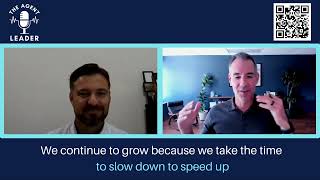
Podcast episode of Agent Leader (host Brent Kelly) featuring Ben Zimmer, founder and CEO of Ethos Insurance and Risk Management. Ben describes leaving a captive role, purchasing his book of business and closing Ethos in December 2017 after taking personal financial risks (selling house, car, and cashing 25% of retirement). Ethos launched fully remote, grew strongly through COVID (25% growth that year) and continues to grow ~20–25% year-over-year, emphasizing a people-first culture built on Appreciation, Respect and Trust (ART). Ben describes hiring around individual strengths rather than rigid role definitions; the agency has roughly nine employees at the time of this recording.
Questions this video answers
December 2017
25% growth
Approximately 20–25% year-over-year
About nine employees
25% of his retirement
Chapters
Welcome to the Agent Leader podcast. My name is Brent Kelly. Thanks so much for listening. We have a very special episode today. It's been a while on the podcast, if you're listening in order that I haven't had a guest on for a while. And today I have a guest. And not just a guest, but a very powerful, exciting guest. No pressure. All right, to my guest, and if you're watching on video right now, you can see him there. But Ben Zimmer, who's the founder and CEO of Ethos, is it insurance and risk management or risk management?
That's correct.
All right, insurance and risk management. And we'll get to Ben. I want to get Ben get a chance to do a full introduction on himself and kind of give a backstory of some things. But Ben has been part of our program at Sitkins for a while and has done some really incredible things. And I was telling Ben before we went live, I said, you know, one of the things that I know that our audience will get from this interview and from Ben's experience is just we had a lot of guests that have had established long term agencies that take the next step and we love working with those agencies. But what about the newer, less established agencies that are trying to get traction and what things are they doing? What struggles are they facing and how are they overcoming it? So, Ben, no pressure, but you're going to solve all those problems today for all the agencies. Does that sound good?
Sure, sure.
All right, before I give Ben his first full introduction or let him do his full introduction, a couple reminders. Number one, as always, the purpose of this podcast is to help you, the independent insurance agency leader, gain clarity, build consistency, and make a commitment to become your best version possible. And of course, I have to hold up, as always, my shameless plug of our book, best version possible. Ben, I don't want to. I keep chiming in and we haven't officially introduced you yet, but Ben, I believe is listened to the audio version. How many times did you tell us?
13 times. I'm not gonna lie. I actually listen a little bit this morning because I need to think about something on one of the chapters. So.
Yeah, okay, cool. Well, maybe I'll ask some stuff of what you. You got, you know, takeaways from that you've listened 13 times. And by the way, there is an audio version. See, as Ben mentioned, we have the audiobook for. So if you like to listen while you're driving or you know, whatever it is, you're on a run or a walk, hey, you know, pop in the best version possible and get better as you also move and shake throughout the day day. So one other announcement, September 7th, and this podcast should be released right before this event. There may not be a huge amount of time, but September 7th, I'm going to be hosting a live presentation live on LinkedIn on the multi million dollar mistake that most independent insurance agencies make. So how's that for a title multi million dollar mistake. And I'll talk about what that means and why it's so impactful, but I will say, and I say this with all candor and, and authenticity, that this is the most important event that we've done at Sitkins, certainly since I've been at Sidkins for six years. So how's that really want you to be there. Go to LinkedIn, check out our page. We'll make sure you get registered. It doesn't cost you anything except for an hour of your time and I promise it'll be worth it. So with that, let's get into the interview. I brought Ben on here. This isn't about me, it's about you, Ben. So Ben Zemmer again, founder and CEO of Ethos Insurance and Risk Management, located in the great state just next to where I'm at, Indiana. Right. And we're in the summer time right now is recording this. So, you know, we don't often get to say this in the Midwest, but man, it's hot. All right. I know we're not the only one in the country, so most people don't feel bad for us, but it is hot. I'm sure sometimes you be listening to this and we'll be saying we do anywhere to be warm in the Midwest, but not right now. But Ben is the founder and CEO of Ethos Insurance and Risk Management and, and has really done an incredible job of staying focused amongst many, many distractions. I'm Ben, I'm going to let you kind of tell your story, but tell the audience obviously who you are and then just about kind of Ethos, how you got started in that and where you are today. Sure.
Well, thank you very much, Brent. I, my team and I, we always, every time a podcast comes out, we listen to it. What I found with us is that we are always interested in getting a little bit better and taking a little bit of knowledge. One thing, focusing on that, doing that well and then saying, okay, we've got that mastered, you know, and then we'll move on to something else. But so with Ethos, kind of unique story, you know, worked in the. I worked in the captive side for 10 years, joined an independent agency. And five years after that, being in the agency, I decided I wanted to purchase my book of business. Contractually, when I went from captive to independent, I made sure that if I was going to do this switch, I had the opportunity to purchase my book of business. That doesn't happen anymore much at all because of just the models changed a lot. But long story short, started this in 2017, in December is when we closed. In order to close, I will tell you, I had to sell my house, sell my car, move my family to the apartment complex I lived out when I was 23 years old and cash in 25% of my retirement. So it takes a little bit of. A little bit of guts, obviously, and there were some trying times. But I'll tell you, we were. From the beginning, I knew, me and my partner Stacy, she was a wonderful integrator and I was a wonderful visionary. And together it was a great fit. And I thought, you know, if we're going to do this, let's start at our level and let's expand upon that. And what we first realized is, you know, we don't need a big shiny office. We don't need anything. So we were fully remote day one and have expanded upon that and really have no, we have one brick and mortar place where just Chad's over there by himself. But we have been 100% remote since day one. Our best year was Covid. We grew 25% in Covid. We've been continued to grow 20%, 25% year over year. Cumulatively. I always say this. I'm the. The husband of one, the father of three boys. I got three great sons, freshmen, a sixth grader and a second grader. And it's going great. So first grader, sorry. With Ethos, I think what. What really has changed was I decided that we were going to build an agency based on respect within each other first. And that's why I called it Ethos, because our culture is we have to take the best care of each other first. And Brent, I say, Art, every single meeting I have with every. Every team member we have is from the producers to the account managers to whoever it is, it's. I always end it with, I appreciate, respect and trust you, and I enjoy this journey together. And I think what that's done is because being remote and you're not getting some of that interaction day to day that you would have if you're in an office, you have to vocalize that. And, you know, you. I'm going to keep quoting you, man, because like I said, our agency, a lot of everything I do is, is based on what you and Roger have been saying. And it's if I don't appreciate them and tell them I appreciate them or if I don't tell them that I appreciate them, they don't know I appreciate them. Right. So we really focus on that. Every meeting is first things first. I can't believe we got this done together. I mean, I said it to everybody, I can't believe it worked. But really what it came down to was we, we decided to make our agency a little bit different in the sense that we found the qualities within people and their experiences and said, what do you, what do you feel like you're best at? Well, I'm best at this, talking to people forward facing them. Well, I don't really like talking to people. I like, I prefer to email. I'm a task guy. You know, I like to do tasks. So instead of doing the historical, like here's your account manager, you're a csa, you're an ae, whatever. I say no, where's your, where's your God given talents and where's your, what's your DNA to that? What things that you're best at? So, and that's how we built. And so, you know, we're about nine employees strong now, tripled in size since we initially opened and continue to grow because we take the time to slow down, to speed up. As I always say, we always stop, think about what we're doing right, think about what we're doing wrong and say, okay, let's, let's really focus on the things that we can, you know, control and are within our capabilities and talents and resources to move the needle. So I probably talk too much.
It's. Listen. No, you didn't talk too much. This is, there's a reason I wanted to have, have you on the show is because there is extreme value. And I think part of it, Ben, is that like any of us, you live in your own world, you take some things for granted. We did this, we did this. But I've already got a bunch of nuggets and I just say this, you know, whether you're an established agency or a newer agency, some of the things that you said, Ben, they apply to everybody, certainly to, you know, what you've done successfully for getting this kind of off the ground. So I got to make a few comments because a, I like to make comments and I just think they're important of what you said. I want To I want to make sure what you said has more importance. Number one, you reminded me of something about risk. Obviously we live in the insurance world, so risk is all around us. But you know what you said with the, the risk that you took to do and basically follow your dream, right. In essence or something that you're passionate about doing. I had someone say this to me and this was part of my journey is, you know, the risk. At some point, the risk of doing nothing or the risk of staying status quo becomes more than the risk of not taking the actual risk. Meaning that you're like, I can't, I couldn't imagine being here in 15 years and not trying this. Right. So kudos to you. But then the reality of it, it's one thing to say I'm taking a risk, another reality of it of selling a house and cashing out your retirement, the car and all that, I mean, like, that's real world stuff, man. So kudos to you for that. It's always interesting too. And I'm gonna, I'm gonna get on. I gotta be careful, man. You know, this. You're on my sessions, I go on tangents, but like when I hear people that have been successful and then I hear people that maybe aren't and have a jealousy or envy, and I go, you don't know what this person did to get here. Like you. You don't know. Right? So that's, that's part of the, the human spirit there. Also, you guys were remote before. Remote was cool. So kudos for that. Right.
We didn't have the money to do it to get a nice office. Yeah.
I mean, which is awesome. And the last thing I want to just, I want to hit on and maybe we have some more conversation here, you know, this idea. And again, we use the acronym and you mentioned art, A R T, Appreciation, respect and trust. It just, it's interesting to me because you at the, from the very beginning realize that if we don't communicate and have the appreciation, respect and earn trust internally will never get at the level external. And you know, the, the great thing is that you were able to start that from the culture from basically day one.
Right.
But really it's attainable for any agency. And sometimes it might take more work to start to flip that, but your results have shown and we'll get to some of those as well. And you know, part of this too, and.
More from Roger

This Shift Helped Us Unlock Growth 💡 | Agency Leadership Tips #insuranceagency #agencygrowth





How AI Can Help Insurance Agency Owners Master Their Financials (Without Being a CFO)

From AI Hype to Real Results: Steve Anderson on How Insurance Agencies Can Use AI to Grow Now



