Moving Your Agency Forward from a Financing Perspective with Tim Parenti of First Insurance Funding
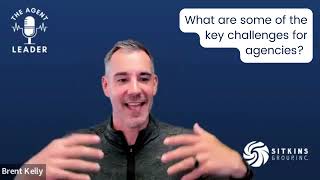
Tim Parenti of First Insurance Funding talks about what independent insurance agencies need to grow: hiring for attitude over experience, building strong culture, and finding partners who offer more than just financing. He describes how successful agencies invest in coaching and mentorship while staying patient with talent decisions.
Questions this video answers
Senior VP of Sales; been with First Insurance Funding about 11 years.
Approximately 15,000–20,000 agencies.
They began agency lending about 15 years ago; cumulative lending mentioned is almost a half a billion dollars.
WindTrust (referred to as the parent company/bank).
A training class called 'just to say maybe', introduced in 2013 to encourage flexible client-focused problem solving.
Chapters
The Agent Leader Podcast. The podcast for independent insurance agency leaders to gain clarity, build consistency and to make a commitment to become their best version possible. And our book Best Version Possible is still out in the marketplace and we're getting some great feedback and always want to get this into our agency leaders hands. So I think I do a reminder every single time every podcast. But hey, we're proud of the book and the feedback we're getting. So you can go to sitkins.com bvp sitkins.com bvp to get a copy copy of that book. Also want to reference that we have officially launched the best version possible experience which is an up level of our membership program. We're excited to announce this. Certainly you can reach out to me or my team to learn more about the BVP experience and you can go to sitkins.com experience to learn more about that. So we've got a fantastic session today. I haven't interviewed this gentleman before. We've had so many conversations in different ways. But someone I've wanted to get on the podcast podcast A because he knows his stuff B because he's just a great leader in the industry and I think 3C he gives a great perspective or have a great perspective. I'm seeing things maybe a little bit different in working with agencies and agency leaders throughout. So I'm going to leave it at that. That's my, my intro temporenty from First Insurance funding is with me and Tim. I'm going to just turn it to you so you can let our fine audience know about you, what you do and hey, why should people listen to Tim? How's that? No pressure on you. Go.
Well if you listen to my wife she'll say there's no reason to listen to me, she's had enough. But thank you Brady. I appreciate being part of this great program and obviously being having a great connection with you and Roger. Over the years we formed quite the partnership. I'm pretty excited about it. So yeah, I'm with First Insurance Funding. I'm the Senior VP of Sales. Been with first for about 11 years. Ironically they were a client of mine when I was in the consulting business going back many years ago and I ran their sales conference and after a while they said gee, we're kind of getting tired of renting you. What's it going to take to buy you? And as you know Brent, everybody has their price.
That's right.
So you know, I wasn't really eager to let go of my independence being self employed for 20 plus years being a consultant, but, you know, had to be the right fit and they certainly fit the bill. And to this day, 11 years later, I'm. I'm not looking backwards in any way, only looking forward. Terrific decision and a great organization.
Yeah. Can I ask again? I mean, I had a few questions I wanted you to think about, but how many agencies about do you guys work with across the country?
Oh, gosh, I mean, over, you know, 15 to 20,000 even just quite a bit. Pretty much any agency across the country that does commercial insurance premiums and needs financing. Yeah.
So I just, you know, I mentioned the beginning. This an interesting perspective. And so Tim knows a lot of people, a lot of agencies, and again, it's going to have just, I think, a very unique thought. I know in our conversations, Tim, just outside of this and different events and things that we've talked, I've always got great value in listening to what you have to say. So I know the audience is going to get a ton of value as well. I want to start off, and I never, you know, I just feel bad when I start off a question that's almost a negative type of question. But I, you know, you ask agency leaders what are they struggling with or what's a challenge that they have? Typically, they could start naming things off pretty quick. You know, there's always challenges and frustrations. But again, from your perspective, Tam, what are some of the key challenges or frustrations that you see independent insurance agencies and their leaders dealing with? And maybe you've got some ideas of how to solve them or at least improve them to some degree.
Yeah, I mean, they're the usual suspects. Right. It's finding talent is pretty much always at the top. But that's not specific to the insurance industry. Right. That's specific to pretty much industry, any industry across the country. So. And of course, organic growth and of course, being able to get into the markets they want to get into. So it's kind of like a. It's a catch 22. They. They want to be able to get into the markets and have access to better pricing and all, but at the same time, they want to remain independent. Well, as you know, with all the M and A going on, it's like you want one thing, but you can't really get it until you do something that maybe you don't want to do. So it's a little bit of a conundrum for them. The other thing that I'm finding out is I'm finding that agencies are far more selective for the right reasons about who it is they want and choose to do business with. It's all about the extras. Because it's not just, can you get, Can I get insurance? It's like, what can I get in addition to insurance? What kind of safety programs? What type of checkpoints are we going to have? What type of additional consulting services? So they want vendors who can see beyond the daily function of what their organization does and sees the organization as a big picture. And we're seeing the same thing with, obviously, the insurance space. They're looking for trusted advisors. I mean, it's a different world today than it was 10 years ago, heck, even five years ago, or if you want to include Covid in there two years ago, it's a whole different ball game. So they're looking to align themselves with organizations that have a pulse on the bigger picture of what they need, as opposed to, in our case, the microscopic portion of an agency's need, which is premium finance.
Yeah, there's some great, great points there, Tim. And I'm even. I'm just looking at my notes. I'm trying to scribble down, as you're sharing a lot of great information there. But I mean, obviously the finding talent thing, you're right, it's true, you know, in every industry. But certainly it's one of the things we continue to hear. And I've been at several events the last few weeks, and, you know, I just keep writing down people, people, people, people, people. And you look at the recent best practice study in big capital letters, you know, the biggest concern is people. And I had to laugh as you were talking about some of the, you know, it's either this or that or whatever it may be. And, you know, I always tell independent insurance agency leaders, I said, you know, the best thing about being independent is you're independent. You can do anything. I said, here's the problem. The worst part about being independent is you're independent. A lot of choices, a lot of decisions to make because you do get to create the business model. And one more thing that to piggyback on what you said, and Roger has said this before in some of our trainings, we've talked about this as the landscape changes. And I'm not exactly sure even where this came from, but he said, and this was a different industry, but I think there's some truth of what we're seeing in insurance. He said, what you get paid for, right? What you get paid for, you may have to begin to do for free. And some of that's the transaction stuff. And insurance he goes, what you currently do for free, maybe the only way you get paid, which was the extra resources and the service and being that indispensable risk partner. Right. Because the, the transaction, the transfer of risk. Well, a lot of, A lot of buttons and clicks can do that, but it's what, what surrounds that. Right. The value with back to the people. So I appreciate you sharing. I think it's a really important topic. Well, let me, let me flip a little bit to the good stuff. And you shared some things, but what, what, you know, what have you seen from your experience? Tim, you think about some, maybe the best agencies you work with or some of those that are having a high level of success. What is it that they're doing? What do you see out there?
Well, there's a lot. But the one that's really stood out to me in the last year and a half, I would use one word, and that is patience. And the best agencies right now, I think, are not looking for quick fixes. They're not going out there, just hiring an account executive from another agency, you know, doubling their pay and just plugging them in there. They're seeing the big picture. They know that that doing that model is not sustainable. In fact, they become vulnerable to the next agency that wants. It wants to come in and pluck that same account executive that you pluck from somebody else. So I'm seeing people that are real, the top ones are willing to go outside the industry and hire people that don't have any industry experience, but they have something that can't always be taught, and it can't necessarily, in some cases, be coached. And that is finding people is a bit of a cliche with the right attitudes, the right mental mindset, and those who possess sound emotional intelligence. And those two factors really help bridge the other challenge that I think agencies do experience. When they do go out and they. They buy producers or they're buying account executives or frontline staff. And that's culture. It's culture. I mean, one of the most prized possessions the best agencies have are an adherence to their culture and being inflexible in who they are and what they stand for. When you bring somebody in from the outside, from another agency, let's say, that can potentially not always be compromised. So what I'm seeing, a lot of people go out and they're hiring people that have the right attitude, the right mindset, and they're willing to invest in the long game and say that, you know, we can teach them insurance, we can get them their license, we can do all those things, but they're willing to be patient with it. And behind that, not only do they do that, they have a really, really strong, robust coaching and mentoring programs behind them. So it's not just the training, it's the coaching, it's the mentoring, it's being tagged. So they're building a long term employee workforce which ultimately then becomes, when the word gets out now, all of a sudden people go, wow, I didn't know anything about this industry. They took a chance on me. And people who possess really strong cultural moral values usually hang out, you know, like attracts like. Right? And so now that that philosophy becomes your best recruiting tool. So they say to their friends and their neighbors and that are like them, hey, here's where I'm working. I knew nothing about it. They've really helped me out. It's a great industry and in 1, 1, 1 success solves another challenge.
A lot of good nuggets there. I hope if the listeners, Tim, if they're not driving, they could take a few notes there of what you just said because there's a lot of wisdom in that. And I do have a follow up question or maybe two on what you just said because I'm thinking the minds of an agency leader. It's like, okay, I get that. I think I'm with you here. But, but what else? What hit me? It's interesting. We, we have a campaign, Tim, and this is not an official campaign, this is an internal campaign that we kind of joke about. But we say with agencies, you got to stop the gimmick of the month club. And you know, it's just like, oh, here's the next new thing that's going to be the magic pill, whatever you want to call it. Right? And you're right. I just, I think I referenced earlier, I've had two or three different mastermind groups or organizations and leaders. I've been around the last month or two. And it's interesting, although the topic of people and what you just said comes up a lot. There are certain agencies that have really done what you said. They were patient, they have focus a lot on culture, what they stand for, what they don't stand for. And they're going, yeah, it's tough, but we're retaining most of our people, we're attracting other people. In fact, some of our best people are attracting our best other people, you know, and just exactly what you said. So it's, it's very interesting. Now I do want to ask, and I don't know if you have, you Know, this is probably a tough question, and there may not be a direct answer to it, but I want to get your thoughts anyway. You talked about, you know, emotional intelligence and some of those characteristics that may not be insurance and that you can teach people insurance.
What.
Have you seen agencies or have you seen agencies being able to. How do they. How do they find those type of people? Like, what are they looking for? I mean, it's a pretty broad question. Again, I don't want to put you on the spot, but have you seen any trends where, you know, okay, we don't need someone with insurance knowledge, but we're looking for this and this, and this is how we kind of know this is the person we're looking for.
Yeah, there's a Brett. There's really no magical place, but there are a few that usually come up. I know one individual that every time he goes to a restaurant, he doesn't go there to eat, he goes there to recruit. Because if the, you know, you think about the environment, they're juggling multiple tasks. They are dealing with difficult customers. They have to be polite even in of difficult times. And those are all characteristics. And they're essentially, it's a live job interview right then and there. And I've seen them several times pull out a business card, say, hey, if you ever decide that you want to do something different, here we are. So I'm sure that's not new to any of the listeners, but that's a big one. Another one is, you know, a lot of people, you know, culture matters. A lot of people like to just recruit people from their church. They share the same denomination, those same ethical values and mores. Chances are they're going to have a pretty strong run of that. So they'll recruit from, from their local church. So those are the two primary ones, and I'm sure there's. There's countless others, but those are the two that come to mind.
Oh, that's great. And, and, you know, I can say it's like, oh, yeah, maybe I thought about that. But I think people lose focus. And, you know, I actually told my. I told my daughter, who's now a freshman in college, and she's worked different jobs, but I've told us other people too, young people. I'm like, you know, because you get people in college or whatever, and they're like, well, this isn't my career, and they're working this job. I'm like, you never know who's watching. You know, if, if, you know, if you've got the right Personality, you work hard. I mean, let's face that's hard to find sometimes today. So you find that you want to grab onto it. And I think the biggest thing is just, I love what you said there, but it's like for agency leaders, if you're looking to attract people, it's like antennas are always up. I'm always, I'm always thinking of looking around and going, hmm. Because by the time you really desperately need someone, it becomes really hard. So I just constant like, let's continue to build that network and say, hey, I don't know if now's a good time, but there's something there I might want to share with you. So I love that, Tim. I want to, I want to get to know a little bit more about you and your firm because you guys do again, so many things obviously known for financing, but I know it's more than that and the impact you have on agencies. So I want to give you the mic here and kind of share some stuff that you all do at first. Insurance funding, maybe some things that people know, maybe some things that people don't know that can add value to agencies out there.
Yeah, you know, we gotta face the facts. You don't have to be a rocket scientist to really do premium finance. Anyone who can fog American pretty much do premium finance.
Oh, come on, Tim. It's harder than that.
But you know, it does take a little bit of something extra depending on the metric that you use. We're either number one or number two in the entire country. So obviously things like rates and terms, we're always going to be competitive. So we try to, to look beyond that. So the number one factor that people like about what we do, and I mentioned, mentioned this earlier, is that we look beyond the day to day functions of the agencies. We try to become a resource for them. We're owned by a bank and you know, any agency is either, you know, is looking to either acquire another agency or acquire producers. They have some, some banking challenges and we provide that service to them at our personal expense. Gives them another fresh set of eyes. And in many cases we've had people come to us with deals from their bank and we'll look at it and say, hey, you got a great deal, go for it. Or in some cases we'll say, we can't take this kind of business, but here's a few questions to ask your own bank or your own banker and maybe we can help you get a better deal than what you're already getting. Even though we have no interest in doing it. So the question is, why would we even do that? Well, we're very objective in our relationship. We care about. This is definitely a philosophy of ours. We care about the health of the agency in the aggregate, not just the small sliver that we call premium finance, because we think that's really what dictates a true partnership. So we do agency lending again. If they want to buy another agency, they want to buy a producer's book and, well, help in that respect. In fact, we were the first premium finance company that started doing that. And I think we did. It started about 15 years ago. One of the agencies that we were working with brought it up as an idea and we said, wow, we never really thought about that, but let's check into it. So we talked to our parent company, WindTrust, the bank, and they said, yeah, I think we can do this. And so we started with zero in premium finance lending about 15 years ago. And I think we're up to almost, I think, a half a billion. So we do quite a bit of that. We have an appetite for that and it's definitely in our wheelhouse. So that's why that's one thing that people really like about us. The other thing that people really like about us, again, is, can we take a holistic view of an agency? Well, if you look at the three primary players in an agency, you've got the leadership team, you've got the producer sales team, and you got the frontline team, AES, ams, and csrs. So when I came in, I looked at this business culture, premium finance, and I said, wow, this is a really selfish business in the sense that, you know, our clients, probably we need them a lot more than they need us, right? We're out there begging for loans. Please send us a loan police, send us a premium finance loan. And my, my thinking was I thought that was a pretty selfish relationship. So I said, what if we could, you know, the Bible talks about the law of reciprocity. What if we could balance things out where we could give things back to our clients, our agency partners, in return, in addition to premium finance, things that they want but don't know where to get it, they want, but don't know if they can afford it or they want, and they don't know if it's any good. So we thought, what if we could bring all of these services to them. Training and development for the AES, ams, csrs for the leadership team and producers, training that we provide at our personal expense. That all has nothing to do with Premium Finance. It's a very objective commitment to the overall health of their agency and that's been really effective. In fact, in my prior world, I used to do a lot of executive overviews where I would sit down with boards, I'd sit in meetings and I do a full executive overview about their organization. So we've done some executive overviews for agencies around the country as well, which gives them a nice unbiased snapshot of the, the overall health of their agency, whether it's personalities, the structure of the board, the structure of their business, et cetera. So that's been, that's been very fun and very fruitful. Fruitful.
I love that. I think that's, I mean, obviously, which why I've enjoyed getting to know you, talking to you, learning about, you know, what you all do. Because yeah, obviously there's, you know, there's a transfer and there's some of the stuff that you do from a financing perspective. But you know, this is something that, you know, Tim, that what you guys do is something we talk with agencies about is, you know, so often people will come in and go, how do I complete this transaction, so to speak, or close this sale? And you know, what you're really asking and you know, put words in your mouth, but we tell this for agencies is how can I help you move your business forward? Right. And that may be more than just, you know, some of those things. Did you want to comment on that?
Yeah, I was just going to say, you know, what I try to mention other agencies is you have to. Premium. Premium finance anyway, right? You have to use somebody. So we just say, as long as you got to use somebody, you might as well get something extra for it, right? I mean, if you could buy, use a simplistic observation. If you can buy your car at an X dealership and it's just a car, or you buy your car at Y dealership and you get a free oil change and you get a free car wash and they'll pick up your dry cleaning once a month. You know, a clean car is a clean car and you get all the extra at no cost to you. It seems like a no brainer. It seems pretty easy. And that really goes to our culture. I mean, that's just the way our culture is. In fact, back in 2013, the President of First Insurance Funding, Frank Burke, came up to me and he said, Tim, I've been walking around the office and I'm hearing too many no's like, no, we can't do that. No, we can't. Do that. He goes, I just don't want that to be our philosophy. Our philosophy should be, let's check into it. So he had me design a training class for the internal team and it was called just to say maybe. And the point was it's a simple training just to kind of reprogram their thinking that hey, maybe with a fresh set of eyes, maybe with additional information, maybe with a bigger focus on the big picture, there is a possibility. So that's just the culture. We really don't want to turn anything away. We want to make something happen for our clients with both the agencies and the agency's customers. And it was really a very well received. It kind of a little hokey at first, but at the end of the day it gave people the, you know, the opportunity, like, hey, maybe I shouldn't be so close minded. Maybe there is a way to do it.
Yeah, I love it. I mean, you know, sometimes there's always that balance between what works and what's hokey. But hey, if it works, it works. And you know, that's a big part of culture. And I think, you know, what you said there, Tim too is I always think there's, there's an abundance mentality in thinking, there's scarcity mentality and thinking. And I just, I love talking to people thinking abundance, not of it can never work, but how will it work? How could we make it work? What can we do differently? Right. Those are great questions.
One of the thing I was going to mention, and it's. Sorry to interrupt you, but it's also our technology. I mean, everybody says we have the technology. We've been first to market with a lot of technology that's out there right now, and we're still leading the charge. The question becomes why? Right. So the why is if you interview any. I remember you and I were at a meeting one time with Angela Adams when she was presenting. And I said, angela, how many of the AES, AMs and CSRs say to you, gee, I just got way too much time on my hands, I'm really bored. And of course we all got a laugh out of it. She said, never. So what we do is we try to build our technology in concert with a focused user group. Group. And the whole objective of it is, of course, is to make them as efficient as possible, minimize key strokes as much as possible, and also which improves quality. Right. And so we definitely spent a lot of time on our technology making it very easy for the agency to streamline their work and their operations so they can get on to other parts of the business. So we become. They become big fans of us because we make their life a lot easier.
Yeah, that's. I'm glad you mentioned that.
And.
And, you know, one of the things that I believe in, I think you're probably sharing this belief. But, you know, I always ask agencies, like, is it still a relationship business? Like, yes, of course. Of course it is. And I think sometimes technology, well, first of all, it's either misused or it's just not allocated or trained properly or whatever. But those that use it, I always say, you know, if you can leverage technology to build relationships, you're really making things happen to where the technology's happening, and you're utilizing it and you're making it efficient so that you can be a human being and do some of the things that computers never can do. And so, you know, what you're doing with that, Tim, is you're freeing agencies up to be able to be that human being, to be the risk advisor, to ask other questions, to show empathy, to have collaboration, which, by the way, computers aren't very good at, versus I'll just click and all that stuff the technology can take care of. So I. I'm really glad you shared that. Are you ready for the last question, Tim? And this is the most important question.
Sure.
I mean, hopefully they've all been important questions, but this one, this is the big one. So. And by the way, I'm. I'm gonna kind of set you up here, too. If there's any way, if I can get maybe two answers out of this, one from Tim and one from your alter ego, I would really think that would be cool. But here's the question. I asked this to all of my guests that. Come on, Tim. So you're not the first, but if you were, if you were having a conversation so you. You come face to face to the young, younger. I don't know how much younger you want to go, let's say 20, 25 years, I don't know. But the younger Temperanti. And there he is, young Tim, looking at you today, Tim. And he looks up at you. I guess he would probably look across from you. I don't know if you've gotten taller. But he looks at you and he says, hey, Tim, now you've been doing this for a while. You're ahead of me. What's one piece of advice, the one piece of advice you would share with me before we have to leave, what would you say?
Well, to my younger self and maybe to other younger Selves is don't let other people determine or define what success air quotes looks like. Be your own barometer of what success looks like. Steve Jobs did not go to look at a template and say, oh, this is what success is. He created it. The guy who created Napster, same thing. That guy, Mr. Zuckerberg, who created Facebook, same thing. They had their own vision. They were going to determine what success meant, and they weren't going to do it according to anybody else's impressions, impulses, thoughts or feelings. They were going to be their own barometer. In fact, a great story about that, and I know you're a voracious reader like I am, Brent. If you, you might recall that Fred Smith, the founder of FedEx, his senior college paper was a thesis on a business plan that we all know called Federal Express. He got a D on his report teacher, the professor said, wait, this will never work. So, you know, when I hear stories like that, we just know what will never work. That's why, you know, if I had to bring it full circle at first, insurance funding. We're always, we're always pushing the boundaries of what is possible, where, you know, sounds cliche, but we just are never satisfied. It's meeting after meeting about what's new, what's next, what's going on in the industry, and paying very close attention to what's keeping business leaders, CFOs and the frontline staff up at night and doing whatever we can to put our resources to work to make that a little less daunting for them.
I, I've asked that question a lot and I get a variety of answers. I love that for so many reasons. And as you were saying that, Tim, it's like. And again, you can give countless examples, but, you know, like every great idea, now, there's probably been many bad ones too, but every great idea, right? I mean, it started in someone's mind, they sat there and it didn't exist before. So, you know, I love that about, you know, don't let people define your success. Oh, you could never do that. It's not been done that way before. Before. Yeah, just wait. Right? And it actually comes back at what you said earlier, right? With the, with the culture of your company. Maybe, just maybe, right?
Who knows?
Maybe I'll prove you wrong, maybe I won't. But guess what? I'm gonna try. And I think that's, that's such a powerful thought.
So you know what they say. You know what they say, though, if, if you want to listen to what other people have to say, let me tell you something that in a nickel will get you nothing more than a hot cup of jack squat. You wanted it, There it is.
I got it. I'm so happy now. If you didn't know, I'm sure you, hopefully you're all laughing now, but that Tim's alter ego, Matt Foley there in a van down by the river. Right, Tim, I gotta share something. So Tim attended one of our in person networking events. Oh, it's probably been three years ago now because it's before COVID It might have been. Right. Right when it kind of started.
March 2020.
Okay, March 2020. So it was like the last thing that we did at that point for a while. And we had, we had a nice group of Asians. Some couldn't make it for obvious reasons, but we were sitting outside in the pavilion and beautiful Cape coral, which of course now has been damaged by the hurricane and everything. But there was Tim sitting down there and he breaks into Matt Foley and boy, we had 30, 40, 50 people, all eyes and ears and just hysterically laughing. And so I love Tim, not only what you brought today, but your personality, your fun, you're engaging and I know you do a lot for agencies out there. So thank you for coming on and being part of this. Any last words and you know, where can people find you? Obviously you're in a lot of agencies, I'm sure people can find you. But anything else you want to share, Tim, for the audience before we, we leave?
Well, thank you, Brian, I appreciate it. Yeah, I just, you know, we, we care about the agencies. It's one thing to say it, but you know, deeds speak a lot loud, louder than, than words. We're happy to help you out. There's even. You don't have to necessarily be a client of first to use at least my services to help you out with. If nothing else, kick the tires, see what it's about. The one thing that we do different than, let's say carriers, for example, when carriers come in, they want to help you, but they want to help you sell their product, move their product, talk about their product. When we come in and we try to help, we don't even mention premium finance. We're very objective. Whatever it is we can do to help, we're doing it because it makes sense to help. You can find me on LinkedIn. Feel free to reach out. And again, if you're listening to this podcast, you already know about the Sitkins Group, but we are big fans. We proudly endorse everything that they do. If you're not using them, please do. If you are using them, use them more.
Keep going, Tim. You're doing great. Listen, thank you again and again. I knew you, you get some great insight being on the podcast today. And as a reminder to all the audience, again, a lot of things you can check out with us. And by the way, if you haven't, I haven't mentioned this for a while, but you know, we want to continue to grow this podcast and it is, it is a free resource we provide to agencies out there that want to just take a listen and learn from people like Tim and other agencies. I brought Roger Sitkins on many times. Sometimes I just go on rants, Tim, on things that are, that are happening. But it's all with the heart of service, to help people and to grow. So if you could rate or review this podcast, it's adding value to you. We'd appreciate that as well. Well, so with that, I want to thank you, Tim, and wish you as agency leaders, all the best in your success. Thanks for listening.
Thanks, Brent. Godspeed.
More from Roger

This Shift Helped Us Unlock Growth 💡 | Agency Leadership Tips #insuranceagency #agencygrowth





How AI Can Help Insurance Agency Owners Master Their Financials (Without Being a CFO)

From AI Hype to Real Results: Steve Anderson on How Insurance Agencies Can Use AI to Grow Now



