Prepared to Succeed with Risk Advisor Toye Oshoniyi
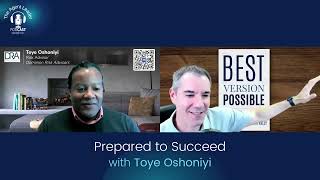
Toye Oshoniyi from Dominion Risk Advisors talks about starting out as an insurance producer, the obstacles he hit, and how being prepared and coachable helped him move forward in the industry.
Chapters
Welcome to the Agent Leader Podcast. My name is Brent Kelly, your host. Thanks so much for joining me on another episode. And I've got a fantastic guest that I'll be sharing with you today. I'll bring him on in just a second, let him kind of tell about his background. Before I get into our very special guest who's going to get to bring ton of value to you. The Agent Leader podcast listener today, as always want to remind you what the purpose of this podcast is. We want to help agency leaders. Whether you're a principal, whether you're a sales leader, whether you're a producer, whether you're just a professional in the service world, whatever your role is, they're all vitally important. We want to help you gain clarity, build consistency and make a commitment to become your best version possible. And for our video viewers here I have behind me on my green screen, Best version possible is our new book that is out. Certainly can go check that out. If you go to stickens.com, that's s I T K I N S B, you can take a look and order a copy for yourself and for love, for you to get a chance to take a look at it. Also you can view our movie, our best version possible movie. Again, sitkins.com VIP we want you to be a VIP guest. So sitkins.com BVP or sitkins.com VIP for the book or the movie I mentioned, I've got a great podcast guest. I've got Toye Oceany from Dominion Risk Advisors and I'm going to give a little Toye, just a little precursor to the audience, a little nugget of some of our relationship and then I'll let you talk more about yourself and some of your background so the audience gets to know you better. But here's what I'll tell you. The podcast leader audience. One thing that Toya exemplifies and Toya has been through our producer camp, their agency is part of our all inclusive model. So get to know their agency well. But Toya, actually I'll just, I'm going to step out of my intro here just for a second. When did you attend our producer program? I'm trying to remember exactly when you attended.
I think it was the first virtual one. You guys did okay last year. Yeah, I think it was like December through January.
Okay. So yeah, I thought it was about a year ago. I didn't look at the exact time. But one of the things that stands out in our program and we generally on our producer program that we run our virtual producer Fit. It's an eight session program that we run but we also do Q and A at the end and I just find it interesting. I know people have appointments that come up at the end and we get that, but we open up for Q and A. There is a direct correlation we've learned in two and a half, three years and even beyond that with some of the other programs that we run is that when people are hungry for knowledge, they always stay to ask questions. And Toya was one that every, at the end of every session was on there going, hey, I'm still learning this stuff but what do you think about that? Or what do you do there? Or what did you see there? And he's always taking notes and it just goes back and hopefully this will come out in our discussions. Atoya I'm sure it will. Is that the best producers, the best professionals are coachable. And that's something, I don't know how you define it, what is coachable, what's not. But it's just the ability to say, listen, I, I know there's more for me. I want to grow, I desire to grow. You know, I don't have to have all the answers, I never will. But boy, I'm going to keep seeking them. And that's something that I think that's that this audience is going to take because the path that you're on is unique than some of the guests I've had previously. I've had agency leaders and sales leaders and some of our top end producers. Toya is on the path to that and I have no doubt he's going to achieve it. So that's your buildup. Toya, I wanted the audience to know you. Toye Oceany from Dominion Risk Advisors. If you could just give an overview of your background and history to the audience. The floor is yours, the stage is yours. Toya.
Yeah, no. Hey Brent, thanks for having me on and just a big fan and I follow you and I listen to your podcast. Even as far as asking you some advice from a podcast you did in 2018.
That's right.
But yeah, my background, I grew up in New York, upstate New York and played soccer growing up played soccer at West Virginia University. Had a full ride there and moved down to Roanoke, Virginia. Played for a professional team here for a little bit. When I moved here I really got a fantastic network. It was just a blessing and as I moved through kind of a different, some different roles professionally, before I got into the insurance of the PNC world, I was doing commercial Furniture for a steel case dealer. And, you know, I'm just going to skip a lot. But you fast forward to Covid and then the work environment, everybody got sent home. So I went from having this huge pipeline, huge number of my pipeline, and all of a sudden Covid hits and everybody gets sent home. And all my orders are like, we don't know what we're going to do. And I kind of saw the writing on the wall. I didn't know when this was going to end. So probably about a year after Covid hit, I got let go of my job. So we were, we were blessed enough to kind of be in a good situation financially where we could really take our time to figure out kind of next steps for myself and my family. And dude Baldrige from Dominion Risk Advisors, he's a. He's a. He was a friend of mine. I coached his son in soccer. We just met and had coffee, and he said, hey, you know, I think this could be a good opportunity for you. And we prayed about it and we really talked through it. And, you know, when I, when I got involved, I said, man, this. I wish I would have done this almost 15 or 20 years ago, but I didn't. Here I am now. So how do I make the best out of this opportunity moving forward?
Yeah, it's. Well, again, just from your background, obviously, you know, the audience can tell that you're a new producer, a new advisor in this game. Right. And so, again, I just, I want to bring you on again for a couple main reasons. Number one, I already mentioned you're coachable. You're a sponge for knowledge. You can just sense that. And I think there's a lot of value to see how people approach things and think that way. The other part of it, too, is we've got people that are like, well, you know, either it's a producer themself or maybe a sales leader, an agency leader that's got some younger or newer, doesn't always be younger, but as you said, just newer in the game. And you're like, what can they do? What should they do? And I think you're going to give. I know you will. You're going to get some ideas for those producers today. And I know that you're not wanting to say, I've got this thing figured out. I'm on the. There's. There's nothing going to hold me back. You're going to have challenges. But I also know with your mentality, your mindset and your hunger, I mean, you know, you're Going to do great things. So. All right, so here's what my first question. I already kind of alluded to it. Maybe you mentioned even going back with COVID But for you, as a. A newer producer advisor in this game, and there's a lot of new stuff coming your way, what would you say is your biggest challenge that you face toy?
Yeah, you know, it's. There was a lot of challenges. You know, you're one of the biggest challenges. Just kind of reinventing myself, going from what I'm doing and then jumping into this new role and, you know, you're starting a new career, and a career that's not as simple as, you know, A, B and C, and then you're fine. There are. There's so much to learn about this industry. And I was reading back and looking through, actually listening to one of the podcasts. You said when you first started out that it was. It came back to questions like, that was what. That unlocked a lot for you. And after kind of like, kind of listening to that and also the training with you guys, that was something that you guys always kind of came back to was. Was really good questions. And so for me, the biggest challenge was probably knowledge. And then the other biggest challenge for me is because I realized that, like, my opportunities are almost limitless, you know, and so I'm like, all right, I've got all these industries that I can go after. I've got all these opportunities. How do I narrow that down? I'm going to be all over the place. And then secondly was like a blueprint or a roadmap of what success looks like in order to, you know, capture these opportunities. So I would say those are probably the two biggest challenges that I had as far as, like, the hard work and going out. And, you know, you know that that wasn't a challenge for me, but it was harnessing it and really being focused. Kind of going back to the book. The one thing, like, what is the one thing that I really need to focus on when I first start?
Yeah, great, great, great feedback there. A couple things I want to just pinpoint on that you said. I love them both. You mentioned the questions. Actually, I'm working on content right now for one of our sales meetings, and that's going back to what I'm going to be getting into, again, is questions. And yeah, you were alluding that a 2018 podcast I did. I'm like, oh, yeah, like, see, the guy is a student, right? Always trying to learn. But I'll tell you. And this, I say this to Any new young producer, whatever it is, you know, inexperienced, trying to get in the game is there's that lack of confidence, which is common because, I don't know, I'm learning the industry, I'm learning this coverage stuff. I'm learning the technicalities of it. I'm learning, you know, how business owners think in these ways. Like, I just. It's all new stuff, but if you just scale it back and say, listen, and obviously depends by your agency resource, but if you've got mentors and people and other producers or agency leaders and underwriters and carrier people, they're going to help support you if you approach it the right way. What you found already, and certainly what I found in my experience, even going back, thinking way back when I started doing production, was I didn't have to have all the answers. I just had to ask the right questions. And the fear of it, well, what if I ask the questions and I don't know the answer? That's okay. You know, hey, Toy, that's a really great question. Or, you know, I asked you a question and you'll say, that's a really great question. What do you think? You know, and part of this is, you know, I don't want to. I don't want to knee jerk my reactions, because there's a lot of factors here I want to take this back and discuss with my team. I want to make sure I get you the right answer. And just having that, that confidence and control, I think, is a big issue. And the second thing that I want to allude to, and then maybe you can, maybe this will turn in maybe a success or some success that you're having, is how do you take all the noise in the world? And in this case, as an insurance producer, I always joke and say this, Toye, one of the greatest things about being independent insurance agent is that you're independent, meaning that you can pretty much build a model, whatever you want. The biggest challenge of being an independent insurance agent is that you're independent. You know, and what hit me, Toya, in your soccer experience is someone could say, hey, Toye, are you willing to run fast? Yep. And you're saying, I can run fast, but could you point me in the direction I should be running? Right.
That's a great analogy. Yeah.
So speak. Speak to me how you've been able to. Or some things maybe you've done to try to filter all the stuff that you're trying to process.
Yeah. You know, I was very fortunate that my agency put me in your training in the early stage when I started, and I'll be honest, when I was first in the training, being so green to the industry, a lot of it was. It was just going by me so fast and the conversations were just at a different level. And so I'm excited that I'm going to come back and do the training again. I think in a couple of months, your next round. So I'm going to do it again because now I've got a different mindset. But I will tell you, the blessing of taking it early was it allowed me to say, okay, what is a future ideal client like? The things I took away from that as a beginner was I could identify that and that was at an agency. Where do that. Going back to my mentors and saying, where do you want me? Where do you want me to spend my energy? Because otherwise I'm going to spend it everywhere and if I spend it everywhere, I'm going to do nothing. Well, so let's get that dialed in. And then the other thing you brought up was your pods. Your pods, your points of differentiation. I knew if I could kind of nail down those two things, it would kind of set me in a path. So I reverse engineer everything. So I'm like, okay, if I've got my PAs, I've got my FICs, then I'm backing into it and saying, what questions do I need to be asking them? That maybe just because I might not know the insurance industry 100%, not even like 20% probably at that point, but I know the right questions to ask to get the information I need and kind of keep the ball moving forward and kind of adding that value. So I would say, you know, between, like I said, the pods and the, and the fics, and then kind of figuring out the questions to ask and then I started learning more about, okay, now I need to know what markets I need to go to.
Great.
Being able to say, ask these questions. But then I'm like, well, what if I don't have the markets to support the answers I'm getting or support that business? So I was. That's. Those are the things that really helped.
Me in the beginning. Well, I mean, first of all, I'm glad just to share that is people ask, well, geez, how long should someone be maybe in the business before they join your producer program? And I don't have a clear answer on that because it just sometimes depends on the person. But typically when you're throwing in right away and you're trying to get your technical training done or your license I mean, there's a lot of things that goes into that. You're like, ah, but again, part of how we have things set up, and I'm glad you're coming back, is like reading a book. Like, I read Think and Grow Rich when I was 22.
I just ordered that.
Did you again?
Yeah, because I read it a while.
Ago and I just ordered it and like, I read at 22 because someone told me I should and like, oh, it made sense. Like, I kind of. But okay. And then I read it like a 28 and then at 32, and I've read it pretty much every year since. And every time you're like, oh, I see this a little differently now because you grow, you mature, you learn. And so I think, again, whether it's our program you're coming back to or just your own experience, you're going to continue to filter that. And part of that is what I love, what you said. And here's something that I would ask anybody in the. In the audience. What are you doing to quantum leap your results? What are you doing to supercharge your growth by putting yourself around people and ideas and others so that you don't have to do everything by trial and error? Because here's what I wrote down. What you said, Toye, is this. I don't. I don't know, but I know I need to know. And here's what I mean by this. Like, I don't like future ideal clients.
Right?
We talk about that again. I'm not going to. In this podcast. It's. We go deep into this. The idea of what do pods really mean? How do you position them? So how do you position yourself? Just all that goes in the idea of 80:20, the principles of 80:20, like a newer producer, for example. And as you said, that may go. I don't quite know how I'm going to do that exactly, but I know that it's important and I know I need to eventually figure it out. That's the difference is we've had people toya that have. And again, you talked about going back that have said, same people that were in the same program that you were in. That said, man, I wish I would have thought about these things 15 years ago. And part of this is being able to put that in your mind now. So again, I just applaud you for that. And the last thing I'll share is this. And this is something that I know you're working on really hard. The idea of asking questions and saying, this is who I want at least who I think I want. Right here are some of the markets now, what are some of the questions I need to ask around that is that so many people with more and more experience believe that if they just have this list of cool stuff that they've done and that their agency does, it's going to be the most successful. It's okay. But what you're doing, Toya, and the best producers do is that, listen, I know one thing about business owners or people in personal risk. They care way more about their own lives and businesses than they care about mine. And so just that mindset of if I can just engage in questions, people know that I care. People know that I'm actually helping to try to design something for them, not me. And people know that, you know, the program that I'm going to put together is about them. I mean, just those key basic parameters. Oh, yeah, yeah, yeah. But how many people really do it? So I just had to share that because it's really important. I want to ask you again, in your short career in the insurance world at this point, what have you seen Toya as your biggest breakthrough or success to this point?
I was thinking about this question this morning and I would say is being prepared is one of the key. What has really helped and what I mean by that is I think a lot of different ways that you can go about this business and everybody. I feel like just in a short time, you're so busy, there's so many things I feel like that can consume your day. And then all of a sudden, you know, the day gets away from you, or it's a week, then it's a month, and then it's two months. And then you look back and you say, oh, man, did I really get back to doing any prospecting? You know, did I? And then when I did get the opportunity to get in front of a prospect or, sorry, an fic. Don't say prospect, but fic, you know, was I prepared? So one thing that we've really started focusing on as an agency is, is starting that process really, really early. And what I mean by that is if it's FIC that we do get an appointment with and let's just say they've got a renewal that's like two months away, we might seriously say, hey, this isn't the right time maybe for you to. We don't know yet. We've got to take a look at it and say, do we have enough time to really add the value that we really want to add and create the relationship that we really want to create. Don't get me wrong, if they say, hey, we like you, we want to do a bor, we're not going to.
Say, no, leave me. That's a buying signal, right?
But, you know, so I think what we've done is like, give perfect example. On an account, we found out that the renewal was, was probably about 10 months away. But what we started acting as if we were already the incumbent and having those conversations with them 10 months out. So all of a sudden it just changed their mindset and the way they thought about who we are and what we could do and that back to being prepared. So now we're getting the time to really learn more about their business, get deep into their business. So when it does come time to renewal, they're almost already looking at us as if we're going to be their risk manager or risk advisor forward. So I would say just being prepared in that timeline has been really good for us.
That last minute or so is really powerful. I mean, it just. Some of that's the mindset and just the fact, I love that we're already acting as if we are their agent right at that point before we are. And the other thing too, you said, you know, 10 months out. And we talk about that even in our different programs and people like, well, that's. That seems silly. Like, you know, that's a long process and of course it depends on the size of the account, right? The complexity of the account. But. But, you know, part of it is people say, well, why would they take your call? Or why would they meet with you? They're not in the quoting process. And the simple answer is, great, we don't quote. We're not asking to quote your insurance. And for most agencies, that's a really hard thing to say out loud. Like, what do you mean? You know, and so it's just the idea of we approach things differently. And what I love about that toy and hope everyone's listening, is that from the very first connection, again, you've already identified someone, you already know some of the points of differentiation, so you're prepared with some of the initial questions to get them thinking a little differently. But from that moment, in this case 10 months out, you have already completely repositioned, right. Yourself as an agency and as an advisor, as someone that they probably haven't dealt with in this capacity before. And so again, just a lot of kudos on that and just the word being prepared. I mean, we spend so much time, and I'm raising my own Hand here, because I'm guilty of it if I'm not careful reacting to stuff that's not that important. I mean, if you, if you really think about it versus saying how prepared and proactive can I be, the things that really do matter the most. And it's tough. It's. You know, my favorite quote that I say all the time comes from the late, great Jim Rohn. If you don't plan your life or design your life, there's a good chance someone else will. And guess what they have planned for you. Yeah, right. So it's just that I love that idea. I'm going to be very intentional with the plan, so. Love that. Toye just from you already referenced, you know, some of the, your, your takeaways initially from our program. Anything else that jumped out at you just in some of the conversations we've had in the programs or even some of the emails you've sent or whatever, but just anything that has been some of your biggest takeaway from some of the work we've done together.
Yeah, you know, I think just, you know, just like the book you guys came out with, those three words are powerful. Best version possible. And I think, you know, when I, and that was one of the things that really stuck out to me when I did the training early was that this isn't about just my insurance journey. This isn't about my PNC journey. This is about a personal journey you can really implement. You know, like you said, BVP in every aspect of everything you do. So, you know, just starting with that, that really, I thought, set the stage for a different mindset. And I think keep on going back to that. Like, even if you're in the middle of doing something and then just say to yourself, wait a minute, was this my best version possible? Like, could I be doing something differently right now? Am I doing something different that can set me apart from my competition? So I think continuously asking that question, almost like it gets you back to the core of why you're doing what you're doing. And one of the things that I loved about this industry, there was two things that really resonated well with me, was one, I love the opportunity to help people and especially businesses, business leaders and this industry is something that for the most part, you don't really know. I mean, I know I was ignorant going into it. I was like, yeah, I get on the personal side, I was like, yeah, my homeowner's policy comes and I just sign it, whatever, and I just send it back, whatever. But when you really dig into it and you find out how much value you can add to a business. That was really attractive to me. The second thing that was really attractive to me, I remember Roger came on, he said, name one business you can decide to give yourself a raise at any given time.
Yeah, right. Your ears perched up like, I like this.
I was like, wow. Yeah, I never really thought about that. So, yeah, you put those two together. I was like, man, I think. I think I'm really enjoying this. But I think going back to, like, the best version possible was something that I really took away. Obviously. FICS pods. I'm like, down with all your acronyms now, so. And all the saying. So there wasn't really too much that I didn't take away that I found useful. It was just fantastic.
Well, yeah, we. We have an acronym problem, number one. We know that, but it's fun. Get some chuckles out of it. I just, you know, once you said, I gotta go back and I'm gonna give. We were joking before we started recording about, you know, you hear things from places and referencing people. But I'm going to reference Jim Rohn again because he had a huge impact just on my life and development. But I'm glad you mentioned it, because one of the things that I'm just so passionate about is it's not just to tell people to do things, but to get to, like, why it's important to do them, and more important than that, why it's important for them. Like, that's behavior change. And so when we talk about best version possible, and we didn't. I mean, we tell the story, we didn't sit there and go, what's the. What's the hook? We can start to say that's going to really motivate people. It was just our own dialogue internally. And Roger and I, a few years back, and we just started saying, if we can really get people to understand what that means and what it looks like, we can really make a significant difference in change. Because you said it's internalized for you. And what Jim Rohn said is this. And this is when you said that it just like, oh, yeah. He said, our philosophy determines our attitude, our attitude determines our actions, our actions determine our results, and our results determine our lifestyle. And so it's just kind of working it backwards. If you don't like your lifestyle, look at your results. If you don't like your results, look at your actions or your behaviors. If you don't like your actions or behaviors, look at your attitude. And if you don't like your attitude, look at your philosophy. And so I think it just, it all comes back to what is my philosophy? How am I going to view things and look at things. And I'll tell you one of the things Toya, that you said indirectly, and I hear people say this, I think I said this years ago. What do you do? I'm just a, I'm just an agent. I'm just, I'm a, I'm an advisor with such and such. Technically. True. But there's that little word you probably heard, right, Just. And even if we don't say the word just, it sometimes comes out in our body language. I'm another person who's. All these people are out there selling insurance. They're all pawns. They quote, they float. You heard us say before, it's very much a commodity. Commodity. We're going to kind of pretend that it's not. But that's what I really do. And I'll just get through it. Versus what I do really matters, and here's why. And I believe in what I do and I'm passionate about what I do. And I owe people that are the right fit an opportunity to have a conversation because I know I can have a huge impact in their life and their business. Like, yeah, just a different approach. And again, some of that comes with doing it and getting out in there. I get that. But it's just. How do you view yourself?
Yeah. And it's funny you said that because sometimes though. I'll explain not in those exact words, but this is what I, this is what I do. This is who I am. And this is, you know, this is how I can, you know, I find value in what I do and how you can find value in what I do.
And yeah, just a different approach. And again, some of that comes with doing it and getting out in there. I get that. But it's just, how do you view yourself?
Yeah, and it's funny you said that because sometimes though. I'll explain not in those exact words, but this is what I, this is what I do. This is who I am. And this is, you know, this is how I can, you know, I find value in what I do and how you can find value in what I do and come back and they'll say, yeah, all you insurance guys are the same.
Same.
And I back. I'm like, all I say is really, that's all I say. And then they all of a sudden go into why they. And I'm like, wow, I feel really bad that that's been Your experience with how you've approached your risk management, you know, and all of a sudden it changes the conversation. So it's, it's just interesting. The power of just asking maybe that question of when you get that response of guys are the same, like, really? And then all of a sudden they open up. So, but. And then also to go back to just that word, just. I remember reading something about that and I started taking that out of even, like in my emails, like, I'm just reaching out to you. I took that out and said, no, I am reaching out to you. That's exactly. It's not a little thing. It's a big thing. I'm reaching out to you because, you know, we, we've got some dialogue going. So I like that you brought that back up. The word just.
Well, I have a lot of little things and I catch myself. I mean, I'm just. I just think there's power in how we. There's power in obviously how we think, but a big part of it in how we say things because I think those two are obviously related. And you know, I have people say, I always catch myself or catch others now and say, hey, have a great week. No, go make it a great week. Yeah, well, that's semantics maybe, but have a great week means that, you know, my kids didn't wake up at night and it's not raining or cold and that everything went well. Like, well, no, that's reactive. Like, make it a good week is. Regardless of the circumstances, I'm going to do everything in my power to have the right mindset and attitude to approach things differently. Right. Like, yeah, that's. It's just, it's subtle, but it's important. And I think Toya, back to the insurance part of it is, you know, we jokingly say the bar is really low in the industry and say that. But it's true. Like, if you ask, well, and I love what you said. If someone says, well, all you people are the same. There's an inclination that either says, well, no, we're not right versus saying, you know, I hear that a lot. Tell me why you feel that way.
Tell me more.
Really? I love how you said, really. And all of a sudden they'll start unpacking this stuff and you can say, wow, like you said, I'm really sorry you've had those experiences. Now we have to earn your trust. But we look at things quite differently than those experiences. Can I ask you a few questions? Like, you know, and, oh, now all of a sudden it's like ah, so.
Come down, they trust a little bit more. And then you know, so there's, and that's what I loved almost about this process. And I think that's the thing. You know, I've talked to other risk advisors and you know, I've talked to Duke. He's been doing this for over 30 years. He's seen done it all and, and.
And all of a sudden they'll start unpacking this stuff and you can say wow, like you said, I'm really sorry you've had those experiences. Now we have to earn your trust. But, but we look at things quite differently than those experiences. Can I ask you a few questions? Like you know, and it's, and oh, now all of a sudden it's like ah.
So come down, they trust a little bit more. And then you know, so there's, and that's what I love almost about this process. And I think that's the thing. And he says, you know, guys come and go in this industry. They really do. And I said, well I think for me it's falling in love with the process. And that process isn't always going to be sunshine and rainbows. There's going to be a lot. You know, I've talked to other risk advisors and you know, I've talked to Duke. He's been doing this for over 30 years. He's seen or done it all and cloudy days and stormy days. But knowing that something else on the other side. And he says, you know, guys come and go in this industry, they really do. And I said, well I think for me it's falling in love with the process. And that process isn't always going to be sunshine and rainbows. There's going to be other cloudy days and stormy days. But knowing that else on the other side is what kind of is exciting about it, but also learning through that those is what kind of is exciting about it, but also learning through that those, those try. I mean I can't tell you how many appointments.
More from Roger

This Shift Helped Us Unlock Growth 💡 | Agency Leadership Tips #insuranceagency #agencygrowth





How AI Can Help Insurance Agency Owners Master Their Financials (Without Being a CFO)

From AI Hype to Real Results: Steve Anderson on How Insurance Agencies Can Use AI to Grow Now



