Recruiting Agency Talent with Art Betancourt of AEBetancourt
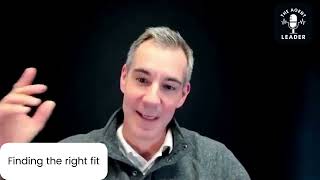
Podcast episode (Agent Leader) hosted by Brent Kelly featuring Art Betancourt, CEO of AE Betancourt. The conversation focuses on recruiting and developing talent for independent insurance agencies: key challenges (shortage of experienced talent, limited time/resources to develop hires), practical opportunities (building a multi-channel talent pipeline, defining performance-based hiring metrics, looking for transferable fit), and AE Betancourt's recruiting-as-a-service model and 'perfect fit' process. The episode includes Art's background, concrete service offerings, and contact details.
Chapters
Welcome to the Agent Leader podcast. My name is Brent Kelly, your host. Thanks so much for joining me on this episode. As always, the mission, the purpose of the Agent Leader podcast is to help you the independent insurance agency leader to help you gain clarity, build consistency and to make a commitment to become your best version possible. And we have launched our best version possible experience at Sitkins Group. If you want to learn more about that and how you can partner with us. We're looking for growth minded agencies. Go to sitkins.com experience sitkins.com experience for the best version possible experience and I'll tell you as an agency leader you are in for a treat. I've got a great guest on this episode of the Agent Leader podcast. Always want to bring in people that can provide resource different perspectives, unique perspectives add value to you the independent insurance agency leader. And I've got a great guest today. I've got Mark Betancourt who is the CEO of AE Betancourt in the great state. Found out make sure of Michigan Grand Rapids.
Right.
So I want to bring Art in and I'll let Art, I'll let you kind of share about your backstory a little bit and what it is that you do specifically at a court to help the listeners on this podcast. Because I got to officially meet Art in we just were talking about that before we started recording late March, early April of this year. Seems like it was two months ago, but it was like six months ago as we record this. So time flies. But welcome to the podcast Art. Thanks for being a guest.
Thanks Brian. It's a pleasure being here and I'm really honored. I mean you guys provide such great resources to agencies and have such a great impact on them. So I'm just like I said, honor. It's a pleasure to be here with you to be today.
Great. Well thank you. And if you could, I'd love for the, the audience to hear a little bit about you know, kind of obviously what you do at a Betancourt, what that means to them as agency leaders. I know it ties into stuff that we talk about all the time when it comes to people. So if you could just kind of share, share about what you do and, and why it matters. Because it does.
Yeah. I mean so we, our, our focus is really to accelerate organizations by helping them find or attract find, select, hire great talent for their organization. And you know what I'm really passionate about is the impact that employment has on value for an individual for our communities, but ultimately for organizations as well. And so I like to you Know, as a company, we really, our focus is to create that impact on value through helping agencies find great talent. And there's a huge need for it out there, and so we're happy to be able to jump in and help out with it.
Yeah. I'm just thinking now the last three to four months, whether it been events that we've hosted or I've been part of or attended, and you go around and talk to the, talk to people in the room and agency leaders and what's your biggest challenge? People. Finding talent. Finding talent. Finding talent. So, yeah, I've got the right guy. Share some stuff here. You know, we talk all the time, Art on the podcast and I do about, you know, the number one job of an agency leader is to develop your people.
Yes.
And guess what? It starts by having people to develop.
Absolutely.
And the right people. So, you know, I obviously, you know, I've got a few questions that I would like to ask you. And I told you before we started, it's very much like a cup of coffee or having a cold beverage. And, you know, I may follow up with some more questions because I'm always interested, I'm just curious in what you do and, and the impact you've had, what you've seen. So I don't want to start on a negative tone, but I guess I will because I mentioned, I mentioned, you know, the things that I hear as challenges of talent. But what do you see out there in talking to agencies in particular, of what their biggest challenge or challenges are and how are they dealing with some of those things?
I mean, the overlying challenges are there's not enough talent. And I would say there's not enough experience talent, really. And, and then secondarily, we don't have the time or resources to develop our own talent. So even if there's great people out there, you know, we have a need right now. And, and, and so I don't have six months, 12 months to three years to train up a producer and build a book so that they can then be on my succession plan for my producer that's getting ready to retire or my account manager that suddenly quit. You know, I would love the luxury of hiring somebody and training them for two years to take it over, but I need somebody right now. And so, you know, the, those are the two greatest challenges out there. And then there's a lot of things that are, that are underlying that, whether that's compensation, you know, we can't find people because of. Of comp. We can't find people because of geography because of, you know, work from home and there's, you know, lots of other underlying things within that.
Yeah, I think you said that really, really well. And you know, the second part really hits me. It's a big part of what we do is we try to help agencies develop talent. But you're right, it's one of those, well, can we do it tomorrow? Like how, how fast is it going to happen? And it's, that's not the way that that works. You know, I talk about, you know, kind of being a talent gap, but there's, we see so many things out there that we hear, you know, in the economy, outside of the insurance market for sure. So this is kind of just a, an offset question. And I'm not trying to be funny or flippant, but like, is there truly just not enough people, enough talent, people that want what's the real cause in the gap? Because people ask me all the time and I don't know that I have a clear answer. What's your perspective on that?
Well, I would certainly say there's not enough experienced talent.
Yeah.
And even non experienced talent, it's out there, but you have to work hard to get it. And you have a couple things going against you. One, that in any industry, good talent isn't just falling into people's laps. And then in our industry and the insurance industry, there's a misperception of what this career really is and people should be beating the doors to get into this industry, beating the doors down. But they, there's a misperception on, on what the opportunity is and they're not. So not only do you have to convince somebody to leave where they're at, you have to convince them why this is the greatest industry they've never heard of. And so it's, you know, it's, it's, it's real work to get it done.
Yeah, I, I don't know if it's a good analogy or not, but I use it all the time, so let's keep going with it. But I mean, I'm a, I'm a big college sports fan and you know, I just look at like programs. It's like, it's like, you know, it's recruiting. Right. And it's such a big part of, hey, you want to win games? The best coach, they want the best. Best, best coaches find the best talent. But you know, as you're saying, it's, you know, two parts. This number one is do they even want to play that sport?
Right.
Be in the industry and number two, if they do want to play that sport or they're good in the sport, how do I get my message to stand out above all these other people that want that talent too? And it's so scarce, you know, and fin, you know, it's one of those things that it's interesting because I always find a few agencies that go, actually we're doing great. And, and this is just the buzzword that's hard to define. It's like, what is it? They got good culture. Well, how do you establish that? Right. That takes time. So I, I want to kind of guys put this into a positive light, so to speak, and kind of get solution minded with you a little bit with the talent. You said lack of talent and experienced talent, I guess is what you said mostly there and then not enough of it.
Yeah.
Does that, does that provide some opportunities and if so, what is it? And I have part of, it's a big part of what you guys do to help agencies with some of this, to help bridge that. But you know, in, in the talent world, like what opportunities do agencies have? What are things agencies could and should be doing?
Well, I mean, first of all, you talked about developing talent and you know, that's if you need it now, it's too late. And so the, the number one job I think of leadership and business and you know, great CEO saw this. Jack Welch, Steve Jobs, Elon Musk. Right. They, if you read their biographies or read what they did, their, their number one initiative is they went out and found the talent. And not only did they find the talent, they created, they created processes and institutions within their organizations to find talent and to develop talent as well. And so first and foremost, I think you have to look out, the opportunity is to look out two or three years down the road and say, you know what, you know what, what does the future look like for us from our needs? What does the future look like for where we need to grow? What does the future look like for the people that we think are here and tire and let's add 10% for attrition that we're not expecting and then say how do we develop that, that talent now? And so, so that's, that's one thing. The second opportunity with experienced talent is because there is such a talent gap and there's so much movement. There are, there is experienced talent that are ready to go to that next level. And as people begin to move out, you're able to bring them, give them opportunity to move to the next level or opportunity that they may or may not have had before to grow into a position. And so that's one benefit of that talent gap of people aging out, not enough people getting in. There's more opportunity for those people that are in it. And then the question is, how do we, how do we show those people that opportunity at our agency? And then there's all kinds of great talent out there that, that might not be a great fit for where they're at, but might be a good fit for you. And for a lot of reasons. It could be because of geography. It could be because, you know, one producer is really good at going after $20,000 accounts, but the agency's sweet spot is $5,000 accounts or vice versa. They're really good at going to after $5,000 accounts. But, but some agencies are, their sweet spot is $20,000. So it's really defining, it's really about defining what is right for you, what success looks like for the role, what you want that person to accomplish. We call it performance based hiring metrics. And then aligning what you're looking for with those metrics and then finding those people that are right to give that opportunity to. But it takes work and it takes, I call it a total talent pipeline. And it's passive and active candidates. Active and passive search. And you know, there's room for job postings. You know, that's, that's passive search for active candidates. There's room to hire recruiters, which is what we do. That's active search for active candidates, even passive candidates. There's referral programs that you can do with an organization. It can't be just one solution. It needs to be multiple solutions. That's really guided from the top of the organization down.
That's well said, Art. And I taking notes there, a couple of things goes back to my college sports thing again. But it's interesting too because, you know, we work a lot with sales teams as well and with agencies and there's such similarities of I'm working with a producer, talking to a producer about, you know, are you always prospecting? It's like for an agency leader, are you always recruiting? You know, and I think you said it really, really well. And you know, it's interesting. And this isn't to, you know, to slight any agency out there. It happens. But it's like, you know, we know someone's going to be retiring for two or three years. We see it coming and then we're suddenly surprised, oh, what are we going to do here? And you know, again, sometimes there are surprises I get that.
It's like, absolutely.
It's like when I get surprised that Christmas happens every year, it's Christmas again. They always have it December 25th, like, oh, I guess we do got to go shopping. And then, of course, the development of talent. And then I thought it was really interesting, as you said, that is finding the fit. Just because it doesn't fit somewhere else doesn't mean it may not fit, you know, in your place or vice versa. And, yeah, my. My college. You know, my college analogy there is. I think that's. It is really what some great coaches do at run programs in college sports is maybe they can't compet against some of the biggest. The biggest names out there, but they. They develop talent while people see that and they go, you know, I don't know if you're a fit here, but I can see how this is going to fit here, part of our culture and what we're doing. You agree with that?
Yeah, absolutely. And, you know, actual college sports analogy comes to mind. I'm a big Notre Dame fan, and, you know, Notre Dame has one of the top fencing programs in the country. And I think that the woman that won gold in fencing at the Olympics this year was actually the only student, college student, university student that won a medal or won a gold medal in the Olympics. And if you think of a sport that potentially there's probably not a lot of people beating the door and beating down the door to get into, it's misunderstood. It's probably fencing and Notre Dame, you know, the coaching staff there, they could. They could sit around and go, man, this is hard. You know, there's just not enough talent. You know, we're. We're all competing for the same talent. The way they've built their program is they go to the gym at Notre Dame and they look for the people that have the talent that they're looking for and the personality that they're looking for, and then they go convince them why they should be in fencing, and they build their team and train them, and they have consistently, men's and women's, the number one fencing program in the country for callers. So I. I think that's. That's right on. And I love that analogy, too, by the way. The college boards.
Yeah, it's just, well easy for me because I. I like it. I always try to confuse it, but I've never heard in that sense of fencing, because that takes it a step further as far as, you know, you find stuff. And it's like, I did. I. I don't know fencing. But you know, it's funny. Like that's part of the advantage. I think of people like, listen, I know you didn't know fencing, but I watched you do this or play this and you know, and you could be great. You're like, yeah, teach me. You know, and all of a sudden you find the right fit because you're seeing things differently. When I wrote down there, already just said that is, I mean, the best agencies around this, they're creative thinkers, you know, outside of, well, you know, the, I always say there's two types of thinking. There's, there's the problem thinking we always have a problem and there's solution thinking. Yeah, there's always problems. But what are our solutions? How do we, how do we get around this? What would be something we could do that's different, that's unique, that other agencies aren't doing that we could grasp on and own? And I, I love that. And I mean, you know, one more on that. I mean, I talked to an agency a couple weeks ago. This probably won't surprise you. And it's like when you begin to always think about people on your team, you see more people who would fit on your team. And you're at a restaurant and you, you've got a server who just, you could just, there's something about it. It's like, you know, and they, they call you by your first name and they come back and they go, are you looking for a. You, somebody got a really good job. I don't know how this is a career. What if we can get you into an amazing career?
Right.
And be able to coach and train around that? So I don't know if you see that sometimes in your world.
Yeah, well, you know, think of it this way. If you're a business owner, an agency owner, you're sitting there, how many, how many cold calls do you get every day?
Yeah.
How many, how many people knock on your door trying to do business to business, sales to you? And, and you know, sometimes it's, it's as simple as a conversation as going, hey, tell me something. You're a great salesperson. Do you start from scratch every year? Yeah. Yeah. My, you know, they, they might. My goals change. I, everything that I did the year before, it goes away and I got a hustle. And then the follow up question is, could you imagine in 10 years from now if whatever you sold today, you'd still be getting residual commissions off in 10 years, what do you think that would do to your career and your income and your family. And there's so many examples like that of why being a producer in the insurance industry is great. I could name off ten of them. Right. And so there is talent all around us and we just got to be looking for it.
Yeah, that's, that's a great point.
It is.
I, I'll just tell you real quick. I, so I started right away at 22 years old as a commercial alliance producer. And you know, I struggled for. It's a tough, it's a tough deal out there. But it's funny, I remember even early on in my career talking to people, networking events, you know, person that's, you know, real estate, whatever. And I'm like, it's like every time you sell a house, like you just have to go sell another one, right? Yeah.
Could you imagine if you got a commission check every time somebody paid a mortgage? That's what I mean.
I was like, wait a second, that's it. Like, yeah, you just got to go.
Out and find more.
And I'm like, oh, outside of the fact that, you know, a lot of insurance is required, you know, so anyway, it's interesting. I would like if you could, or I wanted to give you time because you mentioned a little bit about some of the things that you do. But you know, if, if you're an agency and again, I've got agency leaders that listen to this and people in the insurance world and, and they're looking to work with someone like you. I'd love to know kind of what, you know, what your perspective is, what are some things that you do do for agencies and agency leaders to help them in this talent situation.
Yeah. And maybe if it's okay, I'd like to share just a little bit of my story to kind of lead to that and maybe I should open with this. But you know, I, I started in this business about 15 or 16 years ago and joined a, you know, well known national consulting firm and helped build a third party, a recruiting platform that was really focused on helping agencies hire producers. And, and about seven years ago I just made some crazy life decisions and you know, started a Betancourt, went back to school, school, got my MBA at Notre Dame, had a fourth kid. And when I looked at what do I want to build, what do I love? You know, again, it goes back to that impact. The very first person that I placed, an agency owner, came to me and said, hey, I have a business problem I want to perpetuate. I need partners, I need to hire great producers. And the very first person I ever Hired for that agency five years later, became a partner, and he's still there today. And the recruiting model in general, what people are typically think of as recruiting is broke. It's $150 billion industry the client satisfaction rate of a cable company. And the reason is because the way the fees are structured, it creates incentives for recruiting firms or recruiters that don't align with the interests of the client or the candidate. And so I thought, man, there's got to be a better way to do this. And so that's where we develop what we call recruiting as a service. And when we engage with people, we're able to do it in ways that other firms can't or won't do. You know, one of our values is acting as a partner. And so in our process we are transparent. And what that means is we actually share a candidate database with our clients. We also show the work that we're doing on a day to day basis. We are a dedicated resource so that you, if we're doing a search for an agency, we're not doing the same search for another agency in the same market. So you know that you're getting the best of us. The best candidates are representing you and you get a percentage of our time. And so we find, you know, through that we get better, faster outcomes. It typically reduces the cost by about half of what you normally pay. And we just do it through basically a simple hourly rate. And we've had a ton of success. We, this year we were named an Inc. 5000, fastest growing company in the United States. We have 32 team members now. You know, we were awarded several awards of Excellence by Inc 5000 and the local chamber of commerce here. And you know, one best and brightest companies to work for regionally and nationally the last four years in a row. And we've, we've had a lot of success because of that model. And so, you know, we have agencies really agency partners in pretty much all 50 states and hire for any role within an agency. Lots of producers and account managers are the biggest needs right now. And, and we've even grown into other markets because a lot of our partners, agency partners, refer their clients to us because we've done such a great job for them. So. And then another thing that we do that's unique is we really go through our, before we actually engage in our search, we go through what we call a perfect fit model. And the, and I won't go into the details on that now because I don't want to take up too much time. But Essentially, it's based on the concept that the number one reason why companies have a problem finding and hiring people is because a simple concept that it starts at the beginning. You can't find something if you don't know what you're looking for. And most people start and end with a job description and not a, not a, not a lot of people don't even get that far. But job descriptions are great internal legal documents, but not great documents for finding and hiring people. And so we develop our perfect fit process to help to assist us and agencies to make sure that we know where we're going to find them and that we know exactly what great talent looks like. So when we do see them, we can identify that.
Fantastic. Thanks for sharing the story. Because what I love about that is, I mean, that's the realness. That's why you do what you do. Right? And, you know, I always think, you know, the best entrepreneurs started because there's a problem they want to solve. They see a problem in the world and they want to be part of the solution and fix it. And I love what you're doing there. And I'll tell you, we definitely, we could talk more about align a lot and how we, we interact with agencies and what we're looking for. And I love that, that last part you said there, it's so true. It's like, you know, it's really hard to find something if you don't know what you're looking for. Exactly. And I think that's a big part of just understanding that. So. All right, well, actually, before I get my last question, what's the best way for people to, to connect with you or your team? Is it your website? Somewhere else they could go?
Yep. Yeah. So you can. Our website is aebetancourt.com. that's a e B E T A N C O U R T. You could probably just type it into Google. If you misspell it, it'll pop up.
Yeah.
You can also email me at arthur.bettenportaubettenport.com or give me a call on my cell phone. 903-312-2589.
You're gonna have thousands of people calling you.
Awesome. I love it.
All right. I don't know about that, but we'll, we'll make sure we get the links and stuff in the, in the show notes. So are you ready for one last question?
Yeah, absolutely.
It's a personal question I asked every guest. It's my favorite question because I think it's, it provides a Lot of great value to. I always learn something every time, so I'm selfish. But here's my question. If you are having a conversation with the younger version of you, and I don't care how far you want to go back, Art, but you know, we could say 20 years ago or something, but you're. You see the younger version of you just starting off kind of in your adult life, so to speak, and they're looking up at you, or I guess probably the same height looking at you, and they say, hey, older, more experienced, wiser, better looking Art, what's one piece of advice you'd give me?
I'd probably say go get. You know, I, I developed a, a kind of a core belief of whatever I'm doing, you know, build it like I'm building it for myself. And I would say start doing that earlier and believe in yourself and go build it for yourself if you need to. And, and go get it, man. Just believe in yourself and go get it.
I love it. Hey. Simple but effective. And I will say, I, I don't want to comment on your one thing too much, but it's just, it is interesting how much for a lot of people, including myself, and many times the fear, the doubt, lack of confidence, whatever you want to call it, can hold us back from doing the things that we're. We're destined to go do. So it's awesome that you, you took that leap in what you're doing so well. Art, again, I respect your time. I appreciate you being on the podcast. I know the listeners are getting great value from you being on it. So any final words before we depart?
Brent, thanks so much for having me on the podcast. I really appreciate it and looking forward to, you know, continuing our relationship and seeing the impact that you guys are having on so many agencies. And if we can help in any way, just, you know, just, just keep this in mind. So really appreciate everything.
Yeah. Thank you so much, Art, and thanks for being a listener. If you're getting value from this podcast, please leave a rating and review. I'd much appreciate it. Again, if you want to learn more about how we partner with agencies to really tribute agency growth partner, working with an entire agency, masterminding, training, coaching, go to sitkins.com experience sitkins.com experience thanks for listening. Take care.
More from Roger

This Shift Helped Us Unlock Growth 💡 | Agency Leadership Tips #insuranceagency #agencygrowth





How AI Can Help Insurance Agency Owners Master Their Financials (Without Being a CFO)

From AI Hype to Real Results: Steve Anderson on How Insurance Agencies Can Use AI to Grow Now



