Specializing for Success - Interview with Joe Vens
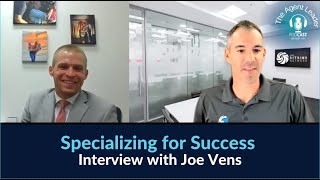
Joe Vens of First Main Street Insurance built a specialty practice serving Iowa public entities like cities and school districts. His grandfather started the agency in Clinton, Iowa, and Joe moved from banking into insurance to lead the public-entity division. He credits discovery meetings and clear process rules with winning and keeping accounts.
Chapters
Welcome to the Agent Leader podcast. My name is Brett Kelly, your host. Thanks so much for joining me. On another episode, I'll be recording this podcast video and audio. So if you have access, whether to YouTube or certainly on our website, you can check out the video. But obviously we're going to be on the audio podcast as well. And the purpose is always of the Agent Leader Podcast is to help you, the agency leader, gain clarity, build consistency and to make a commitment to, to become your best version possible. And today I'm excited. I've got a very special guest, someone who I know is committed to becoming his best version possible. I've got Joe Venz of First Main Street Insurance. Joe, welcome to the Agent Leader podcast. Glad to have you.
Brent, thanks so much for having me. Excited about spending some time together this morning.
Well, it's been a little while since I've had a guest and I've told the audience, Joe, I'm going to get more and more and we've had a lot of, again, whether it's agencies going through our all inclusive model program or within it, certain producers or sales leaders or agency leaders going through other programs. You attended our Producer Fit program this past year and I wanted to bring Joe on because he brings a couple different things that maybe we haven't had on the podcast. And I know the audience can gain a lot of insight from number one. Well, maybe number one. First of all, Joe, you're just, you're just a cool guy, right?
That might be overstated a little bit, but I appreciate the compliment.
Well, he's also a humble guy. That's why I was trying to put you on the spot there. But Joe is one of those people who goes through our program and you can just see is engaged and wanting to learn. He's obviously part of a great agency based in the great state of Iowa, which I was just there a week or so ago, be back again soon. But he's also a, I call you a younger producer, Joe. You're a young looking guy on People Watch on the video. And I know you've been with the agency for a couple years, correct?
Yes, I've been with First Main street actually for about a six month timeframe. Been in the industry for several years and have a family background that goes back 50 plus years that isn't tied directly to me but a couple generations before me.
Wonderful. Well, and again, you know, part of it is you've got that flavor and then you also have really, you know, dug into a niche, right into a specialty. And so I Want to talk about that and what you're doing in those areas, but you kind of gave a little bit. But anything else you want to add about your background? I think people are always interested. You mentioned you've got a 50 year, kind of long, you know, tail track record there, then just a recent time with the current agent. But how did you get into the business? Just tell me a little more about your background, Joe.
Yeah, so that 50 years is borrowed, obviously, but been in the industry as far as enjoying what it looks like and kind of as an observer for a long time. So my grandfather started an agency in Clinton, Iowa, where I'm from originally. And that was over 50 years ago. He has since passed, but my father and uncle run that agency today. So I've had grandfather, father, uncles, aunts, cousins. Many of us. The joke is kind of. It's in the Ben's blood to get into the industry. So even going through high school and college, I knew I wanted to get into insurance at some point. And it was several years ago that I made the change from commercial banking, which is what I did out of school, into the industry. So that's my background. I know that most folks are a lot, who I talk to kind of fall into an insurance role just out of randomness and life circumstances. For me, it's in a gimmicky way, almost kind of a dream come true to follow in grandfather and father's footsteps and others in our family. So that's my background as far as the industry goes.
That's an awesome story. And yeah, I wonder, I mean, gosh, Joe, if you would have gone a different path. Maybe you were the black sheep or something, right? You had a lot of pressure there.
Kicked out of the family officially, is what they told me. So I knew I just, I would be forced into it at some point. But I. I've been pleasantly surprised how much I enjoy the industry. It's been a really, really good move for myself and our family, so.
Fantastic. Yeah, it's typically. I mean, the most common things are it's in the family somewhere. Obviously your roots run deep, very deep. Or it's. Yeah, I was just kind of meandering around and, you know, I fell into it. And whether it's family or you fell into it or something else in between, it's. It's really hard to leave. And the reason why is because it's really cool business. As we talk about all the time, there's so many opportunities and options and what you get to do and help people. So, Joe, I Want to jump right into kind of what you do that's different. And again, I think it's really interesting is, you know, on this podcast, many times I've talked about the power of a niche or a niche, you know, however you want to flavor it, but being known for something, right. And I do believe that it is such a noisy world out there. I don't believe that you have to niche to have success. But boy, I think it's an extreme competitive advantage. And you know, what you've done in the public space, maybe if you just share with the audience how you got into that, right? Maybe. Was there an interest there? Did you see an opportunity and then just kind of currently what you're doing within that space?
Yeah, you bet. Brian. So I'm the lead advisor within our public entity specialty group. So just a quick background first. Main Street Insurance exists throughout the state of Iowa. We have 2021 now partner agencies located throughout the state. And so what we identified as a group is in a lot of our agencies, the key clientele or some of the biggest accounts that we have are the city, the county, the school district or other public entity or municipality, partnership or organizations. And so as an agency, we wanted to identify ways to provide our current client based value beyond just being the insurance placement agent, but also find opportunities to grow in the communities that we're in that we don't currently serve as the lead advisor on those types of accounts. So for me personally, I'm fascinated by the public entity world. I think that the risks and exposures are so vast when you're overseeing a community or a county or you have several schools within a school district. So there's a lot there to understand and unpack and also just the visibility and being in front of the community when you are serving in that space. There's just something to that that gives me a lot of drive and motivation and energy. So that's the reason that we chose public entities. As far as my specialty or the area of focus that I have, but I'm just a big believer in that. Going through the Sickens program, you guys really reinforced and emphasized the importance of identifying key roles that you can serve in. And I think specialization just allows you to do that in a really big way, separate you from the 95% of your competition that identifies more generalist type agents. So it's been fun for me to dive into that space and learn a lot and excited to continue to serve with those types of clients.
I just have to ask, and as you were saying that again you know, being relatively short with current agency and then diving into the public entity space, you know, it just hits me because when I talk to other agencies, I talk to producers, Joe, it's like, well, you know, we're fine to be a generalist and we can help all people for all things at all times, but I just imagine of trying to, you know, let's say you have an opportunity to work on a public entity of some kind, but you're a generalist and you're just going to dive in and provide a quote. Right. Or you know, go off a bid spec versus you coming in saying this is what we do, this is why we do it, this is the impact that it has. Tell me maybe just from in again without bragging necessarily on you specifically, although you can. But just what type of competitive advantage being able to position yourself in that way has meant for you.
Yeah, a couple of things to talk through there. One, the thing that's unique about the public entity space in Iowa in particular is there's not a lot of carriers or insurance companies that operate and that right business in that space. So you truly have to find a value proposition or a way to make you unique. School districts in particular. There's one carrier in the state of Iowa that writes 95% of the schools. So you're not likely going to separate yourself by bringing in a different quote or proposal. Cities, I'd say it's 50% of the market is written by one kind of pool. Same thing county, 75 of the 99 are written by that same pool or cost sharing group. So in this space we're almost forced to, whether you like it or not, find a value proposition and way to make you different that stands out. And our agency platform has allowed us to identify kind of a pain point for a lot of cities and counties in school districts historically is they had to make one of two choices. They could either be represented by their local small town agency and they know that the revenue that their account generates goes back into the community. There's people that are employed there locally and in doing so they might have recognized, hey, we don't have the market access or the tools and resources or the expertise that we would like, or our account may be dictates but we're being served locally. So they've either made that decision or they've said, hey, our account has grown in complexity. We need to be represented by an agency based out of Chicago or Minneapolis or a bigger metro that has the specialization or expertise in our space. I think our platform and value proposition allows for the best of both worlds. When we have agencies all throughout the state, our pitch when we go in is to say, hey, you will be serviced by the local agency here. Revenue will be generated through an agency that employs people here locally. They have a pulse on the community. They're here day in and day out. But our public entity specialty group does this every day. We understand the markets really well. We're focused on the pain points that you're facing and finding solutions to what those are. And so that's kind of our value proposition as we're thinking through how do we serve best in that space. That's what we identified. And it's been really fun for me to just be a part of it in a small way to watch the value that we can bring. It's important to our team, and we think our clients are finding a lot of value in that message.
Love that. For a lot of different reasons. And, you know, obviously, going through the Producer Fit program that you went through recently, you know, we have a whole section just on pods, points of differentiation and what that means. And I think, you know, as you know, Joe, a lot of people talk about it like, oh, we're different, or we want to be different. You know, I find it interesting, too, with, like, in your space, very similar a lot of times to our benefit agents that we work with is that, you know, when you've got one main carrier, so to speak, or one provider of something, like, we better not be fighting on price because we've got no extra value. And I love that combination of, hey, listen, we know our stuff, but the fact that we're local in your market does matter because there are agencies that will say, as, you know, like, we're local. And, you know, what does that mean? Well, it just means we're local means we're here in your community. Yeah, but what does that mean? For me, it means that we're local. So what I love is there, there is and can be impact if it's shared the right way. And what you do is bring that to another level. You know, I think, Joe, is that every producer that I have ever spoken with, unless they're just a liar, um, they've had both successes and they've had failures. And, you know, I said it'd be interesting asking you this question because I know you're a humble guy, so you won't want to brag about successes, but you had them. I wouldn't have you on if you had been successful. But I also know you probably stubbed your toe. Right. And learned some things. And I'm just a big believer that we need to replicate success and we need to learn from our losses. And so if you could maybe share an example of where you were able to position yourself or whatever it was, you've had some success in your space and. And maybe one of those that didn't go as well and what you learned in that process as well.
Sure, yeah. I was going to try and frame myself as probably the first guy in podcast history to say, I've had a lot of. A lot of failures and no successes, failure story. But I'll try and harken back to one or two from a failure standpoint. I mean, that stuff happens all the time. You work on accounts, you feel like you're in a winning position, you get blindsided. But those are the ones that I've actually learned a ton from. I can remember working on an account early. It was in a community that was close to home, to my heart. It was actually close to where my wife grew up. And this was years ago as a brewery risk. And I just remember having meeting after meeting with this group. Real good rapport. Presented a quote, felt like we were in a good spot and a week removed from that. I'm thinking we're binding the policy. And I got an email from the carriers saying, we received an agent of record letter on this. And that was pretty early on in my career, so it wasn't a huge account, but I was devastated by it. But what I've learned since, and I think the Sick Kins program is so valuable in this way, is I didn't take them through a process. I didn't set rules or expectations up front. I didn't really understand their pain points. What I did was brought in a proposal from an insurance company that was. Had some slightly enhanced coverages and it was slightly cheaper. And so I presented that, thinking I'm the man in that setting, and learned the hard way that their agent, who they had been with for 10 years, had access to that market, too. So when they went to deliver the bad news that, hey, we're leaving, it was a pretty easy defense for them to say, well, I can provide that same thing to you. So lessons learned in that are the value of process, the value of discovery. And I know that Sickens talks a ton about that. And so that probably leads into one of my or one of our recent successes as a team is being in front of a group. We're doing our executive brief meeting, which is the initial meeting for our Team where it's a 15 to 20 minute, just quick, hey, we want to get to know you and the history of your account, what you're doing in the risk management and insurance space, and talk about how our team operates and some of the value that we bring to clients. And so we learned about them. I shared with the group that we were across from the fact that we take them through a 60 to 90 minute discovery meeting, we present a plan, from there we implement, and then we manage the relationship ongoing. And the group was not excited about the discovery meeting. They just said, hey, word. We're incredibly busy right now. We don't really have time for that, but can we just give you our policies and can you show us an apples to apples comparison? And one of the development, some of the development stuff I do outside of insurance, I've learned that in negotiating, you're always in the best position when you're willing to walk away from an opportunity. And I just didn't feel like we were in a good position to win the business on trying to show them a different insurance option. So I just said, you know, in order for us to best serve our clients, it's really necessary to go through that discovery process. We find that clients find a lot of value in that. So if you don't have the time or you're not willing to, no big deal. It just might not be a good fit to work together. And so we're getting ready to leave the meeting and they're, they kind of stopped and said, whoa, whoa, whoa. Like, you won't work with us without doing that. You require it. And we just, we kind of stuck to our gun and said, yeah, we, this is the process we work with clients on. And it's to their benefit. They're best served when we understand what their company looks like and how we can best support them. And so since then, we've actually done our discovery meeting and went over two hours. It was a success. They found a lot of value in it. And we present our plan to them next week. We're really excited about the opportunity to do that. So I think just buying into the things that Brent, you, Roger, others teach us about process and about being different than the others. That's. That's been some of my recent successes and grateful to your team for teaching us that. That's a newer concept to me, full transparency. So that would be failure and success.
Yeah. Now those are awesome. And I mean, I was sitting here, if you're watching video, I'm sitting here taking notes because there's just, you know, hopefully as an audience listener or a viewer, there's some big takeaways there. And I certainly got that and listened to you, Joe. And, you know, obviously the first thing is whenever you get an AOR on the opposite side or bor. I mean, a punch in the gut is a light term, right? Like, that hurts. And by the way, I've been there. It's just like. It almost takes your breath away, right? To a degree.
But it is just to jump in there, though. Perspective is a great thing. Time is a great thing. Because this was years ago. And I remember at the time being so frustrated at the other agent, the prospective client. How could they do this? Why would they do this? I can't believe they handed this over and having time and perspective on it. It was not the prospective client. It wasn't the other agent. They operated probably in the capacities that they should have. It was my lack of due diligence, process, setting rules and expectations. So it's funny that time and a change in perspective just. It's brought a lot of clarity to me since. So those are not always the fault of the person signing or the person offering. A lot of times you have to do some reflection and recognize your role in the situation.
So, yeah, well, I mean, that's. That says a lot. Everything is a little bit easier when you're further away from it as far as to go back and look at things that weren't fun, to say the least. But you're right. And I mean, one of the things that we talk about in our program, if you recall, is having absolute personal responsibility. And that's not always fun or easy because, you know, a situation like that, and it could be an aor, but it could be anything else. You just got lost. You lost an account. You didn't have an opportunity, whatever the case may be internally, right, with your team, something gets dropped or whatever, or there was a miscommunication. The first response, the natural human response, doesn't mean it's the right human response, is, what did you do? Why did you do that? How could you do that to me? Right? It's all external, pointing in some direction. But the truth of it is, as you were looking at reflection of time, is how could I have dealt with this better? Where did I fall short? Where did I miss the mark? And most importantly, what I love about is, what can I learn to make sure that doesn't happen again? So those to me, are all critical. So again, hopefully, as a listener, you're like, okay, you know we always say that, you know, all progress starts by telling the truth, which comes from Dan Sullivan. But we, you know, say the truth shall set you free, but first it'll make you really uncomfortable, you know, and to go to, let's say, you know, again, it was an agency leader or someone in your office and go, I screwed this up and own it. That's really. But that's how you grow. And I think one of the things, too, just to go on that now we'll get to the success side of it, what we can learn from that. But I think the other part, too comes back to just communication. And you know, one of my favorite quotes, and I forgot who said this, is that the greatest myth in communication is that it actually occurred. And I think oftentimes I see producers, I see agencies that, well, they said this or had an opportunity here or whatever. I'm giving a quote. Like I said, you know how much we don't like those terms in certain cases, as you learn through. But it's like, oh, I think, I hope. I assume that this is what they're going to do. But you've never really walked them through a true process. You've never really established the rules. We've never really gone deep enough. And one of my favorite terms from another podcast is called selling from the heart. They talk about is you have commission breath, right? It's like, I just want to shout at the quote and you start thinking about how much money you might make and all those kind of things. But to transform that, Joe, to what you talked about with the success that you had and what that meant. First of all, I hope all the listeners were noting. And Joe, I don't know if you even realize you said it, but when you were talking about the failure, it was, here's what I messed up on. And when you went to the success, you said this was a team victory. That's leadership, right? And it doesn't mean that you didn't do a great job. I'm sure you did. But it was a team approach. And that's one of the biggest things that, as you know, we practice and preach with agencies is that if we're going to have external success with clients, we've got to have internal success with our team. That we're aligned, we're on the same page. Doesn't mean we're always going to be singing Kumbaya together. We're going to have conflict, but we've got to be working in the same direction. So kudos to you. And then could you Just share. You mentioned it and I don't know how deep you want to go into it, but you mentioned that executive briefing. And again, this is something that we talk about in our programs, but it's kind of that first step, so to speak. And maybe I'll just preface this a little bit, Joe, but what I wrote down and what we talk about is if you go into that first meeting and you have a real clear idea, this is our purpose, this is our unique process and this is the payoff when we do it. And by the way, and here's the big one, and by the way, this may not be a great fit. I don't know if you would qualify for this. That always seems like the hardest thing to get into. But then people are like, what you mean you're not just going to give me a quote? Isn't that what you all are supposed to do, you insurance people? Darn it. So could you expand on that a little bit of just how you see that approach working in your business?
You bet, yeah. I have learned so much from the Sitkins program and Matt Hughes, a quick shout out to him. He is our sales leader here at First Main street within our organization. I think he's been through the Sidkins program about a thousand times. He is a huge believer in what you do and what Roger teaches. And I just, I've learned a ton in that. I think a couple of notes on executive brief specifically. I remember having a pretty hard conversation with Matt just saying, you know, on relationships that I already have, people know what I do. So I don't want to go to a meeting and just have it be an executive brief where I'm just going through what I do. I want to kind of hybrid that with a discovery meeting and maybe even present a plan and try and figure out all the solutions in that meeting. And I remember him just sharing your approach. If you don't buy into a system and process, you are going to be everybody else. And if you find being everybody else, do that. He said, but if you buy into these systems and processes, you know, Brent and Roger have created hundreds, if not thousands of million dollar producers that serve their clients and communities really well. So this works. You can buy into it or not. And so I just said, okay, I'll try it out. I'll commit to at least seeing what this is all about. And it has been just eye opening to me to go into those meetings with intentionality, knowing what the goal is of that meeting. And oftentimes it's to move a prospective client from that meeting to a discovery session, but just bringing ultimate clarity to the person that we're sitting across from as a team during those meetings and saying, here are our goals and objectives for today. We want to learn a little bit about you and what you do. We'd love to share with you our proprietary and unique process and how we serve clients. And then I think at the end of this meeting, we'll both know if we're a mutual fit to move to the next step in our process, which is the discovery session. Does that sound fair to you? And it's kind of amazing to see those folks say, oh, wow, this is organized, it's professional. And most times we get to the end of those meetings and it is a mutual fit to move to the next step, but not always. And I think having that walk away power, if you were just being used for a quote or to be shop so they can bring something back to their golf buddy and you're not actually going to win the business or attain it anyways. The best time to lose business is in the first meeting. I remember you said that and I believe in that. So I think just setting rules, expectations, being very clear about the purpose, that's been world changing for me. It saved me a lot of time and it's brought a lot of value and success to our team. So I'm a big believer in the systems and processes that you all teach us to implement.
Well, and to your credit, Joe, you and your team are the ones that are executing it. Right. I mean, there's a lot of people that hear the message, oh, well, I don't know, we'll go on our own way. And as you alluded to, you can do okay doing what everyone else does, but is that really where you want to be? And I mean, long term, certainly, and short term as well. I would say this, and again, I know most of you are probably listening to this via audio, but if you can just hear Joe's voice. Again, he's a younger professional. If you see the video, he's younger. But I do think it's important. I mean, this is true for anybody of any age or any experience, I think out in the marketplace. But you know, Joe, I mean, and you already addressed it to a degree, but when you come in as a younger professional, I mean, you're in the public entity space, you know, my guess is there's probably some more experienced people that you're competing against. Right. They've got some more gray hairs like I'm getting or have. Right. And so There's a little bit of that where a lot of younger producers in particular kind of say, oh, thank you just for the opportunity.
Right.
I'm just so privileged to even be here. And maybe that should be grateful, certainly. But part of it is, I think what you've expressed, I hope younger, newer producers can hear this, if you're listening, is you deserve to be in that room, but you also need to act like a professional. And what you said, Joe, is that I'm a professional because we do have a unique planner process. We do want to really understand and be a risk advocate, not just another quoter and floater. And we bring value to, in this case, public sector businesses. Right, Public entities, but businesses or anybody like you, individuals like you, whatever it may be and who you're working with. And by the way, what we do is unique and different. I don't know if it'll be a fit and all that is 100% accurate. I think one of the things I wrote down again that you've heard us say, but I think the audience, if I, if I haven't said it before, I'll say it now, is the idea of prescription without proper diagnosis is malpractice. Right. Remember that?
I love that comparison. It's one of my, one of my favorites. And it rings so true if you give the example of a physician taking some other physician's diagnosis from 10 years ago and saying, I believe that that was accurate 10 years ago. So I'll just, I'll give you a new drug that we have that's a little bit cheaper and have that filled and you know, now I'm your new doctor. Assuming things have changes or changed over a 10 year span, which they're almost guaranteed to have changed in that timeframe, that would be malpractice. And it's amazing that our industry is riddled with stories like that where unfortunately not everybody in our role is trying to really do discovery and identify what has changed since they put their insurance package into place. And so you'll almost have to kick me off my soapbox here. I talk about it a lot. I just think there's so much opportunity for young advisors and young people that are finishing up school or looking to make a career change. This industry, I don't think everybody from an outside perspective always hears insurance and thinks that's the most attractive or glamorous role. But the way that we can serve clients, the complexity of different businesses and coverages and carrier relationships, there's so much fun to be had in this industry and I think that there is such a gap and need for young people to come in and serve and be different. And an aging demographic of insurance. It's a great time for any young person to consider a role in this world. So sorry to jump up on the soapbox once again, but I love to share that story. As a younger individual myself, I love being in the business, and I think that there's a ton. For anybody who is a talented young person looking to grow a career, this is a good place to be considering doing that.
Amen. No, I appreciate you greatly for sharing that, and I feel the exact same way. And although I'm not, you know, I don't know what the age group is, but a certain point, like, we wouldn't qualify to be a young agent, so to speak. You just under 40 anymore? I've surpassed that. But, you know, I'm kind of in that middle role where I see you're right. I mean, there is a. It's known. I mean, there is an aging demographic of advisors, producers, agency leaders who are kind of on their way out. And I think there is still a mindset and our philosophy, or whatever you want to call it out there, that, oh, yeah, it's just that old, stale business. And, you know, part of that, I think, comes the fact that if we're running our business where we're just quoting and floating the term that we always use and we're just like everyone else and all these things that we could go into. And I've shared before, well, if I was 25 or 30 or 32 or 20, I don't care what the age is, or if I'm 42 and I want to go to a new career. Right. That has opportunity, whatever that is, I wouldn't be excited either. But when you start to understand the value that you really provide and what it means. Right. Obviously, in your, you know, your sector, Joe, with public entities, but it could be, again, with individuals, it could be the benefit side. It could be in the PNC side with businesses, whatever it is, and that our economy doesn't exist without what we do. So let's be great at it and make it fun. And by the way, we could be really successful and make a really incredible living and help a bunch of people on the way. Right.
Amen to that.
Is that okay? Yeah. And so I'm with you. I just think, you know, part of that for agencies listening, is to say, hey, listen, like, what can we do that? And I always say this. People don't want to just go somewhere and do something they want to be part of, something that matters. And you know, we could say, well, that's cliche and whatever. But no, I think it's really true. And you know, I really hope Joe, and again, people like you, that's what's exciting to be able to, you know, have an impact on your life, because you have an impact on mine, is to say, hey, listen, there's something here and together we can do really cool things. So I appreciate you sharing that. I have a couple questions. Thoughts. Two left. One is all you think about. I want you. If again, whether it's a newer advisor, new producer, or just anyone in the industry, what would be one piece of advice that you would give them? And then I want to ask a question about college football. So go ahead, Ken.
One piece of advice for newer individuals. I would say spend time and thought and be intentional about if you're starting out. What risks or what opportunities do you really enjoy spending time in? What are some of the opportunities that lit you up when you had a chance to work with those folks? I would be intentional about where you want to spend your time and then just make the decision to specialize in that space and commit time. Allow yourself during working selling hours to have a focus around where do I want to be and how do I brand myself and market myself as somebody who, whether you feel comfortable calling yourself a specialist or an expert, maybe that will take some time. But it is true if you are focused on it to outwardly be telling people, you know, I have a focus in manufacturing, I have a focus in John General Contractor risk, I have a focus in retail, whatever space that you enjoy being in. And it might take some time to identify that, but make a decision that you're going to be, you know, have a focus in that space. And it's not that you can't write business outside of that, but I think identifying where you're at separates you. And so spending some time and thought in that and then making the decision that yes, I'm an expert or specialist or I have a focus there, I think that will help grow your career at a quicker trajectory than just being that generalist or not having a focus. So long answer there. But that would be my piece of advice.
No, I, I love it. I mean, that's, I think, kind of the, the focus, if I could use that word of this podcast. And again, it's always great, you know, to have people on because I talk to people all the time that have a different focus or a niche that they work on and it's just, you know, I see so many examples and I could give countless numbers of success of people, and there's just a higher level of success in those that. That focus and have a niche in a certain area. And there's a reason I. Specialists make more than generalists. Doesn't mean generalists are bad people or can't make a decent living. But, you know, part of that, Joe, you know, and I've done a whole podcast on this, but something called the Law of Compensation, which basically the most important part of that is what is the difficulty in replacing you? And when you have a specialty and when you know they care much more that you understand their perspective, their business, their viewpoint, their struggles, their bottlenecks, whatever they are, that's what they care about. They expect you to know insurance and risk advice. That's your license, right. You're with an agency. Right. Like you should know that. But do you know me and do you know me so well that you can ask engaging questions and offer solutions that no one else is willing to go go there? Right? And when you can do that, you become really hard to replace and your value raises. And as you've learned, it's kind of fun because you have a competitive advantage and you can talk shop and you feel more confident. So we could go on and on and high five on the power of the niche, but anything you want to add to that, Joe, I'm with you.
My only add there, one of my favorite quotes is, people won't care about how much you know until they know how much you care. And so that's once again, anytime if I'm across from someone saying, well, I know everything about commercial insurance and I have a background and I went to this school and I had this designation, I don't think they will quite care until they know that I'm across from them. Because I love the public entity, the city space, the county space, and here's why. And here's our agency footprint. And we've identified that clients just like you are the reason that we can do what we do. And you face these challenges and we dove into these things, we've noticed this. I think people won't care about how much you know until they know how much you care. So having a focus on them as opposed to what you know, I wholeheartedly agree with that.
I don't want to add anything to that because that was. That was so good. So I could. But I'm not going to because that was. Well said, Joe. Here's my last Thing, we'll keep this brief. So obviously you mentioned Matt Hughes. Matt's an awesome dude. Sales leader there. So Matt, shout out to you if you're listening this. I'm sure you will at some point. Obviously. Matt played football for the University of Iowa. I know. You're an Iowa grad, right, Joe?
That's correct. Go Hawks, go.
Okay. Okay, Good enough. So I'm an Illinois grad and our team has been terrible forever. So two things. Number one, Joe, and our audience probably isn't going to care, so we're going to keep this really brief. How's Iowa going to be this year? And number two is our new coach, which is an Iowa guy. Is he going to help us get better? Go.
So, really brief answer. I have a 6 year old and a soon to be 4 year old at home, so if you would have asked me the question 10 years ago, how's Iowa going to be, I would have been able to give you a full scouting report on their quarterback, their receivers, their defense, everything. And would have been able to give you a solid answer. Honestly, between insurance, keeping my wife happy at home, our two kids, I just have not spent a ton of time scouting the Iowa football team. So fingers crossed for a great season ahead. But I don't want to give you an answer without the background. So that's the answer to that question. As far as your Illini, I don't know if there's a coach in the country, including the Nick Sabins of the world, the Davos Swinneys of the world, that could help the Fighting Illini football team. They are forever destined to be where they are.
Oh, come on, Joe.
That's my feedback. I don't want, I don't want to be too harsh to you this morning, but hey, we just beat Nebraska.
Give us some credit here.
We all need to live in reality. And keep in mind that Nebraska is Nebraska, so that was a great win. Congratulations to you for that. But we got to be honest with ourselves. You have a quote around starting with honesty, so.
All right. All progress starts by telling the truth. Is that what I said?
There it is. I know.
Well, and you know what? I'm an eternal optimist in lots of things, which is good, but could get me in trouble. So. I hear you there. I appreciate it. And I also applaud the fact. You know, part of it is funny. As we go through life and change, I'm like you. Like years ago I'd be like, oh, this and all this kind of stuff. And now I'm like, I don't even know who's on the team. I don't know what's going on, but I hope they do.
Well. You have four, five kids at home.
I got five, yeah.
The fact that you can have any hobby outside of helping insurance producers and your family, that would be incredible. That's got to be so busy. So credit to you for raising the next generation. We have two, and that feels overwhelming. So I'm sure five is quite the challenge, but probably a super fun one to have.
Well, I'll tell you, Joe, as I told many people, especially as I had done more travel, not so much in the last year or so, but a little more now. And people like, also tell me, I got five. Five. Five kids. Like, that's crazy. I got two or I got three or I got one. I'm like, first of all, I don't believe it's a competition. And if it was, I don't know that I would be deemed the winner. So there's no need to say anything but, yeah, it's crazy. Whether it's two or five, you know, we always want to be our best version, not only for our business, but for our families. Right. And for a greater purpose. So thank you, Joe, so much for being part of this. I'll just say one kind of closing thought to the audience. If you're looking to transform your agency, obviously Joe had mentioned his experience as part of the Sitkins program. Their agency is part of our all inclusive model, which allows Joe and every other advisor and producer to attend our programs on an ongoing basis. We have programs for service team members. We have programs for sales leaders like Matt to continue to kind of sharpen the saw and agency leaders. And the goal is, again, a holistic team approach with the process. A starting point of that is just go to our website and download our scorecard. It's an awareness tool to see where your agency is today. It's a great starting point. You can do it for free. Just go to sitkins.comscorecard sitkins.comscorecard and get your. Get your transformational scorecard. You complete it and see where you're at. And we'd love to continue the conversation moving forward. So without further ado, Joe, thank you so much for being part of this podcast. Wish you continued success. I know we'll stay in touch. The audience is better for you, for you being with them. So thank you very much.
Bren, thanks so much for having me. This was a blast. This morning.
Awesome. Have a good one. And to everyone else, all the best in your success.
And anytime if I'm across from someone saying, well, I know everything about commercial insurance and I have a background and I went to this school and I have this designation, I don't think they will quite care until they know that I'm across from them. Because I love the public entity, the city space, the county space, and here's why. And here's our agency footprint. And we've identified that clients just like you are the reason that we can do what we do and you face these challenges and we've dove into these things, we've noticed this. I think people won't care about how much you know until they know how much you care. So having a focus on them as opposed to what you know, I wholeheartedly agree with that.
I don't want to add anything to that because that was, that was so good. So I could. But I'm not going to because that was. Well said, Joe. Here's my last thing. We'll keep this brief. So obviously you mentioned Matt Hughes. Matt's an awesome dude sales leader there. So Matt, shout out to you if you're listening to this. I'm sure you will at some point. Obviously Matt played football for the University of Iowa. I know you're an Iowa grad, right, Joe?
That's correct. Go Hawks, go.
Okay, okay, good enough. So I'm an Illinois grad and our team has been terrible forever. So two things. Number one, Joe, and our audience probably isn't going to care, so we're going to keep this really brief. How's Iowa going to be this year? And number two is our new coach, which is an Iowa guy. Is he going to help us get better? Go.
So, really brief answer. I have a 6 year old and a soon to be 4 year old at home. So if you would have asked me the question 10 years ago, how's Iowa going to be? I would have been able to give you a full scouting report on their quarterback, their receivers, their defense, everything, and would have been able to give you a solid answer. Honestly, between insurance, keeping my wife happy at home, our two kids, I just have not spent a ton of time scouting the Iowa football team. So fingers crossed for a great season ahead. But I don't want to give you an answer without the background. So that's the answer to that question. As far as your Illini, I don't know if there's a coach in the country, including the Nick Sabins of the world, the Davos Swinneys of the world, that could Help the Fighting Illini football team. They are forever destined to be where they are.
Oh, come on, Joe. That is.
That's my feedback. I don't want. I don't want to be too harsh to you this morning, but, hey, we just beat Nebraska.
Give us some credit here.
We all need to live in reality and keep in mind that Nebraska is Nebraska. So that was a great win. Congratulations to you for that. But we got to be honest with ourselves. You have a quote around starting with honesty, so.
All right. All progress starts by telling the truth. Is that what I said?
There it is. I know.
Well. And you know what? I'm an eternal optimist in lots of things, which is good, but could get me in trouble. So. I hear you there. I appreciate it. And I also applaud the fact, you know, part of it is funny. As we go through life and change, I'm like you. Like, years ago, I'd be like, oh, this and all this kind of stuff. And now I'm like, I don't even know who's on the team. I don't know what's going on, but.
I hope they do.
Well.
You have four, five kids at home.
I got five.
Yeah. The fact that you can have any hobby outside of helping insurance producers and your family, that would be incredible. That's got to be so busy. So credit to you for raising the next generation. We have two, and that feels overwhelming. So I'm sure five is quite the challenge, but probably a super fun one to have.
Well, I'll tell you, Joe, as I told many people, especially as I had done more travel, not so much in the last year or so, but a little more now. And people like, also tell me, I got five. You got five? Five kids. Like, that's crazy. I got two or I got three or I got one. I'm like, first of all, I don't believe it's a competition. And if it was, I don't know that I would be deemed the winner. So there's no need to say anything, but, yeah, it's crazy. Whether it's two or five, you know, we always want to be our best version, not only for our business, but for our families. Right. And for a greater purpose. So thank you, Joe, so much for being part of this. I'll just say one kind of closing thought to the audience. If you're looking to transform your agency, obviously Joe had mentioned his experience as part of the Sitkins program. Their agency is part of our all inclusive model, which allows Joe and every other advisor and producer to attend our programs on an ongoing basis. We have programs for service team members. We have programs for sales leaders like Matt to continue to kind of sharpen the saw and agency leaders. And the goal is, again, a holistic team approach with the process. A starting point of that is just go to our website and download our scorecard. It's an awareness tool to see where your agency is today. It's a great starting point. You can do it for free. Just go to sitkins.comscorecard sitkins.comscorecard and get your. Get your transformational scorecard. You complete it and see where you're at. And we'd love to continue the conversation moving forward. So without further ado, Joe, thank you so much for being part of this podcast. Wish you continued success. I know we'll stay in touch. The audience is better for you being with them, so thank you very much.
Ren, thanks so much for having me. This was a blast this morning.
Awesome. Have a good one. And to everyone else, all the best in your success.
More from Roger

This Shift Helped Us Unlock Growth 💡 | Agency Leadership Tips #insuranceagency #agencygrowth





How AI Can Help Insurance Agency Owners Master Their Financials (Without Being a CFO)

From AI Hype to Real Results: Steve Anderson on How Insurance Agencies Can Use AI to Grow Now



