Two BORs Before Lunch - Producer Success Story with Kristen Schoenberger
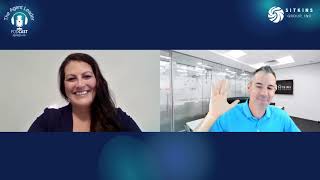
Kristen Schoenberger moved from direct writing to Hub HDH in 2020 and landed two BORs before lunch by protecting her selling time and building relationships. The accounts covered 2,400 and 400 employees. She credits team support and the Sitkins program for her accelerated success.
Questions this video answers
December 2020.
Inherited 38 clients and grew her book to 92.
Signed in June (year implied within interview timeline).
One group of 2,400 employees and a second group of 400 employees.
Chapters
Welcome to the Agent Leader podcast. My name is Brent Kelly, your host. Thanks so much for joining me on another episode of the podcast. And I have a very special guest, if you are an agency leader who is thinking, gosh, I've got a newer producer, someone coming to my agency. Is success possible? Is even accelerated success possible? Well, I've got someone here who's got some great stories to share. I've got Kristen Schoenberger with HGHub with us today and she's gone through our Sitkins program last year, actually it was early this year, I should say. Right, Kristen. So she'll be our special guest today. And Kristen, I'll get to you just in a minute so you have a formal introduction and can kind of share about your background and some of the things that you've done and are doing currently in your, in your role. I also want to mention too, that again, for this podcast, if it's providing value to you and your agency or really would appreciate a subscribe or a rating, we are doing these podcasts, not just audio, but if you're watching me, you know this video as well. So my special guest, you can already see here on the screen. But we're doing audio and video, so lovely. Again, rating or subscribed. We're going to have more agencies hear the message that we share on this podcast. And also if your agency wants to learn more about what we do, a great starting point is to do a transformational scorecard. This is a agency scorecard. Just to get a, a footprint of. Is my agency on the right track? Are we doing some of the things that we need to be doing? And if you just go to sitkins.comscorecard sitkins.com Scorecard, you can take that scorecard and we'll give you some instant feedback on your results. So with that, Kristen, are you ready to have an incredible discussion today?
I'm ready.
All right, so again, Kristen is with Hub Hch. Now, you're in West Virginia, is that correct?
Correct. Morgantown, West Virginia.
All right, so we'll tell the audience a little bit about yourself, your background, your experience, whatever it is you want to share. And I may ask some follow up questions, but the floor is yours, Kristin.
Oh, thank you. Thanks, Brent. Thanks for having me. So I spent about 11 years at a Direct Writer doing commercial insurance. We were pretty strict on what we'd write, kind of keeping it in certain lines of businesses, certain industries. We did employee benefits up until 2018 when the market kind of changed with the ACA. So it was a Great experience. I learned a lot and then came through Covid and started re evaluating my book. And I had inherited 38 clients, and I grew my book to 92 at my previous employer and just reevaluating, I think, like everybody did during COVID And I thought, what else is out there? So I started kind of looking around and I always was curious about the broker side. So I truly love employee benefits. And unfortunately, my direct writer that I was with had kind of cut that out of our portfolio. So, you know, I kind of explored the world of the brokerage side and I talked to a few brokers and ended up at Hub HDH in Pittsburgh, Pennsylvania. You know, it was perfect timing. They wanted to expand south into the West Virginia market. And I was kind of based here in Morgantown and was familiar with the state and covered the state for my previous employer. And, you know, I started there in December of 2020 and it's just been great ever since. Awesome.
It's always great to hear the story. By the way, are you a Mountaineer fan then, by the way?
I am, I am. I do have a brother that went to Pitt, so I have to be careful.
Okay.
I am a Mountaineer fan. Yeah.
Well, I know that's a big deal out there, so very good. Well, you know, it's always interesting and part of it too, people have asked us before, you know, like, well, you know, do you just work with pnc? And as you experience, Kristin, we, you know, we do work a lot of PNC agencies and agents, but we also have a lot of benefits, producers. And obviously that's your background and your love and your passion. So you started in December, officially. Right. With the agency, as you said, and obviously in your background kind of leading you there. I'm going to ask you a question that again, to be honest, wasn't really prepared before, but I'm just naturally curious about it. And that is what's been the biggest surprise to you. You know, you kind of move from that captive world to the agent broker side of things in December, and here we are recording this, the end of September. What's been the biggest surprise to you in the last nine, ten months?
You know, I would have to say the team. The team behind you to support you. You know, we talk in sickkins about the perfect handoff, and, you know, where I came from, I was, you know, soup to nuts, the whole team, as you would say. So, you know, it's. It's a trust factor and it is a. Learning to understand the process, I think is the biggest thing coming to the brokerage world that I was just floored by, you know, the amount of resources and, and the people that support you. So as a producer, you truly can be a hunter and you can go out and you can sell and do what you do best and then hand it off to your team. And you know, it's, there's never, it's a seamless transition. So. Yeah, that's awesome.
Yeah, that's. It's interesting you said that and not surprising. We hear that quite a bit, obviously. And I always, I always joke, Christian, with independent agency leaders or professionals in general. I said the best part of being independent is that you're independent. And the hardest thing about being independent is that you're independent. Right. Because there's, there's a lot of choices you could have. And obviously, you know, with your agency and kind of the focus there is, they've embraced the service handoff. Right. Very much at a very high level and it's again, very similar. And again, I use sports analogies all the time because at least for me, they're easy to understand. But you know, the quarterback hands the ball off, right. Or throws the ball and we've got these different roles. They are both vitally important. Important, but they're different. And we want people to be in their unique abilities as we talk about, and that comes from Dan Sullivan. To do the things that you're wired to do, that you love to do. And as you said, to go out there and be a hunter. So I, you know, one of the things too, and I, at the beginning of this podcast, one of the main reasons, there's a lot of reasons you're on this podcast with me, Kristen, because you going through our program, you just had a bubbly personality. You could tell you were a growth minded individual. You're committed to success and getting better. And so I just want to tell the story a little bit about how part of this came and we, so we were going through the program and I guess, Chris, it would have been last winter, right? We were in like January, February, somewhere in there. I can't remember the dates. But you know, we, we do interactive live virtual programs. And so I get an email like, I don't know, a half hour before one of our programs from Kristin and she says, I want to apologize. I'm not going to, I'm, I'm paraphrasing this right. I have to apologize. I won't be able to attend the session today. I'm completing two BORs. Was that right? Something like that, yes. Yeah, tell me that story. The audience can hear it and tell us about those accounts that you wrote. And then maybe just some, you know, some examples of how you got it or what that looked like. So the floor is yours?
Sure. So at my previous employer, things were very rigid. You had your territory, you stayed in your territory, you didn't move. So the brokerage side is much more relationship driven. When I was at my previous employer, I worked with a larger company in West Virginia. They had over 500 employees. And what that meant to me as an agent was I. They had to come out of home office. I wasn't allowed to write them. So while they were a client of my company, they weren't my client. But being that large of a company down here in West Virginia, they wanted boots on the ground. So whenever I had the opportunity, at an association event or, you know, a meeting, I would reach out to the owner, say hi, ask him how he's doing. Is there anything I can do for you? You know, I know I'm here local in West Virginia, and he would take me up on it, whether it be safety classes or, you know, just meeting with his, his top executives to discuss, you know, life insurance or other products. So I spent 10 years helping someone that I never got paid for. And, you know, I always thought in the back of my mind, one day this will pay off. I don't know when, I don't know how, but it's going to pay off. So then I moved to Hub, and he was the first phone call I made. And I said, you have 2,400 employees. How's your health care going? And he said, it's a disaster. My people have no communication with our broker. You know, the broker has not answered questions in over three months. We need help. Can you come help? And I literally had one lunch with the HR team and he called me. If it was. It was almost two months later, so it wasn't like immediate, but two months later he called and said, you better send me that vor. I need to sign it. So. And then, little did I know he had a small security company on the side that had about 400 employees, so I had to take that one as well.
So what were the size those groups again? Kristin, make sure the audience heard that.
2,400 and 400.
Yeah. So that was a pretty good day, right?
Yeah, not bad.
Yeah. Well, you know, it's interesting because as people I'm sure, are listening to this, like, well, yeah, you know, it was 10 years and, and she had that. But think about the takeaways from that right now, it doesn't have to be 10 years, but a big part of we talk about too, and you heard this in the program, are these relationship deposits, right? And continue to earn those relationships and the long term approach to it. And sometimes, you know, we can do those things and they happen in a year or two or less. And sometimes maybe they are five to 10 years. But I would ask anybody listening, Whether it is two years, five years or 10 years, is those relationships deposits worth a 2,400 group? Well, I would say probably yes in that. And let me just kind of a second to that because it's one thing to have the relationship, right, but it's another thing to say, okay, well, you've got a relationship, you still got to go earn it, right? You still have to be able to have things in place. So outside of just the fact that you've had the relationship for that long and earned it and of course moved to a spot where you had an opportunity then to take that over, what else went into that? Like, what did you and your team have to do to make that happen?
You know, it's been a lot of work. I mean, we signed the Bors in June and it's been work. You know, we've had many meetings and put in a lot of man hours of totally kind of taking their whole system and revamping it and making it work for the company. You know, it's not about what you think is best or what you think would work for them. It's about really sitting down and listening and saying, you know, what's not working, what is working, and then taking the not working part and making it work for them. So, you know, from the enrollment system, their enrollment management system, you know, they were trying to rush 2,400 employees through in one week and that just, that just wasn't working. And it became frustrating, you know, on the side of the HR team. And you know, I always tell the HR departments when I walk in, my job is to make you look like a rock star. That's, that's my number one goal here. Because if, if they don't feel, they don't care how much, you know, until they know that you care. It's that old saying. So, you know, they could look at me as just another insurance broker coming in, trying to make a dollar. But that's why I really like employee benefits, because it gets to a problem. You know, you're dealing with people's hearts and health and, you know, it's, it really gets to the heart of people.
Yeah, that's fantastic. And again, if you didn't write that down, audience, please write that down again, however phrase you want to use it in the world you're in. But I mean, my job is to make you a rock star, right? That is so powerful. And I, you know, I know in our elite program, Kristen, we had a gentleman who talked about it, said, my only job is to help businesses. Like, how can I help them move forward? Right. And that's just a different way of saying it. Your job is you're working with the. Again, they've got real problems, right? Real issues and frustrations. And when you come to them and say, hey, my job at the end of the day is to make you a rock star, like, I would have to guess there's a pretty strong emotional trigger to that. Now, of course, you're going to back it up with what you do. And you mentioned the hard work, but that is fantastic. That, to me is a mindset, right, and an emotional deposit that you're making immediately on how you do things differently versus not what we can get, what can we give? And I do want to just back up just a second because I think there's something here that I don't want to miss. As you said that, because although you had background and experience right from where you came from, you started in December, which, by the way, happened to be like, probably the height or the worst of COVID I would have to guess, right? I mean, in the dark winter of last year. So it's a tough time. So even though you had the background and you had the relationship to a degree, I can tell you, and I'm sure you could probably attest this as well, is that many producers would say, I'm not quite ready yet, or I don't know if we should do this yet, or I don't know if I should make that call today. Did you have any of those doubts before you went in there? And maybe you didn't, but if you did, what were they? And if you didn't, what gave you that confidence?
You know, and I think this speaks to Hub and HDH in particular. I was a little nervous, you know, because I'm newly entering the employee benefit space after three years of not touching it at all. So, you know, it's something that I was nervous because, I don't know, the products out there. I was still, you know, getting back into the. The swing of the healthcare market. But I took Chet Rhodes, my president, down to that lunch with me and Just phenomenal. Having having someone sit next to me at that lunch table that can talk the talk while I fill in relationship gap, you know, it just. It just speaks to the team approach. I mean, I couldn't have done this without my team. And although I was the new girl on campus, they welcomed me with open arms and, you know, said, if you have the relationships, we have the knowledge and the resources, let's. Let's make it happen.
So, okay, so agency leaders, listen to what she just said.
Right?
And I know some of you go, well, we're structured different or whatever, but I mean, I think, you know, I always say this. What's the number one job of leadership? And certainly if you look at what's the number one job of sales leadership, oftentimes people will say things like, well, it's to make sales or grow sales, which certainly is the outcome we want. But I truly believe the number one job of a sales leader is to develop and grow your salespeople. Right. Your sales team. And a big part of what you said, Kristen, was to empower and equip you to be successful. Right. And you already have a lot of the tools. And again, just talking to you and people can see you and hear you, that, you know, you're just a. You're a friendly person to talk to. People can get along with you. I don't. I don't sense you being difficult to like. Right. In any means. Right. No, you're not. But the big thing is, though, as a leader, how can I help this person grow faster than they would on their own? Right. And so one thing that you put in there is the idea of team selling. Right. And certainly there's a part of mentorship in there as well, because I'm sure knowing Chet, been part of our programs for a long time, you know, could say, hey, what about this and what about that? And how can you get better here? So I just. Again, it's kind of a quick aside here to all the listeners out there. As a leader, what are you doing to empower and equip your sales team to take steps that they necessarily couldn't do as fast on their own? And it's not that you couldn't do it right. And you wouldn't do it. It's just that you can accelerate your growth. And the big thing to me is how do we compress time? So I thank you so much for sharing. I think that's a really powerful, very powerful story that you shared and what happened there. And by the way, kudos to you. Because you still had to do the work, right? You still had to do the legwork and you still had to pick up the phone and have the courage and confidence to say, I don't know if I am fully ready, but I am ready enough.
Yeah. And I have learned so much. I mean, I have learned so much about the process and everything through it. So it has been a great experience.
Awesome. Awesome. All right, so just a couple more questions to pick your brain for the audience because you again, exciting just to hear your journey and some little things that you are doing. Yeah, obviously you went through our program again last. It was, you know, late winter, early spring, I don't know exactly. Sometime February, March, I think it finished up just from your perspective. And I'm curious on this too is, you know, from your background and then coming in December and then all of a sudden in the middle of COVID and you hop on the Sitkins training and stuff and now Roger and myself are saying things and you're learning from other peers around this program. What was the biggest takeaway or takeaways that you got out of that program?
You know, I have to say the schedule and the red zone, green zone that you guys, you know, hammer to us. And you know, it seems so simple. It does in theory. But I think once you really get into the swing of your everyday job and what you're doing, coming from a place where I was not only the producer, but the account executive, the servicer, the, you know, jack of all trades, it's hard to let go control sometimes. And so on the broker side, you know, there's. There's a lot of emails that I know are meant for my service team or, you know, meant, meant for someone else. I'm just copied on them, you know, to be, be in the loop, be aware. So really giving that the time back to myself to go out and find new prospects, new clients, you know, that is something that sickens, really promotes, and make sure that you're spending your time doing what you need to do for your job. So, you know, that that has changed my world because coming into the brokerage world, I had no clue how to really be a producer with a team behind me. So that kind of helped me define what I need to do.
Yeah, I mean, thanks for sharing that. And you know, again, everyone has different backgrounds, how they come into that, how they see that, and agencies are structured differently, but you know, at the very basic core, and I love that we always say it's, it's simple, it's not always easy. Sometimes to do some of the things that we talk about, but it's simple to understand. I mean the idea is that basically, you know, we try to keep things so simple. Chris, and maybe you remember this is that you know, the definition of a producer is one who produces. And to do that it's like oh well, hahaha. But the question is that we always ask producers is how much are you actually even in the game? And you know, you find like well geez, my role is to bring new business into the agency. That's really whatever title you can say you're an account executive or relationship, whatever, a producer, advisor, I don't care what title those are, fine. But at the end of the day, the reason why you're there is to obtain and retain great clients. Right. Future ideal clients, and keep your best clients. And so we find that, geez, that's their role. But they're always spending maybe like half the time at best, maybe even a quarter doing that stuff because they're caught up in everything else. And so you know, that concept of green zone, red zone is pretty simple. If you're in the green zone, you're doing the right stuff. If the red zone you're doing non sales stuff, which by the way, there's a time and place for that. But it's not usually 10am on a Tuesday.
Yeah.
Or whatever that may be. So yeah, thank you for sharing that. All right, here's my last official question to you and again, I appreciate your time and energy for being on this with me is again, I know that you've officially started December, but again with your background, if someone were to come to you and let's just use again, obviously benefits is your passion, your background and what you do. But it could be any insurance professional or young insurance producer in this case. And they said, Chris, like I know you just started, but you're off to a pretty darn good start and you seem to have a few things figured out. What's that one piece of advice you would give to me to help me be better? What would you say?
You know, I would say don't lose yourself. I think sometimes especially I'm sure you see in sales training, sales training can be kind of rigid. So you know, it can be somewhat robotic, somewhat, you know, say it this way, don't say it this way. But I think as a salesperson you have to remember what makes you unique and you know, keep, be genuine. I think people can tell if you're genuine or if you're not, if you're there to make a quick buck if you truly care. So through all the sales training that I've been through, it is phenomenal. You know, producer fit was an excellent six weeks. But you always, I want young sales reps to know, take your sales training and make it your own. You know, keep it. Don't lose yourself in all of it, because that's what people are truly going to connect with.
That's awesome. That's great, great, great advice and authentic advice too. So I appreciate that. You know, you've heard us say this, Chris, in the program, it's like, you know, the easy part is to sit in for a few hours for, you know, we used to run programs six weeks, now I run them eight weeks, whatever the thing is. And then of course, we do some follow ups and all that. But the idea is that like, that part of it is kind of the easy part. Like, oh, yeah, yeah, that's something I should do. That's a model, that's a new idea. That's a strategy I should implement. Whatever it is, the hard part is going out there and actually executing it. Right. Or you close the book and it's like, what's next? And I think what you shared is so powerful because now we use a term called flexibility without dilution. I don't know if you remember us saying that or not. It's been a while. But flexibility without dilution, which is simply this, there's a core strategy, don't miss the point of why we're doing it or why you're doing it, and then have some flexibility around it. Right? It's your unique experiences, it's the way that you communicate at the highest level. It's some of your passions and things. Those all need to be intertwined. And, and I think you're spot on. Like, people can see fakeness, Right. And you know, the term that I heard on a different podcast, I think it's called selling from the heart, was don't have commission breath. You know, people can smell commission breath. So this idea of like, why am I really here? And what you said, going back to that is my job is to make you a rock star.
Right? All right.
That's a different approach. My job is to get all these people on this plan and get this through and to the finish line. And by the way, I'll make some good money because of it. Yeah, right. There's a total different mindset on that. So I appreciate your viewpoint and I think any new medium, old, however you want to define, experienced producer can really get some great great insight from that. So thank you, Chris. And it was awesome to have you on the podcast and I know our listeners are better for it. I just want to wrap up with just one final thought. Again, is that if you're an agency, whether you're looking for one of our individual programs or certainly our all inclusive model where we allow all aspects of your team to learn about our unique processes and systems and strategies and I think a big part of this, Kristen, and you can nod or mindset, right? Just to get you thinking a little bit different, thinking bigger. We'd love for you to have a conversation with us to see if it is a fit for your agency. And our all inclusive model is sitkins.com aim for all inclusive model Sitkins. Kristen, any final words that you want to share to the audience before we say goodbye?
No. Thank you so much for having me and good luck out there.
Thank you. Thank you. Well, hey, good luck to you and we'll definitely stay connected, obviously knowing your organization very, very well. So thanks all and thanks for being a listener. Take care.
More from Roger

This Shift Helped Us Unlock Growth 💡 | Agency Leadership Tips #insuranceagency #agencygrowth





How AI Can Help Insurance Agency Owners Master Their Financials (Without Being a CFO)

From AI Hype to Real Results: Steve Anderson on How Insurance Agencies Can Use AI to Grow Now



