Two Vital Questions for Sales Leaders
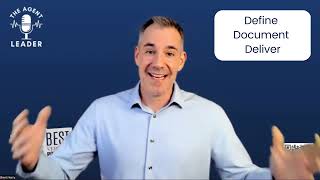
A podcast episode (Agent Leader Podcast, host Brent Kelly) directed at sales leaders, producers, and agency leaders presenting two core questions every sales leader should ask to build accountability and performance. Kelly emphasizes the need for clarity, documented expectations (a producer performance agreement), and a coaching approach that combines monitoring/accountability with mentoring/coaching. The episode includes practical phrasing for conversations, guidance on consequences, and a call-to-action to use structured agreements and networks (Sitkins) to develop sales culture.
Chapters
Welcome to the Agent Leader Podcast. My name is Brent Kelly. I am your host. I am so excited that you're with me today. And if you are a sales leader, if you are a leader of salespeople, producers, this podcast specifically is for you. Now, if you're a producer or an agency leader in a different role or different capacity in the agency, don't turn this off, at least not yet, at some point. Hey, if you want to turn it off, you have every right to do that. But I'll tell you that what I'm going to be talking about today in particular for sales leaders are the two vital questions that every sales leader should be able to ask and of course, get answers to. And if you're an agency leader, obviously this is important because, you know, sales culture and agency is always important. And I think it's important for you to hear this message. If you're a producer, well, guess what? These are questions that you could be asking and should be asking yourself and having your own personal accountability in becoming a great sales professional, a great producer. So this really applies to many of the roles that are sales focused in the agency. But I am going to be directing this particular to the sales leader. Now, one thing that you know, I've mentioned this before in the podcast, the role of a sales leader, whether that is your defined role, your main or only responsibility, I know there's some sales leaders that that's their main job. And some larger agencies, we've got some agencies that are player coaches, meaning you've got your own book of business, and you built a nice book of business, and now you're doing sales leadership as well. We have some agencies that they don't even quite know who the sales leader is, but someone's sort of taken that role on because, well, someone needed to. I think this will be very helpful for you. So, again, if you're a sales leader, this podcast is for you. And before I get into these two questions and some conversation around these two questions, I want to. First of all, thank you. If you're listening to me now, thank you. I appreciate it. Whether you're a new listener, whether you're a longtime listener, this podcast and why we do this podcast is all about you. It's the Agent Leader Podcast. And the purpose is always to help you gain clarity, to build consistency, and to make a commitment to become that best version possible. That is our theme, that is our focus. What is the best version possible of you? What is the best version possible of your agency? And if you are an agency leader, A leadership team. And you want to learn more about what we do at the Sidkins Network, how we work with private clients, how we structure our process, which is the best version possible. Experience. Go to sitkins.comexperience sitkins.com experience and love to have an initial conversation, just a short phone call to learn more about your agency and see if there's a fit for us to have future conversations moving forward. Now with that being said, let's get to the stuff, let's get to the questions. Hopefully you've got a pen and paper ready. Unless you're driving, please don't do that. But these are questions that are so important for agency leaders, for sales leaders in particular. And you know, something that I believe to my, you know, to the, my core being is that your number one focus and role as a sales leader, your number one goal is to develop your salespeople, to develop your producers. And whether you've got one producer or if you're, again, if you're a producer, how do I develop myself? Whether you've got a team of 10, 20, 30, 40, 50 producers. I was just recently with a great private client member that we work with. I was out of their location. We did a sale at a sales Summit and about 40 or 50 of their producers, they're all in one room and it's just, you know, and sales leaders as well. And just some of the conversations that we have and the importance of that can't be understated. And listen, you've got to be a sales culture and part of this is just true belief in what it is you do, the impact you have in your community, the impact that you have with your clients, the impact that you certainly have with your team responsibility. You know, we can't, we can't pay more money to anybody if we're not growing as an agency. And so it's fun to get out there and have some of these important conversations. And as I was thinking and preparing for this and some of the teaching and training and coaching that we do around sales leadership is really based around these two vital questions. And the first question that I'm going to share with you today really can't be asked without some work up front. And I want to make sure that's known. Right. This is a question that you can ask this question, but more importantly than this question, I guess, I mean questions are always important, is some of the pre work and conversations and diligence that agencies and sales leaders do prior to this question. Because you really can't ask this question with effectiveness, as you'll see in a second, or here in a second, if you haven't done some of the pre work. And here's the question, I'll start with this. The question is this. I thought we agreed on blank, blank, blank. I thought we agreed that blank, blank, blank was important. I thought we agreed upon blank, blank, blank, this process. Right? And of course, blank, blank, blank means what that agreement was up front. And one of the things and why I want to share this is that it's really hard for you as a sales leader to lead or manage air. Let me say this again, this may be something you may want to write down. And if you're a sales leader, you could say, you could personalize this. It's really hard for me as a sales leader to manage air. Now, what do I mean by that? If nothing has been defined, if nothing has been documented upfront and we don't understand what we are going to agree upon to deliver both internally and externally as a sales professional, how do you lead or manage that? Is it just. I thought, I hoped, I think you said in the past, this is what happened in the past, this is what happened to me. Right. Obviously there's no clarity. And I, you know, I mentioned the purpose of this podcast. Clarity, consistency, commitment. This is true in all phases that we work with agencies. And clarity. What are the expectations? Consistency, what are the few things that we've agreed to, you're going to do really, really well. Commitment, what do we do if we don't do it? I mean, those are the central themes around everything that we teach and train around at Sitkins. And they're pretty basic. But I'll tell you, in many agencies, they're not clear, they're not understood, they're missed. So this question is this, Hey, I thought we agreed on blank, blank, blank. And so let's go back to this because some of you go, well, how do I ask that question if I don't have anything that's, that's said before this? Well, again, you can't. So the three things that I want to share with you, and I've used these words before in different podcasts, but the three words, and I said them earlier, you maybe caught, maybe you caught them, maybe you didn't define document deliver. One of the things that we have as a resource and our private client members use, and this takes some time. This is a process. This is some work. There is no doubt. But as I say all the time, if you do some of the hard work up front, it makes your Life way easier long term. If you don't do any of the hard work, you do the easy stuff. Everything's harder at the end. So there is some hard work in this, but really important, impactful work. And one of the things that we train and teach around is a producer performance agreement. Does your agency, do you as a sales leader have some form of agreement? And this doesn't have to be a contractual agreement, right? This isn't part of the employee agreement. This is a producer performance agreement. Hey, listen, listen. What are some of the expectations that are important for us to be successful together? I mean, that's. Listen, a producer has a lot of personal freedom. We understand that. But they. They're ME Inc. And if you're a producer listening, you're ME Inc. The company you own, which is your book of business, so to speak, within the WE Ink, which is the agency. Right. ME Inc. Is part of WE Inc. But you have to think and act like an entrepreneur. You have to think and act like a business owner. But that ME Inc. Is part of WE Inc. So we're having these initial conversations. How we know if ME Inc. Wins? How do we know if ME Inc. Is successful? What are the few things that ME Inc. Must do, the producer must do to be successful? To. To. To earn results, to know that they're on the right path? And what are some of the things. What are the discussions we're going to have and next steps we're going to. We're going to need to do if that doesn't happen. So a producer performance agreement. And we have a template that we use with agencies to help them do this. You know, first of all, talks about some of the annual planning and goals. That's where many sales leaders do a decent job. But that's where it stops, right? What are your goals? What are your numbers you want to hit next year? And we can talk about revenue or growth or retention or some of the closing ratio. Right? Whatever numbers you want to use, it is important to have stretch but realistic goals that we're just. We're not making up numbers, but based on past experience, based on current performance, based on some of the things that we're working through. What are those goals and objectives for. For the next year? Right. Or you could use whatever defined point of time that you want. But what are those. I think we do need to know what those numbers need to be. But there's much more than that. Right? The next part of this is, okay, what are some of the key strategies, behaviors and habits that must take place for you to hit those metrics. And by the way, a great producer performance agreement, however you design it is done together. Now you should have a template. You know, our agencies have templates and things you use. You want to lead that, right? It's not like, well, yeah, whatever you think, I don't mean it that way, but I do believe there's some questions that we ask. Because listen, if you say it to that person, listening to that producer, if you say here's exactly all the things you're going to do, no matter what, it might register, it might be true for them. But if you ask questions around it and you design it together, it is definitely true. Because not only are you saying that they are too. So certainly you can lead this conversation, right? There's certain expectations, there's certain non optionals that you're going to have hopefully in your agency and we talk about those. But we want the producer to truly buy in by asking questions, by having conversations, you know, how important you think that's going to be? Well, that's going to be really, really important. We agree. We've seen that with our producers, it's been very, very important. This is something that's going to be critical to your success and our expectations. You do guess what? This isn't to micromanage the producer. It's not at all. It's to help them, set them up on a path of success that they can win, that they can make more money, that they can earn more revenue, they can have more freedom. Right? This conversation, yes, we want to help us as a sales leader. But you know, as Zig Ziglar says, if you help enough people get what they want, you can have everything that you want. So this is really designed with the conversation in mind of, hey, I really want to help you. My goal is to help develop you as a sales professional to achieve all the things you want to achieve, how the success you have. And part of that is defining the key things that we need to do and that you need to do every single week to hold you accountable to get those things you want to get done right. And everybody's going to be looking at this differently. But you as a sales leader need to drive that conversation and ask some great questions. So that starts with having some form of agreement. Now you can keep this really simple at the beginning that we've talked about some of the goals, we've talked about some of the key specific behaviors and habits that the producer needs to do. We give a number of ideas for agencies. You know, they can look at and they don't have to use them all. In fact, they shouldn't. But find the key areas and then part of it becomes like, well, what happens if you don't like these things, you know, are important to you? They're important to us. What, what are some of the next steps that would happen if you don't achieve this? Now, by the way, you need to talk to your attorneys and your human resource people. Right? Of all these kind of things, every state's different and all the legalities. I get that. The point of it is there needs to be some discussion of consequence. And it doesn't mean, hey, if you don't do this, we're going to fire you. Right. What it means is there's going to be some important conversations to be had, right? Or there's going to be some type of. I hate to use this word, but some type of probation or we're going to do a deeper review on things, but we're going to talk about this up front. This isn't a surprise. And by the way, if it's a brand new young producer, it's going to look different than maybe someone who's been in the game for 10, 15, 20 years or whatever, right? There's going to be some differences. You got to have some flexibility, Flexibility here. But the biggest thing that I want you to hear me say is right now, could you ask the question to your production team, your producer, or could you ask this to yourself as a producer? Hey, I thought we agreed. I thought I agreed that I was going to do this. Have you defined and documented those particular expectations that we know what the heck we're going to deliver upon? I've done podcasts, a very similar path about client experience. It's the same thing with client experience. It's really hard to meet and impossible to exceed expectations that we've never defined or documented. Because what happens is you end up managing air. Same is true as managing your client expectations. How do you manage? I don't know. I don't really know what they are. I think they might be. They could be. I found I sound like it's Harry Carey. If anybody are baseball fans out there. Hairy care of the Cubs. It might be. It could be. It is, right? It's. It's kind of. I don't. It might be. It could be. And then we have frustration on both sides. You're frustrated as a sales leader. Producer could be very frustrated because. Well, you never told me that. We never agreed to that. I don't know about that. That's not what I remember. That was a different conversation. I thought you said this. And if you've managed air before, you probably know exactly what I'm talking about. So the first question, I thought we agreed. And can you ask that question in good conscience? I thought we agreed that this was important. Right. And by the way, now we're at this question too, which if you've done that, which can be a process, and they say, I thought we agreed that you were going to do X, Y, and Z. It was really important to your success, and quite frankly, you haven't done it. Yeah, you know, you're right. We did agree to that. And I've just. I've fallen short. And, you know, this has happened. And this has happened. Well, here's the second question, which is a great question. Second question is this. Help me understand. Help me understand why you're not doing X. Help me understand why you're not doing the thing that we agreed that you were going to do, whatever that may be. Help me understand. Again, you could phrase that a bit differently, but I like this for a lot of reasons, because part of this is the first thing that we want to do as a sales leader is not jump down someone's throat. That doesn't really solve anything. The walls go up, the shields go up. They get defensive, you get more angry, they get more angry. And all of a sudden it turns, you know, it turns from a conversation into a confrontation, and nothing gets solved there. So part of this is, okay, I thought we agreed, you do this, you didn't do it. Hey, help me understand why you're not doing this. Now, could you get a number of excuses? Of course you could. But your job as a sales leader is to dive deeper into the real thing. Hey, help me understand. And by the way, if you ask that with true curiosity, which you should be, you ask that with a sense of empathy, which you should, you ask that with a sense that you really do want to understand what's going on so that you, as a sales leader with any power that you have, can help them get through this struggle, this issue. You'll get to the truth. Hey, help me understand. It could be anything. And I could just give a million examples here, right? It could be the fact that they've just gotten complacent. It could be the fact that maybe they're having health issues. It could be the fact that they're having some issues with their spouse at home. It could be the fact that they've gotten away from some of the basics. They've got distracted. It could be, it could be, could be, could be lots of stuff. But you as a sales leader now have the capacity, by asking this question, to better understand and to better help them. See, one of the things that we look at at sales leadership is there's two circles in sales leadership that we teach our sales leaders, and they're overlapping, but the two circles are. One circle is monitoring and accountability, right. That we're going to monitor. We're going to hold producers accountable. The other one is mentoring and coaching. And I can tell you, in working with a number of sales leaders over the past many years, the one that most sales leaders really enjoy is to mentor and a coach, to be able to provide some expertise and value to the producer, to say, listen, let me help you through this. Right? Why? Well, because I think as human beings, we do like to help people overcome difficult difficulties and challenges and obstacles. It's fun to see people when you say, you know what, I'm really glad you challenged me here, asked me this question or gave me this tool or resource because it really was a difference in my life. And if you've been doing this for a while, there's not much better than that, right? You challenged me when I needed to. You encouraged me when you needed. When I needed it most. Right. So help me understand. It lets you get to the bottom of some of this. And you may need to ask more questions. In fact, I wrote some things down here of help me understand. Well, tell me more about that. Why is that happening? You know, tell me why you're struggling there. What do you think can be done around that? What are some solutions that you propose? You know, one of the things that I learned in coach and doing coach development and training is the fact that there's always another question. The best coaches are just consistently asking questions to get that person to think and analyze in their own terms and world so they can come up with solutions. Most people, if you ask enough questions, they have the answers and solutions, they just maybe haven't brought it out to the surface yet. Or maybe it's been hidden somewhere deep or they've been hiding it. I don't know. But when you ask enough questions, tell me why you're struggling. Why does that happen? You know, when you've seen it working, what's been going right, and when you see it's failing, what's been going wrong? Right. What do you think can be done in your world? Obviously, as a coach and as an agency, what do you think I can do or what can we do as an agency to help you. And this doesn't mean that, you know, we're going to fix all the problems. But hey, let's talk about it. What are some things maybe that I or we are falling short as an agency and there could be some valid reasons in there if we really listen, then we want to get to some of the action steps. Right. You know, well, and again, part of this depends on the person, depends on the conversation. I just want to give you some higher level thinking here, but when, when do you think, you know, as you get through some solution ideas. Hey, when do you think this could be resolved? Right? When, when could I, when can we as an agency expect for some of this to be resolved and get back to the things we agreed upon? Could be, hey, I'm going to start today. You know, this is an important conversation. It could be. I've got a few things to clean up over the next couple weeks and I'm glad we had this conversation. I feel better to be honest with you. And I can tell you over the next, you know, month or two, we're really going to be some progress back in this. You know, you have my word, you have my commitment, whatever that is. Right. By the way, I signed this producer performance agreement, so here's my signature. So I didn't mention that earlier, right? It's when something isn't signed, is it valid? Right. It goes back to the documentation. So when, when can I expect this to be resolved? And then here's something that whatever the conversation leads to, right? Every conversation is unique. But I think it's really important that we get clarity on what happens or what should I do? What should we do if nothing changes or it isn't resolved? You know, you have this conversation, we talked about some of the specifics that may be happening. You know, whether it's lack of, you know, discipline or complacency or whether there's something really serious going on or maybe there's an issue internally with the team, who knows? Right? But we have some of those conversations around and say, listen, now we've talked about this and we've come up with, you know, revised or game plan. I have a better understanding of this. If nothing changes the next month, two months, three months, whatever time you want to put on the table, what should I do? What should we do as an agency moving forward if nothing changes now, you know, part of this is we're not trying to give them ropes, so to speak, to say, okay, now, great, now you're gonna, you know, the Rope. Eventually I'm gonna be, you know, you're gonna, you're gonna catch me. You got me. But we've had an authentic conversation with a producer and you say 90 days from now and we're having this conversation. Nothing has changed this. What would you, what should you expect me to do? What should we do? Most people will say, you know, at that point, maybe it's just not a good fit or you're gonna have to change my role or whatever it is, but allow them to own up to the fact that there is accountability and responsibility there and act. Ask them to think like a sales leader. Hey, if you were me, what do you think I should do? Again, you got to find your own approach, you got to find your own style. So do what best fits you. But in talking to sales leaders and working with teams, the more buy in that we can get up front throughout and even at the end of the process, so to speak, with this, the better off we'll be. Because it's really hard for someone to look you face to face and you've had an authentic conversation and you do truly want to help them. I mean, that is your nature. That's what you want to do. I want to help you succeed. I want to help you overcome some of these barriers and challenges. Whatever I can do. And part of that is equipping you where I can, empowering you where I can, but also being account, helping you be accountable, where we need to be accountable. And we have seen, I've seen many cases where a producer, finally they go, you're right, enough is enough. I've been hiding too long. I've been, you know, doing whatever, too long. This is real and things are finally going to change now. Does that guarantee they will? Of course not. Right? You may have 90 days and nothing's changed. But if you've had that conversation, they say, well, you know, if nothing changes, if this is never resolved, if I don't change in my behaviors, habits, well, maybe it's time for me to find something else to do. Maybe this isn't a good fit. Maybe I need to find a role that's, you know, I don't know, an account manager based role because that's where I'm better fit. I don't know. Okay, I appreciate you sharing that. Something we need to consider. So these are the things as a sales leader, I know these are hard, difficult conversations, but they're important conversations. And you know, we say all the time at Sitkins when we're talking with our members, you know, a Problem left unattended will eventually become a crisis. A problem left unattended will eventually become a crisis. And I'll tell you, if you don't address this, if you don't have these conversations, if you have a struggling producer, if you have a producer who I don't know if they're going to make it, how long do you want to keep doing this? How long do you want to keep having conversations around the same producer or two? That's been two years. We're still talking about Joe, but we think maybe eventually he'll get it. What are we doing different? Well, I just. I think this is going to be the year for Joe. I have bad news for you. It's probably not right. So we need to be very intentional with these conversations, because, by the way, other people on your team can see it. Well, if they're going to let Joe do whatever, I guess I don't have to do that much. That's a fact, right? That happens with agencies. And I would say this, too. The last thing I'll say on this as a sales leader is that if you don't have this conversation, if someone isn't a fit, if there's real issues going on that maybe can never be solved within your agency, within that agreement in your agency, within their performance, how long do you want them to waste time in their life before they go find something to do which is more appropriate with their skill set or what their passion is or what they really want to do? You don't want to have someone on your team for years and years, and they go, I wish I would have done something different five years ago because this is not really what I'm meant to do. That's okay. Like, it's okay just because you brought them in. I know there's part. I'll fix them, I'll fix them, I'll fix them. And we could do a whole different podcast. We talked about, you know, proper ways to try to find the right people. But guess what? You could be. You could do the most screening possible. You could have the most references. You could do all this stuff, bringing people in. You're still not going to be batting 100%. No one ever will. At some point, you got to say, you know what? I want to free you up to go do what it is you really meant to do in your life, and it just isn't this. And maybe initially there's some, you know, some. Some hard feelings or some stuff, you know, things that go on. But I will tell you, we've had an agency, a sales leaders who have had these conversations and they have told me, I've had conversations with them directly saying, you know what, I let this person go last year and it was a pretty, you know, it was a big challenge. It was someone I really liked, but they just want a good fit. And they came back to me this year and said, thank you. Thank you for being upfront with me. Thank you for allowing me to go do some things that I really was meant to do. I respect you and I respect the fact that that wasn't a good fit and I respect the fact that you allowed me to go do something that I'm really designed to do that I'm really good at. All right? So that to me at sales leadership, and if you're listening here, as a producer, all these questions that I asked are things you should be asking yourself, right? If you don't have a sales leader or maybe you don't have a good sales leader in your producer, you should be in your own ME Inc. Having these accountability questions to yourself. You should define what you're definitely decide to do. You should have your own internal agreement. These are things that I'm agree to myself to do. Now find accountability partners, obviously that you can if you don't have one in your agency. But this is such an important conversation because sales leadership and if you're in this role, you don't need me to say this to, to justify what you're doing. But sales leadership, I truly believe is the hardest position, the most difficult, most challenging position in an agency. There's a lot of responsibilities there, especially if you got your own book of business, right. You've got to. You have accountability from a sales leader to have department produce. You may have accountability certainly to agency leadership or a board. There's financial obligations there. And you've got a number of producers who can be challenging to deal with and you're trying to meet their needs. You got carrier, you know, all those things, carrier carrier agreements, all those things going on and you're trying to, you know, get through your week and do all these things. So I understand it's not easy. But I will tell you one of the things that we see again and again. This is going to be a huge shock. It's not, it's not a shock is the fact that the best agencies educate, equip and empower their sales leaders at the highest level. And we say at Sitkins, we're not a substitute for sales management or leadership. We're not, we're not a Substitute right. People want to follow people that are part of the the agency culture. However, what we are are an advocate and a resource for agencies and sales leaders to see things a bit different, to empower them to ask better questions, to be able to help them get greater buy in with what they're trying to do and ultimately to help them get the results they really want to get right? And that's really what it's all about. And so listen, I applaud you as a sales leader. If we can help you in any way. I mentioned earlier, you want to have a conversation what we do at Sitkins Group with the Sitkins network. And one of the things, by the way, that I love about our network is the fact that we allow, you know, we allow sales leaders communicate across channels, right? We do sales leadership programs. They can discuss some real world things that are happening. We can reach out within our network and say, listen, how did you deal with this? What did you do? How did you accomplish that? What worked for you? What didn't work for you? Because one of the things that can happen if we're not careful in this industry and you're in your own problems, your own world, is you go, gosh, am I the only one dealing with this? And you'll find out very quickly you're not. There are other people that are going through similar frustrations and challenges. There are other people that have had results in areas that you're struggling with. There are people that you can help that maybe problems you saw that they're still working through. So don't ever minimize the power of a network or the collective genius. We can help you again. Contact us@sitkins.com experience to learn more about our network. Sitkins.com experience love an opportunity to talk with you and your agency to learn more about some of the frustrations and challenges you may have and share more about our unique experience, the best version possible. Experience with that. I wish you all the best in your success. Thanks for listening.
More from Roger

This Shift Helped Us Unlock Growth 💡 | Agency Leadership Tips #insuranceagency #agencygrowth





How AI Can Help Insurance Agency Owners Master Their Financials (Without Being a CFO)

From AI Hype to Real Results: Steve Anderson on How Insurance Agencies Can Use AI to Grow Now



