Wisdom In The Room - Interview with Dan Mickells of UNICO Group
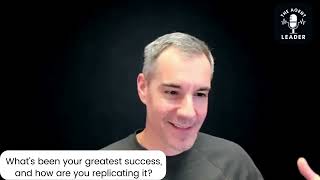
Dan Mickells, risk advisor at UNICO Group, spent 30+ years in insurance and now leads sales at a top-100 US agency with $32M revenue. He shifted from individual producer to sales leader by treating team members like clients, scheduling intentional check-ins, and using a sales scorecard to track KPIs and behaviors.
Chapters
Welcome to the Agent Leader podcast. The podcast to help you, the agency leader, gain clarity, build consistency and to make a commitment to become your best version possible. I have a great guest today that I'll talk a little more about this guy in a minute. But I will tell you there's some people that when you talk to like you get off a conversation, you're fired up, you're ready to go. This is a guy that's gonna gonna get you fired up. I know he gets me fired up because he's passionate about the business and the industry. So can't wait to introduce him here in a second. Before I get guest and our great conversation, I always want to mention that we are continuing to look for growth minded partners as we get into 2023 and moving forward. In fact, partners like affirm this guy who I'm going to be talking to works with but those that are really committed to growth, those are committed to being that best version possible. If you're interested in learning more about what we do and how we work with agencies, our private client group, go to sitkins.com experience sitkins.com experience learn more about our process, what we do more. More importantly, you can schedule a strategy call, talk to one of our coaches to see if it would be a fit for your agency. So with that I want to get into our guest further ado. I built this guy up a little bit, now I'm going to build him up a little bit more. He's someone who fires me up. Dan Michaels, who's a risk advisor, also sales leader at Unico Group in Nebraska, the great state of Nebraska. Are you in Lincoln or Omaha today? Are you in Lincoln today, Dan?
I'm in Lincoln today. Yeah. I kind of share my time.
All right, so the capital city there in Nebraska. I've had the pleasure. I was just thinking about like, gosh, how many different ways have I connected or know do I know Dan? Obviously Unico is one of our private client group members and we've had a number of years of relationship with Unico. Love working with that company and the leadership and their team. Dan also is part of our sales mastery group that we had going on. So got to know Dan even better then. Dan was also part of the agency Leadership Institute. So I got to see Dan there. We, we run into each other a little bit. But Dan's just a, a super energetic guy and he's passionate about getting better. He's passionate about helping others get better. So I know you as an agency leader are going to take some Great nuggets from today. So, Dan, I can't build you up anymore. Well, I could, but I'm not going to. Dan, welcome to the podcast.
Brant, you're too kind, very appreciative to be on here. I, you know, like you mentioned, I love to learn, and I find all kinds of opportunities to do that in your podcast and other podcasts really inspire me. And I think the work you're doing is tremendous. And hopefully I can offer, you know, maybe a nugget or two for your listeners, because I think there's always something we can think about and maybe refine. I've been in the business, Brent, a little bit about me for 30 years. Over 30 years. I started with the National Carrier, and I was really lucky because it allowed me to wear a variety of hats. I was in operations, I was in recruiting, but I was also in claims, and it really allowed me a really good foundation to see and understand really, what happens when you have a loss. I did that work for over 25 years. But one of the guys I met along the way was a good mentor of mine, Rick Stokes. Rick is a principal here at Unico, and we constantly stayed in communication with each other and stars aligned. Six years ago, I joined Unico Group, based in Lincoln, Nebraska. We got about 135 to 140 employees right now, 32 million in revenue. We just cracked the top 100 agencies in the United States, and something we're super proud of and something that we are continuing to strive to push, push that number upward. Married, three kids. Love, love, insurance, and really appreciative of the chance to be here with you today.
Yeah, well, thanks, Dan. You know, I won't give too many clues at the National Carrier, but I live in central Illinois, and there's a big one, and they have red as a color. I don't know. You just go with it. Right? But absolutely. You know, we've talked about that before. You know, I think it's really interesting, though, because there is, you know, when I talk to people, this is the advantage of what I do for a living. And just doing this podcast is I get to learn so much from people. And, you know, one of the things that I continue to see is that that wealth of. Of background, even in the insurance industry, just seeing different things and different perspectives. Certainly. I'm sure Dan has made you a better risk advisor and at the point now, a better sales leader. I want to start off. I got. I got a list of questions. I'm sure I'll. I'll take Us off track somewhere because, you know, it's sometimes fun for me to do, but I want to start off not in a negative light, but, you know, I always want to address frustrations. You know, you guys at unico, I know, Dan, you personally had some great success and we'll talk about that. Certainly in some things you're doing, but obviously there's challenges, there's frustrations too. And you know, the agency leaders that, that listens podcast, they're dealing with stuff too, and there's probably some crossover. So I like to get your perspective, whether it's individually, sales team, agency wise, whatever direction you want to take it. Um, what do you see as one of the biggest frustrations or challenges that you're dealing with right now and what are you doing to address it?
Yeah, good question. And, and I think I, when I was thinking a little bit about challenges, one is, as you mentioned, I'm moving from a risk consultant to, you know, helping on the sales leadership team. And so in and of that self making that transition has been, you know, a little bit of work and trying to recalibrate on how my schedule looks and things like that. But I think really what it comes down to for me, Brent, is this, this business is about patience and you need to be patient. And I think that can be a frustration because I'm a high performer. I want to see it yesterday. I want to play the game before the field's chalked. I want to get out there and get things done because that's kind of how I'm wired. And I think what I'm really challenged with right now is knowing this is a larger sales cycle and having the patience to stay the course. So gets back to what you can control, the day to day things. You talk about stacking good days, stacking good days, stacking good weeks is how I overcome it. It's things that I can control. So that's getting meetings, getting appointments, taking care of my clients, managing processes and procedures. Because I really do think patience is something that you need to have in this business. Unfortunately, sometimes people don't have it and they start to do desperate things. And for me, when you do, when you get into that desperate time, a lot of times you do desperate things that are probably the best things you should be doing. So I'd say patience and how I overcome it is a lot of the tools Sitkin's given me.
Well, Dan, I mean there's, boy, there's a lot we could unpack there. I mean, I. Taking notes, as you're saying. Things, I mean, first of all, I want to hit a few of these areas with some follow ups to get your, your thoughts on this. But you are moving from that, you know, risk consultant. You obviously have your book of business and it's a very nice book of business that you built and earned and now from a leadership, a development role. And you mentioned schedule, which is obviously a critical piece, right? How do you figure that out and allocate time? You know, you've heard us say before times you're only diminishing asset. I'd like to get your thoughts and you could talk about that. But I also, what I was interested in, Dan, and I would ask you is how there's a time issue, but there's a mindset issue, right? Like that's a big thing we see with agency leaders. And this is not uncommon to have a player, coaches or successful producers that have earned the right, have a book of business that are now in a leadership role. And one of the things I see, it's like, gosh, how do I go from 100% focus on hunting and now the patience to slow down, have these conversations that quite frankly my interrupt my, my own growth if book of business. So I, I kind of let you give you a lot there, Dan, but how do you, how do you approach that?
You know, it's a great question and I've really been wrestling with that. But what I'm finding right now, Brent, frankly, is trying to take the people that I'm working with, my team, and pretty much putting each one of those as one of my clients so they become part of my client relationship calendar, if you will, so that I am making sure that I'm getting the right touches with them, giving them what they need, really going through, you know, a sales process which each of my team members on what they need. So I've tried to use that model so that I'm not overcomplicating it. So I treat them like they're a client and my whole job is to make them better, to make them more efficient, to make them more effective, to make them more money, just like I want to do for my clients. And so that has really been my transition. And what has really helped me the most is that Sunday planning or that weekend planning so that you spend some time really getting organized so that you can attack the week, attack the month, attack the quarter. And that to me has really been helpful. So I've taken the people that I'm working with and integrated them into my client relationship calendar. And that's it seems to be working, but certainly it's not perfect. You get the phone call, you get the question and then you get off kill. But that's what I'm trying to do.
Yeah. Well, boy, first of all, I'm glad I asked the question because I think some great, I hadn't really thought about that way before, but you know, you think about, you know, some of the top producers, what they're great at is proactive relationships with their clients. And you're just taking that approach. Right. On a more personal level with your team members, which I love. And I, I also think too, this is my thoughts on this. You talked about patience, which by the way is really hard for an aggressive, you know, entrepreneurial minded salesperson. Right. I mean that's, that's a hard thing. And it's, you know, you get to play the short game and the long game. Right. Knowing that there's short term behaviors that lead to long term outcomes. Right. And that's again, that's, that's a challenge of discipline and patience. And I always chuckle. Roger Sitkins, he says many times and of course I borrow slash steal a lot of these sayings, but he said, you know, people think it's a get rich quick scheme. It's. It's not. But it is a get really rich slow. Like, right. And it's like, okay, how do you want to build this? And you know, one of the things and every organization set up a bit different but obviously you've got your own book of business. Dan, a lot of the producers that are player coaches certainly do. Questions. Gosh, what, what would it look like in 3, 5, 10 years if you're able to accelerate and expand all those books of business around you on your team? Right. Like my guess, there might be some, some value there as well. Is that fair?
No doubt about it. And, and you know, when right now, my, how they're kind of slotting me from a sales leadership is to really work with our newer advisors. I'm also working with some advisors that I haven't had a lot of, done a lot of work with and so maybe offering them a fresh perspective, a fresh point of view. So we've kind of changed up the cadence on what that looks like. I think it's been helpful for everybody because it's fresh faces, fresh ideas. But you're right, I mean, working with the new advisors, my goal is to get them validated and get them contributing, become a shareholder. And I win when they win because we're making more money, our values higher and you know, the world's a better place when that happens. And so you're exactly right. And so I enjoy that part of it because I think probably one thing that I've had some success with is just building out good processes and procedures and staying steady with it. And I think newer people, it's really easy to get off track and so continuously helping them stay the course on what's going to work for them. That's what I've been pushing. Things you can control.
I think that's. That's critical. And you mentioned too, just about the proactive scheduling. We talk so much about that. But I think I wrote down. And this is really hard to do. I mean, I struggle with this. I do, you know, do my best on it, but it's like I want to be so prepared and proactive on the week ahead. I don't want to be thinking about what I need to do. I just need to do what I wrote down really, really well. Right. And it takes a bit of that pressure. Right. I just need. I just need to show up at this appointment prepared. I need to be prepared for this and that. Now, the reality of it is, Dan, and you hit it like, does that mean you're not going to get the email, the call, the knock? Right. Yeah. Right. And then it becomes, well, how do I deal with that? And, you know, part of this, too, and this is something I've. I've learned from waiters, and I try. It's one of those where it's always, can I get five minutes? Do you have a minute?
Right.
Do you have a second? And you don't want to be dismissive. A part of this is I want to give you my full time and attention. Let's make sure we have a proactive, intentional discussion around this versus some random discussion that is half serving you, half serving me, and throwing us all off course for the week. Right. And there's a. There's a balance there. I don't know if you agree or disagree with that.
No, no doubt about it, Brent. I agree. I think, you know, one of the things that I've found that is very helpful is when you are clear with people you're working with. And all people really want is to know the ground rules and to have an understanding of how. What that all looks like. You know, my son the other day said, dad, you gave me an invisible expectation. How was I supposed to know that? I said, oh, boy. And I go, you're right, son. I wasn't clear with you on what I really wanted you to do. I assumed a couple things and it was unfair. So I put an invisible. He called that an invisible expectation. It was just a great reminder to me that you can't assume things and it's important to be very clear in what you're wanting so that everyone's on the same page.
It's always so amazing what we learn in leadership and relationship communication with our kids. You know, obviously, you know, I've got them strung across all over and we have a five year old in my house still. I have a college student, I have a five year old. And the one thing that five year olds don't care if you say, you know, let's find a time and I'll give you my full attention. They don't really care, Dan. Like they'll just say now, now. And look, look, look at this, look at this. But you know, outside of five year olds, right, Part of that is even with your kids, it's amazing what they'll learn and listen to. And you know, Dan, like if, if you were someone I was working with or I was trying to mentor you or coach you and certain things, I'd say, hey Dan, listen, let's face it, like when you pop in and you get half my attention and you're half asking a question, how successful are we really? Not really. So let's do this, let's be really intentional, right? And I'm going to delegate some time my calendar. I want to give you my full attention and I can answer your question thoroughly and with intention. And I'll promise you that. Is that fair enough?
That's right. Of course I had a, when I, in my prior life, I, I did manage a lot of people and I, I took a survey one time and it was, it just was the blinding. What's Roger say?
That blinding flash to the obvious.
Obvious, yeah. And you know, I was going through and I was meeting with this person, you know, regularly and all this and that I just felt like it got stale and I really wasn't making the connection. And somebody said to me, have you ever asked him how often you guys should be meeting and what that looks like for you? Because I might have one employee who wants to meet once a week for 15 minute check ins and I have others that it's once a month and it's like, have you asked? And it just kind of. So now, you know, you have some, you know, things that seem so obvious. So now it is. I, you know, I asked my new people what does it look like? I, it's, it's your business. I'm here to support and help you. What does our relationship look like and how often do we need be meeting formally, informally, and what that looks like? And they were like, well, I've never really had that question asked. And I'm like, well, let's figure that out and then we get it. A roadmap for the. For the year.
Yeah. You're instilling so many thoughts on this that it is funny. We use the term blinding flash of the obvious if people don't work with us. And there's so many of those. I mean, I have them all the time. And you're like, you know, someone asked you a question, like, why is that? It's funny, it comes back to defining expectations right. On some of these things. And it's like, what would it look like for you, Dan? I mean, I think back when I talked, for example, account managers, or we're doing some talking about having a top of the stack submission to insurance carriers. Like, what would that look like? Well, we do this and we do this and we do this. And I just kind of stop. And I said, well, who are your top carriers? Oh, xyz. Like, would it make sense just to pick up the phone and ask them? Like, they're like, yeah. I'm like, isn't it more important that they're aligned with what it is you want versus what you think? And it's true with relationships in office as well, isn't it?
It's so interesting. I just had a business meeting this morning before I came on and she had pitched UNICO on some services and we decided to go in a different direction. But I enjoyed her and I wanted to get to know her. And she offered some things that I think might be helpful to my clients. So we get together for coffee and she, you know, kind of the pleasantries. Then she said, hey, can I ask you something? What the heck happened? And I said, I'm glad you asked that. I go, let me ask you a question. What do you think we need? And she goes, well, I'm not sure. And I said, yeah, you didn't ask. I said, you came in with your whole program and you threw it out there. And we all looked at each other like, she's not taking the time to really understand why we invited her to the meeting. And so it was another blinding flash. She goes, you know, good point. And I said, you know, it isn't. I mean, I'm sure you have your style and the way you do things, but pausing for a second and Figuring out truly what's going on is helpful, which kind of gets to what we do day to day. So.
Yeah, and, you know, part of that too, knowing you, Dan, it's like one of those things where you experience the other side of it. Again, we all have chinks in the armor. I mean, I've done stuff like that, certainly, but when someone points it out to you, like, oh, my gosh, thank you. But that's something like a story you can. You can tell your sales team.
Right?
Like. Right. Like this is what happened. How often do we do that? A lot. Where you come in and go, this is how cool we are. And they don't really care how cool they are. What they care about is them. Right. Go figure. So, all right, I wanna. I wanna hop in. And you shared some of. I mean, just our discussion here, but I'd like to know, just thinking back, and this could be this year or as far back as you want to go, but, you know, you have had at unico some successes. And I mean, obviously I know you guys very well. You had a great year, which is testament to your leadership and your team and communication. And, you know, I. Again, it's just there's so many kudos to throw your way. But I would like to know, looking at that, what do you think has been your greatest success? Why? And what are you doing to replicate it? Because one of the last thing you want to do is get momentum in it and then just take your foot off the gas pedal.
So. Yeah. What do you think? That's a. That's a great question. And when I was kind of reflecting on that a little bit, you know, the word focus kept kind of coming on the scene, but it's kind of like what we've talked about before. You really get what you sow. And we really wanted to become a sales organization. We were a great company. We took care of our clients, but I don't know if we had the growth levels that we really wanted. So when you start to put a focus on new business and really talk about new business, that really has become a mantra for us. And we built a sales process around that. You know, in the past, you know, it was around taking care of the clients, and we had a good retention levels all the time. But what does that new business process look like? And so I think, Brent, honestly, our greatest success has been, number one, a focus around that and then building out key performance indicators that are tracked weekly so that we do have a scorecard that allows everyone to see where we're At So if things aren't maybe going the way we want, we can have some data to point to and learn from. And I think when everybody's in that mode, it really does create some healthy competition. So that has been a success. Now the other side of it, and I would say this is we have, you have to be careful kind of going back to that patience because you can start doing things that maybe cut corners. So you may not, you may miss a coverage, you may not have the full discovery, you may win the account because they were wanting a better premium amount. But you know, I always say if you win on price, you're going to lose it on price. And so, you know, it's, it's important for us to really make sure we're following through throughout that process, that sales process. But it has been focused on growth. There's no doubt about it. When we started putting, you know, future ideal clients in front of their, in front of them, tracking that, keeping score, it changed the flight for Unico Group, in my opinion.
Yeah, so. And part of that too, it's interesting, I'm just, I'm taking a bunch of notes as you're saying that because it is, you know, the word focus is used a lot and I think, but, but it can be, and I do this too where you say something but if you start to ask questions to go deeper. Is that really true?
Right.
And, and you know, some of the things I know that you guys have done, but this is certainly for the listeners, it's like, well, you know, gosh, Dan mentioned about being a sales organization. You know, one of the things that I'll say a lot, and I think this is very true in the industry and it just, it is, what it is, is that there are a lot of really great service organizations, agencies out there that do sales when it's convenient and then there are some great sales organizations that also provide exceptional service. And this doesn't have to be like one or the other because as you know, a great sales process done right builds a great continuation slash renewal process. It's a long term relationship. So those two should be going together anyway. But your thing on focus, I'll just throw some questions. I know you guys have done some things, but for the listeners, like, oh, we're focused on being a sales organization. Okay, what's your people development process? What's your sales playbook process? What's the, what's the weekly or ongoing communication about sales in the organization? How is it visible? How is it measurable? How is it accountable? Like you know, those are things you look at, and those are all part of that. Right. If we're focused on it, it gives us something to talk about. And I think it's really important. The last thing that you said, Dan, it is critical, and we believe in this, like, what can happen, especially when you use terms, you know, key performance indicators. And some people go, oh, you know, oh, it's back. They're important because you need to know the numbers. But you've heard this from us before, Dan. It's important to know the numbers, but it's the behaviors and strategies that drive the numbers. Right. Like, a lot of this is, what are the key behaviors? What are the key strategies? Some of these sales processes are very long, as you mentioned, what we have to know is, are we tracking the right stuff? Are there key behaviors that, Dan, this team are doing that are leading to the result, or are we just taking it for granted and hope it turns out and we'll get back the next year and go, gosh, we didn't have as good a year as we have. Yeah, well, next year we'll be better, you know, So I don't. I didn't really ask a question there, Dan, but just any. Any thoughts or responses just from that.
I completely agree, and I think that there's a lot to unpack. When you just are looking at that data is one thing. There's a lot behind the data. It just tells part of the story. And I think one of the, you know, things, too, that we think a lot about in our agency is really figuring out some of those behaviors and who's having success with them and learning from each other. I think the wisdom really is in the room, and I learned that a long time ago, that if you're not learning from other people, you need to surround yourself with people that you are learning from. And I think one of the great parts about our team is everybody is really putting a focus on learning and finding tools to make themselves stronger. So you're right. I think it does. The numbers are part of it, but there's behaviors and learning to make sure that you're adapting to what you need to adapt to.
Absolutely. It's, you know, something we. We. You've heard us say before. You know, if you're the smartest person in the room, you need to go find yourself a new room.
Right, Right.
There's always somewhere to learn from. And whether it's locally on your team, as you guys have fostered through other coaches through, you know, podcasts like this, I mean, I Learned a ton through books and there's, there's always things that you can look at things and I think, you know, the biggest thing around this is, you know, are you coachable? Is your team coachable? You know, if you know everything, then the answer is not real coachable. Right? Those are, you know, I'm sure you, you've been across those people in the past where it's like they know everything. Just ask them. And you can't grow, right? You can't grow from that. So it is important. And you know, with that, Dan, I guess I'll, I'll take this. And this isn't to be self serving, but maybe it is. You know, you guys have been with us for quite a while. I know that you mentioned some things about future ideal clients in terms that we know, but I am truly interested of the partnership that we've had and some of the learnings. What's been some of your biggest takeaways or the biggest takeaway that you've had in working with Sitkins?
Yeah, yeah, that's, that's awesome. And just thankful for the work Sitkins has done for UNICO Group. Genuinely. I think one thing that you guys have really done at great job with is getting us focused on a streamlined sales process and common language that we can all talk about so that we now have better, you know, a better framework in how we talk to each other as well as our account manager group. And that really does save a lot of time. I mean, when you're able to be on the same page with regard to that, I think it's been helpful from a time standpoint and for me personally, I think there's a lot of things that I've taken away. But you know, we talk at least. And we were, you know, a couple of weeks ago we were talking about just basic blocking and tackling. And for me that means a really good Sunday planning session. So for me personally, I do spend some good time each weekend really looking at my calendar, what, where the gaps are, where the opportunities are and prepping for that because it really takes some anxiety off me knowing that I'm prepped for a great week. And then the other thing that, you know, I strive for, and I don't know, you know, if you shared this or whatever, but good things usually happen when you meet people. I mean, they usually do. You may not get a sale, but you might make a connection. You know, our model at UNICO is where connections make a difference and you can't have connections and relationships if you're not meeting with people and so setting appointments and getting appointments. To me, that producer, perfect week striving for those 10 meetings, that has been monumental for me. And then lastly, Brent, is what we've talked about is having really good discovery conversations and going deep with clients and really figuring out if it is a match for me and the client to work together or to engage with unico. Because you and I both know we're not for everyone. That's why there's a lot of agencies out there because they all serve different needs and purposes. And I've realized I'm not for everyone. And that was something that has been helpful for me to move on so that I can spend my time with the right people who want to work with me as well as unico. So those are some Sitkins items that I think have been important to our agency and myself personally.
That's great. And I mean, again, I say that, I'm like, is there, you know, is there some, some goodness for Sitkins? Well, of course, but it's always interesting because people take certain things and apply them a bit differently. And I think even what you shared there, Dan, there's a lot of value just in that list that I wrote down to some things that either the team's doing or you're doing. I do want to hit a couple things because it is important. I think these are really important learning lessons that you mentioned. The first one was this idea of the streamlining and communication. You know, one of the things that we truly believe in and we've had so many conversations and we're making even more up levels this next year to do more of this. But you know, we'll see. So often when you get a very coachable or excited producer, for example, or even a leader and they want to be coached up and. Which is great. Right. And they want to do those things and improve, but then they get back to their team and it, it doesn't, it doesn't fit the puzzle. Right. So to speak. Right. And it's like, well, why are you saying that? Well, because I heard this. Well, I've never heard that before. And so, so much of this is just getting in alignment around it. It's a UNICO culture. But it's very, very interesting when you hear culture and hear this all the time, which is so cool. Like for me, it's just, it's awesome. It's like, tell me about the future ideal client list. Right. You know, talk about the peer to peer questions. How are you utilizing those? Right. And those all become Part of culture and people understand it. And what's great, Dan, is you can take that, and that part's already known. Now you can get to the good stuff.
That's right.
Right. Right now. Now you can kind of get to the good stuff. So I think that's really important. And then I do want to mention, too, and if you want to elaborate any of this, please do. You mentioned connections, but. Which is obviously critical, right? It's back to the collective genius and all this. But to have connections, what you were hitting on with the producer, perfect schedule, which we teach. Just got to get in the game, right? Like, you just got to get in the game. And, you know, I use this analogy all the time. I probably use that in five podcasts, so I'll try to keep this brief. But, I mean, it's no different than a great basketball player whose job is to score points spending three quarters on the bench and. And you're like, well, I don't know why I didn't score more points. Well, you don't even. I mean, not only. Not only are you not able to score points, you haven't learned anything. You haven't grown because you're sitting over here getting distracted, doing stuff that isn't even your primary function in the game. You're folding towels, you're filling up water bottles. I don't know what you're doing over there, but you're not in the mix. You're not. You're not. You're not in it to experience it, to learn from it, to grow from it. And part of that is just. Just get yourself in the moment, get in front of people. There's a great book about the proximity principle. Just be in proximity with people that maybe could say, yes, you could learn from it, know someone who knows someone that you need to know. Just get in the game. So I get a bit excited about that, Danny.
I do, too. I do, too. And. And that's, you know, I think we're meant to be in relationships, and people want that and strive for that. And I think coming out of COVID we're starting to see more of that and people being more receptive to meeting and all those good things. But, you know, that's what I love about this business. It's really not where you've been, it's where you're going. And even if you haven't had the success that you've wanted, it doesn't mean you can't flip the narrative, which is really, really cool.
Yeah, that's. It's exactly Right. And obviously, we want to learn from the past. We ain't going to live in it. Right. And that works both ways.
Right.
I mean, I think about, here's my sports analogy again. I mean, some of the best are defensive backs in football. Like, you better not remember that last drive when you get burnt or you're going to get burned again. Right. But what did you learn from it? And at the same time, it's to know that my next great play hasn't happened yet.
Right.
Like, you know, I, one of my, I don't know if this person was. I don't think so. But in our sales mastery program, it might have been a separate conversation I had, but I asked someone who had a very large book of business. I mean, it was like three and a half million dollars, like, doing very well with a book of business. I said, hey, tell me, like, three and a half million, like, what's, what's been your best or biggest sale? And he just kind of looked at me with, like, bewilderment a little bit. I was like, oh. I was like. And he's like, I don't know, Brent, I haven't made it yet. And, you know, it's just like, that's how top performers think. Right. I'm like, that's so cool. So anyway, just something to think about for the audience. So.
Yeah.
All right, Dan, I've got, I got one final question, which is my favorite question. You can take this however you want, but, you know, at some point you told me your career and starting with a national carrier and all that, but at some point you were just beginning your career here in the insurance world. World. Right. And you didn't know much, but you're probably eager and excited and whatever, scared all at the same time. But I'm going to give you an opportunity here for the younger Dan Michaels to experience something. So the young starting his career, Dan Michaels comes face to face with today. Dan. And the younger Dan, you know, looks at you and says, more experience wise. Me, I need one piece of advice that's going to help me to be more successful or whatever that means to you. What's your piece of advice to the young, your younger you, Dan?
Yeah, this is, that's a good question and one I gave some thought to. And honestly, it really provoked a lot of thoughts. What it comes down to for me, Bren, is don't be afraid to fail and really be okay with it. Because honestly, in my view, your greatest growth, or what I've noticed for myself, your greatest growth is when You've had failure. And I look back at my growing up, whether it's in sports or in school, when I didn't win a game or I didn't win a wrestling match or I got a bad grade, those seem to resonate with me the most than winning a medal or winning a tournament or hitting a big sale. And, you know, it kind of made me think about. I was rush chairman in my fraternity back in University of Nebraska Back in 1990, a long time ago. And I'll never forget feeling great about getting this position. And it's a. It's a sales position, right? You're trying to bring in and recruit talent into your fraternity. And I really was feeling great about it. And as the. Because we rushed during the summer. So once school ended. So this is a small, short sales cycle. It's kind of like May to August, and that's kind of it. And then there's some other sidebar. But you got to get your pledges in that time frame. And I remember coming home, I was living in Lincoln. I came back to Nebraska, and my dad, he's been in insurance and sales his whole life. And I came into the house and I was down. And he goes, well, what in the world's wrong with you? And I said, oh, nothing. And he dug a little bit deeper, and I said, I just got my butt kicked by a couple houses. Some guys I thought were going to go to my house, and they signed in another direction. And he paused and he said, and I think he was wanting this to be a positive, but it turned out to be a negative for me. He goes, well, how you feel right now that sales. And I said, well, if this is how I feel in that sales, I don't know that I want to do sales. And I got puckered up over that experience. And so I remember having an opportunity out of. Out of college where I could be in sales, like sales management, because my profile fits that more so. Or go into, like, an operations role. And that's the path I took because it's guaranteed pay, had good benefits, there was a bonus opportunity, and that was that consistent way versus the sales way. And I kick myself now because, honestly, it stayed in me for quite a while until I had some opportunities at State Farm, where I was doing some recruiting and some incentives, and then met Rick and came on to Unico. But my advice to anybody is don't be afraid to fail. And it's okay. It's going to be all right. You get your best growth. And took me a while to get over that hump. But that would be my advice.
That's. That's great advice. And there's. And I know it's a hard question because there's so many things you could. I love how I usually get, you know, a summary of kind of overall, it's this, like, typically a mindset thing. And just a few comments I want to add. I was. I was taking some notes, and then. Anything that you want to add, and we'll. We'll wrap up here, Dan. But, you know, again, embracing failure is easier said than done. Right. I get that. You know, typically, if you want to take it to a more specific, like, producer role, if you're working on a really nice account and you feel pretty good about it and it falls through, you know, most of us don't want to go, let's spend a lot of time really dissecting this. Right. You're going to be like, no, like, I'm mad and I don't want to talk about it. Right. I mean, that's. That's the natural thing. But what hits me as you were saying this, and, you know, we talked about, you know, sports examples, and I love your. Your example from the fraternity. What often happens is we don't really talk or embrace it or learn from it till we've already wasted a year. Five years, 10 years, 15 years, 20 years. Then you go, you know, there was something that happened 20 years ago, and it's like, man, you could have already been growing from that, but, But. But you hid from it.
Maybe that's right.
Or you push it to the side and. And again, not trying to. I've done this, too, where you find things like this, and you're like, gosh, if I just would have. Would have put it in front of me and just dealt with it, and, and, you know, wow, I wonder. I wonder if I could have accelerated my growth faster because you've heard us say this before, Dan. You know, nothing grows in your comfort zone except complacency. That's right. Right. And. And you know what we'll typically see, whether you're a leader or a producer of any kind is that safe. Feels pretty good. It's comfortable. That's why it's the comfort zone. But you can't grow from it. And you're going to look back in 10, 15, 20 years, and that's when you have the regrets. If only I would have done this. If only I would have taken this chance. If only if I would have, knowing that there was a greater chance for failure because There is when you get out of your comfort zone versus saying, I did it, I stubbed my toe, or, heck, I smashed my face. But gosh darn it, man, I'm a better, bigger person because of it.
You got it. That's exactly right. And it's tough. And I look back on that. And the positive. I'm a positive person overall. So my spin was, you know what? Maybe that was God's way of saying I wasn't quite ready yet. So when I came into this role, where I was at, I think that's lent itself to a lot of my success because it allowed me the time to really get knowledgeable, to get very educated, to add value, to bring ideas. And then my network, because of when I came in, was much larger than somebody who might have been younger. So it all. But that piece of advice is the one that I would get out of your comfort zone. Take calculated risks. If it's in your belly, trust it and go for it.
Yeah, that's. That's. That's great, great advice that I remember. I'm a big John Maxwell fan. He's got a quote that I love. He said, you know, experience is not the best teacher evaluated. Experience is the best teacher. And, you know, but you're all going to grow through experience to some degree, but it's the level of growth, and you really evaluate it and own it and go, man, I screwed that up. But guess what? I, you know, I may not like it, but I'm gonna brace it, own it, and I'm gonna learn something from it. Darn it. And that's. That's pretty cool. Which.
A couple of my sales leaders here, we just started having sales meetings, and we're starting to talk about wins but also losses. Yeah. What we can learn from it. I. To your point, nobody likes to talk about the losses, but there's some nuggets in each one of those, and that's been a good. I've gotten. We've gotten some early feedback on that, and we're going to continue to do that.
Well, Dan, I do want to add one thing. I think there's value here, and I won't let you go. But, you know, from a sales leader perspective in the role, you're here. I love that you said that, because I think that's really important of. This is going to sound odd. Not that we want to foster a culture of failure. It's not where I'm going. But foster a culture that we know failure will occur, and we're going to address it. And we'll learn from it, improve from it. And I tell you, there are, and I'm sure you've seen this too, let's just use producers as an example. You know, no one wants to talk about where they screwed up, why they look stupid, they feel ashamed. You know, it's got your peers there. But as a leader and as a culture saying, listen, we're all, by the way, and start, here's mine, here's my screw up. Right? And it didn't feel good. But here's what I'm going to learn from it. And here's how I'm not going to repeat that again. Who goes next. That it's, you know, I don't mind that you screw up. What I mind is you do it again and again and again.
Yep, I, I completely agree. And I think it creates, at least for me and hopefully others, it creates some endurance. You know, it gives you that, that push, that it's okay and, and it, you know, you forge ahead and it doesn't matter. I heard a quote a while back, you know, when I was coaching baseball. Baseball is about failure. And, you know, the line was, hey, guys, it doesn't matter. Let's get better. You hit a home run, doesn't matter. I mean, celebrate it, but it doesn't matter. Get better. If you make an error, it's okay. Let's get better. Let's work, improve. So that idea of self improvement, you know, stuff you teach and preach and very, very appropriate, I think.
Okay, well, Dan, thank you for being a guest. I knew you'd bring energy and passion and great, great value and you certainly delivered on that. So thank you, thank you for being a great partner. I will say this, and here's another plug, but it's important. We are, we want more deeper relationships with organizations like unico. That desire to get better and want to grow not just financially, which you will. Right. But in all kinds of ways that lead to that, that desired outcome of growth and profitability and just foster deeper, important relationships. So, Dan, thanks so much for being part of the podcast.
I appreciate it. Bryant, great to see you and have a great week and a merry Christmas.
All right, you as well. All right, all the best to your success out there. Thanks for listening.
Just started having sales meetings and we're starting to talk about wins but also losses. Yeah, well, we can learn from it.
I.
To your point, nobody likes to talk about the losses, but there's some nuggets in each one of those and that's been a good. I've gotten We've gotten some early feedback on that and going to continue to do that.
Well, Dan, I do want to add one thing. I think there's value here and I want to let you go. But you know, from a sales leader perspective in the real. I love that you said that because I think that's really important of this is going to sound odd. Not that we want to foster a culture of failure. It's not where I'm going. But foster a culture that we know failure will occur and we're going to address it and we'll learn from it and improve from it. And I tell you there are, and I'm sure you've seen this too. Let's just use producers as an example. You know, no one wants to talk about where they screwed up, why they look stupid, they feel ashamed. You know, it's got your peers there. But as a leader and as a culture saying, listen, we're all by the way and start, here's mine, here's my screw up, right? And it didn't feel good. But here's what I'm going to learn from it. And here's how I'm not going to repeat that again. Who goes next. That it's, you know, I don't mind that you screw up. What I mind is you do it again and again and again.
Yep, I, I completely agree. And I think it creates, at least for me and hopefully others, it creates some endurance. You know, it gives you that, that push that it's okay and, and it, you know, you forge ahead and it doesn't matter. I heard a quote a while back, you know, when I was coaching baseball. Baseball is about failure. And you know, the line was, hey guys, it doesn't matter. Let's get better. You hit a home run. Doesn't matter. I mean, celebrate it, but doesn't matter. Get better. If you make an error, it's okay, let's get better, let's work, improve. So that idea of self improvement stuff you teach and preach and very appropriate, I think.
Okay, well, Dan, thank you for being a guest. I knew you'd bring energy and pass.
More from Roger

This Shift Helped Us Unlock Growth 💡 | Agency Leadership Tips #insuranceagency #agencygrowth





How AI Can Help Insurance Agency Owners Master Their Financials (Without Being a CFO)

From AI Hype to Real Results: Steve Anderson on How Insurance Agencies Can Use AI to Grow Now



