World Class Leadership Produces World Class Results with Chet Rhoads of HUB
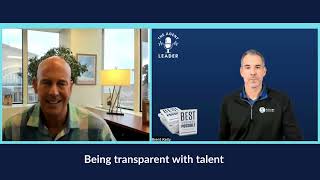
Chet Rhodes, CEO of Hub Three Rivers, discusses how transparency and vulnerability in leadership drive growth. Since taking over in 2021, he doubled headcount to 200 employees while maintaining culture, and one top producer he developed has written over $2M in business.
Questions this video answers
November 24, 2023.
January 2021.
About 200 employees (doubled in roughly three years).
Over $2 million.
Ranked number 18 in the world in 2022 (world CEO rankings).
Chapters
What is the correlation between vulnerability and world class leadership and world class results? Well, on today's Agent Leader podcast, I interviewed Chet Rhodes, president of Hub Three Rivers. Chet not only is an exceptional leader in terms of encouraging and challenging his people to get great results, but he talks about caring about people and showing vulnerability. Now, Chet was ranked number 18 in the world in 2022 of the world CEO rankings. So you want to make sure you got a pen and paper, take notes for this exceptional podcast today. Enjoy. Welcome to the Agent Leader podcast. My name is Brent Kelly. I am your host. Excited to be with you on this episode and I have a fantastic guest. My guest today is Chet Rhodes from Hub Three Rivers. And as you'll learn from Chet today, we're going to, we're going to talk a lot about the agency and successes, some of the challenges they're facing. I certainly want to talk about also a chat about some of the leadership challenges that he faces in running an organization of this size. So we're excited to have Chet on today. And Chet, I will, if you're watching on video, you'll see Chet in the box there. We'll make sure you get a formal introduction and I get to do that here in a minute. But I also want to remind the audience, as always, the purpose of the Agent Leader podcast is to help you, the agency leader, to help educate, empower and equip you to become your best version possible and the best version possible. Fast track, a 90 day success plan for agencies is available and our next program starts in January. So go to sitkins.com fast track to learn more about how to get started with Sitkins. So with that, let's dive into the interview again, Chet Rhodes, President and CEO of Hub3Rivers. Chet, welcome to the Agent Leader podcast. Good to be here.
Thanks.
Awesome. Well, I'd like as we start off, Chet get just give a general overview. I'd like to, if you could share a little bit about how you became where you or where you, you know, how you got to where you are today and certainly a little bit about your Hub branch that you are running there in Pittsburgh or.
So I basically started right out of college. I didn't go to college to be in insurance. I think insurance found me because when I graduated in 88 from Duquesne, there were no jobs in Pittsburgh except for being a life insurance salesman. So unless I wanted to move, which I did not, I embarked upon an insurance career and did the carrier side for five years and then came on the broker side. And I've Been on the broker side for 30 years now. I was 10 years old when I started, so don't start doing the math there. When I came to the broker side, I came on as a producer. And through the years I took over some leadership positions. I ran the employee benefits department at one time. I ran sales at one time. And then January of 21st, became president.
You know, Chet, I, I've known you for a few years now. Obviously, in working and being part of the Sitkins Group, you've known Roger and some of our team for a long period of time. And I'll just say this. You know, I'll speak on behalf of what our team says about you, and certainly what I've gotten to know in meeting with you in different events and obviously phone calls and these kind of things is that, you know, Chet is not only a great business mind and committed to growth and excellence, but just an all around good guy. And I know that's a bit cliche, but I think it's so important as we talk today about, you know, your agency chat and again, some of the challenges, successes, that, you know, the idea that you can be a, a human being that cares about other human beings at a high level. In fact, you know, from my experience in watching you, the more that we do that, the better leaders we become. And so I, I love to kind of tap into that a little bit in our conversations today. I want to start off with this, and I don't mean to go into a negative thing, but every agency that certainly we work with and talk to has challenges. And so, Chad, I'm curious. Here we are in 2023, near the end of it. There's just a few things going on in the world. There's a few things going on in the marketplace. From your perspective, what are some of the key challenges that you're all facing? Certainly maybe as a leader or as an organization. And what are some of the ways you're addressing these challenges that you're facing today, Chad?
Well, I think not. I think I know every industry, it's not just the insurance industry, is facing this talent war. And I believe through our own actions, and I would suggest to anyone else that's in my position, that when you're dealing with this talent war, that you should be transparent to your existing employees and your prospective future employees. Because I, I truly believe when you're transparent, these employees will trust you more. And it's, it's a real big situation. We deal with it every single day. We have employees that are being offered wheelbarrows full of money from competitors. We have prospective employees that we make offers to, and then all of a sudden they're current employer thinks they're worth 30 grand more. Not sure why they didn't think they were worth that before they resigned. Right. And so we, we play that out with these prospective employees and say, hey, you know, it kind of like back when I was in boot camp with Roger, he would say, hey, you know, have your prospect rehearse with you how they're going to terminate their relationship with their incumbent broker. We're doing that same thing, but it's with the prospective employee and role playing out. How are you going to handle it when your employer says. Your current employer says you, hey, listen, susie, you're worth 30 grand more now that Hub International is going to take you away. How's that going to make you feel? So we're getting out in front of it being transparent and seems to be working for us, but we certainly haven't solved the issue. We, we're gonna continue to forge through that. So I think that's a huge challenge for me is just making sure we have the best talent that stays.
Yeah, yeah, Chet. I mean, that's something obviously that, you know, I mean, so many insurance agency leaders out there facing right now. We talked about some of that. You know, we were at a private mastermind summit in Tampa a month or so ago. That was a big topic of the conversation with the agency leaders. And I know chat, one of the things. And I want to go just a little bit deeper in this. You can take this where you want, but you mentioned, you know, transparency. And I think looking at my notes, that was a big thing that you talked about. And you also mentioned a bit about vulnerability. And again, that word could mean a lot of things for a lot of people. You know, to me, it's not about vulnerability. It's just. Let me tell you about all my words and that's all we're going to talk about. But I think what I wrote down, and you can either agree with this or disagree. This is being able to define reality of what it really is and what it means and having those open, as you said, transparent conversations. And so. And again, maybe this is a bit. I don't want to make you go somewhere too specific if there isn't a specific example you want to give, but just is there's been observations and areas when it deals, when you're dealing with people that you've been able to be. You said transparent, more vulnerable, more realistic in certain situations. Versus, you know, trying to do the smoke and mirrors game and where that's worked out well for you. Is there an example or some way you've seen that in your agency? Sure.
So I'm not smoking Mirrors. I'll never be smoking Mirrors. I'm straight up, and I'm not afraid to be vulnerable. Actually, I think being vulnerable is pretty natural for me. But actually, you suggested I read a book several years ago, Getting Naked, and it really made me be intentional about how I'm naturally vulnerable. And so I do that with prospects, I do it with clients, I do it with our producers prospects. I do it with our producers clients, I do it with our employees, and I do with our prospective employees. And it has never backfired on me because at the end of the day, people want to feel valued, and they will feel valued when you let them in through your vulnerabilities, and they will feel valued when you are honest and transparent with them. So I guess an example of that might be hitting on, you know, hitting on a couple of points where we talk about getting that talent. We have a. A Top Gun producer that we hired two years ago, and he is just absolutely killing it. The business that he is bringing in. We can't keep up, hiring enough client managers. It's a great problem to have. But I wake up several times through the night, you know, thinking about that, because I need, you know, I'm a man of my word. I need to deliver on making sure this gentleman has a team. And one day he came in my office and he said, you know what? I'm gonna have to go somewhere else where I can get the support that you promised me that you would give me that you didn't. He said, you know, I'm at that impasse. I said, well, you know, let me tell you something. Do you look at the news? He said, yeah, where are we going with this? I said, well, there's this talent war out there. Have you heard about it yet? And he's like, well. Well, yeah. I said, so do you think the insurance industry is exempt from that? I said, do you think I'm exempt from that? So we played it out. And I said, so you can go ahead and resign and go to a competitor, whether it be an independent firm or, you know, a public firm, it doesn't matter. We're all. We all have these issues, and you're going to go from one frying pan into the next. But what I can tell you will be different is you will never have a president that cares like I Do. That was a year ago. He's still here today, has written over $2 million of business and we still have the issues of getting enough client managers. But I was vulnerable and I was honest and I played it up for him and he respected it and he's obviously staying around and writing more business and we're gonna solve this. It's just, you know that old adage, nothing good is easy.
Yeah, yeah. What a great. It's just a great example, Chad. And I just thinking, I mean, as you're saying that, I mean the, the natural thing, I think for a lot of leaders and again, you know, just go getters and you want to succeed. I don't think this comes from a malicious place, but it's like, well, you know, we are going to do this and this and this and this and versus saying here's the reality of where it is. Right. And you know, I know we've had these conversations. I love the way you express that chat because, you know, I shared this. I think you were. Might have been at this event and I heard this years ago from a leadership mentor of mine. And so there are three questions that every person is asking about you. And I think this is true in general, but certainly they're asking their leaders. They're asking three questions. Number one is, can you help me? Is there things that you can do to help me? Number two is do I trust you? And number three, Chad, is the one that you emphasize, which is sometimes just take it for granted, is do you truly care for me? Do you truly care for me? And I think when you care for people, that's where it comes from. Chad loved it. To hear that, is that I care enough to tell you the truth that we're not perfect. We have things. But you know, here's the vision. And obviously, as you said, Chad, it comes from a place of meaning. So I love that. I appreciate you sharing that. I think any listener should get a great abundance of value from that. I know talking about the challenges and of course this kind of leads into successes. But I'd love for you to share, Chad. I know there's been many. I also know you're a humble guy when it comes to success, but just from agency leaders listening out there, what would be a success or a series of successes or just something that's, that's gone really well for your agency that you go, you know, we've done a pretty good job at this and we've been able to replicate it for a while because I think that's one Thing that's important too is that we can all have success, but sustainable success is the challenge. So I'm curious if you think about you in your role in your agency. What's been some sustainable success you've been really proud of and how did you go about doing that?
So I have been in this presidency position. It'll be three years, the end of December. And each year since I was president, I think what I'm most proud of is our organic growth. And obviously the retention plays into that and the maintaining the awesome culture we have, basically doubling the size of our employees. And so I think it's a real juggling act. Not. I think I know it's a juggling act of all that's inherent to getting after the organic growth we all aspire to have as leaders, but also being very mindful front of mind not jeopardizing your culture when and getting after the sales goals that we have to hit the OG that we desire to have. And so that's what I'm most proud of. We, we've been able to maintain a great culture with over 200 employees now and we maybe shy about 2 million, but we doubled the size of our firm in three years shy 2 million.
It's. That's definitely something to be proud of. And, and you got, you know, again, we, we have many conversations, but it's something that's certainly a focal point. You said something that's interesting to me because my guess is is there's agency leaders. I shouldn't say I guess either. I know, I know they're agency leaders that struggle with this idea of having this, this culture of growth.
Right.
And the sales culture and you know, having accountability right behind some of these things as part of it that, you know, we need to grow with also balancing the culture that you know, we don't want to be so much in your face that it sales that it just turns people away. That might be again, a bit high level but just that that balance. And how have you again because you have sustained that for a long period of time and you do expect a lot from your people in a good way and you have good people on your team. So maybe that's part of the answer. I'm giving him my own question here. But just Chad, as you think about that, how do you, how do you as a leader balance that of I'm going to push you and I'm going to care about you while I'm doing it. Maybe that's a different way. I'm asking that how do you find that balance?
I actually, first of all, I find that, I find that balance right in front of them. You talk about transparency. I, in front of them, you know, I, I let them know that I have high expectations. But at the end of the day, we're going to expect that you deliver on those expectations in an environment that is safe to be who you are and respected and an organization of gratitude. And every day I have an opportunity to chat with a consultant, a client manager, a producer, you name it. I'm not shy about saying, hey, listen, we are so blessed. We have so much that we are to be grateful as a firm. We also need to pay it forward, whether it be in the community, whether it be with your teams and mentoring them. You know, I'm really careful about the words I choose and that, that's something that you know of your culture is going to become the words, you know, whatever words you choose, your culture is going to become that. And so when you, when you hit on, hey, we need to be grateful, we need to be respectful, we need to be accountable. And they know I'll go to the wall for them, but they also know I won't tolerate mediocrity. And so I just have that balance with them. And I just feel like it works. But it's not. This doesn't go on behind a closed door. It's discussions with them in our sales meetings, always saying, hey, listen, producers have your why. And if you don't have a why, then your why should be outside the glass doors of this large conference room. All those people that are working to retain your groups. If you don't want to sell to have extra money, come in your own, own household, then sell so these people can get a great bonus.
Yeah, yeah. So many things. And I have a couple follow ups of that chat because that is really good stuff. And I mean, you know, you've heard us say we talk about what is culture. Culture is a language and behaviors that are normal. I think, you know, you expressed a lot of that. What are people saying? What are people doing? And I also want to just mention, because you said this, you know, about, you choose your words carefully. And I think it's a big part, I hear that from, from, from leaders that are growth minded leaders and doing a great job with their agencies is that they're, they're very specific on the type of words they say. And I think. Here's the other thing, Chet, that you, you mentioned in your comment. There's a cadence to it. This isn't, you know, January first, hey, we're going to be respectful and accountable, and then we don't talk about it again until next January. It's that, as you said, you know, in front of people and consistently with the group is this is who we are and how we operate. And one more comment on this. And it hit me, as you were saying this, I always think of. We were talking about my. My daughter, my oldest daughter, when she's playing basketball, and she had a couple times, she's like, you know, the coach is really getting on me. And I said, well, tell me about it. It's like, well, you know, it's always asking me to do this and saying this. And I'm like, well, is he challenging you to get better? Yeah. Yeah. I said, do you think you get better?
Yeah.
Yeah. I said, the biggest problem that you would have is if the coach stops talking to you, right? That. That's when I would be worried, because that's when there's, like, there's no point. And so I think, you know, what I'm hearing, again, annoying you a little bit here with the. With the agency is, is the fact that comes back to caring. I. I honestly believe that. And, you know, I talk about this quite a bit, and maybe I get your thoughts on this and how you go about this, but I believe that number one job of a leader above anything else. There's tons of responsibilities, but the number one role or responsibility of a leader is to grow and develop your number one asset, which is your people, which isn't easy. And I think, to me, the easy thing to do for a lot of leaders as well. They're good enough. It's fine. I'd rather not have that conversation. But if I really do care about you, I want to challenge you because I want you to have the best. And like you said, Chet, if it's not for you, it's for the people you work with. So I don't know if there's any additional comment. It really wasn't a question, but I just wanted to. To mention a few of those things for what you said. So any additional thought on that, Chet?
I. One additional thought that I left out, and I think it's really important. Listen, we're all humans, right? And we're all delicate. As tough as someone might seem on the outside, they're delicate inside, and I recognize that. So any chance that I have to coach up, if you will, any. Any member of our firm, and it doesn't matter what capacity they sit in rent. I always say this, and. And I truly mean it. You know, God has given us, each of us our own talents and we're all wired differently. And you know, he was pretty intentional when he did that because you can't have just all producers or you can't just have all retainers of business. And so I say to everybody, when, when I get that chance, you know, God gave you some talents and he chose you. So what can I do to help you exercise them and make God feel like he didn't waste giving that talent to you when I could have given it to someone else. And it's amazing the, the, the look you get from the person across from you when you say that to them and how receptive they are and actually how impactful they are to the firm when they realize like, hey, you know, I am worthy. I was given these talents and I am going to exercise them and I am going to be my best version. So that's one thing I forgot to add that I think is so important.
I love it. That's great. I love that. Again, so important too. And I always say this too. It's just one of those things as an empowerer and an encourager that also challenges just the, it's just to see that you see the potential in people. I know even Roger talks about that. You know, potential can be a great word but it's also often a negative word. You know, lack of potential and unfulfilled potential. But to be able to have them see that and what's really possible is really, really a neat feeling. So thanks Chet, that's great. I'm going to ask a bit of a. Again, I would say it's a self serving question, but I'm, I'm interested with your experience certainly knowing Roger Sitkins and our team for a long period of time. So we, whether this is over the past few years or at some point in all your history of, of hearing some of the Sitkins trainings and philosophies and strategies and certainly you don't need to, to go through many of them. But I'm curious, is there one specific philosophy or strategy that you've gotten through, some training or course or program that we've run over the years that you think had the most significant impact? Either you chat personally or certainly you know your firm.
Personally? For me and I, I really do try to ingrain it in, in into the folks in our firm and some app embrace it, some sit on the sidelines, others they're not there yet. But for me there was many things. All behaviors in execution But I think one that really has worked for me over the years and I use it in everything. It's role playing. There was a day when I did my role playing for working with prospects. You know, just this morning on my way into work, I was role playing the difficult discussion I had to have with a couple people this morning. I have another very important meeting tomorrow and I've actually been role playing all week in preparation for that. You know, I have a really difficult discussion with a huge carrier bars next Thursday. I'm role playing that. I role play all the time. It doesn't matter where you applied. I mean, the example I gave you about 10 minutes ago where you role play with a prospective employee, hey, let's, let's, let's role play what's going to happen when you talk to your employer and they give you that raise that you've been asking for after you're only. You've resigned. So role playing. Yeah, been huge for me.
I mean, all those examples. I mean, think about the things you have coming up. Chad, let me ask you this before I give some feedback on that. Has that, has that come naturally to you or I guess is it something that as you do more and more of it is just, just part of who you are? Like, it's not even. Is it optional or is it something that. This is just what I do.
So it was not natural for me. And you know, when it was introduced to me way back when by Roger and his team, it was not natural. But you know, you can imagine over the years now it's, it's just like, you know, riding a bike or, you know, chewing gum. It's just, it's just a part of me.
Yeah. And you know, we of course use the term and coin the phrase low risk practice, which is what you're talking about, right? This idea that it's, it's practice, it's low risk. I mean, the worst that's going to happen when you role play is that you're going to sound stupid to yourself or someone you're role playing with, which isn't always comfortable. But I'd much rather have that uncomfortable conversation than I would be in front of that big client or the carrier meeting or whatever the case may be. I'm, I'm laughing too, Chad, because it's funny. My, you know, my kids are, kids are funny little creatures. They're smart, they're perceptive. But I, I walk around my house and this just happens too. I don't know that this is natural, but it's Just something that's, you know, before I'm delivering a training or a presentation or a podcast, I'm talking out loud about things I'm going to say and how I'm going to say it. And my kids would be like, dad, are you talking to yourself again? Are you doing your business practice talk again? You know, so it's just, it's funny how that just becomes. And hopefully again, whether it's my kids or team members or anybody else and people who work with, they go, why not? And you know, every opportunity does that does deserve your very best. And, you know, the idea of role playing, it's interesting. And this isn't going to be anything that you haven't heard before, but the idea of whether you're in sports or music or whatever it may be, you practice. You always practice. It's not even a thought yet. For some reason, in this business, whether it's a producer on an appointment or a leader having a conversation with a team member, we just assume we got it all figured out. And so I hope that everyone's hearing you loud and clear as you said that, that it's role playing, it's consistent and it's become, it wasn't natural for you, but you've, you've established that as part of your DNA. So I've got one more question, Chad, and I want to be respectful of your time and then any other thoughts and comments you have, feel free to, to add, and maybe this goes in a little bit to certainly not communicating to your teammates so much, but communicating to the younger version of you. So I want you to think back, and I know you started this business when you were 10 years old, right? Something like that, long time ago. But, but you were having, when you were starting your professional career. Let's pretend that the younger Chet Rhodes, starting off his professional career, walks into your office right there with the current version of you and says, hey, older version of me, I need one piece of advice that's going to help me over the coming years. What is it?
I think it's, it's all about behaviors. Executing on the behaviors. I had, I understood how paramount the execution of behaviors were back in the 20s. In my 20s, I think I, I think I was pretty successful, but I would have just been much more successful. I would have had less bloody noses. I would have had, I would have had a better work life balance because I had to work harder because I wasn't executing on the right things and I wasn't doing, you know, the behaviors that really would have had the impact. I was probably doing some other behaviors that were lower risk to me and didn't put me out there and make me vulnerable. I didn't understand what vulnerability was. So, yeah, I would say having understood what vulnerability was and how I could have used it to my advantage and then executing on behaviors.
Yeah, yeah, it's, you know, it's, it's funny, I heard someone a while back say this is that, you know, as, as they get older, they realize that they, they know even less than they thought they did when they're younger because the world becomes bigger. You know, I actually know less. But he said the things that I do know, I know much more clearly. Like, you know, there's more that I realize I don't know as I get older because there's so much to learn. But the things that I do know, I know even better. Right. Or with clarity. And I think again, just kind of, as you said that I'm thinking about execution on the behaviors. It's that lot of things to do. But what are the right things to do. Right. That have the most impact. So before we part, and again, I want to be very respectful your time. I want to. First of all, thank you so much for coming on here. I, I've taken a ton of notes. I know the, the listeners are going to get great value and agency leaders. Anything else you'd want to say to the audience? And again, a lot of agency leaders, but producers and other team members, insurance professionals that are wanting to grow and develop that you'd want to share before we depart here.
I, you know, as I sit here and I think, you know, part of my job as the leader of this agency is, you know, making sure that we have the next generation, the next generation of me, the next generation of our sales leader, the next generation of our retention teams, producers, the list goes on. You know, the insurance industry is aging out and there's going to be a huge issue in the insurance industry. So I think we have a huge, huge opportunity here as insurance professionals to be vulnerable and tell the world that there's going to be a mass exodus of folks in the insurance industry. But as we learned during COVID 19, there are emerging risks that we never thought about. And we had our most successful year during COVID So I think with that vulnerability and you're sharing that with the rest of the world, that, hey, you know what? This insurance industry could be vulnerable if we don't get after that next generation. And if you can paint a picture to the young generation, that's coming into the workforce and you're really good at, you know, futuristic and in our articulating that we have such an amazing path ahead of us. But if we don't do something, we're letting down the world because the world needs insurance.
Yeah. Amen. There's I just sat there. What I wrote down is like there's an amazing picture out there but someone's got to paint it. I think that's true of all agency leaders. Right. I love that, that compelling vision. Well, Chad, then again, thanks so much for taking the time to coming on here. Appreciate you and your organization and wisdom and your vulnerability as we talked about today. And for all the listeners out there, again, as a reminder, if you're interested in learning more about some of the things that we're doing at the Sitkins group, go to sitkins.sitkins.com fasttrack to learn about our 90 day fast track program. With that, I wish you all the best in your success. Thanks so much for listening.
More from Roger

This Shift Helped Us Unlock Growth 💡 | Agency Leadership Tips #insuranceagency #agencygrowth





How AI Can Help Insurance Agency Owners Master Their Financials (Without Being a CFO)

From AI Hype to Real Results: Steve Anderson on How Insurance Agencies Can Use AI to Grow Now



