Episode 259: The Economics of Fast-Growth with Sterling Wilson, President of Pop! Promos
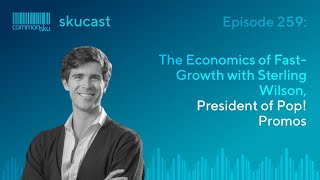
In this interview, host Ritika Chhikara talks with Sterling Wilson, President of Pop! Promos, about the post‑COVID supply‑chain landscape, the company’s strategic response, and broader economic and personal insights. Wilson identifies three macro trends reshaping promotional products: reshoring, escalating US‑China tensions, and a surge in sustainability demand. While Pop! Promos does not specialize in reshoring, it is diversifying away from China by establishing a production hub in India, targeting 25% of volume by the end of 2022 and launching half of new products from there. The firm has launched a corporate social‑responsibility (CSR) program to eliminate single‑use plastic by 2025 and to increase recycled‑polyester content, targeting 25% of volume from recycled materials by 2025. Wilson explains the company’s budgeting approach—three scenarios (A, B, C) to manage rapid growth (20%+ YoY) while preparing for a possible recession driven by rising interest rates and credit contraction. He advises distributors to place cash in sweep accounts or CDs to earn ~4% interest, to conduct contingency planning, and to proactively extend debt maturities before banks tighten lending. Wilson also discusses his role as an “accidental developer,” renovating the historic Harvest & Dairy building in Philadelphia into office space, apartments, and retail, and a nearby Jasper House project that adds affordable housing and a food‑manufacturing incubator. He highlights Pop! Promos’ product strategy—over 100 Pantone‑matched, full‑color items delivered in under 30 days, with a rapid launch cadence. Hiring culture, hiring the best people, and building a strong team are presented as the most critical levers for success. Wilson shares personal background as a mathlete from a small Indiana town, the importance of keeping commitments, and his current master’s research on data‑privacy regulation, arguing for balanced consumer protection without stifling innovation. He concludes with reading recommendations, notably Neal Stephenson, and offers advice to entrepreneurs: deeply understand customers, focus on a niche, and prioritize quality and culture.
Chapters
But Sterling, thanks for joining us.
Thank you, Bobby. Appreciate you having me on.
You bet. You have really deep expertise in supply chain. So you lived in Thailand and China for years. You speak a fair amount of Mandarin. You've got a very unique perspective. We were just talking about the webinars that you did throughout the pandemic to help educate the market on what was really happening in the world of supply chain. What's the most prominent change post Covid in supply chain in general that you that we should be aware of that affects the world of promo going forward?
Yeah, I think that's a great question and people are asking in boardrooms and management teams all over the country and particularly in our industry. I think there's three really big trends going on out there. The first one is reshoring, which I know we'll talk about a little more. The second one is US China relations, just geopolitically and how it feeds into trade and our business. And the last one, in my opinion, is sustainability. And just this continued momentum and desire from consumers, especially younger consumers and companies to be viewed as sustainable and to make a positive impact on the planet with their products. So I think it's those three that are really the drivers coming out of
COVID Can you give us an example of the kinds of changes that you are adjusting to and just in your world? Like what does that look like when you talk about those three things, sourcing and manufacturing for you?
Yeah, I mean the reshoring, we consider ourselves a rapid importer. So our whole business is give you all the customization, pantone matching and full color products, custom packaging that you get with an import order, but doing it in under 30 days guaranteed. So the reshoring piece is outside of our expertise. It's not what we do. And I think there's some real challenges to that that I'm happy to dive into later. But the other two major points, US China relations and sustainability, we're proactively addressing and have made some big investments to deal with and to adapt to. So the US China piece, look, it's the largest bilateral trade, investment and financial flows relationship in history. Like US and China are the two largest economies in the world. US the dominant hegemon of our time last hundred years, and China rising power. And so it's simultaneously really hard to imagine a true decoupling, like a stopping of trade and financial flows between the two countries. And yet at the same time the tensions are just getting ratcheted up. So from our standpoint, we have a real desire to continue to deepen and invest in our supply chain in China, but to diversify. And so we opened an office in India two years ago in Delhi. And I've been back and forth and our team's been back and forth half a dozen times in the last two years. And our focus there is to create redundancy in some of our top product categories so that we can produce the same product to the point that our clients can't tell the difference of where it was made between India and China. And then to lean into the new capabilities that are there. I mean, you have organic materials like cotton, including organic, sustainably sourced BSCI cotton, a BCI cotton, you have real handiwork. There's like a whole artisan kind of thing in India that you don't have in China. Different textiles, different fabrics. So. So it's been really exciting. As of, as of the end of 2022, we could produce almost 25% of our volume in India. We're not, but we can, we have the capability. And half of our new product launches are going to come out of that country over the next couple years. Years. So diversifying the supply chain and then on the sustainability front, we at pop promos put together a CSR committee, corporate social responsibility, and really zeroed in on sustainability as one of the key pillars we wanted to focus on. So we've gone through and audited our supply chain and made a statement. We're going to remove all single use plastic by 2025. And so we cut 17,000 pounds of plastic out of our operations last year. And it's just the beginning. So we'll be working to remove even more and, and then also focusing on sustainable materials. So more and more of our products, especially the textiles, are actually 100% recycled polyester. So you're literally going water bottles in a. Water bottles put in a recycling bin into products that we're selling into the US market. And I would say recycled materials. A third of our product launches this year and next year will be recycled materials. And we hope to get to over 25% of our volume by 2025, being exclusively recycled materials. So you literally have a circular economy feeding this industry, which I think is really exciting and something people can be proud of.
Yeah, for sure. This must really challenge you in terms of evolving your product line in general. I've seen so many changes over the past couple of years. And you laugh. Why do you laugh? Is that because it's that big of a challenge?
It's super difficult. I mean, I mean, yeah. So look, every People listening to this podcast are largely entrepreneurs, and you and I both know that it's very painful and difficult to figure out how to do something well the first time. And once you figure it out, the easiest thing to do is just do that. More like bigger. But learning how to go from manufacturing in China super fast with really high quality and, you know, very tight tolerances for printing and color, and have audited your whole supply chain for Disney and Walmart and everything else, and then turn around and have to do it in another country with totally different regulations and stuff is difficult. And learning how to make your products with virgin materials and then turn around and have to re engineer that. And it's not like you just make it out of something else and print it the same way. It's different temperature, inks. Everything else is super difficult, but it's fun. And I have to tell you, our experience here is we started to put together a CSR committee last year and asked for volunteers and we got massive turnout from our team. It's a young company, it's creative, and people just raised their hands and wanted to be part of it. And the enthusiasm for doing it's been really high. So it's hard, but it's fun and it's something we can all be proud of. So we're going to.
Yeah, that's cool. I love that. Back to US China relations for a second. They do seem to be intensifying more and more each year. Do you see ramifications for from this, for our industry in the near future? Oh, that's such a hard question. It's such a big question. I'm sorry to ask such a big question, but I'm.
No, it's a great question. It's a great question, Bobby. And we all get those really big, hairy, difficult questions, and the natural inclination is to look away from them and talk about something else. But I think it's important. I mean, if you look at it from a big picture, China is a rising power. GDP has risen from a third of the US to within striking distance in since 2005. And you've got a massively populous country, the leadership there, you know, with the revision of the constitution and Xi Jinping, who's going to be in power for at least another couple of years, which will make 15 straight years, they're becoming more authoritarian. That's scary. And, you know, my big concerns are, you know, us and China seeing each other in competitive and often like, you know, militaristic tones or like, talking about each other that way. I'VE seen the conversation go from, you know, one focused on trade and very tactical, trying to get advantage to something that's more of, like a conflict of values, which is scary because very zero sum. Once you agree that you and I have totally different values and we're just in conflict, there's not a lot of common ground to find, find negotiation and, and progress. And then, I mean, you're seeing it now. Just look at the news. You've got the, the spy balloons that are coming over the US From China. The Chinese have dozens of them all over the world. Can I leave? The US Is flying spy planes and satellites all over the world, and we're upset that someone else is doing it.
Right, right.
So, you know, it's, it's, it's tough. And our answer to that charge is, well, we're the superpower, we're the good guys, but the Chinese don't see themselves the bad guys. So I think that's tough. And the part that really scares me is you have the two largest militaries in the world and the two most largest economies in the world, and governments that are increasingly like, whether it's make America great again or build back better. And China has a very nationalistic rhetoric going. As soon as the two sides stop talking to each other, the risk of a mistake goes up. We shoot down their balloon. We cancel meetings. Presidents aren't talking to each other. The militaries no longer have cut off communication. It doesn't take much to have an accident, you know, know, like a plane that goes down or runs into something to start a war. And that's very, very scary to me and for our industry, and more broadly scary. Keeps me up at night, if I'm honest.
Yeah, well, thank you for commenting on that. I know that's a tough topic, and yet, you know, despite our best efforts, deglobalization might not be a reality in the future. So sourcing in China and our sort of attachment, if you will, to China is, is so deeply entrenched. Thanks for your commentary on that. I want to switch over to another topic entirely on economics and finance, because when I asked someone, I asked someone I really respect in the industry, I said, who's the brightest thinker besides our friend Jonathan Isaacson at Jimline, who's the brightest financial thinker in the industry? And my friend immediately said, said you. So I'm gonna throw a few hardballs at you. Maybe they won't be that difficult for you. So we'll touch on your math background in a minute. But what impact do you see on the economy having in our industry right now?
Right now, what I'm seeing day to day in our business and my conversations with competitors and customers is demand. That's very strong. Companies that are spending money to try and capture what continues to be really strong consumer spending. It's green lights across the board and everyone wants to grow. As you look a little further into the future and think about what the Federal Reserve is doing, it looks different. But today, green lights across the board.
Okay, how are you forecasting for the year for pop? I mean, how are you. You feel really bullish on the year. How do you, what are you anticipating in terms of growth and how has Q1 been so far for you?
Yeah.
So
here at Pop Promos, we talk about budgeting. We remind each other that we have to have humility and we don't know what's going to happen. So we build three budgets at the beginning of the year, A, B and C. B is the base case and obviously A is if we're growing faster, C is slower and we actually build out full budgets, including HR plans, staffing plans, et cetera. And so we are so far this year slightly above our plan B budget. We are high growth companies. So you're talking 20 plus percent growth. There's which is really positive. As far as the rest of the year, I have some serious concerns about construction slowing down, real estate investments slowing down and seeing banks pulling back and individuals and companies having to inject money, cash into things. You're seeing credit contraction, literally the amount of money in the economy shrinking. It's a slow process, but the Federal Reserve has tons of power to do that by raising interest rates. So I'm very concerned about a recession in the second half of the year. But the reality is I don't know what's going to happen. And we make our contingency plans and right now we added five people to our team last week and are growing and expanding and focus on executing for our customers. But I don't know, honestly.
Yeah. And when you talk about real estate construction, let me ask the dumb question. How do those things eventually impact our industry? If we're looking at maybe things shifting in Q4 or toward next year, what kind of impacts do you have? Does that have on the small business entrepreneur or say the distributor or the agency or a manufacturer like you?
Yeah. So I think that really comes through in, in two different ways. The first one is there are sectors of the economy that are very sensitive to interest rates. So things like construction, purchasing of heavy Equipment, things that are finance. If you buy a house, 70 to 80% of the purchase price is paid with the bank's money, not yours. Typically when you get a mortgage and the cost of that money has more than doubled in the last nine months. Right. And it's the same if you're a business, you're financing a big piece of equipment or building a new office. So you know, the first issue is construction is a huge part of the economy, as is manufacturing for durable goods that get financed. And right now the Federal Reserve is cranking up interest rates and with intentionally trying to get people to stop buying them. Right. They are going to succeed. How long it takes is a separate question. But they are going to succeed in that, without a doubt.
Right.
So that's going to hit construction, manufacturing, heavy industry, some finance companies, as you see demand fall, et cetera. So that's, that's one. And you'll see it in pockets of the industry. First and distributors that are diversified will see just kind of a slowdown. And ones that are really heavy in construction or some heavy manufacturing may see their businesses contract significantly. So, so that's the first place. And then the second place is literally shrinking the supply of money. So for example, if you're a big company and you buy $100 million office building in 2018 and the bank lent you 75 million of that, and now it's 2022 and your five year loan has expired and the bank is saying, well, your building isn't worth 100 million anymore, it's worth 80 million and we don't want to lend 75% of the value, we want to lend you 60% of the value. Then all of a sudden, in order for me not to have to sell my building or give it to the bank, I as a company have to put $15 million give it to the bank, which literally shrinks the amount of money in supply when you multiply it across all the kind of financial institutions in the country. So you'll see the credit supply and money supply shrink, which really causes problems because you have less liquidity. Right, right. So those are the two places. And the real fear is that those two things happen and it leads to a general just contraction in economic growth and a recession and higher unemployment. But it's a, it's an interesting time because while I'm concerned about all that, and I think most economists are today, you know, the jobs numbers are amazing. Unemployment still at historic lows and there's a lot of wage pressure. So it's weird to be Seeing one thing and expecting something very different in the near future.
If you're talking to an owner of an agency or distributorship and given the state of the economy right now with this sort of white hot moment that we're in with a concern for projections down the future, what would you advise business owners to do or what have you done recently to make adjustments and how they handle their business financially? And I kind of mean that, like you mentioned a tip to me about cash and just what are business owners doing with cash? It's a general question, but do you have some advice for distributors, entrepreneurs, agencies at this juncture in time as they look at the next 12 months?
Yeah, I think there's probably three things that I would look at and we'll start with the easiest one we have all gotten used to. I started this business in 2012 and interest rates on cash in a bank have been sub 1% the entire time that I've been in business nine months ago. And you know, we carry some cash balances, etc. Right now if you're a business and have a six figure cash balance, you, you can put it in a sweep account or in a certificate of deposit or a series of them and your bank can help you set it up and you can earn 4% interest on that all day long. Right. So if you, you know, if you're running a moderate sized distributorship and you've got half a million dollars in cash on a balance sheet, for example, that's $20,000 a year in interest income and all you have to do is pick a phone, call your bank and they'll give it to you. Right. So, so I'd highly recommend doing that. The second one is just contingency planning. I think if right now you're being super conservative when there's so much demand and everything's growing, you're going to miss out on a lot. And if the economy turns and at the end of the year things aren't so good, you know, you're unprepared to make a change, you're also going to run into problems. So I think it's just being prepared for different eventualities and contingency planning.
Yeah.
The last thing I would look at is if you have significant debt and looking at the maturities, I wouldn't, that's coming due in the next year or two. I would think about working now proactively to extend the maturity on that debt. Even if it's expensive. If you, if you can pay it down, fine. But I wouldn't assume that your bank will just let you extend the debt six months from now or nine months from now. The Federal Reserve is trying to decrease the amount of money in the system, which means banks are reducing the debt, the lending to people, and that person might be you. So I would just encourage you to look at it proactively, try and negotiate it and move the maturity out a couple years or consider paying it down. But I just don't think that it's wise to think that you can roll over whatever debt you have in the near future. There could be some problems.
Yeah, I like when we started this conversation with you and your three plan budget. You're obviously planning for this incredible growth right now and you're in the middle of it, and then you have these contingency plans as a backup as well. Have you always functioned that way as you've always operated that way?
We've always done that. We've always done that. And it's been a good practice over the years. Candidly, when we first started, we had no, we had no projections to even no historics to look at project. So we were actually making it up. We didn't, didn't know anyone in this industry, didn't have any family or any prior operating experience. So if you're just literally doing this and making it up, it's good to plan for a wide range of scenarios. And even now, as we've grown, you know, past 100 people in our office, etcetera, it's, it's just continues to be a, a good practice. And just thinking about what might happen makes it more comfortable when, when something unexpected happens, like Covid, for example.
So, yeah, let's talk a little bit about your role as an accidental developer. You, a lot of folks may not know this. You became an accidental developer by restoring. I'm assuming you're in that building now, the old dairy building, the Harbison's Dairy building. I saw a picture of it from 1895 and then again a picture right before you restored it. And I must say, you have a
lot of faith and grit and determination.
The before and after is incredible. It's gorgeous headquarters. We'll link to it in the show notes. But how did you get into that?
The short answer is pop promos was looking for more office space. And here in Philadelphia, we're in, we're in a neighborhood called Kensington, which is a historically very poor part of the city. And there's an apartment building boom on. So we needed about 20,000ft of office space. And realistically, I couldn't buy 20. I couldn't buy and build 20,000ft of office because everyone wants to build apartments and that's the highest and best use. So ended up finding a hundred thousand square foot building and turning it into 20,000ft of office and 86 apartments and some retail as well. What's cool is it's been a transformative project for the neighborhood. I mean this building, you had a decrepit milk bottle on top of it, which is very cool. You're ever in Philadelphia, come see it, please. But doing a historic renovation, we had to go to the National Park Service to get approval for it. Had to restore the milk bottle to look exactly way it did in 1950. And it was a big, it was a big leap. But I'll say it's been great for the neighborhood. Our staff is really excited to come. We have 40 foot ceilings and big open trusses and it's, you know, exposed brick like you see. So it's a nice space and it also kind of puts a flag in the ground. Like we signed a 10 year lease as part of building this out. We're not going anywhere and we're going to keep growing. So it's been fun. But the grit and determination thing, building a project like this, especially with COVID hitting halfway through is not easy or fun. I will say. Yeah, it's difficult.
What is it in you that made you. Have you always thought about development? Has always been the way you think? I mean, why I should ask the question why you decided to this besides just the functionality of really needing it?
I always like building things. Always. Like Legos were the favorite toy as a kid or popsicle sticks and glue. Also very cool. But I was just like building things. I find it just innately gratifying to take something and take something that wasn't there and build it or combine different pieces in a new combination. And it's creative and I enjoy that. Unfortunately. I think I'm a creative person. You would think otherwise if you saw me sketch or draw. It's completely. You couldn't recognize a stick figure for what it is. But yeah, just enjoy the process. It's fun.
Your firm, Harvest and Dairy redevelopment and Jasper House redevelopment turns defunct warehouses into elevated workforce housing and affordable commercial space in Philadelphia. What projects are you most excited about right now?
Yeah, so about four blocks away from the Harvest and Dairy building where I'm working right now, I'm working with, doing a community development project taking, as you said, an old warehouse. It was an old auction house built in the late 1800s and we're building 140,000 square foot building with 150 apartments, 20% of which are affordable for the neighborhood. And we have a community garden in the middle where we've contracted with a local urban farmer to do educational programming for school kids. And again, we're in a low income neighborhood and a lot of kids haven't touched dirt. Right. I mean, you don't have kids that know about where the food comes from, etc. So got really strong support from the community on that. And then the ground floor actually is a 6,500 square foot incubator for black owned food manufacturing businesses. So it's exciting, it's gratifying and basically we're just building on the success we had here to do another project nearby. Great for community relations. It's great for the neighborhood. Yeah, it's exciting. So we're really enjoying it.
That's really cool. Let's talk about pop promos a little bit. Thank you for your patience as we talked to you. You're so willing to talk about all these other topics. I want to talk about POP for a second and folks will want to know about this too. How has POP evolved post pandemic? What do you think the business biggest change for you and your team over the past year or.
The biggest change is just the quality of. We've just elevated the business, the quality of people that we're hiring, the standards that we have in place. I think probably the most significant change for pop promos since the pandemic relative to other businesses is that we haven't changed that much. We've doubled in size since 2019. We've raised the bar in terms of terms of who we're hiring. We moved to a much bigger, nicer office. We open more manufacturing offices in India. We're just raising the bar. We're still in the office three days a week. We think it's important we make product. We want to. We're adding 20 plus people a year to the team and we need to grow and train and onboard people. So I think in a world that's been like shaken pretty hard and a lot's changed, I think the most significant or kind of salient thing for us is that we haven't changed that much and that we're really continuing to focus on doing a great job for our customers and delivering unique product for fast. Yeah.
What do you wish folks knew about POP that, that they may not know or they overlook?
Yeah, it's a great question. I'm so glad you asked. I'm going to shamelessly plug something for all of you. So many times I talk to our customers, they say, I love your company, we order socks from you. Or I love your company, we order like full color bags from you. And we haven't done a good job of educating the market and our customers that we actually have over 100 products in our line and they're all Pantone Match in full color and delivered in under 30 days. In fact, the average is less than 20 now. And I think it's just been hard to get the word out. We've been launching a product every other week for the last couple of years. And I would say if you work with us, check out the other products we have. They're amazing. We're not actually really concentrated in any category anymore. And if you haven't, check out the virtual services, we continue to invest there. We got three times as many artists as salespeople on staff. Really focus on the creative element of the business and we hear from our best customers. These things help me win business and win new accounts and grow, which is what it's all about.
Yeah, you took pop from a sunglasses project to today where you're at today. I'm curious what you would tell a younger Sterling to focus on or not focus on. I mean, obviously he had no idea that he was about to get into a business and then go through a pandemic and then launch a development program. Program and all of these things. You've always strikes me, what little time we spent together here strikes me that you have always been very ambitious, smartly ambitious. But what would you advise? And of course we're speaking to the audience of entrepreneurs that are running suppliers. Maybe they're a smaller supplier that just got in the business, or maybe they're a distributor or agency. What would you tell them different to focus on or not focus on?
First things first. Talk to your customers and try and understand them and what they want and what they need. I mean, we used to say, oh, we work with promotional products distributors. But realistically, the difference between different distributors businesses around this industry, from spot buys to customer mix to programs where they have their own warehouses and inventory to fulfill fulfillment to. I mean, it's just incredible the diversity of customers in this industry. And we didn't spend. We tried our best but didn't understand our customer well enough for years. And we're still trying to better understand exactly, you know, all the different needs around the industry. So I'd say that's first and foremost is get to know Your customer. Second one I'd say is pick your customer well. Like we don't service the whole industry. Like we do not work with everyone. We're not the right fit for everyone. Like we're really heavily focused on enterprise clients. Like 50 plus percent of our revenue flows to big corporate companies. We focus on quality and making sure the color's right and delivering 99 plus percent of orders on time or early. And it's a quality play and a service play. But there are lots of different positions within this industry in every product category. So get to know your customers and figure out who you're serving because it's not everyone. Try and serve everyone. You can't do it that well.
Thank you for saying that, by the way. I'll let you finish. I'm sorry to interrupt. Thank you for saying that about the distributor clients because I think that's a big mistake that suppliers tend to make is oversimplifying the distributor market.
It's shocking. We just started tracking, we started tracking a few years ago programs, meaning it's not a one time buy for an event, but it's going into a uniform or an ongoing gift program or a new employee program or something else. And I got to tell you, the findings have been shocking. We had no idea so much of our business was this kind of recurring, like long term contract based thing between our distributors and the end users. And now that we know that we're better able to service it because we get the needs and the inventory risk concerns and everything else and we had no idea before. So. Yeah.
Did you finish that? I didn't mean to interrupt you there.
No. The only other thing I would say is every different business model has its own challenges and opportunities. But the one thing that I've come to appreciate as someone who comes from like a kind of nerdy math background, if I'm honest, is that the most important decisions we have made every week and consistently is who we hire and who we bring into the business and hire the best people you possibly can. Especially when you get started and look for culture and fit because you can put a team together of great individual people. And if they don't work together well, it's not fun. It doesn't, it doesn't feel like smooth and it's not, it's a mistake. So if I could go back in time, I would, I would tell myself like repeat, hire the best possible people you can and build a strong culture because it makes a huge difference.
You grew up a little about Sterling. You grew up in what we call in Texas a one horse town. Me a tiny community. When I say tiny, a very tiny community. You even had to drive to school an hour to school on an hour back for 10 years straight just to get an education. And whereas I was someone who graduated with a scant understanding of fundamentals of math with, you know, the bottom 10% of society. You grew up as a mathlete. I didn't even know such a thing existed. So a two point part question, just so we can learn more about you, what's a mathlete? And two, tell us a little bit about that small town experience and how
it shaped who you are today. Well, now that I'm engaged and no longer in the dating scene, I'm happy to tell you all about my experience as an athlete. No problem, right? I mean it's embarrassing. But also, I don't know, every kid has different skills and inclinations and a mathlete is someone who competes like is actually a competitive math problem solver and there are, there are regional, state, national global competitions for mathletics, et cetera. And it all sounds very silly now, but at the time was my ticket like out of Indiana, a small town Indiana, into, you know, great school where I end up meeting my business partner in Connecticut. So, so that's what a mathlete is. And my experience in a small town. What I like about the Midwest and I go back and see my parents regularly and a few old friends that I keep in touch with is people are just very, they're polite, but they're also direct and they'll just, they will tell you, yes, I will do this for you. And if someone makes a commitment where I grew up, I'll be at your party, I'll help you move whatever it is, they're there and they don't whiffle, waffle and change their minds and everything else. And I think it's just like the biggest thing I took away from is just honoring your commitments and following through what you say you're going to do. It's a great principle to live by and especially in business because you get to, if you and I work together and you know that every time I say I'll do something, I'll do it, it removes so much stress, anxiety and communication from our relationship because you just know I'll be there. And so that's probably the number one takeaway. And we try and make sure that we as a business follow through on that. We hire for that too.
Where does the name Sterling come from?
My mom just liked it.
It's A great name. So you're also. So as if you don't have enough irons in the fire, we have supply chain, we have. You know, you're running pop, you're running this development business. You're also working on a master's in philosophy, studying privacy rights and data collection. That kind of blew my mind a little bit. What led you to study this and what interests you about this topic?
I just, I love learning generally. I really enjoyed my experience in school and like I said, it was my ticket out of a small town and not with a. Not a ton of opportunity in it. I would say what I find so interesting about data privacy is right now, I don't know what Zencast is, but I would bet that somewhere in the terms of service that you and I both initialed, they actually get to record this, make a transcript of it and sell it to marketers. Right. Right now your phones, both of our phones are listening to our conversation, tracking where we are on gps. There's liquid markets for data. Came up with Cambridge Analytica, with Facebook, et cetera. And what the reason I think it's so interesting is you have a lot of septuagenarians in Congress who are trying to regulate the space, but they don't understand it at all. And I don't think we as a country and as a society have had a real conversation around what is acceptable and what is not. And I want to write my thesis is based on just a layman's conversation around what information are these companies really collecting, how are they monetizing it, and what conversation do we need to have in order to create some reasonable regulations around it? Because currently the rule is any company, as long as you sign a disclosure, a terms of service, which often run dozens of pages, and the studies have shown if you read every single one, you wouldn't have time to actually have a job. You'd spend all day reading them. As long as you sign that, they can collect almost any information they want on you, as long as it's not health information. And as long as you're not under 16 and they can package up and sell it to anyone they want. Like that's the rule. And so there's basically, it's complete free for all, and a lot of people are getting taken advantage of. And I think we need to have a conversation and come up with some real regulations. I don't think that trying to stifle all the great innovation we've had. We're on a. We're. We're doing a live in person interview from halfway across the country. And I don't want that to change. But I also don't think that these companies should be given a totally free hand to do whatever they want. Nor should we trust Google or even Apple when they say we're the good guys, trust us. It just, that hasn't worked out well historically. And I think we should be really thoughtful about what, how we regulate this
and what a fine line for us. All right. You as an entrepreneur, you're known as a highly respected marketing company as well. POP is. And, and we are sort of all living in this world. Google and all the rhetoric around killing third party cookies and all the different things that are tracking, it's quite a murkier world.
Why
you have approached this from a very positive aspect. But this, are you, do you come at this from alarmed as well? Are you deeply concerned about this? Or do you think if we can shift this the right way, we can actually come out of this in a very proactive way? It's not like you're trying to throw out the whole conversation. I'm not making my question very clear, but sort of trying to understand better where you're coming at.
Most entrepreneurs are optimists. I think you have to be either that or a little insane, often both. Because your odds of success when you start something totally new is incredibly low. And you have to look past all the naysayers and data that says you can't succeed to pull something off. And it's one of the things I love about this industry. You walked the PPAI show, which we loved by the way. We thought it went great. Great. There is so much optimism and creativity out there on the floor and I love it. It's addicting. And that's why so many people wind up in this industry and don't want to leave. I will say as an optimist, I look at the amazing innovation that we've had. Apple's worth two plus trillion dollars. Because this is the single most useful piece of technology that I have ever seen, other than maybe penicillin in an elevator. Right. It's incredible what I can do with this thing. And I don't think that we should get rid of this. Right. I do not think that we should outlaw the Internet. I mean, what a silly thing. But I, but I do think if you're an optimist, that we have a government that fundamentally is responsive to the needs and demands of people who live in this country and we have a democratic system and it's imperfect, but it works. And we have representatives in Washington that there are plenty of examples of ones who are badly behaved and not looking out for the constituents but for the most part really care and want to do a great job. And having a conversation with the whole country, it's going to be in media, it's going to be in people just discussing it over beers after work. It's going to be lobbying groups having a real conversation around what should companies be allowed to collect on me and what shouldn't they and how do we draw those lines and then set the rules on an even playing field for everyone and let the market continue to work. I think it's really important. I just think we haven't had the conversation and no one's discussed it enough.
Yeah, I ask it because I think we as marketers are having a bit of an existential crisis ourselves around this topic and so working through it, as murky and messy as it could be, working through it is so important. Let me completely shift to another topic, Sterling. What person, family or mentor have you had in the business that's had the
most impact on your life? I had a basketball coach in high school. I switched from athletics to basketball and his name was Donald Gowen and really lovely guy. He was my advisor at school and the varsity basketball coach. And he just had a very broad view on life and his role as a teacher. And the quote that sticks with me and actually passed away my senior year of high school and the quote that sticks with me is someone asked him how his basketball season was going. How's your season going? Normal question. And he said to be honest, I'm not going to know for about 10 years because what really matters is what happens to all the young men who play on my team and what they go do with their lives. And it was just, it was a very touching thing and it was read. It was part of his eulogy that was read. And I just, I think about that a lot. We all get very caught up in the day to day. I'm trying to win this sale, I'm trying to grow my business, all these things. But realistically we're all people and the contact and relationship we make with other people, it's amazing, a kind word what it can do for someone and change the trajectory of their lives. And I think if we all view it that way, we can do something extraordinary. I really look up to them and I think about them a lot.
I was just listening to an episode yesterday with Brene Brown and Simon Sinek and they were just talking about this immediate Impact versus Future Impact. What a great story to put that into perspective. Okay, last question for you Sterling. Share with us one or two articles. Everyone loves to know this question, the answer to this question and it's going
to be hard for you.
One or two articles, podcast episodes or books you've read recently that really impacted your your thinking and don't try to fit those with the audience or what you think business people might want to read. We're curious what makes you curious. Like what what what have what has really challenged or inspired you
right? My my favorite author out there is a science fiction writer named Neal Stephenson and really prescient guy coined the term Metaverse with a book called snow crash 30 years ago. Wrote about Crypto Nomicon which all about cryptocurrencies before they ever existed and just this very thoughtful, very talented writer, sarcastic, funny as hell guy and so although read all his books in just a deluge of reading during the pandemic when there was nothing else to do outside of work. But if I could recommend to the group, I mean, I don't know, pick up any of his essays or books and just give it a read and see if you look at the world a little bit differently by the time you finish.
That's great. We'll link to some of his books there in the show notes as well. Sterling, thanks for spending so much time with us. We could have talked for another hour, I know that. And congratulations on all the incredible success with Pop. Congratulations on your recent engagement. You've got such a rich life and you have earned earned so much respect in this business. So thanks for joining us.
Really appreciate you having me on and I'll make sure to call Jonathan Isaacson and say thank you. Turns out my bribes are working so I'll do that. But thank you again. I really enjoyed the conversation Bobby, and hope you have a good rest of the day.
Thanks Sterling.









