Episode 287: “Never Lose an Employee Again,” a Chat with Author, Joey Coleman
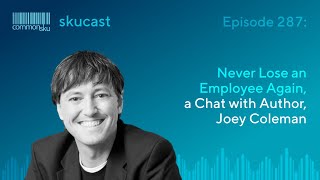
In this interview, host Ritika Chhikara talks with author and employee‑experience consultant Joey Coleman about why leaders often feel their employees don’t care about the business and how the opposite is true: employees want leaders to care about them. Coleman explains that the first 100 days of a new hire’s tenure are the most decisive period for both employee and client retention, citing research that 40% of new hires leave within a year and more than half quit before three months. He breaks down the financial impact of turnover, noting that the total cost of hiring (hard and soft dollars) can be three to four times a new employee’s salary. The conversation walks through Coleman’s eight‑phase employee experience model (Assess, Accept, … Advocate) and highlights the “Affirm” phase (counteracting new‑hire remorse) and the “Adopt” phase (recognizing veteran contributors). Real‑world case studies illustrate how tangible touchpoints—Impact’s three pre‑day mail kits, Trek’s annually updated culture book and “Trekisms,” JAM’s rookie hoodie and custom hockey sweaters, and even a mis‑fired Burger King goodie‑bag—can embed belonging and gratitude. Coleman also shares his Design Symphony methodology for mapping the full employee‑and‑customer journey, emphasizing that a seamless experience for one fuels the other. He offers a practical calendar audit to help leaders see how much time they actually spend on internal people‑development versus external revenue activities. Finally, he connects these ideas to the upcoming SKU Con, warning that 20‑70% of new clients also churn before day 100 and promising actionable strategies for both employee and client retention.
Chapters
Joey. So glad to have you here.
Oh, Bobby, it is my pleasure. I've been looking forward to this conversation for a long time. Thanks so much for the kind invitation.
You bet. Your material is so deep and so helpful. I got into your book and realized. So we have two parts to this. As I mentioned the intro. We're going to talk a little about employee retention today and then client retention at SKU Con, of course, which we'll get into in a minute. But really today is all about employee retention. And I was. I sort of opened it. To be honest. Joey. I opened. It's like, okay. Client retention book.
I was blown away.
Two things. I was blown away by the depth of the material that you had. And then you have this vault of resources. And I just got lost over the weekend going through some of this. So let's just get started and break this down a little bit. Your book starts out with the most common struggle all leaders grapple with. And. And, and that is this. I wish my employees cared about as much about my business as I do. And you had a solution for this because you have in the book. Your employees wish you cared as much about them as you do the business. Now. It's such a bold statement and also a very aspirational and challenging thought. How do we even begin to do this? I know that's what the whole book is about. But those are pretty aspirational thoughts.
They are. Bobby. And I also want to lead with from a place of empathy as a fellow business owner for 20 plus years now.
Right.
I know that all of the business owners and the business leaders listening do care about your employees and you actually care about them tremendously. The problem is they may not know that. And the reason they often don't know that is we have a tendency as leaders to. Because of all the things we're dealing with. Because of all the various stuff that is happening behind the scenes that our team may never be aware of.
Yeah.
That their belief is we are telling them we care more than we are showing them we care. And even when we are telling them that we care, lots of times it feels to them that it's an afterthought. Oh, thanks so much for your work on that project. Good job. Right. It feels like a. From the hip knee jerk reaction that they were supposed to do as opposed to something they truly believed. So I think the secret becomes to revert back to our days of kindergarten where we had show and tell. That it is a two pronged approach. We need to show our employees we care and Tell our employees that we care and give them that feeling that we are on par, if not higher than any as employees, than any of the other relationships. And as a brief aside, the way this often manifests as we're going to have a one on one meeting with one of our team members that we cancel because of a client call going over.
Right.
Or we need something. I was talking to a incredibly valued employee. He's been with a company. He's the number two in the company. He's been with this company for four years. He called me over the weekend. He's like, Joey, I just need to talk. His boss, the CEO of the company has canceled every one on one meeting. They're supposed to. They're supposed to have a weekly one on one has canceled every single one for the last five months. And this employee, who I know based on the running of the business, if this employee leaves the business experiences an immediate 10 to 20% drop in revenue. Immediate. That's how crucial and a linchpin this individual is. And I'd be willing to bet, Bobby, that the CEO has no idea that the COO called me this weekend and is thinking about quitting because the one on one meetings have been canceled and the COO doesn't feel appreciated.
Is that a couple of reasons, A couple of questions I have for you is, is part of this has to do with the speed of business?
Right.
We're moving so fast, we're doing things so quickly. And so in that example is a great case also. There may be a great relationship between the two of them, but still you need, you still need that interaction is what you're saying.
100%. I mean this. My wife and I have been married 13 years. Right. I still bring flowers.
Right.
I still take her on dates. We can take our closest relationships for granted and then get the result, which frankly is usually a divorce, whether that's in our personal lives or our professional lives.
Yeah.
Or we can say, if this really is a relationship that I value, I'm going to be regularly providing evidence of how much I value that relationship. Evidence in terms of time, evidence in terms of attention or words spoken, gifts given, focus shared, all these things that we know how to do as human beings. But to your point, because of the speed of the business, because of all the things we have on our plate fall to the back burner, especially with our most trusted and valued people.
Right. Well, I also have a lot of empathy for business owners in the sense of there are doing things all the time for employees. I think of Just a recent example, benefits, compensation, benefits packages come up and they're more expensive than usual. And I know as the former CEO of a company that you sometimes absorb some of those costs because you don't want that to hit employees, but you don't really communicate that or you're not really, you're not really talking about, like you said, show. So we're going to get into this a little more in the details, but let's start with a couple of key points. What I call a linchpin in your book, and that is the first hundred days. Why are the first hundred days so important for an employee?
Well, the first hundred days are so important because first impressions matter and the foundation upon which we build a relationship is created. And in those first three months, the first hundred days. Now this just isn't Joey's belief. All the research shows this, okay, this Joey has his beliefs in his hypotheses and then I go out and I test them both in a pseudo laboratory setting with my consulting clients, but also in the research I do. And what we found, doing the research, writing my newest book, Never Lose an Employee Again, was that across all industries, globally, 40% of new hires will not make the one year anniversary. 40% of the people you hire today will not be there a year from now and over half of them will leave before the three month anniversary. So this time period, this discrete period at the beginning of the relationship, when bonds are being created, handholding is being done, foundations are being established. If we don't double down and invest truly in onboarding, building in those connections early on, we never get the chance to capitalize on the increased productivities, the increased efficiencies, the increased scale that are often driving our decisions to hire. And so it's like we have this desire to be able to serve our clients better and to grow our customer base and grow our market share. But if we don't invest early on, we're never going to get to that point with our people.
Yeah, and speaking of investing, the cost of a new hire according to your book is three to four times the position salary. But we don't see this in terms of investments we make in the first hundred days.
Correct. Most, most organizations aren't tracking it. Right. Most organizations also aren't taking into consideration the blend of hard dollars and soft dollars that go into that equation of three to four times. So here's the thing we understand. Oh, if I pay this money to this employee for two months and then they leave before I've had any appreciable productivity from them or delivering on the value, we might as well have lit that money on fire and warmed our hands by it because at least then we would have gotten some value. The flip side of that is when we then have to hire someone new, what usually happens? Well, we say to our team, hey guys, don't worry, I'm going to hire someone as quickly as I can. Oh, wait a second, that's the wrong thinking, right? Or then we say, oh, never mind, we're going to take a long time, we made a wrong hire. In the interim, we just need you to pick up the slack and do all of their work that that other person was doing. We're not going to give you a bump in title or a raise. Just take one for the team and chip in. But by the way, normally we take a month to hire someone, but since we messed up that last one, we're going to take four months. Now that person goes home and says to their spouse, their significant other, their roommate, you know, maybe I shouldn't be here. What I'm being asked to do more for less. This other person was only here for two months and they left it. Did they realize that something was wrong that I should have been able to catch up on or what's going on and now we're not getting there. Not to mention all the time we spend doing interviews. Everybody on our team who sits in an interview, that's an unproductive hour or a non billable hour for them, all the time we spend advertising, all the time it takes for a new hire to get up to speed and actually understand our systems and process. So we've got hard dollar costs, we've got soft dollar costs and they add up quickly.
Yeah. You know this audience, you're talking to an audience of entrepreneurs, salespeople, business owners, but who are also selling things like onboarding experiences for their customers. So going back to this first hundred days principle, one of the things I loved about your book, as I mentioned earlier, was that it was just replete with examples. So full of examples. One example of someone who gets it right is a company called Impact, which sends not one but three separate mailings or kits to their employees during onboarding. Who else comes to mind is a great example of investing in onboarding?
Well, just to clarify on the impact, to be clear, not only do they send three separate physical mail mailings to their new hires, buyers, homes, they do that before the employee's first day at work.
Right.
So this isn't spread out over the first six months no, no, there are separate mailings. One of the mailings is all about swag and the gear and giving them the impact gear so that they feel like they've got the look and the vibe and the feel. And it's hats and it's socks and it's sweatshirts and it's things like that. One of them is all about technology and productivity. So it's their new laptop, all the things they're going to need to be able, you know, a camera for at home so they can set up their home office. They have a lot of folks working remotely. So before you've even shown up at the work, you feel like you're part of the team and you feel like you've got all the tools that you need to succeed.
Right.
Then the third mailing is two books. And people are like, joey, we're sending them books, we're sending them homework. Yes, because these two books are the foundation of how IMPACT thinks about its culture. The foundation around how they communicate and how they treat each other and how they treat their clients. And the assignment when they get those books is, by the way, your homework for the first week on the job is going to be to read these books at work like you're going to be paid to read. But if you want to get a jump start on your homework assignment and start reading early, go ahead. And so what they are transmitting not only in terms of the physical touch points, and as you well know, Bobby, in an increasingly digital world, physical, tangible touch points are hugely valuable. It's why this listener base in this community is like dialed in. You're perfectly served, set up to serve folks in this physical reality world. When we combine that with things that are about long term vision, being part of the culture, having the resources you need to succeed, understanding our philosophy and our ethos before they've showed up for the first day, you're making these investments, strategically and tactically in how they think and feel about the new position.
Most of what I think of the books especially, but most of that ends up becoming several months of unpacking philosophy and values and things like that. Whereas day one and the fact that they're paying for it. Let's get into so many great examples, let's get into some more details of the book. Because you talk about eight phases of a remarkable employee experience. So we don't have time to get into all eight, of course, but of the eight phases you outlined, assess, accept, affirm, activate, acclimate, accomplish, adopt, advocate, is there one that is more critical or worth Singling out here in the time
that we have, you know, this is kind of like asking somebody who has multiple children, Bobby, which one's, which one's favorite? Okay, but here's the thing. As a parent, you know, everyone, you do have a favorite. I get it. No, I'm just kidding. You don't have a favorite, but you have one that needs more attention than the others, potentially. I'm going to paraphrase or, you know, audible a little bit on your request for is there one? And I'm going to pick two. And the two are, one is highly related to new people coming into your organization and one is highly related to your veterans that exist in the organization. Because when we think about our employee experience, we got to take care that we're properly filling the funnel going forward. And not making matters worse, let's stop the bleeding and the hemorrhaging, but we also need to not make it all about the newbies to the exclusion of the folks who've been there the longest, who if they leave, it's even worse than if a new hire leaves because we lose all the institutional knowledge. So the two phases are the affirm phase and the adopt phase. The affirm phase, let's maybe dive into that one first. In common parlance, we might all be familiar with the concept of buyer's remorse, where right after a purchase, we begin to doubt the decision we just made. In a team member context, I call that new hire's remorse. It's the scientifically proven fact that immediately after signing an employment agreement and accepting a job offer, the newly hired employee who is a candidate just mere minutes before begins to doubt the decision they just made. Now we're back at the office celebrating, oh, we got them. They accepted our offer. That was the candidate we really wanted. Woo hoo. Meanwhile, they're saying, oh, you know, I'm not sure I made the right choice. Should I have negotiated for a benefits, a better benefits package? Maybe I should have. You know, I was interviewing for a couple positions at this time and I hadn't heard from two of those other companies. Maybe I could have strung this one out a little longer to see if the offers from the other companies were better. And that fear and that doubt and uncertainty they have about the choice they just made creates an emotional deficit that if we don't address, they show up for the first official day on the job in that state of new hires remorse. So the reason we call it the affirm stage is in that stage, you need to affirm their choice and let them Know that their decision to begin the next chapter of their life with you was the smartest career move they've ever made. When we change to that type of KPI, how could we make every new hire feel before they show up at work? Between the time period when they sign the contract and they show up for their official first day, whether that's a couple days, two weeks, a couple months, maybe for a more senior executive, how can we make them feel, wow, this. This is the beginning of something special.
Yeah. So that's a firm.
Exactly.
And when it comes to affirming, I was actually blown away by what you were saying, because I've seen that look on new people's faces when they arrive. It's like you can see it on their faces. They're like, did I make the right. What am I doing here? It's just this sort of awkward moment. So you said affirm, who was the second favorite?
So the second favorite is adopt. Now, the adopt phase is the seventh of the eighth phases. So it's much further into the relationship. Often, frankly, it's beyond the first hundred days. These are your most loyal people. They're committed. They're all in. They're not answering the call from the headhunter. They're not cruising LinkedIn ads and indeed ads on the weekend to kind of see what's available in the marketplace. They're bought in. The problem most organizations have is we take those people for granted. We don't properly and regularly show them how much they matter. And the operative word, I'd love all business leaders to have running, or the operative question, if you will, I'd love to have running in their heads when you think about your veteran employees is, do these people know how crucial they are to me, not just the business, how crucial they are to me.
Wow.
And have I shown them with my actions that sticking around and staying invested in our operation is worth the sacrifice they're making? The sacrifice of time, the sacrifice of opportunity, the sacrifice of, you know, continuing to show up day after day and contribute. Do they know how valuable they are to me? And am I showing them how much I appreciate their investment and honoring their ongoing investment of their time and effort?
Joey. I respond probably like you do, as thinking like a business owner. And I'm thinking how overwhelming this is a lot of times. And that's just the world we live in now.
Right?
It's not like, I mean, this was the world we lived in 20 or 30 years ago, too. It's just far more obvious now. And I think the expectations are higher. I mean, it's a different world we're working in now. Wouldn't you agree?
100%, Bobby. I mean, not only is it a different world, courtesy of the pandemic, and everything happened with the changing in the workplace and how people work and what they expect from work, it's different world based on the globalization of work. One of the crazy things that came out of the pandemic is pretty much every business in every industry on the planet realized we don't need people to be physically close to us to be productive to our enterprise. One of the biggest challenges that my clients based in the United States are having is their top people are being poached by international firms that are coming to them saying, hey, you can continue, continue to live in North Carolina and do the kind of work you do, and we're going to pay you a salary that's higher than what you're getting paid now. But, oh, by the way, we're a French company, which now means you're going to get five months off of paid vacation every year.
Right.
And so they're doing things that we can't even begin to compete. Oh, and our annual meeting is in Paris. So every year we're going to ask you to come to Paris for a week and hang out. I mean, these are things that the typical employer is never going to be able to compete with. But now that is the competition. The third piece that I would say is, is relevant for our discussion here. I don't know a single leader on the planet who is saying, gosh, I have four extra hours of time today. What am I going to do with that? Right. That's not the world we're living in. But when we combine what's happened with the pandemic, we combine what's happened with globalization. We combine what's happened with the shifting of demographics and the graying of the workforce and the new employees and team members that are coming in. If you don't start making time for this, I can pull out a stopwatch and measure how much longer you're going to be in business. Yeah, because the landscape has changed.
It's a hard reality. It is the reality. I mean, you could say if you could quantify the time you spent on developing employees pre pandemic, it might have been 10% of your time. Whereas now you're saying, no, the shift actually has to occur with a bigger, chunkier time, because that's how we're, how we're eventually trying to measure this is how much time I, as a Leader am going to invest in my team 100%.
Quick little exercise listeners can do. Look at your calendar for the last week. So go back to last week. Whenever you listen to this, go back to your calendar for last week. And I want you to just pull out a little sheet of paper and look at everything in your calendar. And on the sheet of paper, write a line down the middle, the top of one column write sales, marketing, customers, external activities. And on the top of the right column write people internal activities. So on the left is everything you're doing to grow the business, to foster the business, to serve your existing clients. On the right side, your everything you're doing to grow and foster your team. And you only pro tip here. You only get to get make a mark on either the left column or the right. Some of you are like, but Joey, I invited two team members to come to that sales call. So it was for both of them. No, no, no. The other. Now you may say because of the nature of the sales call, it was actually all about team building. And it was, you know, do fine. Mark it on the right side of the column, the employee side, but you're probably going to mark it on the left, right, growing the business. Just look at every item on your calendar. And is it get a hash mark on the left side or the right side and go through the week. This should take you about 20 minutes.
Yeah.
And then let the numbers speak for themselves. And you tell me if you think you're devoting enough time to your team.
I love that. Gives you something practical that you can actually put your arms around. Let's talk a little bit about merch and employee retention, because this is such a big part of our audience and it's such a big part of what's happening in the experience today. You probably saw this. Kevin Ford, an employee of Burger King, didn't call in sick for 27 years and was sent a goodie bag by his employer, including a movie ticket, Starbucks cup and candy. And he was incredibly grateful. It was unbelievable, his gratitude. And somebody went to the trouble to do that. But the Internet roasted that employer. And you know, rightfully so. If, if we are missing everything else that was happening, if there was anything else happening. But anyways, what about that story was such a miss to you when you saw it?
Well, to your point, let me talk about the thing that was absolutely beautiful. The way that man responded to this gift was a lesson for all of us.
Yes.
That number one, there's always an opportunity to express gratitude and thanks, both as the One expressing it and the one receiving it.
Right.
And number two, we get to choose how we show up in the planet. We get to choose to feel slighted at every small thing or honored by things. Right. So that, that was a great takeaway for me. That being said, and you alluded to this, if that's all that employer did, we can do better.
Right.
27 years of service without a missed day of work is, should be rewarded and acknowledged with something other than a movie ticket, a Starbucks cup and some candy. Right. It deserves a higher regardless of whether that's an hourly employee or a salary employee, regardless of whether that's frontline, back of stage executive. It's a human that gave up nearly three decades of their life in service of your business. How are we showing that we're never, let's be clear, we're never going to be able to properly acknowledge, reward and provide a level of commensurate feedback or gratitude or value to our employees for all the time effort that they've put into our business. Just save yourself the problem. You're never going to be able to do it right because they can't get that time back. But we certainly can strive to come close. Yeah, we certainly can strive to leave as much on the table as we can in terms of our effort. Our proof are, you know, showing our telling, our expressing our appreciation for the value and the contribution they've made.
Yeah, you have a lot of examples in the book, as I mentioned before. Sorry, you have a lot of examples in the book as I mentioned before. And in your book you talk about Trek, the bike company that has over 3, 500 employees now for those listening, you can go to joey.com joeycolman.com vault unlock a host of examples like the ones we're talking about. It's such a cool experience. How they set the tone for new employees, inspired them with a history in a way that's cool and fun. What stood out to you about that experience in particular?
Well, first of all, I appreciate you calling out all the examples, Bobby, because there's over 50 case studies in the book from all seven continents, small, medium and large, online and offline product and service. Because I wanted to illustrate to the readers, the listeners of the audiobook that this stuff works. If you have human beings as employees. If you don't have human beings as employees, please reach out to me, Joey C. Joey Coleman.com Send me an email because I'd love to do an interview and learn about your non human employees. But we, we can be doing so Much more. What I love about Trek is Track took that awareness. And we talked earlier about the affirm stage. This is what they do in the affirm stage. They took that awareness that a new hire is going to show up for their first day in the office or their first day at work. Anxious, Scared. Yeah. Not certain about the stories that are being told, the acronyms that are being used, the language that is being spoken. And they created the Trek Culture Book. Now, the Trek Culture Book is hundreds of pages. It tells the story as you alluded to the history. It calls out individual employees. It lists all the employees of the company by name. All the employees. And you're like, wait a minute, Joey. What happens when they hire someone new? Yeah, they print a new edition of the book every year. So it's. It's really celebrating their people. But my favorite part, if it's. Again, it's hard to call out one part. My favorite part of the book is there are four pages of Trekisms. Now, Trekisms are phrases, acronyms, things that you might hear as a new employee in a meeting so that you understand the context.
Yeah.
What does it stand for? What is it about? It's kind of the equivalent if you had never been. We talked earlier about France. If you had never been to France and somebody said, we're going to have you go live in France for at least the next six months, hopefully five years. Because that's what employers want. Right. We want you to work for a couple months anyway, but ideally for years. Should we maybe give them a phrase book? We're not going to teach them to be fluent, but can we at least teach them, you know, where is the bathroom? You know, my name is. Where can I find these type of phrases? We need to do the same thing in our organization. And so there's an opportunity to affirm the person's choice by saying, hey, we want you to be fluent in our language before you even show up. Now, are they going to be fluent? Not at all. But are they going to be comfortable with a couple passphrases? Ideally, yeah.
You had so many. Another example is Budai Media's mug story. If I got the name right. Bombbomb is the name of a company where the employees introduce themselves. There's a merch example. LTBD does some sabbaticals. I could go on and on of the examples you used and the case histories in the vault. What is your favorite? You have a favorite or two that really stand out. And maybe we can narrow it down to the merch experience. Since this is for merch providers.
That's a, that's a really good question. It's a very difficult question. I know, but it, but it's a good question. You know, I'm gonna, I'm gonna give an example because I know having spent some time in the promotional products merch industry, right. I know one of the big categories is apparel. So let me call out an interesting apparel example that is done by the amazing team at jam. So JAM is an organization based in Canada that manages sports leagues, kind of corporate bonding events. So imagine if you want to have like a kickball league, they're going to manage that. Imagine if you're going to do like a virtual happy hour for your entire remote team and maybe you want to play some games during that virtual happy hour. They can bring in and help you with that because they are all about play. Their approach to onboarding new employees is very playful. So when you show up for the first day of work as a gym employee, you pull into the parking lot and you are met at your car by your manager, they eliminate that whole fear of walking up to the front door and like, am I in the right place? What floor are they on? Is the receptionist going to know me? You're met by the person who's going to be your main point of contact during your time at the organization. They walk you to the front door, you open the front door and you hear music pulsating through the entire building. And it's your walk on music. And the reason it's your walk on music is as part of the interview process or process because they're in Canada, they would have asked you, hey, if you were a professional athlete walking out onto the court or onto the field and they played your walk on music, what would your walk on music be? And so now this question that you answered maybe weeks ago that you completely forgot that you answered, they're feeding that back to you and the music is pumping. And then you round the corner and you see a tunnel of all of your co workers. It's a high five tunnel. And here's where we get to the apparel. Everybody is wearing a hockey sweater or for those of you that don't do hockey, the equivalent of a hockey jersey, right? A hockey sweater with the employee's last name on it and the year when they joined the organization, custom embroidered, beautiful, beautiful hockey sweater. And you're going down the line and you're high fiving and then you come into a boardroom and a couple other things happen. And it the end of that you are presented with your rookie hoodie. Now, your rookie hoodie is a beautiful hoodie with the logo of the company on it. But it doesn't have the year you joined. This is the hoodie that you're going to wear for the next year. Anytime we have a team meeting or a team event or we bring everybody together for this. And then on your one year anniversary, you are graduated to the hockey sweater. So what they've done is two apparel opportunities, right. They're selling the company the rookie hoodies, but they're also selling them the custom embroidered sweat hockey sweaters. And now the apparel has become part of the culture. It's not a uniform. So many businesses approach apparel from the lens of uniform as opposed to a physical marker, a wardrobe that says I belong. I'm part of something bigger than myself. Yeah, I'm on this team.
You know that example, the introvert in me freaks out a little bit. But you know what the alternative is? Is just alternative that you show up to this very intimidating building with a bunch of people. You don't know the alternative. It just doesn't compare. Right. It's just, it's just an amazing experience. That's. That's very cool. Thanks for sharing that.
Oh, it's my pleasure.
Let's talk a little bit about you and Design Symphony. Now you mentioned that you have experience in the business. That's going to be a surprise to folks. We'll get to that in a second. But your company, it makes perfect sense. Your company is called Design Symphony, a customer and employee experience branding firm that assists corporations, nonprofits, small businesses in creating breathtaking interactions for the people they serve. The reason why we really love having you a part of SKU Con and joining a city for the SKU cast is because there are so many similarities between client retention and employee retention. Do you have a particular process you and your customers go through to analyze these interactions? Like how do you onboard new customers? Is this a part of it that you're going to, you're going to break down every experience they have with both
employees and clients 100%. So what I realized. So I have been operating in the customer experience or client experience for about 20 plus years now. And what I realized about five minutes into that career is that you can't have a remarkable customer experience without having a remarkable employee to deliver that experience.
Right.
The problem is most organizations treat customer experience and employee experience as two total different things. Customer experience usually falls under the scope of sales and maybe marketing, maybe your customer service team employee experience. You get big enough that it's covered by HR before you're big enough. It's usually a haphazard thought of maybe the founder or the CEO when they have a chance while they're hiring people. So you have these two totally different worlds and experiences that you're trying to navigate. I see customer experience and employee experiences. Two sides of the same coin. As you polish one, it improves the value of the other. A better, happier customer leads for better employee interactions. A happier employee is going to serve your customers better. Right. All of these things just feed upon each other in a way that makes it really advantageous to your organization. So when you ask about a process. Yeah. The first thing I do with all of my consulting clients, I do this in my client workshops is we look at. But what is the journey? And the thing I will tell you, Bobby, that has never ceased to amaze me is I can go into a company of any size, even one or two employees, and I say, we're going to map out from the first time a customer hears about you until the point where they are a raving fan, singing your praises far and wide. They're a zealous advocate. I have yet to find a single employee that could map every touch point that occurs during that journey. What usually happens is as our business grows, those become even more siloed than they naturally are in terms of the client's emotions and their experience. We then build in systems and structures that sign them. Oh, the marketing team is about filling the funnel. Well, then we hand off to the sales team, and they're about getting a conversion. And then they get the sale. And what do we do? Let's hand off to yet another person, the account rep, and they'll do it. And, oh, what if they haven't paid their bill? Let's hand off to another person in the accounting team who's going to be sending them invoices. And then, oh, now we back to get the salespeople involved to see if we can get a referral out of them. I mean, it's exhausting thinking about it, let alone experiencing it.
Right.
So one of the first things we do is build that map. And nine times out of 10, once we build the map, we immediately see the opportunities for improvement.
Yeah, phenomenal. If folks did like I did the first time I heard your name, and they go to your bio and they find out you have this incredible background. You're one of the most dynamic folks we've chatted with. But how do we get from. There's a Joey question how do we get from teacher to attorney to agency guy to dabbling a little bit in the business, the promo business, CIA and Secret Service, it's an amazing journey.
It has been an eclectic path, to say the least. Bobby? Absolutely. Some people hear that and they're like, gosh, can this guy not hold down a job? No. Here's the through line that connects all these things, at least for me, in each of those positions, whether I was working for the CIA, the Secret Service, Office of Counsel to the President in the White House, I was a criminal defense lawyer. I ran an ad agency for 15 years. I taught at the postgraduate level. In each of these jobs, the way you succeeded was by having a keen understanding of the human condition. Why do humans do the things they do? And what can we do to convince, persuade, encourage them to do the things we'd like them to do? So what I've loved about my career is I've been able to not only learn within that world, within that industry, how to do those things. Things, but then port those learnings into completely different industries where in many ways, a lot of those techniques had never been used. But I also got to learn the new techniques and tactics in that industry. And it just built on itself over time. And it was really only after, you know, 20 plus years of doing this that I realized, wait a second. There's an opportunity to thread these things together and come up with some first principles. Principles. Come up with some frameworks that can be applied in any situation.
Makes perfect sense. We are so excited you are kicking off SKU Con with this in Vegas on January 14th. We just launched this, made it public like two weeks ago. A week and a half. Two weeks ago. We're already 50 sold out. It'll be sold out in no time at all. We're. We're going to talk about client retention there. We spent most today talking about employee retention for small teaser. What can folks expect to walk away with from their time with you at skuko?
So a couple of things. Number one, I got to tell you, I'm just bursting with excitement to be at SKU Con. And as you and I have talked about, and we'll share more as we go. You know, my first foray into running my own business. Promotional products, tchotchkes, giveaways, logo, merchandise, whatever you want to call it, that was my foray into my own business. So you're taking me back to my roots. This is where I'm super excited to have this conversation. Here's what we'll learn. Number one, we're going to learn that the first hundred days that is so important in the employee context is actually even more important in terms of the impact on your business in the customer context. Here's why. Depending on your industry, depending on the type of clients you serve or the different industries you serve, 20 to 70% of new clients will quit you before the 100 day anniversary. 20 to 70%. These numbers are 70. Staggering, right? Number two, if we are losing clients this quickly, any hope of lifetime value improvement, any hope of future referrals, any hope of any that goes out the door, how do we solve this problem? Well, we've all had the pain of losing a customer, losing a client, having someone ghost us, having someone come to us and say, oh, I didn't realize. I knew you did shirts, but I didn't know you did pens as well. So I gave that to, you know, the random person outside the grocery store that was selling me pens. I gave them the business business, and it's just like, oh, my heart is breaking. We're going to learn how to build those connections early on and lay that foundation in the first hundred days of the customer experience in a way to dramatically increase your profits, your retention, and your referrals. So that's what we're going to be talking about at SKU Con.
What a great way to kick off our year together. Joey, thank you for joining us today. Thank you for joining us in January. We're going to have a blast together. My friend and I have to tell everyone here we've been working with Faith, who's on Joey's team. Joey's entire team is this way, just so you know. And Joey's actually this way in person. So thank you so much for your energy, for your optimism, for helping us understand as business owners and leaders that we can do this. And there are tactical tools to help us get along. So thanks, Joey.
Oh, thanks, Bobby. Excited to see you and everyone else at SKU Con. Come join us in January. It's going to be awesome.









