Episode 292: A Chat with Liz Wimbush, PPAI’s First-Ever Director of Sustainability & Responsibility
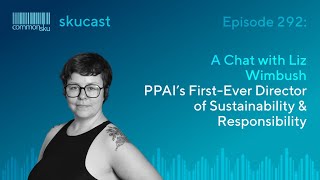
In this Skewcast interview, host Ritika Chhikara welcomes Liz Wimbush, the newly appointed Director of Sustainability and Responsibility at the Promotional Products Association International (PPAI). Liz recounts her previous experience as Vice President of Supply Chain and Sustainability at Genu Mark (formerly Right Sleeve), where she oversaw B Corp certification, supplier vetting, logistics, and production. She explains how that role gave her a holistic view of sustainability that includes social impact, governance, packaging, shipping, and worker compensation. Liz describes the mission of her new PPAI role: to provide vetted education, tools, and standards that help members embed sustainability across their operations, starting with guidelines, partnerships, and a member newsletter. She emphasizes a “progress over perfection” mindset, positioning herself as a collaborative shepherd rather than an eco‑police, and stresses the importance of standardization, shared language, and industry‑wide collaboration. Highlights from the Visionary 200 conference reinforce these themes, especially the need to embed sustainability throughout a company rather than as a bolt‑on. Liz shares personal influences—books like Finding the Mother Tree and Braiding Sweetgrass, brands such as Patagonia and Oatly, and her love of motorcycles, dogs, and mid‑century modern design. She concludes with actionable advice: start small, be earnest, seek help, and remember that no effort is too tiny when it’s genuine. Listeners are directed to subscribe to the PPAI sustainability newsletter for ongoing resources.
Chapters
Liz, it is an honor to have you on Skewcast. I love it.
Thank you so much for having me, Bobby.
And I love that for folks that are listening on audio, Liz just showed up. She's in LA now and she showed up in a Nikki Lane T shirt. And it's really cool. So if you're a fan, you'll know what I'm talking about. Anyways, I am so glad to have you here because this is such an important move that PPAI did and recruiting you was a genius move. And we're going to dig into the details, details about that. But before we do, I think we need to provide some context for the audience that might not be familiar with Genu Mark or familiar with Right Sleeve and your background and your journey. So before we get into your new role with ppai, for those that might be new, you were the VP of Supply Chain and Sustainability at Genu Mark, one of the largest distributors in North America. Liz, what did that role encompass?
Yeah, so at Genu Mark, I led the company's sustainability efforts, so including our B Corp certification, our supply chain management, so vendor relationships, logistics, freight, as well as managing the production and the kidding teams.
Oh, wow. Okay. So your day to day can look wildly different. You can be working on vetting suppliers or manufacturers sustainability, you can be working on production issues related to kitting and fulfilling fulfillment.
Okay, yes.
So it was a wide, encompassing role. But the bottom line is your role at Genie Mark, as a distributor gave you incredible expertise in everything from production to supply chain to sourcing. And I would assume as you grew in your role at Right Sleeve, you, because of your passion for this background in sustainability, you also probably developed a pretty strong expertise in vetting suppliers.
Yeah, so that was something that was a pretty big focus. Even starting at Rightsleeve before being acquired by Genu, Mark was kind of making sure that we were being really careful in our vendor selection and looking at it from a big picture, kind of holistic view. So instead of just eco products, you know, the umbrella of sustainability and how they were looking at it and approaching it as a. As a whole company. So it was something that we, we
focused on a lot to that point. We just had Skew Camp and we had on the stage, CJ Schmidt with hit, we had Dan Pantano with Alpha Broda prime, and then of course we had Neil Ringel with pcna. And a lot of what was brought up was the sustainability efforts going on with suppliers and manufacturers beyond the product, because many of us often don't think beyond the Product. There's a lot going on in terms of processes and shipping and things like that. So is that part of what you're talking about?
Absolutely. So much of what goes into the sustainability efforts in our industry and you know, any industry at large is the stuff that happens kind of in the background. So for sustainability to really work, it has to be pretty embedded in the whole company. So looking at what their social engagements are, how they're impacting the communities that they work in, how their governance structure is set up, how they're approaching shipping, like you said, how they're approaching packaging, how they're approaching the kind of compensation that they offer their workers throughout the whole supply chain really feeds into the whole big picture of sustainability.
Did you have a system for, I don't know of a better word, so forgive me for this terrible word for it, but did you have a system for grading or creating like a list suppliers, or was it not quite that dogmatic?
Not quite, because it would really depend. There was a sliding scale. So if we were working with a supplier that was very niche and, you know, outside our industry, or a supplier in our industry that was, you know, very broad and covered a lot of different products, we would kind of have to rate them as the wrong word, like you said, but kind of scale them differently in terms of how we approach what we wanted to do working with them. So are we going to commit to being a really important vendor partner with this company? Is this going to be somebody that we go to daily? Is it going to be more of a niche company that we only work with for this one project? How much of an impact can our buying power have with them? So if they have a really well fleshed out gift back program, but they don't necessarily have eco products or if they're working really hard.
Right. It's good point.
Setting their carbon or mitigating their shipping impact, you know, those kinds of things could really factor in a lot of the vetting that we were doing.
I'm glad you brought that up. We'll talk about this here in a minute. But this whole binary approach to sustainable partners versus not is, is. Is something I think we as an industry should really learn to embrace. What are you most proud of about that role in your experience?
I'd say probably the easy answer is the B Corp certification. Yeah, that was a really great process to go through. Um, like it wasn't easy, don't get me wrong, there was a lot of work that went into it, but it's really eye opening and helps understand what you can do to improve even if you don't go for certification. So I honestly encourage anybody who's interested in, oh, great advice, B Corp assessment and just start plugging data in.
I love that.
We got really good buy in from the whole company on it. So I was really proud of that and just how excited everybody was to learn more and dig into it. Yeah, I think just the foundation that was laid through a lot of that work was probably what I'm proudest of.
I love that you suggested whether or not you're trying to get B Corp, because what it does is it shows you areas of your business that you can improve. And I've heard that going through the B Corp process is literally about business improvement. And so you're not. That you're there to get a, get a embossed sticker on your, you know, piece of paper that says I'm B Corp. It's actually to sort of change things within. Fundamentally change things in your business architecture.
Yeah, absolutely. And to make sure that you understand where you can best improve and where you can leverage the impact you can have the most. Because that's something that's harder to really know. You know, if you're working in a bit of a siloed environment, it's hard to know how you stack up or how you compare or what you can really be doing to have the most impact. And that assessment really helps leverage a lot of different tools and data to show you kind of here's a path forward. Yeah.
So now, as the Director of Sustainability and Responsibility at ppai, what is the mission and scope of your role?
So primarily it's, you know, PPA having identified the need to have someone providing guidance and resources, like vetted resources, whether that's education or tools or services to members in a world that is, you know, the sustainability, sustainability world is pretty quickly evolving and just finding ways to make sure that we are committed to supporting members in their sustainability journeys.
Yeah. Well, kudos to PPAI for selecting someone to fill this role with actionable experience as a distributor that's so impressive. I love that they did that. And how do you feel your previous experience sort of helps in this new role?
Yeah, I think there's a lot of, there's a lot of sustainability that is very. The impression people get is like somebody looking down their nose at and judging from on high. And I think having the experience I have really helps me with an empathetic lens to look through. Like, I understand a lot of the struggles that the distributors and suppliers are facing. In sustainability efforts in our industry. And I think primarily being able to take those kind of lofty ambitions that everyone has and operationalize them and focus. I think it also hopefully speaks to members being able to trust me a little bit that I understand their needs and have their interest in mind when we're building these resources and tools for them.
Yeah, that's a really good point. What are your most immediate priorities in this new role? What are you, what are you most excited about doing?
First priorities are setting up some standards and guidelines, partnering with the right service tool providers to offer members education and tactical plans to kind of weave sustainability throughout their operations. What am I most excited about? Honestly, kind of listening and learning, really. There's so much passion in our industry and some key players have laid a lot of the groundwork to get us here where we are, with a lot of recognition that this is important and we need to focus on it. So getting to spend my days strategizing how to best embed sustainability throughout the industry from small single person companies all the way up to the really big players is. It's such an amazing opportunity and I'm still kind of pinching myself.
But yeah, yeah, this fits into your passion. It's not just, this isn't just a job for you, this is a passion.
Exactly.
Can you share more about PPI's role as it pertains to sustainability? I think some of us, maybe we have a misunderstanding or maybe we don't know what PPI's role is or should be. Is it standard? Is it discovering partners to help with processes help us understand PPAI's part in my journey as a, as a business owner or someone in the industry.
Yeah. So I think, I mean, both you touched on two really important parts of it. Offering guidance and standardization, as well as some more practical solutions to, like I said, to really embed it. So that's education partner companies that we want to work with and tools, but starting from that foundation of education and, you know, making sure that we're all speaking the same language. So, yeah, being able to point to different terms or glossaries or accreditation companies is one thing, but being able to also offer up those like, tangible tools that companies can use. Yeah.
Can you. How can I, like as a distributor supplier, I'm excited about you in this new role. I think it means a lot for our industry's future. How as a distributor supplier can I plug into this new change going on? Are there resources at PPI that I can learn about or through the ESG efforts there? How can I Sort of learn more.
Absolutely. So right now your best bet is to sign up for our newsletter. You'll get all the latest news and updates through there, including some writings from yours truly. And that's@media.ppai.org subscribe. And there's a couple different newsletters that will come out and a lot of it will be really starting to focus on, like I said, those standardizations and guidance and tools that we're going to be putting out for members.
Cool. We'll link to that in the show notes too. You mentioned that your role is that of a helpful shepherd, not the finger wagging eco police. Can you unpack that a little more?
Yeah, absolutely. There's a lot of emotion around sustainability.
Yeah.
And gray areas. So most people have an opinion and a strong opinion about it and it's very personal. So, you know, a lot of questions around like what can I even do to help or am I doing enough? Do my customers really care about this?
Right.
I think the last thing we need is the perfection police, especially in our industry. It's really the antithesis to progress like that.
Such a great point. Yeah.
I think the key to success is really collaboration like coopetition and celebrating the wins because they all add up and no one is going to get anywhere if anyone is kind of looking down their nose and judging someone else's progress instead of celebrating it and adding their own. So I heard something last week that really stuck with me, which was lean in together, go further. I think that's like the perfect tagline for sustainability.
Speak to that a little more. You attended this critical conference as one of your first weeks in the new role. Can you share a little bit? Was that the primary takeaway? Was there a few other things you want to share from that conference?
Yeah, there were a few other things. So it was called Visionary 200 and it was this gathering of incredible sustainability leaders across all sorts of different industries. And a lot of them were similar themes like progress over perfection and taking a really holistic approach to sustainability. So having it embedded throughout your company instead of it being a kind of bolt on option at the end and that it influences all the different business units, how important it is to focus and operationalize sustainability commitments. Everyone's got, you know, these really lofty goals and instead of backpedaling them just starting and yeah, really that idea of embedding it throughout a company and not having it be something that somebody does, one person does kind of at the side of their desk, having it be, you know, leadership, thinking about it in their Business decisions or operations, marketing, sales, everybody really playing a key part in it.
Yeah, we've touched on this a little bit. But let's say I'm a supplier. Let's say I'm running, I have 50 employees and I'm running a factory, maybe 150 employees. Or maybe I'm larger or I'm a distributor who is maybe 20 grand in revenue or 5 grand in revenue, or maybe I'm a small distributor who's trying to figure things out. And something that you mentioned to me is that we need to think about what progress looks like in this field. Because I for one have seen a lot of progress. There is a lot of progress to be made, there's no doubt about that. But I'm, I'm one of those that sort of recoils at the, at the negative press thrown at our industry or whether it's inside our industry when we just generalize. So it's like the whole Republicans are awful, Democrats are awful. No, actually, all these people living their lives and running these businesses are individuals who make individual decisions. And you speak a little bit more to that because I think how we view progress is such an important part of this equation.
Absolutely. Like you said about it being more individualized, I think progress really starts from people being curious and wanting to start somewhere. So what can I as an individual do to contribute?
Right.
What can my business do? And having it come from a place of what can I do to positively contribute instead of this from a defensive, negative lens? Because nobody, we, none of us do our best work when we're coming from this fear mongering, defensive position of I just want to mitigate. So really looking at it from a positive standpoint, what can I positively contribute? What can my business positively contribute? Everyone is uniquely positioned to do something just a little bit different. And it really all adds up. So like starting with the standardization so that we're all kind of speaking the same language.
Yeah.
Is a good place to start with progress and having some concrete goals that as an industry we can work towards. You know, everybody individually contributing to these instead of it just being. I want to make sure I'm contributing. I'm scared. Here's five things I think I can do, but I have no idea if they're helping.
Right.
You know, collaboration, Collaboration. Collaboration.
Yes. It's like any big values driven goal that has a massive impact in the net result. And that is that instead of asking the question, why aren't we? And whether I'm a key player in an organization, whether I'm an Individual employee. Because I think there can be so much finger wagging inside as well. Why aren't we. It's more. All right, what can I do about this in my particular role? And there may be some small thing that I can do to help move it forward a little bit.
Absolutely.
So let's talk a little bit about Liz. Liz sent me this link to a beautiful triumph motorcycle because we were geeking out over bikes. And this is something that anyone who knows Liz knows she loves riding motorcycles. What else do you like to do in your time off away from work?
I love spending time outdoors. I have two dogs. I love spending time outdoors with my two dogs and just kind of discovering the world through their eyes. I love antiquing and finding really cool vintage pieces. I love mid century modern.
Yeah.
Cool design style furniture.
Yeah.
So I spend a lot of time doing that. And as nerdy as it sounds reading about sustainability,
hey, I love it when your passions in your profession come. Come together. It's such a magical place to be. You know, it's. I love it. What's a book, podcast, movie, or experience that has really made the most impact on you? Folks love this question, and I do, too. Is there one or two or is there two or three? What do you.
What do you. I would say two. Two books.
Okay.
The first one is called Finding the mother tree by Dr. Suzanne Simard. If you haven't read it, go find it. I promise you it's awe inspiring. She's done really incredible research around proving the interconnectedness and cooperative nature of life on this planet and how we're connected to that. It's so inspiring.
Oh, I love it. I wrote it down.
The second is tied. I guess I wouldn't say the second. They're tied with braiding sweetgrass by not
read it, but I know what you're talking about.
Okay. If you haven't read it, do yourself a favor, listen to the audiobook because her voice is magical. And I really love with. With books that the authors are clearly incredibly passionate and inspired about. Hearing it in their voice, I think is the most distilled way to kind of get the content. And her voice is like, I will listen to it probably once every year or two just to be able to listen to her speak. It's incredible.
All right, that's actionable. I'm downloading that right when we get off. I have some Audible credit, so I love listening to audiobooks. Is there a brand or company or organization that you admire and follow for inspiration? I'm sure there are Plenty. But are there a few that really come to mind?
Oh, yeah, there's. There's a lot. Brands that are really focusing on circularity are the ones that are kind of catching my attention these days. So, I mean, obvious. Patagonia, there's a couple Canadian ones, Annualaire and a Nain a Nian I believe is how you say it. Both clothing companies that have really, really great programs and systems around circularity. Oatley, the Oat beverage recently introduced me to this concept of a carbon handshake instead of a carbon footprint, which is the carbon emissions that you mitigate so that aren't being put out because of what you're doing. So instead of your carbon footprint being all the carbon that's contributing to what you are doing, it's this what's being not put out because of something that you're doing. And they're just super transparent. It's really inspiring. Their marketing is pretty fun too.
That's awesome.
And then within the industry, I'd say companies like the Good Tea, Sanmar, Gemline, they're all doing really great work in different areas of sustainability that are really inspiring.
That's cool. Final word of advice for those who might be struggling with their own sustainability initiatives, or perhaps those too overwhelmed even begin thinking about it. And even if we have to repeat something we said earlier, it's probably great that we hear it again.
Totally. I'd say there's no effort too small when it's earnest. Just learn about what you can do from a local or a personal level and start there. And just start. Don't worry about being perfect. Don't be afraid to ask for help or advice. If you see somebody doing something that you think like, ah, yes, that I wish I could be doing that, like, just reach out and ask them. This is something that, you know, everyone is in this together and everybody wants you to succeed in sustainability. There's nobody who's, you know, rooting for you to fail or not be as good as they are. Ultimately, everybody succeeds together. So just ask for help, talk about it.
I love it. Very actionable advice. Liz, I'm so thankful that you joined us here today and I am so proud of you for this leap that you're helping the industry take forward. And we are watching with admiration and thanks for also just being a generous partner. We know we can reach out to you if we have any questions. We'll link to everything we talked about today in the show notes, but enjoy your weekend.
Thank you so much. You too.









