Episode 294: Inside the Mind of Polyconcept CEO, Neil Ringel: A Client-Centric Vision
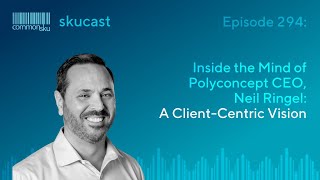
In this 30‑minute Skewcast interview, host Ritika Chhikara talks with Neil Ringel, CEO of Polyconcept North America (PCNA), about the company’s recent sustainability achievements and strategic direction. Ringel explains how PCNA earned a silver Ecovadis rating—the first time in North America—by focusing on value‑chain impact rather than internal efficiencies. He details the company’s conversion to a public‑benefit corporation, embedding ESG considerations into board fiduciary duties, and launching the ProudPath program to give distributors transparent, third‑party‑certified product information. The conversation contrasts stricter European sustainability regulations with the more self‑regulated U.S. market, highlighting how European learnings are applied stateside. Ringel then outlines the importance of electronic purchase order (EPO) integration, describing how clean, data‑rich orders reduce manual handling, speed fulfillment, and lower operational costs. He discusses PCNA’s product‑assortment shift toward higher‑end, sustainable items (good‑better‑best strategy) and the phasing out of low‑value disposable products. Amid broader economic uncertainty, Ringel shares a cautiously optimistic outlook and three 2024 priorities: deepening digitization (EPO, ProudPath), strengthening distributor partnerships, and expanding premium, eco‑focused brands. The interview closes with personal reflections on mentorship, a recent leadership book (“Multipliers”), and Ringel’s off‑work interests.
Chapters
Well Neil, welcome to Skewcast.
Thanks for having me. You bet.
I want to talk first of all about one of your favorite topics to get kicked off. Just jump right into the deep end on sustainability. Ecovatis is the world's largest and most trusted provider of business sustainability ratings, creating a global network of more than 100,000 plus rated companies. Ecovatis sustainability recognition levels are based on the percentile rank of your company's ecovatis score and PCNA was given a silver score or rating, putting you in the top 25% of all companies they evaluate. Such a huge accomplishment for a pcna. What about that accomplishment should we know about? Like, I feel like we might underappreciate a big initiative like that.
Well, firstly, thanks for the recognition. We're really proud of achieving a silver rating our first time out. Yeah. And it really is no easy accomplishment. Our it takes our entire company to do this. So I'm extremely proud of our team. The thing I like about echovatis is the scoring methodology that they use is contextual to each individual industry. So that means the PCNA is essentially rated against our peers in key categories like labor and human rights, ethics, environmental, sustainable procurement. So Echo Bottas is really challenging for folks like us, for suppliers like pcna, because we're scored most heavily not on the activities within our direct control, things like changing our lighting, all those things that are important internal waste streams, but really more on our ability to effect change across an entire value chain. Things like sustainable sourcing and design factoring, supplier oversight, stuff like that. So it's really hard to get silver and we're very proud to have accomplished it.
We were talking about accents right before we got on, so Ecovadas. Ecovadas. You can tell us Texas boys going to keep calling it Ecovadas. Anyways, you said first time out, was this the first time you had actually attempted this?
It is. This last year is the first time we applied. We have a couple of years under our belt at PF Concept over in Europe, but this was our first attempt in North America.
Something that you mentioned and talked a bit about, SKU camp, is that Eco and ESG permeate practically every decision you're making at pcna. Can you give us a glimpse of what that means and what that looks like? I mean, for example, what would be a current initiative that you yourself are working on as a priority for the business?
Really good question. Let me start perhaps with the. I want to start with what I think is the best example and then I'm going to Give you the specific answer to what's on. On. On my platform.
Your desk.
Okay. Yeah. Maybe the best example is that earlier this year we took a major step as a company in integrating sustainability into our core mission and as a business. We actually went out and updated our charter and reincorporated ourselves as a public benefits corporation.
What does that mean?
So what it essentially means is that our board of directors is now required to include considerations for all social and environmental missions into their fiduciary responsibilities. So we're kind of holding ourselves accountable at the highest level and leadership and commitment starts at the top. And it's a big deal for us and it really sets the tone for how we run our business. Now, that's specific what's on my desk thing. I want to see more sustainable products. I want to see our sales accelerate in sustainable products because that, that means that we're creating a positive impact out in the market. So what are we doing? We're trying to make it easier. We launched our proud path initiatives. We're trying to provide as much transparency and third party certified credibility as we can to our distributors. So when they're out talking to their customers, they're doing it with confidence. Yeah.
What does an A look like for you in this category? It's such a big. It's such a daunting initiative. Like, it's so big, sustainability is so big, and there's so many things that you can approach it or attack it at. What's a platinum rating look like?
I. I think it looks, it looks like what we've accomplished in Europe already. I, I mentioned earlier that we've been at the GVADA certification in, in Europe. I think we're on our third or fourth year. We just went from gold to platinum in Europe.
Wow.
And, and platinum is. You're in the top 1 or 2%. To me, that, that's an AUS. And so we aspire to do the same thing here in North America and we're not going to stop until we get there. But, but for us, it's really more, it's more the journey than the destination, to use a bit of a cliche. But I don't think we're ever going to truly get there because I think the goal line is going to continue to move. But boy, I sure would like gold next year on our way to platinum.
Since you have such an intimate connection with leadership in Europe, what is the distinction, what is the biggest distinction with what they're doing in Europe with their sustainability initiatives and what we have here? In the us Is it about customer demand? What do you think it is?
Well, I would say the EU has set much more stringent goals for product, for transparency, etc. The US has come a long way, but it's not as far along as Europe is. So the standards are higher. And what we've learned in Europe, we're applying in the us which is one of the reasons why it's helped so much.
I see. So real tight regulations from the government in Europe, but then you can apply that and self regulate or self govern here in the U.S. exactly.
That's a.
That's a very American thing to do, by the way.
Well, you know what? It is. And we can also admit that Europe is first in this regard. Yeah, we have some catching up to do.
That's what I've heard a lot. Let's talk about one of our favorite topics, and I know it's one of yours. It's not just me saying this is technology and process. At Skew Camp, you said this quote, our job is to help you expedite something that ends up beautiful in your customer's hands as fast as possible. Probably a great. One of the best succinct lines I've heard about our business from a supplier ever. We're all trying to solve this problem with technology and process. Both Commons Q and PCNA are committed to make this happen. And the EPO process has been crucial to our mission together, to make distributors lives easier. So I'm going to ask the basic question. For those that are new, for those that maybe tired of the lingo or maybe they've new to all of this and why is it important? Why are EPA EPOs so important to PCNA in particular?
Because they're important to our distributors as well. And that was a good quote, man. I'm going to write that down if I said that. But look, let me break it down. In Its simplest form, EPOs come into us electronically. And because they come in electronically, common SKU is requiring certain fields and data to be in there. So when we get that po, it's a clean order, so to speak, and it goes right into our system with no human intervention. And that means faster turnaround times. Yeah, right. So I think all of us know, and I think the entire distributor community knows that there's a lot of back and forth that takes place on an order. Often because somebody left something off inadvertently, a field isn't fully complete, there's not enough information. The EPO solves so many of those problems. So for us, it is about expediency. Right. One of the things we talked about is a fast order. And a fast order starts with getting the right information.
Yeah. How does EPO integration impact your infrastructure? That's a, that's a really big question. Because of the support resources allocated to chasing down none EPO problems, the back and forth, the you. You forgot your. To attach your art, you forgot to do this or all the things that we know that are dozens of problems. Are you able to put a percentage or a figure to go?
Cost savings, It's a hard one. Clearly there are savings. I don't have an. I don't have an actual number. But what I can tell you is this. The more clean orders we get, the more efficient we get, the more efficient we are, the faster we produce product and the more accurately we do things that that back and forth process. I think this industry has accepted that that is a cost of doing business.
Right.
I just don't believe that. And I think what common SKU is doing with the epo, what we're doing to receive the EPO is promo standards. All of those things lead to a better, more elevated experience. And that, that's. We're all shooting for the same thing. Yeah.
And for me as a distributor, what I love is the EPO process causes. It's almost like sustainability and regulation in Europe is that we're requiring you to certain things before you can ever get that PO across the line. But when you do, it goes to the first of the line in PCA's factory because you're not having to put it in a hold or waiting pile or anything like that. So as a distributor, I love the fail safe of something like that.
Yeah, I'd love it for all those reasons. Look, a clean order on an EPO cuts the line and gets done first.
How do you think this will fundamentally change our business in the future? What is the. What does the world look like when we really have, you know, 100% adoption? We actually have really high adoption with PCA and I think it's the highest adoption we have so far. It's tremendous.
Look, what's it do? I think it short. It shortens the cycle at every step. Look, the one thing none of us can get back is time. Right? I mean it's. It's just we don't have enough hours in our day. We know that the AES out there who are selling certainly don't have enough time in their day. Going back and forth on a PO is something that can be eliminated. Right. Time can be Used to actually sell something or serve somebody and not just work to get an order to flow through the system. So ideally we'd love to see 100% of our business be like this. Now the reality is the EPO solves one problem, it doesn't solve all of them. There's still back and forth that takes place on art and a number of other issues, but little by little technology is going to solve these problems. And we're trying to lead the way there. And I know you are as well.
Yeah. Since you have such a macro view at PCA and you work with your partners in Europe. One thing you mentioned at SKU camp was the economy. There's been some economic pressure, particularly over the last few months. You referenced we're likely in a recession. When you were at SKU camp, but you said something really interesting about the trade offs you've seen. We've seen. You said we've seen less orders from certain industries, but we haven't seen a trade off against lower quality. And it's really refreshing to hear. It sounds like PCNA is really pushing toward these higher quality items and we sort of keep that. Whereas pre pandemic, I think we saw a lot of more inexpensive items, but we're seeing the order value and all kinds of things increase. But that's part of a strategy, I'm guessing, right?
It is. Look, we, we're a large supplier. We have approached the higher end of the market with retail, third party brands. Yeah. Things like, like Stanley and Herschel. And for us that's part of a good, better, best strategy with those higher priced products, high quality products, recognizable brands being amongst the best things in our assortment. We've also eliminated a lot of items at the lower end of our assortment. It doesn't mean that we're not keeping that full stratification across our business. It means that we have the environment in mind as we work our assortment. So we won't add a product if it doesn't meet our proud path standards, if it doesn't have some give back associated with it or recycled content associated with it. So we have gotten out of some of the lower end disposable landfill type products that the industry may still want. We're just choosing to move toward a higher end product. And we've seen great adoption there. Yeah. At the same time, to be crystal clear, they'll have lots of stuff less than a dollar or two, just not as much as we used to. And we're leading more into recycled goods. Yeah.
That's had to impact Profitability and order size and all those kinds of things that impact both suppliers and distributors, given the multiple international crises that are sort of erupting around the world. And as we speak, there is, you know, obviously devastating events happening around the world. Do current events impact you production now? I mean, what are you keeping your eye on, internationally speaking, that impacts you and subsequently customers?
Well, I mean, look, we, we're part of a great big world, right? And I think it goes without saying what's going on right now in the world is just gut wrenching, heartbreaking and just at a human level, just, just awful. As far as its impact on us, I, I worry about the impact on our people on our team. We have people have family members in the Middle East. We have people who have family members in Ukraine. We worry about them from a. I think your question is probably a little more about supply chain. Look, during COVID the entire industry was, was impacted by supply chain bottlenecks. We're not seeing those right now. And, you know, we keep our eye on geopolitical things, but right now it's business as usual.
I'm glad to hear that. And yes, you're exactly right, and I'm so glad you brought it up because we have a very international team from our Toronto base. We have very international team, and that's a really good concern. I'm glad you brought it up. Just for our audience to be aware that we have employees that might have family members that are affected in a very tangential way. But this isn't about supply chains. It's just about humans and us connecting with each other. Let's talk a little bit about Neil, NJ kid who became CEO of PCNA. You often determine priorities for the organization, but you're also involved in challenges from time to time. What are your three priorities heading into 2024 and what's your outlook?
My outlook? Look, I'm an optimist. My outlook is cautious optimism that whether this is an official recession or not, there's definitely a malaise that, that hangs over the economy right now and a lot of uncertainty because of things we just talked about. But I'm an optimist. I believe in the better nature of things. And I do believe that things will improve economically in this country and around the world. As far as priorities, only three you have to choose. Dude, I'm still thrown off that you called me a kid, so I'm thrilled. Look, first and foremost, our entire team approaches our business the same way. Good economy, bad economy, it doesn't matter. How can we Be a better partner to our distributors. It's not about how can we grow more. We'll grow more if we're a better partner to our distributors. So it starts there. And to do that, the things that we're focused on right now as a business, continually transforming our business by adding more digitization and more tools. Things like EPO, continuing to digitize. Proudpath, where we spent the 10 minutes of this. This discussion today, our eco and our ESG initiatives, we're not done. We're just starting on that journey, providing unique insights and tools that will help our distributors grow. What can we provide that maybe others can't? Or if they can, hey, that's great, too. But what can we do to help you grow? And going back to that product strategy, adding more great brands that end customers want, I mean, that's what we're looking for. Yeah. Going into 2024.
So back to that kid in Jersey who came up. What do you enjoy doing when you're not working?
You know, my kids are grown, so when I get to see them, it's a treat. My wife and I have. Have a dog, and we're lucky to be in a place where we can be outdoors a fair amount. Like to play golf when I can. And, yeah, just make. Just. Just kind of be useful and make good use of my time.
Who's made the biggest impact on your career? Do you have a mentor or friend or someone who's really guided you through the years?
Yeah, look, when you're a kid my age, Bobby, you probably pick up a few. You know, you might have picked up a couple along the way. Yeah, no, I have a few people that people wouldn't recognize their names, but they mean a lot to me. Guys like Joe Doody and Jay Baytler and Shira Goodman. These are people who have just had a tremendous impact on me because I've seen their leadership skills, and I've tried to take the best from all those folks who've been great mentors and friends to me over my career.
Yeah, the community loves this question, and I do, too. What book, podcast, video, movie? What's made a really big impact on you lately? Or what are you reading or listening? Listening to? That's changing the way you think.
Oh, man. So I went to a conference recently, and I heard a speaker by the name of Liz Weissman speak. She wrote a book called Multipliers. It was on a New York Times bestseller list. So I went out and I got that book, and I'm not through with it yet, but I am enjoying it and learning quite a bit. And it really is about the power of leadership and how leaders can either SAP energy or. Or multiply energy. It's really good read.
It's great. Thanks for the recommendation. Neil, thanks for joining us today. Thanks for hanging out with us for a quick 30 minutes for a chat. I love talking to you.
Yeah, thanks for having me. It's great seeing you.
You bet, buddy.









