Building an Inclusive Workplace: The Role of Talent Acquisition in DEI | Rajeev Sharma
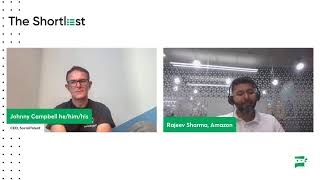
This content was created by Johnny Campbell. This content was uploaded by Johnny Campbell. This is a YouTube video titled "Building an Inclusive Workplace: The Role of Talent Acquisition in DEI | Rajeev Sharma" created on June 8, 2023. It features a discussion between Johnny Campbell, CEO and co-founder of Social Talent, and Rajeev Sharma, Director of Talent Acquisition for APAC and MENA at Amazon. They explore the role of talent acquisition in promoting diversity, equity, and inclusion (DEI) within organizations, discussing strategies, challenges, and the impact of technology on DEI initiatives.
Chapters
You're very welcome. It's episode 140 of the shortlist. My name is Johnny Campbell. I'm your host for the next 40 minutes or so. I'm also CEO and co founder of a company called Social Talent. And today on the shortlist, we're going to be talking about how do you build an inclusive workplace and in particular, what's the role of talent acquisition in diversity, equity and inclusion. So in this episode we're going to be exploring the critical role that Talent Acquisition plays in and driving, or being the front end, if you like, of companies, DEI initiatives. And how do you then from there create a diverse and inclusive workplace? And why would this be an objective of your organization? We're going to look at some innovative strategies that TA can use to increase workforce diversity, but importantly also create equity and a sense of inclusion within the organization. And our guest today, who I'm very, very excited to welcome to the show, to dig into this topic is Rajeev Sharmat. And Rajeev is the Director of Talent Acquisition for apac, that's Asia Pacific and Middle East North Africa at Amazon. And prior to joining Amazon, Rajeev was the head of TA for India and APAC at Bank of New York Mellon. And before that he worked in recruitment for Barclays Shared Services and boa. So an illustrious career with some really esteemed organizations and, and working for an organization I think everyone on the show is going to be familiar with. Rajeev, it's an absolute pleasure to have you. Thank you for joining us this evening to discuss this topic. Perhaps you might explain to the team a little bit more about what your role is within Amazon, the team you have some of those focus areas and maybe why you got into this area and why DNI in particular is an area or topic that you're so passionate about.
Right? Thank you so much, Johnny. Thanks for the opportunity to talk about dei, which is very, very close to my heart and of course all of our listeners as well. A little background, spent about 20 years in recruiting across three different banks before joining Amazon. So, you know, started with bank of America, then Barclays and then bank of New York Mellon at Amazon. I've been here for four years now. My current role involves a team which is responsible for hiring across all of the various fields that Amazon supports, be it operations in terms of the fulfillment centers, the supply chain, the marketplace itself, across various tech and non tech roles, especially around a growing technology space that we are all operating in. And there is also a team that I support which does sourcing for global teams. So I have a center of excellence in India which is doing sourcing for all of our Amazon positions globally and trying to hire for those positions. So in a way I kind of touch recruiting across all of Amazon. That's a little about my role and the team that I work with. And DEI for me personally, I feel is something which is just beyond, you know, a good thing to do. It is the right thing to do. It's been proven over many, many researches that all of our customers, all of the people that are there who are building these communities are really important for us to be able to take them along and the representation we have from a workforce perspective as well. So it's only important for us to bring all of that to light. And that is why building a diverse team definitely is something that all of us are working towards within that talent acquisition space. And I think I personally am trying to champion that.
So Rajiv, this is a topic that I've personally been engaged in for nearly 10 years as social talent. We've had training content for eight years on DEI. And if I'm being honest, it was diversity. When I started doing this, it wasn't the E, it wasn't the I. There was no B. We just talked about diversity. And it also wasn't usually popular, as in nobody had a problem with it, but nobody was asking for it. The summer of 2020 I felt was a critical, pivotal time to really change the world's focus on dei. And it kind of really, really went up a notch. If you look at Google searches, they went crazy after that, that summer and it kind of shifted into a whole new gear and regulation came in in different parts of the world. So we're in 2023. If you look back at then let's go back 10, 15 years, even 5 years and now what are you seeing are the big differences? And then in a 2023, 2024 context, how is it evolving do you think in terms of the priorities and the way organizations are looking at DEI today?
Yeah, I mean it's changed quite a bit. I think if we look at 10, 20 years back, organizations focus on DEI was limited to complying with local anti discrimination laws or maybe providing a training for all employees on how to avoid violating those laws as part of onboarding practices. I think DEI has emerged as a field. Much of its efforts were focused on gender and racial equality in the large part due to the socio political climate of global economies and countries. The DEI that we see now is expanding into marginalized groups, including people with Disabilities, neurodiverse folks, lgbtqi, and people that sit at the intersections of multiple marginalized identities, including women of color, queer and trans people of color, etc. So I think there's been a momentous shift away from just, you know, meeting the law and abiding the law versus representing what we call as the right workforce for us. And companies are taking a more intentional approach to advance diversity, equity and inclusion. In fact, equity is playing a larger role in, you know, all of the life cycle, from recruiting to retention than ever before. The long term success with DEI requires more than just hiring the right people. I think this looks like, you know, auditing all of our employee lifecycle metrics through a demographic lens and identifying where you have the large disparities that you can invest in programming and policy based solutions to close these gaps in a more intentional way. So I think there's just been quite a bit of training, upskilling, mentoring that has come to the forefront, which was earlier, not there. It was more about doing what the law required. So I, I think that shift has been massive.
I love that kind of, you know, evolution because I think you're right. Starts with compliance and then it's moved, moved on a lot more to be much more business focused. And I've seen some friends that, we've discussed it many times on this podcast with different listeners and with different guests. And some of your points you've made there have been echoed by others. So, for example, you know, you see the expansion from what would have been. I agree and I'll use my words here, the kind of more us focus on race and gender, which was almost exclusively a two issue piece on diversity to I know that in social talent we look at eight different levels of difference. You know, we talk about neurodiversity, physical disabilities, we talk about faith, we talk about socioeconomic backgrounds, we talk about sexual preferences, we talk about gen, of course race and of course gender and other areas. But there are so many other differences and there are so many intersections that exist within that as well. But you made the point around equity, which I love because the more I've got to understand equity, and we've discussed it again with others on the podcast, but I come back to it because, you know, if you're equitable, you kind of solve for everything, don't you? Because that's, you know, you know, equity is blind to the difference. It's more that you are there to support everybody regardless of their difference, regardless how they might be underrepresented in talent and opportunity, et Cetera. And you're there to help everyone who perhaps isn't, who needs that help, who needs that support, regardless of the category. In fact, you don't even need categories. Is that something, though, you see everywhere? Because dei, I think I've experienced is different in the US In Europe, in Asia. Different parts of the world have different focuses and different priorities. You're in a global role in many respects, Rajiv. You see global hiring, global teams. Do you see that difference, that kind of different focus depending on the region or geography, or is that blending away, do you think?
Yeah, I think there are quite a bit of, you know, unique aspects that every region or country brings along. When we look at, let's say we talk about India from an India perspective, I think while we've made huge efforts and, you know, movement when it comes to, you know, gender, but when we look at people with disabilities, when we look at LGBTQIA is when we look at even some of our armed forces and. And while we don't consider them into, you know, the overall DEI framework, but these are also underrepresented cohorts. So, you know, our armed veterans, all of these. I think there are specific nuances that are yet to be developed if we. If we move to, you know, Middle East. The nuances on nationalization, there are laws which ask you to hire people with specific nationalities because, you know, the representation of them in the workforce has kind of become a key point for the. For the government. So when we look at Emiratis, when we look at, you know, Southwestation, all of that, if you go towards Australia, you. You realize the indigenous tribes and, you know, originals and how do we include them and how are we partnering with those communities? I think that's coming to the forefront. So there are different sections within which I think every region comes and kind of sometimes double down on. So there are certain Asian countries where you would find women are much more in the workforce than most of the men. So they are generally very. I'd say from a gender perspective, they are already diverse. But when you look at the leadership roles, do you see the same level of representation? And sometimes the answer is no. So the lens there will change from. Rather than having, you know, women across the organization also focusing on, do you have enough, you know, women in the leadership and is there a glass ceiling? And, you know, those kind of conversations coming through. So I think there are those nuances that are coming to play again in different regions, but gender, lgbtqi, as well as people with disabilities, and, of course, you know, race and ethnicity are some of the major ones that does feature in most of these regions.
It's often said that what gets measured gets done. And in a DEI world, you know, you can have great intentions, but it's. Unless you can measure, improve that you're making progress, then it's kind of difficult. But some of these differences are harder to measure than others. So gender might be estimated by somebody's name, or they might fill out the form and perhaps even their ethnicity. But some of these other areas of difference are just much harder to try and measure, therefore probably harder to focus on because it's hard to see the difference. How has Amazon approached this challenge of measurement? And what are your learnings you could share perhaps with other organizations around the importance of what you measure, what goals you set.
Yeah, I mean, you're absolutely right. I mean, if you can't measure, you can't improve. And certain areas it is very difficult to measure. So in certain. So when we look at our recruiting process, you know, when somebody comes in and applies through Amazon Careers job, then they are trying to, you know, apply for a role. They need to fill up a form and they. The online application has a self id. Now you can do a self ID either, you know, you know, we ask questions, which is optional because you cannot make it mandatory. As an equal opportunity employer, it is an optional, you know, question for people to answer. It could be about, but that could be limited to certain aspects, which is around gender. We have added now, you know, people who are from armed forces and veterans or in certain cases in certain countries, people with disabilities is to be tracked because it is a government mandate. For example, in Japan, a certain percentage of your workforce has to be, you know, representing people with disability. But I think these challenges are real. And some of the ways we are trying to address those is through our various business resource groups and those BRGs. And we have these networks for our employees where they can just come up and join those networks. You don't have to identify yourself to be part of it. So if there is a. There is glamazon, which is, you know, for people who are very passionate about working in, you know, for lgbtqi, you don't have to be identifying yourself, but of course, you know, it's about how do we ensure that people come together as allies and just spread more awareness about some of those aspects. Gender as a whole is still the most measurable, I'd say, across the organization. And of course, in, in terms of us specifically, I think it is, you know, the, the racial ethnicity and all of that is also getting measured. But beyond that, it, it still continues to be a challenge that we need to work towards. And I think that's where, when you have to operate with in the right spirit, you just need to create all of your programs, policies, allies, mentoring to be able to enable those groups and let people be comfortable to come forward. And in certain cases also self id.
I remember many years ago I met with a team of recruiters for one of the big semiconductor manufacturers, let's just say, and the TA team have been working very hard to hire more diverse talent or talents into the business and they've been quite successful. And they've been doing this for a few years to try and reach a corporate objective for diversity across the whole organization. And they were very frustrated because they were hiring in folks who ticked the box from a diversity perspective, as in, they were representing the underrepresented communities they were trying to hire from. They were coming into the organization, but they were exiting within six to 12 months. And so those same vacancies were coming back on the TA team's desks. And they were very frustrated because they felt they were working so hard to drive diversity. But obviously the company was not inclusive enough. There wasn't a sense of belonging that kept those individuals. And I wanted to kind of put to you, what is the role, therefore, do you think, of talent acquisition? What role can they play in not just driving diversity, which some people see as the front end, you know, changing the shape and complexity of who comes in the front door, but how can they perhaps move even forward into inclusivity and equity? And what have you seen to work within a TA environment and their role in a wider DEI initiative?
Yeah, I think when we look at talent acquisition, you know, it is the face of the organization, you know, it is what is the first contact that any team has with a prospective candidate? And a lot of it starts from how do we develop our hiring strategies and how inclusive is it right from the job description? You know, does the language in the job description, is it gender neutral or is it biased towards a certain section people? How do we eliminate those, you know, conscious and unconscious biases within the starting of the hiring process? I think it starts from there. And as. As the talent acquisition builds its sourcing strategy in terms of actively seeking out, you know, diverse talent by implementing various, you know, strategies, they are also listening more to the candidates and what they are seeing. And as you listen to their candidates, I think they also tell you a lot of things. That is a certain perception of the organization as Such, and how are you making sure that you are feeding that perception back within the right forums, within the right branding, employer branding or employee value proposition and the communication so that when we are going back with the right message to the, you know, to the prospective candidates or our target audience, they are able to see very clearly what's the purpose of this organization and does the purpose align to what those individuals are seeking? I think these days, if you look at millennials, they are much more aware about, you know, having, you know, having, asking questions to say, what's what's your goal on, you know, the, the climate pledge, what's your, you know, goals on sustainability, what's your goal on diversity and your, you know, what's the work that you're doing on inclusion? So I think the candidates are more aware these days and they are also very expressive about what they would or wouldn't expect and the quality of environment that they want to be in. So TA team can continuously provide that feedback to the right forums, to the right channels and the larger community that is working towards the whole life cycle from hiring to developing to retaining that talent. I think that's really, really critical and removing those biases. You know, the interview process, you know, when a candidate comes in and is giving in five interviews and does not see enough representation, which is also diverse, that does give a lot of indication, you know, so I think TA is the catalyst which can listen in to what's happening in the market. It is an external facing function and then it can give the right inputs to the teams internally who can then build the right strategies to be able to become more inclusive, to build the right equity in the workplace and that allows our organization to continue to retain that talent. I think, I think those are some of the ways TA teams could be, you know, contributing just beyond the talent acquisition, which is of course, you know, you build the right sourcing strategy, you get to the right people, you put the right message out there in terms of recruitment, marketing and branding and, you know, highlighting the company's commitment to diversity and inclusion. But it's, it's the partnership that TA has to have with the talent management, with the HR business partners, with our businesses, all of that is really, really critical.
I want to dig into some of that because I agree if you move beyond having the right sourcing strategy, looking at your employer branding, highlighting the efforts, initiatives that your company work on, making sure that you have done the work around your job descriptions, etcetera, you move into kind of process pieces, then in terms of what we also often talk about being an inclusive hiring process. And that process process goes beyond the TA team. It extends into the interviewers, the hiring managers, the HR colleagues who need to get involved. What works to try? Well, first of all, what are the challenges there? What are the kind of, you know, key wins to try and focus on in terms of priorities? And then what are some of the initiatives you've seen that work well to debias that process to drive more inclusivity in the process, you know, beyond the sourcing and attraction stage, moving into the hiring stage, what are the challenges? What are some of the solutions you've seen that work?
I can give you some practical ones and some of the learnings that I have seen. And these are simple things that happen every day. For example, there is a certain process within hiring where recruiters tend to send cvs to hiring managers for them to review. Now it's a very subjective process because not Everybody uses professional CV writers to be able to write the CVs which means the ability of a resume getting shortlisted could be on the basis of how the hiring manager perceives that cv. And are we eliminating that through maybe a more objective way, which is an assessment, which means everybody who's gone through an assessment which is defined for a certain job function or for a certain role directly goes in and has an interview. So we eliminate those processes which are non value adding or are very, very subjective. And we saw the, a huge difference. Back in one of the organizations we did an experiment where we actually eliminated the whole CV screening process. And we said anybody that is to be in, that is to be interviewed should have already gone through an assessment. And we saw a lot of those candidates who were rejected were actually clearing the assessment and ended up being, you know, getting hired as well. So I think that's, that's one such example. The other is about the interview loops that we are setting up. Do we have diverse panel that is coming in for the interviews and does it represent the organization? Well? Those are definite cues which allows you to be able to assess the candidate from all aspects and you know, eliminate any bias that one or two individuals may have. So that's, that's the other one. Eliminating the whole need of very, very specific, relevant experience. And I'm in. You know, I'm not saying that relevant functional knowledge is not important, but I feel that in the, the, in our attempt sometimes to go for functional skill, then I'll give you a very simple example. If you're going and hiring for a field role which is, you know, a typical Expectation is to go and get somebody from a manufacturing background. Now if you end up hiring everybody from a manufacturing background over a period of time, all of the people who are working in that function will be from similar organizations, similar thought process, similar assembly line kind of a mindset. So how do you build diverse perspectives? So we've tried to eliminate the need for us to give too much of focus on functional and over index on our leadership principles because you can always train for functional knowledge. What you cannot train for easily is, you know, your leadership principles or in certain, you know, it's those behaviors, your, you know, so behavior event interviewing is some of those ways of how you can eliminate the need for people to be getting hired just on the basis of sometimes just the functional knowledge. So having the right focus on leadership principles, having the right focus on building a more diverse interviewing panel our ways Amazon has a bar raiser concept and most of us are aware. I think that also brings in a lot of neutrality within the interviewing process, which means that it is not just incumbent on the hiring manager to be choosing who they should or should not hire. It's, you know, it plays an important role and where a bar raiser comes in with a perspective, with a much more experienced mindset and awareness to be able to showcase what are the right things that we should be focusing on a candidate. So I think those are some of the ways, you know, we've built and TA teams could continue to look to achieve through.
I love that we've talked a bit on the show already about skills based hiring and behaviors based hiring. Moving away from experience as being the only thing you look for because I think you're right, not only do you tend to hire a homogenous group of people who think alike because they've all come from the exact same background. But opening it up to leadership behaviors or skills that are transferable across many roles and industries also opens up the talent pools. And the Data shows typically 10x. You know that you'll find those folks. But it's harder to like you mentioned, you, you lead a global sourcing team. It's just harder to source for behaviors and skills above experience. Experience is like there's a group of manufacturers in an area employees with this job type and those companies are going to be fine. Like how do you reconcile that challenge where you know, okay, somebody with different skill, these core skills or values, but it could be coming from any industry, you know, they could do the job. Does it push it kind of away from the sourcer doing keywords and more towards the assessments.
I think the way we like to break it down for our sourcing team specifically or even for recruiters is so again an example to take is if you're hiring an ops manager who's going to be doing a role in one of our fulfillment centers. So what are the five things that we are looking for? We're looking for somebody who can understand data well, can understand the numbers, is able to look through, dive deep and identify the problems and problem solve. We are looking for someone who can lead large teams. So people management, again people management is not specific to a certain industry. Operations is everywhere, data is everywhere. So it's not also tied to a certain industry. The expectation of a continuous process improvement mindset and how do you continue to learn and look for solutions or improvise? So we break it down to say if anybody has done, has managed a team, has worked with data, has worked with people, is able to have innovative ways of problem solving, then those are the people who would fit in the job. Now they could come from a hospitality background, they could come from a hotel or a services organization, they could come from manufacturing background, or they could be working in a restaurant or even a large IT enabled services or a third party bpo. These skills could be common in all of these industries. So rather than going for specific industry, we try and open the funnel and we say if you were to open the funnel and look for these five traits or skills and then able to translate that into what the role role typically requires and how do you position the role. So it's important for every sourcer to have the right pitch. So do we have the right pitchbook for them to be able to pitch the role and say, hey, why does this role resonate or should resonate with you or does relate to you in terms of the background that you carry? I think that's where we try and establish the mechanisms where sourcing can go beyond just keywords and allow to open the funnel. Because sourcing the largest problem is we end up creating the funnel too small by becoming very specific with certain keywords. So our focus is opening the funnel and then filtering it down to the right leadership principle.
The OR operator used to be my favorite one. It's how you open your search and it's what you need to do when you're finding particularly difficult to find skills. So I love that explanation, Rajeev, of how you open that funnel. That's fantastic. Let me, let me turn to a topic we mentioned briefly but moved off and that's the topic of equity. So A lot of people understand diversity. They understand that you can look in different talent pools for different underrepresented communities. You might do keyword searches or partner with organizations who are invested in those communities. People maybe understand the concept of inclusion. So feeling like you belong in an organization, feeling like you're included. But sometimes I've discovered people get a little bit lost when they think about equity and particularly when they think about equity and how TA plays a role in equity. What are your thoughts on equity? How does it play out in Amazon and through some of the initiatives that you and your team or other teams execute on?
I think so far diversity and inclusion has been more familiar. And if we look at the focus on equity and there's been a debate about equality and then equality, move to equity. The best way to put is equality about making sure that everybody has a shoe if they are playing a certain sport. But equity is about making sure that everybody has a shoe which fits them so they are able to use those. So from a recruiting perspective, are we able to give the right tools to our teams which they are able to use to be able to finding the right talent? So it's not always about using the similar technology or products. It's about using the right products that allows our people to be able to excel in what they would like to do. So I think those are ways of how we want to classify between equity and equality. And inclusion equities is all equity and equality and inclusion equities is also tough to measure. It's, you know, because it's tough to measure. It's, you know, because in an, in a TA organization, for example, and I've seen that when I started in my previous, you know, roles within the organization, all of our applicant tracking systems or tools were only catering to English as a language. And I'm just giving that as an example. When we realized that the target population that we were trying to reach out to did not all speak the same in a TA organization, for example, and I've seen that when I started in my previous roles within the organization, all of our applicant tracking system language, which means recruiters were finding it extremely difficult to be able to then create the job descriptions or, you know, the right landing pages for them to be able to, you know, apply for those jobs. So any tool that we build the. There has to be, there has to be a global mindset to it, which, which means that the use case is that pick four countries which are very, very diverse and try and find a use case before we build a product to Say will this, will this product or tools were only catering to English as a language and I'm just be applicable in all of these countries or with extremely different requirements. And that's the first phase when we are trying to build any tool or any process. So are we able to build that for us to be able to use it across the organization, across geographies, across languages? We're trying to experiment with giving that as an example. When we realized that the target population that we were trying to reach out to did not all speak the same various AI tools, which allows us to give the right inputs and measure the right outcomes, which is one of the other big challenges that TA teams continue language, which means recruiters were finding it extremely difficult to face because the regulations around reporting data, specifically diversity data, is a huge challenge. And on top of it you have other GDR norms, etc. So I think being conscious that any product that you make has to be representing the right set of places where we are going to implement that. Having the right users doing the testing and ensuring that they are to be able to then create the job descriptions or they are testing those for the environments where we are going to be deploying those tools. Those are ways that we are trying to build to make it more equitable for our processes.
I love that shoe analogy, Rajiv. I haven't heard that one before in all my conversations.
And it's, you know, the right landing pages for them to be able to, you know, apply for those jobs. So any tool that we build, the.
Beautifully simple, I think it does really capture that equity piece versus equity.
There has to be a global mindset to it, which means that equality and.
The importance of equity over equality. No point in ever getting a shoe if it doesn't fit everybody. It's not usable by everybody. I love this. I think in our processes we look at reasonable accommodations. In the processes we look at tools and systems that are more inclusive and thinking about others outside ourselves. So your point around non English speakers engaging with different tools and sites, etc. Is really important. I look at accessibility, those are visually impaired, audio impaired and all different needs in terms of engaging with processes. You know, timing of interviews in a process could be, you know, more equitable depending on what your approach is and the different cohorts you're looking after in social talent. You know, I just met with one of our team in engineering yesterday and I think, you know, we've to date spent 6% of our development budget on making our platform more accessible. So it's not adding New functionality for.
The average, the use case is that pick four countries which are very, very diverse and try and find a use case before we build a product user.
But it's important and it's about how do you open up more functionalities to.
Say will this, will this product more.
People and giving them that equity rather than just an ecosystem for everybody. So I love that you touched on AI and I'm going to bring this to our last topic because I wanted to understand your thoughts on technology and the role that technology can play in.
Meeting some of be applicable in all of these countries or with our DNI goals and initiatives.
So interested to hear what you've seen, what you're looking at that is interesting to try and help DEI and also perhaps your thoughts on the risks of some of that technology from a DEI perspective.
Yeah, I think as we look and you know, there's been quite a buzz with AI and ChatGPT and all of those lately as well. But if we look at, you know, how technology can use or ease us from a DEI perspective, I think it's first is focus training. The traditional learning courses may not help an organization to focus on, you know, dei. I think leveraging tech through virtual courses, through interactive elearning, lifelike experiences and then significantly, extremely different, you know, requirements. And that's the first phase, you know, boost the sense of immersion required to better empathize and understand the people. You know, that's one of the ways optimizing is when we are trying to build any tool or any process. So are we able to build that for us to be able to use it across the organization, across geographies, across hiring processes in terms of how can we use, you know, AI to pattern match the best candidate for the right position. But we also know the inherent risk. Sometimes AI can actually hard code your biases. So if you look at how machine learning works, it looks at cross languages. We're trying to experiment with your past hiring patterns and then it creates models which tells you which candidates are most likely to get shortlisted for the kind of roles. But if in past we have been hiring a certain type of candidate without too much of focus on having the right representation or more diverse representation, it could actually hard code as well. So I think we are very conscious of that and ensuring that we build the right assessments and spending more time on the science behind those assessments, which is able to assess the right various AI tools, which allows us to give the Reddits. I think those are the other areas that technology can help us optimize Our hiring processes, much more data collection and reporting is one of the biggest, I think right inputs and measure the right outcome. It's the way. How can we become more intuitive? How can dacoms, which is one of the other big challenges that TA teams continue to be more predictive and allow us to face because the regulations around reporting look at some of those areas that we are not paying attention to and you know, it kind of just zoom those areas that needs attention, you know, be it in terms of turnover or retention or demography that is leading to certain, you know, a leaky bucket in, in certain cases. And how does technology play a role in kind of getting the right inputs for the database decision making? Those are areas that I think we can continue to invest. And I think the larger part, how technology can solve for is accessibility and accommodation. I mean, how do you interview somebody with hearing and speech impairment? How do you interview somebody with visual impairment? How do you look at neurodiversity? And you know, are your assessments, are your recruiting processes able to cater to that? Or even just for example, can we use voice data specifically, you know, diversity data is based assistance to fill up our, you know, interview applications. It's a huge challenge and on top of it you have, you know, other GDR norms, etc. So I think being conscious that for somebody who is visually impaired and we have so many voice assistants today in the market, how do we delve deeper into that to say, hey, we'd love to go to say, hey Alexa, I would like to fill an app. Any product that you make has to be application for Amazon and it guides you through that. I think those are areas definitely we want to invest in and explore. And how does the whole candidate experience piece comes into play in terms of technology and that experience will define whether we are treating the people fairly and are they getting the right experience. So those are some of the ways technology can be used, you know, in terms of meeting our DEI goals, eliminating unconscious and conscious biases. And you know, if you've heard of tools which, which you can run, which identifies whether a certain job description is, you know, gender neutral or not, some of those tools are now, you know, representing the right available and that, you know, through use of those tools and technology, I think we can just continuously improve our input within the larger recruiting process. I think those are some of the ways we are continuing to be conscious of and set off, you know, places where we are going to implement that evolving.
I think we could start a whole new 40 minute podcast just on that.
Topic and Having the right users doing the testing and ensuring that you know.
They are your comments there at Rajeev, but we're at time. I want to thank you so much for sharing your insights. Maybe we'll get you back again to begin the conversation about how we're seeing technology evolve and how it's working. Maybe as it's as the year winds down and we have more experience, they.
Are testing those for the environments which where we are going to be.
Well, thank you so much for sharing your insights and thoughts. I'm going to ask you to perhaps just share one more piece of advice. You've given us lots of insights already, but if you were to leave our audience today with one piece of advice, one tip that might help them in their jobs, their lives, what would that be?
I think what I've realized is as we were trying to kind of push the DEI framework within the larger organization, the biggest missing link we found was the right narrative to say why is it good for business and why it's not a. Why it's not a good to have but a must have and sometimes employing those tools. Those are ways that we are trying to build to make it more. It's the the biggest place where we were under invested was our own talent acquisition team. I think the recruiting teams, if they do not understand why we are what doing what we are doing and if they continue to chase it as a target but not understand equitable for our processes.
I love that shoe analogy, Rajiv. I haven't heard that one before in all my conversations.
And it's the purpose behind it, their ability to have the right narrative or the beautifully simple.
I think it does really capture that.
Equity piece versus conversation to influence the candidates, to influence the hiring managers. I think that if they're not convinced, they cannot convince anybody. So, so I think the first thing is look inside within your process are your recruiters, you know, buying into the the idea of what we're trying to do and how do you educate them? How do you make sure that everybody is on the same page? I think it starts from there because that is the starting point of all the conversations through from a recruiting process perspective. So I'd say that pay more attention and you know, spend more time in training your recruiting teams and investing in them and that could be a game changer.
Rajiv, and you, you certainly have put your money where your mouth is and I know you are a big fan of investing in your own teams and educating them. So thank you so much. I think in the words of Simon Sinek we'll sum it up by saying start with why, with your own team and make sure they understand the quality and the importance of equity over equality. No point in ever getting a why. Rajiv, it's been an absolute pleasure to spend some time talking with you. I got lots from this. I'm sure our listeners have and hopefully those of you listening will share this further. Thank you so much for joining us. If it doesn't fit everybody, it's not usable by everybody. I can't wait to have you on again.
Rasheed, thank you so much. Thanks for the opportunity and I had a great time talking to you. Thank you.
A pleasure and thank you for listening joining us. I love this. I think in our processes, you know, we look at reasonable accommodations and processes. We look at tools and systems that are more inclusive and thinking about others today, taking your time out to spend some time on this important topic. We'll be back in a couple of weeks time with another great chat for episode 141. In the meantime, you can check out our back catalog on socialtalent.com the shortlist or check out our previous shows in your podcast app. Until then, talk soon. There's outside ourselves. So your point around non English speakers engaging with different tools and sites etc. Is really important. I look at accessibility. Those are visually impaired, audio impaired, and all different needs in terms of engaging with processes. Timing of interviews in a process could be more equitable depending on what your approach is and the different cohorts you're looking after in social talent. I just met one of our team in engineering yesterday and I think we've to date spent 6% of our development budget on making our platform more accessible. It's not adding new functionality for the average user, but it's important and it's about how do you open up more functionality to more people and giving them that equity rather than just an ecosystem for everybody. So I love that you touched on AI and I'm going to bring this to our last topic because I want to understand your thoughts on technology and the role that technology can play in meeting some of our D and I goals and initiatives. So interested to hear what you've seen, what you're looking at that is interesting to try and help DEI and also perhaps your thoughts on the risks of some of that technology from a DENI perspective.
Yeah, I think as we look and you know there's been quite a buzz with AI and ChatGPT and all of those in lately as well. But but if we look at, you know how technology can use or ease us from a DEI perspective, I think it's first is focus training the traditional learning courses may not help an organization to focus on, you know, dei. I think leveraging tech through virtual courses, through interactive e learning lifelike experiences and then significantly, you know, boost the sense of immersion required to better empathize and understand the people, you know, that's one of the ways optimizing our hiring processes in terms of how can we use AI to pattern match the best candidate for the right position. But we also know the inherent risk. Sometimes AI can actually hard code your biases. So if you look at how machine learning works, it looks at your past hiring patterns and then it creates models which tells you which candidates are most likely to get shortlisted for the kind of roles. But if in past we have been hiring a certain type of candidate without too much of focus on having the right representation or more diverse representation, it could actually hard code as well. So I think we are very conscious of that and ensuring that we build the right assessments and spending more time on the science behind those assessments which is able to assess the right candidates. I think those are the other areas that technology can help us optimize our hiring processes much more. Data collection and reporting is one of the biggest, you know, I think it's, it's the way how can we become more intuitive, how can data be more predictive and allow us to look at some of those areas that we are not paying attention to and you know, it kind of just zoom those areas that needs attention, you know, be it in terms of turnover or retention or demography that is leading to certain, you know, a leaky bucket in, in certain cases. And how does technology play a role in kind of getting the right inputs for the database decision making? Those are areas that I think we can continue to invest. And I think the larger part, how technology can solve for is accessibility and accommodation. I mean, how do you interview somebody with heading and speech impairment? How do you interact with interview somebody with visual impairment? How do you look at neurodiversity? And are your assessments, are your recruiting processes able to cater to that? Or even just for example, can we use voice.
More from Johnny


Where Does Your Hiring Stand? Diagnose It with the Maturity Model | SocialTalent

Where Does Your Hiring Stand? Diagnose It with the Maturity Model | SocialTalent






NEW CONTENT - How to use Generative AI for Recruitment Marketing with Glen Cathey | SocialTalent

NEW CONTENT - How to Use Generative AI for Sourcing & Recruiting with Glen Cathey | SocialTalent

NEW CONTENT - How to Unlock the Power of Generative AI with Glen Cathey | SocialTalent