Creating community in the digital world of work | with Rick Kelley
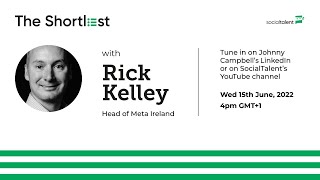
Rick Kelley, Head of Meta Ireland, talks about building community in hybrid work through VR and the metaverse. Meta is running inclusion programs like Belong and she Talks Games, and testing practical uses: virtual concerts, VR meetings, onboarding. Kelley argues that hybrid work risks leaving people behind unless leaders actively shape equitable behavior.
Chapters
Sam.
It's 103. We're episode 103. This is the shortest. I'm Johnny Campbell, your host for the next 45 minutes and the CEO and co founder of Social Talent. And today we're going to be talking about creating community in the digital world of work. I'm back in the home office today, which we'll bring up again in a few minutes. Great event last week in Barcelona. Thanks. For those of you who joined us live, listen to the podcast as well. We did a fantastic chat and we're going to up the game again this week. Work is becoming more digital. You know, we, we, we find ourselves with a, a phone in our face in Barcelona doing a live broadcast or we're back in our home office after I was last night in Birmingham at an in person concert to see Crowd of House, one of my favorite bands that I grew up with. And today I'm on today's show. When I read the briefing, I'm thinking, what will I be seeing these concerts in the future in some sort of online virtual reality world? And what does that look like? Let's rewind just a second. Right, let's go back to how do we create community in this digital world of work? Right, so the pandemic we keep talking about it two years in put us through a crash course in operating remotely. It accelerated trends that were already in existence and beginning to emerge. So much so that the kind of future of work is more talked about as the present of work. Right? The future of work arrived all of a sudden like a bang in mid 2020. But how do we keep ensuring that our employees feel connected, included and most importantly, seen in this new reality? Really excited to have our guest join us today. Our guest today is Rick Kelly. Rick is the head of Meta Ireland. Some of you may know obviously meta as Facebook, WhatsApp, Instagram, and he's the VP of Global Gaming for Meta as well. We're going to be discussing today what the Metaverse could mean for integrating work, how the foundations for future leadership practices are being laid right now, and why our approach to diversity, equity and inclusion need to evolve along with everything else in this new digital world of work. Rick, you're most welcome to the show. I'm wondering if you would perhaps give us a minute to introduce yourself to our audience. Who's Rick? What's your background? How did you get here? Why a person with that accent is running Meta Ireland perhaps? And why this topic is so important to you.
Right on. First of all, Johnny, thank you very much for having me appreciate, you know, the time to have this chat with you and something that I'm very passionate about. And those of us at Meta in the leadership role have been really quite focused on not only the last couple of years during the pandemic, but even prior to that around diversity, inclusion, but also, you know, creating an equitable work experience for everybody involved. A little background on me. You're right, I, I do lead the Irish business, but at the same time I've got a thick Boston accent. I moved here actually 13 years ago to this day. So I've been here for 13 years working at Meta or Facebook really since the inception here in Ireland. I was employee number 30, 31 and now we're over 3,000 employees as FTEs and other 6,000 additional contract workers here in Ireland. So we've got a quite a large presence in the country across six different offices, including Cork Data center out in Meath and then four here in the Dublin area. Let's see, prior to coming to Ireland, I actually lived in Barcelona for two and a half years. So that was my entry point into the European lifestyle. I was there last week too. So it's so funny that you were there as well. I was holding a, an off site for my leadership team and going and visiting some of the larger gaming clients that are located there. It's a great city, like, lot of fun and it has a way of consuming people if they don't, you know, set their limitations. It's a blast. Great weather, great food and great culture. So prior to the European, you know, I guess experience again, I'm from the Boston area and have had a career in tech from Lycos way back in the day, which was one of the first search engines to really come about. And then I moved on to Yahoo and then Facebook. So yeah, that's a little bit about me.
I'm glad you mentioned an off site in Barcelona. I was at a conference in Barcelona because it got me thinking, you know, it was my first event that I attended as an attendee. I was at a previous conference two weeks previous in Vegas, more as you know, doing meetings and networking that way. But I was just an attendee at a conference. I been attending virtual conferences for the last two years in Zoom and teams and all that stuff like everybody else. And what I realized I was missing was the, the chance encounters, the unexpected unplanned meetings and events. And a lot of us who've done virtual meetings kind of have missed that. And we, we realize that's a weakness in a lot of the platforms that we've been using the last two years. And it kind of brings me to our first article that I love to jump in and discuss with you today, Rick, which is actually coming from Harvard Business Review, published last month by Mark Prady on how the Metaverse could change work. And some folks listening here might think, well, the Metaverse is a thing that Mark Zuckerberg coined and he didn't. Right. Goes back to, I think 93 is the first reference to the Metaverse. And this particular publication in HBR really digs deep. I felt in some of the potential implications of work. And one of the areas it mentioned is events, you know, and how Metaverse, let's say a Metaverse conference, let's say, or meeting could bring back some of that chance encounters you get in real life that we all starve are starved of and need that isn't really being serviced by the Zoom and the team's equivalents at the moment. Right. But I'd love your thoughts on, on this and it's a huge topic. Right. So maybe I'll ask you to perhaps give me a bit of focus on from your perspective as a leader of a 3,000 person business here in Ireland, very fast changing industry, like ignoring perhaps the fact that Meta is one of the several organizations that are titled as leading the kind of initiative of the Metaverse potential, what do you see as an employer, as a leader, as a father, as the potential for this new future of work with this Metaverse? Maybe you could just pause by just redescribing what the Metaverse is for. Some folks maybe aren't familiar with it before we go on.
Sure. Well, I think there's a couple things. First of all, let's put the Metaverse even aside for just a second and talk about the point that you just started to make, which is last week you're at an in person conference and the energy you got from being live and in person after two years of staring at a Zoom screen or staring at a computer. And I had, as I mentioned, a leadership off site there, which is my direct reports, brought them all together, as well as a couple of key partners of ours within the business. And three of them I had never met in person in real life because we couldn't travel. They had been hired since the pandemic began. And you think you know people, that you develop a relationship through the screen because you see them on a weekly basis, you see them multiple times a week, but you're so formal, you're. Your actual personality doesn't come through as it truly is in real life when you're, you're kind of jamming things into 30 minute meetings. And then like, how exhausting is it to start a 30 minute meeting? And you want to develop rapport, you want to spend time getting to know people. So you spend the 10 first 10 minutes of a 30 minute meeting shooting the breeze about, you know, what they did on the weekend or anything. And then you're like, oh, shit, I got to get down to the actual nitty gritty of what this meeting is all about. And that's been our way of life for the last couple of years. And it's worked, you know, in an acceptable format. But I think anything we do, we really agree that being live and in person allows you to get to know people on a more human level than. And we kind of forgot that because we thought we had this and we all think that this is working smittenly. But at the same time, when you go and you grab, you go for a walk with somebody or you go and just do something in the real world, you get to, you know, wow, that person's really funny, or wow, their quirks are interesting and their hobbies are interesting, and you never really uncover these things when you're in a virtual world. So if we take this into kind of what we're talking about with the metaverse, first of all, the metaverse, what is it? Is probably the most difficult question you can ask me because it doesn't really exist yet. I can't say, oh, I'm going and look at that. What it is, is basically the vision of the metaverse is not something that meta as a company or Facebook as a company is building. We are building the tools that will hopefully allow many companies to build what the metaverse will become. And it's really in its infancy. You probably have experiences right now, and we'll touch upon some of those because there's some great tools. But at the same time, what it is today is not what it's going to be in five years or 10 years. It's going to really grow and think of it as almost like at the dial up stage of what the Internet was, you know, way back in the mid-90s when we were all getting online for the first time. If you were alive at that point, I know some of the listeners may actually not be, but when we describe what the metaverse is, let's take a 2D experience that you have on the web and you bring it into a 3D immersive world. And so a couple of examples of that. As you mentioned, you were going to see Crowded House in Birmingham last night. Well, we actually have the Foo Fighters live and in concert within our Metaverse environment. And so, you know, instead of being, you know, this. This took place a couple of months ago down in Australia. And if you're not in Australia, you couldn't see the Foo Fighters at this concert, but you throw these little glasses on or the goggles, and then now all of a sudden you're sitting front row for the Foo Fighters. And, you know, this is a free experience and everybody got to, you know, participate. But, like, if you think about how that could actually develop businesses moving forward, Crowded House can reach you, you know, from whatever location that they're at. And if you're one of your favorite bands from yesteryear, you can experience them in any way that transform that out into the NBA. The NBA Finals is taking place right now. Again, if you're not in Boston and you're not in Golden State or in. In San Francisco, you can't go see those games live and in person. You throw the goggles on and you're right there courtside, you're sitting there watching the whole game taking place. And it's an immersive entertainment experience that you wouldn't be able to have because your physical limitations. So all the tools that we're building, Horizon being an example of how we can build workplace tools into this 3D environment. And so the first experience that I had in doing this was being thrusted in a conference room probably about a year back, so deep in the pandemic, hadn't been back to the office, I've got these goggles on, and boom, I'm sitting next to my co workers in a conference room looking at their avatars. And I got really choked up because it had been a long time since I had felt that proximity to another human being. Even though it wasn't looking at their faces, I was looking at their avatar. But this is how they had seen themselves or how they wanted to depict themselves in this environment. And we actually had something where we could see our hand movements. You could actually high five because you've got your paddles there. And so it's a great collaboration tool. And now we're just building on the usability of this so that I can present whatever's on my laptop, on a whiteboard, on a screen, I can go and draw on a whiteboard. So all the things that you're used to doing in this physical office world, we can now do in this Metaverse environment, you know, to create more collaboration tools and more opportunities to be close together when we could be, you know, eons and continents apart.
I had experience a couple of months ago, Yasser Ahmed, who's been on our show before, he's the VP of Talent for HelloFresh. I called up Yasser about an event we were trying to organize for some customers and getting some feedback from certain customers about, should we do it in person, should we not? This is back in January, and the consensus was, let's not. Let's not do. It's the wrong time to meet up in person, but we want to try and get some community. And the Astro said, well, would you not use Oculus, you know, to create this event? I was like, really? Yeah. I play poker with my friends. We use. We use your sets, and we do this. So we experimented for the first time. I set my device up, and I got my. My son's Oculus. I stole it from him and put it on. And I went into a meeting room and with. With. With Yasser and a few others, and I was amazed because I was a bit of a cynic as to. Yeah, what's the work application? Because I. I want to watch Foo Fighters gig with my headset. Absolutely. All day long. I'd love to watch the NBA final all day long. But I'm thinking, really, but work. What's. What's the application? And like you, I did it. I went into a conference room, and I was able to sync my Apple Mac and. And access everything on my computer in this virtual environment using my paddles. And actually, I was able to put them down and still do stuff. I was quite amazed. Without the paddles, I could do so much and create this. You know, I drew my room with the lines and all this kind of stuff. It was wonderful. I had my whiteboards. I could change everything around me. It was just so such an experience that you just have to do it to really understand. It was my sense of it. And I begun to. Begun to kind of open up a bunch of questions for me, right, that I want to maybe discuss with you right around, you know, what would be better? Because, well, maybe we'll start with what. What isn't working in this hybrid world, right? Because I know I'm going to skip past the whole conversation of are we going to be, you know, remote working or hybrid working from now on? Because I think, you know, the people voted and they want it, right? And the organizations that are coming out, Mr. Musk and others saying, we're not doing this, you know, they're getting a negative reaction, right? People want this, they've proven they can do it. It's here to stay. If companies aren't doing it, like get on the bus, right? But moving to how do we make it better? There are loads of positives about this and we'll have a look in our second article about some of the research that McKinsey's have published on this. Loads of positives about, about, about remote working. But what is missing, what's still not there? You touched on some of them. You touched on this in person experience. Getting to know somebody socially and they're, you know, who they really are. What else do you think is just not really working terribly well? Like what do we need a solution for? I'm saying there's a thing called the Metaverse that's uses for it. What problems actually still need to be solved in this hybrid office environment, in your opinion, Rick?
Yeah, well, I think there's a handful of things. I mean, number one, onboarding in a new company is incredibly difficult. Doing it from an office, a kitchen table, a basement, wherever you're from. Like, how do you really get to the essence of what a culture is in a company if you are not really participating in it or if you're, you know, doing it behind a screen? And so, you know, I think one of the ways that maybe the metaverse can be supportive and helpful in that is putting you in an auditorium with your other brand new coworkers that are going through orientation all as one. And I think that's really important too from a just ensuring that you have an equitable start to inside a new company is ensuring that your onboarding practices are actually uniform so that some people aren't getting more attention than others. In person, folks aren't getting, you know, a deeper level of orientation than others. And everybody has kind of the same type of a start. I think another real danger in this remote work environment is just the proximity bias and that people have these, you know, interpersonal connections with people that are in the office, but yet those that aren't, you know, miss the going to lunch and the casual chat and you know, you know, as we say in island, the crack, right, the laughing and the joking and the things that can help build deeper bonds. And if you're not participating in those things, you could be, you know, out of sight and out of mind. And so it's really important, I think, for leaders to be conscious that this bias actually exists. And how can they create, you know, culture within their teams. How can they create moments where people that are remote can feel every bit as part of the team as people that are sitting in the office? Because this is something that's not going to go away and it's only going to materialize. But 2022 is really a year of learning. Nobody's got the playbook on how to do this. And you're going to make mistakes, you're going to learn on what works and what doesn't. And hopefully, if you're collaborating through forums like this, you can learn from other companies that are either for a lot further along or have made mistakes in how you might avoid them in your own world.
You mentioned when you tried out the software a year ago, that you are sitting next to your colleagues, well, virtually next to your colleagues, and, and folks who come in the avatars, the avatars that they chose that they felt represented them. I want to kind of explore that for a minute because some of the, the, the HBO article, for example, digs into this a little bit. But I've read and, and would understand that there were huge benefits, not just for everybody in the workplace, in the idea of a metaverse or something like that, but actually that perhaps there could be even more benefits for folks who are currently more marginalized or feel more marginalized, less included in an organization. I wonder, could you touch on that? Like, when you think about equity, you think about the metaverse, what are the, what are the more more exciting potential areas of the metaverse that could really help drive more inclusivity, more equity in the workplace that we have today?
Sure. Well, I mean, if we even just take a step back and look at remote work and working in a hybrid world, we're all in a different place. Right. Some people like, oh man, the last two years have been great. I've really enjoyed working from home and this suits me. Being able to, you know, meet the kids on the school bus when they come home or whatever it is, and really integrate work life. But other people have hated it, right? They live alone, they've felt isolated, they felt alone. And so getting back into that work environment has been a massive welcome and breath of fresh air. And I think we have to recognize that people are all in different places and nobody is the same as we were back in March 1st of 2020. Right. And so as leaders, we have to understand where everybody within our team is at and help really cater in experience to them. But if we actually shifted the gears a little bit to people that are more marginalized and are feeling that Working remotely can be more suited for them. The study in that article says that people with disabilities have actually appreciated being able to work from home more because, you know, access to some of the. The things in the office are more difficult. Even the commute could be more difficult. You know, it depends on what the disability might be. But if it's vision or hearing, not all of our experiences are designed for these people to, you know, in an equitable way. And so if they have these things at home, they feel like they're able to do their best work. But also it's people that, you know, self declare as LGBTQ plus, you know, they're 13% less likely to want to go into an office because they feel that they have to hide who they really are around. People in the office or people in the trans community have an even greater degree of wanting to work remotely. And so, you know, recognizing that those people are every bit a part of our teams and have, you know, you know, we want them to feel as included and welcome. And that may be if that's what makes them more comfortable to work from a remote environment, we should be doing all we can to foster that. And so, yeah, I just think that that article brought out some really interesting points around people that are. Perhaps you wouldn't be enlightened to the fact that there are certain demographics or urps that would, you know, feel more comfortable or feel like they could do better work at home.
I also touched on, if I recall more examples such as folks from the autistic community, folks on the spectrum who are more visual learners, visual communicators than, you know, that the benefit of a potential metaverse is that you have that different mode of learning, you know, which I think it's not just folks in the community like the autistic community. It's anyone who's just a better visual learner than they are, you know, a reader. We all have different learning styles. We all like different approaches. It opens. It opens, it opens it up to more opportunities. Maybe that's what Hybrid has done as well. It's given us more flexibility. Your point around? It's not for everyone. Okay, great. The companies are doing it well, are saying we will provide a workplace for those who want a workplace, we'll provide an online experience. For those who want an online experience, we'll probably zone in on a primary experience. That will be the default. So there's less confusion. That seems to be consistent enough amongst a lot of organizations, but it is about opening up more opportunities for different ways for folks to Connect, which again the idea of inclusivity. There isn't one type of person working in our organization. We want different things. It brings me, if you don't mind, to our second article which I think is really worth mentioning and we'll share the link out. And it's research that McKinsey's recently published on hybrid making it fit with your diversity, equity and inclusion strategy. I know you know the, the DEI theme is, is a big one for you, Rick. You've, you've, you've, you've been a champion of, of more equity in the workplace, in your team, within the gaming business in, in Meta, maybe you can touch on some of that. But McKinsey article here I thought was really interesting because it digs into the data rather than just opinion that would show that hybrid working really does have the benefit or potential benefit of driving more equity, more inclusivity in the workplace. Yet another to embrace it. What were your kind of big learnings from this, if there were learnings for you rick, from this McKinsey research?
Well, I mean I think one of the, at Meta, we've tried to take a leadership role in not demanding that our employees work in our offices. And so one of the things that we've offered is the ability to work remotely, the ability to work cross border. And part of it was, is to provide some flexibility for employees to work where they feel that they can do their best work. But also it has a valid business reason too that we can recruit in areas that we never thought we'd be able to, you know, pull talent in because we didn't have an office in that location. And I think if you look at the engineering hubs that we have as a company, it's places like Seattle, you know, Northern California, London and then pockets elsewhere. But like if you're living in, you know, name a country in Europe, in Spain, for example, your ability to join our ranks as an engineer are pretty limited if you're not willing to go and move to be part of that. And that doesn't suit everybody. And so the whole idea about being able to work remotely is bringing jobs to more disparate locations. It's bringing jobs to people that may not have the ability to go inside an office for 40 plus hours a week. And you know, I, I look at, you know, people that have children at home, you know that there's different, you know, ways that limitations that they may have if they don't have, you know, child care at their ready, that remote working can offer them more flexibility to get the job done.
Yeah, it's a big, It's a big issue. You know, we have opened up the, the, the office to so many more people who perhaps we didn't realize weren't, Weren't able to go work for a company because they didn't have an office in the same country, or the city was too far away or the commute was too much. I love the McKinsey piece around inclusion. They've kind of summarized it in that, in three pillars, I guess, where they talk about work, life support, team building, and mutual respect. Right. And this is kind of, I believe, the employee survey, that there's consensus there that they're the three practices that drive most inclusivity. Right. And maybe the hybrid working perhaps touches most on the work life support, which means many things. Right. For some, it could be that you need to care for a parent, care for child, or just have free time to pursue your interests, your exercise, your team, sports, whatever that might be. Team building. The psychological safety piece that we've spoken often about on this, on this show and we'll talk about again, and that mutual respect piece, kind of seeing someone not just as a colleague, but as a human. And that bigger piece, you know, what's your experience on those three elements, the kind of those three pillars? Are they the three pillars, do you think they capture quite well what people are looking for when they say they want that sense of inclusivity?
Well, you know, I think that when you say inclusivity, it's about how do you make people feel a part of the community, a part of the team, so that they can do their best work and that they feel engaged in the people around them and the company mission. And there's a lot of challenges to that in the last couple of years. And so, like, if we take a look at the environment that we work within here in Ireland, you have a lot of people coming from France and other parts of Europe. You know, for example, we have 122 nationalities in the Irish offices that make up parts of our teams. And they don't know each other, they don't have friends here, they don't have family here. And so talking about, you know, how do we make them feel included, we just need to make them feel comfortable in those early stages. And then you introduce English as a second language, the endemic Irish culture and sports that are very foreign to them. And so we've tried to create a program called Belong, where people that you don't necessarily have to be from somewhere else, but we're trying to Bring people together who have a common interest or common passion or just want to learn about something new. And we're putting people from very different teams together in an extracurricular activity to hopefully increase the level of inclusion that we have within the company. So, for example, we had a Gaelic Games day a couple of Saturdays ago where we took 50 people out into the middle of Meath and introduced them to hurling, introduced them to Gaelic football, you know, had a couple of pints of Guinness afterwards. And these were people from all these different countries that learned a little bit more about what makes the Irish culture and Irish, you know, sport and community what it is. There's loads of different events from going to the Bloom Festival for flowers, you know, in. In. In Dublin, you know, hiking up Tarantula, which is. Or Karen Tula out in Kerry. So there's ways of getting people out of the office and making them feel like part of the community in ways that it's been very difficult to do over the last couple of years. Secondarily, I think it's about calling it out, particularly to managers, that this is such an important thing, you know, without raising awareness in providing training in tools. And they're not, you know, just because we talk about it doesn't mean they're going to be experts in it. And you've got to actually make an effort to. To educate yourself and companies that are investing in educational programs around how to be a strong ally, how to manage biases, how to recognize biases, and then how to actually design a team without biases being factored in. That too, helps create an environment where people feel like they can join a company, have career opportunities and do their best work.
I want to zone in on two things, Rick. One, you know, you mentioned a couple of examples there, what of what Meta Ireland are doing, and I love the idea of the Belong program and how you can kind of experience more of the Irish culture. What else do you think the business is doing that, you know, is leading the way? And I'll go back to your point that we're all learning in 2022 of how to get used to it. There is no playbook. There is no. This is the best practice. But what else, as an employee and a leader, are you seeing in your own business and Meta that you think is working really well? You know, I'm gathering that, you know, the social piece and that disconnecting that from doing the work. So not getting together necessary to do the work, but getting together to just be right to. To foster that sense of belonging, teamwork, that getting to know each other sounds like a really good best practice that I've seen in other businesses as well. What else have you seen in the business and others seen in matters? You think that's probably something that others could adopt and will persist through this?
Yeah, I think there's a few things. Number one, you know, when you are having, like, all hands or fireside chats, you know, do you have one of the panelists be at home and other panelists be in person so that there's a feeling of inclusiveness, whether you're watching from in the room or you're watching from remotely. Right. Because one of the panelists are actually remote. So things like that would be an example of how are you integrating, you know, different locations into your experiences so that people don't feel like they're watching, you know, a TV show. Secondarily, be thoughtful around when you ask people to come to the office. And so many different companies have many different policies from, you have to be at work five days a week. That's not a very popular policy. But other companies are saying, come to work when, you know, works for you or come to work when your manager says. And that's pretty opaque as well. And so I'm not saying that Meta has the right example. And we're continuing to evolve our policies and be thoughtful around how we can, you know, mix the needs of the company along with the needs of our employees in terms of flexibility. But, for example, saying, hey, look, we're going to have. Mondays are going to be office days for the whole team, so that we can have lunch together, we can have our team meetings together, we can solve problems that we need to solve as a team together. And then, you know, other days, you're. You're welcome to kind of come and go as whatever works for you. And I think that that's a best practice. And then also what we're trying to create is a feeling of, hey, you're almost. It's kind of fun to be in the office. You know, first of all, we're very lucky that we get offered, you know, lunch and, and breakfast and, and dinner. You know, basically three meals a day. That's pretty darn good food. And like, come on in and see, on Thursdays we have International Food Day, where, you know, this year, this, this week it's going to be, I don't know, Jamaican food. And next week it's going to be fourth of July. So it's going to be American food. And to create these themes that are almost like moments that people want to be a part of. And then of course, you know, look, you never underestimate the power of alcohol in a good happy hour. And having one of those on a regular basis continues to, you know, we've seen some of the more popular days in the offices when we're hosting different happy hours and those, you know, obviously you've got to cater to people that, you know, don't participate in drinking alcohol. Different religions, different beliefs. But, you know, there is, you know, a time and a place where that seems to make sense and seems to work.
Work. Yeah. We've kind of seen ourselves in our business and other clients of ours where, you know, we've moved towards, you know, realizing that going organizing events for 7pm that started in a pub may not be the most inclusive events for an organization. But maybe we start with lunch, we move to largely doing lunchtime starts for organized events that kind of officially end from our side in social talent at 5, 6pm and then if folks want to go off and make it alcohol fueled as a cohort in the evening, that's their business. But we try and create the environment where it's not the primary thing. Because I think that has been a thing. Maybe it's, I don't know if it's uniquely Irish culture thing, but too much of that revolved around alcohol. And if that wasn't your thing, it's very difficult and hard to feel that you belong when there's that kind of culture.
Particularly if your manager is sitting there, right, and you're, oh man, I got to feel like I've got to be part of the team. I want the FaceTime, I want the recognition. I want him or her to know what I'm working on. So there is this feeling that you have to participate in these things that you might not be comfortable with. And Lord knows we've seen different, you know, hr. I'm hearing an echo here. We've seen different hr. You know, issues pop up when too much alcohol gets put into people. So moving away from an alcohol first experiences I think is good for, you know, as much as we can do.
You mentioned it's an evolving policy on hybrid working, remote working, etc. We've had other guests on the show in the last few months talk about the importance of feedback and surveying and polling and listening to your employees. What is the business doing to actively listen, to evolve the policy you mentioned. It isn't just one thing. And maybe Mondays works now. Maybe it becomes something that doesn't work. How do you make sure you actually have a good policy pulse on what the business is thinking, what the employees are thinking that will drive the evolution of those policies.
So important feedback is an area where underrepresented individuals oftentimes miss out on the level of coaching that, you know, managers like to give feedback to people that look like them. And that means if you don't look like them, you're less likely to get the feedback that's going to help you advance in your job, you know, do a better job, you know, continue to improve. And so what we've tried to do is look at, okay, how can we give feedback on a consistent basis and on a regular basis and ensuring that everybody gets it. And so, you know, we have a review cycle just like everybody else does, but we also have mid cycle check ins where employees can basically give feedback to their manager and their manager collects feedback from this person's peers and then delivers feedback to the individual. And this happens for everybody. It's written, it's systemic. And so there's tools that we've built that make sure that people, everybody has three, at least three peer feedbacks and that the feedback is in on time. And that level of coaching that's, that's mandated has helped us ensure that people are essentially, you know, able to get access to the coaching that they need and make their, their successes, their projects very visible to their leaders and you know, have the touch points with their leaders that they need, whether they're in the market, in, in the building or working remotely and you know, ultimately giving them new opportunities to grow. So yeah, no, I, I definitely agree that that's a, actionable feedback is something that's imperative when particularly, you know, underrepresented individuals getting the, the type of coaching they need to keep them in the building. Because we work so hard to, to bring them in, to find them, to identify them. But do we do enough to make them successful when they're there? And I think the answer is pretty disparate depending on, you know, the company's policies. But you really have to be thoughtful around that.
So that piece around that feedback process, that mid cycle check in, I love that. Right. Because it brings me to the second question I wanted to dig in, dig into with you. Rick is around leadership because many of us in the business we work with or we just read about, we've seen in the last two years that leaders have been tested and many, maybe most have failed because we realized that leading in a hybrid, remote type environment is different to what people were doing beforehand. Perhaps leadership has always been the same thing or best practice. Leadership has always been the same thing. But it would seem that a lot of folks were leading by observing, by walking around, by making sure that they just saw people work or what they thought was work, being busy at a workstation, and that was okay. And then the team were still largely left to fend for themselves. When we went remote in a professional environment, the company that did go remote, you actually had to check in. You had to have a process for understanding what everyone's doing, how is everyone performing? You couldn't just see it anymore. You had to actually work hard. That's tested a lot of leaders, as I said, many have failed. Would you have said that Meta just did things really well, perfectly before the pandemic, so therefore it was smooth and seamless? Or what have you seen as the leadership challenges that emerged? And how has the business or the people in the business sought to remedy those?
Yeah, first of all, I agree. I think managing in a time over the last two years has become an incredibly more difficult job because as you say, you don't have those, you know, visible touch points that you might have had in the past. And so to me, no, of course, Meta doesn't have this. All right? And we have plenty of managers that are doing things, you know, one way and others that are doing others. And hopefully if we're sharing the best practices, then we can all kind of take advantage of those and do the best we can. But this is certainly an evolving process. But I do think that the managers that set appropriate goals for their teams and then they manage to the goals and track the progress, then you're gaining visibility of the actual output of the employee that we're talking about. You know, if it's sales, it's a pretty easy thing, right? You have numbers you could be looking at. You know, some companies track things like call times and call, you know, number of calls and number of meetings. We certainly don't do that. We don't, we don't believe that's the path to revenue, that that leads to meaningful conversations. But there are other touch points that a company needs to or that employees need to have with their customers. You know, whether it's sharing back information to their team, you know, are we, you know, doing presentations that helps move the needle with clients? Are we developing the research? You know, there's all sorts of different, I guess, objectives that people can have that we need to manage towards so that we can, you know, understand if employees are engaged, if we're understanding, you know, the type of output that they have. And so it's hard, it's hard work. And you know, other teams like engineering will have a different set of criteria that they can use. But essentially you have to have an agreement on goals and make sure that those are being adhered to.
Your team, we talked about this before Rick, your team, let's say on the, on the gaming side before your recent promotional. I'll give you more time in your role running the Irish business, but let's say in the global gaming business, you, you know, when we spoke first earlier this year, I was so excited to hear about the work you've done around inclusivity in your team. And we talked about the broader challenge that businesses have when they're trying to set goals around inclusivity and diversity. A lot of them rely on KPIs and KPIs have a role to play and a lot of organizations use them, you know, diversity, KPIs that they set the business that they want to have inclusivity measurements perhaps through engagement that perhaps they're doing. But you know, something you said to me struck me. I thought I've used it again with many, many people and I just thought was super interesting. I wanted to pay to touch on again was that. And correct me if I'm wrong on this. You mentioned that the success you felt, the success that the business had maybe was down to or certainly in part to trying to focus on the behaviors of individuals a little more than the actual outcomes. The belief that if you manage to the behaviors, the outcomes will happen. Managing the outcomes can actually lead to, to inappropriate decisions being made. But managing to behaviors generally on scale drove the right outcomes. And it's an important distinction because I've thought lots about it since you mentioned it. I wonder, would you mind, in your words, better words, just explaining that concept and perhaps share with me, do you think it's something that has a broader applicability across many, many different ways that we can lead in this kind of hybrid world?
Yeah, sure. I mean to take a step back when we looked at what diversity means in our gaming business, 23% of industry professionals are female. So this is a male dominated industry and it's tough to open open doors for females that want to have a career in the games world. And so that's been, you know, one of the things that I've thought deeply and my team has thought deeply about over the last five or six years is how can we enlighten women to the roles that are available in this industry? Because if you look at people that play games. It's not just people that are playing like first person shooters in their parents basement. That's not what defines gaming. Gaming is things like Candy Crush, it's things like Words with Friends, it's casual games on your phone. And guess what? Women play those games more frequently than men do or every bit as frequently. And so if you're going to build games for that audience or you're going to market games for that audience, well then certainly you need people from that demographic to really be able to connect with those consumers. And so we've made it a mission to highlight with something called she Talks Games and highlighting how women have found themselves in the industry some of the challenges that they've had within working within a male dominated world, how they've overcome, how they've found allies to help support them through some of these challenges. And we've created a video series called she Talks Games that really gives, you know, about 100 women's story about how they found themselves in the games industry. And it's led us to have different practices when it comes to recruiting and hiring. We ensure that there's at least one underrepresented candidate for every job that we have out there. We have at least two underrepresented employees giving the interview to the, to the entire, you know, roster of people going through the interviews. So that if you're coming in you see that what representation looks like within the games industry at Meta and we've been very proud of the results that we've been able to achieve and now we have more than 50% of our team within gaming identifies themselves as female and more than 50% of our leaders, which is even more important because then you have representation to see what that looks like. And so when you talk about behaviors versus results, I mean there's different ways to drive revenue. And we're a revenue driven team for the most part, the majority of us and you know, there are practices that you can employ that helps you get to revenue that might not be healthy revenue, it might not be long term revenue, it might be, you know, revenue that the company could do without. And so what we try and emphasize is, is you know, how did you get there? What's the long term? Are you building relationships that are meaningful? Are you presenting research that maybe doesn't get US revenue this quarter but gets us revenue over the next six quarters? Because it's a longer term way of thinking and being strategic around how to develop a conversation accounts. And so you know, that's just one example where the almighty dollar isn't the last and only thing that we use to kind of coach our team on and drive our teams towards. It's really about how well do you navigate these type of conversations. If you're a manager, are you leading with things like empathy, humility and are you, you know, able to identify with people and make them feel connected to the mission because of the way that you represent the company?
Really important aspects. You mentioned our revenue roles, how it's not just about the final KPI, which is often a revenue number that could drive the wrong behaviors. I think this comes up in particularly the world of diversity and hiring and trying to manage teams where again, if people are focused on a number, you know, they can just drive the right, the wrong outcome. Whereas what we've always heard is the behaviors. Are you, as you said, are you ensuring there's reputation representation on your shortlist? Are you on your interview panels? But you run a really good process and again on scale, you mentioned a couple of times, a really good process. So are the behaviors what we expect to have in place? We set the expectation, this is what we want. And then are we confident that those behaviors will drive the outcomes which again, there's measurement in that and you can see the correlations. I just love that it's an important way to kind of operationalize this stuff because folks I think can look at targets and goals and go, this is what we want. And they set the targets and goals and expect it just to happen. Whereas I think the lesson that I took away from our first conversation that we had on this topic was that actually more focus or at least equal focus on the behaviors that drives the outcomes will lead you to that success. Because that's a fantastic achievement. 23% in the industry to over 50% on scale. You're not talking about a small team. This is a large global gaming team that has this representation and the, the reasons behind it are fantastic. You know, you've articulated it really well in terms of not that we need to, but the business case in terms of understanding who the customer is using these products as well. Rick, we could go into a whole bunch more on leadership, a whole bunch more on driving that sense of belonging and inclusivity. But I'm very conscious of your time. You're a 3,000 person organization to run in Ireland global gaming business that you also run in a dual role.
I was wondering, I should take you around, I should bring you to my own performance review. I love having you next to me there, there.
Always a pleasure. Let's get you on again. Maybe we'll dig into to how the metaverse evolves over the next year, what those plans are, ways of working that you learn in your team that you can bring bring to bear. But I'd love if you could maybe just give us one more piece before we close out today, and that would be to add to our 102 pieces of advice that we've had on the show far, if you could add that fantastic 103, what advice would you give our audience here today? Whether it's advice that you've gathered from your own career, from your own experience, or whether it's been passed down to you by somebody else, words of wisdom, what would you leave our listeners with today?
You know, we all as leaders have people we look up to and people we want to emulate and mimic some of their behaviors. But I actually think that I've learned more in my career about who I want to be as a leader from people that I saw that I didn't want to be like. So recognizing the behaviors in leaders, that turned me off and ensuring that I don't emit those same type of feelings in other people. You know, one classic example I give is, you know, there was an individual that was a very senior person that sat about 25ft away from me for a couple of years in my early career. He would never say hello. He'd pass you in the hall. He wouldn't look at you. And maybe he was an introvert, maybe he. But he wasn't because we, you know, we knew who he was, but he just didn't. Yeah, how hard is it just to smile, to say, hey, how are you? How's your day going? What's up, man? And like, those little things without doing them makes you feel like, oh, like, you know, I'm uncomfortable around that person, or like, does he not like me? Or what's the story there? And so, you know, it's one of the things that I've tried to always do is just like, it's so easy to just say, hi, man, how are you? How's your day going? You know, that type of thing. And it's just being personable and being friendly. But the bottom line is, what can you learn from the people that you don't want to be like and ensure that you don't impart those same behaviors in your own practices?
I love that. We've all worked for. It's called them assholes.
Exactly.
In our career. And perhaps there are, there's more, more wisdom.
I just Gave you an easy example. I've got four or five more like, you don't want to be like this, folks.
Well, it's funny, I think you touched on something there which is universal. We all. What is the meaning of life? We all want to be noticed. We want to make a difference, make a contribution, be noticed. And as you say, it's easy thing in the world to do is just take notes, you know, with a sentence, kind, word, and that can make the difference to somebody. Such a remarkable difference. I was a close on I'm going back to Barcelona last week. I was running on the beach A couple of mornings I was in Barcelona and I run in cities. That's what I do when I'm there. It's my exercise. Way to see the city greatest and most. You run as well, Rick, don't you?
Yeah, yeah, a little bit.
Slowly, slowly. But there's a kind of a universal thing when you run. You say hello to fellow runners, you wave, you say hello. Your smile and it can really lift you, you know, somebody just giving you a unprompted wave or smile just to recognize you.
Right.
And I ran on the two mornings in Barcelona and nobody waved, not once. And I landed back last week and went for a jog at lunchtime in my local park. And in a 5k run, I bet 20 waves and nods and smiles. Yeah, it doesn't kill you. It's not a big ask.
But it feels harder to ignore than it is just to be. Give the head nod and hit, you.
Know, hello, do that in the workplace. Give the head nod, say hello, learn from what others are not doing. Well, Rick, thanks so much for joining us today. Taking some time out of your busy days, you know, absolute pleasure having, having you on to tell us about the metaverse, the future hybrid working, what you've learned in your teams, what MET is doing, what it's not doing, what you think might happen might emerge and some of the challenges that we all face in this world of 2022. Real pleasure having you on, Rick. We'll have you on again soon and best luck.
Love it. Thanks so much, Johnny. It's. It's been great spending the last 45 minutes with you and I hope, yeah, I hope to see you again soon.
And thanks to all of you listeners who've been listening as well. Really appreciate your time. We're gonna be back next week. We'll be back in the studio again next week on the 22nd of June, where I'm gonna be joined by the fantastic Linda Jonas, who is the co founder of Cultivao and she's also a contributor to the Social Talent Platform. Delivers a fantastic course on remote leadership on the Social Talent Program with her good buddy and colleague Jason Lawrenson. But she's going to be joining us next week. Linda will be to talk about reskilling leaders for hybrid working. So to touch on what we touched on with Rick today around what are the skills leaders need in this hybrid working world? Linda's going to be sharing her insights, fantastic insights and the work she's done over the last two years with enormous amount of organizations and leaders to understand what's missing, what do you need? So if you have a leader, you are a leader. You work with leaders. Join us next week. You want to hear what Linda has to say? That's the 22nd of June. We'll drop the podcast that evening. Or you can join us live on LinkedIn or YouTube at 4pm UK Irish time, which is 11am in the east coast of the US, 8am the west coast. But again, if you miss that, don't worry, Podcast will be live in Apple, Spotify, wherever you find your good podcasts come Wednesday evening, wherever you are in the world. Until then, thanks for listening. And don't forget to take Rick's advice. Do look out for what the assholes in your career have done and don't do what they've done. And don't forget to give a wave next time you see someone out for a run or in the office. Take care. We'll talk to you soon.
More from Johnny


Where Does Your Hiring Stand? Diagnose It with the Maturity Model | SocialTalent

Where Does Your Hiring Stand? Diagnose It with the Maturity Model | SocialTalent






NEW CONTENT - How to use Generative AI for Recruitment Marketing with Glen Cathey | SocialTalent

NEW CONTENT - How to Use Generative AI for Sourcing & Recruiting with Glen Cathey | SocialTalent

NEW CONTENT - How to Unlock the Power of Generative AI with Glen Cathey | SocialTalent