Exploring Neurodiversity at Work with Expert Insights from Parul Singh | SocialTalent
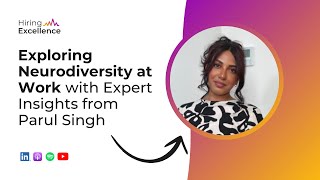
Parul Singh discusses neurodiversity at work, covering ADHD, autism, and other conditions. She shares her own diagnosis story, the difference between masking and disclosure, and concrete accommodations like adjusted meeting times. For managers and neurodivergent employees, she offers practical advice on creating inclusive teams and deciding when to disclose.
Questions this video answers
August 27, 2024.
Inattentive-type ADHD.
Parul states she is autistic and is currently self-diagnosed (awaiting/declining formal private diagnosis due to access/cost).
Based in Manchester (originally from Liverpool); she was on a career break and had left her last job about two weeks before recording; previous work in recruitment/marketing for a tech consultancy.
Preferred contact: LinkedIn; she runs a newsletter called "Dopamine Diaries."
Chapters
We can only go so far advocating for ourselves, especially if, you know, we've maybe been been in the past. Maybe we're a little bit like new after our diagnosis. If we're like new to like the company asking the question and like giving us the space to advocate for ourselves and actually, you know, actually listening and actioning it is possibly one of the best things that you can do for us.
Hi and welcome to the show. I'm Johnny Campbell, CEO and co founder of Social Talent. And this week we're speaking with Paril Singh. We're going to be talking about neurodiversity in the workplace and I'm absolutely thrilled to have Parol here to join me. Parol, you're welcome to the show. I wonder if you could introduce yourself to our audience, tell us a little bit about yourself, maybe your professional background, personal background, and start with where are you joining us from today?
Yeah, of course. Thank you so much for having me, Johnny. So I'm actually currently in the middle of our career break, so I actually left my last job about two weeks ago at the time of recording. So my last role that I was doing I was working in recruitment, marketing and candidate attraction for a tech consultancy. And before that I was a tech recruiter for about five years. And also I run a lot of sort of like communities. I'm a community manager for the talent community. I run one of, like, my own meetup groups. I'm a woman of colour, I'm neurodivergent. So a lot of my career has also been kind of like focused around like, advocating and championing for like, minority groups in the workplace outside of work. Well, some people might be able to tell from my accent. I'm originally from Liverpool, I'm a red, in case anybody's wondering, but I've lived in Manchester for about 10 years, did uni here, loved it so much, decided to probably never leave. So, yeah, that's a little bit about me and thank you so much for having me on today.
Well, Parul, it's such a pleasure to have you on and I'm dying to dig in and understand a little bit about you, your background and the wider kind of topic of neurodiversity. I wonder if we just start by explaining to our audience, for those who perhaps aren't familiar with some of the terms and language, what is neurodiversity? What does it typically cover? You mentioned you're neurodivergent. You didn't say you're neurodiverse. Maybe talk about some of those Terms as well. And what? Just to get everyone comfortable with the language and the terminology.
Yeah, of course. Before I go into that as well, I know that there tends to be quite a lot of, like, dialogue on social media around, you know, kind of like, using, like, the right language and sort of, you know, this is right and this is wrong. I'm very much of, you know, my viewpoint is that, you know, if people are, like, trying to understand, you know, it doesn't really matter if there's maybe interchangeable words that are actually sort of, like, used. But anybody making an effort to, you know, try and understand, like, the difference, like, I think that is great. Just before I start. So I guess starting with, like, neurodiversity, so I guess, like, you could maybe draw a parallel with sort of like, you know, like, biodiversity. Like, biodiversity is like the variations within, like, a biological ecosystem. Similarly, neurodiversity is like the infinite variations of the human brain within, like, the human species. So linking to that, if you're describing something as neurodiverse, that is generally a group. So imagine like a team of people who have neurodivergent conditions. Don't have neurodivergent conditions. That would be described as a neurodiverse group or neurodiverse collective. And then neurodivergent is what we use to describe an individual. So myself, I'm neurodivergent. I have a neurodivergent condition, adhd. I'm also autistic. And then the final one would be neurotypical. So in the literal sense, that would mean, you know, neuro meaning brain, and then typical meaning, you know, normal. Though arguably I would say that there's, you know, maybe no such thing as sort of like a normal brain. But in this context, it means somebody without a neurodivergent condition and something which is slightly different from those sorts of, like, definitions and which is something which I'm. I'm still a little bit new to. You know, I'm still. I'm still learning as I go. But there is also what's called identity first language and then, like, person first language. So identity first would be I am an autistic person as opposed to a person with autism. And this generally goes down to kind of like a person's individual preference. I do know that a lot of, like, the autistic community do prefer kind of like the identity, you know, first kind of like language. You know, it's something which is, like, innate. Like, it's like a part of you. It's not like, you know, like a disease or like an infection or anything that like you have. It's just sort of like who you are. And so that's a little rundown of the kind of like definitions.
And when people talk about neurodiversity, you mentioned autism, for example, there. What are some of the other different divergent brain types that are out there that people might come across like? You know, because I imagine we're not just talking about somebody who has autism or somebody who has adhd, the two I mentioned earlier, there are many different types of brain types that might be covered under that broader spectrum of diversity that we mentioned.
Yeah, of course. So I would say probably the most commonly known ones would be adhd. So a common misconception is that ADHD and ADD are actually different things. But actually it was just kind of like the language which was changed and they added the H in there as well. So that actually does cover like both. So they're actually the same thing. And then also asd, which is autism spectrum disorder, which you mentioned, and dyslexia as well as probably kind of like the more sort of like commonly known ones. And there is also like dyspraxia and like Tourette's as well. So the whole umbrella of like neurodivergent conditions actually does cover quite a lot. But a really important differentiating factor to make is that they're not mental health conditions and they are actually completely like separate. So everything that we're talking about here, they are neurodevelopmental conditions. However, there is like a high incidence of mental health conditions in neurodivergent people, which, you know, often comes as a result of like the challenges that are faced by living in like a society that is, you know, generally built for like neurotypicals. So, you know, high recurrences of like depression, anxiety, eating disorders, etc.
And thank you for that kind of broad coverage. And the language point is interesting. Right. I've, I have, I'm adhd, I have four kids, one who has dyspraxia and is autistic as well. And you know, I've had to grapple with the language differences. So my wife has worked with children with autism for 20 odd years and I would have always said person with autism, as I thought that was more respectful. And then, you know, as I engage more with that community and look at how do I describe my son's brain types, it just doesn't feel right to me as again, it's a personal preference to say with autism because it's not an affliction that you're going to ever be without. It's just the way your brain works. And I had a wonderful conversation with, with my three youngest boys in the car a couple of weeks ago. We were talking about brain types. And I guess the way I see it, I don't know if you're the same par I think you are, is that we always have a different brain type, a predisposition to certain ways of thinking. You know, I described to my kids that my brain type just doesn't really sit still. I need to be busy, I need to constantly do stuff. That's just the way my brain type works. I talked about my son's dyspraxia that, you know, his brain type just finds it difficult to coordinate some of his, his, his limbs and hands are in fine motor skills. His brain doesn't quite focus the way, let's say his brother does. Our autism express itself in a very wide manners. We have some kids who are non verbal and then other kids who are, you know, barely noticeable for this difference. But perhaps they are struggling with social situations or they might have a particular passion about something. That passion could be mathematics, it could be football, it could be whatever that you know, around us in the world today we have all these different brain types and it's just recognizing that whatever our brain type is isn't necessarily what everybody else has. I think that's the thing that as you grew up as a kid, you just think everyone thinks the same way as you. When you become an adult you go, oh, our brains just work differently. I'm not the same as everybody else. They're not the same as me. Is that kind of how you see it as well?
Yeah, yeah, 100%. I think the first thing that you mentioned there is that like, you know, it is like a spectrum. So every neurodivergent person is going to be like potentially different from another one. But even like within that is like day to day sometimes it's like situational based as well. There are, you know, there is research going on that you know, looking into like how menopause affects women and like adhd. There's actually quite a lot of women. I'm actually in like a WhatsApp group chat for like ADHD women and a lot of them are talking about only being diagnosed after having children because of how like their hormones actually change and actually how it actually became like evident. So even for like an individual it can really fluctuate depending on like the stage of life and like, the situation that you are, that you are actually in. And then the other thing which you mentioned there about how, like, it's just such a beautiful thing that, like, the world is just made up of, like, so many brilliant kinds of, like, different minds. And like, a phrase that I heard in a talk and, like, just really stuck with me is that, like, you know, what happens when great minds don't think alike? Because that phrase that we always say isn't it is like, you know, great minds think alike. But what about kind of like the inverse? And it's really interesting and I'm happy to sort of like, link this study in the description if anybody wants to read it. But, like, researchers have found that, like, dyslexic people were actually crucial for the survival of the human species. And they use this evolutionary theory called complementary cognition, which is basically, in simple terms, it means, like, the sum of our parts. So, like, we need all kinds of brains to a survive as a species, but also to thrive. And I think that really translates in the workplace as well. The more that, like, it's like that. What is it? Like the yellow car theory, like, when you see a yellow car and then you'll just see, like, all of the yellow cars. So the more that, like, you kind of like open your mind to, you know, neurodiversity and like, the workplace, like, you'll start to spot things and the more that you kind of, like, become conscious of them and then making sure that, like, it's an environment where, like, everybody can thrive. And I think really, like, you know, hammered home that, like, complementary cognition sort of, like, concept. And I think that's really big for me. I know we're going to go into that a little bit, like, later, but, yeah, I think that just relates really well to what you said, is that all the different ways of, like, thinking, but it's having, like, the empathy as well. Because, you know, when I was younger and I didn't understand about it, I would get a little bit frustrated about people because I'm like, you're not getting it. Or, you know, I'll admit I was probably quite, you know, a little bit, you know, Aggie, about, you know, children being really loud and disruptive and, you know, in sort of like, public. And now that I understand, it's actually just given me the empathy to think that, like, I don't know, but, like, they could be autistic, like, they could be having a meltdown, they could be nonverbal. They might not be able to tell their parents, like, how Exactly. They're feeling. And I think not just, you know, the positive impact that it's had on me in terms like my career in the workplace, but I think just the understanding outside of work as well. It's just been, like, really big for me.
I love that term empathy. I think empathy is the. Is the theme I want to take for this talk, because I think that's. That's what you're hoping to achieve from this, is to give everyone listening that ability to empathize more with everybody around them. Right. Or all these different brain types and all these different wonderful people in the workplace. Talk to me about your particular experience, Paro, because your. My understanding is your diagnosis of ADHD was later in life and your diagnosis of ASD was even more recent. Walk me through what ADHD and ADSD mean for you individually. As, you know, as you said earlier on, it is different. There's a wide spectrum. Not every ADHD person or ASD person is the same. So how does it express itself for you and with me? Tell us about, you know, receiving the diagnosis and also what it meant for you.
Yeah, definitely. So I was diagnosed with inattentive type adhd. So there are actually three different types. So inattentive is kind of, you know, the more, like, internalized kind of, like, symptoms. And then the. The kind of opposite of that is like the hyperactive, impulsive type, which you kind of, you know, a stereotype for, like, the, you know, disruptive boys in sort of, like, the classroom. And then there is also, like, a combined type as well. So I do have the hyperactivity, but a lot of it is kind of like, in. In my brain. I've always, like. My brain has always been going, like, a million miles an hour. I've really struggled with sort of like, the emotional dysregulation side of things, which means that, you know, I might not kind of, like, react to a sort of, like, situation without, you know, I may react without actually, like, thinking about it. And my time management was always, like, really, really poor in school. I couldn't pay attention to things that I wasn't actually interested in. And what's quite interesting, I just sort of, like, pulled it up here as well, just to maybe actually read you some actual snippets from, like, my school reports. One of them says her position at the front of the class has made a difference to her concentration. Parallel deemed some subjects to warrant her attention or more than others. She is very smart, but she distracts herself and sort of like other people. So, you know, school Was a real struggle. And then going into like, university where, like, you don't have to go to lectures if you don't want to. Like, nobody is going to tell you off. Nobody's taking attendance. And my God, when it came to exam period, I was cramming for like the entire month before it and like burning myself out, like completely. So that was kind of like my earlier life. And then it was only kind of like going into the workplace. And the point where that sort of like had the light bulb moment was it was by chance, actually, I didn't know a lot about adhd and I went to this sort of like virtual talk. It was a tech one and it was during COVID time, so. And there's a lady called Rachel Morgan Trimmer who the other ones were technical talks. She was talking about neurodiversity. So I was like, okay, interesting. And then when she's kind of started talking about some of the characteristics, I was like, oh my God, that's me. Next morning requesting to the gp and then got my diagnosis just like a few months later. But something which I've kind of come to realize with kind of my own journey with that and probably similar to quite a lot of other people, is that you often diagnosed based on like, how much you like, inconvenience other people. So if you internalize a lot of your symptoms, because a kid in the back of the class who's maybe, you know, dozing off or doodling instead of paying attention is a lot less disruptive than somebody who will physically not sit in their seat and they're like shouting things and you know, being really rude and being, you know, openly like, distracting. And then the other element of it is like, like the masking aspect. And I'm not saying that like, this is just sort of like women and like girls, because can definitely impact like boys as well. But I think from like a young age, like, we're brought up as like girls to like, behave in a certain way and like, have certain kind of like, mannerisms. And you're taught that like, you know, to the opposite of kind of, you know, boys will be boys, like sometimes is that like, you know, you have to be quiet, like, you have to be like, polite, you know, remember like, your manners and all sorts of things. And it gets ingrained in you. So you kind of like start to naturally mask at sort of like such a young age. And also just maybe for context, people who are not kind of like, sure what like masking is. It's basically kind of like you Know like animals in, you know, in the wild, like camouflaging. It's what you will do as like a survival skill. So you know, examples of like cowboy mask as well is I used to be an internal recruiter and I'd be doing the first stage interviews. I would try really, really hard to make sure that it's not really obvious that I'm taking notes because I want the person to make sure that, you know, I'm paying attention and then making sure that like I'm staring right at the camera because like retaining eye contact can sometimes be like really difficult for me or when we're doing in person training sessions is, you know, trying not to, you know, try not to like fidget as well. But like, you know, as like time passes it becomes harder and you know, I know people be listening to this in an audio sort of aspect. Thought Johnny, you'll be able to see right now in my hands I've got my little twisty fidget toy because it soothes me and like I really need to be able to do that to sort of like concentrate. So I think because I was very good at masking, just pretty much like flew under the radar. But like that diagnosis was like really like a turning point in my life. Like my journey since then has been one of like self compassion because there's a, like you can't discipline or you know, autistic ADHD traits out of somebody. You just can't no matter how much you try. So it's given myself the self compassion that this is why I can't do this. And maybe I need to work out a different way to like approach it because I don't think it gives me like a free pass to speak to somebody a certain way or you know, not really get sort of like the work done, but just a little bit of like a different approach. So I would say like I'm a very different person now than I probably was about like three years ago.
And so looking at your, you know, your experience in the workplace and then what you've learned from others in different communities who perhaps share some of those traits, what are some of the perhaps unexpected, perhaps obstacles or challenges you faced that perhaps other people with ASD or ADHD are likely to face that maybe most people aren't aware of that wouldn't, they would never even think of, what are some of those challenges that come up in the workplace? You know, you've shared some of them, you know, the fidgeting to try to concentrate, the eye contact. But maybe other more General, general observations you've made about yourself and others that you can share.
I think one of them, which I only kind of realize, you know, around the time that, you know, the penny dropped, that I was also autistic, which kind of only happens about two and a year, two and a half years after, you know, like my ADHD diagnosis and I am self diagnosed autistic, like at this stage I'm like, you know, want to be really, really open about that because believe, you know, I have to practice what I preach and I do believe that a self diagnosis is valid because, you know, diagnosis is not like accessible to a lot of people. Like the wait lists and the NHS are very, very long and a private diagnosis costs a lot of money and you know, I'm on a career break at the moment, so I probably need to be a little bit more kind of like sensible with that. So I think a lot of it kind of more fell into place, you know, with the kind of like autistic side of things. And like one of them is the like taking things like quite literally and like being quite like things. And a lot of autistic people might not like we sometimes don't really see hierarchies the same way as like other people actually see them. So which is a very interesting kind of less known part of it. So when you don't see like the hierarchies as much and then also like you like to understand a lot about like the why that can sometimes come across as like you know, questioning somebody, you know, especially sort of like a manager. But like for me to kind of like be able to, you know, if somebody asked me to do something, you know, I always do it. But, but if I understand sort of like why and like where this fits into sort of like the bigger picture, it makes it a lot easier for me. But sometimes for people that, you know, it can be seen as questioning their like authority or like something else. But it, it just kind of, a lot of it sort of like comes from quite, you know, like a genuine and like authentic place. Like I don't, you know, necessarily kind of like mean it in that way. I think one of the other areas I probably would say is like trying to kind of like find that middle ground within a team with different neurotypes. Because again like there might be other neurodivergent people within a team, people might have the same conditions as me, but even have like different kinds of like communication preferences. And I think that was kind of like a really interesting thing to you know, the last team that I was working in, like, you know, they were really good and like really understanding. But you know, there was like, I think about like 15 of us by the time that I actually left. And most of us are actually like, we're a remote first company. And I think being remote actually poses a lot of like challenges because I think when somebody's kind of like struggling with something, it's sort of like a lot harder to tell. So something which I tried to kind of like start getting people to like use a little bit more is like a sort of like a working with me manual. Have you like heard of one of those before?
No. Tell me more.
So I think it was, I mean it was, it was over sort of like Manzo's kind of like social media and LinkedIn a few years ago I think kind of went semi viral. But they basically have like a bit of like a document and people fill it in themselves and it says kind of like what their communication preferences are, you know, what they need to kind of like work to the best of their like ability, how to give them like feedback, etc. And now there are actually like online tools to do that. And I think having something like that in, you know, a team, maybe a newly formed team dynamic where there's perhaps like new team members and people are working really remotely, I think not for just for neurodivergent people. Remember like people who's you know, kind of first language isn't like English, people who come from like a different country. So like the cultural kind of like norms and expectations are a little bit different. Somebody has like anxiety. So I think that's actually really simple thing to like approach and tackle in like the workplace if you want to make it a little bit more neuro inclusive. And that's something that I've probably like experienced in sort of quite a really positive light as well.
I love that actually you, I recall one of our team leaders doing that with her team and they, they kept an online document and every new team member would fill it out and they'd be able to see their colleagues and it was all those things such as communication preferences, styles, you know, even down to how I prefer to be contacted, do I prefer slack, email, text, my working hours that are comfortable with, why I'm not comfortable with, let's say 9 to 10am What I'm doing. I, I like social situations, I don't like social situations, all those different things. And having it written down to your point is wonderful because it's freeing when you're the team member coming in, you don't have to figure this stuff out from over months and make mistakes or maybe embarrass yourself or somebody else. It's just there at the open. I love that. What other advice would you have for anyone listening here who. Well maybe let's take two different types. Let's talk about anyone listening who suspects that they might be neurodivergent and then somebody who, who doesn't believe they're neurodivergent but believes they might work with somebody or might have someone on their team who's neurodivergent. So maybe take those two use cases for the first person you mentioned long waiting lists in the UK it's the same in Ireland. I think it's the same in most places. So if someone is sitting here thinking I recognize some of those traits in me, gosh, maybe, maybe, maybe I'm neurodivergent, what advice would you give somebody who's thinking that?
I think it's maybe a little bit, I understand it might be a little bit more difficult for people to approach it if they are kind of like self diagnosed. I am a little bit more kind of like confident about it. But you know, in reality a medical diagnosis does kind of like give you that confirmation and a little bit of sort of like validation. So you know, first I can understand that they're like, there may be anxiety for people who don't yet have that kind of like medical diagnosis. And I think the very first kind of like step is people are pondering should I disclose or should I not disclose. And I think that is really the age old question. I was actually just talking to a friend this week who is applying for and interviewing for jobs and they are also neurodivergent and they were saying, you know, like, should I disclose? Like should I ask for like the reasonable adjustments? And what I said to them was, is especially sort of our interview and application stage. Like unfortunately there is a little bit more kind of like risk on the line as opposed to sort of like in the workplace. But what I said to them was, is if you're worried about not disclosing because of, you know, people seeing you differently or potential, you know, like discrimination, whether it's, you know, intentional, unintentional, subconsciously, consciously, people might may well do it anyway because they like depending on how well you can mask, like you can't always hide it. So if you're not disclosing because of fear of discrimination, there's always sort of like a risk for that anyway. And again, for me, like, personally, I would treat disclosures like a bit of, like a litmus test for companies anyway. And I appreciate that, you know, that is a massive privilege to say that, like, I will disclose at application stage. Not a lot of people can necessarily afford that sort of like, privilege dependent on, you know, whether they've been made, like, redundant, like they really need a job and depends on, like, the demand of your skill set, etc. But for me, like, if a company doesn't really respond well to that at that stage, I would rather know them than kind of like go through the process, get into the company and then disclose me, like, oh, no, this was a really sort of like, bad idea. And generally what I find as well is, you know, if you're wondering how, you know, you can't get the support that you need, you know, through like, reasonable adjustments without the sort of, like, disclosure, you can maybe do it a little bit more kind of like in a mysterious way that, oh, I would really like to have the actions in writing after, like, the meeting. People might be less likely to take it a bit seriously, do you know what I mean? Because it is a legal requirement in most countries. So I don't know where kind of the listeners are from, but in the uk, you know, neurodivergent people, the majority are protected by the Equality Act. It is a protected characteristic. So if you disclose, you have like, the legal protection. Not saying that that is like, sort of like foolproof and. But, you know, there are massive kind of like financial repercussions for companies. Employment tribunals surrounding neurodivergent conditions have, like, sharply increased over sort of like the last few years. I can't recall the exact set. I think it's maybe in like the 20, 20%, sort of like mark, actually. So I think it's absolutely worth it. And then also it takes that weight off your shoulders for, like, not feeling like you have to, like, mask and starting to get a little bit, like, comfortable and it is a little bit uncomfortable to sort of like begin with. My unmasking happened over, like a period of like, several years. Like, it doesn't happen in a month or sort of like six months. But being able to get through the day without, like, trying to, like, appear inverted commas, normal is just so much more, like, liberating. And I just find that, like, all of the things that you worry that people won't like you for, some people will love you even more for that, actually. And a lot of people really, they genuinely want to do the right Thing, thing. Sometimes they don't know how to sort of like approach the conversation or sort of like support. But just going into it with like a little bit of like an open mind because my experience has generally been like really, really positive. And I hope that other people would also have a similar experience as well. But it's open enough in the first place.
I think for people who perhaps have a physical disability, their colleagues are literally physically more aware of it. Somebody's blind or deaf, you're going to be more heightened to, you know, turn on closed captions to do these different things. Someone who's neurodivergent, you know, almost by definition you're not going to see anything. So if you're, if you're listening to this podcast and you're thinking, maybe someone in my team is neurodivergent, maybe someone who works for me, maybe my boss, what are some of the things that you would recommend people could consider and do? You mentioned briefly there, note taking, for example, talk me through some of these things that are less obvious to somebody who's neurotypical that maybe you could recommend that they start thinking about that could help a more neurodivergent team.
Yeah, I think the communication preferences is a really big one. And the good thing about that is that you don't have to make it like a big, a big thing. Because some people might feel a little bit uncomfortable being like, oh, because of your adhd, like how can we sort of like do that? It just can approach it in a little bit more sort of like a sensitive like manner and not always kind of like waiting for that person to like the neurodivergent person to come to you in the team saying that like, I may be having a problem with this. I'll give an example of my, my line manager in my last company when I worked in the recruitment role. So I had joined that team and it was my first internal role and I come from a very small company as well and I've been there for about a month and we're having a one to one and she said, you know, I'm not sure, you know, maybe the, the team meeting is maybe, you know, not as sort of like effective. Maybe it's not like working for you like as well. I noticed that perhaps you struggling to sort of like pay attention a little bit. Is there anything that we could do to maybe, you know, improve it a little bit for you? I was like, oh, wow. Because, you know, if somebody's a month into a job, you don't want to be the person going in being like, hi, like, we just, you know, this is not working for me. Can we change this whole process? A lot of people are not comfortable advocating for themselves for that level. So the first thing, her just asking me, basically noticing, then asking, and me feeling like I have the safe space. To be really honest, I think think was, was the first key bit. And then actually actioning what I, what I suggested. So I said my concentration is usually a lot better in the morning. I'm not saying put the meeting in at the cracker door. Nobody wants 9am meeting a lot of the times, but, you know, maybe, you know, if it was like before lunch, that would potentially like really help because I kind of go down a slippery slope throughout the day. And she said, yeah, that's absolutely fine. And then the other thing that I said is like the sort of structure of like the meeting. And we kind of flipped the way that sort of like we did things and we're going to like the details. And then on the agenda we actually broke down how many minutes is going to be spent on each of kind of like the 2, 3 sections. So it followed like a really nice format. So instead of one person talking for like almost like half of the meeting in like the beginning, we were all giving our updates like the beginning. So it was a little bit more sort of like variety, a little bit more kind of like engaging. And actually as a result, and it reduced the meeting time from like an hour to like 30 to 45 minutes because it ended up being like more efficient that way. So it didn't just benefit me, but it also benefited like other people in the team. So I guess kind of like the main thing that I want people to take away from that story is that like, we can only go so far advocating for ourselves, especially if, you know, we've maybe been been in the past. Maybe we're a little bit like new after our diagnosis. If we're like new to the company, asking the question and giving us the space to advocate for ourselves and actually listening and actioning it is possibly one of the best things that you can do for us.
I love that two of our speakers, Jason and Linda, referred to this as the cultivation mindset and leadership. Sounds like your former leader in that recruitment company had this where you recognize that everybody turns up up to work wanting to succeed, nobody wants to fail. And so therefore, when you observe somebody who is not, you know, coping or struggling, something's in their way or they're not getting enough of something, that's the Idea of the cultivation mindset is that just like a seed wants to grow, everybody wants to succeed and therefore they're not succeeding. It's not their fault, it's that they're not getting something or something's in their way. There's an obstacle. I think having that mindset as a leader is just so important to be empathetic, to have that empathy towards others. To go, hang on a second, I'm just going to sit. Not sitting here saying Parol is not paying attention. She doesn't like this job. She wants to be disruptive. Of course she doesn't. Something's happening that's resulting in somebody just acting in a way that seems disruptive. What is it? It must be something that she's not getting or it's in her way. Let's see if I can help that. That's my job as the manager, is to try and help that person, help everyone on the team in that way.
Yeah, I think a lot of that kind of comes down to like the perception of like neurodivergence. I think in like general and I think just probably like a really kind of like current topic at the moment is like the representation of neurodivergent conditions in the media. So recently, which I did a post about earlier this week was like an article by like the Daily Mail which had basically like cherry pick picked, you know, things from like a study to kind of like fit the narrative. And it was basically saying that like research has shown that like, you know, increased screen time, you know, on like, you know, phones, laptops, etc linked to higher risk of adhd. Basically like implying that being on your phone too much can actually sort of like cause it. And then there's like others where you know, there's been, you know, politicians in like our like country as well, like, like saying that, you know, like the political conferences etc, that like it's a result of like bad parenting, that it's like trendy, that everybody just sort of, you know, they want a diagnosis like they want special treatment, they want benefits, they want, you know, they just want like an excuse to sort of like get out of it. And like, you know, a lot of people are, you know, smart enough to kind of like see beyond that. But if you kind of like consciously sort of like have this sort of like information that you know, you're like reading and it can potentially like influence, you know, that like we are all inherently biased as sort of like humans. And I think what you said earlier about how like, you know, with physical disabilities being Visible, but, like, you know, neurodivergent conditions, not sort of being, like, as sort of, like, visible. They are less kind of, like, understood. I think we made great progress over the last few years, but I think those sort of, like, you know, perceptions. And there's actually a study which has done that, like, 50% of people said that they would be uncomfortable employing somebody with at least one neurodivergent condition. There was another one done which found, and that one was granted a fairly small sort of sample size, but that, you know, autistic people were less likable to neurotypical people as compared to sort of, like, the, like, control group. And because it's how, like, we don't like, present and interact in, like, a social way, it can come across as, like, as, like, rude. It can come across as, like, direct. It could come across as flaky. I've really struggled with friendships as well, to be honest. Like, I. I found it really hard to sort of, like, maintain that kind of, like, that sort of, like, communication. Like, I found it very difficult sort of like, throughout my life. And I think changing that sort of, like, perception is, like, how. How we see it and that it's like, it's beyond, you know, just the symptoms or like, the traits of our condition, that this is part of somebody. It's part of, like, the way that they actually, like, think, think there isn't anything wrong with them. It's not like, a deficit. And it can bring so many strengths to, like, the workplace. And like, I work in the tech sector, and I've seen a lot of companies who are kind of, you know, not just tolerating, but really embracing neurodiversity in the workplace. Like, they are thriving. They have, you know, higher employee satisfaction, higher retention rates, you know, more like, more neurodivergent people getting promoted into leadership skills, which is like a massive barrier for us more innovative teams. So, like, tech companies want to build the best products, so inevitably it's actually going to do that. So I know that like, you know, tech is probably, you know, I appreciate probably in a little bit of an echo chamber, like, sometimes, but I think generally speaking, like, we're making a lot of, like, good progress. But I think that's the first thing to tackle. It's the, like, the perception and, like, the stereotypes. And sometimes I've even had to, like, challenge my own internalized ableism as well. And because you think that, okay, well, I don't struggle with this. That's not a problem for me. I don't demonstrate those sorts of like, traits and, but like other people might. So even neurodivergent people can also have those like perceptions about each other. And I'll be really honest about that. But it takes work.
I love that the work is worth doing. You mentioned something there about friendships that just struck with me. A good friend of mine, he's 52, over Christmas he shared with me that he received his ASD diagnosis at 52. And one of the things that, that it gave him was this is a friend who, amongst a group of us lads, you know, we were, you know, he would just never get in touch. And you know, we used to kind of joke, but we're kind of annoyed that, you know, he just never ring you, he'd never organize lunch or to go to the cinema or whatever. And we were kind of going, we always have to make the effort. He just never makes the effort. And you know, I persevered. But then he shared with me, he said, because I've learned that my autism, he goes, I don't. He goes, this was said to me when I received my diagnosis. I goes, I never thought that was a problem. I didn't know you're meant to follow up with people, keep in touch when you haven't an actual reason to be in touch. Because I never knew that was a thing because I've been told now with my autism that other people, neuro typical people, keep in touch with each other. They message, they check in. He goes, I don't do that. And I've realized I've lost friends. And he declared it to us and it was brilliant because it just changed everything. We're like, okay, that's just the way his brain works. He's not a bad person. We were holding himself to the standards we, we felt everyone had to hold themselves to. And when he was able to share that his brain works differently and he loves us as friends and still wants to spend as much time with us. It's just that it requires an immense amount of deliberate effort for him to do that versus, let's say a neurotypical person. You know, sharing that with somebody and knowing that about yourself can be just so liberating. Right. And for your friends. And I think back to the empathy piece. We constantly just see the world the way we experience it and we assume others see it the same way. They think the same way, they act the same way, they have the same feelings about things. I think the big lesson for me in all of this is to realize that we are great minds, do not think alike. To your point, Parol, the beauty is the great minds think completely differently and they're all still great and can work in one workforce. Parol, I have to thank you so much for your time. I know you do a lot of work in this space. You deliver talks, you deliver training with folks. If people want to reach out to you and contact you, what's the best way to reach out to you?
Best way to reach out to me would be through LinkedIn. More than happy to hear from anybody who has any questions off the back of like anything that like I've said, I have a newsletter which is Dopamine diaries on my LinkedIn as well, which is all about kind of like neurodiversity in the workspace and I can also pop my email if you want to if people don't have LinkedIn and they want to get in touch. So yeah, thank you so much for having me today, Johnny, and I really enjoyed recording this podcast.
I will include all those details in the show notes and thank you for listening. And if you have any questions or concerns around neurodiversity and you want to ask any questions or want to be put in touch with Parol or anybody else on our team or anyone else in our community, please do reach out to us in the show. Until next time, thanks for listening.
More from Johnny


Where Does Your Hiring Stand? Diagnose It with the Maturity Model | SocialTalent

Where Does Your Hiring Stand? Diagnose It with the Maturity Model | SocialTalent






NEW CONTENT - How to use Generative AI for Recruitment Marketing with Glen Cathey | SocialTalent

NEW CONTENT - How to Use Generative AI for Sourcing & Recruiting with Glen Cathey | SocialTalent

NEW CONTENT - How to Unlock the Power of Generative AI with Glen Cathey | SocialTalent