How those with power and privilege can help others | Johnny Campbell & Salma El-Wardany
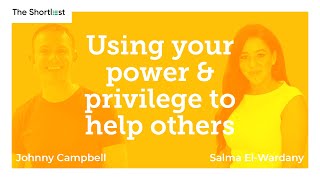
Salma El-Wardany, founder of Digitally Human, talks about how people with power can actually help marginalized groups. She points to real examples: Instagram's algorithm biases against women of color, a hiring algorithm that increased diversity, and why Sainsbury's Christmas ad sparked backlash while Nike and Yorkshire Tea didn't. Privilege isn't one thing but many overlapping advantages you can use in hiring, promotion, and visibility.
Chapters
Foreign.
It is Wednesday 18th November. Welcome to this week's the Shortlist with me, Johnny Campbell, your host, CEO and co founder of Social Talent and host of this regular weekly show. Just a quick reminder for those of you perhaps who are new to the show or perhaps want to check out some previous episodes you missed, you can find out all about the shortlist at the socialtown.com forward/the shortlist where you can find recordings of our previous shows. This does go out as a live broadcast on YouTube and LinkedIn, but is also a podcast available on Apple Podcasts, Spotify or wherever you find your podcasts. So this week's show, let's talk about it. I listened this morning. Actually this morning I had to go out and do a run. It's a charity run for a fantastic trust here in Ireland called the Mark Pollard Trust, who run an annual event called Run in the Dark, which is of course we can't really do in person this year because it's a weird year. So everyone had to run it virtually. And on that run I listened to a fabulous podcast by Guy Raz on his How I Built this. If you don't listen to Guy Raz's podcast, you should. It's awesome. But he was interviewing Kenneth Cole. Yes, Kenneth Cole, the guy of the fashion brand. Fascinating story. Good interview about how the business started, et cetera. And what I didn't know about the brand because he started the business in 1982 was was the kind of role that the brand played in social justice movements through the 80s 90s into today. And interestingly, the first kind of thing that Kenneth Cole did that was different was back in 1986 and he told the story of how he took out a full page ad in some of the big newspapers, New York Times, I think in the US basically trying to highlight the AIDS crisis and bring support to it, which is a very controversial thing to do back in 1986 when a lot of people really didn't understand it, they felt were in fear of it. And Kenneth Cole, which wasn't a big business really at the time, got behind it and put money behind it to try and raise the issue. And the brand has continued to do that over the years and advocate for issues that it felt that it could shine a light on. It could really kind of go out there and recognize the privilege that it has as a brand to try and shine the light on social issues that may not always be resonate well with its customers, but to took a chance and that's what we're going to be talking about today how you basically can leverage power and privilege. And I'm really, really excited to be joined today by the inimitable Salma El Wardani, who joined me last week on another broadcast. You may have heard where I got to listen to her for 20 minutes and be so inspired by her work and her learnings. She's a powerful ally, a spokesperson and advocate for diversity. She's also a recognized poet, writer and broadcaster. Our audience today will pale into insignificance compared to the audience that Salma regularly has on her radio show on Radio London. But on today's show, we're going to be discussing how those with power and privilege can effectively step up and help those who don't. Welcome to the show, Salma.
Hi, Johnny. Thanks for having me. It's lovely to be back.
So, Salma, tell me about why this is such an important issue for you. How you got into, you know, how you got into speaking at TED talks, being a broadcaster, being someone who's, you know, called up on stage to try and advocate for these issues. How did it all happen?
I think the first point of call is me being a child who talked too much, but it's finally paying off. This is what my theory is. I was that kid when I was younger. My parents or everyone around me was always saying, still talking, but now look, I'm making a living out of it. So who's laughing now, really? So I guess when it comes to diversity and public speaking, a lot of that started from me personally telling my story and then setting up my business, which is digitally human, which is a marketing company that focuses specifically on building diverse brands and creating inclusive workplaces and brands that diverse talent want to go to. And so that's kind of when I started speaking internationally publicly on this, when I was going around telling other companies my experiences, how we set up the business, how we work to get other people into businesses and what other businesses could be doing. And that's kind of the glossy overview, the business answer, I suppose. And then I suppose on a more personal level, diversity is something that I've lived my whole life. I'm Muslim, I'm a woman of color, I was born in Africa, African descent, grew up in Newcastle upon time. And for everyone in the uk, they'll know that that's, you know, just on the border of Scotland. It's like the last outpost before you hit Scotland. And it's not the diverse place that London was. I didn't grow up in the streets of London where I saw people who looked like me. And I saw communities of color and people who were more progressive in terms of whether it was from, you know, with sexuality, with ability, whatever it might be. I just didn't grow up around that. So I very much grew up in a really diverse, eclectic, mixed household and then never seeing anyone who looked like me, whether it was in entertainment, politics, arts, or even on my home streets. And I thought, there's something wrong here. Something's. Something's not adding up. And then, you know, moving to. And then I lived in Egypt for a few years and then I moved back to. And I moved to London. And I've. I've been in so many different spaces where I've lived in such diverse environments. And I've seen that it's so much better for everyone involved when we can bring so many people together. And I guess that's the more personal side about why I do what I do and why I fight so hard for marginalized voices, whether that is from people of color or women.
I'm going to come back to your own background and what work you do, Sama. Over the next 30 minutes or so, I'm excited. I'm keen to get into our news stories because there's so much there. But before I do that, I just want to give a shout out to those listening live or viewing live to say we would love your questions, love your contributions, your comments. Please, please, please join in. If you'd like us to read them out would be anonymous because I know that can be. It can be difficult discussing some of these issues. A lot of people are not sure about the language. Do I know the language? Am I okay to say that or ask that question? So save space. So encourage anyone who's listening live to please put your questions in. If you do want us to hide your name, please let us know that as well. We'd love to hear from you. But before we get into that, let's get into the news then. The first article. This is one you sent to us, Sam. Tell us about what Sainsbury's are doing in their beautiful Christmas ad and tell us why it's got into the news.
Well, it is indeed that time of the year where Christmas adverts start popping up. I personally have already cried over the John Lewis Christmas advert every year. It just doesn't change. But it is that time where all the brands kind of put all of their, you know, well, a huge chunk of their marketing budget behind their Christmas adverts. Sainsbury's has done one basically what they've shown is just a family, a father and a daughter talking over the phone, trying to figure out if they'll be able to see each other and if they'll be able to be around the Christmas table this year because of COVID Obviously. That's it. That's the Christmas advert. The only thing that people have remarked on online or what the backlash has been about is that this is a black family. There's no white people in this advert. This isn't a mixed race, race family. This isn't, you know, a white family and a black family. This is just a black family. There's all black people on screen. And the backlash has been enormous online. People have been saying that they're going to be boycotting Sainsbury's because they don't see themselves represented in this advert, that it doesn't relate to them, that they can't find affinity with it and that they think Sainsbury's is just virtue signaling.
This upset me because of the backlash and the article, you know, and I hope it's a tiny, tiny minority. Right. It's actually a gorgeous ad. I love that. I would prefer a conversation about the merits of should you make the gravy in the actual dish you cook the turkey in or should you make it in a separate bowl? I can debate that all day, how that should work. That, to me, is the story here of the father's gravy. Not, not, not, not who's in or who's not in this. You know what it reminded me of, Salma? It reminded me of. If you remember a couple of years ago, when in the us Colin Kaepernick, I think I'm pronouncing that correctly. He was the. He was. He was the NFL star who, who knelt for the national anthem and got himself into a load of trouble with the NFL teams. But if you remember, Nike came out really soon afterwards and made him the poster person for their brand. And if you remember the time Nike stock price fell 2% that day that they launched the campaign, there was a load of videos went online saying people burning their Nikes, going, never use this brand. People in the military going, how dare they? And there was this kind of, this is going to be disastrous for Nike. Can you remember how it worked out for Nike?
Well, listen, they're still doing well from what I can see. They haven't gone out of business. And that's the thing. People come out with these huge statements about what they're not going to do anymore because a brand has Done a certain thing, but the reality is we rely on necessity. So if you're, I don't know, in an area, you've got 10 minutes before you've got to get back to work, you're on your lunch break. The only supermarket there is Sainsbury's. You're going into it whether you like that Christmas advert or not. And people love Nike products, so they go, well, when I want that running pair of trainers that actually support my feet in the right way, they do end up back at night, regardless, because that's the truth. People like the product. Right.
But I think more than that, right, what Nike fan was, Yes, a bunch of people stopped buying Nike.
I.
But more people converted to Nike because of what they stood for and because Nike stood firm and they doubled down on this strategy, going, we're taking a stance on this. I don't think Sainsbury's were taking a stance and they made an ad, they made a nice ad, but I really hope they double down on this and they take a stance to go, hang on a second, we're doing more of this. Don't like it. Great. We're going to do so much more of this. And we hope you don't come to a Sainsbury if you don't like this ad. I'd hope that they come out and say, you know, pay off if, if, if, if you don't like, you know, we don't want you as a customer if you're going to be angry with this ad. I guess Nike came out and said, well, this is what we want to be associated with and if you're not comfortable with that, it's fine not to buy Nike. It worked out already. Nike sales went up 38% or something in the quarter after that. Right. Directly resulting from that, they believe, because more people valued a company that took a. A positive social stance than people who were just bloody racist in the first place.
Yeah, absolutely. And I think what you said at the beginning is really important. Let's hope it is just a small minority and it is a small minority, but often that small minority can make such a huge noise and it can affect other people who perhaps weren't thinking about it in that way. And that's the dangerous thing about that. But you're absolutely right. So, for example, after this advert came out and Sainsbury stood by it and said, look, we're committed to diversity and portraying an eclectic Britain, which is what we're doing, black Twitter went mental and everyone was kind of. There was lots of jokes about how everyone would now be shopping at Sainsbury's. Excuse me. And you're right, it's so powerful when brands stand by that messaging. And another brand that did it, actually, that comes to mind when the Black Lives Matter protests were kicking off in March and it was all just beginning. I think it was PTIPs or someone had tweeted something in support of BLM and then someone had responded on Twitter and saying, basically, I'm not going to be buying PG tips anymore. It'll just, I'm going over to Yorkshire Tea. And then Yorkshire Tea had seen it and responded and say, listen, Sharon, don't buy our tea anymore. The customer leave us alone. And it's so powerful. And I mean, it's an incredible opportunity that we're standing for something and we're not tone deaf. We're aware of the conversations, we're aware of the things our consumers care about and we're here to double down on that. And that's what's beautiful about it.
Yeah, I love that so many more brands are actually brave enough to take a stance and not sitting there going, you know what, we might annoy some customers and reduce our sales. They're going to go, yeah, we might, we might. And we will annoy customers and we will reduce some of our sales. But it is the right thing to do and it would be wrong to pull this or wrong not to not to go for this. I think I like that movement away from safety to do what's right. I think the more of that, the better. I don't jump into our. We've two more articles to cover. I'm going to get back to this.
But the point is, I want to say this like from a real, I guess, fiscal point of view because everyone always comes back to the money and the figures and the profit. It works. Like I don't. I'm going to make an active effort to go into Sainsbury's because you're a person, you're a brand that is sticking up for my community. I mean, yeah, like, absolutely.
And every other retailer that comes out with an ad now I'm going, hang on a second. They're all white people. Are you? Too many of the non diverse groups. So not going to go shopping in your place. Hopefully that encourages others to do the same. Then we're doing something right. Let's jump into our second article. There's a bunch of stuff that's really interesting in the news this week. This one came from Fast Company and it talks about hiring Algorithms. I know you worked in our industry and recruiting for many years, Sam, as well. And no doubt you hear conversations about algorithms and usually when it comes to diversity, the rhetoric has been lately around algorithms actually don't, don't help diversity. They can be anti diversity. This article from Fast Company, if I read it correctly, outlined a different type of algorithm that actually, in what seems to be scientifically rigorous examinations, actually came out on top for driving more diversity. But they did it in a certain way. Can you maybe explain this a little bit more to me or give your opinion on this?
Yeah, and I think what's important to state and to start with when we're talking about algorithms is that algorithms are made by humans. And so everyone goes algorithms, tech, the robots, right? There's no robot at the end of that making it right. Algorithms are made by humans and therefore they have human bias inbuilt into them instinctively. And you have to bear that in mind when you think about it. So for example, everyone trusts algorithm. And we've been talking about hiring algorithms within the talent industry for so many years because a, it's going to help recruiters get through the vast amount of talent that they need to get through to make the hires and the placements that they need. But actually we need to start looking at algorithms differently. And this for me is hopeful because people are starting to have a conversation because a lot of trust has been placed in algorithms that it will find the right candidates or it will do what we want it to do, or it will put the right messaging that we want across our screen. But I think that this is good in that there absolutely needs to be a readjustment of how we look at algorithms and algorithms program everything that we do, from the talent that we hire, to what we buy on Amazon, to what comes up on our social media feeds, to what we see on our news feeds. It just infiltrates everything that we're doing. And so we need to start looking at those algorithms properly, which is why I'm really glad that we are starting to look at it. And this article is, does do that. So for example, I'm at the minute, I'm looking at Instagram's algorithm and Instagram again is one of those place where huge amounts of people have gone to find talent, where a lot of brands are doing their employer branding strategies over on Instagram and Instagram. I'm currently writing an article for a publication, quite a big publication, which I can't mention just yet, but for a publication in which it explores Instagram's bias against women of color. And the experiments that I've done personally on already shows that Instagram has a huge bias. So if you're a white woman, you can say something. If you're a white guy, you can say something. If an account that is run by a black woman or a woman says exactly the same thing, it gets taken down and it gets penalized and it gets put off. And I've done that experiment over the last week and it's remarkable how much those Instagram, those algorithms can, yes, they can help our lives, but we have to make sure that we're using the right algorithms.
I love that. I'm a massive believer in the scientific method. While sometimes it can be flawed, it's the best thing we have. And taking that approach to go, I'm going to experiment with different accounts and try the different things, try the same way and see what the outcome is. It is the true leveler. It's like, does it or doesn't it? Well, I use the scientific method and here are the outcomes. It's not an opinion. I'm not sitting here going, I think they're all. I love that you've taken that approach. Will you please let us know when that article gets published by that publication, whomever they are, because I'd love to dig into it.
I will indeed, I'll let you know. But the experiments have been truly eye opening and terrible all at the same time.
So I've got a great question here from James Maley. Right? He asks directly a question for you, Salah, similar to the Nike example. What's your view on companies that use diversity themed, kind of B2C marketing campaigns but have poor representation with underrepresented groups across their own employees, should they be celebrated for raising the broader issues or focus their efforts inwardly?
Do you know what, James? That's such a good question. And it was a point that I was going to bring up. So you segued perfectly into a point that I wanted to raise at some point. Listen, here's the thing. There is so much to be said for brands who are including diverse adverts. They have diverse marketing campaigns, marketing strategies. But the truth is, if your policy is diverse. So if when we look at your business and you go, you know what, 50% of your board is of color and know 50% of it is female, and you are wholly represented across your industry, you have working class people in your business and they are afforded the same opportunity as those people who come from very privileged backgrounds, or you have people from the LGBTQ community or from the disabled community, and they're all being able to promote their way through that business of an equal measure, then quite frankly, everyone on the outside doesn't give a damn. Honest to God. If I look at a company and their adverts, for example, let's use Sainsbury's as an example. If Sainsbury's consistently only has adverts that feature white people with the odd token black person somewhere. However, behind the scenes, their policies are so incredibly diverse and actually, you see that they have, I don't know, 50% of people of color on their board who are, you know, there's 50% white and 50% are of colour. I don't care. I genuinely don't care. I think leave it to other people to raise the awareness. Fine, I'll have conversations about raising awareness. Other people will. That's absolutely fine. I don't need you to do it. If you are actually living in and you're talking the talk in the right way. And I think you'll find that most people don't care. Like, there's been so many arguments as well, where people have said, I don't want to be referred to as Bame or. And all of these things in light of the conversations that we're having recently. And quite frankly, they're little. I don't care if you call me Bame, if actually I can go through your company at the same pace as a white person.
But would you. Do you think it's wrong if they're not providing those opportunities internally? If they're not, you know, showing themselves to be inclusive, but they are just. They're doing their advertising right. Let's say. Let's say Sainsbury's board is all white males. And, you know, it turns out that Sainsbury's isn't a great company to work for. From an inclusion point of view, it's. No, it's not bad. As in, it's not different to the normal average, unfortunately. But let's say it's not. I don't know if it is or not, by the way, but let's say they're just not particularly diverse. But they've made this really great video that is promoting the issue and getting people talking. Is that wrong that they're doing that? I think that that's this other point that James making. Is that wrong that they. That they do they have the right to do that? Is there still a benefit of them doing that even if they aren't doing all the right internal moves?
I think if You're a brand and you're consistently having those conversations and you're showing people that you're putting diverse people in your adverts and you're consistently doing nothing else, then, yes, we have a problem. But the hope is, and this is what we have to acknowledge, is that everyone has a starting point and everyone gets into this conversation in different ways. So if Sainsbury's, for example, is starting to create a more diverse company, and if their starting point is doing an advert with a black family, then great, maybe that's step one for them and maybe step seven is about. They're going to hire their first, you know, black chairman. You know, maybe that's, that's step seven for them and that's their starting point. And then great. But yes, if you have a brand that, like James said, that consistently does nothing but just talks about it online, then, yes, you have a problem there for sure.
We mentioned boards. I'm going to jump into our third news story from this week, if that's all right, Salah, because I think it's related to this issue. It comes from personnel today and the author here is talking about boardrooms in the UK anyway, are now more, more meritocratic and diverse, according to this study. And this, this caused a bit of debate and in our business, because, you know, the article talks about how it focuses on a particular thing, which is probably education, and it talks about, it leads and opens with the percentage 10 years ago of board members in the UK who came from Oxbridge. Right. Cambridge or Oxford. And then how that's massively gone down, that there's a bigger mix, that there's less of a focus on people from an MBA and accountancy background, which is the traditional route to the board.
But.
And it's more mixed and it also touches on, not big time, but touches on obviously the great strides that women in the UK have made from 10% to 33% board representation. Still not far enough, but getting, getting somewhere anyway. And this created a big bit of a debate as to is can a board call itself diverse at all if it's only focusing on that thing? Is that a version of diversity, a flavor of diversity, is it? Absolutely not. What are your thoughts?
Do you know what? I'm so glad we did this article. I really want to get into this and I really want to talk about this because I think it's something that we don't talk about a lot when it comes to diversity, because we all say we need diversity in companies, we need it in organizations, in education. And then people don't really pick apart what that diversity does. What we have to remember is there is a hierarchy of diversity. So there is a hierarchy in terms of what people find most palatable, what people are most willing to work on. Right? So think about how open people are about pride and think about the amount of companies that, you know, that celebrate pride in June or change their logo to a rainbow, and that's everyone from Starbucks to Prep to, like, the real high street people that you see every single day. And, you know, we've been doing that for years, and it's like, well, now no one really has a problem with talking about people from the LGBTQ community or talking about pride and celebrating trans and gay people and queer people. We don't have a problem with that anymore. That's powerful, palatable to us. Right? But no one's changing logos to BLM signs. Come, you know, Black History Month. No one would dream of changing logos to BLM signs. Now, gender is something that we feel like we can quite easily access. So gender is a point that a lot of companies go, okay, let's do diversity, let's do gender. They're not going to tackle black people. They're not going to say, let's get someone who is from the disabled community or. Or who's Asperger's or who's autistic and let's hire them. They're not ready to do any of that, but they're like, okay, we can talk about women. Let's do that. So women are often the entry point to diversity. Right? And it kind of seems that at the top of that hierarchy, you have women and you have the gay community. And people are like, at this point in time, they're quite comfortable talking about that, and they're quite. Whether anything gets actually done is absolutely by the by, but they're comfortable talking about it for now. And this, I think, is such a huge problem because in doing so, we leave out huge chunks of the diverse minorities that absolutely need to be part of the conversation. So we don't often talk about people from working class backgrounds. Right. I am. I grew up from a working class background. I got my clothes from Oxfam when I was a kid. You know, my dad was a market trader out on the market stores. And I would. I would go with them and put up that market store and we would sell stuff. Right. I remember joining the corporate world in London, and I remember someone saying, what does your dad do? And I say, oh, he works on the market. And I remember like about four white faces around me just looked at me and no one knew what to say. And everyone and everyone else's fathers were, I don't know, bankers or investments or worked as traders or whatever it might be. And I remember going, oh, and it was the first time, oh, you're not comfortable with the fact that I didn't go to the same school as you or I or my parents don't work the way your parents work in blue collar jobs or whatever it might be. And we don't talk about those things. We don't talk about certain elements of diversity. What this article is doing is saying, look, we're having more diverse boards, but when we break down what that diversity is, it's women, right? Or it's those easy diversity access points. It's not the more uncomfortable diverse access points, if you know what I mean. And as well, this is what the problem is with bame, right? Which is why so many people have said, look, BAME isn't a comfortable term. Because when we say, look, you need 10% of your staff to be BAME, what we then might include is Asian people. You might include Asian people that have gone to Oxbridge their entire life and come from very wealthy backgrounds, very privileged backgrounds, and you still don't have any black people in your organization, but you fulfilled a BAME target. So you can say you're diverse. So yes, this article is saying we've got more diversity in boardrooms, but actually when you break it down, it's bullshit.
Yeah, I was having a conversation before we went live and I was talking to of things a couple colleague about, you know, if you have, if you have a board or team, whatever, right? And let's say they're gender diverse, you've got. Right. Nice representation of the LGBTQY community. You've got, you've got someone who perhaps has more needs than somebody else from a, from a physical perspective. You have somebody else who's got a good ethnicity mix there. And every single one of them went to Oxford. I don't consider that a diverse group at all. It's like they all think the same. They've got the same human experience, the same. Okay, each of them has a slightly different flavor, don't get me wrong. But the commonality from education in a business environment is just so strong and so samey. I think it just, it clouds everything else. So, you know, because you're right, so right about the issues. Two things that I heard in the last month. One was I had a great podcast on this emerging challenge in San Francisco, but mainly, let's say West Coast US Challenge from the Indian community working in the US how this. I didn't know this. I work with a lot of customers in India and I know there's challenges, diversity there. I know what they are and how they're trying to resolve them. But this was a US One where Indians with other Indians in the US Are basically trying to subtly understand what caste the other Indian is, to basically put them down and they ask a load of questions that only an Indian would know if it's a loaded question. And this is this microcosm of racism that the Supreme Court in the US Ruled was allowed and it wasn't discriminatory because they don't understand it. Right. Because it's a bunch of American people understand these issues. Right. And then likewise, I heard a great talk last week from somebody talking about individuals with dyslexia and talking about how, you know, individuals, dyslexia have so much. The science has shown that they've huge amount of extra skills on average in creativity in other areas because of how their brain is wired that is not being leveraged. And they're trying to look for better representation in the workforce and really kind of help employers understand that. Actually saying you have dyslexia should be a badge of honor because it gives you an edge statistically for certain roles. But that's not how society sees that. And the campaigner was talking about how she went around handing pamphlets out and surveying people going, if you could, if we could choose to have your next child to be dyslexic, would you say yes or no? And like that uncomfortable question that people were asked, she's like, I've got dyslexia. It's been a real asset to me. It's been valuable. It could give your child a real edge in lots of careers. And nobody's saying, yes, I'll sign up for that. These are uncomfortable conversations around, call them non core, non top hierarchy, levels of racism and discrimination. But I think you're right. There's a hierarchy. It's like, let's just deal with the. Call it the easier ones, the ones that everyone else is doing. No one's going to think we're too controversial and they still have to be dealt with. They're not solved. Right. So this is the, how do you resolve that dilemma? Like, we haven't fixed, you know, gender pay disparity in women's rights. We haven't fixed, you know, discrimination for the LGBTQY community. So it's not as if it's done, then we can move on. So how do you resolve that?
Yeah, and you have to. To that point, you have to bear in mind that actually, when you're hiring just certain tenants of diversity, what you're doing is you're still able to uniform your board, for example. Right. So let's say you now have more women on your board. Those women could all be white women who went to Oxbridge. Right. Let's say, you know, you now need to hire someone from a certain. I don't know, a certain job role or something. You can hire a very specific thing, or you can say, you know what we have, our CEO is a gay man. You can be a white gay man who went to Oxbridge. Right. So you're actually. What you're doing is you're saying we're diverse, but you're absolutely not, because you're ignoring the marginalized voices, because those voices still have privilege. And this goes back to conversations we've had about privilege. You know, it depends on your level of privilege, and it is granted based on where you stand in society. Right. But yeah, to your point about how we fix that. God, there's a million radical things that I want to do, but I don't know how prepared the business world is for radical things just yet. I think it's. It's very much a process. We have to be having conversations in the first instance that are uncomfortable. Just like you said, Jonny, about that dyslexic question, people really shy away from those conversations because they've never been confronted with them, and we have to get more comfortable with being confronted with those conversations. So, for example, if you're in your business and you're sitting in your boardroom and you're having your monthly board meeting, look around that room and look at the faces. And if no one is diverse, be the person that says that. And it's uncomfortable to say that. Like, if you're a white guy, be the person that goes, why are there no people of color in here? Or why are there not more women? Let's just have a conversation around it. Right? Let's just talk between us. Why do we think that is? What should we do about it? You have to start getting comfortable with those difficult conversations, and you have to start taking responsibility. I think the point was now for us to coast along on the sidelines, for us to just look at the problem or admire the problem. Now's the time for action, where we all stand up and go, well, I recognize that every single person from a black person to a disabled person to a white person. We all have a level of responsibility here, so I'm going to step up and do my bit. Right? Whether anyone else around you is doing your bit, whether you're junior or senior in your business, we all have a bit to do. So it's about stepping up and being like, well, I'm going to drive that bit in my business and see what I can do, whether it's in my team, whether it's on the board, whether it's in the wider business, in the group. We have to start stepping up because I don't think we're in a position where we can't anymore.
I'm going to call out another listener comment before I come back to a question, if you don't mind. Salma this comes from Kathy Iverson Cathy saying having a policy for diversity is one thing, but the implementation of those policies have to be visible and clear. Culture takes time to change, so it's important to be transparent. I think that's a lot of what you're saying is transparency. You don't have to say you fixed it all, you don't have to save all the answers. But the transparency, the honesty is really, really important. I'm going to ask this Amma, back to privilege. I'd love if you could share with us. For many listeners and viewers who don't understand what we mean and don't mean when we talk about privilege and all its different layers, could you maybe walk us through some examples of, maybe some positive examples of how individuals have or can display privilege, use their privilege, I should say, to help others and how that plays out in the workforce.
Course, yeah. So privilege, let's just accept as a starting point that we all have it and we just all have different amounts of it. Everyone has it, but again, it just manifests differently. So you either have. So for example, let's use me as an example because I'm, I'm kind of the easiest example here. I am a woman of color. I'm Muslim. So there's loads of different ways that I'm oppressed or that I'm not heard or that my voice is marginalized. However, I still recognize that amidst all of that, I have privilege. So for example, yes, I'm African, but I'm light skinned. So I have light skin privilege, right? Yes, I'm working class and grew up really poor, but I have a British passport, which means I can pretty much get into any country. I have the privilege of being able to step in and out of countries In a way that all my family in Egypt, in North Africa don't have. They can't come to this country. The way that I can step globally around the world. I have the privilege of a phenomenal education. You know, I had a bursary because we didn't have the money to afford the fees for university. And I went to a Russell Group university, worked really hard and have an education that other people don't have. So I have all these different points of privilege. Yes, I'm marginalized as a voice, but I still recognize that, hey, actually opposite my friend who's Nigerian and she's really dark skinned, we are treated very differently when we go on holiday and we're both navigating airport security to when we're in the workplace and we're in meetings, how people talk to me, very different how people talk to her. So everyone has that privilege. We all use it in different ways and it will manifest in different ways. And I say this when I talk about privilege because it's so important to just keep saying over and over again, we all have privilege. And that's okay. There is no point in wishing away your privilege. There's no point in arguing that you don't have it. The thing that you do do with your privilege is you use it to help out people who are less privileged than you. And that's in the big ways, small ways, the tiny, insignificant ways, and the ways that you can do it in your company. So the example that I used last week, Johnny, when we were talking, when we were talking about diversity, was the example most recently in the American elections in that Joe Biden is now president elect and he picked, as a white man, he picked a black woman to be his vice president. So he was using his privilege and his power because he's going to be in that position as president before Kamala Harris is all on her own. And he picked her and said, I'm going to bring you up with me. I've got a seat at this table. I might get a seat at this table, obviously, when they were in the elections, but I'm pulling you up with me and you're going to have a seat beside me. And that means she then can kind of go up those ranks a lot quicker. So that's an example of like a global example of privilege being used for the better. For me personally, like I said, I had the privilege of phenomenal education which got me, you know, great jobs, which allowed me to navigate the corporate world. And then I set up my own business and in My business, I only employ women or people of color. That's the way I'm using my privilege to help out those in my communities and to bring people up with me. Because I know there's plenty of other companies that will hire white men, for example, and I don't need to be one of those companies who does that. And I want to afford, afford voices and space for all of those marginalized people then also on a real daily basis and on a real individual basis. And I use this example. So, for example, when I'm on the tube, when we used to travel and we used to commute to work, a little thing that always sticks in my head is that if there is a woman, if there's a black woman, for example, standing, and I'm sitting, I'll always give up my seat, even if she's the same age as me. Because normally I'll give up my seat to someone who's older than me, of course. But even if she's about the same age as me, I'll still give up my seat or I'll let her have the seat. And it's tiny and it means nothing. But I know that every single day, the way she navigates the world is harder than the way I navigate the world. I know people will take a tone with her more than they'll take a tone with me. I know people will look at her or give her more harassment in the street than they will with me. I know it's harder for her to ask for a promotion than it is for me to ask for a promotion or a pay rise or whatever that is the very tiniest, the smallest of ways that she navigates. There's one tiny, tiny thing that I can do in my day. I'm not changing diversity. I'm not changing the conversation. I'm not making a better world just by giving up my seat. But it's just a small thing that I recognize that I can do because life is just fundamentally easier for me than it is for her. So that's kind of the big ways and the small ways that we can use our privilege and how we can then give it to other people basically in order to help them.
Many of our listeners may have heard of this, this topic, and it may be something that they've heard in the workplace or elsewhere. But talk to me about allyship and allyship in the workplace and what it looks like and perhaps how anyone who's interested in listening can go. I'd love to be get involved and use my privilege to help others Talk to me how allyship can be a mechanism for doing that.
Allyship is one of the most powerful things we have, and I adore allyship because it's basically just you being a mate. It's all it is, is helping someone out, right? So Joe Biden was an incredible ally to black women when he elected Kamala Harris as his vice president. He said, look, I see you. I'm going to use my power. I'm going to help you. Right? And there's so many ways we can be an ally in the workplace and this. And it's the smallest of things and it makes the biggest difference, right? So a lot of the time when we're talking about D and I, we talk about inclusive cultures and we talk about getting diversity into our organizations, but actually, when we don't have the inclusive cultures to support support that diversity, that diversity becomes a revolving door. We get them in and we lose them just as quickly. And that's a problem, right? So allyship is one of the incredible ways that we can change culture. I know Kathy put in that comment previously that actually, it's really hard to change culture, and it takes time, and it does. Allyship is one of the most instrumental tools we have to change that culture. So when I was working in the heart of corporate in London years ago, I remember it was like after the Paris bombings that had happened, and I'd come into work, people know I'm Muslim because I don't drink. So it's quite obvious when you're in recruitment, and lots of people do lots of drinking on a Friday night, and they knew that I was Muslim, and they came in and we were all standing around in the kitchen, and everyone was talking about the news the night before. And everyone said, well, what did you think? What did you think? What did you think? And then someone turned to me and said, salma, why are they just doing this? Why? Why do they want to do this? I just looked at them and I. I just. My mouth was open and I just didn't know what to say because I was so taken aback by the question that I suddenly had to defend an entire faith. And I suddenly had to have the answers that I don't. I suddenly have the answers to why an entire terrorist group might be doing something so awful. And then another time it happened and people were. They were making some sexist jokes and I was the only woman around, and no one said anything. And then later on in the kitchen, a couple of the guys came up to me and they said, look, he was out of order or that person was out of order for asking you about isis and they shouldn't have done that. And I remember just looking at them and going, but you didn't say anything at the time. Where were you at the time? You were sitting at a desk next to me. And it was just us. There was no management around. So your job wasn't through. Right. And there was no, there was nothing stopping you from turning around and saying, hey, Dave, that question's out of order. You know, there was nothing. Don't come to me and tell me in the privacy of the kitchen that it was awful because that does nothing for me. It doesn't help me and it doesn't help change the culture on the sales floor there. I need you to be an ally on the sales floor. I need you to turn around when Steve is being sexual, not because Steve.
More from Johnny


Where Does Your Hiring Stand? Diagnose It with the Maturity Model | SocialTalent

Where Does Your Hiring Stand? Diagnose It with the Maturity Model | SocialTalent






NEW CONTENT - How to use Generative AI for Recruitment Marketing with Glen Cathey | SocialTalent

NEW CONTENT - How to Use Generative AI for Sourcing & Recruiting with Glen Cathey | SocialTalent

NEW CONTENT - How to Unlock the Power of Generative AI with Glen Cathey | SocialTalent