Improving Candidate Experience at Just Eat with Olga Power
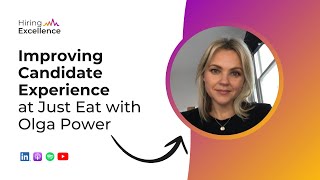
Olga Power, Global Director of Talent Acquisition at Just Eat Takeaway, explains how better candidate experience drives higher acceptance rates and NPS scores. The company uses surveys, interview training, and chatbots to listen to candidates and improve hiring. Transparency on salary and inclusive panels matter most.
Questions this video answers
About 12,000 full-time corporate employees.
About 70 people globally.
Approximately 3,500 people per year.
Generally 12,000–15,000 applications per month.
Around 62–68% on average.
Chapters
We make sure that we're, you know, honest and transparent with candidates. We talk salary up front, we talk hours, we talk teams and what to expect. And it's constant communication throughout is really key for us.
Hello and welcome to the show. I'm Johnny Campbell, CEO and co founder of Social Talent. And this week on the podcast we're speaking with Olga Power, global director of talent acquisition@justdtakeaway.com on the importance of candid experience. Olga, you're very welcome to show.
Thank you Johnny.
Olga, we'd love you to perhaps share a little bit about where you're joining us from. Brief history of your career and maybe for context for anyone for some reason who doesn't know who just did takeaway.com are you, you might be able to just share a little bit about the organization, size, history, how long you've been there and some context around your kind of hiring volumes will be really, really helpful as well.
Olga yeah, sure. Thanks for having me today. So I'm based in London. I'm a global TA director for Justy Takeaway. As you mentioned Johnny, I joined the company almost four years ago and a lot of people will know us as, you know, the food delivery company. So you might order your Friday night takeaway from us. We've also recently entered into the delivering for convenience market. So not just takeaway but also product, goods and products as well in more recent times. So we're about 12,000 people FT on the corporate side which is where I work, that's excluding our couriers and we're based globally, 19 countries. I head up TA. As I mentioned, our recruitment team is about 70 people globally today and we work across all functions, product and tech, corporate sales, high volume which would be customer services and everything that goes behind the operations of what we do. Yeah. So nice, nice to be here today to talk about how we hire in terms of volume. Just I guess for context, we generally hire about three and a half thousand people every year globally into those various functions. And yeah, we're based everywhere so we have our, our team spans across the globe including Canada and, and Australia as well.
For a business like just you takeoi Olga Canada experience takes a particular kind of level of importance because you know, like say in a business to business environment like let's say social talent. Right. Candid experience go really important to us as an organization. But to be honest with you, most people who might get rejected aren't going to probably be a buyer for a product. But in your circumstance, if somebody doesn't have a good experience if they get rejected, if somebody says something weird to them, somebody doesn't come back to them for feedback, that's a potential customer, almost certainly a potential customer who could be peed off from a consumer brand point of view. So it is arguably much more important for an organization like just you takeaway to focus on can experience and others, as in the business case is even more so stark. Would that be fair or maybe you might explain how you think of it.
Absolutely. Look, we have to be really mindful of our candidates because as you said, they're our customers. They're the people that are on our app ordering their Friday night pizza, ordering their pet food, ordering whatever else it is. So not only do we want to leave a good impression that we have a good recruitment process, but, but also that people will want to continue or to start to be our customers. So we really have to be mindful of the fact that if we don't get it right or that if somebody has a really bad candidate experience with us, then we could potentially lose them as a customer. I refer to Virgin Media a few years ago. They had a very well publicized case where because of a bad interview experience or recruitment process experience, they lost up to $5 million at the time. And to turn that around, what did they start doing? They started asking their candidates about their experience and then actioning on those feedbacks and really kind of honing in on how to make the process better so, so that they weren't obviously you know, losing more, more and more customers. So there is, there is a revenue element to it, but also a branding element, of course.
And the last few years, like you mentioned, the size of the team now the amount of hiring that you're doing, but it, that would perhaps give the impression of it's being very static, predictable, the same every year. Has that been the case in the last four years since you joined?
Well, no. I mean, we're the kings of change. Kings and queens of change here. Well, if we go back to when I joined back in 21, it was obviously the year of COVID everything was shut down. You know, you couldn't do your Friday night date night in the restaurant. You were ordering pizza, you were ordering takeaways for the family instead of, instead of going out. So that was a really hypergrowth year for us when where we hired nearly 7,000 people and it was a case of how many people could we hire as fast as we could bums on seats. And it was just a whirlwind. Right. The year after we calmed down, we stabilized and we kind of went, decreased 50% in our hiring because obviously we were getting through Covid place were opening again. And so the demand was decreasing to somewhat. But it gave us the chance to really sit down and look at what the year had brought us, what the candidate experience looked like. So quantity really was the focus rather than quality back then. And we knew we had to do something because we knew we weren't providing the best candidate experience. And again, this was impacting our customers.
So you know, at its core, people might look at just a takeaway, just that they might look at delivery or Uber eats, some of those competitors as, you know, food delivery companies. You're largely a tech oriented businesses, right? It's very much tech oriented. I think what you hire from a corporate perspective is a lot of tech talent. Big into data. How do you see the role of data in candid experience and hiring? And how do you use data, how do you collect data to try and drive that experience?
Yeah, so we looked at this in great detail. So as I said, when we kind of took stock of that hyper growth, we knew we had to do something. So we introduced as Virgin Media did, as I mentioned, talent candidate surveys. So we essentially wanted to know if we've been through our recruitment process, what was it like? Was it what you expected? Would you recommend applying to Justy takeaway to others? How was your interview experience? How are you treated throughout? So every candidate that goes through our process will receive this survey which takes less than 10 minutes to complete. And we get back really good, really good qualitative data from this. So we receive generally 12 to 15,000 candidate applications each month. So you can just imagine the amount of qualitative responses and feedback that we can get. Sure, not everyone will fill it out. We, we have around on average 62 to 68% fill rate. And that's fairly equal between those who go through the process and get an offer or don't get an offer. Right. So it's very equal on both parts. We get about 1200 answers every month on what people think of our whole process and we get really good feedback from that. So we, we've built our, we built a candidate experience, I guess committee within ta, within our own TA team who take these results monthly. We benchmark them against our global competitors and we look to see, okay, where, where are we really excelling? Where do we need to put more kind of effort into? And then quarterly we come up with different incentives of okay, we're, we're being told that we're not doing this Very well. We need to concentrate more here. What can we do? So it's like a project team, a continuous improvement project team that we have that really focuses on this area, on.
The mechanics saga is that one survey at one particular point in the process, are there different surveys for different points in the process? And what are the categories that you typically capture data under if you do categorize it?
So essentially as a candidate you'll only ever fill out one survey, so it's usually at the point of exit. So if you reach our first stage interview and it doesn't go any further, you'll get the survey. If you go through the whole way and get an offer, you'll get the survey, or if you don't, you'll get the survey. So we're not kind of spamming people with surveys at every stage of the process and it's very interesting to see the differences between whether a candidate is successful with us or unsuccessful and that. And, you know, the feedback that we get is really helpful and helps us then to improve our processes. You know, we. Some of the initiatives that we've worked on was candidates were telling us, you know, your feedback's not always very clear. So we did a whole feedback training session with our TA teams. But also with included in our interview training with hiring managers is that we have to give good, detailed feedback to candidates, not just very generic, oh, sorry, you didn't make the final cut. But, you know, they were telling us that you need to give more feedback on what can we do better next time, you know, where did we fall down? So that now in our scoring has increased by 1% globally because we now take the time to verbally. The other thing is, if we ever touch a candidate and they've spent time to go through interview processes with us, then we believe they deserve the right to get that verbally that feedback as well. Which really, you know, we feedback based on the competencies that we've asked throughout the interview process what didn't quite fit, what did fit what, you know, what we were looking for, what we didn't find or where the mismatch was. So really digging into the detail there for the candidates has. Has, you know, turned that kind of score upwards rather than downwards.
What are these are some of the more memorable are important kind of learnings and then initiatives that drove substantial outcomes that have come over the last, you know, eight to 12 quarters from these surveys.
Yeah, I mean, another one to think of. We were told that our interviewers weren't always prepared. So I just as I mentioned we rolled out global interview training for, for all managers who were involved in interviews. You know, you just, you don't show up to an interview and read off a resume. You know, you make sure what competencies you want to assess in that interview. You make sure that you're not just, as I said, questioning. As you read down through the resume, you look at your unconscious bias, you make sure that you're addressing that within an interview. We make sure that we have diverse interview panels and overall we rose by 0.5% in that area where people did start to feel like interviewers were showing up and being there and having read the resume. Small things, right, that we think that we in TA you kind of take for granted. But hiring managers are maybe coming from the tech world or the product world who don't always conduct interviews. It's a reminder we've, you know, shared with them guidances on how to use different methods of interviewing and how to really make it interesting for the candidate and relevant as well. And finally, another big initiative that we got was that we wanted to make our interview practices and our recruitment process more inclusive and diverse. So, you know, how do we tackle that? So we created a TA Inclusive, Diverse and Belonging committee within our own team. Again, to really drive how can we raise the inclusivity of our interviews. We did things like across the whole process, ensuring that we had inclusive hiring panels, inclusive job descriptions, advertising for part time roles, flexible roles for maybe returning to work, mums, things like that. So really looking at the whole process from opening a vacancy all the way through to making sure that people see us as an inclusive, diverse employer as well.
Yeah, I love those examples. Olga, thank you for sharing. I'm wondering though, when you look at the volume of data, you know, it sounds like they're, there are general things that apply to all hiring, all roles that you made changes on the interviewing. You know, how do interviewers show up, giving feedback, being more inclusive in the process. Do you kind of cut the data in any way to go, okay, generally we're fine, or generally it's okay. But there might be cohorts where there are significant differences that we need maybe tackle for different regions, different demographics, different types of roles we're hiring for. Does that happen and how do you think about that and if you do see that, what are some of the kind of learnings or initiatives that have come out of that kind of way of looking at the data?
Yeah, great question. So it's not a one size fits all approach when you're hiring that Many people across so many functions every year. We have to be mindful that perhaps if you're hiring for a customer service agent or a CPO that you have to have adaptive, a different style. Right. A different process and speak to your audience. And then we get the data back from that and we dissect it based on okay, where this person was interviewed for. In terms of function, our department, the surveys are all anonymous but we do ask for some info so we can kind of dig into what areas we need to kind of concentrate on more. And one of the areas to use as an example is we generally find that our high volume roles, which is in, within our customer services area, our applicants are usually between 18 to 34 age range. So we wanted to see how we could better serve that demographic and, and, and really get, get to know them better and, and, and, and think of ways to make the process easier and more engaging for them. So so basically we, we adapt different tech and different styles for those different groups. And as I say so what's interesting is uSwitch, their website comparison company, they did a survey for this demographic between 18 to 34 year olds and found out that a quarter of them never answer their phone, ever. You know, it gives them a sense of foreboding, your feeling of something's wrong, why is my phone ringing? 70% of them said, you know, don't call me WhatsApp me, you know, Snapchat me or whatever else all the other young tech things are today. And that was the preferred method of communication which might be different to someone of a different level or of a different age category. Right. So for those, we did a high, we do a high tech, high touch appointment approach. So you apply for a role, you get a WhatsApp thanks for your application. You get some killer questions. You know, can you work these hours? Are you available to start in this time frame? What's your visa status? So all of these killer questions, as we say run by a chatbot, you get through the, to the next stage, there's a gamification competency based, skills based and then you finally come through to one of our TA team who will then invite you along to an assessment center on the day, show you the offices again, further kind of test on your competencies and the fit for the role and then we go from there as to whether it would be an offer or not. But we find that much more engaging for that demographic. We found afterwards our attrition levels have really improved because we're more targeted. It removes biases as well. Because it's not based on your resume as to why you're chosen. It's based on the fit, on the competencies that you show throughout those various assessments. And it's on your own time as well. We're not asking you to do an hour long interview on, you know, on a weekday or whatever when you're busy. You can do these online on your own time. So that's just one example of how we've kind of adjusted the process. But again there, if you look at the product and tech side, we'll do other things like obviously coding tests or whatever else might be relevant. But it's really about kind of learning and knowing your audience and engaging with them as best you can.
I love that I'm not that demographic, all because I think, you know, but I would prefer that kind of a process certainly for the early screening stages where, you know, there's probably, as you say, a few things that you need to know quite quickly and you don't want to take some, an hour out of someone's time or book even 30 minutes out of their time. You can do it across a couple of messages throughout the day and that can be more convenient for them and, and much more convenient for your team. Like when you look at ROI of those kind of things, Olga, apart from improving the candidate experience, which I no doubt it measurably did, do you see other roi, other benefits of business and that kind of an approach where you're, you're bespoking it for different cohorts like that?
Yeah, yeah. And look, we, we, I think, look, talking about AI and that's today's hot topic, right? We're, I don't believe it will replace jobs, but I think it will, will help us in our jobs. And this is one of the areas where it has helped us because by using these chatbots that we have, then our recruiters can get on with actually supporting during the interview process, with the offer process, really supporting the candidates after those initial screening phases, which has helped us improve the experience even more. We've saved. Last year we saved over 500 days of recruiter time simply by just removing that initial 20, 30 minute screening call where they could have spent 25 minutes on the phone with somebody to discover actually shift work doesn't suit them with their lifestyle or whatever that is, or weekend work doesn't suit and maybe we're looking for weekend staff. So suddenly all of this time we're getting back and you know, the market's tough out there right now. A lot of costs. Companies are looking at their costs, including us, naturally. So when we're looking at our own talent acquisition team and the FT that we have, we can really drive for efficiency there as well. What are we spending our time on? Hiring the best candidates and we're getting back that time that we were losing on those, you know, hundreds and hundreds and thousands of screening calls where, which were fruitless in the end. Right. Due to, due to whatever reason. So it definitely has made a good impact.
I love that. Like when you might call real business cost savings, where you're actually saving headcount and costs whilst delivering a better service to the candidates and improving the quality of candidates. I think I guess the ultimate go, you know, you do it more efficiently, the business is happy with your. Because you're delivering results financially on the bottom line, the top line equivalent, hiring wise, you're getting better quality candidates and delivering a better experience for the market. So it really kind of comes together nicely.
Yeah, exactly. And look, there's no surprises at the end of the process then our acceptance rate has gone up to 85% because through the process we make sure that we were honest and transparent with candidates. We talk salary upfront, we talk hours, we talk teams and what to expect. And it's constant communication throughout is really key for us. And look, we don't always get it. All right, our current NPS, our candidate NPS score is about 7.5. Obviously I want it to be 10, but, but, but you know, that's almost impossible when you're dealing with that volume of candidates coming through. It's unfortunately very hard to please everyone all the time. But at least if we can tackle the bigger issues that I mentioned earlier that do, do turn the needle right and do up the dial for us, then we can really look at those bigger initiatives and tackle the smaller ones as well. I mean we. Personally, I'll also sit down and literally each quarter, as I said, our candidate experience committee within TA will go through every comment, every feedback, read through it, look at what people are saying and we still get it. Look, you know, my application was sitting there for weeks, I got no feedback, I had my interview, I didn't get feedback, feedback in a timely manner where I was told I would. And I think, you know, we, we can't get them all, unfortunately. I would love to say that we were perfect and we're, you know, we've, we've got it all right, but we're not. And, and I think, but, but that just drives us then for continuous improvement. What can we do better. Why did this person not get a feedback from their interview three weeks later? Why did they get the incorrect rejection email or whatever that might have looked like? Right, so again, it's not perfect, but at least we're doing something about it. We're listening and we're tackling the bigger things, which is making an impact. And again, look, there's peaks and troughs in the scores. We might score higher one quarter, lower the next, but we really dig in to find out why that was and, and, and look to see where we can make it better.
As we say in the name of the show, it's not about perfection, it's about hiring excellence. Excellence is about being as the best you can get. But it isn't, it's realizing you can't get to a 10 out of 10. It's just not reasonable. Final takeaways, and the pun is very much intended there, Olga. Apologies for that. For any leader who's listening, going, yeah, you know, we're about to put this big importance in to kind of experience. I've just taken over a role or a team or it's our new focus area. What have been your takeaways from this measured approach over the last four years through, you know, explosions into hiring, hiring, you know, going after difficult talent. What would you share? Maybe some of the universals you think are applicable to pretty much all organizations that other leaders can take from you?
Yeah, I'd say, look, really listen to candidates. As I mentioned at the start, you don't know what you're doing wrong until you're told. Right. Because we might think we've got a great process in place, but until you're at the other end of the receiving end of that process, you don't actually know. I always think back to it before I joined here, when I finished up my last company and I was, I was at that side of the table myself and very quickly saw what a good, terrible and amazing recruitment process looked like as a candidate. You know, we've all been ghosted at some stage. We've all been left hanging with no answer. We've all got the generic feedback. We've all. So I really, I think for me, that was a huge learning because sometimes, yeah, we do all these things, but to really put yourself in the shoes of the candidate and think of them. And I always say this to my team, it's just, it's not just another resume or a candidate. It's a human being who have a family to provide for. There's, there's a person behind the resume, you know, so, so think of them as people and how you would like to be treated. And again, I've seen amazing processes through my time as a candidate and I've seen really awful ones. And linking back to where we opened of, you know, our candidates are our customers. There are companies obviously won't mention them that I did go through a process with that I, that I would not be, would not go back and buy their products or be their customer simply because I had a really bad experience. And I know this will resonate with most people right in who's ever looked for a job or gone through a recruitment process. So I would say really think of the people behind the application and also listen to what they're saying. Look at your processes. Yeah, we can fix everything. But take the bigger, bigger initiatives. As I mentioned, like what are your interviewers doing in the, in the interviews? Are they trained? And you know, again, throughout the process, are you talking to your candidates again? Sometimes the process goes longer for what we would like, but no news is still news. Call your candidates on a Friday afternoon and say, look, I'm sorry, I know I was meant to tell you the outcome today or by the end of this week. Here's the thing, there's a delay because of abc. I will call you next week. And what we've started to do is just, we've carved an hour or two kind of on a Friday after, after lunch just to give those update calls. It's a 30 second thing, you know, no news, but that's news in itself. So. And it's small things. It doesn't have to be groundbreaking all of the time, but all of these things add up there then to the overall experience.
I think, okay, it's phenomenal feedback and you're right, you break it down to simplicity. It's, you know, it's, it's a person on the other end of the email, the WhatsApp, the phone line who's waiting to hear. And they've got a family or they don't if they got expectations, career goals, whatever it is. And you just, if you act in a human way, you'll generally have a much better experience. Olga, thank you so much for sharing those insights today. Pleasure to get you joining. We had to try a couple of times to get this podcast recorded. So I do really appreciate your perseverance and sticking it out and sharing those insights for audience. Hopefully we'll get you back on the show in a year or two to kind of give us an update on what else are you learning from the candidates? As the market evolves, as the talent you're hiring for evolves, and as your measurement tools evolve, as well as exciting to see what you're doing in AI and automation and really improving that experience. So, Olga, thank you for sharing.
Great Johnny, thanks for having me today. It was lovely to chat.
Natal, thank you for listening. And joining the show, as we always say, isn't about perfection, it's about hiring excellence. Hopefully you've heard some great tips on hiring excellence around canned experience from Olga today. We'll be back again with a new show next week.
More from Johnny


Where Does Your Hiring Stand? Diagnose It with the Maturity Model | SocialTalent

Where Does Your Hiring Stand? Diagnose It with the Maturity Model | SocialTalent






NEW CONTENT - How to use Generative AI for Recruitment Marketing with Glen Cathey | SocialTalent

NEW CONTENT - How to Use Generative AI for Sourcing & Recruiting with Glen Cathey | SocialTalent

NEW CONTENT - How to Unlock the Power of Generative AI with Glen Cathey | SocialTalent