Tackling imposter syndrome in the workplace | with Aimee Bateman
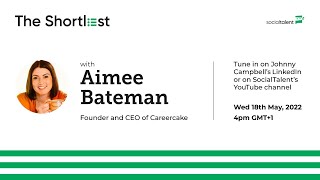
Transcript of Shortlist podcast episode 100 (host Johnny Campbell) featuring Aimee Bateman (CEO/founder of CareerKick). The episode focuses on imposter syndrome in the workplace: definitions and differences from ordinary self-doubt, links to courage and resilience, possible causes (genetics, gender/serotonin, early emotional development), tactics to manage feelings (naming the feeling, journaling successes, reframing), and short discussion of narcissism and what non-narcissists can learn from self-promotion. The tone is conversational and coaching-oriented.
Chapters
Sam, You're very welcome. It's episode 100. Welcome. My name is Johnny Campbell. I am your host of the Shortlist, this podcast and live broadcast and it is our 100 episodes in. And we have a very special guest Today for our 100th episode, someone I've been really looking forward to speaking with for some time. I've never had the opportunity to share a mic our stage with this guest. So today on Our very special 100th episode is our chance. So you're welcome to Shortlist. This is obviously a 40 minute podcast and it's a. We get to run this every week. We get to broadcast live. And for those of you listening live, we'd love to get your questions and comments coming in here. Do do so by commenting on LinkedIn and YouTube because we're only talking about imposter syndrome, and particularly imposter syndrome in the workplace. And regardless of where you sit in an organization, if you're the intern who just joined, you're the CEO and you run the show, we're all susceptible to those nagging feelings of self doubt. And it often crops up when we try new things or we fail and we feel uncomfortable and second guess our abilities. Being slightly overwhelmed, those situations is completely normal. But what happens when this is prolonged and happens all the time, when no matter the qualifications, the experience or track record of success you have, you still don't feel good enough? That's imposter syndrome. And today, as you'll see sitting beside me, if you're watching live, we're going to be chatting with Amy Bateman. Amy is the CEO and founder of CareerKick. And you may know Amy from her wonderful videos on LinkedIn Learning. You may know her from a conference you've been at when you thought, wow, that speaker was amazing, or you've had a fortunate look of meeting her in person and you'll be even more bowled over. But Amy, as somebody who is passionate about this subject, I'm going to discuss how doubt can hold us back in the workplace and the impact of imposter syndrome and leadership. And more importantly, look at strategies to use to overcome these feelings. Amy, you're so welcome to the show. Wonder if you could perhaps in your own words, tell our audience about you, your background, what brought you here, and why this subject?
Yeah, okay. Hi everyone. Thanks for having me. So, I am, yeah, who am I? Random Welsh woman that you've brought on on the Shortlist this week. I am an ex recruiter, so I spent the majority of my 20s in recruitment and then when the credit crunch came in, we had loads of really talented people coming into our offices and we didn't have any jobs for them. So I started a YouTube channel called Career Cake and started making YouTube videos in my kitchen that I didn't think anyone would watch. To just try and help people find their voice in a really competitive marketplace and not need me, not need recruiters like me, and hopefully go out and do it themselves. And obviously that grew and Career Cake now is the last decade has turned into a sort of an online learning platform, helping people with. With softer skills stuff. So. So confidence and imposter syndrome has been. Getting out of my own way has been the biggest battle I've had to cope with over my 20 year career. And it's my favorite thing to talk about. So I'm really excited to be chatting about it today.
I love it. I started social talent by broadcasting and making YouTube videos under a staircase in an accountant's office.
No way.
Maybe different. The kitchen, we used to have the. The staff who worked in the accountancy firm, they, they'd march up the stairs to bring our post and we'd be in the middle of filming and go, oh, because it was just so noisy and small. So we'd have to stop filming, wait for the post to be delivered. Yeah, filming again. Then they go, oh, I forgot a letter. It's like, no. And likewise, you just didn't know who's watching.
Yeah. Humble beginnings, right? Humble. I remember my first ever YouTube comment. I was so excited and it was somebody asking me why I hadn't washed my dishes because my dishes were in the back. I was like, probably means my production game here.
Thanks for tuning in. We're going to finding out why Amy Bateman did not wash her dishes all those years ago. Maybe I want to jump into our first article. There's a lot in the press about imposter syndrome, particularly post pandemic. Right. As people reevaluate themselves and their careers. I want to start with one that was published in Fast company last month. The title of this article was this is the Surprising benefit of having Imposter Syndrome. Real clickbait title there. Okay. But this article is kind of talking about, you know, a positive spin on imposter syndrome and kind of, you know, zooming in on the fact that the type of people who, according to the article, tend to have imposter syndrome are high achievers, people who are actually successful. What is your take on this article? And that particular point? Is that something that we should see as a positive do you find it to be true or is this misleading or, you know, taking the focus off something we should be focusing on?
Yeah. So, firstly, I would like to say that I love this article and I wish that this messaging was out there a lot more, and I'm delighted to see it. Imposter syndrome is my best friend. Like, it's one of my. I almost call it my superpower. I often call it my superpower. The reason that I think imposter syndrome is a positive thing is imposter syndrome. Right. Firstly, 70% of people experience imposter syndrome and high achievers. So you can be a high achiever and not experience imposter syndrome. I have a friend who's kickass, amazing, she's fantastic, and she doesn't experience imposter syndrome. That's fine. But if you do experience imposter syndrome, then you are a high achiever. So instantly, in those moments where you feel like, I'm not good enough to do this, I feel like a fraud, or how it sounds to me is, who am I to do that? Who do you think you are? That's what I get in my head a lot. That feeling instantly puts me in a position of power because it means I'm a high achiever. I'm, you know, if you're feeling that, you're awesome. So the first thing you should be doing is patting yourself on the back, because if you weren't a high achiever, you wouldn't be feeling these things. So if you want to do anything, we know psychology, if you're going to go to a positive, you have to come from a positive. So you can't. If you're beating yourself up because you've got imposter syndrome and you see it as a weakness, as a failure, then it's very, very difficult to get to a positive from a negative. So you want to instantly put yourself in a position of power, pat yourself on the back and say, I've got imposter syndrome. Clearly that means I'm awesome. Now what am I going to do about it?
I loved a particular line in this article. I've just never heard this said before and I never thought about this. And again, talks about actions to try and, you know, counteract these feelings, which. The feelings. My understanding is, Amy, you can't stop the feelings from happening, most likely, but you can do something with that feeling. Yeah, I love this concept. It talked about confidence and courage, which I never thought about the two words side by side. And if I, if I read it correctly, the article saying that you know, people say you need to be confident, but confidence only comes from experience. You can't just say, be confident. You need a lot of experience. But actually it's better to have courage, which is acknowledging that you're not yet in the position to be confident. But instead, if you can have courage and make that the thing you focus on, you can get over some of these issues and you can make that first step, like, does that ring true to you?
And that's what I do with the people that when I'm coaching as a career coach, that's what I'll do. And also when I'm coaching myself through stuff. So you can't be confident and insecure. It's not. It's not like you're either one or the other. You can be a. You can be a person that's confident in some situations and a person that's insecure in other situations, and vice versa. What you can be consistently, however, is courageous. And confident people are not people that are just born confident and they're confident all the time. I've done some really, really courageous things, but I was absolutely panicking in the background. So courageous is. Being courageous is so much more than being confident, and it's so much more important, because even when you see these people out there doing big things and they don't need to be big things in the whole world, isn't it like starting a company or, you know, launching a podcast? It could be speaking up in a meeting. It could be going for a promotion. You don't have to feel confident. You have to feel the fear and just be courageous anyway. So courage comes from feeling frightened, but doing it anyway. And that's where the strategies really, really fall into place. So when I hear people say, oh, you're so confident, I just think, no, because there's lots of situations where I'm not confident. You can be both. And we're imperfectly complex human beings, and we always. Depending on which room we're in which situation, we're always either one or the other. But we can be courageous.
I love this. And you mentioned about trying to use imposter syndrome as a power. Reminds me. And we haven't discussed it because I'm in the middle of reading Dan Pink's new book, Pink's work for years. He's got a new book called the Power of Regret. He analyzes regret, and he's trying to. Basically, his general thesis is regret is actually a really positive thing, and it's a really good thing, and we need it as opposed to being something that you want to avoid. The chapter I was reading last night, and you know, this will make sense in a second, I swear was talking about how one of the four categories of regret that he talks about are the roads not traveled, essentially. And he talks about in, in his analysis of, I think he was, got 8,000 pieces of information of people, you know, posting their regrets online. And he collected all the data he was able to find out. He said, like the, the acts of what he called a mission are things you don't do. And this was a category and it's, it kind of, I, I call it the road less traveled. Right. Or not traveled. So as people who kind of go, like, I didn't do something, I should have taken that action. Right. Again, the lack of courage, you might say, and in the data, and this is supported by research going back 40, 50 years in psychology, people regret things that they didn't do twice as much as things that they did do. So if you even just take that as a measurement, even if you took it, it might not be the right thing and you might regret it, but the feeling of regret that comes from not doing something lasts much longer and is twice as profound than doing it and it being wrong. So I read that as a justification for courage, that on a two to one ratio, giving it a go will end up working out better twice as often as not giving it a go. But you're going to have a regret about doing something which you might have a regret about doing something. It will last half as long, be half as impactful. Impactful as the regret of not doing something. Of not having.
Yeah, yeah. And to really, to be courageous and to show up courageous, you have to really take the time and the energy to question the fear. Like, what is it that you are actually frightened of? What's the cost? I don't necessarily mean financial cost.
Cost.
It could be a financial cost. It could be the cost of somebody thinking that you're stupid if you say, if you talk about a new idea. But really digging into the why is super, super important to overcome anything.
So. So let me flick to our second article, because it comes from Business Insider, and it talked about, talks about narcissism, which is maybe right on the other end of the spectrum. And this article's by Amy Morin, again published a few weeks ago, and it's called the five reasons Narcissists are Successful at Work and what you can learn from them. Now, my reading of the article was that she goes heavy on the five reasons narcissists are successful at work and talks less about what you learn from them. You have to kind of make that up by yourself. But talk to you about narcissism and you know this alleged truth that narcissists actually tend to get on quite well in workplaces.
Thank you.
What do you think about that? And then what is your take on what you can learn from them? Because I don't think the article really goes deep enough on that. But what can you share with our audience about what you can learn from the successes of narcissists?
Well, firstly, we all have narcissistic tendencies, so some of us are clearly more than others and we wouldn't be labeled a narcissist, but we do have tendencies. So when it comes to the work environment, so we know that the majority of politicians, I mean there's a statistic that the majority of CEOs in Fortune 500 have score quite high on narcissist profiling. The thing is with narcissists is one, well, if you are one, great. I mean, it doesn't matter what I say because if you're a narcissist and you're listening to this, you're not listening. You wouldn't listen to anything I said anyway because you're a narcissist, so that's fine. But if you're working with a narcissist, you might not know. So if you're having a personal relationship with a narcissist, then you'll know. But narcissists are quite good at hiding certain elements and only showing you certain parts of their Persona. And in the work environment it's pretty easy to do that, right? So especially the more senior that you are, you get more boundaries, more layers, that kind of stuff. But the thing is with narcissists is that they're really, really good at backing themselves so they don't really suffer from self doubt and they also take rejection really well. So I would say that those are the two things that can be in a personal relationship, quite destructive, but in a professional capacity can actually help people get on. Now I would say that I personally would never look at a narcissist. I've worked for narcissists, you know, I've seen them and I've used it to motivate me in the way that, you know, you are everything I don't want to be. I'm going to watch everything that you do and I'm going to do the opposite. You know, those kind of moments. And I think we can all relate to that. But there are some certain things that you just think you can learn and take inspiration from without actually wishing that you were like them.
We don't want to put across that we're advocating that people should be narcissists.
What you should be doing is looking at how, yes, they back themselves. How can I do that? How can I find strategies to do that? They take rejection really well. It took me years to figure out those things, you know, training course after training course, you know, all that kind of stuff. Whereas it just comes natural to a narcissist. But, you know, those kind of things that you can think, well, yes, I can be successful. But it's very hard to spot a narcissist in a professional capacity.
I probably imagine these days in a largely online professional world, it's even harder because you can hide behind your team's calls and your zoom calls and no one can even see you. No one can see you when you're off calls, when you're not on air, so to speak. Right. Because you're hiding in the background. And we have a here from LinkedIn listeners saying narcissists also know how to package a message to make themselves appear to be more elevated, and they actually are. And definitely something we can all learn. Right? So that self promotion piece, if it comes not from a narcissistic place, I think that's, that's, that's quite a positive thing, would you say?
Yeah, and authentic being authentic as well. I think so. So narcissists by trait, don't really feel empathy. So, you know, they don't care about you as much as you think that they do. But certainly in this online world that we're living in now more than ever, it's really easy to fake that.
We have an author on our platform called Kingsley Aikens who delivers fantastic program and networking, and in his research, he proposes that, you know, getting an opportunity, let's say, in his career move, is about 10 or 20% to do with your abilities and maybe 70% to do with who's advocating for you in the room to get the job, virtual room or whatever, which is about, you know, to get that person advocating for you. Of course, networking is important to have the person on your side, but so is self promotion, you know, and maybe it's the, not the narcissistic versus version of it, but that, that, that piece of, okay, you have to sell yourself. Your abilities by themselves won't actually work. People think, well, I'll be found. Somebody will realize how Good. I am, and I'll get the job I deserve. It's not true though, in the real workplace, is it?
No, no. And I always hear the saying, it's not, it's not what you know, it's who you know. And I always say to people, that's rubbish. It's not who you know, it's who knows. You. You could know 6,000 people that you're connected to on LinkedIn, but you know, half of those people don't have a clue who you are. So. And getting over that sort of arrogance and, you know, promoting myself, if you don't shout about this stuff, then who is. So again, that's a huge amount of the work that I do with people I'm coaching through promotions or career changes. And it doesn't come naturally to some people.
I'm going to ask you maybe to help me define some stuff because oftentimes, from my experience, folks get confused perhaps between self doubt and imposter syndrome. And I wonder, would you mind explaining for our listeners the difference and how they. And maybe perhaps give me some examples of the differences.
Yeah, so imposter syndrome is something that. So let's start with self doubt, actually. So self doubt is when you are questioning your capabilities to do something and you're possibly doing it because you're doing it for the first time. So you might be doing it for the first, second or third time. You don't have a track record to, you know, to go by starting a new job, you know, doing videos for writing a book, you know, all this kind of stuff. That's normal. Like if you've never done something before or you haven't mastered it yet, then questioning whether or not you're capable of doing it is totally, totally normal. Like you haven't done it before. Like it's normal. Imposter syndrome is where you are, you do know what you're doing. You've been doing it for quite some time. You might even be killing it. You might even be top of your game. I mean, we're talking about David Bowie that, you know, that says that he has it. Tina Fey, you know, the most. The people at the top of the game and they still, they still question their value. So self doubt would be me doing public speaking for the first time. You know, haven't done it before actually in my life. I think I was like the first, second, third, fourth, fifth time. Imposter syndrome, however, is where I've been asked to coach somebody, probably done a thousand coaching sessions, and I question, can I charge for this, it's like you didn't win a lottery ticket, you didn't like, they didn't like pick your name out of a hat. They chose you because you, you've got a proven track record. So that's the difference. And I think that, understand a lot of people get them mixed up and I, I always say that they're definitely related, but I think again, it comes back to understanding why you're feeling that. So self doubt is totally normal. You've never done it before. Imposter syndrome, there tends to be more, deeper reasons why you're feeling that. And they both have different sort of actions that you can do to overcome either of them.
Well, let's talk about those actions because we mentioned courage earlier. Right? Courage seems to be something that would help you with self doubt because you haven't tried it before. Have some courage and give it a go, get up on the stage and speak. What's the worst that could happen? Yeah, but if I've done it a hundred times, courage might be, might get me up to the 100 month time, but it's not likely to solve my set, my, my, my, my Imposter syndrome issues. So what does.
Yeah, absolutely. And that's exactly why it's important to understand am I experiencing self doubt right now or am I hanging out with imposter syndrome right now? And I think the first thing to understand is that both of them, both of them are a positive thing. Because I always think that what you're really frightened of is people judging you. What you're really frightened of in both those situations is somebody saying you're not good enough or you're making a fool of yourself. And we are wired in our DNA to protect ourselves, right? So, like I am all I've got. You are all your body's got. We make decisions all day long to keep our heart safe, our mind safe, our body safe. Like we are wired to stay protected. So when you have those moments of you can't do this or you know, you can't charge for that, they're gonna laugh at you. That's, that's your best friend. That's, that's your, that's your inner voice saying, I love you, I need to keep you safe. And that was such a game changer for me. I remember I went on a course with a company called the Bravest Path, who were trained by Brene Brown in the US and they did a wonderful course. They came to Cardiff to work with us actually. And I remember the biggest game changer for me was I always thought, whether it's imposter syndrome or self doubt, whatever it was, that voice telling me that you can't do this, I always thought was a negative. I actually called it after my stepfather, who didn't really believe in me very much at all, not a fan of him. And then when they said, no, that's, that's somebody who loves you, I was like, well, it's definitely not him. So, so I, so I would associate it with my late grandmother who loved me more than anyone. Her name was Mary, and she was always wanting to keep me safe. So when I, when I have those feelings, this is what I say to anybody. When you have those feelings, you, you either you're feeling self doubt, you've never done it before, so duh, you're gonna feel these feelings, or, or, you know, you're one of the 70% in the awesome club of imposter syndromes. So, you know you're going to get these feelings when you're doing something that's big, big to you. So when you have these feelings, you want to be like, oh, there you are, you know, I was expecting you expect that it's coming, Name it, welcome it, give it a, you know, oh, I said I do that podcast 20 minutes ago. There you are. Been wondering when you were going to show up, you know, make friends with it. And then once you have this positive relationship with it, it's so much easier to handle. You can just be like, oh, no, it's all right, you know, thank you, little voice. But I've got this and if I haven't got it, I'll figure it out. But thank you for loving me and trying to keep me safe. And then once you're in that positive headspace, you're powered, you are empowered, and it's so much easier to understand. So self doubt is normal. But imposter syndrome could be caused by three things. And I think it's really, really, really important that people understand why they experience imposter syndrome. Because if you want to overcome anything, you've got to understand why you're feeling it. And those three things could be, well, the first thing we know is it's linked to genetics. So 50% of our genetics we're born with. So if you share, if you have personality traits such as you're quite an anxious person, possibly you're a bit of a perfectionist, possibly you're a bit of a pessimist, you tend to, you know, have a negative view on things, then we know now that you're more likely to experience feelings of imposter syndrome. Now, that doesn't mean that if you experience imposter syndrome, you have to be those things. I am none of those things. I'm not. I'm definitely not a perfectionist. I think my team would wish that I was. Actually, they wish I was a bit more of a perfectionist, but I've never been about the details. The second thing is gender. So we only know recently. But I went on an amazing course a couple of years ago where they showed all of this research where imposter syndrome was linked directly to levels of serotonin in our body. So serotonin being our happy hormone. And we know that women produce roughly, I think it's roughly 52% less serotonin than men. So. And that's not to say that men don't experience imposter syndrome, because we all know that they do. But that could be. That could be a reason. That could certainly be a factor. And then the third thing, and the third thing is what's true for me. What's true for me, and that is your emotional development. So there's that wonderful quote, give me that boy till he's seven and I'll give you the man for the rest of his life. We know that our early development actually arguably is up to 6. So what's true for you? Did you experience things growing up where you got a lot of reward and a lot of attention if you got to number one, but if you got to number two, not so much. Or you had a sibling who was really smart or really good at something and they got a lot of praise and you didn't get so much, or maybe you just didn't get a lot of praise. There weren't a lot of people saying, well done, that was brilliant. So you grew up being a bit of a people pleaser. And all of these emotional and social developments will impact the reasons why you might experience imposter syndrome. And I think in these moments, I think we'd be fools to think that what happened to us when we were children didn't impact us as adults, because it does. We know factually that it does. So just taking the time to just think, what's true for me, what's my truth? What's my experience? Because we've all. We've all got a journey, we've all got a story. And just in those moments where you feel it, show some compassion for yourself and think, there's a real reason why I'm feeling this. And then once you understand it, it's so much easier to make peace with it and overcome it.
We've comment, kind of wild comment in here from YouTube. Somebody saying this whole idea of posture syndrome is so stupid. If you actually have the skills, you would never feel like an imposter. I know what your response to this is probably same as mine, but let's go back to the examples you gave were Tina Fey and I think you said David Bowie.
Yeah, yeah.
They are people who I think the world agrees have the talent, they have the skills. And if they felt like they had imposter syndrome, then I think it's fair to say that whilst I respect your view, listener, that, you know, unless you think, oh, David Bowie turns out was. Didn't have skills and talent and Tina Fey, for all her success, actually doesn't have any skills or talent, I'd be surprised if you would share that view. So it's deeply personal, I think, is your point. This is something that has absolutely nothing to do with someone's abilities. This has something to do with what goes on in someone's head. And as you said, there may be three factors that are. Some of those three factors may influence it. Well, this isn't about the ability, your talent. This is the big point you're trying to make. I think it is about what you know, this, what, what your self talk around, around what you're experiencing. You know, the world around you will go, you know, this person's so skilled, so talented, they're fantastic. But the person themselves just does not agree with that. They're kind of, as you said, always trying to be found out. And I, I'd love to get your view on perhaps a connection with resilience. To me, it feels like it's, you know, it lives in somewhere near the same kind of world. Like I look at, you know, resilience, which is, you know, has been picked up as something that, you know, generations entering the workforce now again, overall, generally not, not. Not individually, but generally tend to have lower resilience than previous generations. Right. And there's a whole bunch of factors that may or may not.
Yes. Which are fast. No. Which are fascinating, by the way. So if anybody wants to look into those reasons, and it's not the same in every country.
It's. It's more of a Western world, whatever that means, kind of concept. But like, does resilience play any factor in this? You know, in terms of, you know, is there a correlation that you're aware of in terms of if you've got strong resilience, does that Mean, you're probably more courageous, which means maybe, maybe self doubt and imposter syndrome affect you less or, you know, is this something you've come across?
Yeah, I think, I definitely think so. And I think that the more we know that, you know, the more you do something, the more confident you are at doing something. So there was a time when I might have done something like this and I might have spent all day fretting over it, right? But now I do it and it's because I do loads of these things and it's. I'm more confident with it to do it, I'm more comfortable doing it. But resilience is something that you build. Again, you're not, you're not born with that. And I think that lots of. I always think it's, again, one of my superpowers. I think that, you know, stuff that you go through in life and experiences that you have will only help you navigate the things you're yet to experience. So I think that when it comes to self doubt, I think the strategies to overcoming self doubt are very different to the strategies overcoming imposter syndrome. The thing is, with imposter syndrome, it never goes away, the self doubt thing. You can build yourself up with resilience. The more you do things. There's that saying, I think Daniel Pinky talks about it. Do one thing every day that scares you so that when you are in moments where you're doubting yourself and you're thinking this is scary, it's like, well, that's what I've been prepping for, right? It's like when you run a marathon and you, that's what you've been going to the gym for. Like, that's, that's fine. But imposter syndrome is so much more complex than that and it isn't that simple. And I really wish it was. You know, gosh, the biggest fear that the biggest prison we live in is the fear of what other people think that was. But, you know, gosh, if only that wasn't true. But there are definitely ways that you can, you can, you can understand it. But I feel like imposter syndrome is so much more complex than just self doubt. So I feel like resilience definitely helps with self doubt, but not always so much with imposter syndrome. Sadly, there are other things you need to do for that.
I think it's well put. Like, you know, I think about, I rarely get self doubt. And why do I rarely get self doubt? In my opinion, because I tend to have had a lot of Failure. And that failure has made me more resilient. And therefore, you know, just like you door to door salespeople aren't afraid of a no on the end of a phone line because I've had doors slammed in my face and you go, it's not a big deal if somebody says no. So your self doubt drops because you have resilience, because you've practiced and you have experienced these things. But I think your point in self doubt is so, so interesting because you can't, to your point, cure it. If cure is a word, it ain't going away. You have to manage it. And one of, one of the tactics in one of those two articles you mentioned, Amy, I can't remember which one mentioned writing things down as a tactic to say, you know, sit down and write down your successes. Remind yourself, you know, journal this stuff so you can sit down and go, hang on a second, I feel this thing. But let's look, let's look at the facts and saying that your emotions aren't facts and try and separate the two. Write a list of facts. I have got this, got this far, done this. My emotions possess this thing. My brain is heading me in this kind of self debt. Sorry, this, this, this area. Yeah, Foster syndrome. But the facts are bang, bang, bang, bang, bang. Is that a tactic that works, that you've seen work with folks?
Yeah, I've used it myself. So I actually, I actually call it a brag file. So what that would mean is in those. I remember when I was flying over to the global Silicon Valley conference. Now imposter syndrome creeps in sometimes with me. I'm still sometimes that young girl from Barry island, from that council estate that nobody expected us to do anything. And then all of a sudden I'm on an airplane flying over to Silicon Valley to meet some of the founders of the biggest tech firms in the world. I even cut my hair. I got this like really stupid, like spiky fringe because I thought it looked ridiculous. But I thought if I had a, if I had an edgy fringe, I'd look for tech. Do you know what I mean? And I bought all of these new clothes that I look ridiculous in, but I was just so full of fraudulent feelings, like, who am I was invited to go, like again, I didn't win a lottery ticket. But the whole time on the airplane I was just thinking, who are you? Who are you? And my mentor said, write down all of the things that you've achieved over the last five years that you're really proud of and the reasons why you think they invited you. And that really, really helped. And what I always do with the people that I'm working with who do experience imposter syndrome is look at past successes. So if you've done a talk and somebody tweeted you and said your talk was brilliant, or you spoke at a conference, or you delivered a project internally and went of your colleagues, or one of your clients emailed you and said, thank you so much, you really understood. Screenshot it. Screenshot and save it. Save it on your phone, save it on your laptop, wherever. I've actually got one on my phone and my laptop. And it's specifically around public speaking. Probably done over a thousand public speaks. How I make the majority of.
More from Johnny


Where Does Your Hiring Stand? Diagnose It with the Maturity Model | SocialTalent

Where Does Your Hiring Stand? Diagnose It with the Maturity Model | SocialTalent






NEW CONTENT - How to use Generative AI for Recruitment Marketing with Glen Cathey | SocialTalent

NEW CONTENT - How to Use Generative AI for Sourcing & Recruiting with Glen Cathey | SocialTalent

NEW CONTENT - How to Unlock the Power of Generative AI with Glen Cathey | SocialTalent