The Shortlist with Dr Bev Kaye
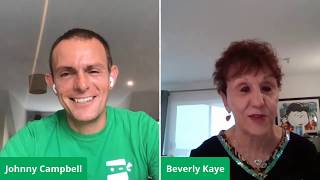
Dr. Bev Kaye shares a three-part framework for return-to-work conversations after COVID lockdowns: Recognize/Respect/Reflect, Review/Prioritize/Revisualize, and Reject/Revise/Capitalize. She emphasizes listening for the 'blinking word' in what employees say and using small stories to surface what people actually experienced, so managers can turn those insights into actions that keep talent.
Chapters
Well, good afternoon, good morning, good evening. I'm Johnny Campbell, CEO of Social Talent and welcome to this week's the shortlist. It's Wednesday, 24th of June. Most of the world is coming out of lockdown in some way, shape or form, and many of us are returning to work. And we're going to be using that as the central focus of our discussion here today with our fantastic guest, who'll be joining us in a few moments. But first, before we get into the core topic of today's show and our fantastic guest, I should remind everybody that the Shortlist is recorded and you can catch up on any of our previous broadcasts. And you can see what's coming up over the next few weeks by going to socialtalent.com forward/the shortlist. And the show wouldn't be the show without you, the audience listening live. So wherever you are, whether you're on YouTube, LinkedIn or elsewhere, we'd love your live questions and comments. And our guest today is going to be a brilliant person for you to ask fantastic questions of because she has a wealth of knowledge. She's a wonderful way of sharing it. I think you're going to be in for a fantastic 40, 45 minutes. So use your fingers, type away, ask those questions. And our guest today is for sure going to impress you with her encyclopedic knowledge and her beautiful way of giving that advice as well. So without further ado, I want to introduce our guest, who I first met probably a year ago. Coming up on a year ago at an event in Philadelphia and we were going through a conference and there was a bunch of speakers and the first speaker, the key, the main keynote, I was like, okay, what's going on here? What's this topic going to be about? And wow, I don't get blown away that often, right? And I see a lot of speakers, but I was blown away by this fantastic woman's practical advice, the way she told her stories, the way she engaged the audience and just how real the advice was and how relevant it was to the world of work today. And I think even in a post pandemic world, it's even more relevant. Our guest today is the fantastic Beverly Kay. Bev is the author of some fantastic books such as Love Them or Lose Them, Help Them Grow or Watch Them Go Up Is not the Only Way. Hello, Stay Interviews, Goodbye, Talent loss. I just love the way you describe things and even your choice of titles, Bev, I won't do it justice. Please tell us, tell our audience a little bit about yourself. What makes you get up in the morning? What makes you passionate? And what do you love talking and writing about.
All of that? Actually, you know, I love that you said a wealth of knowledge. I want everybody out there to know the only way you get a wealth of knowledge is you live a long time so you can use it all. So I'm coming to you around the world from Laguna Beach, California. And behind me is the which way is the picture of Lucy. I'm on vacation and Lucy is saying, na, na, na to work. And I guess I never do that. I. You know, some people use the word workaholic. And I love my work and I always have. And for the past 40 years, I've specialized in three things in career development, which is where I really started and where I still keep reinventing, and engagement. How do we keep people engaged? And retention. How do we make sure they stay? And all of those are very, very interconnected. And I think maybe wherever I go, I look at life through those glasses, like what new stories bubble up and what easy way can I present what I know? And that's why people who know me laugh that everything either rhymes or has alliteration or something so that it's easy to remember. I think I've always believed that managers have the will, just not always the skill in knowing how to develop, engage, and absolutely retain their talent. And today it's all about talent. As we become more and more technologically equal, then I think talent is the only real thing that makes a difference. So do you know your talent? Do you recognize your talent? Do you know how to talk to your talent? And all of that is critical and always has been. So I'm thrilled to be here. When I met Johnny, we were both keynote speakers at the same conference. And I want you to know I was as wowed by him as he might have been by me. So it was love at first speech.
You're too kind, Bev. Thank you. And I think I'm dying to get into your wisdom and advice that you're going to hopefully share with our audience. And hopefully those of you online listening are obsessed, as obsessed with talent as myself and Bev are and are interested by those themes because they are fundamental themes that every organization is exploring, particularly now. I want to start, though, Bev, with some of your thoughts on the news. I'm going to ask Niall to share with us our first news article of the week. Take it away, Nial. So, first up, we have this article from Forbes from Jim Link, and Jim's the Chro of Ronstadt in North America. And Jim proposes three strategies for a smooth return to work in the new normal. Bev, I'm going to ask you your thoughts on these strategies. Are these strategies that you would agree with? Would they be the top three you would particularly choose? What did you think when you read this article by Jim?
Well, for me, the article was great. Thank you, Jim, wherever you are. It didn't have enough meat in it. It didn't tell me the how tos. And I think there are so many articles written that talk about the it, but now how to make the it happen. And his statement about teamwork was really important. His statement about health was really important. But the one that got me, I'm just looking at it, that got me the most was keep the lines of communication open. That's what I would put first. And I don't think that enough managers keep that line open when people are remote. I don't even think they keep it open enough when people are live and in front of you. I think we get so single, single task focused that we don't look at the periphery of the task that we're talking about. And I think that's critical in developing, engaging, retaining talent.
I think you're so right. I think back to your point about, you know, managers have the will but not the skill. It's one thing saying, here's what you should do. It's a very different skill to be able to demonstrate and excite someone to actually do it. I think, you know, I don't disagree with Jim's point. Teamwork, mental health, resources, strong lines of communication, all really important. But give me, give me the how, give me examples here. And it's a short article. It's worth, worth a look for anyone who hasn't checked it out on Forbes. But that point about communication is really important. And I think this is. People kind of go, hasn't everything changed? Technology, these things? But I think what everyone forgets in our sector, Bev, maybe let me know if you agree with this, is that people don't change very fast. You know, we're fundamentally the same creatures we were a thousand years ago. So everything around us may change rapidly. But, you know, we need to be motivated, we need to feel secure, we need to have trust, we need to feel loved. They don't change because you've got a fancy iPhone or you've got some automated AI robot helping you. And as long as humans are involved in the mix, those fundamentals are universal constants. And through all of this stuff, the communication Let me know what's happening. That's an important thing. Jim Stroud. Good old Jimmy. It's great to hear from you, Jim. Jim has commented here. Jim's based out of Atlanta, good friend of mine. He's saying with all the technology, talent makes the difference. Well said, Bev. Jim is someone I've, he's ex Ronstadt himself, but he's somebody I think would align with us in that view. And Jim is somebody who's asked about technology all the time. But I think the people part is what you forget. That doesn't change. We're the same. What do you think?
I absolutely agree. And you know a favorite book for the title. I love to look at book titles. That's why I get creative about my own. Was titled the Knowing Doing Gap. And what I see all the time, people nod their heads, yes, I should talk to people, yes, I should treat them well. But the gap is, do I put that into action? I know it, but I don't quite do it. And so all of I guess the work that I do is around how do you move from knowing to doing and how do you make that gap as teeny as possible? So that like from any books, articles, anything, I want people to say, that's not so hard. Yeah, I could do that instead of another to do for my to do list. I want it to be that easy.
I'll give you a great example of that. Well, sorry. I think it's a great example because he's a great speaker. Good friend of mine, Joe Gersten. I don't even know Joe. He's. He speaks on diversity, inclusion topics in the US And Joe filmed some content for us a couple of years ago around inclusion. And he uses a great analogy. He's a former Marine. And Joe's scary when you meet him, right? You think he's scary, but he's actually such a beautiful heart and guy who just gets the world. And Joe talks about inclusion. He said inclusion is like exercise. He said everyone gets it. Everyone, everyone agrees it's good for us. Everyone agrees we should do it. He said, but you can't be inclusive without actually taking action. And people go, I want to get fit, but they kind of go, how do I get fit? What do I need to do? Give me the steps. Of course, everyone agrees that fitness is positive. Of course, everyone agrees, agrees that we should be more inclusive. But you need practical steps. And I need somebody who, for me, in the inclusion world, which sometimes people get very confused as to, you know, how do you do it? He Lays out really practical steps. You know, I think like you do Bev, which is the how do I actually do it? 1, 2, 3, 4. Here's an example, here's how it works. And you go, I can do that. Speaking of which, I want to take one of your. Want to take our next article if you don't mind, because it's by a fantastic author we both admire. Niall, what's your return policy by the fabulous Bev Kay? So this is something you published a couple of weeks ago with, with two co authors bevery and in it I think you know what I love about this and it's really relevant right now because many, many of our listeners are either dealing with the issue of returning their staff to work or they're in an organization that are discussing or in the middle of or just returned to work. It's a big theme, as I said, the markets open up and governments and states say go back to work, don't go back to work. And people open up their offices and workplaces again, factories. You know, you outlined three kind of high level steps, a bit like the previous author in Forbes did. But you critically go one step further. Talk to me about the steps and talk to me about the connecting the dots between a principle and an actual action.
So the first step in that article is and of course everything rhymes or has alliteration. So the first step was recognize, respect and reflect. And there it is. And you know, they all get I want to say a word I made up Schmergled. They're all interconnected and if anyone pushes its head out, it might be recognized. I think noticing for a manager to notice something a person said and ask for more information or for a manager to recognize this has not been easy. Or to recognize this has been easy. I don't want to go back. It's all those things that are really interconnected. So maybe it's asking a question as simple as how's it been going? You know, what are the purpose of working at home? What are the minuses for those who came to work? What was it like not having all your colleagues around you and just listen. And I think what people want and it connects back to inclusion and diversity and all of that. They want to be known, they want to be noticed and they want to be recognized. They want to be respected. My favorite diversity and inclusion. The differentiator is that diversity means being invited to the party and inclusion means being asked to dance. So it's like I want to be asked to dance and my manager can do that. And sometimes it's asking really easy, simple questions like tell me about your home environment if you're working at home, like I really want to know. Well, I got Lucy right behind me over there and well, I got. It shows an interest in an individual. You know, in my research on retention, I remember talking to an organization who had a six foot rule. Now it wasn't six feet of distance, it was if you come within six feet of somebody, you have to stop looking at your iPhone and say hello. Now why do we have to tell people that? And we do, and we do. So respect, recognize and reflect was the first step.
I think there's a, I was going to say there's a fantastic example. You give a downloadable or shareable that you template that people can use on scale to ask the questions. So actually you give specific suggested questions and even what the answers might look like. I think it's really, really, really practical and useful.
And I think we call that PDF Returning with learning because boy oh boy, are they ever learning from this period of time. And someone has to unpack the learning, debrief the learning. You know, the T.S. eliot once said, and I love this quote, the sad thing is to have the experience and miss the meaning. It's why I believe in debriefing people before, during, after a project, et cetera, so that you understand what did that mean you. And it's not so hard to do. What's hard is to listen.
We did it ourselves, you know, we wanted to survey our staff about returning to work, gosh, about maybe six or seven weeks ago. And I looked around and there was some great free resources. There's one on Qualtrics provide on a return to work questionnaire. I was like, oh, this is so easy. We can just take a template. But there lots of those templates though, just to me weren't compassionate and they weren't, they were factual and they wanted to gather stats, which is great. But I found the most benefit. We had a question that was yes, no. So we could understand our three options and we could put people in categories to understand the big data. But I found the beauty was the narrative. We gave narrative saying just tell us what you think and write as much Texas want you want. It was all anonymous. And I read through all of those and just found that was where the stories were. That's where the real feedback and the human story of how people are working, what they're doing, what their frustrations are, what their environment's like. And it was so powerful, you know, so yes, I Have the high level stats that you can build a pie chart. Here's the numbers. But to be able to tease out the examples of the story, I think there's much more power in that small data, so to speak, rather than just the big data where we can actually kind of really get, get to grips with what are the real experience, what's underneath all this or this big data, what's really happening. It's powerful.
And maybe that's a great line you just said, what's underneath all of this? You know, I used to tell my daughter there's a great Abraham Lincoln quote that says, I do not like this person. I must get to know him better. And so once you peel off that top layer, there's so much there to learn, you know, if, if your ears are open to it and if you're not worried about what am I going to say next. And I think that gets us into trouble.
So. By the way, we've got a Macy, Macy McLaughlin wants to be heard. She wants you to know she's watching on YouTube saying, It's always great to learn from you, Bev.
So thank you, Lacey.
A big hi for Lacy. I want to, I want to move on to the second point in the article that kind of, if you remember that, and that's kind of like after the listening piece to review, prioritize and revisualize. So explain that to me or unpack that for us, if you don't mind, Beth.
And again, it's when you come back to the workplace, am I doing anything to make some shifts and changes based on the amazing amount of learning that must have gone on on the three months you were remote or if you came in during those three months, what was it like to be the only person in your office, et cetera? So I think the review part is, let's talk about what that time was like. What was hardest for you to let go of, what was easiest? What do you wish you had at your fingertips? What have you come to appreciate that you had at your fingertips that you don't have when you're working remotely? And I really want to know in some priority too, here's what's important to me coming back. Here's what I really see my job being when I come back. And the more specific you can be, the better. So this is really a message for every individual out there as well as any manager. Do I take the time to sit back and review what these months have been like, prioritize what I've learned and double prioritize What I do not want to forget that I learned about me, about my work, and then how can I visualize it differently? And I think those are great questions and they'll get your people thinking. And I think what managers need to do is leave people thinking time, you know, stop for a minute, don't ask the second question till you drill down a bit on that first question.
This is also a big part of. A big part of, sorry, design thinking. I was doing an exercise in design thinking last week and it's again, a fancy, fancy, newer, newish phrase around methodologies, but when it's boiled down, I was listening to a lecturer in, in a business school and he's a great professor and he said, fundamentally it means ask more questions, ask lots of questions. Spend most of your time asking questions to your first point. Second of all, take time to think about the answers you've heard and then, you know, make suggestions or, you know, provide solutions. Last he said, most people just rush. They rush to just go, go straight to solutioning. And it's like, no, no, spend enormous amount of time capturing information, ask really good questions, which is your point. And second time is reflect, take the time to think. And third, you then propose solutions. And this, you know, whilst it's been called design thinking in recent years, I'm thinking this is basically what you're saying because you go to 0.3 Nile here in the.
Would you just admit a 50 just to make sure. Great thing for your audience to remember. I would wish I could ask everybody how many of you have been accused of not listening? Johnny, have you been ever accused of not listening? I'll bet you have. So here's my one tip that you could all leave this with. Whenever we teach, deliver whatever, we talk about the idea of listen for the blinking word. It's like you ask me a question, I answer. Out of my mouth comes a word cloud. If you see that word cloud and you ask a question about one of the words the person just said, you will automatically go deeper, not wider. And I think what we have a tendency to do is we ask a question, they answer, okay, thank you, next question. And really, you can't move to the next till you've explored the one word that pops. And the nice thing about that idea is if the wrong word pops, they'll tell you, well, I didn't really mean disappointed, I meant whatever. So for all of you out there, when you leave this and you go back to your homes, your spouses, your direct reports and they answer one of your questions, listen for the blinking word and ask about it. So that's my big tip.
I love that. I've used a different version of that, but the same principle with sales teams and recruiters. I go, listen, you have to do your discovery and find information. I said, you know, you know, recruiters, particularly if they're third party or agencies, you know, they feel obliged to sell early in the conversation. I'm like, you need to ask 30 questions first. Like, I can't ask 30 questions. I'm a stranger. It's crazy. I said, no, no, right. Of course you can't ask 30 different questions, but you could ask five questions plus five sub questions. Again, that's the act of listening, you know, so you know, where were you born? I was born in Florida. Florida. What's Florida like? It's sunny and warm. It's warm. How do you find the heat? The heat's okay. You know, that's how you end up asking lots of questions. But somebody's really engaged because you have. You've pointed out that you listened and thrown it back at them. Those conversations go on for ages. It's. It's great. But the blinking word, you know, Diana saying, you know, she loves that tip and I think it's awesome. Dan Pink, who I love as an author, I mean, if you read Dan Pink, but he wrote a great sales book a few years ago, and he said on the listening piece to give another tip. He said his tip was count to three from the minute when the person. You just stops talking. Count to three before you start talking. And he said, you do this, it could be 15 minutes before you get a word in. He said, but people, too often, you know, you start talking, oh, I want to say something.
It's like, right, right, Shove it.
I was doing, I was doing it and talking over you about himself.
No, that's okay. That's okay. No, you know, the hell with the audience lets you and I talk.
John. Well, we got some good comments here. So palati riddle. I love how you make your messaging memorable, Bev. And it's fun to listen to you. And Jim is again saying, oh, wow, Bev is like the good angel sitting on the shoulders of a HR manager influencing wise people decisions. So true, so true. I want to close on the point three because it's really relevant on that. That article though, Bev, if you don't mind, because I think there's. You mentioned in the article that point three is probably the most important point, which is reject, revise, or capitalize. And what really struck me on this Bev, you gave an example. You said you might have had a policy in place, and because of the pandemic and the crisis, the policy had to change. And now's the time to come back and go, hang on a second. Was that policy right in the first place? Should we change it now that we know we didn't need it, or we did something else? And that to me was a great example of this concept. Reject, revise or capitalize, maybe talk us through that and the other examples you can think of.
You know, again, everything's a learning experience. And so if we have a learning experience that we say, I will never do that again, I think that's important. And it's part of the T.S. eliot quote I said before. The sad thing is to have the experience and miss the meaning. You know, what was the meaning of that experience? And is it something I don't want to have happen to me again? And is it something that I could capitalize on? I realize that wasn't a good experience, but boy, did I learn. Now how do I put the what I learned into real action? Like, what have I learned from my own experience? You know, I am not good at technology, and I've always put my such a you must be on my head. And I've now I realized the heck with it. I have other people that will help me in the technology. I like the ideation part. I like the how can we do this differently? How can we turn this inside out so it's around really letting your people talk to you about what hasn't worked, letting your people talk to you about how they would revise it. And then I think revise and capitalize means let's spread it out further is. Is really important. So there's really an art to returning. And I think maybe we all can learn from that. You know, in. In the regular work cycle, I think people. Sometimes we let people go and we don't do it elegantly. And I think we have to get to having elegant exits so we can have respectful returns. And I think that's maybe something that is going to go on. Some of the people who have been remote may not come back. And then I have to do some revising. So I think the three steps are just reminders.
So that takes me on to another issue that I've heard discussed, particularly in the last couple of weeks, where employers have come back to work after three, four months of remote working or heightened pandemic, and all of a sudden they've been landed with a host of resignations. Unexpected resignations. Right. And to me, you know, I get why people are surprised this. But it does make sense. Right. So I'm keen to hear your thoughts because, you know, you've literally written the book on retention as well a few times. Right. So what is your advice in this post pandemic world that you think is still relevant or still as relevant today about retention, that perhaps those listening who are returning to work, maybe they're feeling a little bit, right, do I want to be here? Or if they have teams, what should they think about? Particularly if they have teams or colleagues going, what might be happening in the minds of your colleagues? And what can you do to make sure that you don't lose people who have gone through this crisis with you, that you. You focus on retention? Because maybe that's not your. Maybe you don't think you have to. But my suspicion is that people should be putting more attention on that right now than perhaps they're. They're going to.
Right. You know, one of the books that I wrote is titled Love Them or Lose Them, Getting Good People to Stay. And that was 20 years of research. And in a few months, the sixth edition will come out. And the word that's key is a number of key words, but the word love, you know, when we first said that's the title of the book, our publisher said, I don't know if you should use that word, because what manly man would buy a book with love in the title? And we really tried to find another word, but love really says it all. It says respect them, it says talk to them, it says smile at them, it says get to know them, it says all those things all wrapped up in one word. And sometimes when I do a keynote on that, I'll start by asking this question. When was the last time you said, I love my work? What was the moment? Who were you with? What were you working on? And when I'm live in front of an audience, I can look out at their eyes and I could see who has to go back in time, really go back to find something they loved. And I think that's a question that we should ask returnees to the workplace. What did you love about your time at home? And what piece of it can we carry into your time back at work? And I know that a lot of companies, a lot of people don't want to go back, and they're saying, I love this work at home. And how do we work with that if we need them back online? So I would want to know, like, I want to Know from you, Johnny, what do you love most about what you do as the CEO?
So what I love most is impact. I love hearing the stories of, whether it's our team, our customers, users of our platform, people who read a blog on LinkedIn or watch a video on YouTube, I just love hearing little stories of, hey, I completed this course, or I watched this video. And lots of them would be. People didn't pay money to do that. They just watch free content or whatever, and they go, inspire me to do this or help me do this, or I got a job doing this, or I now do this differently. And it's kind of. That's. I get. I get fuel from that to kind of go, you know, you, You. Because you know what it is. You sit on a stage or you. You're. You're talking to a camera, right? Me and you were talking to a camera. You know, you're in California, I'm in Dublin, Ireland. And I've no idea who's listening, who might listen to this. Maybe nobody, right? And you kind of wonder, did that, you know, you close down your laptop at the end and go, I wonder did that help anybody? And it's so nice to hear or sometimes years later when someone shares the story going, that worked for me, that thing you said. And not everyone gets this, but to be able to do that, it's a privilege. And so that's what I get excited as a recruiter. I got that. You got somebody a job. Myself and my business partner always tell a story of a guy we got a job for as a butcher in the Cayman Islands. A butcher, right. He was this. This grocery chain in Cayman, right? I used to live in the Cayman Islands, and we were recruiting for this grocery store, and they need to hire a butcher who could cut meats the European way. So we call strips of meat differently to the US So they needed. Although they're right beside the US they had to hire somebody who could cut it and label it the European, a British way, because they were former British colony, bizarrely. So we hired. We found some guy in Ireland, right, who was a local butcher, but who happened to, you know, for whatever reason, he had experience with. Also with American cuts and European cuts. And it worked. And we called him up and said, you want to go work in the Cayman Islands? He's like, what? He's not full of bankers and lawyers? Like, yeah, but they need butchers, too. And he went. He took the job, got the injury, took the job, moved over to Cayman Islands, met his wife there, had kids all this stuff and like that. He doesn't remember who I am or who Vince is. My colleague. Right. He doesn't remember our involvement in that. But I just love that as a recruiter, you can do that. You could pick up the phone to somebody, you find their name or get their name and change their lives. That gave me such a kick to be able to do that to people, to help them, to get them out of the job they hate into the job they love or give them the salary boost they. They wanted to do whatever it was in their life. So, yeah, that's always been it for me. Like Cat sit here saying, let's put up Jerry. I'm sure you know the brilliant Jerry Crispin.
Jerry, Jerry. Hi, Jerry.
Jerry does love his work. You do love your work, Jerry. He loves his wine. He loves his food too, but he loves his work.
And if I had Jerry in front of me, I'd want to dig deeper on the word work, because that blinked and I'd say, well, what about the work? Is it the people? Is it the job? Is it the. And we let those opportunities go right by us. Well, what else, Jerry? In fact, I'll say about opportunity. And I write a lot about the idea of up is not the only way. And there are many choices other than just vertical. And I believe people are either opportunity minded or opportunity blinded. They have these actual blinders on that don't see what could be possible. And if every interaction and everything you do and learn. If we were more opportunity minded, instead of saying, that doesn't fit my outline of life, that we. We'd learn a lot more, we'd even be a lot more happier. So seeing opportunities as always there and not close to us, I think is critical.
100%. I think, you know, it's. It's a mindset, though. It's somebody who says, hang on, because the default is to go. This is a negative. This is a bad thing to stop and go, hang on a second. What's the positive? Right? You know, you might have, you know, you know, people go, I've had to take a pay cut. Or, you know, I don't have go to see my colleagues anymore. Don't have that flexibility. It's kind of going, hang on a second. What can you do? What is the upside of this? And you're so right. Being able to find that is so important. Actually, I've got a great question here. Beverly Crowell is saying, thanks for the practical advice in impractical times. I love that. Nice word play. In honor of the Fantastic, Beverly K. But we have Lindsay watkins. Lindsay on YouTube is asking, and it's a direct question for yourself, Bev. How do you best engage and retain employees that went virtual that have never worked remotely before? So what are your thoughts on that?
That went virtual but have never worked remotely before? I think you have to be really interested in what they learned and not just the business things they learned. Like, what did you learn about yourself and being virtual? What new things opened up for you that you never realized was a skill in your skill bank that you had to do when you went remotely? Again, we need to unpack and debrief an experience for the person to articulate the learning. What did you learn from that? And I try to ask myself that all the time. And every time.
More from Johnny


Where Does Your Hiring Stand? Diagnose It with the Maturity Model | SocialTalent

Where Does Your Hiring Stand? Diagnose It with the Maturity Model | SocialTalent






NEW CONTENT - How to use Generative AI for Recruitment Marketing with Glen Cathey | SocialTalent

NEW CONTENT - How to Use Generative AI for Sourcing & Recruiting with Glen Cathey | SocialTalent

NEW CONTENT - How to Unlock the Power of Generative AI with Glen Cathey | SocialTalent