The Shortlist with Hung Lee
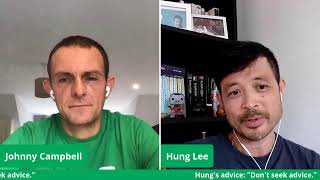
Johnny Campbell and Hung Lee discuss Gartner's future of work trends, a BrewDog CEO controversy, and practical recruiting tactics. Key takeaways: sell the pain of sourcing to justify recruiter value, protect your email sender reputation, and align tasks to your energy levels rather than fighting your natural rhythms.
Questions this video answers
July 1, 2020
Around edition 194
Tens of thousands of subscribers
About 2%
About 2 per 10,000 messages
Chapters
Sam, I gotta play this. Hello, everybody. It's the first of July. It's Johnny Campbell here. Welcome to this week's the Shortlist. Great to have you here for a new quarter, a new half year, a new month and just another Wednesday here on the shortlist for our second season. So welcome back, everybody. Hope you're enjoying the shortlist so far. We've got a great lineup for season two starting today. A great presenter and great friend of mine that I think most of you will know. He wakes you up on a Sunday morning or afternoon and keeps you educated in all that is recruiting. But I'll get to that in a second. Before we do, I want to remind everybody how we'd like to go on the shortlist. We'd love to get all your questions and comments. We'd encourage you to post those questions and comments on YouTube or LinkedIn if you're watching live. And myself and our guest will be most most honored to have them and to try and address your questions. I'm going to get straight to my guests, by the way. Oh, before I do, I got to quickly remind you that all of our editions of the shortlist are available on socialtown.com for. And if you'd like to be notified of upcoming shortlists, please go to that page. Subscribe and we'll send you notifications of all of our guests that are coming every week and you can see what's coming up for the next few weeks and check out our schedule. But let me go back to our current guest this week on the 1st of July. I'm delighted to have joining me here today, Mr. Hong Lee. It seems remiss of us that we have been doing the news segment on this show now for three months. Hong when we haven't had Mr. Recruiting News himself, Hong Lee. And for those of you who don't recognize that name, you'll no doubt know his famous and fantastic and widely read newsletter, Recruiting Brain Food. Hong, tell the world a little about yourself, Brain Food, and what keeps you going through. COVID 19.
Johnny, thank you so much for welcoming me to the show. I mean, what a fabulous entrance. By the way, the shortlist in is I think to. To the. To the media scene. I think it's a fantastic sort of setup that you have here. Really looking forward to taking part. So yeah, my name is Hung Lee. I basically write a newsletter. It's called Recruiting Brain Food. It's basically me looking at interesting things about recruitment on that I find in the deepest and darkest parts of the Internet. I pull it out every week and stick it into a newsletter and I send it to people on Sundays and that's basically it. You know, it seems that started off as a very small idea as a side project, but over the last couple of years or so it seems that it's got more and more popular and people are reading it and now it's more or less the full time thing that I do.
But Hong, you've got like not just a couple of hundred people, there's thousands and thousands of people subscribed to this.
Yeah, I think we're in the tens of thousands now. So yeah, the analytics we do is reasonably good. So we've got a good understanding as to where people sign up from. We've got hundreds in all the big cities in the world. So I would say anywhere where there's it's English language. So it's obviously in places where English is well known or well used, but any kind of big city or place that has a lot of English language friendly type environments and recruiters who typically use English as a working language, there's a big population of subscribers that.
And what edition of Brain Food are we on now? Last Sunday, what was the, what was the number we got to.
Oh, I think it's 194. Is it could be 194. Yeah. So it's been going, it's going weekly so I could tell you it's been, you know, nearly four years worth of effort to get there. So. So yeah, as I say, started off as just a random thing. I thought. I promised myself that I'd do it for one year solid, like guaranteed. No matter what happens, I'll do it 52 times and then review it and, and yeah, haven't stopped since. Haven't missed a week. So yeah, we're still trucking on.
I think you're a man who likes to set yourself challenges and commit to them. I've seen your push up challenge on Facebook from a year or two ago. Let's not go there now.
Everyone's starting to do that. It's like I've seen all these 25 push up challenges going around. I think I want nothing to do with that. I did that like two years ago. I injured my should as a result. It's like the last thing I want to do is continue is get onto this second wave of push ups, you know.
But yeah, well, I'm keen to get, get your, get, get your opinion and views and we're going to actually dive into. Last Sunday's the most, the latest recruiting Brain Food as our subject matter for the this episode. So those of you listening live, we'd love to. If you've read Recruiting Brain Food last Sunday, we're going to talk about the articles in there. Myself and Home have picked a handful of articles from that Brain Food that we're going to discuss. But if you would like to ask questions of any of those article, any questions of Hong, please join us on the comments live on LinkedIn and YouTube. And on that, let's jump into our first news article. Niall. So in the news. So Gartner published nine future of work trends post COVID 19 I've, I took this on Sunday at home and I shared this with a bunch of people and I got, I got some interesting reactions to this. What did you think of this when you first read it?
You know what? I always have a problem with any headline that has a number on it because it's usually a clickbait thing. It's. I call them a listicle. Right. It's just, oh, let's just bullet point this out. And it's usually a collection of crap that, you know, you've been rehashed and seen before. Nothing interesting. But I clicked on this from Gartner because they're a super credible, credible business and they've been featured in Brain Food many times because they come up with some really original research. And I was immediately captured by some of the trends that they were pulling out here and how they described it and how they outlined it. So I thought this definitely needs to go in. I thought they were bang on on almost all of these trends, but particularly even if you disagree with them, I like the way they impact it. So it was like had enough depth so you could get your brain going on it, but not so much that it took people out of their depth so they couldn't consume it. I think a lot of research, type of white paper type publications are a little bit too academic, if you like, in their style and their manner. And it defeats the purpose, I think, of communicating to the audience and spreading the knowledge out. And at the same time, on the other end of the spectrum, you got this, you know, kind of light, ish type of content which is just peripheral sort of ephemeral stuff that's disposable. I think Gartner hit it right with this really useful, chunkable bits of, of know how everyone should read this and just have a think about where the future is going for us in, in our industry.
Yeah. On one hand I agree with you. Like, you know, they say trend One, you know, increase in remote working. Expanded data collection as trend. Two, Trend three, contingent worker expansion. Expanded employer role as social safety net. Separation of critical skills and roles. Humanization or dehumanization of employees. Emergence of. Emergence of new top tier employers. Transition from designing for efficiency to designing for resilience and increase organizational complexity. Right, Nine points. And I was like, yeah, I was like, you. Yeah, yeah, yeah, yeah, I see that. I agree with that. I sent it to some people and they challenged me. These are good senior kind of recruiting leaders. And they went, yeah, like, you know, duh. Yeah, obviously there's nothing new in there. There's like, if you work in recruiting, that list is like, yeah, I know. Now they do know. And I think it sums it up very well. And they put it in great language to your point. And it's a great summary. I didn't see a single damn thing new when I thought about it was like, yes, I know this and it's lovely and it's put together better than I could put it together, but there's nothing necessarily jumping off the pages. Wow, that's so insightful. It's kind of like if you talk to five recruiters for an hour, you'd have that list of nine.
No, yeah, I think you're right. But at the same time, you got to look at how it was generated. I mean, Gartner surveyed recruiters and HR people to generate this, so it would make sense that it reflects that opinion. And you're right. You know, sometimes people do have your instinct is. Or this is not sort of, sort of. It's not put me onto a road of enlightenment that I expected when I opened the article. But like I say, I think there's value in something that is, is a strong summary. And, and this is what it is. I mean, all of the topics I think you might end up checkboxing and saying, yes, that is the case, but they are arguable as well. You know, you could, you could dive into it in a bit more depth and think, right, how have they come up with this opinion? Why do HR recruiting people think like this and is it actually going to be the case? So I think it's, it's a good starting point for more discussion that particular post.
Well, let me ask you to discuss one piece of it a little bit more at home. Right. One of the things that resonated the most with me, I think, and they did describe it well, was number four, which is the expanded employer role as social safety net. And this is an interesting trend where I'VE seen this, I've talked about this, but I actually haven't seen someone else write this down. And to their credit, I think it's bang on where they're kind of saying that the role of the employer has had to expand. And I've used this in the context of employee experience. I've talked about employee experience is a bigger issue. And employer experience has blurred the lines between employer and what typically government would have taken responsibility for in a community. I think there's an increasing expectation, not just the social safety net, but that where governments. And maybe this is more of a US thing than perhaps it is here, uk, Ireland. Right. But there is kind of an expectation that employers are doing a lot more than just the things required in your job and in the 9 to 5, that they really have had to take on this wider role, not just in a social safety net, but in education, health, support, a whole range of things. Like, is this something you've seen? How is it playing out? What are your thoughts on it?
I think it is something I'm seeing. At the same time, I do believe, I mean, the wider context is what is the responsibility for welfare from the state, the employer and the individual? And a lot of the political problems that we see globally right now is the dispute as to where the distribution of responsibility is amongst those three big categories of institution. And is it the state that takes care of the people, Is it the individual that does it? Or as this new emerging thing, does the employer have the responsibility to do this? And we've seen, by the way, in the past, employers have taken a very strong responsibility for welfare. Ford is a classic example. The guy built a town to house his workers and he argued for you need to pay workers more so that they can buy the vehicles that they're making. So this is not new thing to imagine that employers should take this role. What we have though, is big political debates as to what function, who takes ownership one way or the other. Right wing typically would say, look, it's the individual has the predominant responsibility for. This is why they're hostile to anything that is a big state, quote, unquote. And the left wing would say, you know, what individual is responsible? But the state needs to take more responsibility and actually employers need to step up as well. So it's a. We're in flux as to where we're at. My own opinion is that I think employers will find this currently a necessary thing to do. So if you're an employer now and you're not taking additional responsibility for the welfare of your staff, you're A, morally doing the wrong thing, and B, there'll be all kinds of PR backwash if you don't take care of your business. Right now, you see, for instance, COVID 19 on Glassdoor, you can actually do a filter on the COVID response. There's a Covid filter now on Glassdoor. Yeah. So if you go to Glassdoor, you can filter against Covid comments that your employees or ex employees have to talk about how well you have handled this crisis as regards to the employee base. So there's all of these second order effects of employers not taking on this additional responsibility. So I think in the moment we've expanded that role. Question is, is it going to be persistent? I have a big doubt about that. And the reason is I think it's untenable. And I think employers will increasingly see employees as a liability that they don't want to take on. Because if it already comes, when you hire an employee, for instance, you have a duty of care, you have the duty of career development, L and D, you know, all of these types of things you need to do as an employee. That is absolutely right. And also in many cases, by law, you have to do this. But if we layer on more stuff there, we have to recognize that employers might take the other option, say, you know what, I'm gonna outsource that, or hang on, we're doing a lot of remote working, surely maybe I can offshore this perhaps, and we're going to start having this other pressure where employers, I think, will hire less people in order to avoid these additional obligations. So I think there's a bit of a risk for us to press employers to do more than they're able to do. I think that it's one of these where we've got to be kind of very careful as to where we're going here. Unless, of course, we're happy with employers employing less people. I mean, maybe that's another future that we have to think about. This is the Kevin Wheeler argument. Right. If you remember, he's been banging on about the high Kevin, by the way. But he's being proved right. I think with his predictions of, of companies, you know, ultimately being evolving into being very small core group of stakeholders, shareholders even, surrounded by a constellation of people that will operate in different sort of employment contracts with that organization. But they won't necessarily be full employees or even, you know, the full employee may not be perceived as the optimal thing for either party. You know, it may well be. You have a different relationship when you're delivering work to an organization, I think.
It'S, you know, that that is really interesting because I think the move towards virtual working probably underscores that because the line between what does it mean to be an employee and employed when, you know, I could technically just, I go to my bedroom and I log on and I could log on for this company today, that company tomorrow. It's not like you're going to a place where everything around you, you know, breeds the culture of the company. It's different and it probably blurs the line more, you know, to your point, I think it's going to be interesting times, but I could go on this one for ages. Let me move on to our second story because I'm keen to get your opinion on, on, on a variety of, of some of the great articles you. And speaking of opinions, one that an opinion that always is out there is that of Mitch Sullivan. I love Mitch. Mitch, if you're listening right now, we'd love to hear from you. Mitch posted an article about, about another post that was put on, on LinkedIn. And this outrage that Mitch talked about actually was in response to the CEO of BrewDog, I think. And we might have that post, this refers to a post that their CEO, James Watt put up saying, you know, it was kind of a facetious comment about, hey, would you prepare to pay a recruiting consultant £30,000 to search LinkedIn for 10 minutes or save that £30,000, do the LinkedIn search yourself. And the article starts with and I probably misread Mitch on this. I thought maybe he'd join in the bandwagon of beating James Watt up where people were saying like, how dare he belittle the role of rec. Does he not understand? A lot more goes into it. But I did like where Mitch went with this because he was kind of going, guys, calm down. Is the real argument here, not the fact that James Watt or anyone like him can make that statement, that we have such a reputation that as an industry, this is probably more the staffing industry that people don't see the value beyond, you know, are you doing a 10 minute LinkedIn search to charge 30,000 pound? And I, I did like his angle there and I think it's a really, really valid point that's maybe not made often enough. What did you think about this one?
Yeah, I mean, I'm totally aligned with Mitch. I mean his, his analysis I thought was absolutely correct. There was this huge outrage. I mean his title is outrage. And he ultimately was criticizing the criticism, really. And I thought he was correct. Don't get me wrong, I think James Watt was crude with his commentary and unnecessarily offensive. You know, basically recruiters. But at the same time, at the same time, this is old criticism. I mean, show me a recruiter that's been doing the job for two minutes that hasn't been accused of not earning the fee or the other work not being valuable. I heard this, like, in 2000s, so I, I'm surprised that people were so shocked by this. But anyway, the online mob kind of developed, and it was like, you know, boycotting Brew Dog and all this stuff. And it kind of got to the point where, all right, maybe it's kind of time for this guy James.
What?
But then Mitch basically made the point that actually the, the problem is that we do a terrible job of sort of showing our value and showing our work. If we're just focused on delivering CVS or if. If that's the only thing that we visibly do, then of course, companies might be able to have that criticism because they don't see the pain. I remember back in the day, one of the best training sort of sessions I ever had when I was a. A young recruiter was guy called Abid Habit. I don't know whether you know him, I don't know why he still does training, but he said one line that really stuck with me, and he said, look, you've got to sell the paint. You got to sell the pain of doing this. You can't just turn up with five CDs and shortlist the candidates, say, There you go, Mr.
Client.
Or internally, the same. You can't just show up with a candidate, say, oh, There you go, Mr. Manager. Here it is. You got to show them how you went about it. Tell them your strategy, tell them how many people you've contacted, how many people you went through. Give them the market intelligence, give them all the hours that you had to sort of do the tools that you went involved in, the experiments you conducted, the, the, the, the, the, the. The fail points that you hit, show all of that before you show the candidates. And that's a way of selling the pain. Suddenly, you know, oh, it is worth ten grand at least, because this person's gone through that effort. So a basic bit of training, I think would. James Watt said what he said.
You know, you remind me with that comment, right? Did you see that Adam Sandler movie, Uncut Gems on Netflix? Have you watched that yet?
I don't think I have. It's a.
It's a recent up movie. It's Adam Sanders, serious role. But anyway, there's a scene in it where he gets this diamond delivered to his store and it's worth a fortune. It looks kind of ugly. And he's got this like professional basketball player in, in the store at the time. And he brings it over. Somebody brings it as, oh, I'm so excited about this. And he plays him from his phone and just tell him about the story and the history of this diamond and in the story of how hard it was to get out of the earth, how they got smuggled. Big long story and video about it, the basketball players. Like, I want this diamond, I want this diamond. I gotta have this diamond. It means so much to me, right? Because he talks about, you know, he talks about how in that part of Ethiopia that extract them extracted, they have the only black Ethiopians. And this is a really. Are black Jews. He's talking the black Jews in Ethiopia. He's telling this story which connects the two of them. And this guy wants it. It's just a rock, right? But the story behind the rock and the effort and the connection to culture and other things made it valuable. I think, you know, if I'm going to take that, that extract it to recruiting, you got to have a story, you got to have the pain. You got to basically sell that sizzle. You can't just go, there's four resumes.
Yeah.
Because like, okay, I was like, there's a rock. Do you want to buy it? No. Give me the story behind that. Give me the emotion connected to something personal to me, you know, Give me the pain that required to get this, these four resumes here or this rock into this store. I think Mitch made a great point around looking at the websites of staffing agencies saying they all say the same thing, right? And they all say the same thing, right? That's, that's not quite true. But most of them say broadly the same thing, which is we'll give you four resumes. Type. Type language, right? It's all vanilla, the same. And you want differentiation. You're not going to go, you know, here's Coke, Pepsi. What do you do? We quench your thirst. Oh, we quench your thirst. Like not very interesting, right? This is the whole point about brand, the brand story. I just don't think, I don't think the staffing agency world in general, again, loads of exceptions to this get brand very well.
No, they don't. And actually there's a reason for that. I mean, I take an academic interest in it now because having been in recruitment now for 20 years or so. It's obvious that one thing that annoys me is that we throw recruiters under the bus too often and we say, oh, it's because they're crap or because we're crap or whatever. It's not, there's a systemic reason why recruiters can afford not to pay attention to brand and still trade effectively. So I think ultimately it's, it's, it's a sales driven environment, always has been. It's possible to make money in, in a, in a way that is kind of disparaged and considered, quote unquote, bad recruitment. But hey, bad recruitment can be good business. And that's the fundamental problem we've got as an industry, is that you can kind of conduct yourself as a bit of a cowboy and make a lot of money. And in those circumstances, that's where we get the, the negative PR and that's where we get the backwash. But at the same time, you know, we've got to think about why this emerges in this industry. Like, how can we, how can we, you know, what are the systems behind it? Ultimately, I think it comes down to the relationship between clients again, like what they're prepared to tolerate and pay for. There was a person, a friend of mine the other day posted online saying, hey, I've been working one month for this customer, for this client. Clients just withdrawn the role, decide not to, they don't need it anymore. I've just wasted a month of my time. And I'm thinking that's exactly the reason why you have to be a cowboy at times, because you're covering for the loss of that one month's worth of uncompensated work. So the entire economics around a lot of our industry could be, could be more equitable for sure. And that will automatically improve the quality of service and experience.
And Mitch is a big proponent of something that. I did a webinar with Greg Savage, the brilliant Greg Savage. I love Greg. Some people for some crazy reason don't seem to like some of Greg's comments. I think Greg's genius and I did a webinar with him on Thursday and he made this point, he was like, get paid for your work. He said, if there's less work out there, just get paid. Mitch. Mitch. I know this from having long chats over beers with Mitch Sullivan over the last decade. Mitch is a big proponent, helps people understand this, like, get paid for your work. Contingency work leads itself to shortcuts, leads itself to that kind of an approach, I think. And most of the staffing world, certainly around perm is still based around contingency work. And it's hard because you're going to have to cook corners. You're going to have to spread yourself thin across many jobs. And it is one of the biggest challenges if you're doing staffing agency recruiting is that you don't get paid for 80% of the work you do. So therefore it's hard.
That's why the fees are 10k, 20k, whatever, because you're actually being paid for all of the other jobs that you didn't nail. For every fee that you actually bring in, there's 20 jobs that you've done equal amount of work on that you've not been paid for because you've got either been out competed or the job's been withdrawn or there's something that's occurred where the job for some reason can't be delivered against and you've got to then think, right, where am I going to cover that? That's where you bump the field. What is the true value of doing replacement? You know, if all of the work we did was compensated for, what is the true value? Probably nowhere near 10k.
You asking your mechanic, right, if she's going to do 90% of the work on your car and you might four, you know, one out of five people pay for the work, they go, well, you know, I didn't quite get the end part, so I'm good. Like, that's madness. No tradesperson would ever agree to not get paid for any of the work they do. But in our trade in recruiting, many of us do a lot of work and don't get paid for it. I'm going to jump. I got to jump to another story. And I change gears and jump to our third story here. Hong, hold on tight. You know these stories better than I do, so bring it to a more more practical piece of of advice that you shared from the team at Intercom. And for those of you, by the way, don't know, Intercom. Intercom's blog team are fantastic. I've always found them super insightful. They produce great content that is genuinely helpful to their community rather than just trying to promote the Intercom product. And it helps that they're an Irish company, right? No harm there. But they posted here and you shared this step by step guide to improving your email deliverability and open rates. This wasn't written for recruiters, but every recruiter should read this. Tell me why they should read this home.
Because email is still the number one way in which we get hold of people. It is absolutely critical channel for recruiters to get good at. We have abused it because we don't think so scientifically about how this works. Why I love these blogs from intercom, Send Grid, Mailchimp, HubSpot, like organizations that help you send loads of emails so they know what gets opens, they know what gets delivered, they know what language to use, what to put in your subject line, what kind of things that you need to avoid, what technical things that you've got to get right. So I never get bored of this type of stuff. Whenever I see an article like that from a vendor of this type, it's almost certainly going into the newsletter because I think more people just need to know about it. There's never enough information about this. Even I don't know enough about it. And I say even I, because I know I've sent at least a million and a half emails in. In the time of brain food, there's at least a million have been sent out. But even I know like 30 of the things I should know about email deliverability. And I read that post then as the stuff I didn't know, I thought, oh, for instance, one bit of content, their research that they did was really good, was if you have someone on your list that hasn't read your email, you've got to, after 10 emails, they've still not opened anything. You've got to get rid of them because the chance of them opening the 11th email is down to about 2%.
2% the 11th? Yeah, yeah, 1% after 14 emails.
Right. And so you've lost them, basically. So the email you send, you continue to send to them is not going to reach them. All you're doing is lowering your open rate, which then penalizes you at a global level. And then you kind of start sort of moving down that sort of. Your reputation as a sender starts, starts being degraded. And if you get to a point where you're known as a spammer or you blacklisted or your domain's hammered in some way, you've got big problems even using that channel again. So you've got to really be careful.
This blew me away here, right? Never knew this stat, right? Everyone knows that being marked as a spammer is bad, but they're saying that a healthy spam complaint rate is about two in every 10,000 messages being marked as spam, which suggests that anything more than that probably not healthy. Like I say, there's a lot of people here going, I'm definitely getting more than two out of every 10,000 mark to spam, you know, because they're talking about, you know, get permission, make sure it's to people that's personalized. But I was just stunned by that. I would have thought the average spam complaint rate was much higher than that. So you really have very little wriggle room to move with.
No, you do. And you have to be careful. You have to think of your email domain, the thing that you send out, as a, as a permanent long term resource that you really have to protect. I think of it as kind of a toolkit. Let's say you're the builder again. You keep your tools in tip top condition. You know, you don't just let them rust in the toolbox. You clean them, you oil them up, you make sure they're sharp. They're the tools of your trade. Without them you can't do your job as a builder. Recruiters have to think the same way for their email domain because if you screw that up and you kind of get yourself a bad reputation, it's almost impossible to actually recover from, really can be difficult. So don't ever get yourself in that position. Learn what it means to have the right things in your email header. Do you know what things like dkim is and all that type of stuff? You got to know it. Otherwise don't send an email before you go at least on some sort of course on this.
I think anyone listening to this show who's involved in employer branding, marketing, messaging runs, a business, manages a team should read this article and check out more from Brain Food that you share regularly because there's so much to learn from the professionals that do this in volume by the quick one hung, we got Liam Daly saying big shout out saying love Brain Food from Hong. We got Aaron Daniels listening as well. Aaron, yes, I agree with you. I didn't know where I was going with that analogy earlier on either, but I think we got there in the end. Let's move on. But I got to jump to our, our fourth story that I think we both agree was good. From. From. From. From. From Brain Food on Sunday. And this is. There's so much in this, right? There's richness in this. 3 Productivity principles Most knowledge workers ignore. If anyone listening only has 50 has 5 minutes left and they can't listen to the rest of the show. Dial off now and Google this article and read it right, because it's gold. I prefer to stay on and read it as well. But this, this has so much practical gold for absolutely everybody listening. I Don't care what your job is, who you are, what you do. Everybody should read, read this article. Do you agree?
100%. I mean I learned a lot from it and I'm actually speaking to Christian. He got in touch after the article. Yeah, he got in touch and said, oh, thanks for, for putting it in the brain food or whatever. Let's have a chat. I thought, absolutely. So I'm really keen to have a chat with Christian and maybe we'll get him onto a brain food live at some point and explore this further. Because productivity, especially now, we're all kind of self managing is our responsibility now. I mean back in the day, I mean this is an ongoing trend anyway, but accelerated by the fact that we're distributed and we had to kind of work off by ourselves. We have to manage our own productivity. The manager is not going to sit there and say home, get on with your job. So what Christian is basically saying is, look, there's three things that knowledge workers have really got to monitor if they want to make sure they stay productive. And oftentimes he's saying that we're monitoring the wrong things, which is why we're spending longer doing stuff and, and I think you were doing stuff and not being, not getting the, the outputs and results we want. So for instance, number one, we should manage our energy, not our time. I thought, boom, straight away, bang on. You know, we typically organize by time, don't we? We box it or 30 minutes to do that, 60 minutes to do this. Even on calendar it's already organized. 15 minutes for this call to whatever. But he's saying, you know what, by managing by time, the quality of those minutes is going to vary according to your energy levels.
Yeah.
You know, when you're super energetic, you know what, you can get absolutely loads done in 10 minutes. Boom, document out, you know, something reviewed, a great call conducted, it's sorted because your energy level is in the right place. But, but if your energy levels are low, it might take you three hours to get through that document. So you've got to manage your energy instead of your time. I thought that was a brilliant piece. Not only was this piece good, it actually give you some practical advice on how to do wasn't just hey, manage your energy. Christian went out and said, look, here's a couple of steps, here's a framework you can use that will help you do this.
He did 1, 2, 3 for each of those three points, which was gold, explaining it, giving you tips, actions, kids. This resonated with me particularly because you referenced Danny Kahneman, kind of godfather of behavioral science, who got the Nobel Prize for his work on the human mind and System one, System two, fast, slow mind. But I read this went, yes, yes, yes. These are things that I'm always conscious of, but probably not deliberate enough. I think he made the point around being more deliberate under these three categories. To your point around, when do you have energy? And looking at the tasks list, task list and saying which of these requires different levels of energy and therefore deciding when you're most energetic, align that to the tasks that require the most energy, et cetera, et cetera. So probably I talk about recruiters, let's say, go back to the staffing agency, World Business Development. Like you need energy for that, right? So do not put that in at 3:00pm 3:00pm, 2:33pm is known as the sagging kind of hour for all of us where we get a bit low. Like, that's not. When you do this kind of stuff.
It depends on your person, though. Like, one of the things that he did say was that you have to have some introspection to understand when your energy levels are high. And he used the, you know, are you a night owl or a lark or whatever type of, type of analogy.
But.
But it is true. Like certain. You got to just know when your energy levels are high and that's when you do different types of work. When it's low.
I'm going to put you down. I'm going to put you down as an owl. Are you an owl or a lark or are you? Neither.
I'm a lark.
You're a lark, Are you?
I'm definitely up early. And the best stuff is really before nine. Okay.
Wow.
I would say it's the best stuff is before I get interrupts. So I think the modern experience of most people in work is that we're constantly interrupted. And one of the things actually we've discovered by remote work is that we've reduced the numbers of interruptions where, you know, you're not getting grabbed by your boss. So you're not getting, you know, having to say hi to, you know, a friend that you haven't seen for a while. And then this, you know, suddenly you've segued off into somewhere the conversation. So I think obviously this happens digitally now and at a very high rate. But if you get up early enough, literally there's no one else up and you can get focused there. So I do the focus work early and then you have to obviously communicate. But I understand when you start communicating, just more stuff happens Right. You know, if you start an email, they're going to email back, then you email back again and before you know it, there's a strand of work that is occupying mind space. It's causing you to. And that's the second point you saw about the focus aspect. Once you start diving into your inbox, your focus is going to be shattered. So you know, you've got to have the discipline to think about what tools need to be on or off. And one of the practical tips that I've learned over, over the years is to have tab discipline on the browser. You know, like, in other words, there's certain collections of apps that I'm using that are usually working together, but they're not all in one thing. You know, occasionally I do need to be in the inbox, but that's not always there because sometimes the inbox needs to disappear in order for me to get that document out. And I think that type of management is really useful to experiment with as well. I love that.
When you look at behavioral psychology, right, you know, we are driven by completion of things, right? We're driven by progress and the measurement of that progress. It's a massive motivator in every human, right? So if you action, emails, reply, reply, reply, you take tasks or slack messages. Oh, done, done, done, done, done. You feel, and the frequency of that, if you're doing them every two minutes, you're banging off the list. You feel fantastic. So when you've got to sit down and do something, it's going to take you two hours and there's only one measure of completion, it's done or it isn't. You kind of gravitate towards that. I can get like regular 2 minute hits by replying to emails or, you know, answering this call or answering this slack message. Which do I want to do? I want to get those regular two minute hits or do you want to get the big hit only at the end of two hours work? And most of us end up doing the crappy things like keeping on top of our, our inbox without doing the important thing, which requires you just turn everything off, put the earphones on, like that's, that's kind of how I work. We got a little lad coming in. Sorry, this is live shows. We got somebody come in who wants, You know, this is, this is, this is, this is, this is really important stuff, right? So when you look at the principles, the energy, the focus, the rest, right? Energy levels, people have different energy levels at different time of day and I'm a lark like you Right. But I got thinking about owls. I know loads of owls and I want to have a meeting at 9 o' clock and let's go and let's do things. The owl wants to sleep and is not productive. And 30 or 40% of us, I think are owls. And those people are penalized by our working hours. We make those people come to come to school at 8 in the morning, come to the office at 8 in the morning and they're sitting there going, oh yeah, you know me and you are like getting to bed at nine o' clock in the evening. They're coming alive with thoughts and energy, yet they're not being, stopping harnessed in the workplace. And this, this rigorous kind of 1800s idea of everyone has to work the same hours. You know, it just doesn't work for everyone. Right. And I hope that in a more virtual world, hopefully we could do more of the work that a lot of us are doing at the moment. People also start working the hours that.
Suit their body clocks in a more asynchronous world. Johnny, I think we're starting to learn this term, but it's really important for, for this diversity of, of of behavior that we're looking for. I mean you talked about people being these owls and you're right, I've got friends like this and I recognize why. This friend was academically a low achiever even though he's super, super bright, super intelligent because he's, his brain is not on until about 11 o' clock in the morning at the earliest. And then he's burning it all the way through the evening and he's coming out with these amazing things. But then you put him in this, as you say, academic environment, march off to school at 7, 8 and whatever it is, super early in the morning. He is never going to be switched on there. And you just wonder how many people we've kind of just talent with misused because they haven't been, the timing hasn't been right for him. Like something as basic as that. And I think one thing I would hope that we would see round the corner in the future is a real re examination of scheduling. You know, do we really need to be the 9 to 5 that needs to disappear? I think everyone would agree that. So let's get rid of it.
Why? I throw a fascinating piece of research actually. So I read this a few years ago. I was like, wow, right? And I'll dig it out and try and share it online tomorrow. But they did a study of kids who started school an hour later than this other batch of kids, right, and they looked at the success, average success in life, income, happiness later on and the difference in starting one hour later in what's called secondary school, let's say 12 to 17 or 18 years is the equivalent of moving a school, a kid from a really poor, lower income, backward school to the top private school is just changing the hour. So you know, you don't have to have money to have better, better education outcomes, it turns out because, because all of us as teenagers until 20, 22 to 28 are hours, right? Our body clock just changes and it doesn't reset till our mid to late 20s. So whatever, it's going to be for the rest of our lives. But if you basically just allow kids to go to school at half nine, ten, you'll have a higher output educationally for the rest of their lives on average.
That's it.
That's the only thing you need to change. It's amazing.
Please send me that, that article, that research. I'd love to get deeper into that and I can totally just remembering my own childhood getting up when it's absolutely dark and eating breakfast in the freezing morning or you're not in right condition to learn, you're pissed off and you know, and all the discipline stuff that you need to do that teachers need to do to get these like de energized and zoned out kids to pay attention. You do think, wow, how much, how badly it might we have made this, have we structured this, you know, so I'm, I'm really hoping this period can shift us off that and we can kind of have more personalized ways in which we learn. Kids are going to be autodidacts anyway. You know, they're going to dive into the YouTubes, they're going to dive into the self learning stuff. Self directed learning I think is going to be, got to be the way forward for all of us really, no matter what our level of age, education.
So yeah, but I want to deal with his third point before we, because we're going to run out of time and I really want to deal with the third point because I think it's really important. So energy, focus. The third point was rest and this, this as a lark, right. Like yourself, I'm very different to myself and my wife, my wife's probably an owl. I'm a lark, right. And in the evening time I deliberately, I don't know if anyone, I mean I've shared this public before. I don't work once I go home or have my, have my Dinner, the old word, I went home. Now I'm always home, right? But I get to my, I have dinner with the family, I don't look at my emails, I don't check this stuff. I'm not a surgeon, right. So I'm not out there saving lives, needing to be on call, right. I don't actually think entrepreneurs who at work 24 hours a day are heroes. I think they're idiots, right? But, but for me, if I don't have a two hour break from mails, technologies, the news, Twitter, before bedtime, my mind cannot turn off. And you know, selfishly that's one of the reasons why I turn off. And to make the point here about rest, I am not good if I don't have my minimum 7 hours sleep. If I don't rest from media at least a couple hours before I go to bed, I won't have that good rest. I get this about myself and that's something. The last point that, that they made was the importance of they manage their rest by hacking back digital technology deliberately. What are your opinions of this? What's your story on this last point?
I need to get better rest, no doubt about that. And I realize I need more sleep than I usually take. Again, this entire period has really helped me understand that because not that I was ever a night owl, but basically, you know, from pre covered me going, going to bed before 10, 10, 30 would be weird. I'd be doing stuff to be people to meet or whatever it is. Now I'm there at nine, it's like I need my sleep because I'm getting up at 5, right. So, so I've really time shifted my, my behavior in, in a quite a significant way. About two, three hours have been shifted and I'm thinking that probably I'd like to persist with that because I really enjoy these empty mornings. They're just free time where you know there's, there's job of work ahead but you can actually get tons done before the avalanche of stuff comes at you. And then you know, you can just get on with chipping away at that and you know, late in the evening or whatever. Obviously bars are opening up and restaurants and nightlife and stuff that's opening up soon. So maybe I'll have to revisit that. But over the last three months that hasn't been there. But what it has given me is a lot of rest and I felt a lot better for it. So yeah, no doubt we need this. One of the tricks is not obviously have any electronic devices in the house. In. In the bed.
I'd agree to your. I learned a new word in. In the context of. Of remote working from you today Hong, which is asynchronous since Lean Daly's point nine to five is no longer no longer the asynchronous type type of working. We got lots of comments in coming in quite fast. I want to take some of them for you Hong. Current events require us to get more rest. We are using more energy to battle the times than normally at 100 degree. We've got a great question here from Sorka Coleman. Hong, I'd love to hear your thoughts on this. Can an owl be effective in recruitment? Are people open to getting calls at 9pm about potential opportunities?
I was much better in recruitment. I mean what recruitment is one of those very weird jobs that never faded the 9 to 5 framework. People can't take calls or answer emails whilst they are at work and yet we are following. We should have always been time shifted from other people that we recruit. You know if you're gonna, if you can design the hours of a recruitment individual really it should be from 7 till 9 I would say and then massive break in the middle of the day, so called core hours when actually no one's going to speak to you so you're wasting all that time and then you start again, let's say from 5:30 until 8:9. Whenever people can't talk during work hours. I mean this is back in the day of course when everyone's in the office and all the rest of it. So we expect this situation to change. But, but yeah, I think I was gonna absolutely be effective in recruitment. Locks can be the people who I think always struggle are the middle guys, you know, because basically we're working the same hours as the people we recruit. That never made any sense.
No, no, I'm gonna, I'm gonna. I can't believe the time by the way we're hitting in the time I think the owls are coming to life. If you're in Europe, the larks on the west coast of the US probably only coming to life now. So folks, that's just been a sample of what, how, where you can go from a quick read of Brain Food every Sunday. It's amazing what you'll learn every single week. Collated for you by the masterful Hong Li. Fabulous articles and insights from literally the broadest range of topics you could ever find. If people want to subscribe to recruiting Brain Food who aren't already subscribed and you haven't, you're mental but if they haven't and they don't know where to get it because this is new to them, where can they subscribe to get a list of this in their inbox every week with more articles like this, quite simply.
Recruitingbrainfood.com that's the website. Just jump on there, sign up. I think it just takes your first name, second name, and an email and you'll get one email a week on Sunday, curated by me. Hopefully it'll give you some brain food for the weekend.
Hong, I'm going to ask you to close like we ask every guest every week with your piece of advice. Either a piece of advice that's been given to you for our audience, so people who are recruiters in the talent space, the HR space, or. Or a piece of advice you'd like to share from your experience. What is the one thing you'd like to like to leave our audience with this week?
I would actually say the one piece of advice I would give is to don't seek advice. I know that sounds like completely ridiculous, but the reason why I think this is actually quite important is because oftentimes when we look for advice, we already know the answer that we want the other person to say to us. We're just looking for validation of that point. And it's part of the reason why I try not to give advice actually, because I think sometimes why do you think I'm right? Is. Is my position. You know, we are in a. Especially in the current period of time that we're in, which is going to be volatile, unpredictable. We have chaotic the vuca. This is the world that we're in. We have no real handle as to how to this future is going to look. I think the only person that's going to, the only person driving this car is you. You're the person that has to make the decision. So trust yourself, do it. And that's my advice to the people that are out there. You are the best person to make this decision. Anybody else that you're trying to get input from, I think ultimately it's validating the instinct or knowledge that you already have. So go with your own voice.
I love that feedback. That's good advice. Don't seek advice. Hong, thank you for giving the advice that you recommend we don't ask for in the first place. Hong, it's been a pleasure, man. I could talk to you all day, all week. I can't wait till this Sunday for the latest brain food. Thanks for joining us. Don't forget to join us. Hong. In the back room. The link is on your private chat online. For those of you who joined us and enjoyed the show, you can find out more if you go to socialtalent.com the shortlist where we have details about upcoming shows including next week's show. So next week I'm really excited to be welcoming a friend of mine and we're going to get her up on screen now from Niall. Next show is the same time, same day. We've got Bex Clark who's the head of talent for EMEA for Adobe. And Bex is a fantastic professional who's worked in a lot of really interesting companies and been exposed to in a kind of fast moving world of tech and gaming. A lot of the big issues that we see in recruiting that are changing right now and the future of work is now Bex has seen a lot of that. I want to talk about the power of change and the importance of being adaptable and how that's not just important but it's an essential survival skill. So Bex going to be sharing her stories and insights on that on the show next week. July 8th at 4pm UK time, which is 8am on the West Coast, 11am on the east coast of the United States and it's later in Asia. Steve, thanks for that and Hung, thanks for joining us. Aaron, Steve and everybody else who's been listening, hope you enjoyed the show. Don't forget we'll be back next week if you'd like to participate. We're looking for speakers for probably season four. We've got season two and three pretty pretty, pretty clocked up but we'd love to hear from you and you can reach out to the team@SocialTownEnt.com the shortlist until next week, I've been Johnny Campbell. Hope you've enjoyed our first of July show. I'll see you next week.
More from Johnny


Where Does Your Hiring Stand? Diagnose It with the Maturity Model | SocialTalent

Where Does Your Hiring Stand? Diagnose It with the Maturity Model | SocialTalent






NEW CONTENT - How to use Generative AI for Recruitment Marketing with Glen Cathey | SocialTalent

NEW CONTENT - How to Use Generative AI for Sourcing & Recruiting with Glen Cathey | SocialTalent

NEW CONTENT - How to Unlock the Power of Generative AI with Glen Cathey | SocialTalent