The Shortlist with Jan Ackerman
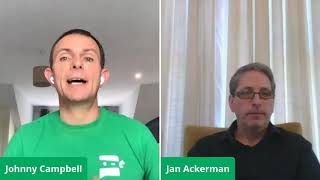
Jan Ackerman, VP of Global Talent Acquisition at Oracle, discusses how to keep people from leaving during uncertainty. Oracle runs internal career fairs, integrates internal candidates into hiring shortlists, and Ackerman holds 'Java with Jan' 1:1s and an Ask Jan Slack channel so employees know what moves are possible.
Chapters
Good afternoon, good morning, good evening. Welcome to the shortlist on Wednesday, 15th of July. So I'm really excited about today's show as the topic that we're going to be talking about is one that has been just bobbling for the last three months, to the point now that I think every talent and talent acquisition professional at a senior level in an enterprise organization is talking about this as one of their top two topics and top two challenges for the rest of this year and going into next year. And we've got a great guest who can share some really fantastic insight on what one of those enterprise organizations is doing and also his views on where that leads us directionally for the future. But we're broadcasting earlier than usual this week, one hour earlier. We'll return to our normal slot the next week. So good morning those of you joining us on the west coast of the US we're at 7am, those on the east coast, more respectable 10am of course it's 3pm here UK and Ireland and a little bit earlier in Asia, places like Singapore. We're getting to have a 10pm call rather than too late. So welcome to the show. As always, this show is going to be recorded. If you have to jump out halfway through or you get to listen to the whole show, you love it and you want to basically follow our other shows either in the past or see what we have coming up, you can check it out@socialtalent.com the shortlist where you can subscribe to be notified of all of our shows which post, by the way, are now available also in podcast form on Spotify. So that's available this week. You'll be able to find the shortlist on Spotify and listen to those podcasts audio versions of any of the shows, including this one if that's your preferred medium. As ever, we want you to join in the conversation. The best shortlists involve you and we take in your questions and we'll take them on YouTube or where most people are generally listening live is LinkedIn, so feel free to jump in in the comments below your screen that you're seeing now if you're listening live and you can ask us any question as we go through the show, I will endeavor to take as many of your comments and questions as we go along. So without further ado, I'd like to welcome our guest today. Our guest is the VP of Global Talent Acquisition for Oracle, one of the largest tech companies in the world with a very famous history, fantastic brand, a very large TA organization, and our guest today has been with the organization for quite some time and seen amazing growth and change in their TA structure. He's someone who I've known for quite a long time and it's probably because they are one of the first and most progressive TA organizations that I came across who really started doing things even 10 years ago or more that are considered progressive even today. They were doing them a decade ago and this man was instrumental in that growth. So I'd like to welcome to the show today Mr. Jan Ackerman joining us from Florida in the U.S. jan, maybe you can tell the audience a little bit about your passions, your team, your background, just in case somebody on the call doesn't know who Oracle is. A little bit about the organization will do.
Thanks Johnny. Good afternoon, good morning, and good evening to those of you who are in jpac. I'm so delighted to have the opportunity to spend some time with you and talk about what's going on in the world of internal mobility, which we're going to talk about in a little while. But to start off, let me tell you a little bit about myself. I've been with Oracle now for about 20 years, been in the talent business for, oh, I guess 100 plus years or what feels like that, and very much excited about what's happening in the world today. The changes that we're seeing, having to deal with all the craziness that's going on in the world has really kind of been a challenge for us in the talent business. In terms of what org. I think anybody in the technology field knows a little bit about where they're premier in the database world and been around in that field for a very long time. Most specifically, we've entered in the cloud space and compete against some of the big cloud giants in the world. But we're one of the few that has all aspects of the cloud. So we're a hardware vendor with our acquisition through Sun Microsystems many years ago. We have applications in all the major areas and within specific industries. And as well right now we've got a huge infrastructure business to compete with some of the big challengers in the cloud business. So a little bit about Oracle, a little bit about myself, a little bit about my team, if I could. We are a very unique group. We've got about 300 plus talent advisors throughout the globe. We pride ourselves on doing things a little bit different in the industry and trying to stay ahead of what's out there in terms of technology and how we approach our business. And pretty much excited to talk with you today, John Likewise.
Jan, I've been excited to have you as a guest for some time now and just for those joining us, depending on where you are in the world, John, while based in the US are running a global team. Prior to the global role, Jan ran the JPAC team. So again, anyone on the call who has specific questions around the JPAC region, I know that Jan is someone who probably knows more about that, having lived in the region, ran a large team there than most guests we might have on. So we're going to get to the topic of internal career mobility and its rise, of its importance and how that's kind of going to play out over the next few years in a second. But before we do that, as we do regularly at the start of every show, let's go to the news. Niall thought you'd leave me hanging there now while we play that. So our first article, John, this week. This is an article from Forbes. The author Mark Murphy put in some good tips, I think good tips here about a Friday afternoon meeting. He suggests that all of us can have with our teams to immediately reduce the burnout of the teams and increase their optimism. In which Mark shares three kind of or four I think questions that can be asked of your team in a Friday afternoon end of week wind down call. What are your thoughts on the tips that he shared, Jan, and do you employ something similar to this within your teams?
So we don't necessarily have a Friday afternoon cadence where we're doing it on a regular basis, but I actually really enjoyed the article and thought this was a great idea. The whole idea of talking with your teams I think is critical to the success of any kind of management of folks, making sure that you're constantly keeping up with them and hearing what their thoughts are. But I think Mark specifically identified specific questions to ask your team and why those questions were important. And I really, it was an eye opener for me and I actually shared the link with my team so that they could actually take that away, have some takeaways from it and maybe start doing it.
Yeah, I think the four simple questions were, you know, ask your team to share an example of at least one success from the week. Ask them what their biggest frustration from the week was, what accomplishment they're most proud of and what's one lesson from the successes they're going to bring into next week. And that's the short part of the article. I like that he went into the psychology behind how that, how that basically makes your team more successful or primes them for the week. And the one I really latched on. Jan, I don't know. But you. I've always been interested in this concept of buoyancy. I know that Dan Pink, the author, wrote about buoyancy in one of his sales books many years ago. He talks about, you know, being optimistic, having that glass half full attitude just correlates with so much success, happiness, growth and all those things. Like it's hard sometimes in the world that we're living in today to be buoyant, to be class half full. What's your experience in terms of the people you've worked with and seen over the years? And it's the relationship of buoyancy to success in an organization or in ta?
Yeah, I think it's actually critical. Right. Those folks who have a focus on success typically have a real positive attitude and are always seeking to understand. And so I think that very, very quick, very important.
Yeah, I know. I remember the damn Pink when he talks about it in his career, the sales book he wrote. But he talks about declarative self talk is actually can work really well where you literally buoy yourself up with positivity. Right. And I'm a cynic at the best of time with these kind of self help type advice, you know, to tell yourself it's all going to be great. But the research shows that this kind of positivity, setting yourself up with a positive mindset can really work. And you can, even if you're feeling a bit down, you can tell yourself to be more positive and it does actually tend to work. How important is it, do you think, particularly post Pandemic for potential employees, when you look at Oracle and the assessment criteria you would use and it's generally your view of hiring in the world, how important is it, do you think going forward or how important will it be for employees to have these kind of attributes, to have buoyancy, to be able to kind of take a positive attitude. Is that something you've ever assessed for in the past or look for?
Yes, absolutely. And I find it critical. I'm constantly talking to my leadership team to boost that positivity within the organization, try to motivate our employees. And I think Ms. Murphy talks about it in his article and it's really critical that you're bringing out the best of folks and asking them a simple question like tell me, just reflect in the last week, tell me about a success that you've had. Gets them thinking in a positive frame. And so I think it's very, very important. I always, always, always try to stress the positive, even in dealing in hard times. And, you know, given the COVID situation where a lot of hiring we see around the industries as a whole is starting to wane, it's all so important to keep that focus on positivity we're talking about. How do we motivate our employees? How do we keep those people engaged? What kinds of things can we do other than what we typically do? The blocking and tackling of talent acquisition, interviewing, identifying and screening candidates. What other kinds of things do we have? Projects. We've got a remit of projects a mile long to try to attack those now when we typically can't do those during normal time because we're so busy doing the things we do in talent acquisition.
I think that maybe partly answers a question from Shane Moogan. Hey Shane, good to have you on the show. Shane's on LinkedIn asking how do you keep a high performing team focused and motivated when there's such global uncertainty? So it's one thing saying to be positive, but what are the kind of, what are the other attributes that you think are necessary, the tactics to try and actually keep them not just motivated, but focused and high performing in this kind of environment? John, what's worked for you?
Yeah, one of the things that we've been doing in our organization and actually it's been homegrown, it actually came from the field, which is something that I've always pitched to our folks and that's about education and training. Now is an ideal time to go out there and get trained. We have folks on my team who have actually gone out and gotten cloud certified, which is totally out of the realm of what we would normally do and typically wouldn't find time in our busy days to do those kinds of things. Doing education and training, technical education and training has been pretty successful.
Yeah. I saw one of the other cloud players announced today that they're making available 100,000 scholarships online. It's not technically scholarships. You pay 60 bucks a quarter. Right. But I like the way they pitched it and it's a basically teaching. They're trying to say that they're going to teach you some of the cloud skills and project management skills. So again, a big focus on education, but I think it's more about how do you kind of drive people to be more directly responsible for their growth and education as opposed to kind of going, here's a course you must go on trying to really light a fire in people to say you need to make sure you're more employable by developing your skills. I think it's a really good point. It lends itself to that positivity. John, I'm going to jump into our second news item and ask Niall to bring it up. I think this is an interesting one here as well. So this came from HR News and it's Dan Tejnak in degreed and he basically focused on this topic, which is very pertinent for our conversation today, which is why retaining your talent will give you the edge in uncertain times. And in this article in HR News, which you can find@hrnews.co.uk Dan's talking about really the area of looking internally rather than externally. What somebody recently said to me is looking at your renewability strategy rather than your replacement strategy within your own organization. What were your thoughts first of all on the article and Dan's perspective on the importance of retaining talent when you read this job?
So it hits home at the larger topic that hopefully we're going to talk about today. Johnny and I think he really nailed it. It's very important that as a large organ, I don't even know if it's a large organization. Any organization who has the vested interest in their talent, which is really in our business, is critical to our success. Must focus on those people. Attrition is the big word of the day. I think every big corporation focusing on how to minimize attrition, how to invest in your people to make sure that you're a listening to what they have to say, where their interests lie, how you can further develop them are all critical pieces to your success. Any success of an organization, is it.
Something that you've ever been measured by? Because it's talent acquisition, rightly or wrongly, typically gets measured by metrics such as cost per hire, velocity of hiring and other such attributes. Right. Often the connection isn't made to retention and therefore TA typically isn't responsible for retention and it's never connected. Have you experienced that in the past? What are your thoughts on those metrics?
I think we talk a whole show and maybe we consider doing it sometime in the future. Johnny, just about this topic because and I think we had gotten together with a couple of colleagues not too long ago when this topic came up. There's a huge disconnect typically in talent acquisition and then once those people get hired, we throw them over the transom and it's our brothers and sisters in HR who manage those folks. And I think that's a weak link in the chain and it's something that we're focusing on at Oracle and specifically that I've engaged my team to work with our HR business partners to keep that relationship. We have relationships with those candidates. We go back to those now employees and we ask them for referrals and very often they ask us, you know, hey, I'm not happy with what I'm doing here. Or it's not exactly what was propped up to be. So it's really, really critical that we and talent stay very, very much engaged with our HR business partners and our employees that we've brought on board to keep that linkage.
I wonder, Jan, could you tell us a little bit about your Oracle's history in this area and in particular, you know, more recent changes around internal career mobility? Because often I was talking about internal career mobility, I'd be asking maybe ahead of talent development about what she's doing with her team. And maybe, you know, when I talk to a head of talent acquisition, the perspective is typically, well, you know what? Of course we deal with internal applicants and we pass them on. What's been the Oracle story and what's happened most recently perhaps to change that?
Yeah, so we have really gotten a wake up call in this area. I tell the story of we went off as an HR leadership team a couple of years ago when we looked at topics that we wanted to set aside for our HR organization. And at the top of the list, surprisingly so, for everybody across the HR organization was career mobility. And a lot of that was driven by a survey we did of our employees, asking them what's important to them. And internal career mobility is extremely important to them. And so we actually put a tiger team together of leadership, high level leadership within the HR organization and then reached deep down to our organization and brought in folks from the business to help us to look at internal career mobility. I have a dedicated team within my organization that actually works with various parts of our leadership team. But they were touching the surface. They weren't large enough to actually touch all the employees who are interested in making a career change. What we've done is put together this team and worked on a new methodology where my external talent advisors are now also working with internal talent. So when an internal candidate applies for a job, we put them in the mix the same as we would an external candidate in previous years. We didn't do that. We kind of left it to the hiring manager and their responsibility to deal with internal. It was around the typical things you find. I think when this topic comes out as well, we don't want the recruiting team poaching one organization to another. So a real positive effect. And we went away. And we looked at a ton of different ways to measure ourselves, to look at metrics, to look at history, and then to look at the future and our success and how we were doing with this big change in our internal mobility policy.
It's an interesting point around just how you deliver the candidates to a hiring manager. I was talking last week on a webinar with the CEO of a company who sell referral software to enterprises such as Oracle. And the his point was, he said during COVID he said they saw internal referrals shoot up, like, massive increase in usage in internal referral software to drive referrals and all that kind of great stuff. I asked him this question. I said, that's great, but do you find, because we had shared this conversation previously, or you shared those comments with me, and I said, do you find this is an obstacle that if you don't actually fix in the process the fact that, you know, you're separating candidates by how they got to, you know, internal applicants or an internal referral is separate to external shortlists, do you find that that becomes an obstacle? And he was like, yes. He said like, so we can have all the activity you want around more people applying for jobs, more referrals. But even the process, the recruiter isn't, you know, bringing them together and making them more of a unified shortlist for the hiring manager. The hiring manager is left to her own devices to decide, oh, these are the internal applicants. They're not the good ones. You know, I want to look at the externals. People like the external stuff, right? For whatever reasons, it's. Most hiring managers seem to prioritize that. I think it's a really important point in the process. You can put all the systems in place, you can put all the promotion in place. But actually critical can be just changing small things in the process to make it work in the end. Is there anything else you've kind of uncovered just on that process piece that has been critical to making this a success so far?
Well, I think yeah, one of the things was communication. If you do this in a bubble, if we do it as an HR organization or a talent organization, I think we very early realized that that wasn't going to be successful. And so what we did was we put together a communications team who really just focused in on how do we get this message out to senior management. And we're running focus groups. We actually started doing internal career fairs where we would go to a particular location, we would bring in leaders. This was pre Covid. We would bring in Leaders to do presentation about their organization, what they were looking for, and we'd invite a large swath of employees to come and listen to hear what this manager had to say. And then in the end, for candidates or employees, I should say, who were interested in hearing about the opportunity, they could actually sit in and go through a, a brief introductory interview, if you will, and start the process right there and then. And we found that to be hugely successful. And so getting senior leadership on board and getting that message, that internal first, right. We call it, you know, family first. Looking at what's important to us internally, getting that message across to senior leadership and then having that inculcated throughout the organization has been very critical to our success.
Yeah, I think, you know, for initiatives like this, the buy in is really important. Again, you can have the process stuff, you can do all that stuff. Right. But there's probably two elements. You mentioned the senior leadership buy in, which is unbelievably critical to say, you know, if you have the right leaders, and she says you should focus on this as a business, everyone will focus on it. The absence of that means people don't know if it's a real priority. I think that's really important. But I think you'd also mention to me the importance of alliances across the wider colleagues. You mentioned your sisters and brothers in hr. How important, in addition to getting senior leadership buy in for the campaign, was it to involve your peers across those different teams?
I think that was the glue that kept us together. Because if you think about it, they're the ones that are fielding most of the questions and issues around internal career mobility. It's a part of their day to day job responsibilities where employees are coming to them and say, I'm looking for a new opportunity or I'm not happy with my manager or I'm thinking about looking outside and doing counseling for employees. So they're at the coal face of talking to the employees. Without them in the mix, we wouldn't be successful in what we were trying to do.
So whilst this initiative can come from talent acquisition, it's critical that it's a peer driven initiative across those parallel parts of HR rather than just being a talent acquisition thing on its own. Yes.
Yeah, I can't stress enough. I think you and I talked about this previously, Johnny. If you're not doing this with your HR business partners and your leadership team, you're going to have a missing part of the success of the program. And our HR business partner are a very key part of our success.
I want to Walk back to the career fair concept you mentioned. This may not be something most of our audience are familiar with, but correct me, I'm wrong. I think you said that in addition to obviously having different leaders present on their teams and what their teams do so, so that internal employees can begin to apply for that, you guys did other stuff such as helping prep people with their LinkedIn profile. Like that probably seems like an alien concept that you are organizing a fair to help your existing Staff Build a LinkedIn profile. Explain the rationale of that to me.
So you know, I talked about these career fairs. It's much more than a career fair. So we start off with basically talking a little bit about careers at Oracle and what we're doing to motivate internal people to consider careers at Oracle. And let's face it, we all recognize that the alternative to a career of staying here is a career outside. And so many folks will go to LinkedIn to look for a job. Many folks will go to outside places to consider how do they update their profiles, how do they rewrite their resumes. And so we started to run clinics to help people to update their LinkedIn profile, to rewrite the resume to make them look more appealing. We actually did clinics for those kinds of things because we recognize they're going to go outside to do those things. And we do these things a lot for campus. So we've got a lot of expertise. We're constantly doing these kind of clinics as part of our campus relations programs and very, very successful and extremely well received.
I think it's amazing if we look at the two kind of cornerstone pieces of this. One is having a team dedicated and having the processes maybe modified around how can you actually apply for a job or how can you get access to the visibility of the available job opportunities within your organization. And then there's the kind of, the more kind of higher level branding of the whole exercise. And as you're having to go out there into the business and sell it and engage people and show them that these things are happening. I even help them with the visibility of their profile and their skills, which I think is pretty awesome. It's led to several questions. I'm going to jump into some of the questions we've had in the comments here. Jan has been several of them that have all kind of said I seem to have a theme about yes, but what about the new virtual world or more virtual world, let's say, and we have. Srijit Nambiar has asked a question that's been backed up by several people Including Rohan Bave as well. And Srijit says, nice to see you, John. One question keeps coming up is as we go, 100% virtual and that's the new normal, or let's say 18, 75% virtual. Would that impact the quality of hire? And any advice in this space, specifically sales hiring?
Yeah, sri, just a shout out to you, say hello, an old friend. So I don't know that virtual is going to make a change. I think it's going to make it easier because we're so now used to being on camera with folks. Every one of US is doing five to 10 Zoom calls a day. I think it's going to be more helpful to us. You will get that lack of the physical touch of being across from one another, but I think it's going to be a real positive thing. And when you're doing sales recruiting and a lot of what you're doing is that personal touch, I think you can do it on a video just as easily as you can live and in person. I don't think it's going to be that big of a game changer or anybody that's asking this question. I think it's going to help us because people are becoming more and more comfortable with this technology that we're using. And you're still live and in person with somebody. We had a. We had a question about something. We were trying to do an HR function and people were like, oh no, the law says we have to physically be in the office to do this and do it face to face. And I was like, but this is face to face. And they were like, we never thought about it that way, but it is.
I think it's a. Sometimes there are differences, sometimes there really isn't. Matt Mullen has a question for you, John. He said, john, have you found success with internal virtual social gatherings with your team? And he's commented to say you've heard of teams having coffee breaks, but with the virtual world still existing at just one voice at a time, do these really work? Any guidance from your side in managing a big team and staying virtually connected to keep morale up? So we just focus on your team. What have you done to try and keep that community or social element to the team in Covid time? And I also want to just throw into Matt and anyone listening. Jan, you've managed your team virtually for a long time, so this isn't actually new to you. I probably should put that in there. So what works now or what has always worked for you?
Again, I give a shout out to Zoom and other platforms like that, Cisco, I think that's helped a great deal. Johnny, you mentioned I was based in the region in JPAC for about 15 years. And the latter portion of that, the last 2 or 3 years, I actually was physically based back in the United States. Previously, I'd been in Singapore and India and lived in a region and had to manage, not only manage remotely without Zoom technology for the most part, but working through the night to try to match the hours of my team that was up in places like Singapore and India and China and Japan. So I think that we've managed. One of the things I can tell you, I don't remember who the gentleman was that asked this question, but one of the things I would say is a simple rule. Turn your camera on. I don't care whether your hair is done, you're wearing your T shirt, turn your camera on. Let's do this face to face. Too often you'll see in these meetings, people are reluctant to turn them on. I think it's been a big game changer that we're doing a large group of people. One of the things I did for my team is I started a thing called Java with Jan, where I have a member of my team, my ops team, reach out to anybody on the team, whether they're part of the operations team, whether they're a talent advisor, whether in leadership, and just set up a half hour with me and we use a formula called Stop, Start, Continue. And I spend the first five minutes trying to get to know the person if I don't know them personally and haven't had an interaction with them. And then I spend the remainder of the time, the 25 or so minutes with them, talking about what should we start doing as an organization? What cool ideas do they have that can help us move the ball forward? What things should we continue doing that are helping them individually as a contributor and then as a group, and then what should we stop doing? What things do we do that really don't help us to get our jobs done effectively? And I've gotten some amazing feedback. I take notes on everybody, with everybody that I talk to, and then I put those together for the person that helps me coordinate these things. And then I share them on my team calls. What I'm hearing in my Java with Jan. I started an Ask Jan Slack channel for my team so that anytime they can get out on Ask Jan and Ask a question, don't care how silly it may sound or how important or not important it may sound, get out there and ask it and let's talk about what's going on in our organization. And it's been very helpful. So communication is absolutely critical. We do a newsletter quarterly. Anything you can do to reach out to your teams and communicate to them is going to bring, I think, success. It goes back to the article we were talking about earlier.
I think what I'm hearing, John, is that it isn't so much the individual tactics that Matt might be looking for in his question, it's more the leadership style, being open, transparent and available. If you have that style style, this will work and you'll find the tactics that work for you. The style is probably the thing that's most transferable. I'll ask you a question about going back to the internal career mobility and the successes you had earlier in piloting this and extending this across Oracle. And you mentioned obviously that they were in person, those career fairs you had internally. Have you thought about. Yes. Or have you even executed on this what the next iteration of that will look like in a world where it's likely for the next whatever amount of time? We can't have those in person events. Have you considered that? Have you made plans around that, what that will look like as you scale that out across the organization?
Yeah. I think many of us on this call and that watch this podcast in future broadcasts of it will have to admit that we've all had to adapt. We were thrown into the maelstrom. And I'll give you an example specifically, Johnny, when we talk about campus, as you know, we do, as many companies do, we do all of our interviewing for campus during the course of the fall, spring and winter months. And then come summertime when they graduate, they start. Well, all of a sudden we were faced with thousands of people all across the world, whether they were part of our sales program or part of our development, campus programs were all going to start and they were going to start virtually. And so we had to really refigure. What does that look like? How do we engage with them? Typically we would bring them all together physically and do a week long training program for them. And then even more important than that was we realized in less than a month and a half's time that we were going to have to run our internship program, summer internship programs. In some cases it ended up being a four week program when it was supposed to be a 12 week program. And in other cases we did an eight week and a 12 week program, all of which were planned, set and were all developed for physically bringing folks to our campuses around the globe. And then we had to basically redesign the whole program to do it virtually. So, yeah, we're getting real experience at this and I think it's going to change the way we do business as a talent organization. We're going to have to learn to adapt. Just looking at, if you look at organizations, physical space has now become an issue. Like, do we need as much physical space as we needed before? Since we're finding even organizations like development who would say, no, no, no, no, my team has to be together, they have to be in a physical space together, are now finding that their productivity is just as successful now as it has been. In some cases, they're getting more success based on being virtual because people don't have the distraction of traveling to and from the office and spending time in traffic. They're actually spending more time in the office. And because they're locked in from home, they're spending more time on weekends and other after hours dedicated to work. And so we're seeing productivity boosts that we didn't normally see.
And can I ask you then on that one? Right. Just as a side note, John, having worked in JPAC for so long and obviously back in the U.S. now, do you think there are cultural differences with regard to remote working or challenges? A lot of the rhetoric tends to be Western Europe and the US focused, where everybody says everyone loves, you know, remote working, everyone wants to do it. Is that the reality on the ground in every place you've experienced?
I think you can't make generalizations, but I think with COVID because it's affected everybody globally, there has been a paradigm shift in other places. I'll talk particularly about India, where we thought that being able to work remotely was not something that we can consider, but we're doing, we're forced to do it. Given that, you know, not only is Covid caused that, but the government has implemented that everybody will work from home and we're getting productivity from folks. But, you know, does everybody's environment across, you know, a wide variety of cultures allow for you to work from home? No. I mean, even in Western cultures, if you talk about Western Europe and you talk about the United States, we still have kids running in the background. I tell a story of, you know, my 16 year old one day decided he wanted to go to the printer and came down in his shorts to walk across my screen in the middle of the meeting to pull something off the printer. And I said after the meeting was over, I was like, did you even think about what he said? Oh, oh, sorry. So we're all trying to figure out how to work from home. Whether you're in a remote place or there are cultural differences, I don't think it makes a difference. I think we're all figuring it out and we're getting success with it.
I think there's been a great equality in just that particular part over the last four months in that because everybody in the world is in this. There is no us and them here. It's like, you know, a child running across your screen. My youngest is a year and a half as I think, you know, Jan. And he hasn't walked in on this particular broadcast, but he's walked in on many. It just happens and it isn't. Oh, that happens in that culture or this culture. It's happened everywhere. So we kind of go, this is just human life. Right. We get on with it. I want to ask you one or two last questions from our audience before we wrap. Jan, I have a question here from Annmarie Crook. Annemarie is asking, in today's market, how do you get someone in a TA team to respond to LinkedIn emails or job applications? I noticed recently, you know, a lot of companies are posting but ghosting, so posting jobs, not getting back to the candidates. And she's asking, what are you, what are you doing to coach your team to do in terms of applicants? I bring this up because we talked about this in terms of when you had a little bit more capacity at the beginning of the pandemic in your team. You focused a bit on this because canned experience I know was dear to your heart. So maybe can you share a little bit about your thoughts on this topic in terms of responding to applicants, what you've done with your team in Oracle over the last few months?
Yeah. And I didn't pay Annemarie to give this question because I don't know Annemarie, but I love this question, Annemarie, because this is a real hot one for me. I think that it's absolutely critically important that each and every candidate that applies against the job and everybody that responds to a LinkedIn post, or in my case, I have 20 plus thousand LinkedIn subscribers and when they write to me, I write back to each and every one of them. When people apply for jobs, when they send me their cv, I actually personally put them into our ats and I actually send them a customized individual note. I start with a template and then I customize the template. And so my answer to you is a, lead by example and B, I think that ghosting should be a thing of the past. As a TA leader, it's critical that you set the example and that you let folks know that it's just not acceptable to ghost candidates. You just got to be able to put that in your process.
I agree. And we've won. Last question related to bring us back to our topic of internal career mobility and it's from Anjali Kabati is asking. Hi John, how has hrbp our business parties played a key role in promoting internal mobility through collaboration with different leaders within the organization and comment being, I'm sure they will have to cope with different leadership styles. And can you quote some examples? So it's I guess the role of the HRBPs in this. You know, what have you learned so far and do you have any examples you can give us?
Yeah, so I've said this before. They are critical to the equation for our success that we've had in our program if we didn't have them on board. We set this as an HR goal, so it wasn't a talent advisory goal. And the team we put together.
To.
Address this was made up of my colleagues in leadership in the HR side as well as HR VPs and talent advisors. You know, you bring up a very important point and that is they're meeting and talking with the customer on a daily basis about HR related issues. And so if they're not on board, if they don't have internal career mobility at the forefront, forethought of their mindset, we'll never have success with this. So what we've done is we've run all different kinds of chat and informational sessions for our HRBPs to talk about the program before we go into a new region and we're going to do a career fair. We have our HRBPs as a part of planning for those career fairs so that they're going out to their leadership team and saying, hey Johnny, we're going to be doing this career fair. Would love for you to pitch this, send out an email to your team or would you be interested in speaking? They are absolutely a key part of our success and in communicating to the leadership team because this is at the core of what they do in terms of internal employees, or not internal, but employees and employee satisfaction and they have a vested interest in this. No, HRBP does not have to deal with the question of the A word. Right. Attrition. They're all having to deal with it and they're all asking for what's a better solution to that problem. And here's a Great example of one of the things we mitigate attrition.
So I could ask you tons more questions. We've got more coming in, by the way, Anne Marie saying thank you for that as well. She's on the market and was shocked by the amount of people who ghosted her. And I think it's, you know, it's good for recruiters to understand what it's like to be on the other side as well and feel that. So we hear you, Marie. So I'm going to ask you one last question, if I can, for today's show, because we're nearly at time, Jan, and it's what we ask every guest on the show and it's to share with us, if you don't mind either the piece of advice that you have received in your career that you think has stuck with you the most or the piece of advice you would give to, to our listeners and our audience today that you would hope might stick in their ears that will help them navigate this kind of fascinating world of talent. So what would your advice be?
John yeah, so I love to go out to college to visit the campuses with my college team and get a feel for what's happening with students. And it's just I find it invigorating to be out with young folks and talking about their first step on the career ladder. And very often I'm asked similar kind of a question. And one of the things I tell them, I tell my team. And I also tell anybody that comes to me and asks me for mentorship or for career advice. And that is very simple. Your mentor, your leadership are not responsible for your career. You are responsible for your career. So you need to do whatever it takes, really understand your goals and objectives, really lay out for yourself, what do I want to be envision where you think you need to be five to ten years from now and then set your sights on that and do every single thing you can to get the best. And not just when I say do everything you can, it doesn't mean one of the things I point to in my success and my career has been I went out and I learned technology. I actually became a programmer and ended up doing a side business building applicant tracking system. And so what I say to people is get out of your comfort zone, learn and do other things and really try to advance your career, take responsibility for your career.
I think it's an excellent point. I had the same conversation earlier with somebody today who's talking about internal career mobility, and they said that employability is fundamentally every employee's response, responsibility. The organization can support their efforts, but you need to own it yourself. You need to focus on your own employability. Jobs will go, they're being lost at the moment in many organizations and they will continue to be lost forevermore. That's just the nature of recessions, but it's also the nature of the evolution of skills in organizations. But if you focus on your employability, you'll progress through many different jobs and therefore you'll keep employment and keep satisfied and keep challenged. But it isn't for someone else to fix. It's I think to your point, John, it's an excellent point to make. You got to go out there and grab the bull by the horns. John, thank you so much for joining us, sharing your insights. Been fascinating. I hope our audience has enjoyed it as much as I have this. You know this this session is available and can be found@SocialTown.com the shortlist if anyone wants to share with any colleagues who they think might benefit from it. John, thanks for joining us. It's been absolute pleasure. Really appreciate you doing that. Don't forget to join us in the green room with the link that you can see on our show afterwards for our catch up. For those of you who were able to join us live, thank you so much. We really appreciate, as always, your live comments and questions. They make this shortlist what it is. For those listening to the recorded version of this, we'd love to hear your questions on any of our live shows and of course we can connect you with any of your guests if you've got direct questions. We'll be back next week. Next week we've got another fabulous guest coming back and we're back at our normal time of 4pm so that's 4pm next week and I'm going to put that up on screen in terms of where you can find that, you can register for the show at socialtown.com forward/the shortlist and we'll go live at a normal time which is 4pm UK Ireland time, which of course is going to be do my maths I think about, gosh, 11am on the East coast of the U.S. and back to 8am on on the west coast. We'll be joined by a good friend of mine I've got to know over the last number of years who's met Malka who runs talent business for Waste management in the US And Melkaya is going to be talking to us. She was a former group head of talent acquisition who moved into a talent role and going to be talking to us about the evolution of talent acquisition into its broader talent home, if you like. I think Jan's demonstrated a very direct example of how it's happening right now where talent acquisition is being asked to take on a bigger role. But Mel K. McDuff is going to talk about her particular example of how she transitioned as a TA leader into a talent leader and to talk about her belief that this is going to be a trend we're going to see across other organizations. So you'd like to join us for that show, please do register@SocialTown.com the shortlist, and we'll see you next week.
More from Johnny


Where Does Your Hiring Stand? Diagnose It with the Maturity Model | SocialTalent

Where Does Your Hiring Stand? Diagnose It with the Maturity Model | SocialTalent






NEW CONTENT - How to use Generative AI for Recruitment Marketing with Glen Cathey | SocialTalent

NEW CONTENT - How to Use Generative AI for Sourcing & Recruiting with Glen Cathey | SocialTalent

NEW CONTENT - How to Unlock the Power of Generative AI with Glen Cathey | SocialTalent