The Shortlist with Jill Larsen
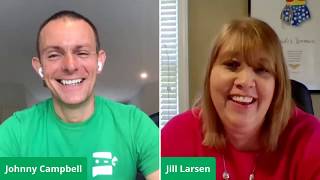
A June 2020 episode of The Shortlist (host Johnny Campbell) featuring Jill Larson, CHRO of PTC. Jill describes her background (recruitment roots, TA and HR roles at Cisco, previous CHRO at other public companies), board/advisory work and teaching. The conversation centers on COVID-19 impacts: early signs of hiring stabilization in some industries, discrepancies in unemployment data, differential sector recovery (tech vs hospitality/travel), and how CHROs have stepped up—accelerating people-first practices, crisis management, communication, and board engagement. Jill recounts joining PTC in February 2020, immediate crisis decisions (office closures, PPE, remote-work challenges), rapid culture and leadership activities (regular employee communications), and offers career advice on transitioning from TA to broader HR leadership.
Chapters
Sam. Well, hello, good morning, good afternoon, good evening, wherever you're tuning in from around the world. I'm Johnny Campbell, CEO of Social Talent, and this is this week's shortlist. It's June 10, Wednesday. We've got an excellent guest this week and we're going to be talking about the new world of work and particularly what that means for chros, which are typically held responsible within organizations for the responsibilities of all the human aspects of the world of work. And I'm excited this week to have a fantastic guest. But before I introduce her to remind everybody that you can go to socialtalent.com the shortlist where you can find a link to this show and you can find a the recording of this show after the fact, and you can find all of our broadcast shows with information on the lineup of future speakers over the coming weeks on the shortlist. So without further ado, I want to, I want to introduce our guest this week. Jill Larson is somebody I've known for many years. Jill is currently Chro of ptc, an industrial tech organization based out of Boston, Global business. And she'll tell you a little bit more about that business and her role. But I first met Jill when she was running a global TA on behalf of Cisco several years ago and she is one of us. She's come from the recruitment world and has expanded that remit into the wider remit of a chro, which is a fascinating journey in itself. But I do want to talk about the journey of a chro who joined her company only in February of this year, a month before lockdown, which is an interesting, strange time in itself. But Jill, I'm going to hand over to you. I won't do you justice. Maybe you can introduce yourself, your background and tell the world a little bit about what PTC does.
Sure. Thanks, Johnny, and thanks for having me. As Johnny said, we've known each other for a long time and he's seen my career through a lot of iterations. I am currently chro of a company called ptc. It's about a billion and a half revenue public company based in Boston, 94 offices around the world. But we're really focused on SaaS and software in the industrial manufacturing space, which is a space I've not been in before. You know, for me personally, my background has been going back and forth between talents and head HR roles. I started my career as a recruiter. I was on the agency side, I was in house. I was the only HR person from any startups during the dot com boom. And then Took some larger HR roles at Sungard and EMC and then went back to talent and ran TA as well as a bunch of other parts of HR at Cisco for five years. And then I've been a public company chro for the last four at Metadata, which is a life sciences technology company in New York City and then most recently at ptc, joining right before the COVID crisis, which is a pretty interesting time. So I'm very excited to be here. You know, recruiters are people and so I feel like that those were my roots but really excited for the conversation today.
Jill, before we go into the news, do you still keep your toe in the tech? I know you were always supporting a lot of tech startups and businesses personally outside of your role. Is that still something you're quite passionate about?
It is. So you know, I've done a little bit of investing as well as been on a number of boards. I was on the board of Montage, which competed with HireVue and then they got sold and are part of a larger assessment organization now. And now I'm actually on the board of Sterling, which is background check company that many people are probably familiar with. I am on the comp committee, help them a lot with thinking about talent and technology and how we really kind of translate that even for access and diversity. So really exciting company based in New York, Goldman backed, so private. So I do a lot of board and advisory work as well in my and I teach, I actually teach at Columbia. I teach digital HR there and created the course for them for their graduate program.
And Jill, do you sleep at any time?
No, not really.
Take a break.
I wear a lot of makeup under my eyes. No, I don't sleep a lot.
Well, I'm not sure you get time to to check the news, but we're going to go into the news segment. I'm keen to get your opinions on a couple of really, really relevant and interesting stories that appear in the news. So Niall, that's, that's. Let's take our first article there. So Jill, this appeared in US today only I think Monday and it's been a story that's been followed by lots of other outlets as well around signs of stabilization. So again, just a reminder for anyone who's listens to this at a later recording. It is early June 2020 and the market is seeing signs of stabilization. Hiring is picking up in certain industries as the kind of coronavirus layoffs ease and particularly in the US most states and not all 50 states have reopened. Some of the aspects that were closed over the last two months. So what are your thoughts on this article? Is it accurate? You know, is it what you see as well, anything you'd like to add or kind of throw in that's a little bit different to maybe this article's perspective?
Sure. I mean, I think that. I think that we are a little bit surprised, at least in the States, but I think globally at the recovery we're starting to see. There was a lot of discussion from a financial perspective of whether it was going to be what you call V shape, where we have a dip and come back up a U where it's prolonged, or an L where we don't recover. So I think everyone's really excited that it seems to be leaning a little bit more towards U or V, which means a lot for unemployment. You know, it's interesting because the unemployment numbers. There's a lot of discussion right now that the unemployment numbers in the states were actually inaccurate that were released in June. I don't know if you saw some of those articles, but just that the ADP payroll numbers were very different than the Department of Labor numbers. So. So I would say I do think there's a positive recovery. I do think we're starting to see it. I think tech has, for the most part, continued to invest. I've seen a lot of collaboration across companies, so lots of. I don't know if you've seen this, Shani, with your customers and such, but we see a lot of HR leaders and talent leaders pooling together resources, centralized portals where you can find talent. And a lot of those folks have been able to rebound really quickly, at least in tech. I think there are other parts of hospitality, you know, travel, where those, you know, a company like a TripAdvisor, so exciting in the SaaS, space for hospitality that really cut their staff in half. So I think it really depends on the industry. I think we need to continue to do the right things to make sure that we're hiring where we can and for the companies that are, that we're being really thoughtful about going after that unemployed population to get them back because that will help all of our economies and help us recover quickly around the world.
Yeah, I think it's an important point that I'm going to add to which I think is to remember it's an election year. So, you know, official government information in an election year, you should be perhaps scrutinized a little bit more to see how true it is. I saw this and, you know, I was surprised that people were surprised with some of the data, like I've been talking with people for three months about this, that we're going to go to 25% unemployment.
Right? Right.
And on average in most markets, from the 3 to 5% it was, was at. And then we're going to go straight back down to about 15 or 12. And then the only part that I was uncertain about was how long it would take to go from there to back to 3, 4%. Could be years, could be months. Right. And so then when it goes really high, people were surprised when it went so high in certain markets, like in Ireland, it went 28%. I'm like, that's shocking. Like, no, it's not like you shut down so much of the economy. Course you're going to get that level of unemployment. But when you turn back on like you, you go, restaurants can open tomorrow. It's a huge amount of people that can go back to work. Retail can open tomorrow. A huge amount of people go back to work. Of course it goes down. It's kind of obvious. I'm not really sure that there's huge surprise in that. What are your thoughts maybe on. Because I get that, you know, whether it's a U or a V, we're seeing it rising again. But what about the. Is it. Is it a. My angles.
Right.
Is it going to be a. In your opinion, you know, later in the day.
Have you been drinking already?
Only this.
It's.
But like, do you think. And it's just opinion because we all don't know this stuff, but would you suggest that it looks like the market's going to recover, let's say within a year, or would you be thinking more two, three years outwards in terms of.
I mean, believe me, don't quote me because I'm not a financial analyst at all, but I would say I would see something in like the 12 to 18 timeframe. So even though the retail is coming back, even though the restaurants are coming back, travel start to come back, it's coming back on a prolonged. So you can only have 20 to 25% capacity in restaurants, for example. So I'm going to be able to rehire everyone unless their delivery is going really well. You know, travel people are still very nervous about traveling. You got to wear a mask for the entire flight. It's a lot for some people. I think you're going to see more of a slower recovery in that. I think also the place that will be interesting in the data is I think a lot of entrepreneurs really suffered and I think we lost a lot of companies that were smaller companies that just maybe didn't have enough venture funding or PE funding or were kind of bootstrapped family businesses. And then there's other pivots that you see, especially in the US in the supply chain for meat and other foods, that you see small butchers and things start to be able to come back small farms, some interesting pivots that might be really, really helpful. And obviously the environmental impact, if you've seen that, is pretty unbelievable, which is when we all stopped kind of polluting the environment. The environment kind of made a quick rebound. So I think that's also a very interesting thing that might pivot us a little bit around social, more social and environmental causes and also thinking about our footprint in the world and can we, can we do more virtually?
Yeah, I think it's really interesting that, you know, a lot of, a lot of individuals would have always expected that, but we never had a chance to do a mass global experiment to prove does it work. So now people say we could do this. Look, this is what happened for that three month period. We could have this again or even part of that, which is very interesting. Let me move on, because you mentioned entrepreneurs. I want to move on to our next story, which is written by an interesting entrepreneur. And this is how chros have met the moment from hbr. This article, to me, I thought was a really good starting point for us to have a good conversation about maybe the role of chro going forward, not just in Covid, but maybe not a fundamental shift, but maybe an acceleration in a direction that we all hoped we would go. Before I give my opinion, what did you think of this article and perhaps why?
Sure, I mean, I think it's a timely article. There's been a lot of conversation in at least my circles around the timing of chros and, you know, real chance for chros to shine. Because sometimes that hasn't always been the new story over the last, you know, many years. But I did laugh that it was Arianna Huffington that wrote it just because she's never been a chro in her life. I know she has a business and she's very focused on wellness and engagement and I'm sure that was driving it. But I think I would agree. I think being a new chro in a public company and one that hasn't necessarily had a really strong people strategy was a real drink from the fire hose experience for me of crisis management and having to get to know my CEO really, really quickly, who is an introvert and an engineer. So his name's Jim Heppelman. And Jim has come a really long way in meeting me because obviously this is a very people centric, empathy centric situation. And it requires us to go away from models that especially PTC only had about 20% of their workforce as a virtual workforce before this happened. And so, you know, I obviously come from companies like a Cisco where you have a very high distributed workforce because of the technology. So lots of adjustments that we had to make. Communication, engagement. How are people feeling? Are they getting the things they need? Really a quick pivot towards people, which I think a lot of the article was really about. It was about agility, it was about experience of engaging your employees, communication. And then what does this mean for the long term future of work?
Can you share with me a little bit more about that? Right. Your personal circumstances? Because I think it's quite unique. You know, you start in February and then March we go into lockdown and you're, you're in that month, the first month where you're, you are still trying to get to know the business and the people and all of a sudden you're expected to then, you know, become that, that, that, that rock for the whole business when you are probably not even to. I know Ariana talks about, you know, becoming more mindful with yourself and make sure you put your own life jacket on, which is nice and fluffy. But, but there's some truth in that. I think there's, there's, there's a, there's a good element in that which is like you need to be pretty confident in yourself before you can then represent your business to the business. So what was your experience or how, what has it been so far? Jill?
Yeah, you know, so I've been through a couple crises before. Not of this, not, not of like Covid, but I had a breach when I was the CTO of RSA where we had to lock everything down. And I had the FBI and the NSA and the CIA in my store, my offices. And so I've been through a lot of really interesting crisis management. So that's really where I went to was crisis management. And I didn't worry at all about like my brand or, you know, how can I, how can I get Jim to like me while I'm telling him difficult things? I just really tried to be data centric, business centric and people centric at the same time. It was a very difficult decision for us to close our offices. It was something that I finally called him and just said, we're doing it, and here's why? And he was very supportive of it. And I just said, you know, we're now at a place where it's an employee safety issue and I have to call it. And he actually was on vacation at the time. And so it was a really interesting conversation for us. But part of the reason I took the job was because I really like Jim. I thought we had good alignment. So for me, I just really went to best practices and relationship building. I was working probably 20 hours a day, so to the point of putting my vest on first or my face mask on first, I was not doing that for a little while. And then I finally had a moment where I just said, you know what? I can't, you know, because this really isn't virtual work. This is work from home. This is where you lifted and shifted entire populations and put them in their homes. And not everybody has level playing field. Not everybody has a space like I have a nice office to do it from. A lot of people are in their bathroom or the closet or sharing a flat with a bunch of different people. And so I try to remind people of that, that it's not the same experience for everyone. And then you have the introvert, extrovert, you know, do you have sick, you know, are you surrounded by situations? With COVID I happen to be married to a firefighter, to a first responder, so my situation was a little bit different. And we had to think a lot about, you know, quarantining and every time he came back from work and it was very dangerous for a while there. And so you just don't know what people's circumstances are. So empathy was a big part of that conversation with Jim and the leadership team at PTC was we need to understand that people have childcare issues. They've never been teachers before. They don't all have the same Internet connections. You know, how are we going to think about all that? So that, I mean, to me, I can't say it was a perfect onboarding, but I really tried to lead and role model and that's what the employees needed and that's what my leadership team needed. And so that's where the confidence was really important. I've been through crises before, and if we take people first, then we're probably going to land on the appropriate side of the situation if we really focus on making sure our people are safe and as engaged and healthy and productive as they possibly can be given the circumstances.
So I've had many conversations with people over the last few months, and I've heard from a Few people where they've talked about how, you know, working and living through Covid is like living in dog ears. And, you know, so much happens in a day, in a week, certainly in the first two months. I know that Arianna had mentioned in the article some comments about how organizations have accelerated their, their, their, their, their Chro and CEO being in front of the team, moving quarterly to weekly, et cetera, et cetera. And you know, if I look at you and your role, say four months in, would you, would you agree with my hypothesis, which would be that if you take the dog ear principle, you've probably done 28 months of culture building, work relationship building in that four months, that in a normal world you might have taken two years to build up the credibility knowing the business. Would you agree that, that that intensity has given you that benefit, if you like?
Yeah, and I don't. I think it was a benefit. I didn't really have a choice. You know, the completely people centric crisis that happened, that obviously had economic impacts as well. You know, for me, actually the, you know, I just launched the people strategy at PTC and a new purpose and a new set of values and kind of, you know, just really a refresh. And when we had the presentation last week, Jim said, you know, well, Jill, you know, after seven months at ptc and I was like, no, no, no, no, no. I have been here 100 days. We talked a little bit about that. But I do definitely think the dog years, you know, personally I was, I've gone from blonde to bangs to brunette. Like, you know, there's been a, that would normally happen over many years, but I think, I do think the Chro has really been able to step up and I think the companies that are seeing a real rebound is because the company pivoted correctly on people didn't necessarily go right to furloughs and layoffs if they didn't have to. We took a very strong stance on that, that we were really going to try. We slowed down our hiring, we slowed down a lot of decisions around spending to really try to make sure we weren't putting anybody out into that economy and making it worse. And we've really been able to do that and I think we'll be able to sustain that. But it was, we were very forthright about that and it wasn't a PR stunt or anything. It was really just about. We wanted to be in this together with our employees and we did, to the point of engaging differently. I launched a bunch of communications with Jim and the leadership team and the employees. So we do Java with Jim. We did it every week up until June. Now it's every other week. And then we also do live with leaders the opposite week so that we're all sharing the same messages. We can get in front of some of this stuff if it's happening. And you know, because some countries that hit earlier, like China, and then they've come back a little bit faster. So just making sure we're being thoughtful about all the return to office impacts as well has been really important. So I think this has been a real crazy time for anybody in hr, including recruiters, because they've gone through a kind of up and down and, you know, sort of how do you. If you're not hiring, how do you kind of re pivot? But I think, I think this has been a really positive time. So I do agree with the article on that, that it's been a, you know, focusing on employee, focusing on wellness, focusing on role modeling. I think all those things have been really important.
So I've got a question I'm going to come to in a few minutes. I'm going to park it for now from Janine Davis. Great question about your career, Jill. And I think lots of our audience want to know about it. But I want to stay on this theme. In terms of the role of a chro and the challenges at the moment, I wonder, you know, are there specific challenges that you would say? This is the. These are the things I said to myself. I got to do this, this, this and this right now in crisis mode. And if you had that list, how much of that would you. Would you suggest is probably the list that a chro should just have anyway, going into maybe a new role or being promoted.
Yeah, I mean, for me, I was lucky because I did get five weeks in the office before we really went totally virtual. So I did get some time to build some relationships. So I think it's really as it always is in an HR role is understanding your audience, being thoughtful, being as perceptive as you can to understand what's going on with your stakeholders. I think for me, risk and governance was a big part of it. So when I started to see this coming up in January, we're starting to see the issues emerging in China. I immediately went into our IT organization to find out what our disaster recovery plan was because we have a high population in China and India and that actually activated a lot of things. Facilities doesn't actually report into me at ptc, but it has previously. So just being able to help that Team kind of think about assets, getting laptops, you know, just preparing and ppe. I think we were much better prepared because I kind of saw some of that and just said, you know, be talking to the board about just some of the risk and governance. And so I think we did a lot of the right things. So I think it's really about how do you protect your people, how do you protect your brand, your revenue and make sure your board is, if you're public or even private, that you're engaging your board in a really forward thinking way. I'm on a board of another company, Sterling, and I thought they did a great job too of having a U plan, a V plan, an L plan. So companies that got through this well just were realistic about best case and worst case and I think because of that and they have strong HR leaders. Sterling has a very strong HR leader as well. And so I think that's the piece where the HR leaders that waited to be told are probably in the companies that have maybe had a tougher go of being prepared, reactive. But I would also say I use my networks, I'm on a bunch of Chro circle. And so we really did shared a lot of best practices in a way I've never seen before. So it's not a competitive thing or how are you dealing with this, how are you messaging it, do you have a policy? And I think from that perspective we've been able to share a lot and learn a lot of what to do and what not to do because others have been forthright about some of their positive outcomes and their missteps. And so I love that, that culture of collaboration in the HR community and talent community. And I hope it stays post Covid. You know, at the end of the day we're all human beings first and so, you know, forget about what companies we work for and competing and all that. And I really love that part of COVID I think it's really opened up a lot of opportunities for this people community, you know, individuals that are focused on the talent side to really shine.
I think there's two points there. One, just on your last point, I think you're right. I think it's fantastic the way communities come together, peers across industries, across companies. I've been involved in many of those monthly conversations and it's really fascinating and it's brilliant to see how everyone's helping each other and absolutely, I hope it continues. It should, it's something we should have always had. You said something though that's really interesting and I want to go back to it, which is the point around chro, is that, wait, are chros that act. Talk to me about that because I think that's a really important distinction perhaps between the old head of HR and perhaps what we think. I certainly, I hope is the new chro, the new head of hr, the person who waits to be told by the more senior C level people. And then the new approach, which is I'm up there with the CEO and this is my realm and I need to make a decision. Talk to me about your opinions on that and what you've seen.
Sure. I mean, I, I have always been a pretty direct and high impact individual in the work that I do. So in fairness, I don't know that everyone can kind of think about that profile. But, but I hold my integrity and authenticity really at my core. And so I always lead that way. And so I do know obviously some companies will have CEOs that don't want their HR leader to have a point of view like that or to be assertive. And that's hard. I would suggest that those HR leaders go to companies that do because they can be much more impactful. But I think there's still some industries where those CEOs exist. But I think the chros that have been successful are the ones that have had plans, that have had confidence, that have engaged, that have activated, that have been able to collaborate really quickly across functions and regions and really be able to help the CEO and the executive leadership team and the board navigate. And that has been, I took that role very early on in this job of just helping them navigate on. Here's what's going on out there. Here's what I'm hearing from the other boards that I'm part of and the investor community. And here's what my peer chros are doing. We should think about this. This fits our culture. This doesn't, you know, we value this, we don't value that. So I think it also is a great time to test on who you are as a company. What are your values? You know, what do you, you know, how do you think about people and talent and what do you hold most important, because you're sending that message, whether you're doing it explicitly or not, with how you're actually navigating this crisis. And so, you know, you've seen a lot of articles out there that the companies that are really going to be in this next kind of stage of growth are going to be the ones that really navigated this well and really went people first versus Revenues first.
Yeah, I think it's. You mentioned your personal attribution skills. I'm going to come back to Janine Davis's question, which is, thanks, Janine, for this. With your career path, Jill, how did you best position yourself to go from TA to hr? What skills do you carry over? I think it's a. It's. It's something that I think a lot of people would ask because it's actually not a natural transition. To go from TA to HR is okay. To go from head of TA to. To chro isn't common, right? It's not uncommon, it's not common. What do you think? What attributes do you have that perhaps helped you, that perhaps others can learn from?
Yeah, you know, for me, I have always been a curious learner and I've always been someone who loves to innovate and try different things. And so I was always the one to raise my hand on incubation or trying different things. So that's really served me well. My partnerships have served me well. So I'm someone who can, you know, really action and deliver. And so I think a lot of my HR peers, you know, HR BPs and those sorts, always wanted me to be part of their teams. But I also think about talent as a complete life cycle. And some of the folks that I've met in my career who are kind of life or TA people tend to think that once the rear end hits the seat that their job is done. And I think those are the people that probably aren't great for thinking about chro roles because you really have to think about talent and how you start to inject different things into that, into that strategy. I also worked at startups and I would highly recommend for someone that wants to kind of do more of a generalist role to be that only person in a startup or even one of like a team of three, you're going to have no choice but to pick up because it's all hands on deck and there's no money for HR in most of those companies. And so I think if anyone ever wants to do that, that's a great way to do it. And also to be a mentor or to be an advisor. I leveraged my TA role at Cisco to actually move into an HR tech on the montage board. And then that led me into other things on the chro side. And so for me, I just got some of it was luck, but some of it's tenacity. I'm a huge networker. I'm out a lot. I do A lot of speaking, that's actually how I got my first board role was. Cause I was on a panel with the montage head of marketing and so. And it was a ere panel. So it was a talent TA panel. So I think that's part of it is to just put yourself out there a little bit. Who are the investors in those spaces and how do you start to make those relationships? Because most, most IPO type companies, startup companies really want a TA type profile in their chro and then they start to flesh the rest out like comp and some of those specializations after the fact. So, so that's how I, that's how I did it. I just, I made some good choices. I'm pretty bold in my career moves. So I, I take a lot of leaps, I take a lot of risks. I really trust my gut. I have a great partner. So when you're in your personal life, make sure you have good support for the crazy because sometimes the crazy doesn't work out. But that's how I did it.
I think it's a great lesson. The one in particular I think I would, I would most agree with is the, the piece about seeing the bigger picture. You know, I think for anyone listening who aspires to be in a C level role, my take on it is very much that you a proper C suite. Together you run the business, you have a background of expertise, but you're running the business together. And of course you're going to lean on that background. But to see yourself as I run this function, it's just wrong. We run the business, I have this area of expertise, she has that expertise, he has that expertise. But together we run the business. You're going to have crossover, you're going to make decisions and get involved in decisions that are out of your remit. But it's having that mindset not when you get there, it's having that mindset throughout your career. You look at hiring, it's like hiring is just part of an employee life cycle. And you have to take. If you see your role as that's what I do right now or my team do, but fundamentally we got to hire them, we got to onboard them, we got to enable them, we got to make them perform, make them successful, help the business be successful and eventually probably help exit them well as well there's a life cycle from, from an employee perspective. And those people who see themselves as part of that life cycle, despite their job title, I think are always the ones that are more successful in their careers because businesses Value that they, they're not, you're not just a one trick pony, you know, they see the potential to go, hang on. Jill thinks about the business first, her role and function second. She's more committed to the business and that's what we need. We don't need someone who's functional, go home when your job is done. Which is what a lot of people unfortunately think. That's what I do. I'm in this box. I'm a recruiter, I'm in ta, I'm in talent. No, no, you're in a business and you do this right now and it could be something else in two months time. Roll with the punches.
Yeah. I think the other thing too is that TA tends to have really phenomenal relationships with the hiring managers and the leader. And so you can leverage that too with your HR business partners who wish they had some better, you know, so if you start to build some bridges and get them in front of things and bring them into things, that actually creates a great partnership too. So I would always, in my recruiting role, be on the lookout of, okay, they're talking about this, you know, does this person know this is happening? Just give them a heads up. And that built a lot of mutual trust as well. But I know there's, you know, there's some companies that the HR organization is not forward thinking and TA is sort of like, no, we're an elite force. And you know, I've seen that too. So it's really going to depend on your own experiences. But I would say, you know, continue to be a curious learner. There's a lot of online learning out there, a lot of ways to learn other parts of HR in a very non committal way that you can do outside of work. And we didn't have a lot of that. I'm so very young, but in the early parts of my career we didn't have a lot of that. So it was a lot of having to be assertive about my own career.
More from Johnny


Where Does Your Hiring Stand? Diagnose It with the Maturity Model | SocialTalent

Where Does Your Hiring Stand? Diagnose It with the Maturity Model | SocialTalent






NEW CONTENT - How to use Generative AI for Recruitment Marketing with Glen Cathey | SocialTalent

NEW CONTENT - How to Use Generative AI for Sourcing & Recruiting with Glen Cathey | SocialTalent

NEW CONTENT - How to Unlock the Power of Generative AI with Glen Cathey | SocialTalent