The Shortlist with Torin Ellis
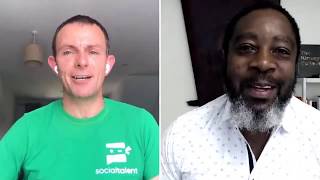
Torin Ellis, a diversity strategist, talks with Johnny Campbell about George Floyd's killing and what it means for workplaces. They cover why remote work exposes who people really are, how companies abandon DEI when money gets tight, and why diverse hiring slates and leadership accountability actually matter.
Chapters
Foreign. It's Wednesday, 27th of May. You're with me, Johnny Campbell from Social Talent. And this is this week's the Short list. So I'm excited this week to welcome a good friend of mine, somebody I first met back in Washington, D.C. many, many years ago. And we've become great friends, great partners. We've even done a TV show together in France. Right. He may have forgotten this, but this is an amazing person who's been a big inspiration in my life and really given me so much to think about and does every time I have a conversation with him, I'm excited about the next 45 minutes of our conversation. This man is not afraid to go deep. He's not afraid to get personal. He's not afraid to really tackle great issues. And we want to encourage you to all join in the conversation. We want to hear your questions, your thoughts, no matter how small or big they are, no matter how radical or conservative you think they are. We to want, we'd love to hear you jump into the chat if you're on LinkedIn or YouTube, wherever you are. We want to hear your thoughts, want to hear your questions for my guest today, Mr. Torin Ellis. Torin, I'm going to get you to introduce yourself, explain who you are, what you do, what you're passionate about, because I just want to hear your voice and not my voice.
Yeah, absolutely. And so you know, Johnny, we still have airlines losing millions of dollars a day. We know that Mike Tyson at 53 can still punch harder than most people in their 20s. I'm growing a little bit of hair. Most people know me for being bald headed. And unfortunately, it's still a challenge to be black here in America. We'll say the name of George Floyd. You know, and I don't know if you saw the incident in the video that happened, but I got to say his name because I know that this digital record will live on forever. And I want to make sure that he and his family know that we are absolutely supporting him. Over there in Minneapolis, Minnesota, who am I? Diversity strategist, risk mitigator, host of Career Mix on Sirius xm, host of Crazy and the King with my dear friend Julie so Wash, author of Rip the Resume and unapologetically focused on diversity, equity, inclusion and belonging. And I absolutely underscore bold and stress unapologetic. That's who I am.
Joan, that's a fantastic introduction. Thank you. I'm, I'm interested to hear more about this. Right. I don't know the story you just mentioned. I Was a gentleman. George. I didn't catch your surname.
Floyd.
Tell me about George Floyd.
Yeah, so George Floyd actually was an individual. I don't know the entire story, but he's someone who apparently was accosted by the police or let's say rolled up on by the police because apparently he had forged a check or had written some series of checks, if you will. And so I don't know how the incident happened, if it was in a store, ended up on the street. But what you will see, if you go out and Google George Floyd, you will see a video lasting somewhere between five and 10 minutes. And I say lasting, Johnny, because unfortunately, a couple of weeks ago I put up a video or saw a video of a young black man being murdered in the street. And I said, I'm not watching any more of what appears to be snuff films. I can't do it. I'm not doing that for my spirit, for my soul. I don't want to have that energy around me and, or in my house with my family. And so you'll see a video of somewhere between 5 and 10 minutes with a policeman. Literally, man is handcuffed behind his back, the policeman's knee is on the man's neck, and you can see him breaking and killing this man just right there in the street. Right there in the street. So, you know, for me, it's just a real frustrating experience, you know, when I have to sit here every single week and worry about whether or not the time that I get in my vehicle, the time that I walk out into a mall, the time that I'm in a park, the time that I'm just simply going into my office building, the time that doing whatever the it is that I'm doing whenever I got to deal with whether or not I'm going to make it home safe, not because I'm doing something that I'm not supposed to be doing, but merely because I'm black.
This is, this is, this is hard for someone like myself to, to get their heads around, right? And I've. I can read about it, I can talk to people about it, but I just don't think someone like me can ever understand this. And someone like me is someone who has. Has the privilege of not having to have that fear, right? The fortunate circumstance in this context of being born with a package that doesn't have to face that in the country I live in today, right? And it can be easy for people like me to just sit back and assume that what I experience is what the rest of the world experiences, and it's just all like it is for me, for everybody. I ain't the truth. And I've talked to you at length about some of these issues as they've come back. And we tend to talk about it in the workplace in a hiring and recruiting context. And that's what I want to talk about today. Right. I want to talk about how diversity, which is, you could argue, a nice name that's put around stopping racism, right. In terms of the hiring process and inclusion, which is people treating each other fairly in a workplace, how are these two themes likely to play out, particularly in light of what's happening in the last three months? Is it different? Do we see changes? Is what you're describing just unfortunately more of the same, or are there incidents that might give us cause to be fearful about, you know, what the outcome of this might be or cause for hope about what the outcomes could be? What are you seeing?
Yeah, so I think it's all of those things, Johnny. I think it really comes down to the individual when we say to ourselves, we want you to bring your whole self to work. That's a phrase you're familiar with. I'm here in Baltimore, you're in Dublin. But that's a phrase that you and almost every single person watching this broadcast now and in the future, they are familiar with. That phrase, bring your whole self to work. Cool. So then, if in fact, that's true, and we believe that it's not just something that's a slogan on our marquee, it's not just painted on the walls inside of the corporate quarters, but we absolutely believe that we live, that, we embody that, then if in fact that's the case, instances like a George Floyd or anything else related to diversity and inclusion will be important to you. It won't be watered down to a metric, although the metric is important. I get data. I understand that. But we won't be beholden to a metric. We will say to ourselves that this is important. We will say that on Today, we know that a lot of our black and brown employees may be a bit angry. They may be dealing with something that this. This could be a trigger for a past experience that they may have had that may have existed in their family, that may have existed in their church, their community. And so, as employers, we got to make sure that we are sensitive to as much of being that whole self as we possibly can. I know that on June 1st, we start LGBTQ Pride Month, and we're going to celebrate that in different ways all around the world and in any way that you celebrate that, I find that to be favorable and a step towards progress. I love that. But we got to understand that today, on May 28 or whatever it is, we got black employees that are experiencing something different than they experienced, let's say, last Friday. And we got to make space for that. And so when I think about, you know, how do we handle DNI both now as we are exiting out of this pandemic and then the months and years to come, it's just got to be something where we are looking endowed more into humanity.
I want to jump into the news, Torn. We've got some. We had lots to choose from. I want to take three articles. I'm going to ask Niall to bring in the news and bring up our first article to kind of get your thoughts on it. Niall, over to you. So first off, right, so this was an article in Fast Company in the last week or so, and this was a positive article, right? It talked about how the crisis, the pandemic we're in at the moment is a chance for diversity, inclusion, progress. And it talked about how you can keep your workplace moving forward. Maybe can you share with me your thoughts on this article Torrent, what you took from it, how much of it is reflective of reality and if you have other stories to share that relate to this, that you've seen or heard of out there.
Yeah, I mean, again, if I remember this article correctly, they talked a bit about how now we are looking at DNI inside of the context and the confines of people's environment. You know, for instance, if you look over my shoulder, you see a book around art and then you see a beautiful book that was done by an artist here in Baltimore City, which that actual cover became the Times Magazine cover, I believe, in April of 2016, when we had the uprising. And so when that article talks about in Fast Company, it talks about how now you get to peer into people's environment where before we were just simply coming to work, we would enter into our vehicle or mode of transportation. You never got a chance to see all of this right here. You never got a chance to see whether or not as a mother, I, I'm trying to juggle between handling a newborn or educating, self study a child who's elementary, maybe middle school. You may not have seen that individual who was dealing with an aging parent or a child who had a disability, if you will. So there's so much of what we did not get a chance to see in people's lives. And Quite frankly, what I will say is that I really encourage for people who are comfortable, even for those who are borderline uncomfortable, I really encourage them to open up their camera. Allow people to see who you are as an individual. DNI is not just a corporate responsibility, Johnny, it's an we responsibility. And so I have a responsibility as an individual to say, listen, if I want said company to embrace me and, and to support me and to provide me with the resources to include me, to make me feel like I belong, then I gotta be willing to do exactly the same thing. I may be a bit timid, I may be a bit of an introvert, I may be whatever, but I need to open up a tad bit. I need to give just to get a little bit as well. And I'm not saying that people need to just go overboard and become cheerleaders and pom poms and all of the other stuff, but I'm simply saying that I love the article because I think that it speaks to how do we recognize we are in a new operation, we are new in a mode of operation. I should say now work From Home has been here for 30, 40 years, but now more people are doing it and I think that we should embrace it because it absolutely is here to stay.
Yeah, I don't gloss over the negatives and we'll come to that in a second with one of our other articles. Right. But what struck me as just the symbolism of this really struck me at the start of this was having Zoom calls and actually particularly Zoom as a piece of software, because you could be on a call with two people or 20 people and we're all just equal size rectangles on a screen. And the symbolism of that really struck me as a real leveler, a real equalizer, just because it shows the equity of a large group and that everyone had a voice. And you know, early days when people even could control muting and all that kind of stuff, it just really was, this is just 20 people. It didn't have the kind of where the core leader or speaker and everyone else is a small box who has no control or is turned off, which some of the software has. I just really liked that. It just. You didn't know where anyone was, what their job title was. You were just you on a screen and you were the same as everybody else. And just that kind of dynamic I thought was interesting. And it was there before because you could have used Zoom before and done that. But the scale of it, where we aren't the job title or the flashy Car or the big office or the whatever. We're the same real estate space on the screen as everybody else on that call or that conference. I just thought there's something good about that.
That's an interesting observation. I had never taken it in that way. And actually I'm going to steal that and share it with some individuals that, that I'm talking to, especially those individuals, as I mentioned a moment ago, that are a bit of an introvert, that don't feel as if they. They want to jump into the fray of a conversation. They kind of feel like the flow is going. And so why should I try to jump in between Johnny and. And Torn right now? I want to encourage people that you really do have the same real estate. I love that observation. And it really is about, you know, leveling the playing field and making people feel like list. You know, you may not have spoken up in the office. You may not have been, you know, that major contributor in the office that. That extrovert was the loud one in the middle in the meeting. They took up all of the air and all of the space. And so now it's incumbent upon a person like a Johnny who's on this call to make sure that they usher in space for everyone to participate. Johnny's got to be paying attention. Yes, we recognize that the real estate is an equalizer, but. But Johnny's also got to be in tune with the fact that Torn is not really saying a lot. I need to prick Torn a little bit. I need to throw him a little lob, see if I can give him an alley. Oop, see if I can do something to get him to be included. But I love the equalizer analogy, love that.
And there's just something about the layout. I really hope some of the other providers can borrow from this. Right, because to your point, you still have to be active, right? You know, being inclusive. Being inclusive isn't something you just think about. You have to. You have to actively do stuff to be inclusive. You know, Joe Gersten, friend of ours, you know, it really hit me when I was watching one of his training videos one day and he talked about the analogy of inclusion and exercise. He says everyone in the world agrees exercise is good, exercise is the right thing to do. It makes us healthy. It's fantastic. Just like being inclusive is the right thing to do, it's fantastic. But you don't get fit by just agreeing with exercise. You have to get up over your fucking ass and do some work and actually go out there and do the hard things. The Things that, that feel like they're against what your body wants to do and your mind might want to do. You got to try harder and be active every day to get fit. And inclusion is the same thing. You have to actively seek out people, actively change the way you run a meeting, the way you drive a conversation. It isn't just okay to agree and to support that. That does, no offense, does nothing. People who think that that's enough, it's really not enough. It's an active process.
Yeah, well, you know, every year I always create a signature keynote. And so, you know, two years ago it was everybody wants ice cream. Last year it was dinosaurs, lions and diversity, my signature keynote. This year, unfortunately, we are not moving around the country in the world delivering it. But it's less allyship, more action. What you just said, it is exactly around our taking action. Listen, I love that you are an ally. You fly that flag of being a supportive individual. But I need you to take action. I need you when these instances of a George Floyd and other George Floyd and other things happen, I need you to be in a posture of William, willing to be inquisitive, be curious. How can I take action? What can I do? Torn? I don't know exactly what I should do, but I got to do something. Johnny. I don't know how to really contribute in this meeting, but I got to figure out how to get involved. I don't want people in my organization to feel like I'm being lazy at home. I'm not contributing to the team, that I don't care about roi, that I'm really sucking up this pandemic and enjoying it. No, this is not a vacation for me, but I don't know what to do. I got to be inquisitive, but I got to take action myself. So DNI EMB is really a two way conversation.
I'll go with, with our news item number two. Now bring up our second item, if you don't mind. So I thought this was interesting, right? This was a Business Insider and it talked about, here's exactly how to tell if a company actually cares about diversity without setting foot in the office. And I like this article because it exposes something that we should all be aware of, which is that, you know, saying we're, we're. We're cool and we're fantastic and we support diversity is one thing, but, you know, there are things you can do in terms of research you can quickly undertake to really get a sense of, does this company actually believe in this? Have they taken the actions to be diverse. What were your thoughts on this? And maybe have you done this with companies to try and use the same principles to dig inside? Are they actually diverse and inclusive? Hey, man.
So let me go back about 12 years. I remember sitting inside of a meeting with an individual and we were happened to. I was on an engagement and we were having a conversation and the guy said to me, he said, but Torn, I think you're only voting for Obama because he's black. So my immediate response to him was, well, tell me why you voted for all of the people that you voted for over the last 30 years. And he had to think about that for a moment. And I said, but did you ever vote for any of them because they were white? It was perplexing to him. He really didn't have anything to say to that. And so what I say to any individual who looks at a corporate board, when you look at their board of directors, the directorship, when you look at the highest level of the C suite, when you look at the level right below that, if you don't see representation. And Johnny, I gotta be honest with you, I'm not talking about white women. I understand when we say that we need white women in the DNI conversation. So I want people to don't at me, don't send me the negative firebomb emails and say that Torn doesn't want to hire white women. That's not what I'm saying. What I'm saying, when we think about representation, and if I don't see people that are black and brown, that are Afro Caribbean, that are Muslim, that are Eastern Asian, I mean, if I don't see true difference in that representation, then I'm automatically pushing the pause button. That doesn't suggest that they're not a great organization to be associated with. That doesn't suggest that someone needs to be that contribution to representation. And it possibly could be me or a person that I'm referring or whomever it is. But I am saying that I agree with Joe Gernstadt. When I look at that representation in that image and I don't see difference, I don't see color, then I do see pause.
Yeah, I think we've got some great comments. I'm going to come to them in a second in terms of how this works and some great opinions here from Dragomisco, our friend Joe Wechuk. Friend. But like I've always thought about this, I'm going to come at it from a different angle for a second. Torn, which is the companies that have tokenism in the representation. They might read that article and say, hey, people are going to look at our board. They're going to look at. Because the article suggests that you should look at the board. And if you don't see diversity in the board, then the company's basically full of shit. That they're pretending that they're diverse, but they don't actually act upon it. But I've seen another problem, which is that you have the token rainbow of colors and effects in your board, but everyone went to preppy schools with the same conservative approach. And you might technically have representation visually, but everybody here thinks the same. They grew up the same, they have the same privilege. They don't actually understand the differences. Like technically, when you look at that, like you look at diversity of thought, diversity of thought. And then the kind of, the more visual aspects of diversity, they tend to correlate, right? And the value is around the different voices and the representation of different voices. But if every voice is the same, except they come in a different, a different rapper, but they're essentially the same voices, that's not inclusive to me. That's not diverse. It may tick a box on the esthetics, but you aren't, you aren't achieving diversity by just, you know, having the right color tones in your corporate brochure. You actually have to have a diverse team, which is something a bit more than that. What do you think?
No, I absolutely agree. And when you use the word tokenism, I refer back to an article that Russell Reynolds delivered March of 2019. I can't remember the, the exact title of the paper, so please forgive me, Neil and team, but. But it was a report that talked about find and secure the next chief Diversity Officer. But inside of that report, Johnny, it talked about how so many of these chief diversity officers and organizations are under resourced. They don't have any power, they don't have any budget. They can't absolutely make decisions inside of the company. And so, yes, I agree with you. Tokenism is not what we're chasing here. And a number of organizations are guilty of doing that. They will place people in and absolutely give them no power, no support. They just simply give them a desk, an incredible computer, big salary, big bonus, but you can't make any decisions whatsoever. And that right there is frustrating. And I know a number of people who have sat in those positions across industry, I mean, industry agnostic, where they've been the token, They've been the example, they've been the only one. And those individuals that I know that are Strong that are courageous, that are willing to sacrifice. They've walked away from those opportunities. You still have people that. Look, Johnny, they want to check and listen. They may need to check for family. I'm not going to judge them. But bottom line is, most of the strong people that I know that have been that token, been that only one, they've walked away from the opportunity, said that they deserve more. They recognize their value. You and I, we recognize our value. So, no, I don't want tokenism. I want genius. Genuine efforts towards making representation a part of what we do.
Yeah. Cathy Iverson has commented here saying DNI needs leadership, support and a proactive plan to create that culture. Right. I totally agree with this. And Zachary has. Misko has spoken about similar comments here. He's talked about improving diversity at work is not just the right thing to do. It's business critical. It's not just something you give to a department. I think people forget that. Perhaps it's to your point, when you hire somebody who ticks a box. We appointed a senior head of diversity and inclusion. They've got a great, great salary. We gave them the great office. What more do you want? To me, I'd rather. I don't know about you. I'd rather they don't hire that person and instead the entire leadership team, the entire board, are just kind of given the knowledge and background and exposure to make them become more inclusive. I think there's a danger of it being that department's problem.
Yeah, well, the jury is out on that. And I know a lot of organizations are working towards that. And to your point of, I'd rather them not hire them. You know, I don't know. I mean, I. I'm not the person who likes to chase ambulances or cajole individuals to feeling as if DNI is important. That's not who I am. You got to know that it's important. And so to Zachary's point, he says it's that business imperative. What I want people on the call to understand, it's not just the business imperative. The business imperative has been stationed forever, but we've certainly had white papers and reports on it for the last 10, 15, maybe 20 years. The business imperative side is absolutely there. The challenge is that organizations haven't married the social methodology, the business methodology, with the social imperative. They haven't put the two of them together. They've always operated or chased one or the other. And I believe that stands right in that gap. That's the humanity piece that I'm trying to get us to focus on if in fact we can really operate, saying we know that it makes more sense to do it, it will impact our bottom line, but it will also impact our community and allowing them to be that whole individual that we talk about. I think that we can put the ribbon and wrap it around the humanity that I think is so incredibly important. So I love you, Zach. For the Business Imperative piece, keep it married to the social imperative.
I'm gonna bring up our third and final article to look at in this new segment. Niall, now is the time to integrate diversity inclusion initiatives into your people programs. Right. So this came from Entrepreneur. If you're not shopping your HR practice for the good of all, you're missing the opportunity of a lifetime. Right? So this is. So the one I want to focus on here is now is the time to integrate. Right. So I missed the kind of point here on. I don't know why now more than anything else, but I am concerned that some organizations, because I've heard it and we've talked about it, they are going for the obvious candidates in terms of their cutbacks. Right. So we're in a recession right now. That's tough. But you're getting people kind of saying, well, where can I cut budget? And some companies are looking at diversity inclusion initiatives and saying, we can cut it there. What's your take on that? You know, because this article saying, now is the time to do more. What's your take on organizations who maybe appear to be doing less?
Yeah. So I'm intimately familiar with this article because I'm quoted and such in Entrepreneur magazine. And So I appreciated Dr. Patty Fletcher for putting it together, including my voice and the voice of the CEO from. And why do we say that now more than ever? Because historically, Johnny, when things get rough, we start to look for ways that we can lighten the load. We can make the run a little bit easier up the hill. We can get the boat to get to shore a little bit faster. So we start throwing stuff overboard. And so what I don't want to see organizations do is to begin throwing stuff overboard. That includes dni. Last week there was an article about Google retrenching, pulling back on their DNI efforts. The CEO and the Chief Diversity Officer said that article is not true. But you have eight, nine, ten employees that are on the record saying, yes, it absolutely is true. These folks have more money than you can shake a stick at. So if anything, why in the world would Google be pulling back on DNI efforts? And correction, Johnny, you and I didn't Originally meet in dc, which we did do, but we originally met in Dallas, Texas. And it was me sitting on stage and using an example of Google that caught your attention. And that is what got this relationship started in September of 2015. And so what I want people to understand is that the reason why that article is so incredibly important is because you can go out to McKinsey right now, you can go to Catalyst Research Group, you can go to Boston Consulting Group. There are any number of organizations that are management consulting firms that are putting out reports simply saying that DNI right now is probably going to suffer. We don't want that. And so what I want to is to encourage, as I was doing in that article on Entrepreneur magazine, encouraging leaders to simply say, we know that we got to hit the ROI on the bottom line. The bottom line is everyone's sales goals and objectives and mission for 2020 has taken a very, very deep shot. Like almost all of us right now are off track. No one is headed towards where they expected to be at the end of December 2020. Can we get there? Sure, some people are going to get there. But for the people who are afraid, I don't want you throwing DNI away because if you got to restart that engine in 2021 because you haven't done anything in terms of your employer brand, you've done nothing in terms of investing in technology, you've done nothing in terms of event curation, you haven't addressed the bias inside of your hiring process. If you allow another 10 months of that, 12 months of that, 18 months of that to happen, then you put yourself looking at 2025 in terms of being able to make a difference. And that's unacceptable.
Yeah, I think it's a really valid point that I think people will go backwards if they take that approach. You know, when the times were good. Right. And it grows economy, the right thing to do is focus on dni because all of the signs pointed towards it's not just better for business outcomes, it's better for society, it's better for just everyone in the organization is going to be happier, work together better, you'll get better outcomes, you're more in touch with your customer. All these things. When you have an opportunity to cut back, why would you cut back on those things? Because they are still the right things for business. And maybe to your point, I think you are, you are in this unique moment where hopefully we're coming together more in our communities to help each other, in our workplaces to help each other. We are, you know, the Leveler is you see people being laid off or colleagues. You have to help out and take the work of somebody else and help them out. Going to change the work you do because all of a sudden, you know, the world of work arrived, the future of work arrived and, and we weren't expecting it to happen so fast. And we have to like I was giving examples of massive big box retailer was telling me that they have had to move people around in their stores. People who were in very set roles in their stores. They've had to say you've got to do this other role that was never your job. Because we just didn't expect people to shop differently. We got to change the balance of where our people are. So you're getting people who have to work side by side with colleagues they never had to work beside before. All of that points towards us to need to up the levels of work around being inclusive because those teams have to work together in different ways. You might have 20% of your workforce gone. So you're gonna have to take on someone else's role, work with new people. It's a time to double down, I think on, on your inclusion efforts.
Oh come on man. Think about it. If I could get on a plane right now and I could hit the social talent office, if I could hit the office of any person watching this right now, you'd have to say that after 20 or 30 minutes of watching just this exchange between you and I that bring in torrent into the organization would automatically change the dynamic on the team. You know that the, the thoughts and the innovation is going to be different. You know, the energy is going to be different. You hear a person who's infectious about people, he loves to get together to collaborate. So I absolutely agree with you. Now is not the time for us to retreat on inclusion and representation and creating that sense of belonging. Even if we have to do it in a remote capacity. You said it. Future work landed on us like a thud. Like literally in 60 days we have done what we've been talking about over the last five years and probably projected three years out. We did all of that in a, you know, 60 day period and even less in many instances. So what that tells me I have all the optimism in the world, Johnny. We can be superheroes and superheroines around diversity, equity, inclusion and belonging to what it comes down to is will versus skill. If it matters enough to you, you're going to find a way to make it happen. Organizations shifted on a dime and they found a way to make it happen. We don't need to throw DNI out of the boat. We need to just roll a little bit harder to get to shore.
Yeah, I got a good question here from Noel Brown. So Noel is with Thermo Fisher, and. Hey, no. Good to have you on the call. He wants to know, Tor, in your opinion, and what do you think about mandating diverse candidate slates for hiring, and can it work if the culture has not caught up yet?
Yeah. No. So I'm going to give you two responses. It's really the same. I believe in it. I just don't necessarily like it. I'd rather that an individual didn't have to be mandated. But I understand the value and the power of holding people accountable. If you want a great example. No. Go out and read Larry Fink's letter to shareholders in December of 2018. And when he wrote that letter, he simply told his leadership that our organization is going to, in five years, look entirely different than it does today. I am now going to hold you accountable for how you pursue representation in this organization. And there were a lot of people who said that he was using his posture as the leader of the largest investment firm in the world. He was abusing his power. He was abusing his capacity and his position. But there were a number of individuals that supported him and simply said, he's right. We have geographic shifts that are happening. We have workplace shifts that are happening. We have that transfer of knowledge and networks that needs to take place. We cannot do that in the same way that we have always hired and built teams. We got to be willing to build teams differently. And if that means that I got to hold you accountable, then I'm gonna hold your ass accountable.
Yeah, I. I've seen this very, very, very, very small scale in my business, Torren, where we had a situation where about a year or two ago, our sales organization, our sales team, small team, were just becoming predominantly male. It was like, Jesus Christ, everyone here is a guy. And that isn't, you know, on one, you know, take any sliver of. Of diversity that wasn't diverse. And so I said to our. We were hiring at the time quite a. Quite a bit. And I said to our head of sales at the time, I need to see more representation here. And he's saying, do you want me to hire more women? I said, no, no. I want you to hire the best salespeople you can find. I just don't believe you're trying hard enough to get candidates in who are diverse. I said, so that's all I care about. Is that you. You tell me that you are bringing more, at least equal the amount of women to the first level of interview after that, I, of course I care, but it's up to you how you hire. Genuinely hire the best people. And I forced it with every week that we chatted, I said, how are we getting on? That's not good enough. And we worked with our recruiter to go out and find more people. So it was about the slate. And we saw over three to six months, we saw the gender profile of the team change. It worked because.
More from Johnny


Where Does Your Hiring Stand? Diagnose It with the Maturity Model | SocialTalent

Where Does Your Hiring Stand? Diagnose It with the Maturity Model | SocialTalent






NEW CONTENT - How to use Generative AI for Recruitment Marketing with Glen Cathey | SocialTalent

NEW CONTENT - How to Use Generative AI for Sourcing & Recruiting with Glen Cathey | SocialTalent

NEW CONTENT - How to Unlock the Power of Generative AI with Glen Cathey | SocialTalent