AI, Security and the New World Order ft. Palo Alto Networks’s Nikesh Arora
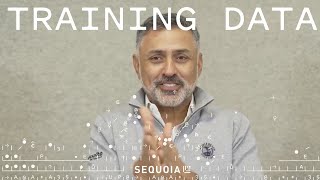
Palo Alto Networks CEO Nikesh Arora explains how AI hallucinations and prompt-injection attacks threaten enterprises, and why his company built an AI Firewall that inspects model inputs and outputs. He argues AI is a platform shift for security that demands both technical controls and organizational readiness.
Chapters
Like I have a principle that I always joke, even on all hands and say, I've never met a person who comes to work to screw up. I wake up in the morning, let's go sunshine, it's time to go to work. Let me see how badly I can do today. Everybody walks in with the right attitude. It's something that happens at work that we create, that causes the unintended outcomes. It's not the person who walks in. If you found the right person with the right domain knowledge, right intelligence, the right attitude, then the rest is upon us.
Today on Training Data, we have a very special episode with Nikesh Arora, the CEO of Palo Alto Networks. Since joining Palo Alto in 2018, Nikesh has built it into the largest and most valuable cybersecurity company in the world, with 70,000 customers and more than $120 billion of market value. Prior to Palo Alto, Nikesh spent a decade at Google as the Chief Business Officer as the company grew from 3 billion to about $65 billion in revenue. Nikesh is an extraordinary CEO with a inquisitive mind and a wonderful sense of what is happening in the world of AI, thanks to being in the center of it with Palo Alto and all of their customers. Please join us for a wide ranging conversation about AI, its impact on security and what excellent leadership looks like. We hope you enjoy Nikesh. Thank you for joining us on Training Data. So we emailed you and asked you if you'd join us on the show and your response was, and I quote, as long as we can talk about Deep Seek and the New World Order, let's start there.
Tell us more, Pat. We all have our interpretation of AI and there's a bunch of us trying to figure out and rationalize this in some sort of mental framework. So like everybody else, I've had my own and I think from my perspective, what we've seen in the last 12 months has been phenomenal. We have people trying to build effectively a brain, right, of some sort. A brain with immense capacity to remember everything, to process everything, and do pattern recognition, which is kind of like my interpretation of an nlm. Now, that brain, because being trained on data that's out there, is susceptible to reaching the wrong conclusions depending on data it's using to train itself. So this is not a secret. And we hear of that in various contexts of hallucination or not having the right answer because I've never seen it before. And that's fine. You can call it the early brain, but at some point in time these things are Going to become very smart, possibly as smart as you pad.
Then it would take several more years to hit sonia stage.
Exactly right. So at that point in time, I think we all have to start getting a little worried. So the question is, how much money does it take to build this brain? One and two, how can all of us use it effectively? I think we can all use it effectively today in certain use cases as we've seen out there. Whether it's creative use cases or search use cases or data aggregation use cases or data regurgitation use cases. At some point in time you're gonna take this brain and give your arms and legs and let it do stuff. That's where things start getting dangerous. And we've seen examples where people gave these brains the right to do stuff too soon, too early, where they started giving you free cars or refunding airline tickets, which is not a good idea because that was their version of hallucinating and giving stuff away. But on the other hand, people are sitting in cars where these brains have arms and legs and are driving us around without a driver. So there are examples where there are precision use cases which are narrow and task specific, where we are letting these things get access to it. So I'm sorry for the long preamble, but the whole notion of the new world order was, and I don't have an opinion on whether it cost $6 million or more. My opinion is that if somebody built a brain cheaply and made it available cheaply, it just expands the opportunity for a lot of these startups. A lot of people try and deploy that brain to do various tasks. And that to me is a major shift in what has been sort of the mainstay of this industry where we all thought you spent a lot of money to build amazing models. And it looks like there could be task specific models which could be built a lot cheaper.
And you mentioned some of the hallucinations and the attempts to jailbreak these models or prompt inject these models. There's a report that came out a few days ago about deep seq R1 that said 50 out of 50 prompt injections worked. So basically a hundred percent success rate on attacking the model. Is that a deep SEQ thing? Is that an open source thing? Do you have a perspective on what the implications of that might be? Maybe it's not as simple as 6 million bucks gets you the same thing you get out of OpenAI.
Well, the question is, which one do you want? Right? And at the end of the day, every model is putting a bunch of guardrails around it. These models, all raw. If they're in the raw, they have. They're in the raw. If you remember the early versions of ChatGPT and Gemini, I think it was even called Vertex. Was it called that? It was called something else before Gemini. And those things had the opportunity for us to prompt inject as well. So there were versions of these models which had to have guardrails built around them. And those things, that's what it costs money to do, is build guardrails. And the guardrails initially were skin deep. As you know, we've heard of these phenomenal stories in the early days where people were able to jailbreak them and get around them and get models to start doing crazy stuff. So I think we will see more and more guardrails, more and more simpler attempts being blocked. I think there are still sophisticated things that can be done to these models. Even the more in your mind, more expensive models have loopholes or have side doors which can be used to attack them to some degree. And we've seen that happen in the past. So yes, perhaps Deepseek is not as guardrailed as it is, and perhaps it was built cheaply. But in the end of the day, whichever model it is, when you deploy it for a precision use case and give it arms and legs, it doesn't matter what guardrails the model comes with, you will have to superimpose better guardrails and controls around it. This is where people like us come in, where we say it doesn't matter what you got. I'm still going to put upon Alto firewall and put a straight jack around this and make it only respond to task specific stuff, I. E. If the model is designed to improve your manufacturing process, you can talk to it about, you know, rewriting Shakespeare.
Let's talk about that for a minute. What's in scope and what's out of scope for Palo Alto Networks as it relates to securing AI?
Well, from our perspective, look, we're seeing two interesting use cases. One, we're seeing a lot of people who are employees, who are kids, who are users using AI in some way, shape or form to augment their day job. And you can call it augment for now and maybe it'll creep up and do more and more of your day job. But it's being used as human augmentation for now, right? Because we're not giving you control. I'm not telling any agent, go write me a paper for my class or I'm not telling any agent to write me a Blog and possibly one of these days they won't. But for now it's being used for human augmentation. And the general fear in the enterprise is my employees are taking proprietary data and putting it in some model and it'll be used for training and over time, you know, it'll get either out of copyright or get stolen or it'll be become part of general knowledge basics network criteria. So we have a use case where we can intercept data which is being used by employees or models or AI that's being used by employees and provide visibility to enterprises and require controls so they can stop employees from going and using AI models or AI apps without any control. So it's kind of one use case which is kind of interesting. You see a lot of companies who want their employees to use AI, but they want them to be able to in a controlled fashion.
Other more interesting use cases I haven't.
Found a company which is not experimenting with some sort of AI project, whether.
It'S as simple as a customer service chatbot, which seems to be the most popular example, or some sort of workflow automation capability, which is another example to the extreme where people are using it to perhaps slowly edge, giving it control over certain control systems, which may not be mission critical, but they're experimenting there. In all these scenarios the biggest fear is the model runs amok. The model gives the wrong answer or the model takes control or somebody hijacks the model. All those are scenarios which customers are wary about, which is kind of like understandable. In that scenario we have a product which is effectively, we formally call it the AI firewall. The AI firewall which inspects anything going.
In, anything going out of the model.
It'll make sure the model doesn't have back doors, nobody can access it. The data is not being sent out of the model somewhere else. You can run it on prem, you can run it in your protected cloud instance. So those are kind of the two use cases we're seeing. The behavior of the model is the responsibility of the people generating the model. Our job is to make sure the model doesn't get hijacked, doesn't get intercepted, doesn't get taken over or manipulated so that people lose control of their AI brain.
Can you say a little bit more about what are the real threats from AI versus the perceived or the hypothetical risks? I remember back when self driving cars were still a little bit of a pipe dream and everyone was saying we're going to have these adversarial images, QR codes in the roads that are going to make the cars, you know, become weapons and you know, things are going to go crazy. And that ended up being like very academic, theoretical risk. It feels like there's some of that happening in LLM lands. Like what are, what do you think are the made up academic risks and what are the very real risks you think are going to, you know, where AI is actually going to really help the bad guys and we have to protect ourselves.
Well look, there is two scenarios, right? The scenario where the bad guys is going to use the LLM, so attack is faster, right?
Because are you seeing that happen already?
It is already happening. If there's a critical security incident or vulnerability in a product, you can go to certain jailbreak models or open source models out there which will give you a recommendation on how to exploit the CV. Because 3,000 models of hugging face, you can pick a model which hasn't been given guardrails or given any morals effectively in the context of a brain and saying, hey, here's a cve. What are the five steps you take to protect it? And what are the five steps that bad guys could use to attack it? So he says, oh by the way, watch out for these five things bad guys could do. So there are models out there that can actually give you a recipe to figure out how to exploit a cv or you can actually tell it, I tried to attack a customer with option A, I tried option B, none of them work because it give this return response and it says, hey, how about you try option C? So there's a whole bunch of ways that these models can be used because they're very helpful right now, right? So they'll try and solve your problem. And there's a risk that actually not just risk, it's actually true right now. And what that does is it reduces your, your meantime to attack and exfiltrate data or meantime to breach. Which means the only way to solve that problem is to be as nimble, as effective and as quick as the bad guys are. Which sort of like, you know, it's a, it's a, as I always say, it's kind of a disbalanced problem. They have to be right once. We have to be right 100% of the time. Which means they might need this sliver of data to attack you. We need the entire corpus of enterprise logs, enterprise data from every IT system to be able to understand where there be there may be anomalous activity which is being driven by AI.
So does that mean right now AI is at the margin more helpful for the bad guys than it is for the good guys?
Well, it depends. We can always sell our book and tell you if you're deployed or XI product, we can be as equally effective and equally helpful and tort the bad guys. But yes, you know, they're not fully deployed. Not everybody has it. So yes, there is a possibility that it just has made the ability to attack much faster for the bad guys. Right. And that's kind of a real threat, it's not a perceived threat. And I think if you, if you play the movie forward and say let's abstract ourselves from this today, and this is version one or version two of AI, you know, in five years from now, everything will be happening in real time basis. Everything. Every bad actor or bad LLM agent would be able to attack an enterprise infrastructure which is not fully secured. And there'll be agents running around your infrastructure trying to make sure that every loophole, every door, every window is locked and constantly monitored. So you can imagine the battle of the agents on either side. I don't think it's infeasible. It's possible. But to get there, there's going to be serious upheaval required of the enterprise data that exists in the company. Which by the way is not unlike the fact that to get effective AI for organizations, we're going to have to have a lot of good data to automate or manage or you know, run businesses. So I think that's kind of where we're going to end up in terms of the other part, Sonia, you asked about the perceived versus real threat. Look, think about it this way, you know, let's assume and we all, I think, I don't know, I haven't heard you guys talk about this, but I'm guessing you agree that at some point in time these models get smarter and smarter and they'll be more and more capable. So, well, let's assume that's going to happen. They get very capable. This person is the equivalent of a PhD researcher from Pick your favorite university and can do drug discovery. Now you've trained it, you're given all the data that exists in enterprise. It's all proprietary. It's all the drug data for Alzheimer's, Parkinson's. You pick your favorite research project that you want to do and you ask the model or this brain to give you an antidote to various medications. Could be amazing for society. And the question is, in the wrong hands, this trained brain could also be asked to make a virus to create that situation, right? Create a bioweapon. It's Possible this brain has no guardrails. You've trained all the data, it has, all the knowledge that you need to have. Then the question is, can I make sure that this brain cannot be taken over by the wrong people, that it falls in bad hands?
So just for fun, if you were supreme ruler of the universe and you had a magic wand.
Yes.
And you could determine exactly what regulation was going to apply to this hypothetical, what sort of regulation would you craft?
You know, Pat, this is an interesting debate. And you know, I had a debate about this with a very, very smart person who's involved in some of the regulatory aspects of this. Look, at the end of this, there will be two versions. I think one version is critical systems, where before giving AI control of critical systems, you'd have to go through a serious certification discovery process with some part of the US Government. Right. You cannot give the control systems to AI for shipping routes and running cargo containers which can crack and burn or control the entire electrical grid of the United States. You can't give it to an AI model because you need to have controls in place and need to be able to have a conversation around what the fallbacks are and all the controls. So I think there'll be a set of classified activities which will need some degree of consultation, some degree of certification validation. It's kind of like, you know, FDA does drug approval. So there'll be some version of, you know, AI approval which can have critical, irreversible impact if you give control to AI. And that'll have to be some sort of certification mechanism. And I think where it is not as fatal, where it's not as critical, perhaps you'll have some degree of self responsibility. You know, you make a bad car, people have a problem with it, you're responsible. Not every car goes through inspection process, but there is a tremendous amount of accountability to the car companies that don't.
Have seatbelts, they don't comply with regulations, that they're responsible for the bad outcomes. Which is why if you deploy AI in a bad way in your company and give it arm to the legs and control and you're responsible, there'll be some degree of, I guess it is.
Impossible for any regulatory authority to create.
An inspection system of this amount of computer data which can get it right every time. So there will have to be self policing and self accountability in there, just the way it exists in today in many industries.
Nikesh, do you think AI labs get nationalized in this? You know, your version of supreme ruler of the universe?
AI labs get nationalized I don't think so. I think the problem is if, given that we're living hypothetical, if it is true that a new model can be produced at a lot lower cost, which is in the single digit, millions or tens of millions, then the AI lab could be anywhere. It'd be impossible to find, discover and control. So what, what's stopping somebody from. And part of like these challenges, these regulatory concepts are very dangerous on a global basis today, which we live in effectively a world with no borders, even though I know that we have a whole different conversation on borders. But conceptually, what's stopping somebody from deploying $50 million in a server cluster in a country which has lax regulation vis a vis this stuff and me building it there or somebody building it there. So I don't think that the idea that it. Yes, of course, if it's a $500 billion AI cluster that is needed to build the world's super brain and AGI, yeah, you can find a way of, you know, maintaining some degree of oversight perhaps on it. But if the answer is this 20 million bucks and I can build a world class model which is really smart, then I think all bets are off.
Let's say I am not necessarily a ciso, maybe a CEO. Let's say I'm a corporate executive of some sort of. And I see the potential for AI, so I'm excited about trying to use AI, but I'm very scared. I'm very scared because I think that when my people use AI they're just increasing the attack surface and making us more vulnerable. And I'm also scared because I think there are bad guys out there who are going to weaponize AI against us and sneak in in ways that they might not have been able to sneak in before. What would your advice be? You know, top three things that you advise this person to do. What can people do to get the benefits of AI without exposing themselves to unnecessary risk?
I think that would be ill informed fear in my mind. Okay, I think there are perfectly fine use cases which I'm sure you can enumerate and Sonia can, and a lot of people can, where you can run a model in a constrained on prem or dedicated cloud cluster which cannot be intercepted or cannot be manipulated. In the end, that model is only useful if you put your own data into it. And if all you do is have the model generate responses but you're not letting it give it any control. You can run experiments, you can look at what the model produces and compare that to other things. You can do a B Testing and say, wow, the model says this, and my best researcher says this. And you can run experiments, understand the power of AI without giving any control. So I think that's why the fear is a bit mislaid, because it's not doing anything. It's just trying to give you the outcome and you can see if it's faster, better, and both are possible or one is possible. Right. Some things happen faster, some things happen even better. So I think running AB testing, being able to test it, is easily possible in today's world without having any fear. I think it's even possible for letting employees experiment with it in a way that it is not manageable. I think where it starts to get more interesting, not dangerous, perhaps, is when you start letting AI act on your behalf. Right. In whichever capacity. And that's where I think any person, not just CEOs, anybody, would have to go through a rigorous amount of testing to see how it reacts in various circumstances. Because depending on what you're giving control to, it could have a significant impact to whatever product, service business that you're running. That's where I think it becomes more interesting. But I think for now, running experiments, running models which cannot be hijacked or manipulated, models that won't run amok, it's all possible today, I think, you know, it would be irresponsible for companies to not experiment.
Well put.
Because I don't think that this thing's going away.
Yeah. You may not know exactly how to get to the future, but, you know, if you do nothing, you're going to get left behind.
Pat, I learned about ChatGPT on a flight to India. I was going there to go speak at my alma mater, and I read about this thing. I was sitting at Dubai airport, not doing anything for two hours. I kept playing with it. And I rewrote my entire speech. I went and said, you're about to witness the biggest technological revolution. Now, I just say it before. Jensen said, this is the iPhone moment. But more important, he's got a bigger mouth and he's a supreme commander of AI, so we'll let him. We'll attribute that quote to him, but that's okay. And I felt it was a seminal moment. And I came back and I said, you know what? First things first. I have no idea about this thing. So I call a bunch of my teams. Like, what do you guys know? What do you mean? Nothing, you know, like, you know, bunch of the important, uninformed. But we were important, so we were. But we had an opinion. So the first thing I did is I put them all into a, like a training room. I invited everyone from Thomas Kurian's team to, you know, Nat Garman, now his team, or a bunch of startups like just brain dump on us. And we did that for two days a month. We get people to brain dump. We had a bunch of our people go, come with ideas. We had 70 ideas, people want to execute them down to seven. And we started playing with it. We ran to everything, every possible problem that you could run with Vertex AI or with the first model of ChatGPT or the first model of Claude. We tried everything, we ran everything through. We had models running with AI, we had models running with semantic search. We were training with all kinds of data and we learned, we learned what is useful, we learned what is not useful. Now it's doing some things by itself which we had to go Jerry rig, but we are partially informed. It's better than being totally ignorant.
What was the biggest surprise from those learnings?
The biggest surprise? Well, the early version of this thing was pattern recognition, was data summarization, was, I'll call it infinite memory. Once you train it with some data, it's never going to forget it. Now there are use cases where I have 50 people solving the same problem and depending on who answers your phone, they're going to solve it differently. In this case, I improved the general level of awareness and knowledge for my entire team saying get it to tell you the answer and then work from there. So it did sort of lift the average intelligence or the average capability of the teams. And I think as it gets better and better, it's going to shorten the time to answers. And I mean, at the end I want to expose a lot of this stuff to our customers, right, so they can go solve this problem themselves. So my problem is if you don't start learning when every startup is learning, eventually the startups do your business, right? You've seen that nary technological revolution that we've run into, whether it's a cloud, mobility, the Internet, we saw it every time. And every time there was these large, now we can call them legacy, but large businesses with dominant market share with every asset at their behest, which they could have deployed and nobody should have seen the light of day who's competing with them, with the new technology. But for some bizarre reason, every time he turned around, there was a Travis, there was a Chad Hurley at YouTube and there was a Larry Page and there wasn't Mark Zuckerberg and there wasn't Elon Musk. So the challenge is that if we don't go embrace this as early as we can and learn while everybody else is learning, we run the risk that we're late and then we go in law of unintended consequences maybe.
On that note, one thing I'd love to understand is it seems like the biggest platform companies in security are kind of formed around these platform shifts. Like you know, the firewall identity as a perimeter, maybe the cloud and cspm. Do you think AI is a new platform shift opportunity from a security point of view? And do you think a new security platform company, which could be you guys emerges or is this very much similar kind of set of tools is going to serve the AI first world?
I think AI has the opportunity to turn security on its head. And the reason I say that is that the security is a needle in the haystack problem, right? Because you don't worry about it until you have to worry about it. So to suddenly wake up and get really really smart very very quickly because something's happened in your infrastructure and it's just impossible to go from 000 like overnight because somebody calls, say holy shit, there's somebody in our infrastructure, they've exfiltrated some amount data or they are in the midst of exfiltrating data. And traditional security has been I'd say 95% at the border around prevention and 5% on detection and remediation. Right. You buy a firewall, it inspects everything that's coming in. You block a bunch of stuff, you buy some sort of remote access endpoint agent, you buy an endpoint XDR capability and that all works because there's a lot of prevention that happens in that process. But the problem in breaches is it's not what you prevent, it's what you let in. And there's things like zero day attacks which have never been seen before. So you haven't seen it very often. You can't prevent it. And the only way you figure out all that stuff is you ingest a lot of data, you look at it and look for anomalous behavior, right? You can't rely on security signatures. So if you're going to look at anomalous behavior, you need to be able to ingest all data. You got to look at pattern recognition, you got to say does this happen like this every time? And say well I don't know, but looks like something's different is happening. So I think this whole notion of doing pattern recognition, ingesting a lot of data, analyzing it on the fly and looking for things is easily possible with, call it machine learning, call it AI, call it whatever you want to call it. But I think that's the only way we can do this at real time speed.
What about what it means to be a security team, a ciso, a security practitioner in this new world. And you know, we get 20 pitches a week right now for like the AI powered SoC analyst or the AI SoC. What is your vision for, you know.
You already have one, so you send them our way. So, you know, try.
Let's review on how that evolves and what the end state is for kind of humans and security.
Like in security, at a very first principle level, we sell two things. We sell a sensor with sensors at the edge of your perimeter. Whatever the perimeter is, whether it's your laptop, whether it's your application, is it your customer accessing your bank account, that's the perimeter, right? The perimeter is the edge of your technological footprint. That's the perimeter. So we all sell sensors that sit at the perimeter inspect. It's like having like a digital security card at the parameter. We all sell parameters and we protect the parameters. We inspect the parameters, we block at parameters, right? And then we, and then what happens is that somebody's written a bad app, somebody's written in the back door, somebody's in the side door by mistake, then people enter through there. So that's. We sell sensors, we protect parameters, and then we analyze data in the back end to look for any vulnerabilities that you might have been created by the infrastructure that you have. That vulnerability could be exploitable in the future. So we look for potential exploits and that's kind of what we do. Which means, and the reason I tell you the story is that. Which means if I want to sell and AI powered anything, I need to be at points of data collection in your enterprise because AI requires data. So again, this is the old adage, right? I am in the best place to collect all this data and analyze it. And of course that doesn't mean anything because in history, people who are in the best place got knocked off their knees and somebody else came and built something better because they were lazy, sitting on their haunches. Now, the only thing is we don't want to be lazy, we don't want to sit on our haunches. We're out there hustling as fast as we can. Not as nimble as possibly in, you know, a startup, but we're nimble enough as a company. We've done 27 products which are in the magic Cord into the right. So we're not shy, but I think every security company, every security startup is going to walk to every customer saying, I can build this for you. The customer is great. How do we start? Says, well, let me go deploy a bunch of sensors around your perimeter so I can collect the data. Holy shit. I already got a bunch of you guys in the industry, you've got sensors out there. Then what do you want to do? Then give me all your data. I'm like, wait a minute, you want all my data? Who are you again? So I think that's kind of the risk you run into is this is a large data problem and large data problems are harder to solve as a startup. Not to say it's not being done. There are people out there raising $500 billion, but not everybody can do that in security.
Fair enough. Do you think security teams are comfortable giving arms and legs? I think so to speak, like agentics?
Oh no, I think they're petrified.
Do you think that flips at some point and when?
Well, I think most top security terms aren't asked, right. I mean Waymo wouldn't exist if they are talked to a security guy or Tesla FSD possibly would not exist. Some security guys. Aren't you crazy? You're giving the car control to your car. All kinds of bad things could happen, right? So from a security perspective, these all bad things happen. Look, I mean, security leaders are for the most part risk managers, right? They're, they're risk managers, they're trying to understand what the business need is and how do I deliver the business need with the least amount of risk possible. Like the safest room in the world is one with no windows and no doors. But it's not very useful. So you got to let doors and windows be created, which means you're managing risk. So security people are risk managers. They sit down with the business, understand what potential risk does it cause they'll give you some ideas as to how to make sure that you protect against that risk. Then they'll set up a whole bunch of safeguards that say, you know, gate one, gate two, gate three, if it doesn't stop, gets stopped here, get stopped here, get stopped here, and then off to the races. So I think security people will allow the arms and legs have to because that's kind of the crying need of the hour. I think the question will be what kind of security tools do we have in place to create those protections that customers can comfortably go ahead and use these capabilities. But that's been true with Every technology.
Our partner, Jim Goetz. And for any listener who's not familiar, Jim has been involved with Palo Alto since formation. And Jim has a creative mind. One of the things that Jim mentioned was after you came in about seven years ago as CEO, the innovation engine at Palo Alto really started to pick up. And I think we see that today also with how quickly you guys have pounced on AI, I guess the question maybe two questions. Question one. If you had to rate yourself, if you had to rate Palo Alto on agility, nimbleness, ability to respond to market conditions, I know you're a tough grader, so you can't give yourself an A plus. How would you grade yourself? And then question number two. You do have all the advantages of scale and data and distribution and being at those points where you need to collect the information to do whatever detection, remediation you need to do. But it's hard to get a big organization and move fast enough to respond to the market. So question one, how would you grade yourself? Question two, how do you drive agility at this scale? Like just practically speaking, what do you do to make that happen?
You know, let's go. First step first, I'd give us a seven or seven and a half on a scale of 10 in terms of agility because we have about 15,000 people, Solibili is five, 6,000 people on our product side. So there's a lot of stuff, a lot of complexity, a lot of legacy stuff that has to be brought along. A lot of stuff has to be ticked and died to make sure that these things work. And you know, I think part of the challenge, you know, is that you have a solid base of 70,000 customers, right? Any tweak you make which impacts 70,000 customers brings their infrastructure down, you lose your license to operate. So it's not like we can innovate, throw shit at the wall and see what sticks and go with that and ignore the other stuff. So we have a serious responsibility in making sure stuff that we build, that we put in line has to keep performing and not bring down anyone's infrastructure because they're the best securities. Inline, we have to be able to watch what's going on inline. Security has the property that if it doesn't behave, it can impact your infrastructure. So we have very high responsibility from an availability perspective and not disrupting our customers, that we have to apply a higher precision standard as it relates to inline securities. From that perspective, I think seven and a half is not a bad place to be. So you probably were at three or Four, seven years ago. As an industry, I don't even say Apollo Alto. I think as an industry with three or four, and I see the industry's moved its agility. If I look at some of the newer players, they're moving faster, they're not sitting back anymore because they see the playbook for the future is not where you let other people sort of come by in the new swim lane and say, oh, nice to see you, you know, congratulations, great job. Now it's like, holy shit, how do they get there? We're going to go chase them down. So I think the industry dynamics have changed in terms of how do you drive agility? You as you know, possibly, you know from talking to Jim and from talking to us, that we have no sort of qualms about going and finding people who are doing it amazingly well and embracing them and saying, you got this figured out, let's go do it together. We'll run fast, right? Sometimes companies get trapped in this idea that I have so many resources I can take them down. They don't understand there's a team of 50, 100 motivated people funded by people like you, who are out there running at sort of light speed, who build an amazing program product which are going to, then if they get traction, then they're your competition on every day in the market and they get better and better and stronger. So the question is, when's the right time to say, oh shit, let's embrace them. They've got less resources but still manage to kick our ass. Let's go make them part of our team. We've done that 19 times, as you've seen. So we're not, we're not shy about embracing innovation if it doesn't come forth. And having said that, and I was looking at it the other day, I think more than half of our products are made in Palo Alto, right? Not acquired. So it's not like, you know, we only have one strategy. We do both because in some cases building on our platform is a lot easier from a go to market and deployment perspective than buying something and spending time integrating it. So we've gone to the point of scale that it's more important for us to innovate on our platform than just go out there and willy nilly, try and look at the fastest innovator and try and stick them onto our tech platform. So I think from that perspective, it's that constant balance. What do you buy, what do you build? How do you embrace somebody else doing it better? And then you got to be nimble and say, you know what mean? I, I am going to get some stuff wrong. The question is, when you get punched in the face, how quickly you recover, right? Don't let them count to 10. So that's kind of like how you maintain agility. And then, I mean, the only other thing is I call it relentless inspection. Relentless inspection of your go to market capabilities, of your deal. Relentless inspection.
What form does that take? Like, what's the sort of thing you might do in one of those relentless inspection conversations that somebody else might not do?
Well, I'll give you an example. For the longest times, I kept seeing us doing really well in certain things. And our teams would create all these incentive programs to drive more behavior to get people to sell. And I have my sales leaders tell me that everybody has an account plan. I said, these things look like very interesting things. I should take a look at one. So one fine day, this is possibly a year and a half ago, we're having a tough quarter. I said, great, here's what we're going to do to start from customer number one and keep going. They show me your account plan. So what does that mean? Send them five slides and fill those five slides and show up on a zoom call. Just have to show up and explain those account plans to me and I'll fast forward. I've probably been through 750 of them so far in the company. I did about 15 yesterday and it's like theater. Now there are 500 people dialed in from across the company.
Wow.
They all get to watch Getty. Salesperson Paul can dial in and watch an account review and process. Because for me, it's basically them learning how to do it. And we go through it and say, who's the person? Who's the buyer? Does they understand the product? What did you pitch? How do you sell it? Did you sell it? Did you talk about this? Did you not talk about this? Why do you talk about this? And by the way, the best thing for our teams is if you feel that this doesn't look as robust as we'd like it to me, you know, B.J. jenkins, our president, many of our product leaders, people get involved. We're not there to. We're not just rentally inspecting, we're actually assisting. I don't like, you'll be surprised if people spit up, their laptops are open, like people are pinging people, LinkedIn, texting people saying, hey, do you know this person in this company? I don't think our plan is robust enough. We don't know the right people. Let's go. So that's kind of like grassroots. I have a little whiteboard in my office where I write down things which I want my team to remember. And the second thing written on it, it says, sales is a math problem. So which people. People find hard to understand. Like, look, if you have the best product in the market and you are able to win and generate billions of dollars of TCD a year, then the question is, why are you losing? It's not the product. Because there are people buying the product is working. It's not that nobody's willing to buy it. It's not that lots of people are willing to buy it. What happened in that process where you were selling that you didn't win, somebody else did. Let's go inspect it. And sometimes you'll find some product things that you need to fix. Many times you'll just find execution errors.
Let's keep going on this thread of driving performance out of people, because one of the other things that Jim said was, was that you have sort of an exceptional ability to recruit and retain really exceptional people and that you sort of drive followership in a way that's unique. Like you're pretty hard on people and you demand a lot from them.
Yeah, I went to, I went to speak yesterday for a person who I worked with at Google. Her name is Lexi Reese, and she actually ran for Senate. She has a startup now. And she introduced me by saying, I didn't quite enjoy my time when I used to work for you, but I'm a better person. I learned a lot. So I'm like, well, I'll take it whichever way you give it to me. But anyway, sorry.
Well, and Jim said you balance that with a very nice human approach where people know that you care about them and you'll go to bat for them, you know, in the right situation. So I'm just curious what. You've now been an executive in a variety of contexts and you've been successful every time. You know, Google is a consumer business. Palo Alto is an enterprise business. You know, you kind of grew up around marketing and sales and you become more of a product person. And so you've got this diversified set of experiences from that.
I'm an enterprise person.
You're a full fledged enterprise person now for sure. I guess what leadership principles or what leadership techniques are sort of context independent that worked at each step in your journey? And are there other things that are kind of Palo Alto specific? But I'm mostly curious, like, what are the sort of core principles of your approach? To leading people.
Not a lot is Palo Alto specific. Right. Because at the end of the day, my senior executives are not writing product documents. Right. They're analyzing strategy, analyzing, go to market. They're understanding, of course, do I have experts in cybersecurity? Of course, we couldn't survive without that. So here Zook, our founder, Lee Collider.
Told you, product officer, some of the other product leaders that we have, they're very smart guys. They understand how products exist in this industry. They act as sounding boards. Sometimes all challenge then. So there's, there's no getting this done right without the right domain knowledge.
So you have to have.
But I think outside of that fact that there's domain knowledge, you still have to have the right people. Like, as is possibly understood that I don't suffer for it because I can fix a lot of things I can't fix without. And if somebody doesn't get it, life for sure.
And you have to make sure you surround yourself with smart people. But if you find them, keep them. Because the next question becomes, you know, what is the attitude these people bring to the table? As long as they are willing to learn and humble and they understand they're part of a team, all systems go. Like I, I have a principle that I always joke, even on all hands and say, I've never met a person who comes to work to screw up. I wake up in the morning, let's go, sunshine, it's time to go to work. Let me see how badly I can do today. Everybody walks in with the right attitude. Yeah, it's something that happens at work that we create that causes the unintended outcomes. It's not the person who walks in. If you found the right person with the right domain knowledge, the right intelligence and the right attitude, then the rest is upon us. And then the question is, how does management create the environment that people can thrive? And it's not just about, you know, happy go, lucky environment. Like I always say, there are three jobs that I we have as leaders. One is we have to identify the North Star. People have to know which mountain we're going to climb. You get the best climbers and you find out you haven't told them which one. They're all on eight different mountains around you. Holy shit. What happened? They're all in different places. So my job is to make sure I identify the mountain. I fight, I argue, I debate. You know, I, I cajole whatever needs to happen to make sure we have a plan of record where we're going to with ample Degree of input. But the end, somebody's got to make a decision. Then the next thing is, is it achievable? Can we write a plan to make it happen? Because the last thing you want is people come, say, I get it, you wanted to build this. But he gave me, you know, one pickaxe and one shovel and two people, right? And he wanted me, me to go dig. The platinum mine takes a lot more than that. So the next question is, is there a feasible plan to get it done and are you resourcing it? Right, right. And very often companies, and you look at our industry, right? A lot of people had the right ideas. When I came to Palo Alto, it's funny, I joke sometimes. I didn't do anything different. We had a cloud security acquisition we'd done. We had an XDR acquisition we had done. We had the idea of building a sim. We just hadn't resourced it. We hadn't written the plan for it. We kind of knew what we wanted to do, but we haven't sat down, debated, argued, so what does the future look like? And we hadn't written the plan. We hadn't resources. We had one tenth the resources we needed.
So you, you don't have a plan.
You have an idea. Ideas are not good enough. You got to have a plan and a North Star. You have to have resourcing that you can sort of execute. It's a plan. The third job as management is to keep communicating it and weeding out things that block the execution of the plan, whatever it is, whether it's a. The person who's not doing it, whether it's a resource that's not available, whether it's a contract that's not working. You know, it's blogging and tackling and sort of making way for your team so they can go out and execute behind you. So if you follow those principles and find the right people around you and, you know, don't suffer fools and have a good time while doing it, sometimes some people do get more scrutiny than the others, but it's good for their, good for their career and good for their character. It's amazing.
Let me ask one more question on sort of management leadership, and then maybe we can go back to some AI topics. So you mentioned the 19 companies that you guys have acquired, fired in the last six, seven years. Maybe two questions on that one. At the moment, when you're pulling the trigger, what goes through your mind? Like, how do you. When it's time to make the go, no go decision, how do you Decide that an acquisition is actually an acquisition you want to make and then maybe. Second question. One of the things our partner Jim mentioned was that pretty much all the founders who've joined forces with Palo Alto Networks have stuck around.
A majority of them.
So, yeah, so what do you do post acquisition to actually keep them around? And maybe it's the same thing you were just talking about with leadership generally.
I'll learn more on that.
Clayton. I think before we get to decide it's an acquisition we want to make, we spend enough time to understand, you know, is it even worth engaging with the company for a few hours or a few days. Right. And we have some principles. I don't like buying number two or three. A lot of founders, a lot of companies say, you know what? Well, you know what? The first one's a billion. The third one's 200 million. Let's just take the third one. We got enough resources, we'll spit and shine and it's going to make it brand new. It'd be worth a billion dollars. Well, there's a reason it trades at 300 million, not a billion, first of all, which means they possibly have some gaps which the customers have identified and you haven't. Two, you didn't actually take out the biggest player in the market. It's still going to be four steps ahead of you. So now all you've done is taken a nimble startup, which is number three. It possibly made it slower, despite all your love and attention to it. He's like saying, okay, well, let me bring me along. So now you've suddenly slowed down number three. You've enhanced the opportunity of a number one or two. So you sit there and say, okay. And a lot of times you joke about it, saying, I wish this competitor would be bought by somebody in competition because they slow them down. So we make sure we're only looking at 1 and 2 at best. And sometimes they're neck to neck, sometimes they're chosen two different paths. And we did that in the browser space. We're very happy with the acquisition of Talon. I think it's doing really well. We're that in DSPM with Dig, actually, in our industry, what has happened since Pat and Sonia is that at first people looked at me and said, what the hell? This guy's buying these companies. I don't know what his plans are. And now we actually have a slide we keep track of. Once we buy something in a category, that category becomes hot. So people think we know something or done a good job of pulling people about that, but look, I think the principle is you got to make sure you're buying the right sort of right player in the market. Then you got to make sure that you can convince the founders that they believe a better together story than they go it alone story. Right. There's no sell and dump because it's not going to happen. We're not going to take the asset because when you're buying, you're basically buying a North Star, an execution plan and a team that executes. But usually they're a third or 40% down their journey. It takes more than seven years to build a great product. Usually these things are three years out, three or four years out. They haven't fully matured into a full product that's going to win in the market. So you need them around and you need the team around. And so once we figured out this is the right company, the right attitude, we can actually make it work. And there are now given our scale, there are some technical considerations. Do we have to rewrite the stack which takes longer? Is this a complementary area that can just run on our stack easily? Is this something you've never done before? In which case it doesn't matter which stacks on? So a lot of those considerations from an integration and time to market perspective. But let's assume all those hurdles have been surmounted and we're actually engaged to the company. I have a rule, I walk in and tell my team and I, I live it. I say treat them on day one as they're part of your team. Right? Because if they're going to work with you, they're going to remember every interaction. Very often I find many companies, the most well intentioned companies start treating it as acquirer and acquired. I live, I come from a country which was acquired or ruled and I.
Don'T like this idea.
There's no like one rules the other. It's like, you know, we're part of the team and the day the deal gets signed, we'll all be on the same page. We'll all be trying to drive the same stock price and the same business forward. So for that six weeks that you're in that discussion phase, how does it, why is it important that you're the acquirer and you're the acquired? So let's assume we do that we like a company. Then I send off the finance and accounting guys and legal guys to due diligence and I tell this founder and their team saying, your job now in the next six weeks is to build a joint product plan and a Joint org chart at the end of six weeks. If you don't like the product plan or I don't like it, if you don't like the org chart and I don't like it, there's no deal. This is alert behavior. The first two or three times we didn't do that and we discovered we spent the next six months arguing about what the product should be and who should be the boss, telling that this doesn't work, this is a bad idea. So I'm like, hey buddy, you want the money? You can have the money. It's my house, I'm going to paint it yellow. You don't like the color, tell me now you can get somebody else to paint it pink, no problem. So that has an amazing cleansing property because you're making a decision with all the facts in front of you, saying, if I get part of be part of Palo Alto, this is going to be the product strategy. It could be yours. It doesn't have to be mine. I'm not smart enough so. But we have a joint product strategy. It's a North Star and we have a joint plan of execution. And then very often Pat just goes back to Jim's comment. Most often, the founders we have bought companies from become the senior vice presidents of our company running their business. Our people work for them, which I think is unique in the market. Very often you'll find there was an acquirer SVP who ran crypto or a blockchain or pick your favorite, I'm using non security terms to keep it, you know, protect the innocent. But you say, oh, since I'm responsible for this, these people are going to work for me. I'm like, wait a minute, you had all the resources, you lost to them. We're not going to have them go work for you. Maybe you can learn a few things. So we did that a bunch of times and in some cases our teams worked for them really well. In some cases our teams left, which is fine. So I think those are some of the things that allow us to make these amazing founders come work here and actually drive more value for us collectively.
Nikesh, I want to ask you about some of the chess that's now happening on the AI stage because I think you've played the chess game so flawlessly in the security market and you know, you have so clearly emerged the winner. The security, the, the AI space by contrast feels just white hot competitive Hunger Games right now. I'm curious your view.
I think it's a lot clearer than that. I think it's Just, it's just, it's just, it's just not clear to the naked eye. But I think it's a lot clearer.
But go on, say more, tell us more.
Yeah, yeah, tell us more.
Like if you think about the state of maturity of AI, you know, there are two extremes. We'll call them the very precise, the AlphaGo type situations which, you know, demis at Google built together which are I'd say fine tuned models which are designed for drug discovery or the, you know, the biopharma field. And there you see that they did a really good job. They focused on the trained right data. They hopefully tweaked the models in such a way that that can actually become a useful thing for society. So you have that which is highly tuned AI models, very task specific or category specific. And then you have the generic ones. And the generic ones are the rage today between the Clauds and the Mistrals and the Geminis and the open AI of the world. And those are large, they're all encompassing, all knowledgeable. But we saw this movie before, right? We saw this movie in search and as a Google, you know, then you had vertical search because the large Google search could not do as good a job of local search. So you had local search. The guard couldn't do a good job of product search. He had product search in Amazon. So how can you be amazing at everything in this space when you couldn't do it in the last few technological evolutions? So I think over time we're going to have to figure out what the distinction between, you know, general purpose, large scale. I know everything, I can do everything model versus models that are fine tuned for tasks. And I don't believe that all the perfect information in the world exists in open domain that you can go out and build it without specialization. Which means you are going to need specialized proprietary data to build these models. And I don't know how you share data between GlaxoSmithliner, Novartis Advisor and say I can build the best drug discovery model in the world because I have perfect information. So that's a question that remains to be seen. So I think over time you'll see a bifurcation from an enterprise use case. And in our business, in the enterprise side you need precision. I can't afford to be wrong. You know, a wrong turn by a Tesla is going to kill somebody. A wrong, you know, block Bipolar Alto is going to bring somebody's infrastructure down or a wrong permission is going to let a bad actor in. So I don't have that tolerance that consumer models can have because they have low consequence. So I think high consequence, high consequence applications require a lot better model, a lot more training with more precise domain data. I think that's going to become a sort of thing of its own. I think everything we're seeing today is general purpose models and eventually they'll be like, and I don't know the answer was that general purpose models become task specific evolved models or there's a new category of task specific evolved models which are built more in the sort of genre of the alphago version. Now on the general models, I think the people who can deploy them against existing consumer properties are sitting pretty right because it creates more retention, more continued monetization of space. So whether Google can deploy a whole bunch of AI against its three plus billion users across multiple properties or Mark Zuckerberg can do it vis a vis Facebook and 3 billion users across Instagram, you know, WhatsApp and Facebook, that's cool. I think Sam's done a great job in building a consumer direct business on the subscription side which he continues to drive very well. And that's becomes sort of his, his moat now because no other model has built a subscription based consumer model. So I think you're seeing the general purpose models being built by existing large consumer properties. You're seeing a new consumer property emerge vis a vis, you know, OpenAI. I think the enterprise use case is still early because we haven't seen the mission critical applications be developed because of the lack of, you know, great training data. So anyway, that's what I think.
But let me ask you, one of the, one of the things that's not on your LinkedIn profile is prior to, prior to Softbank, prior to Google, prior to T Mobile, if I had my facts straight, you were an award winning equity research analyst covering telecom and I believe that one of your claims to fame was calling the Internet bubble and the bursting of the Internet bubble.
I still have that note, a cell note, which I wrote in November 99. Not bad.
So are we in an AI bubble?
Lightning doesn't strike twice. How would I know? Look again for the number of times I've heard it's different this time. You know, we could all be very rich, so. But there are some things which are different, right? If you look at where the AI inflation has happened in the equity markets, it's still in the plumbing and the plumbing is real, right? It's not like people are driving the plumbing up without substance because you're selling four times or 10 times more chips than you sold two years ago. So they have real revenues that underpin that. Now, clearly people are projecting that into a trajectory which I don't understand. And every day you see a new development. You tell me, is target the future or is deep Seek the future. And I don't mean with all its negative connotations, I mean as a concept, are we going to have cheaper models being built for large scale application with limited specialization, or are we going to have a supermodel in the context of AI, which is going to be expensive, but be able to do everything amazingly? You tell me the answer and I'll tell you mine.
Sonia, should we head into Lightning Round or do you have more? Let's do it. Great. Lightning round. Okay. You just bought a cricket team. Why?
You know, there's a bunch of us who are together, not just me, there's ten of us, including your partner, Jim Gets. We're all failed cricketers, we all sports aspirants. So there's a part of that, that's, there's part of the passion which says, wow, I can be associated with the sport at the highest level without having the talent. It's kind of interesting. That's one reason for it. Now you couldn't have a bunch of us buy it who are business savvy and say, what is there, Is there a business model here or not? And if you look at it, the only thing that's left in streaming that is linear is sport. No longer news, television, movies, Nothing is linear. The only thing is linear is sport. You want to watch it when it's happening, pretty much when it's done, you know the score and you lose the interest to watch that event.
Right.
The post event viewership is a lot lower in sport than live viewership. Every other is the other way around. Every other streaming content is the other way around. The post launch viewership is higher than launch viewership. Whether it's movies or television or any podcast or any video streaming. They do, hopefully this one. Right. So it's the only linear sport out there. It's being bid up. Cricket is the second most watched sport of the world. IPL is the biggest franchise. Hundreds is the next best thing. It's in the country, which is the home of cricket. And then we follow the same philosophy. I told you about my startups. You gotta buy something, buy the best. So we bought Lords, which is the home of cricket. It's gonna be fun. Love it.
What did cricket teach you about life or leadership?
It's a team sport. It doesn't matter. How good you are. If the other 10 people suck, it doesn't matter. It teaches you that, right? You can have a bad day and you can still win because you participated the rest of 10 people. So it teaches you about life, it teaches you about business.
You're wearing a Pebble beach pullover. I hear you won a Pro Am recently. What's your handicap?
My handicap's nine, ncga. And it's a combination of the best pros that I could find. Luck and a few misplaced good shots.
Nvidia 118 bucks a share, $2.9 trillion market cap 39 times earnings. Earnings are growing about 150% year over year. Long or short.
I don't understand it.
If you were Jensen, would you be making the same moves?
Jensen has played a very long game. I think he's built a phenomenal franchise. I think what he's done is no less than what Elon has done for electric cars. I think he took something that he built for gaming, thought about it, understood the large need for computer, and put all his energy and thought behind it. He's been the longest serving CEO in the world. Right. So you can't take it away from him. Just can't even trivialize it. You have to talk about him with tons of respect. What he's done is amazing. He has a vision and he's taking it beyond just the chips because he's slowly building an ecosystem, saying, my chips work with a lot of other things together. So I don't think from a long term perspective you can argue that AI is not going to be relevant. I don't think you can argue from a long term perspective that we will be constantly doing some form of development which requires more and more compute. Like in the history of mankind, compute and bandwidth and memory have never shrunk. Yeah. So it's not about to start now. I think he's sitting up a nominal asset. Is it a 3 trillion asset? $3 trillion asset today? I don't know. It'll be a $3 trillion asset in 10 years, possibly more.
What CEO do you admire most?
You know, I have a collection of CEOs I admire traits that CEOs exhibit. It's very hard to have one idol in life because one idol ends has the property that they could disappoint. But if you admire certain things, certain people do, you learn a lot from that aspect of it. And if you have the same circumstance, you might do the same thing. You have different circumstances, you might do a different thing. I mean, I admire Elon's creativity and what he's done for the world. I wouldn't want to work for him, but I admire what he's done. It's amazing. I always joke with my team, I'm saying, would you go on a rocket to Mars built by the guys around you? People are. I don't think so. Right. But imagine he's got a bunch of people who build a rocket and people go up in that thing. That's amazing. Well, you sit in a car which has got no driver in it, and so people have done it. So look at what Satya did to Microsoft. Like he took somebody, nobody believed he could turn this around, a $3 trillion company, and he did. It's amazing, right? So look at Tim Cook. You know, Steve Jobs is a hard act to follow. And Tim's done a phenomenal job in taking that amazing company and maintaining it down the middle and constantly innovating. Look at Mark Zuckerberg recently, right? He's taking that thing around and turned around. Now the fact there are certain things that they've done which I respect is amazing. That doesn't mean anything about the rest of their lives. And I don't need to worry about it.
Which CEO is executing the best in AI right now?
For all the conversation around Sam, I think what he's done is amazing. Right? I mean, before ChatGPT came about, we weren't talking about AI. Right. And before ChatGPT came out, you think Google didn't know about AI? I knew about AI when I was at Google. Do you think Google didn't have a self driving car then? They did. Do you think Satya didn't know what AI means? He did, but look at what's happening right now. You can't run into a CEO who won't spew the words AI. So Sam has created the next impetus for the next technological revolution. That's the way Steve Jobs did it with the iPhone. And the fact that was a straight face. You can go out there and get people to commit to spending half a trillion dollars in building infrastructure. And every, I think the Mag 7, every one of the CEOs is spending way more money in building compute and data centers because nobody wants to be left behind. I'd say Sam's done a great job executing an AI. Now, you know, history is hard and business is hard and we don't know that means that you'll be the winner in the future. But damn, has he done a great job in getting us to where we are.
Yes, I think that's it.
Thanks.
Nikesh.
Sa.
More from Sonya

Building the GitHub for RL Environments: Prime Intellect's Will Brown & Johannes Hagemann
Building the GitHub for RL Environments: Prime Intellect's Will Brown & Johannes Hagemann



Context Engineering Our Way to Long-Horizon Agents: LangChain’s Harrison Chase
Context Engineering Our Way to Long-Horizon Agents: LangChain’s Harrison Chase

How Ricursive Intelligence’s Founders are Using AI to Shape The Future of Chip Design
How Ricursive Intelligence’s Founders are Using AI to Shape The Future of Chip Design

Training General Robots for Any Task: Physical Intelligence’s Karol Hausman and Tobi Springenberg

Why the Next AI Revolution Will Happen Off-Screen: Samsara CEO Sanjit Biswas
Why the Next AI Revolution Will Happen Off-Screen: Samsara CEO Sanjit Biswas