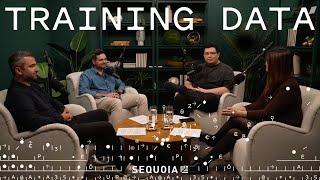
Why the Next AI Revolution Will Happen Off-Screen: Samsara CEO Sanjit Biswas

Sanjit Biswas, CEO of Samsara, explains how AI is moving from screens to physical infrastructure. His company runs lightweight models on millions of edge devices in trucks and construction sites, detecting phone use and coaching safe behavior. Around 2015, cheap GPUs and ubiquitous cameras made this possible at scale.
Chapters
If you think about it, there's like a third shift between midnight and 8am roughly, right. That people tend not to work because they're sleeping. Imagine if operations like logistics could still run during that shift, right? And then same thing. Imagine you're a field service technician. You need a part. Like how amazing would it be if the part could just get delivered to you? Like that is something that's going to be a nice augment to operations. So it's interesting because typically when you see automation kick in again, volume increases, right? Because costs come down. There's way more demand out there than people realize. Because sometimes you'll say, yeah, I could use that part, but I don't need to deliver it if it's going to cost 50 bucks for someone to drive it to me. If it costs five bucks or no bucks, like how awesome would that be? So we kind of view it as like it will increase the speed that the world operates at. Foreign.
In this episode we talk with Sanjit Biswas, founder and CEO of Samsara. Sanjit formerly founded Meraki and has a legendary reputation amongst Sequoia backed founders. So I'm excited to welcome him today for a conversation about physical AI. Samsara is a $20 billion market cap public company with sensors deployed in streaming data from millions of vehicles, capturing 90 billion miles annually. Sanjit shares his insights about the constraints of physical AI, from running imprints on 2 to 10 watt edge devices to why the messy diversity of real world data is both the biggest challenge and opportunity for embodied AI. If you're building in robotics or physical AI, this conversation offers a rare perspective from somebody who's actually scaled it. Enjoy the show.
Sanjit, thank you so much for joining us today. You are a legendary Sequoia founder and it is a delight to have you back at Sequoia.
Thanks for having me. It's great to be back.
I want to start with your background. So you went from MIT's roofnet project to co founding Meraki through its $1.2 billion acquisition. And you are now the founder and CEO of Samsara, a $23 billion market cap company with the best ticker on the public markets. What's the through line? Tell me about your personal passions and experiences and what the through line is between all of that.
Yeah, so I'm an engineer by background, so studied EE and cs. I went to undergrad out here at Stanford, went to MIT for grad school and that's where we worked on this project called Roofnet. So the through line for me has Been about building cool products, cool technologies that have real world impact. And roofnet, this is like over 20 years ago. The idea was, could you build really big wireless networks? Because kind of early 2000s, Wi Fi was not mainstream, it was a brand new technology. Internet access was just becoming mainstream and is still pretty expensive. And so we saw this opportunity to take WI fi, chips and all that technology and use it to build really big networks. And so we kind of had this idea that Internet access should be everywhere. Right. It should be in the air. And how would you do that? And we need to build a big network. So that was roofnet. And then with Samsara, it's a bit of a different sort of focus. We focus on the world of physical operations. So think all the infrastructure companies, whether it's energy, utilities, construction, logistics, like all these real world physical industries. And the idea has been real world impact through things like risk reduction, improving efficiency, improving sustainability, just using all this data.
And now AI, yeah, physical AI feels like it's finally going through an inflection moment. You've been building Samsara for the better part of a decade now. What did you see at the time and how has the field changed? Why now?
Yeah, so if I rewind 10 years to when we were founding the company, we had a couple of sort of intuitive bets or guesses, and the why now for us at that point was connectivity. So we had been through the Meraki journey and we'd seen Internet access go from being kind of rare and inexpensive to being ubiquitous. So this is 2015 for reference. We saw basically the ability to process large amounts of data really coming online. So the cloud had matured. We were seeing the beginnings of the GPU wave. And if you Remember back to 2015, Nvidia was a player and they were doing a lot of interesting like embedded GPUs. So if you picked up a Nintendo SW back then, it had amazing graphics, but it fit in your hand. And so we saw compute was getting really good. And then we saw sensors, really specifically cameras were getting really good because this is probably seven, eight years after the iPhone launch. So cameras had gotten extraordinary. And you combine all these three things together. You've got connectivity, you've got compute, and you've got sensors, slash, cameras. And we said this is the sort of like makings for total sea change when it comes to ability to process data in real world context.
Wonderful. Okay, I'm excited to nerd out more about technical questions on the frontier of physical AI. Before we get into it, maybe can you just Say a word on Samsara for our listeners. I guess how much of the business is, you know, I think of it as very much a having had roots in commercial trucking. How much of a business is that today and whether you see the ultimate vision of Samsara being.
Yeah. So we really focus on the broad world of physical operations. So think about all these different kinds of industries. Trucking is definitely one of them. About 20, 25% of our business. So logistics and big trucks on the road. A lot of our business now is related to field service and construction. So other big kind of frontline industries. But we also are starting to work in like public sector. So we work with local governments, we work with student transit. So we just signed like the largest yellow school bus operator in North America, which is pretty cool. And we work in industries like aviation. So think about like labor intensive asset heavy industries that really power the infrastructure of the planet.
Wonderful.
Can I go back to your comment on Sue? At the time there was a why now? Around bandwidth, compute and cameras.
Yeah.
And it sounds like you may not have necessarily had a crystal ball on.
What was going to happen with AI.
But you kind of felt like you're on the right side of history and that with those raw ingredients you'd be able to do increasingly sophisticated stuff over time.
Yeah.
What I'm curious about, I feel like there are a lot of founders today who are kind of in a similar position where nobody has a crystal ball. We don't really know what's coming. But you kind of know that whatever capabilities you're going to have tomorrow are very different and better than whatever capabilities you have today.
Yeah.
So I guess the question is, since you kind of had a directional sense for where the world was going, how did that influence the way you built the business? Was there anything specifically you did just kind of in anticipation of this inevitable direction that the world was going?
Well, actually the historical context is important. So our first company, Meraki, which was funded by Sequoia, we were domain experts, so we knew a ton about networking because that's what we'd been working on. In terms of our PhD with Samsara, it was kind of the opposite. We knew nothing about this domain. Like we'd never driven a commercial truck before, never worked in a warehouse. And so we were sort of eyes open about it. What we did have was that intuitive sense of the compounding rate of those underlying technologies. So we said, okay, there's this really interesting like problem space, this world of physical operations, it's kind of like overlooked especially 10 years ago, no one was really talking about infrastructure the way they are now. But there are, you know, things are changing very quickly behind the scenes in terms of tooling. So that intuition is exactly sort of what we were powered by. And we said, even if it's not mainstream yet or it's not ready yet, certainly in five to 10 years, which is about now, it will be possible to do this stuff. So I think for a lot of the current founders, it's kind of like if you look at AI model capabilities, even when, like, you know, the ChatGPT moment happened, these models weren't perfect. They've gotten a lot better in the last two, three years, and they're going to get even better in the next two to three years. I think technical people understand that in a way that consumers and customers often may not see yet.
So I think you have an embedded systems background, and you're one of the unique people that's operated at the intersection of the hardware and software worlds. I'm curious, what are the things that make building AI in the physical world different than running AI in big data centers?
A couple of things. Well, it actually is a lot of fun. So the physical world is very diverse. You see a lot of companies now working on physical intelligence and world models. And it's because the training data set is really broad and vast. So if you think about our products, we have products like dash cams that end up on the roads on millions of vehicles. They see like 99% of the US roads. It's just an incredible data set. You've got urban, you've got rural, you've got residential, you've got weather. And so we see all these interesting, exceptional cases. So the training data is really interesting. And then what we can apply all the inference and basically pattern matching too, is also interesting. So I think that's the most fun part. The most challenging part, though, is how messy it is and how distributed it is. So for our products, it's not practical for us to just stream all the data to the cloud. It would be like a crazy bandwidth bill. You need pretty massive data centers, if you think about millions of video streams constantly running inference. And so we have a much more distributed architecture where we actually run in the cameras themselves. And that changes your compute and power footprint. You know, we're talking about 2 to 10 watts, not like kilowatts. Right. But you can do a lot more because you've got millions of them.
And so what is it like? How do you run? I'm thinking some of these large LLMs, even the image image models are very large right now that people are working with. Are you, are you running just very bespoke small models on 2 to 10 watts? That's, that doesn't give you much of.
A footprint, it doesn't give you a lot of room and that's a fun engineering problem. So if you think about it, these state of the art models, they are very large. So you're talking, talking about hundreds of millions of parameters or billions of parameters. That is simply not possible. So our footprint is much more similar to what you could run on your mobile phone. So it's not tiny, it's not a microcontroller, it runs Linux, it's got hundreds of megs of memory, maybe gigs, but it's not like a big data center. So what we tend to do is we will train models in the cloud, we'll basically distill them down or use teacher models. So we'll use a big model to basically instruct a small model. And that's really designed for our use case because we don't need to be able to answer, you know, what the capital of France is, right? Like that's not something the dash cam has to encounter. But we do need to be able to understand what is the risk profile on the road. So we train it with the data that's relevant for the task.
How much of the Data you see? 99% of US highways or US roads, how much of that data can you make use of? How much of that data do you make use of?
Yeah, we can make use of a lot of it. And we basically have the ability to train over like this entire data set. There is a very practical question of like, okay, you run a tokenizer at the edge, you send all these to the cloud, what do you do with it? Yeah, and what's cool about that is what we do at the this year is so much more interesting than what we could do with it two, three years ago. So two to three years ago. And these products really started around this idea of reducing risk. So if you think about the problem we're trying to solve, it's that, you know, our operations, customers, they operate on these roads every day. It's actually the riskiest thing that they do is more so than construction or working in oil and gas, driving on the highway, getting to and from the job site is where they incur like most of their like fatality or kind of high severity risk. So the question is, how do you go take all these images and tokens and Turn it into a risk signal, right. A couple of years ago we said, you know, the biggest risk we are seeing right now is mobile phone usage, right? Like people are on their mobile device while driving a big truck and that's super risky. So we built a detector for that. You do that and you say, okay, we can solve this problem, we can detect mobile phones. What else drives risk? Now we're seeing things like weather, right? And weather's always been a risk factor. It's not a brand new one, but it's now something we can detect using these pretty sophisticated models. Training a weather detector using like old school convolutional networks, like an Alexnet style model, you would have gotten a lot of things wrong. You couldn't tell the road conditions. Once you use more sophisticated models like the ones we have today, you can really figure it out. So that's the cool thing is there are these unlocks that happen every couple of years as model capabilities increase and our data set increases. So these two things really work in our favor.
Is there an upcoming unlock that you are most looking forward to in terms.
Of our product set or just in.
General, or a new capability that's going to unlock some new use case or some new feature for your product?
I feel like we are seeing just such incredible foundational model capabilities that are making it possible to just inference over huge amounts of data. So historically what we did is we understood what was happening in the moment, right? So like I said, mobile phone detection or not wearing a seatbelt or following distance, now we can start to really look over the course of a trip and we're not only detecting negative, risky downside events, but we can actually detect good behaviors too. And I'm really excited about that because frontline workers 80, 90% of the times are doing a great job. No one's able to recognize it because no one sees it. So what's awesome is we can now see that someone's doing awesome and give them a high five or like some kind of recognition or kudos that is like making people's day. And it's a cool like silver lining side effect of having all this stuff running. So anyway, it's kind of a unexpected upside sort of thing.
And do you think it'll be video reasoning models that sort of empower that? I know you can't run a ton, you can't run giant models at the edge, but are you doing stuff server side that takes advantage of LLM?
Yeah, I should have mentioned that. So the model's connected. We have a ton of inference, running at the edges, running continuously. Because when you're driving, there's like continuous risk. And then we're taking those tokens, we're streaming them up and addition, you know, we have images, we have video, we have other kinds of telemetry, and then we can go and run all kinds of sophisticated things in the cloud. So if we need to understand when an accident happened, what really happened, we can run a full video language model, like a reasoning model essentially in the cloud. And that can say, oh, this was actually defensive driving and this guy got cut off, or these are the conditions. So that is really cool. We couldn't have done that five years ago.
Do you believe in world models loaded question?
I do. I'm cautiously optimistic about them, but I think you need a tremendous amount of data. Yeah.
Are you guys training your own world models?
We are not building our own world model, and I think that requires a very specific kind of focus. But in the same way, we don't train our own base foundation models, but we are looking forward to using them at some point.
Yeah. And I imagine you have an incredibly rich data set that might be useful.
We do, yeah. We see about 90 billion miles on our system every year. So it's a lot of driving.
Yeah. It seems like the sensor footprint you've built out is like a tech nerd's dream.
Right.
Most people dream of a connected world and, you know, you should be able to have so much telemetry on all these different attributes of the physical world. But as far as I can tell, you're one of the only companies that's really out, gone out and, you know, put sensors on the physical world in a meaning, in a really meaningful way. Why do you think that is? And what's the key to actually being able to make that dream happen versus have it just be a, you know, tech nerds techno stream.
Yeah. First of all, it takes a village to actually get this stuff out there. And I think that's maybe one other big difference between just pure software and physical world is we have to get the products installed so they're installed on millions of vehicles. We have to train frontline workforces on, like, what this stuff is and what it's doing. And then we have to provide value to all these customers kind of from day one. Right. Like, they have to get something out of it. You combine all this together and you get this big footprint. But it's been hard because you need thousands of people at our scale now to do this and to do the change management, like the Installs and all that kind of stuff. You know, there are a few companies that have data sets of the scale, but it's like Tesla and probably us, right? And then Waymo, there's thousands of Waymos, but not millions. And maybe it will be millions in the future, but we're not there yet. So that gives you a sense of how much effort is just like sheer willpower is required to get this stuff out there.
Speaking of which, I think there are a lot of founders right now who are technical founders like yourself who've built something cool and are now encountering this crazy supercharged race to scale that the AI wave seems to have brought. And so I guess the question is you are a technical founder. I think both Samsara and Meraki have been known for go to market execution. And so maybe the question is like, how important has go to market execution been to your success? And as a technical founder, was it obvious to you at the beginning that it was going to be that important or kind of what was your journey like in appreciating the importance of go to market execution? If that makes sense.
Yeah, I'm replaying like 20 years in my head really fast. So when we started Meraki at that point in time, like I had never sold anything in my life. In fact, like I, as an engineering nerd, like I avoided any situation where there was like, you know, there's like fundraiser, you have to sell candy bars at school. I was like, does anyone need a website for this thing? You just like trying to find some way out of it. So I really was not like a salesperson in terms of background and no one in my family had done sales, so it was very foreign. The thing that turned me on to it was this idea of this is what it takes to get the product out there. And if the product's not out there, it's not having impact. So if you're driven by impact, if that's what motivates you, it's fun to see people using it, right? And then this is what makes it sustainable. So with Meraki, we were growing. The company between 2006 was acquired in 2012 in the middle of. That was a great financial crisis, right? There wasn't a lot of funding at the time. Like risk capital was just like turned off. So we basically had to make the company operate at break even, right? Or thereabouts. And that's what really convinced us. Like we have to figure out how to have sustainable sales execution and a model that's highly predictable. And as engineers we're like hey, this is actually a big engineering problem. Right. And then that stuck with us with Samsara, we were talking about impact at scale. We raised capital along the way, but actually we reinvested way more just from the revenue of the company and the gross margin. So if you look at our numbers Republic now, so you can kind of go back through the balance sheet. You can see we've invested probably close to $3 billion just in getting the stuff out there. Right. R and D, customer success, all that stuff that is only possible with a lot of sales, right? Yeah. So once you understand the why, you can kind of buy into it and say, I'm going to figure this out. It was not natural for us, but it was a pivot that ended up being something we had to do. And I'm really glad we figured it out and have been getting better at it each year. Yeah.
Meraki, you were a domain expert. Samsara you were not. When you started the company, why, why go and pick that domain?
I think it was curiosity. Um, and this is a little bit of like going back to sort of curious nerd roots like you just find yourself like reading books and wondering how stuff works. So after Meraki, we actually didn't have a plan to start another company. There was a while I thought I was going to go back to grad school, finish the PhD kind of thing. My co founder John Bickett, he's like way smarter. He's like that's never going to work. But you go do that. And in that period of time I realized that academic research is very long feedback loop, kind of slow cycle. But there were a lot of other interesting problems that caught my attention. So I got interested I think in energy at that time. So I was like learning about how the electrical grid worked or at the time didn't work because photovoltaics and renewables were coming online. I started getting curious about nuclear, about satellites and things like that. So it's kind of fun to be able to just open your mind up to everything when you've been like laser focused on one thing. And then over and over I found myself. And then John found himself like attracted to this world of infrastructure. And so it was just curiosity about this part of the world that felt pretty overlooked.
Really cool. What do you think of autonomy? And that might be a loaded question.
Yeah.
But you know, I. Two years ago I avoided getting in Waymos. Now I don't think. Now I don't think twice. I feel safer in a Waymo in one. What's Your. What's your point of view?
Super excited about it. Very bullish. I think it's been a long time coming. When I was an undergrad at Stanford, they were doing the first, like DARPA Grand Challenge cars. So this is like 20 plus years ago now. And like you said, Waymos have gone from kind of like prototype tests to like, I prefer Waymo. Right. It's super consistent. You know, there's lots of things to like about it. So our view on it is autonomy happens and it actually increases the operational intensity of the world. Right. So if you think about it, there's like a third shift between midnight and 8am Roughly. Right. That people tend not to work because they're sleeping. Imagine if operations like logistics could still run during that shift. Right. And then same thing. Imagine you're a field service technician. You need a part. Like, how amazing would it be if the part could just get delivered to you? That is something that's going to be a nice augment to operations. So we're a fan of it. Our view on it is we think it's an and not. Not an or exclusive. And it's, it's interesting because typically when you see automation kick in again, volume increases. Right? Because costs come down. There's way more demand out there than people realize. Because sometimes you'll say, yeah, I could use that part, but I don't need to deliver it. If it's going to cost 50 bucks for someone to drive it to me, if it costs five bucks or no bucks, how awesome would that be? So we kind of view it as like, it will increase the speed that the world operates at.
You think it's happened on roads only, or you have customers with warehouses and forklifts and all the above. You think autonomy will hit all those sectors.
So I think autonomy already hit the warehouse. We have a lot of customers with big, like, you know, logistics warehouses. And really about 10 years ago they started getting automated in a meaningful way. And it's pretty rare for me to go into like a heavily, you know, industrialized environment without seeing automation. And that's everything from, like lift systems to big arms moving things. And it actually is welcomed by the people in the warehouse because it helps reduce injury. So if you think about it, frontline workers are putting themselves at risk when they do their job every day. It is not a great outcome to get hurt lifting a pallet or doing something like that. So that is, I think, a good sort of preview of what we're going to see out on the road. And then I think after that, there's a construction site and job site. Yeah.
Humanoids. Yes or no?
Cautiously optimistic, little bit scary. I won't lie. They feel like they're in that kind of creepy, uncanny valley, like when you see them walking around without heads or hands or something.
Have you seen Neo?
I have. That's a friendly one. Yeah. But I think it reminds me of where self driving was about 10 years ago. So probably not a tomorrow, but it does feel inevitable. So as the capabilities increase, it's going to be really exciting.
Yeah.
How does the role that Samsara plays in the world change as we have more and more autonomy over time?
Well, I kind of think of it as digital transformation. So if you zoom way out, that's what customers are excited about, is how do we digitize these operations that have been around 50, 100 years in some cases. And most of our customers, they welcome new technology. So they adopted computers for route planning like in the 1970s or something like that. So they're not against technology. It's, is it going to help? Is it going to be relevant? So our take is you're going to want like a platform to see all of your operations, for all of these different operations to interact. So you can see your frontline workers, you could see all your vehicles, you could see your assets and know what needs maintenance. All of these problems will, will be evergreen. You're going to want to maintain your assets like 20, 30 years from now. Maybe they're robots and maybe they move on their own, but they still need maintenance, for example. And then same thing when you've got customer facing or end customer facing teams, you're still going to need to orchestrate hopefully thousands of people. Right. And they may have help from robots and humanoids and all kinds of stuff behind the scenes. But how do you kind of run the entire operation? So that's what we focus on is the big picture as opposed to any specific product or technology.
How do you see the future of humans and AI interacting in the physical world and in the industries that you serve?
Well, I think they're getting closer and closer. Ten years ago when we started Samsara, most of our customers did run on a lot of pen and paper. Process 2015, it's not the distant past. It really has been a change that they've gone from pen and paper to apps. I think as AI kicks in, you see many of them using voice bots for freight brokerage. That's a brand new phenomenon really in the last year, and they've taken to it very quickly. It's automating tasks. So I kind of think of it as where is our high task intensity, A lot of, like, repetitive task work. And can AI help? Absolutely. So that's where we're seeing, like, very high rates of adoption. I think the stuff that's not changing, at least not yet, is the physical work itself is still being done by people because it requires a lot of exception handling. So construction is a great example. So much diversity in construction. We are not to the point where you can automate it the way you could automate car manufacturing, for example.
Do you think AI is? You mentioned it's something that prevents risky behavior in humans. Are you also seeing it coach humans in these operational environments to actually perform better?
Yeah. First, just thinking about risk coaching makes a big difference. So there's risk detection, like, please put down your mobile phone. But then if it's a habit of yours, we actually want to coach you to help break the habit. Right. And if you kind of look at the impact we're able to have with customers, we often reduce risk, like by 75%. So, you know, three quarters of the risk comes out of the system. Maybe half of that can come from the automated, like in the moment in cab alert, and then the other half comes from coaching. And then that same coaching can be applied to, like, fuel efficiency. You can actually train drivers to operate heavy equipment in really smart ways. And you can gamify it. Right. So that's the kind of, like, cool opportunity that AI has is process just enormous amounts of data, more data than any human could do. You look at patterns across thousands or millions of vehicles and then turn it into actionable insight. That's coaching. So you can apply it to safety, you can apply it to efficiency. It's pretty cool.
What's the organizing principle of your product portfolio? You start from dash cams. It's expanded out from there.
Yeah.
Maybe just tell us the history of how the product portfolio has expanded and how you see the future.
Yeah. So we actually started with GPS tracking or telematics. So 2015, dash cams were not quite viable. Yeah, but because of the cost. Yeah, cost and both like the backhaul cost of bandwidth, but also the cost of the cameras and things like that. But what was surprising to us was in 2015, most of the operational environments we went into, no one had any idea where their field teams were, not in real time. And there was this, like, disconnect because Uber and doordash had started to happen. Right. And so it was weird. The gig economy had real time Tracking. But then the logistics, like long haul logistics, economy was still getting breadcrumbs every 10 to, I think it was like five to 15 minutes. And this probably predates most of the people listen to the show. But there was this platform, MapQuest that predated like Google Maps, right? So late 90s MapQuest, like vintage map. Right.
Sony wasn't around for that. You'd have to print out the MapQuest directions and then take your piece of paper to figure out where you were going.
And it was this kind of like grainy, it looked like, you know, Minecraft level graphics. The amazing part was our customers now back then were using MapQuest printouts and their system for GPS tracking was built on top of MapQuest. So I would go on site and I would say, whoa, we can help with this. So that was product number one, was GPS tracking. That basically got us off the ground and got us into customers. And from there we started figuring out, well, really the bigger challenge for them was managing risk. Because at that point in time, it was mid 2010s, people did have phones in their pockets and they actually asked us, we're getting into a lot of accidents. Do you have a dash cam you recommend that works well with your system? So we said, if we built one for you, would you use it? And they said, yeah, absolutely. So John, my co founder, remember he went to Amazon, ordered a webcam plugged into the USB port and over the weekend wrote some code to get a basic webcam working. We brought it back to the customers the next week. They tried it, they loved it. And then we were watching the videos with them and you could see as people were getting to accidents, they like had their phone out, right? And so we said, could we build a detection for that? So that's where the AI part of the dash cam came from, is very iterative and that has now become our largest product. But it's sold with the first product. So you asked about the kind of portfolio strategy. It's concentric circles, it's keep doing what we started with, core use case, adjacent use case. What else can we do? What else can we do? What else can we do? And now we have about 10 products out there.
Really cool. You mentioned kind of the backhaul and network bandwidth being a binding constraint. I'm curious if you think the growing adoption of Starlink and just Internet everywhere is going to change what it's possible to do in the physical world.
Absolutely. So we started Samsara right around the 3G 4G transition and the unlock was actually YouTube. Right. So if you remember 2015, everyone was starting to watch YouTube and baseball games and stuff on their phone that drove data consumption way up on the carrier. The marginal cost per gigabyte came way down and we were able to piggyback on that. Right. And so that was really cool. I think something similar is happening now, not just with 5G, which is like the networks have invested even more, but now with satellite. Right. Like, the cost of building Starlink is enormous. Like, I don't know how much is being spent on, it's like many tens of billions, right. In launch capacity and so on. But the marginal cost to add another device to Starlink is pretty low. Right. And that's like the cost for any network effect. So we're excited about that because it'll help us get that last like 1% of coverage. And a lot of our customers are in super remote rural areas. Like we have a lot of customers in energy, like oil and gas. There are no roads where they operate. And so there's not that much cellular coverage either.
Do you think that does away with some of the constraints of running AI on the edge? Meaning, like today you can only use some percentage of. You can only stream back some percentage of data because you do a lot of onboard compute in a world of just Internet everywhere, where it's just a lot faster and cheaper to send all data back and forth. Could you be doing a lot of it server side? And could you be doing a lot more?
You could do more of it. But it's funny how when stuff gets cheaper, you find a way to do more. Right. And so when I think it's like a compression problem, right? Like in if the workload was static, like if you were just trying to get GPS data into the cloud. Yes, just stream it. All right. Like it's not a big deal. If you're trying to get one frame per second video from an outward facing camera in the cloud, no problem. But if you want HD video from a 360 view of a truck, like eight cameras, that's a lot of video. And then same thing. If you want it with all the other telemetry that we get, it becomes pretty big. So I think you could potentially do it. But if you can push some of that to the edge and kind of like compress it down, everyone benefits from it.
Do you think controls and autonomy could ultimately be running in the cloud? Or you think that's something people always want to run on device?
That one, I think you're probably going to see edge compute for a Long time. And actually if we kind of go a little technical for a second, one of the challenges there has been around power and computing cost. Right. So if you think about like a Tesla full self driving computer, it's a couple thousand bucks, it takes many hundreds of watts of energy and they're like the first company to be making it really practical at scale way, most probably a bit more. And so I do think that we will continue to see those sorts of approaches because safety is such a big deal. Like you've got humans in the cab, you've got humans on the road, you don't want a network outage to affect people's lives. Yeah.
If we're sitting here in 2030, what do you think is the biggest way that AI has transformed the physical world and physical operations?
I think a couple of thoughts. One is we're pretty early, right. We're at the end of 2025, the sort of AI adoption curve in physical operations. We're still at the base of it. And so by 2030 I think we'll have run up the curve where it'd be much more mainstream in the same way that using apps is much more mainstream now than it was five, 10 years ago. So I think you will see the current technologies basically experience a lot more diffusion. Like get out there. I think we are going to see net new technologies. Like I'm super excited about augmented reality and wearables. Like that's going to make a huge difference to frontline workforces where they have to have their hands free and it brings AI like into their ear. A lot of folks have AirPods in. Right. But having like sort of visual feedback, being able to run like a VLM to understand what's going on in the environment, that will be possible in 2030. It's not quite possible yet, but you can just feel it. It's like right on the cusp.
Maybe it'll be glasses, maybe it'll be some of these new devices that are under the wraps that are looking at. Yeah.
What's your favorite personal use of AI?
Personal use of AI? Well, I love the sort of voice models. Like I talk to AI whenever I'm driving to or from work, I'm chatting with it. And it's not always about anything specific. Like it's kind of whatever's on my mind. So I love that. I've become a big fan of like chat, GPT Pulse, for example. Like, it's just cool that it tells you about for me, events that are happening in the Bay Area. I've Got three kids stuff. It kind of knows its interest rate. So the whole idea that I could know you better than you to some extent is really profound. So I love that. On the personal side, it kind of exposes us to new experiences that we wouldn't have known about, like, you know, a music performance or something like that that my kids would like.
How much of the value that you give customers do you think is thanks to AI vs thanks to all the other technology that you're building?
It's an interesting question. We don't really split it out because there's value in the data, but if no one looks at the data, it doesn't have impact. Right. So one of the things we've heard from customers is this concern about data overload. Like, if you have sensor streams from every vehicle and every frontline worker and every asset, what do you do with it? All right. And so AI is pretty awesome in terms of really helping. Just distill that down to something actionable. So that's why I don't think you can like split the two apart anymore. But it's transformative, it's game changing. And I spent a lot of time on the road. Like last week I was in Texas, like all over. Big food distributor, big oil and gas company, spent time with like the Home Depot. And it's just cool hearing how they're using the data in such creative ways and ones that they didn't have on their sort of roadmap when they started with us, but they're like, hey, if we can use this data to help do time card punches, right, like get someone started on their shift and they don't have to walk to the office, that's awesome. Or if we can share this data with our end customer and let them know we're almost there, we're delayed. That's pretty cool. So it's really neat to see these emergent use cases.
Really cool. It's great to dream on all the way that AI can kind of seep into all these different workflows and everyday lives.
Yeah. And it's never any one thing. That's what I love about this is like every quarter we get exposed to some new use case. And a lot of it is just you spend time with the customer, you understand their operation, and then you come up with like, hey, if we did that, would a voice bot that made ETA delivery phone calls be useful to you? And many of our customers don't even know that's possible. They've never engaged with the voice bot before. So we'll do a demo for, for them, we'll do a prototype and they'll say this is amazing. Right. And so that's kind of fun to be able to kind of go back and forth. Yeah, that's very cool.
I'm curious and your point of view on, you know, there's so much talk of us versus China, geopolitics and our industrial base really needs to catch up. Our robotics or manufacturing, our physical AI really needs to catch up. I'm curious if you've seen that actually accelerate customer conversations or have an impact on your business in any way.
Not in my customer conversations. I do think there's this palpable sense of we need to modernize and how do we just rethink the way the infrastructure runs. So many of our customers are involved in data center build outs right now. They're the energy utility, they're the construction companies. There's a lot going on there and I think that has everyone thinking, okay, what does this mean for us and what should be different about our business? So there's a lot of introspection going on. I haven't gotten the sense it's like us versus China, but it's more of like, could we do this differently now? We're like firmly in the 21st century, right? Like it's what should be different now than the way that like, you know, previous generations ran these operations.
Wonderful. You've been a multi time legendary founder. Any advice for. For young technical founders who are out building in AI right now?
I think it's an amazing time to build. Whether you've done this before or you're starting it for the first time, like just the tools that are available, it's incredible. And like to some extent, you know, everything's getting magnified or amplified. Right. So I think about whether it's Codex or Cursor or all these like automated coding tools, if you have an idea now, you can like sort of manifest it into something real so much more easily than when we started samsar. Even when we started Meraki, like back then we were like racking server. We'd like buy servers from Dell and like take them to the data center and set them. Like can you imagine? It's like just like how slow that feels now.
I can't even imagine.
It's actually hard to imagine and. But that is happening and we will look back 10 years from now and say, can you believe we did X right? I don't even know what X is, but it will feel so different. So it's fun to be on these like exponential curves. And the best place to be on that is to be building, right? Yeah.
Really cool. Thank you so much for taking the time to share your story and what you all are up to on the AI side at Samsara.
Thanks. Thanks for having me. Sa.
More from Sonya

Building the GitHub for RL Environments: Prime Intellect's Will Brown & Johannes Hagemann
Building the GitHub for RL Environments: Prime Intellect's Will Brown & Johannes Hagemann



Context Engineering Our Way to Long-Horizon Agents: LangChain’s Harrison Chase
Context Engineering Our Way to Long-Horizon Agents: LangChain’s Harrison Chase

How Ricursive Intelligence’s Founders are Using AI to Shape The Future of Chip Design
How Ricursive Intelligence’s Founders are Using AI to Shape The Future of Chip Design

Training General Robots for Any Task: Physical Intelligence’s Karol Hausman and Tobi Springenberg
Why the Next AI Revolution Will Happen Off-Screen: Samsara CEO Sanjit Biswas