The Rise of Generative Media: fal's Bet on Video, Infrastructure, and Speed
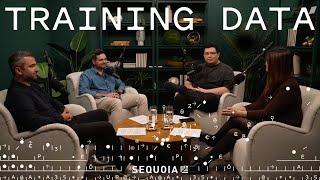
In this interview Sonya Huang talks with Fal’s founders and engineers (Gorkem, Boray Gorkem, and Batuan) about the company’s mission to become the leading developer platform for generative video and image models. The conversation covers why generative video was an overlooked market, how Fal built a tracing‑compiler inference engine and a distributed GPU orchestration layer that can run 600+ models at production scale, and why video inference is compute‑bound while LLM inference is memory‑bound. The team explains their performance‑first culture, the challenges of managing heterogeneous data‑centers, and the economics that let them compete with hyperscalers. They describe the long‑tail model ecosystem, the rapid half‑life of top video models, and the “workhorse vs. premium” model strategy. The discussion moves to developer workflows – a no‑code builder, API chaining, storyboarding pipelines – and showcases diverse customer use cases ranging from AI‑native studios, education apps, security training, ad generation, and design tools. Finally, they reflect on the impact of generative media on existing IP, the future of AI‑generated film and games, and the need for architectural breakthroughs to achieve real‑time 4K video.
Chapters
We recently had our first Generative Media conference and Jeffrey Katzenberg, former CEO of DreamWorks was there and he made a comparison. He said, this is exactly playing out how animation when it first came out, people revolted against it. It was all hand drawn before that and computer graphics, it was new and there was a lot of rebellion against computer driven animation. And something very similar is happening with AI right now. But there's no way of stopping technology. It's just going to happen. You're either going to be part of it or not.
In this episode, we sit down with a team from Fall, the developer platform and infrastructure powering Generative Video at scale. Fall is a place that developers can go to access more than 600 generative media models simultaneously, from OpenAI Sora and Google VO to open weight models like cling. We'll discuss why video models present fundamentally different optimization challenges than LLMs, why the open source ecosystem for video has a thriving long tail in ways that text models never did, and why the top video models have a half life of just 30 days. The team also shares insights from the demand side of the video model equation. We discuss what's happening in the app layer, from AI native studios to personalized education, what's happening in Hollywood and more. Enjoy the show. Borkay Gorkom Batuan thank you so much for joining us today. I want to start with the problem space that you decided to tackle. So FAL is a developer, API and platform for generative video and image models. Video is massive. Obviously it is more than 80% of the Internet's bandwidth and it follows that generative video is going to be similarly massive. But there's not that many companies that are focused on this problem. Why do you think that is?
Yeah, in a way Generative Image and then Video was an overlooked market in this current phase of AI in my opinion for two reasons. Number one, there wasn't a very clear industry use case that people were going after. There wasn't wipe coding that automates software engineering, or there wasn't search which seems LLM market is going after or customer support, anything like that. Also number number two, the investment on the research side wasn't as big three years ago and then that ramped up a little bit slower than LLMs, but still considerably since then. And now the models are much more capable, much more useful and real industry use cases compared to what it was three years ago. It felt like a toy use case. This was just going to be for fun on the side and it's going to be a small market at the end. And now we can see that it's going to be a massive market with very unique use cases and customers compared to the LLM market.
If you actually go back to as we were experiencing it, I think that was an interesting time. We were working on some Python compute infrastructure and then these models like Dall E2 had just come out. And then soon after that, ChatGPT had come out and then Llama had come out and we were just like, we were initially we didn't know that image and video market was going to get that big. We were actually just curious about running image models much faster. That was our initial entry point. And then we saw the initial growth. We had a few customers and they were growing really fast. We were like, what the heck is going on? And then a few customers later, we actually thought, hey, we should double down here. And around that time also the other thing that was happening was people were over indexed on language models. This story of AGI was being told and that attracted all the dollars, that attracted all the talent. So everyone was just working on that where we thought we had something niche growing fast, don't tell anyone. And then we just started focusing on that. And soon after, as we got more familiar with the models, we thought the. I remember, I think we changed our website copy to say generative media, like Generative Media platform. And then it was only like two or three months after that SORA was announced. So we were definitely like ahead. But we really saw the whole future kind of coming with better image models, video models, et cetera. So. So yeah, we made this early bet.
I mean, you guys have a front row seat to the sorts of new experiences people are building. I think the market's only going to expand from the media market that we know today.
Yeah, absolutely. I think, like, I'll quote a Carpathy tweet, you know, no good podcast without it. He did one like recently where he was talking about, like, why he's excited about the, you know, media models. And one of the things he said was that like, he also mentioned that, right, people are visual and we're going to. We have so much more video than text, like wall of text. And he was saying he was making a point around education and a lot of the content you consume just to learn things. I think right now the model quality is just relatively so much worse than what it can be where you could actually have. I do a lot of learning on ChatGPT, but it's through text. But if it actually rendered a video where it could compress A concept.
Right.
Instead of 10,000 characters. If it could do it in 15 seconds, it'd be so much better. I think there's sort of like the quality bar where if like it's going to go up and once we have that we're going to have even more penetration. So it's really a function of the quality right now. And we're just like in the very.
Early beginnings, totally education market almost untouched right now with video generation. And there's so much potential there and it's just waiting the quality, the predictability to get there. And I think it's going to have a lot of potential.
Totally. I mean, you guys sent me that Generative Video Bible app. I think it's a much better way to learn some of the lessons from the Bible. And it's, it's, you know, if you're capturing consumers attention right where they are, you know.
Exactly.
I think it's, I agree with you. We're, we're just at the beginning. So Fall's an infrastructure company and so we're going to structure today's interview. I love infrastructure companies in terms of the technical layer cake. So we're going to start from the core inference engine, compilers, kernels that you built. We're going to go up to the model layer and then the workflows and then end with some observations on the markets and what people are building. Sounds good.
Let's do it. Sounds exciting.
Okay, let's do it. The inference engine. Batsuan. Do it. How old are you?
22.
You're 22 years old? Okay, say we're on your background. I think it's super badass and makes complete sense why this company is so hardcore at.
I started working on compilers when I was 14, so in a way I have a lot of experience on that front. It's not just that, but I started working on open source projects. So my first contributions were around tooling around the Python language. And then I started to slowly contribute back to the Python language, core compiler, core parser and, and the core interpreter itself and became like one of the core maintainers of it. I think at the time I was like the youngest core maintainer of the language. And this kind of gave me like a unique appreciation of compilers and how flexible they are. So when we first started like working on serving these image models at Fall, the main idea was, okay, there is like these like three different image models, three different architectures, but this is surely going to explode. There's upscalers, there's like, you know, there's going to be video models. We were predicting that and we didn't want to go optimize a single model, put our eggs into a single basket, and then go became invalidated when the next model comes. So we started building this inference engine, which is a tracing compiler that traces the execution and essentially tries to find common patterns that are fitting within the templated kernels that we do. So our bread and butter is like spending. We have a 10% performance team that's spending all their efforts into writing kernels that are like 95% there, but generalized with templates. So we trace the execution of a model and find common patterns that could replace these templated semi generic kernels to specialized kernels at runtime and optimize the performance of these models. And we found this technique to yield pretty much superior results from anything that's out there in the market. And this led us to claim number one spot on performance on all the benchmarks. And another big thing about this is we specialize in doing this sort of kernel level mathematically correct sound abstractions that let us maintain the same quality of these models, which is a very high bar when you're in this media industry and when you really care about the output that you're getting.
What's different between optimizing a diffusion model versus an autoregressive LLM?
In autoregressive LLMs, your bottleneck is how fast you can move all those giant weights from memory to SRAM because you have a $600 billion parameter model and, and you're trying to predict the next token. You're doing the attention for like all the tokens, like a couple tokens before that. In diffusion models, you're trying to denoise like thousands, tens of thousands of tokens for a video at the same time doing attention of it. So you're essentially saturating all the compute bandwidth of these GPUs. You're not necessarily bound on memory bandwidth, but like the computational operations that you do are like fully saturated. So you're trying to find better ways to execute around the gpu. This could be like writing more efficient kernels, or this could be overlapping softmax with gams that you do. It's essentially you're trying to use all of the power of the gpu, leverage it in a way that gets you all the capabilities.
So it's a different binding constraint. It's on the compute versus the memory. And what's the intuition for why LLMs are relatively memory constrained and why video models are by comparison relatively compute? Constrained, but not as large in terms of just sheer number of parameters.
I think it's scaling issue. Right? Like, in terms of, like, if you scale these video models of 600 billion parameters with the same dense architecture, you're going to have to do attention with all those full, like, hundred, like, let's say a Single video is 100,000 tokens and you do this attention step, or like, you do this, like, denoising step 50 times, and every 50 times you do, like, attention over all these, like, 100,000 tokens. It's insanely, insanely expensive. So I think the constraint there is like, just how fast you can do the inference. And the Same applies to LLMs at like, larger batch sizes, but, like, at like, the traffic patterns that people do, like, you know, the batch size are not that much and you're mainly constrained by memory bandwidth. So people do optimizations, like speculative decoding and other factors to, like, reduce that overload. Yeah.
What exactly goes into being at the top of the leaderboard in terms of performance? Because I would imagine there's other teams that are also very smart people and, you know, this is. This is my Olympics. And so what exactly goes into. I imagine people have, like, very similar ideas on the techniques and different optimizations they can do.
I don't think anyone cares about it as much as us. We are literally obsessed with Jarrington Media. We are literally obsessed with these models. We have a team that's just focusing on this. So far, it seems like from Nvidia to other inference players, everyone is super obsessed with language models. Everyone's trying to get one more tokens per second on deep SEQ, benchmarks, whatever. And we are on a different lane. We have competitors, but no one close to us because I think we assembled one of the best teams. We found out, like, the best way to optimize these general models and we just focus on this. This is like a purely focused thing. Right? Like, at the end of the day, you're constrained by the hardware. There's nothing unique about it. But, like, we're just like three months ahead, six months ahead. Like when we benchmark Torch, like the latest version of Torch, against, like, you know, our inference engine from a year ago. We're clearly, we are clearly underperforming because, like, Torch caught up. The same thing is going to happen with other players. You're going to always like, the lead that you can maintain is three months, six months ahead at most. The thing that matters is just focus. If you focus on it, if you purely put all your energy into It I think that's like there's, it's very hard to get out competed by others.
Because models are slightly changing each month, each release. So it's still the same general architecture, but there are slight differences where we can go in and optimize where that's different and no one else is paying that much attention to it. Also, hardware is changing as well. So we were able to adapt to B2 hundreds earlier than anyone else and we were able to run video models much faster basically throughout the year because of that obsession with running video models with the latest hardware.
Yeah, got it. What are the hardest technical problems that you think you're solving?
So one thing people don't appreciate it as much is we are running 600 different models at the same time. We have to be running them, we have to be so good at running them that we should be running a single one of them better than as if someone else is running a single model. Because when a foundational lab is running models, maybe they have a single version of the model, maybe they have like a couple other different versions and that's what all they care about. We have to be better than them at running those models and we have to be doing all 600 at the same time. So on top of the inference optimizations that happens in the gpu, a lot of optimizations on the infrastructure level needs to happen. We need to manage the GPU cluster in a way that's efficient to load, unload these models at the right times. We need to route traffic to the right GPUs who have the warm cache of these models. We need to be smart about choosing the right kind of machines, which kind of chips are running what kind of models, and the customer traffic is changing all the time and we need to adapt towards that. So on top of the inference engine, the overall infrastructure is also really, really hard beast to manage. And so far we've done an incredible job at that. Would you add anything to that?
I think that's a pretty fair explanation of what we do. Like I call this distributed supercomputing. I don't know why people don't like that name. But like, you know, I like it, but like the idea is we are at like 28, like this was like a month ago. Now we are probably at 35 different data centers and you have these heterogeneous groups of compute that split across with their own different specs, different networking, whatever, and you're trying to schedule workloads as if it's like a homogeneous cluster that you got From a hyperscaler, it doesn't work like that. So we built like we spent the last three years building the abstractions over it from our own orchestrator to building our own cdn. Like we go back to like you know, fundamentals of web. And we built our own CDN service deploying racks to call us just like routing traffic. So we built all these technologies to essentially make sure that we can tap into capacity wherever it is and schedule our workloads, which is very different than a traditional enterprise LLM usage pattern. The use case that we have are so much more spread across, so much more consumer facing. And when you consider that there is so much investment going into making sure we can tap into this scarce capacity of GPUs.
Yeah, you mentioned hyperscalers and I hear distributed compute and I hear managing giant clusters and I naturally think that's somewhere where hyperscalers should have the incumbent advantage. Why do you think that you've been able to so far execute them on the core engine?
There's two things about the core engine, right. There's the inference part where none of the hyperscalers have any expertise. This is a net new field. I think this has been only happening for the past three years, inference optimization. So it's like a brand new lane that we have been out competing anyone in our field. I think that's pretty much answer of its own. And the second one is infrastructure. I think right now hyperscalers are very busy with their traditional pattern of oh we have this data center capacity, we'll just deploy GPUs and we don't care about trust. This has been changing recently. Even like Microsoft is going buying from neoclods. This is like there's like an interesting pattern happening because the GPUs and the demand and the growth of GPUs doesn't fit to the patterns of these hyperscalers, the growth patterns they expect. So I think at this age not even hyperscalers have that big of an advantage of scale because like they're going buying GPUs from New Class. Like the tables have turned a bit.
Yeah, it almost helps to also be like slightly earlier like in the cup, like in the company journey. Right. Like if you're a public company you also have to kind of abide by like what the, what the market's expecting of you. So the other thing is that there's a huge price discrepancy with hyperscalers and neo clouds. Right. So it's maybe sometimes 2x3x more expensive to use things through hyperscalers.
What's driving that?
Well I think one is like market pressure. Right. And also there's added kind of operational expenses that hyperscalers have for like having you know, better. They just have a better service, right. Better uptime and better SLAs and all of these things add up. And then on top of that there's kind of an established like cloud margin. Right. And you know the market expects the cloud margin to be a certain level. Whereas like if you have a three year old NEO cloud, you know, you're a private company, maybe you don't have as much pressure and there's like assuming infinite demand and limited capacity, you can actually, you know hyperscalers can keep their prices high and, and you know they will fill out the capacity and also like get, get slightly better economics. Whereas like new clouds compete over the whole whole like infinite demand and that that pushes the prices down.
Perfect price competition. What does it take to run image versus video models? Well like you guys started the company around a stable, stable diffusion moment. It was mostly image at the time. How does running video models compare to image?
Let's actually do text, image, video even. Let's compare all three of them. So for let's say a SOTA LLM, like we don't know, let's say deep SEQ or something like that where we know the numbers running a Single prompt like 200 tokens, let's say it takes 1x of teraflops. I think it's tens of teraflops but let's call that unit one. One image is around 100x of that. And if you are doing a five second video 24 FPS, that is around 120 frames. So 100x from one image. So you are already 100x of 100x. So you're at 10,000x for a low standard definition video. And if you want to do 4k that's another 10x. So 10,000x compared to a single 200 token LLM input. So it is a lot more compute intensive in terms of amount of flops you are doing.
Yeah, in general like when we started with image the infrastructure was relatively easier to do because it's like it takes 3 sec or it took 15 seconds back in the days. It takes 15 seconds to generate an image. You don't need to necessarily shave like that 50ms, 100ms. You have overall in the system. And then when we went to video it's like even easier because it takes like 20 seconds, 30 seconds to generate the video. The way that has been happening in the past couple months is real time video where you need to stream 24 FPS videos or like a network link from these GPUs. That's where we actually spend like now some of our time. We started this progress with like speech to speech models a year ago. We started optimizing them where we were able to reduce the latency of our system with like globally distributed GPU fleet. When you send a request, we route to the closest gpu, minimize our own overhead and then do stuff like we pick the best runner, stuff like that. So we are now applying those same optimizations we did to real time video and we actually see really good, interesting demand there where people want to experience this stuff like as they type as they prompt. And that's where like some of the infrastructure technical challenges differ from traditionally running image and video models. Because image and video are similar ish, you know, like just more compute expensive. But like you actually need to care about infrastructure stuff when you go from like less than a second generation time for some of these models.
Yeah. Another, another interesting thing is like image, image models especially you were able to run them on a single gpu. Like the parameter counts is actually much smaller. So that actually makes it a little bit easier for us as opposed to LLMs. And then with video parameter count is going up right now I think we're around like for the open source ones, I don't know, 30 billion parameter. Whereas we hear rumors about GPT4 being like in the trillions, GPT5 being maybe more. So that's another that's like on the flip side it's a little bit easier but it doesn't mean video models are not going to grow. Right. There's rumors around numbers for VO numbers around sora, so there's also an increase in parameter count so that you're going to have to kind of use more distributed computing. But if you're just eight nodes, that's a, or one node or eight nodes, you kind of have a slight advantage.
Yeah, totally. Okay, let's pop one layer up the stack to the models.
Let's do it.
So one thing I think people don't fully appreciate at the media space, and you mentioned this, you alluded to this before, is that there's a very, very long tail of models that are actually used in practice. And so I was hoping you give people a sense of on your platform how many models are people actively using, how's it distributed and like why do you think there's such a long tail of Models being used compared to the LLM space.
This is actually one of the things I would say three years ago people got it wrong. I mean jury is still out, but people right after the ChatGPT, people start talking about omni models. There's going to be these giant models that are going to be able to generate video, audio, image and code text, every type of token. This might still happen I think, but it's more clear that you are better off if you optimize for a certain type of output. Even this is true for co generation, definitely true for image or video output. So that's one thing. When we were pitching three years ago, everyone like that's one feedback we got. There's going to be omni models and there's going to be a single way of running these. It's going to be hard to create an edge on the modality but. But turns out it's not true and it actually makes sense to have a technical edge on the modality. And this is one of the reasons why there is also a variety of models. Because still the best upscaling model is just doing upscaling. And the best image editing model, even the best text to image model is different from the image editing model. So all these special tasks require their own model. It might be the similar model family or similar architecture, but at the end of the day it has its own weights that needs to be deployed independently and that creates the variety in the ecosystem.
I think there's also the like. This also applies to language models where even in the same modality there is different families of models with different tastes, different characteristics, there's different Personas and this happens with like language models too. Like the code that Claude writes is very different than the code GPT5 does. Right. Like and like we see this happening, but the good thing about here is like there's like these three, four different Personas on top of like different like categories. Upscaling, editing, video, text to video, whatever, stuff like that. So it gets you like you know, close to 50 models that are active at any point in time. And then you have a very long tail of models that people still choose because they might like the Persona of that better.
Yeah, totally. Speaking of model personalities, what are some of the most popular models on your platform? What do you think are the personalities of them?
So one thing that's been true since the beginning, the popular models change all the time. So there's always new releases from different labs that take over the other and it's always a moving target. But that Being said, there's two types of models usually preferred by our customers. Usually there's a one big expensive model that has the best quality on video generation. This could be veo, this could be cling, this could be Sora. And then there's usually a workhorse model which is cheaper, smaller, but good enough. And people usually use that at higher volumes. I would say this has been true for the past almost two years, that there's an expensive, high quality model that keeps changing. There's a cheaper, good enough model that keeps changing. But overall this has been constant and.
Is the workhorse model for prototyping. And then you run it through the big expensive model for the final product or what do people use the workhorse.
Versus for higher volume use cases. And depending on the application you are building, you might encourage different lots of variations of the same output maybe, but it's very application specific, I would say.
Yeah. There's also another dimension I think that's kind of happening in real time right now, which is based on the different use case you want to use the model for. So when OpenAI released GPT image editing, that model had just superior text editing, text generation and editing capabilities. And for things that require a lot of text, people started going and choosing that model versus the other models. So it also tends to correlate with different capabilities models are bringing and also what they're good at. So cling, for example, people really like it for visual effects type types of workflows because you know, they had that kind of data in their data set as opposed to, you know, some other models. For example, C Dance is like very good at like detailed textures and artistic diversity, things like that. So it's really a matter of also like this sort of use case dimension that models excel at.
An interesting metric that we saw in Q2 and Q3 was half life of a top five model was 30 days. It's very, very interesting to me where these models are continuously shifting. The top five of the models are continuously shifting.
Tough depreciation schedule for the model providers.
Hopefully they are building on top of the work that they already done. So it's additive to the end, but.
Yeah, yeah, I'm teasing. And the model probably is in a more turbulent state right now than what the end state will probably be. What do you guys think is the most underrated model? What's your personal favorite?
I usually like CLING models for video, but this kind of has been changing because they don't have sound. For sound we have VO3 and Sora. They are the Only ones. A lot of people are working on it, so would love to have more variety there as well.
Image models I like Rev's model and Flux still holds very nostalgic. Even though it's been a year value for me, I still go back to Flux. There's variations of Flux models now that I like.
I'll go with Midjourney, which is not on file, it's not available on API. I just like the. How they navigated the space I think is very interesting. Like they kind of brought this like photorealism which was, you know, that was like a very big deal at the time. You know, no model could do it. And then now they're more like this artsy model.
Right.
Like it's. No, Photorealism is kind of cracked and like no one cares about it. So now they have this like niche, very artistic like visuals, which is very cool.
Yeah. I'd love to chat about the marketplace dynamics a little bit. So I understand your business as a little bit of a marketplace where you aggregate developers on one side of the market, that's the demand side and you aggregate model vendors on the other side of the market, that's the supply side. And the model vendors are both proprietary APIs, model labs that view you as a distribution partner and then also open models that you host and run yourselves. And so maybe talk a little bit about for the closed model providers you have partnerships with OpenAI Sora, with DeepMind on VEO. What's in it for them? Why did they choose to partner with you?
We were one of the first platforms that accumulated the developer love and following from that. These developers work at big companies. So they started working with us and we really built the platform for simplicity and being able to get going really fast. And because the thing Batuan mentioned, the half life of these models is really short. People usually work with many different models at the same time. So we were able to claim that we have this big developer base that love the platform and and not tied into any single model. And here for the platform and model research labs see this and they use the platform as a distribution channel and tap into the developer ecosystem that we built on the other side. This helps us with the next model provider because they see all the developers, they want to be on the platform as well, which attracts more developers on the platform and creates a very nice positive flywheel for us.
Yeah, it very much is a marketplace business and for developers it's a single choke point to be able to access multiple model vendors. And to your point on like the Model space is changing so quickly. I think they really do value that choice.
Yeah, we call it Marketplace because we get to provide infrastructure to the research labs as well, also to the developers. So there's additional benefits. It ties into the flywheel effect that we are creating. So Marketplace plus other services next to it.
How do you position yourselves to get, in some cases, day zero launch access, sometimes exclusive launch access to models like Cling and Minimax. Have you done that?
Yeah.
Throughout the last two years, we were able to build a very robust marketing machine as well. And this is our connection point with, with the developers who are on the platform. Every time we release something, this creates another opportunity for us to introduce a new capability, introduce a new model. And model developers also see that. And we usually do co marketing together. And part of that co marketing, we get exclusive release access for a certain period of time, sometimes forever. We are like we have couple competitors that are on the smaller side. So model developers want to work with the biggest platform out there and increasingly that platform is ours and we get to have these exclusive benefits with the model providers.
That's awesome. Why do you think it is that the open source model ecosystem has been so vibrant for video models? It almost feels like the text models are just consistently a generation behind. Whereas in video, you know, there's so much that's happening in the open source realm.
Video and also image editing. Image editing as well.
Why do you think that is?
It started with stability. They first open sourced stable diffusion and got insane adoption. And almost the same team then started Black Forest Labs and they knew the power of open source, how it helps them create the ecosystem. And with image and media models, the ecosystem actually matters. When developers are training loras, they are building adapters, they are building on top of your model. It really brings free marketing, but also creates stickiness so that the developer. There are still people who are using stable diffusion models because they like that ecosystem because it was so open. So the Flux team saw this from their experience at Stability and they had a very smart strategy of having at least some models that are open source, some that are closed source, and a lot of video model providers that came after is following the same playbook. Because you can have a very robust ecosystem. It gives you a lot of advantages in terms of marketing, in terms of developer love. And I think it's going to keep going like this.
Yeah, totally.
I want to add on to that. Like the domain is also very interesting. I think in the visual domain, ecosystem actually matters more like, I think when like Llama 2 first came out, there was like many fine tunes out there. But like, if you actually downloaded it and start using one, like, you can't.
I mean, can't tell it's a fine tune.
You can't tell like the difference. Like, you can't really, you know, if you're using a, I don't know, like a control Net concept doesn't even exist. Like, it doesn't, you know, language models are a lot more general, like generalized. So you can't really understand the difference if you were to actually fine tune it. So it kind of just ends up being very monolithic as opposed to individual realm. It's just like any small adjustment you make to the model, it can actually have huge implications. Right. It's just very fertile ground for a lot of, a lot of customization.
Yeah. I mean, speaking of midjourney, David Holtz, one of his quotes I like is, you know, he's curating the aesthetic space with midjourney. And I very much think you just have this combinatorial explosion of styles aesthetically. And I think that's the reason why some of the, I think some of the models on your platform are fine tunes of other models, right?
Yes. And like, the thing is like, even if you add a lot of diversity of esthetics with, like, if you actually train on everything, like if you have trained on too many, you may not be able to like actually get the exact, like, like there's so many times you want the exact aesthetics and then you still, you, you may still have to like fine tune the model to get exactly the output you want. Whereas like with LLMs, that's not really like how you operate. You don't exactly want a particular outcome. It's, it's like a different, it's a different problem. So this is a lot more, you know, it's very subjective. So like you kind of have to do these like post training things on top of the models. Sora is another good example. Like Sora 2 is very fine tuned on like social looking stuff. Right. And so, you know, you could probably, you can have tens of different styles and you still want to probably push the model towards that direction with post training.
Yeah, absolutely.
It all depends on the use case too. Like a customer support chatbot does not need personality. You want it to be as vanilla as possible. But we are talking about filmmakers, marketing teams. They all want to add the personality of their style or their brand. So they want to have greater control over the outputs. Whereas maybe in LLMs that's not necessarily true all the time. If you have an agent, if you are doing code generation, there's no equivalent of style and personality.
Yeah, okay, that's a good segue for us to go one more layer of the stack. Let's go to workflows. What does the average developer workflow inside fall look like today?
They are using many different models first of all. So we looked this up recently, our top 100 customers, they are using 14 different models at same time. These are sometimes chained to each other. So one text image model, one upscaler, one image to video model, all part of a same workflow or like a many a more complicated combination of this part of the same workflow or different models used in different use cases. I think that's the most interesting part, the variety of the models people use on the platform. We do have a no code workflow builder as well. We built this in collaboration with Shopify and this is usually very good for their PMs, their marketing teams, the non technical members of the team who are playing with these models. It's really good for trying different things, really good for comparing different models. But eventually this makes it into the product as well. You can reach to this workflow through an API. It's been very popular recently and more and more people in a typical software engineering organization is now interested in image and video models. So the users of this platform has been increasing.
Okay, so the average workflow is not just text to prompt, it's not create a five minute commercial that does it. If I wanted to create a five minute commercial, what would the workflow be?
Yeah, so for this reason people actually prefer open like that's one of the reasons why people prefer open source models because they get to have more control over the model and they can add things here and there to steer the model towards the outputs they want. When we go talk to studios or more professional marketing teams, they all love working with the open source models and because of the pieces they can replace and control, they can add into the. And then these workflows are usually like the ones if you've seen any like big comfy UI workflows with many different nodes, it resembles those where each different piece of the model can be replaced to create more control for the creator.
Got it.
Yeah. And I think like what we have like our workflow tool, it's not the final form of like there's almost like a another layer of abstraction maybe on top in terms of workflow and like as we talk to like these studios, we actually figure out like there's so many ways of Just like there's so many ways of using Photoshop. Like, there's no single workflow. In fact, like, there's probably like, based on your role, right? Like you're a marketing person or you're a animator or whatever. Like you have different workflows, right? And so I think, I think that is also emerging, like, as more and more, like, professionals are actually starting to use these tools. Like, you see the emergence of like, very particular workflows, right? One of our favorite creators is PJ Ace. He actually like shares his workflows online. And every time, like he posts things, you know, every month, he actually has like a different kind of workflow. It's really driven by like the new models, like, based on new model, he may have a completely new workflow next time. I think once we sort of reach some sort of, I guess some sort of productivity and some professionals actually adopting these tools, there will probably be more sort of standardized best practices around using these abstractions. But I don't think anyone knows the final, final form yet. Yeah, and it's like every day we see new things and we try to like, update our product to make sure, like, it, it caters those people totally.
One of the workflows I'm seeing somewhat commonly is, you know, you have an idea for high level what you want and you type that in and then the aesthetics that you want and you iterate on the aesthetics from an image model and then use that image model with the aesthetics. You want to then generate a series of images which then form the storyboard.
So to speak, and then it cascades down from there and then the video.
Models kind of interpolate in between them. And it's funny because that's actually how, you know, that's how you know Pixar and all these companies work, right, in terms of storyboards.
And so I think it was a cost thing in the beginning. Like, that's why they had to do it like that. But, like, it actually also makes sense, right? Like, it makes sense in so many ways to do it, to do it like that. And yeah, they called that stuff pre production and then post or production. So pre production is all the tooling around, storyboarding, et cetera. That's what everyone does even today, even though it was very costing, now it's more of a speed thing.
And AI makes the workflow very interesting where you have everything laid out and let's say a new model, new text image model comes out. They built it in such a way that, okay, you can press a button and now all different combinations are going to be generated with this other model and then you can generate all the videos again. We've seen those insane workflows. You want to update one thing and the whole thing is going to cost like a thousand dollars to rerun it again. But these individuals, they spend a ton of money on creator platforms. I've seen bills like half a million dollars just spent by a single individual, maybe even more when it's in small production studio stuff like that. So it's pretty incredible.
Totally wonderful. Okay, speaking of studios who are building on your platform, let's go our final layer up the stack. Let's talk about customers and markets and what the future might hold. Maybe what are the coolest things that people are building on your platform today? And are they what we would think of as traditional media businesses or are they net new businesses?
It's, it's all over the place. Like what's most, what's so exciting about this space is that it just goes across like all of the, you know, markets you can possibly imagine. Like I'll give you some more, I guess long tail stuff first because, because it's, it's super fun and interesting. There's a security company that's building on top of fall and they basically have these like trainings and the trainings are generated on the fly and the content is all dynamic. Obviously they have some scripts I'm guessing to kind of fit the curriculum, but the content you get per person is all dynamic.
Is Brian Long's company.
Yeah, this is adaptive security. Yeah, they do some really cool stuff. I think that's one of the most unique use cases. You can see how that translates into like rest of education. I think that market is like kind of picking up another one. I think like, you know, this is more common use case I guess is like AI native studios. You mentioned like the Bible app that was one of my favorites. It's called Faith. It's one of the like highest ranked apps on the App Store. And yeah, they have like stories for each of the stories from the Bible and they're like really well produced. And this sort of category of AI native studios, either in the form of applications or they're doing feature films and series and things like that. That's a huge category. So I would call this maybe new media or AI native media and entertainment. There is also a lot of design and productivity out of our public customers. Like Canva is one of those, Adobe is one of those. So they're integrating kind of like in this older tooling they're integrating new models. Ads is a big one. And ads kind of come in many flavors. Basically there's like the UGC style ads, like the stuff you see, like there's a person, you know, demoing a product that's like a very big category, so AI generated versions of those. There's also kind of like older styles of ads, right. More professional looking, higher, higher production. Maybe you saw the Coca Cola ad that came out recently.
Controversy.
So that's, that's like a kind of a higher production, you know, style of ads. But, but you know, what we're excited about is also like programmatic ads, right? So where you can do personalized, you know, to the degree of like literally individuals, you know, yourself being the ad or in the movies, whatever. So like that's, that's also a big like growing use case.
Yeah, I'm most excited for the education use case. I think that, you know, ads is, ads is, you know, the backbone of the, of commerce and the Internet. And so like, like super compelling business case. But education is a market that's like so important and has never really had that many compelling business cases behind it.
Yes.
And part of the challenge with education, I mean the challenge has been the bottleneck to creating high quality content at scale that's actually ideal for the, for the learner. And so I'm personally most excited about education.
Same. Like I really love the education use cases and I actually think that like ChatGPT or just LLMs in general, I think they are already solving it in a way, but it's not the right form factor. If you actually want to fully realize the power that these models are bringing, you actually need to go into the visual space because then it's so much more compact, it's more approachable. I think once we actually crack visual learning like through these video models, that's when it's gonna really just impact people.
Do you think that the advent of generative media is going to increase the value of existing ip? So like Mario Brothers, Nintendo, Disney, Pikachu, all these things. Or do you think it's gonna lead to the democratization of the creation of ip?
I love this question because it felt like, I would say six months ago, it felt like this was all happening too fast for Hollywood, the IP holders, to adapt and be part of it. And from our viewpoint, we thought, all right, these AI native studios, they're just going to take over and Hollywood is just going to be too slow and this is going to just go past them and they're going to be left Behind. But this summer something changed and we've been talking to a lot of usual suspects from the Hollywood. We recently had our first generative media conference and Jeffrey Katzenberg, former CEO of DreamWorks was there and he made a comparison. He said, this is exactly playing out how animation, when it first came out, people, people revolted against it. It was all hand drawn before that and computer graphics, it was new and there was a lot of rebellion against computer driven animation. And something very similar is happening with AI right now. But there's no way of stopping technology. It's just going to happen. You are either going to be part of it or not. So we are seeing a lot of existing IP holders are now taking this very seriously. And at least for the medium term, I think they are pretty well positioned because they, they have the technical people who are actually really interested behind the scenes in this technology. They also have the ip, but they also have storytelling and filmmaking. Know how you still need quite large budgets. Maybe things are going to get cheaper, but in the medium term filmmaking is still going to be expensive. Yes, AI is going to make it maybe a little bit cheaper, but we need these deeply technical people who know filmmaking, who has the ip, who know storytelling to actually in the beginning be part of this. And I think they're going to play a big role in the next coming years in the AI ecosystem.
Yeah, when there's infinite content generation, it almost puts a value on the things that are finite. And I think for those of us who grew up with Power Rangers or neopets or whatever, there is just this nostalgia element and this finite supply of IP that really resonates with, with us.
The opposite is true too. Also there's a lot of new, like we had little toys of these Italian brain rod characters. These are characters with no ip. No one owns them. They are completely AI generated from like the Internet community. And once you have cheap generation of content, very different permutations of it, things that people like catches on and it becomes part of the zeitgeist. Totally the opposite. There's signs of opposite as well.
Yeah, so true. How do you related question how do we prevent like the infinite slop machine state of the world? You know, there's this, you know, version where we're just connected to this machine that knows how to personalize stuff for us and we're just, you know, we're just hooked up to the infinite slop machine. And there's a version where there's, you know, human creativity and artistry and things like that involved. Like how do you think the world plays out?
I think humans eventually converge on the things that are more meaningful in general. I don't know. No matter how much slop we fill the world with, I think taste prevails and people are drawn to experiences that are personal and human. I just think that that's going to happen. One interesting example of this was like when Meta announced vibes and then OpenAI announced Sora too. The reception was very different. And one of the reasons in my mind was Vibes was positioned as this slot machine kind of thing where they didn't have the product out at the time, but it was just like these AI generated, just you have no relation to the characters, etc. Right. Like it was kind of this like detached thing. Whereas like Sora really made it about friends. Right? Like cameo and, and you know, they were very.
And now you can cameo your pets.
There you go. It's huge, right? So yeah, I think, I think like this, this connection to like friends and pets and things like that that actually made. And Sora was also like, they were being very personal about it. They were, they were very adamant about like, hey, we want to make this about friends, we want to make this about, you know, these connections as opposed to, you know, influence slot machine. So I think that's, you know, that perception was also, I think, a good signal that like there's ways to work, make this technology work, you know, in a good way.
Absolutely. Okay, I'm going to get your perspective on timelines and what's feasible today and what's feasible to come. I guess. Do you think that we'll see Hollywood grade feature film length films entirely generated by AI and, and if so, on what time?
What does entirely generated by AI means? Is it like no human involvement or.
Like no human filming? So human is okay?
Editing?
Yes, absolutely human editing, but no, no human filming.
I think less than a year we'll have like, you know, advanced video models with. Combined with the storyboarding that people have been doing, you'll have feature grade short films, like less than 20 minutes. I think that's, that's a fair estimation. Like even today I think you can like do really great films. It's just like not enough investment of time is going into these, but like with enough investment of time and the model quality I think will be there.
I think already there. Okay, and you think it's photorealistic? You think it's anime? You think what, like, what categories do you think are more likely to happen sooner?
I think photorealistic is like what everyone is like targeting. But like anime would be a cool one, right? Like it's like you don't see that many anime specialized models. Why not? I think there needs to be a market for that.
Clearly.
I think it's going to be animation or anime or cartoon. Like one like not photorealistic. Like as far away from photorealistic as possible. Maybe even like as fantasy as possible. Because filming photorealism is cheap and doable already. Like that's not what costs money when people are making movies. It's the non photorealistic stuff that's actually expensive. And you know, even if you look at the animated movies, some of my favorite movies are animated. The Toy Story series, How to Train youn Dragon, Shrek, Ratatouille and people like these things not because it, it reminds them. Photorealism, it's the storytelling that matters. And this created a new medium. I think AI is going to be similar to animation and how that brought a whole different angle to filmmaking.
Yeah, I think feature films are hard like because with photorealism, like you typically, I mean people usually like the movies that their like favorite actors are in. Whatever actors, actresses, and that's, you know, so it's like it's like one step removed from.
That's the thing that costs money to get the actors.
Yeah, yeah, exactly. So that's the, you know, we first need to build a connection to this AI generated character before we can turn into a film. But I think like, yeah, I think it's among like different kinds of content, like shorts, you know. I think Italian Brain Rot is an amazing example.
Right.
It was first like these characters and then it became a Roblox game and making, I don't even know, like, you know, a lot of revenue. So. So yeah, I think, I think like AI native stuff is a shorter form. Content is probably going to be very, very big.
We saw this with VFX where like the VFX effects, like one of the most expensive parts of like producing these videos or films is like got like a fight very, very quickly because it's very easy for AI to do like explosions. Right. Like or a building collapse. It's like almost perfect now and I think it's just going to continue along on that dimension.
And maybe facial expressions are going to be hard. And they're very hard. You don't have to do face facial expressions. That's going to be okay.
But now they can do gymnastics.
Yeah, gymnastics are important. Good thing we have a lot of footage of Olympics.
What about you mentioned Roblox, at what point do you think we'll have interactive video games that are generated in real time?
Yes, I think so. I'm very excited about it actually. I think in one world I think the sort of next reasonable step for text to video. If you think text to video is the continuation of text to image, I would say text to game is the continuation of text to video because you know with a game you would, you know, you would essentially making the video interactive. Right, that's, that's kind of what that means. And I actually think that there is a world where this like hyper, hyper casual games exist. But this is like another level of hyper casual where it's like actually discardable. I think, I think we're not too far away from that. I actually feel like pretty, pretty bullish on having like these you know, one time playable games, like very short games. I think that's probably going to happen. I think that's a good use case for world models other than any other great use cases but, but I think, I think it's going to happen.
What about AAA quality games? Will these models at least you know assist and change the development pipeline of those games or.
Yeah, I think they're already impacting like at least LLMs are impacting like conversations. There's like, you know, dynamic conversations things, things like that. I think pre production stuff is impacted already. I think like kind of side quest like IP stuff is impacted. Right. Like where you have the assets and you can make a mini game. I think people are using it actually not very public but like that is already happening I think like using for AAA production or like generating that with a model that's like, I don't know at least like three, four years ahead for me and yeah, I mean that would be insane if we can actually do that. But along the way there just like the video space, I think along the way to the AAA there's like many other things and I think those are going to be very big.
Yeah, the video model space has just exploded in terms of options, quality, et cetera as you look ahead towards what's needed to get us to the promised land. For everything that generative media can be. Do you think that there's future R and D breakthroughs that are needed on the horizon? Like fundamental R and D breakthroughs or do you think we're very much in the engineering scale up leg of the race?
I think the architecture needs to slightly change at least if you think about scaling these models by 10x100x I think the architecture is a big bottleneck. Right now, in terms of the inference efficiency, the more compression of the video space, then that's definitely needed. We saw this with image. Image models used to be much less compressed and then the latent or you were operating at the pixel space and then we introduced latent space and then even inside that latent space you took 64 pixels and made them a single pixel. And now with video we are compressing on a time dimension where we are seeing like 4x ratios. Why not like 24x or whatever you need to increase that compression. And I think that's going to be a big driver of improving both inference efficiency as well as training efficiency. But I think any model, I think at this age that we are operating, any model you take on the generative media side, we are far from being scaled up engineering wise. I think there's not enough investment being put into or it just started happening in the, within the past six months. Like Google showed this with like their models and how quickly they were able to catch up. They didn't need to innovate that much. It's just like they have the resources, they can put more, more effort into it. But at the same time smaller labs are able to demonstrate this because like there's so much like unique and noble stuff that you can do at the data level to train these models. So I think that's also like helping, contributing and there's the factor of you know, like outside like you know, mid tier labs that raise like 100 to a billion dollars that's also trying to come up with models, releasing them open source or like contributing to the ecosystem.
Yeah, that's what's so exciting about this space. There's so much more work to do. Like so far the research community did the simplest thing possible. They captioned images and trained the model on text to text prompt. And now like we are doing video image editing. That requires a lot more data engineering to create the data sets. But luckily seemingly we have a lot of abundant free video data. We are going to run out of compute before we run out of video data. So that means there's a lot more work to do and a lot more room for improvement.
I mean earlier on like Gurkhem's math also indicates that if you want to get to 4K video real time, that is like, I mean that means like I don't know, 100x maybe more in compute or architecture. Something has to give to get us there. Right. And yeah, right now a lot of models are not that usable for professionals especially or even for consumer. If you're sitting there for the best models, you still have to wait 40 seconds. I don't know, sometimes you have to wait 2 minutes, 3 minutes. That's not really acceptable in a world where we want everything on demand. So, yeah, I think something needs to change and probably pace off hardware getting faster is not enough. I think if that's the case, it'll take much longer. We'll have longer timelines. So I think architecture needs to get better.
Awesome. Thank you, guys. You made a very high conviction that on generative media as a theme, I think way before it was obvious. I think we are just at the start of, I think, what's going to be an explosion of generative media. And it's been really cool to hear about everything you've built from the kernel optimizations and the compiler all the way up to the workflows and what you're seeing from customers with new and old media alike. And so thank you for joining us on the show today.
Thank you. Thank you so much.
Thanks.
It was a lot of fun.
Sa.
More from Sonya

Building the GitHub for RL Environments: Prime Intellect's Will Brown & Johannes Hagemann
Building the GitHub for RL Environments: Prime Intellect's Will Brown & Johannes Hagemann



Context Engineering Our Way to Long-Horizon Agents: LangChain’s Harrison Chase
Context Engineering Our Way to Long-Horizon Agents: LangChain’s Harrison Chase

How Ricursive Intelligence’s Founders are Using AI to Shape The Future of Chip Design
How Ricursive Intelligence’s Founders are Using AI to Shape The Future of Chip Design

Training General Robots for Any Task: Physical Intelligence’s Karol Hausman and Tobi Springenberg

Why the Next AI Revolution Will Happen Off-Screen: Samsara CEO Sanjit Biswas
Why the Next AI Revolution Will Happen Off-Screen: Samsara CEO Sanjit Biswas