Building the "App Store" for Robots: Hugging Face's Thomas Wolf on Physical AI
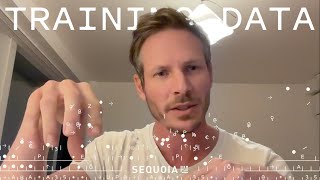
Thomas Wolf, co-founder of Hugging Face, is building an app store for robots. The company is selling a $100 robotic arm and creating LibreRobot, a unified software library with policies and datasets, to democratize robotics the way open-source did for AI. They're also launching Richie Mini, a consumer robot designed like a smartphone with an app store.
Chapters
Many, many startups just already being built on top of low robot. Just, you know, they want to build something, they have this idea of a manual test they can automate, or they have an idea of something they could do in the physical world. And then they take low robot. They take already like the basic building blocks we've shipped, which is just a robotic, a very simple robotic arm. So 100 that we designed basically to be the cheapest robotic arm to be $100. And they're already like trying to start business around this at the bottom, you know, it's the Hugging Face ethos, which is you bring all these platform, all these basic building BL people to build really crazy things on top. And robotics is the same goal for us.
In this episode, we interview Thomas Wolf, co founder and Chief science Officer of Hugging Face, the largest open source community for AI. Thomas has consistently predicted the future and he's responsible for why. Hugging Face invested heavily behind transformers and language models enabling the LLM wave a handful of years ago. Now he sees the same opportunity for robotics and physical AI and is helping to shepherd Hugging Face's LE Robot project, which brings together policy models, data sets and physical embodiments to help developers everywhere become roboticists across a diversity of use cases and form factors. We're excited to chat with Thomas about the robotics explosion, the bottlenecks ahead for physical AI, the US versus China in the open model race, and a lot more. Enjoy the show. Thomas, in your role at Hugging Face, you help Hugging Face invest behind moonshots as the chief Science officer one or two years ahead of the field. You mentioned to me last time we chatted that you have a spidey sense that we're at the same moment for robotics today that we were for transformers and language models a handful of years ago. Tell us what you're seeing.
Yeah, I think, I think honestly it started two years ago. I mean we started, we started our activities in robotics 18 months ago and I think at this time there was a couple of breakthrough out of, I mean, these labs, you know. Well, right, Stanford and basically these teams were starting to show robots that were able to tie notes, hold clothes, you know, cook like threw things in the air on a pan and grab them and basically all of these things we've in one way very little data, but also with also good perspective to be able to leverage some of the world models and things like that that we see really benefit from Internet size data. So all of this kind of pointed to a short future where robotics were going to work in a Way, like hardware was already there, and in my opinion, has been there for quite some time. But the missing brick was really software that could adapt, that could be dynamic, all of that. And we started to see that, and that's why we started to work on the robot a little bit more 18 months ago. And I think for us, the success of the robot, like seeing like this huge community, for us, the big bet was, can you build a big community in robotics as well? There were small community of kind of hobbies or people very seriously building robots for like, you know, factory lines. But it was kind of like a tiny vertical, in my opinion. The question was, could you move this tiny vertical to like a full horizontal thing? Just like nowadays, every software developer is kind of an AI researcher almost. They all want to know how LLM works, how you tr them. And there's this very smooth transition where the 100, 200 million software developers are becoming kind of AI aware. And I think there is a potential future transition where all of these people also become roboticists in a way, if you give them the tools. And so that was kind of our goal. So we started with the software library and the success of that kind of brought us to also try to go in hardware, which is a big question as well. And that's why we acquired first hardware company this year, Poland Robotics, and we shipped our. At least we opened the orders for our first robots that was mid July, so that's one month ago. And this went crazy.
Can you tell us what Loverobot is?
Of course, yeah. So love robots is our attempt of, you know, doing again, the success of Transformer reproducing, the success of Transformers library in the robotic field. So this idea is having kind of a central library that everyone would use and that would bring in a very simple and accessible and easy way. All the latest technology, all the latest algorithm that people use to train robots efficiently, all the latest data set that they use to train this, and also connect this to actuators, which is the hardware part of robotics. And that's this intersection and this mix of three aspects. The policy, the models, the data set, and the hardware which we try to combine in the robot.
How does the role of hugging face change in robotics for people building in the physical world? Does hugging face play the same role or a different role than hugging face has played for people building in the digital world? Digital world with LLMs, I mean, our.
Goal is to play the same role, which at a very, very high level is building communities and bringing people in this idea that AI can be Open source. And it's not something you only consume, but it's something you can tweak, you can train, you can control, you can host where you want. And actually hosting where you want is even more important in robotics because in a future where you have robots everywhere, you kind of want a lot of these models to run locally because if your robots lose connection to the WI fi or something, then run in the wall or maybe, I don't know, run in your kids. It's going to be much more dramatic than just an LLM hallucinating. So safety question in robotics, I think are a good reason. You may want to really be able to not depend on the distant API, but have the models as possible to the hardware. So I would say our role is maybe even more important for safety and future of robotics than it is in LLM.
Could you say a word on the size of the community you have at Liberbot? How many people are building, how many people are contributing data sets and things like that?
Yeah, for sure. Should have checked actually the latest number because it's exponentially growing. So it's several thousand people, I would say 6 to 10,000. One event we did a couple of months ago, we did a hackathon which was worldwide. We had 100 locations in over six continents. So it's still not in a million of people for sure, but it's way above several thousand people. And the main indicator for us is we can measure the number of data sets, for instance, on the hub. Now what we see in all of these things, number of community members or data set, we see kind of this exponential growth, which is, I think a very good indication that we are on the right track. And you have to keep in mind that the hardware that's available right now is still very much kind of a hobbyist hardware. So it's like 3D printed arms, it's like they still wired everywhere. And that's why starting this summer, we wanted to bring much more mass market hardware, I would say so something that would, you know, interest not only the hacker and the people who are used to plug cables everywhere, but also everyone in families, something that look much more polished.
What's the Persona of developers in your Librobot community? And I'm curious how it's the same or different from the people that have traditionally been building like controls, classical based systems.
I would say there is three types of personnel. I mean, one is the, the traditional roboticists, they definitely want to use AI. So for a lot of them, they know how to build hardware. They know what they can use, but they've been frustrated by, you know, the limitation of the software stack, all the optimal control models, and all these are very limiting what you can do. So all of these are people who have really happily joined the bandwagon. And we see many. We see the same effect we saw in Transformers, which is many academic labs starting to use the robots because it's a very nice entry point for all the students. And so this has been growing very strongly. The second community is much more interesting in my opinion. It's people who were not really into robotics, but because they are into AI and robotics looks like a physical manifestation of AI, they kind of want to go into robotics. And so these people that covers, I would say software developer, but even people who are just interested in robotics. So a good example talking here, it's interesting, but a lot of investors have actually bought so 100 arm just to try to understand physically what is this robotic thing, what can it do? And because it seems so accessible, you get the arm and the software is just a python code. And now, you know, with a little bit of vibe coding, you can actually even tweak it or control it quite easily. You know, we see people who maybe are not, you know, purely technical, but who want to understand what's happening in robotics and they use this entry point, which is the robot.
So you can vibe code the robot.
Yeah, that's really my goal. Yeah, so you can already do that a little bit. But for the new robots, rich mini, I definitely want this to be, you know, one of the easiest way to use. I would love my kids to be able to wipe code behavior on the robots.
What sort of phase of maturity do you think we're in for the robotics market writ large. When will we have a ChatGPT moment in the world of robotics?
Yeah, that's the thing I'm looking for sometimes call it also the iPhone moment maybe. What will be the first use case? The first moment where everyone or a large fraction of population will think, I want a robot. In terms of consumer, I think the enterprise market is quite complex. There is in some place there is already a lot of robots in some kind of industry. The car. Car manufacturing is the best example. Then there is this second part, you know, where there is like an entry of robots and here there is a lot of challenge around reliability. Will these robots be reliable enough to be deployed in retail store and basically, you know, be really useful and. But the third part I'm much more interested in is actually entertainment fun demo education where I think Maybe this question around, you know, I need a $3,000 robot because I need reliability, are less pregnant. And so you can take a robot that's really accessible. So HD Mini for instance, is priced at $300. That's something that can definitely be like an impulsive buy. You buy it as a, as a gift and you're not sure if it's going to work or not. But for this price, what we want to find is is there not a lot of potential in more entertainment, fun, education, learning AI through a physical interaction stuff instead of just coding on a chatbot or coding on the screen. And I think that's something that has not been explored at all. I think there was a couple of tried. I mean, the Meet Media Lab, Cynthia did Jibo for instance. But in the past they were using a. Priced a bit high, I think above a thousand. And more importantly, I think the, the software that was there was very limited. So you would buy a robot that would be fun, but you had maybe five or ten behaviors and once you've tried them all, that's it. I mean, it's finished. And here the goal for Richie Mini is really to make kind of almost like a smartphone. So it comes, you have a couple of behavior, but just because you can tweak it and people can build new behavior and share them and plug all the new VLN speech models, chat model, actually the possibilities are kind of endless. It's kind of an open door on like rebuilding, you know, the app store of iPhone, basically. So that's what I'm very excited. And to be honest, this last part is still very much a bet because nothing exists there. Like there is no like real proof. My just hints are all this exponential growth of community, which make it quite plausible.
So you see Ricky Mini as like the, you know, the reincarnation of the robot dog dogs of the 90s was like how people can actually play and experiment and you know, have like these robot companions in households.
I mean, to be fair, this one is a big bet. But something I was discussing just yesterday actually on robotics at Tech Barbecue, someone was telling me as an investor, you know, how just is so many, many startups just already being built on top of flow robots just, you know, people who are like, they want to build something, they have this idea of a manual test they can automate, or they have an idea of something they could do in the physical world and then they take the robot. They take already like the basic building blocks we've shipped, which is just a robotic, a very simple robotic arm so 100 that we designed basically to be the cheapest robotic arm to be $100. And they're already like trying to start business around this, to start like to sell something around this. And Richie Mini is also in a way designed for that. It's a very white, simple robot, kind of a white labeled thing. And if you want to adapt it and if you think, hey, I have a business idea around this, but I need a robot to interact with people I don't know in hospital or something like that, you can take this and you can actually start to build your ide. And that's kind of at the bottom. You know, it's the hugging face ethos, which is you bring all these platforms, all these basic building blocks for people to build really crazy things on top. And robotics is the same goal for us.
Really cool. I want to talk about data as a bottleneck. I think one of the big differences between language and robotics is you have trillions of tokens out in the public Internet to train LLMs. That dynamic doesn't exist in robotics. And actually I think that's where Hugging face's role in the ecosystem could be much more interesting in terms of decentralized data set curation creation. Talk about what's happening on the dataset side of little robot.
Yeah, it's super interesting. I think so. I mean there's a couple of challenges in robotics and I mean the general, the main challenge is in the data. There is just not enough data. There is some ways to use video on the Internet as training data, but it's very limited. And in some way we may be able to use models, but in some other, if you want to automate a test, there is no way around just recording someone or the robot possibly just doing the task. I think here there is one possibility and one limitation. I mean the main limitation is you can record a lot of tasks yourself, but usually what you will lack a lot is the diversity. So you will basically be able to train a robot to do something very well in your room when everything looks the same. But once you put it in the next door room where maybe the walls are green instead of red, the robots has a lot of troubles to generalize. So this is the main limitation. And so our idea with the hub was that everyone could record data sets and if we managed to incentivize them to share the data, then we could maybe build a very multicolored data set that would like multi location data set that would be extremely diverse and in addition hopefully would be also very big. So I would say that's a long term goal. We hope this can help. But another more direct things we try to do is to work also directly with the actors of the community. So we release a couple of data sets to try to help them. Releasing some data set. We think in robotics one of the nice aspects is a lot of people in the end want to sell the hardware and so they can actually afford to even modern LLM, they can afford to share a bit of the software as open source if it brings all the field above. Because in the end that's not really directly what they sell. So that's kind of what I'm trying to convince a lot of robotics company to do. And surprisingly it's actually something a lot of them seems to be interested in.
Super interesting. You tweeted about world models the other day. I think you and I met the same world model founder. What's happening in the world model open source and how does that help or not help? What's going to happen in robotics?
And can I ask on that too, is there a why now in world models at the moment? Because it feels like they've started to pop up recently.
So what is interesting is it feels like it's a couple of teams who have been actually working on that independently for a few months and they just happened to release their right now. Right. Because when you talk about all of them, they are not really copying each other. I mean, I guess one thing was the advent of really cool, really good image generation and basically finally understanding how to fix this six finger things and basically just get a more reliable and more coherent world model for image which naturally was transported to video. And so we see now some really cool video models as well. And this one is just one next step. And a lot of the founders I've talked to in this field also say that they were helped by the advance of like open source video model generation and open source image generation. And basically they take this video generation model and then they fine tune them and then they train them to be able to react to some inputs, which is also what we do in robotics. There's a lot of common points between these two things and it seems to work quite well. So you start to have this kind of very interesting, in my opinion, totally new experience where you actually have a film that's controllable, that's like both photorealistic and also, also reacting in a very coherent way to the action you will input, which is either just moving around or just asking it to add something, add a rider, a castle, A car driving. And you see this thing that just reacts very well. And you have here, I think a lot of potential application, both obviously in entertainment, actually some form of entertainment that might be just totally new, something we've never seen, which is maybe the first time we create a new form of really virtual entertainment, but also a lot of application in business and how you can have interactive thing. And one of these downstream applications is generating more data for robots. I mean there is just two ways to generate data. One is to record it in the real world, which I think is still very interesting. And the other is to simulate it. And surprisingly on the simulation we have not seen a lot of. I mean there was some development, but it's not like there've been some really breakthrough recently on simulation. So maybe this is the first breakthrough I've seen on simulated generated data in quite some time.
Yeah, I was very excited to see some of the Even like what DeepMind's doing with Genie to train, to train their embodied robots. Super exciting humanoids. Do you believe in humanoids as the kind of ultimate form factor?
Yeah, big debates, big debates. What is sure is, I'm quite more excited about trying other form factor right now. I mean the main, the main problem with humanity, I think there is two main problems. The first one is it's always quite expensive just because you need a lot of models and, and all the price in the robots is just the actuator that's always like 70% of the price tag. And so when you have 60 actuators that's just your bill is the year. And so it's really hard to drive humanoids below the price of a car. I think the price of a car is still already quite a high requirement. If you buy something as the price of a car, you do expect to have a lot of value out of it. Right. And so that's why we're exploring like smaller robots, like just one arm or just moving head and this type of thing. There is some possibility that we can get cheaper humanoid at some point. Kscale was trying to do unitree is they've been trying to cut the price and there's a lot of company try to aim, but it's going to be really hard I think to get this under like 10k, $10,000, something like that. The nice thing about the humanoid of course is once you've solved the humanoid, you solve a lot of tasks at the same time. So if you solve the humanoid you can do everything a human do, which is very exciting. And the main question is do you need to solve the humanoids? So on my side, I'm more like, I would like to see a galaxy of different form factors. I also think some of them are much more cute than the humanoid. I think for social adoption. I think the humanoid is also asking a lot from people. Right. It's like this. You're directing this kind of uncally valley with something that looks a lot like you, moves a lot like you. So I thought this would be a big limit for social adoption. Now, to be honest, I've seen a lot of Unit three robots. I don't know about you, but you kind of ignore them at some point. So I'm also much more confident that people will just say, yeah, let's just maybe we're too, too worried about the uncanny valley in robotics. And maybe at some point, once we start to have seen like a couple of robots, people, we just accept them very, very easily.
Okay, so we're going to see the robot humanoid soon.
I mean, the goal would be if we chimney and our small robots work really well, that at some point we'll climb back to make it the humanoid form factor, say kind of progressively as we've done, bringing the community along with us.
As you imagine the world in 10 years, how many robots do you think there are among us? Do you think it's like 80% of them are humanoids and then 20% are this long tail of this diversity of hardware and use cases, or how do you think the world plays out?
Yeah, and I would love to see the second option because I think that's an option where we have much more robots in our life. What I would really not be super excited about is a future where kind of robots are kind of an elite thing because they cost 100,000. And so basically, if you're rich, you have three robots at home, and if you're not, you don't. I mean, Hugging Face has always been also about the big community, so we care about that. And so for this reason, I'm much more excited to see a lot of form factors that are basically accessible to a lot of people. Some of them are cheaper, some of them are more expensive than just this single humanoid that cost a lot. And if you can buy it, that's nice, and if you can have, not too bad for you. So I would say at Hugging Face, that's the future we try to nudge, to push toward. And I think also it's much more fun because in a way you're so restricting yourself. Just like LLM, if you Just try to make them copy human, it's one thing, but if you try to think maybe they can do something that human cannot do, it's also much more interesting in a way.
Do you think we're heading towards a world of big foundation models that can do everything and then be adapted quickly to any new domain with just like, you know, a few prompts? Or do you think that developers in your community are going to start from like a small base model and then do a lot of their own data collection customization to adapt to their domains?
I think we'll see more and more both. I mean, I think as the field evolves, you know, we start to see really a long tail. So for instance, if we take the downloads on Hugging Face, we see both like very large state of the art models being downloaded, which are usually too large to run on a local laptop. But we see also some of the most downloaded models are actually just the right size that fits to run quickly on the laptop. So we see these two like really modality and I think as, you know, as the field kind of mature, we'll start to see this more and more, which is, it's not like you choose one or the other, it's just depending on what you need, you may choose locally or not. And I think GPT5 with the router is a good example of this. Maybe the largest model are the most reasoning, the longest reasoning chain is not the answer to everything and you actually need to smartly select the one you want. So it can be behind a router, but it can also be just locally. You run some models here, they might be extremely useful and we know better and better how to train models that are actually extremely useful. But when you need something much more complex, when you need reflection for a very long time, then you will turn to much larger models.
One of the narratives that's been really popular over the last few years is this narrative of the battle between open and closed, closed models versus open models. Who's going to win? And just in the last few weeks, OpenAI is now present on Hugging Face. And so I'm curious what to make of that and sort of what it might imply about the future of open versus closed or maybe how they work together.
I mean we're super happy to welcome them back. They were there. I mean the first model I worked on and the reason we switched from being a game company to an open source platform was GPT1, which not a lot of people remember but was very funny because it was trained mostly on novels and romance novel and so when you would put two characters in the continuation, they would always fall in love in some way or another. Very cute. Still miss a little bit this one. And then Google took this idea and trained it also on Wikipedia which added a lot of world knowledge and then he expanded to GPTT all of that. But at that time they were very pro open source and I think open source, just like in software, I think both solutions we just coexist and having company that open source both or that do both. I mean Google has been an example for quite some time, right with the Gemma line and Gemini line and some interesting moments where sometime I heard that one Gemma model was actually so good that it was better than closed source models so they had to not open source it. So the frontier, what is true is quite seen at the moment in a way and the challenging, you know, the challenging new players mostly in China. But I think we'll start to see also some new foundation models team in the US So I think we might see also some challenges in the U.S. the frontier will stay quite seen I think and both, both things we'll see with a tiny difference of performance. The main reason right now I think is to be honest, at this exact point of time, I think we're not exactly in a kind of cost saving time of AI. So which means that for a lot of actors, I think moving to open source because it saves costs is not the most important thing for them. So usually they move to open source right now because they want data privacy, they want to be able to adapt the model. They have maybe have a new idea or this, this action model for instance. They have a new idea of something that does not exist and they want to do that. So that's usually what we see right now. So we see a lot of emulsion of new exploration in open source way. What I do expect is as we go to a more mature market as well then the cost and being able to run it maybe on faster hardware or this type of other hardware and then being able to arm the model and to own also the full stack of where the models run will become actually more and more important. So I think just like in software, I think in the long term opens open source is kind of a winning solution for many applications, for many use case. But we're still in the turbulence place where.
Yeah, how do you think Hugging Face's role in the LLM ecosystem has evolved as these models have pushed at the frontier and there's closed models. I remember back when it would be like you could Download the small berk model on hugging face and run it locally. Right. And that was a lot of the usage. How has your business evolved now that we're going towards, as you mentioned, models that are too large to run on consumer hardware? And how do you see hugging faces role evolving?
I mean, surprisingly I was doing these stats at the end of last year. This burst model is still really used a lot. So a surprisingly interesting aspect of open source is also resiliency, which is once you have something that worked, that really work in production, you may not want to be forced to move to the new GPT. Right. I mean that was a little bit of the backslash around GPT5. Just people actually wanted to keep using GPT4O for many things. Maybe they fell in love with this or were their main friends. Some Reddit posts was around this. But also maybe they just had their applications work really well and they don't want to redesign it. I think open source, I mean the long term interest for us is also to provide this very stable base. Like you build something, you know it will exist and you know, you can keep this as a very stable base. And in general, I think in the community our role has switched progressively from maybe pushing ourselves a lot of things, pushing our library, pushing our, you know, our early product to more like enabling more and more the community in general. So we, we work now a lot with many, many actors of the community. We work a lot with llama, cpp, we work a lot with vllm, we work a lot with all the big players to try to see, you know, how, how this whole ecosystem can be very efficient, can work really well. So like one model is released, you want to be able to use it directly in vllm, you want to be able to use it directly in lamasspp. So more this kind of role of meta community builder where we try to align and to bring maybe all the players, you know, at the same pace and to help them move in the same way. So in a way we are much more focused on the, on the community, on the Hub than we were maybe a couple of years ago.
Really cool. What do you think about what's happening? You mentioned, you know, China's had a lot of the open models recently. Like why do you think that is happening and what is the state of open model development in the West?
Yeah, this is the most surprising thing that happened, I think in the last two years, right? The fact that China would become a champion of open source. Who would have predicted that in 2000s, right. And so I've been actually visiting them two weeks ago to try to understand a bit better on the ground how it's happening. And the thing is just, it's a very, very competitive market internally. There is a lot of teams there that are extremely good. And it reminded me in some way of Silicon Valley. People are working extremely hard and they compete with each other. All of these model provider. One part on which they compete, which is surprising is being the most open is the open source aspect. So they're extremely proud of being very open. And some of these companies that stopped being open, one was called zipu, they decided to not open source it and they saw an immediate black slash, I think mostly on hiring, like people didn't want to come work there anymore and so they went back to open sourcing. So it's quite strong now, I would say strongly ingrained. So I would expect this to continue. I would expect also quite more team to come because I see a lot of, you know, I mean, we see that as well. Right. When you, when you have the presentation of GPT5, like a lot of people are, you know, actually did our study, some of them at Tsinghua University. Right. We know the team are here also, you know, partly with Chinese members. So they have extremely, extremely strong people and they all really want to train the best model. What I think is interesting is to see the west kind of coming back to open source very recently, to be honest, just over the summer. Right. But this call for open sourcing, OpenAI decided to come back. Now we're just waiting for Anthropique to maybe open source, their first model. So I think it's time to try to ask them to, to participate. Yeah, I would say right now the situation for open source is pretty good. But yeah, it's like the Jedi and Star Wars. It's never one. We have to keep pushing this, we have to keep pushing our flag of openness.
What's driving the resurgence of open source in the West?
Yeah, I think one thing is when you have in a way nothing to lose, Open source is always a good solution when you're on your team. So it can be, for instance, you create a new company and you want to quickly rise to the top, then you open source your model. Right. That's the Mistral recipe. How can you very quickly become a great player? But for the Chinese, for instance, it's also for instance, in the west, almost nobody will use a Chinese API. So they don't sell API in the west anyway. So in a way they have nothing to lose from the western market by open sourcing their market there. So, so I think there is this thing at play and the consequence of that is also that when nobody's open source, it's like a market, there is an interest for someone to take the room, right? Say we're going to be the open source player. So meta was this open source player when everyone kind of stopped open sourcing. And I feel like there will always be this thing when some people stop open sourcing and then there is actually a gap to being the only the new top open source actor. Then someone will want to fill this void.
Thomas, you mentioned that you know, western companies won't use a Chinese model over, you know, Chinese API. What about are you saying western companies are actually willing or not willing to use Chinese open models when it's, you know, the weights and you know, hosted on US servers? Like is there still hesitance to do that and is it well founded or not?
I don't see that a lot, to be honest. I mean it's a good question. I try to do regular polls, I try to ask a lot of people regularly, what do you think about that? Because it can be for sure a concern, right? There was when Deep SEQ came out and there was a very nice Anson sort model from Perplexity for instance. The thing is, in many business case I don't think people really notice anything. So I think there is more a general appetite for people to have a better way to understand the safety of a model. I would say it's quite general. People are a little bit worried about having a model that maybe will behave strangely in some cases. And so I think this is a general thing that a lot of companies have been asking which is can you guarantee this model will always behave well? Which we know is really hard because even with GPT sometimes you ask the number of R in Strawberry and it's just behaving badly and you're like, why you're very smart, you should be able to know that. That. So I think this is a general thing that is needed soon and there's a couple of teams working on that for sure.
Can we talk about open science?
Yeah, we build LLM like human. But what if, you know, an AI model could see infrared, could see some radiation. We cannot. This is things that human cannot do. So it's already superhuman and for science it's actually super interesting. So a lot of the AI models for science are already superhuman in a way because they can actually either see modality or predict things that are just Inaccessible to, to human. And it's good, I think it's a good ground to think outside of like the human limitation of what we can do.
And you've been pretty passionate about open science for a while. So can you just say a word about what is open science? What role does hugging face have to play and where does your passion for it come from?
For me, it started a very long time ago. So before hugging face I was a lawyer, but before being a lawyer, I was a researcher in physics. And so I was working on this superconducting material. And surprisingly in superconducting material, a lot of the great research had been done by the Soviets back in Soviet Union. And these people, I mean Soviet researchers have a very different way of inventing theory than the Western world has. And so they had some really great idea and some really interesting things, but I had to find this invention or this theory. I had to find them out, to track them down in the Soviet GTP letters and some of them were even still in Russian. And so from this time I got decided that damn, accessing knowledge is hard. And if I can make this easier, that's going to unlock a lot of really cool stuff. If I could just find where, you know, that's this equation comes from and really be able to read this article, that would be crazy. And so when I joined computer science, I discovered archive, I discovered open source. I was like, this is really cool. Everything's just free. Basically everyone just share things, read in English, everyone can read it, it's even free, you don't even have to buy the publication. And I was very excited about that until I started to try to reproduce one DeepMind paper. And I discovered that there was a limit because people publish what they want to publish, but they don't really give you all the tricks of the trade. And so when you try to reproduce that, you discover that it just doesn't work. And so open science for me was this extension which is, it's nice to give open models to people so they can and build things on top, but it's even better to explain how to train a model. It's a thing. It's nice to give a fish to someone to feed them. It's even better to teach them to fish. And that's basically what we want to do. We think in the very long term AI is going to be such a fundamental technology that basically it should be just like physics should be something everyone could learn by reading a book. Like if you want to learn today about general relativity, you can Read a book and you can know about it, right? You don't have to pay to get access. I mean you, you buy the book or you find it, but that's, that's basically free access. I think AI all the recipe to train an intelligent object or artifact should also be something that everyone should know. So I mean that's a very long term thing. But the very short term thing is if we teach people how to train great models, then they bring great models on the hub and then we have much great content to offer. So it's kind of also just content providing. If you provide great model, it's not nice. And so one example that we do for that is we write very long blog posts that some of them even become books. We just published the books this summer on how to train on a thousand GPU and how to balance the load and how to do all of this parallelism thing. Another very long blog post we wrote was around how to make a very good quality data set. And so we made a data set to pre train the models called Fine web and it's used in a lot of the recent models, the Quinn models, they say they use fineweb for instance, in part. And then we also wrote how we built this data set, how we filter it, what is important to understand when you want to build great data to train models. So all of this I think just go together and for us is a way to basically bring just better open source AI models in hugging face.
I want to go back to your physics and superconducting comments. It feels like a lot of the AGI labs believe that AI actually disrupting science is not that far out. There's been some exciting discoveries. Well, I think there's been exciting evidence so far in math and then maybe extending into physics, material science. Do you think we're going to see an inflection point in scientific discovery from these models? And what do you think open source's role will be in driving that?
As always, it's nice there is some hype here because then it drives people. But I think sometimes we overestimate what's happening. I mean math is a good example, right? There was this idea AI is doing new proof for some math theorem and that's like inventing new science science. I think as a scientist myself, I think that's really the wrong way to view science. The reason is I was a bad scientist, so I can tell about that. So I was a very good student. So when you give me a problem, I'm always pretty sure I can Find the proof, I can find the thing, But I know this thing has a solution. So I just have to fill the gap and kind of grab a couple of things I know and then combine them together. And when I became a researcher, I discovered that I was a pretty bad researcher because basically what I was not able to do was I was not able to ask the right question. So if somebody asked me a question, say, can you demonstrate this theorem? I could do it. But if someone say, okay, what is interesting to explore now in math? I had no idea, basically. And so in science, the main thing you need to do, if you want to do, I am talking about big, big breakthrough, right? Is you need to ask the right question. You need to find a way to ask a question nobody has asked before. And a question that will open a whole new field of research. And that's basically a Nobel field. A Nobel Prize. Nobel Prize is typically someone who just open a new field of research because this person just asked the right question is maybe, you know, maybe the speed of light, the speed of light should be the constant. And let's explore what does it mean? And it means actually we can create general relativity and then we can invent black hole out of it. And I think LLM right now are still extremely bad at this thing, at this kind of tasteful way to ask the right question. Which doesn't mean we cannot do really cool stuff with them. But the way I see them nowadays is really more as very useful helpers. So once you have human researcher who say this is something interesting to study, then you can use them to actually multiply by 10, 100 or thousand the prediction you can do. You can use them to quickly do a full survey of what has been done in the past on this molecule, this protein. You can use them to say, okay, what would be the most logical way to test this hypothesis? But I still see this as kind of accelerator and assistant of scientific research than what I would love to see, which is an AI that would say, hey, I have an idea on how to go faster than light. But for this, you cannot just write the answer on how to go faster than light. You have to ask the right question. What should we change to today's theory? Or what should we do today? What should we reconsider to invent something that has groundbreaking to your point on.
Asking the right questions? What do you think are the interesting questions in the world of AI right now? Now, or maybe the questions that people are not asking that they should be asking?
I mean, this is one question I think and it's related to something we talk a lot, which is this sycophancy, which is tendency of AI models to always agree with you. I think a good researcher is actually a good example of person who disagree with a lot of people. My former professor was a Nobel Prize, was very not friendly in how he would describe, but I think that's part of it. You have to be extremely opinionated. So finding a way that this, you know, to push this model to have maybe in a way stronger opinion or maybe a taste in their opinion or like I think for science will be a key. And it may, of course this will be based on deep learning and LLM, but it may involve other way to train them, other way to think about them. I think that's one of the big question. I think not, not a lot. There is a couple of people exploring that, but not a lot of people are exploring.
Okay. When you see the world in 10 years, like what, what, what is hugging face's role in it, how much of your community you think is building with LLMs, with robotics? I know it's hard to think in 10 year time spans, but what do you think the world looks like in 10 years?
Yeah, 10 years. Very, very different. I mean what I would love to see is in 10 years a world where basically everyone feel like they can build with AI and now they're just, just consuming AI, but they feel like they can be actor of this thing. A little bit like the difference between we used to have a lot of media that were generated and created for us and then we moved to the current era where everyone is actually able to create media and we saw that this created a whole new generation of people and YouTubers and influencers and people actually making extremely interesting content. And I would love AI being the same, which is like a very big community, like the software developer community, where everyone can create things with AI and the feel like it's just another tool in their box. They can code stuff, but they can also train a model and they can mess with, maybe adapt the model. So the nice thing about that is I'm a big believer in basically the creativity and natural invention of just the community. I think it's something that's very beautiful to witness. So in 10 years I hope that people are not just consuming, you know, AI content and not doing anything, but they're actually exerting their creativity to build really nice things with a lot of AI tools around them. To be honest, that's something that I think that's kind of what we are building right now. So I'm quite optimistic. The thing is going to change a lot of things for society in general because a lot of this job will just be different.
It's a beautiful vision. Thomas, thank you so much for joining us today. We really enjoyed this chat.
Thanks. It was a pleasure. Sam.
More from Sonya

Building the GitHub for RL Environments: Prime Intellect's Will Brown & Johannes Hagemann
Building the GitHub for RL Environments: Prime Intellect's Will Brown & Johannes Hagemann



Context Engineering Our Way to Long-Horizon Agents: LangChain’s Harrison Chase
Context Engineering Our Way to Long-Horizon Agents: LangChain’s Harrison Chase

How Ricursive Intelligence’s Founders are Using AI to Shape The Future of Chip Design
How Ricursive Intelligence’s Founders are Using AI to Shape The Future of Chip Design

Training General Robots for Any Task: Physical Intelligence’s Karol Hausman and Tobi Springenberg

Why the Next AI Revolution Will Happen Off-Screen: Samsara CEO Sanjit Biswas
Why the Next AI Revolution Will Happen Off-Screen: Samsara CEO Sanjit Biswas