Fireworks Founder Lin Qiao on the Power of Small Models to Democratize AI Use Cases
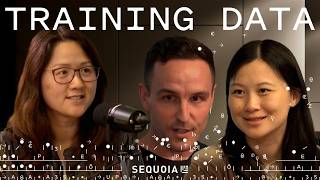
In this interview, Lin Qiao, founder and CEO of Fireworks and former head of PyTorch at Meta, explains how a five‑year effort to productionize PyTorch at Meta—supporting over 5 trillion inferences per day—shaped Fireworks' mission to compress AI time‑to‑market from years to weeks or days. She argues that a single‑framework strategy centered on PyTorch enables simplicity at scale, allowing Fireworks to offer a SaaS platform that delivers low‑latency, low‑cost generative AI inference and high‑quality fine‑tuning via a small‑model stack. The conversation dives into technical optimizations (hand‑written CUDA kernels, distributed and disaggregated inference, semantic caching, aggressive quantization) that hide complexity behind a simple API. Lin outlines the customer journey—from startups exploring with OpenAI models, to digital‑native enterprises, to traditional enterprises—highlighting the need for ultra‑responsive, cost‑effective AI. She details the challenges of fine‑tuning (data collection, labeling, algorithm selection, hyper‑parameter tuning, product‑design feedback loops) and how Fireworks automates much of this workflow. Lin predicts convergence between open‑source and closed‑source model quality, emphasizing that customization and automated tailoring will be the differentiator. The company’s vision includes a function‑calling model that routes requests across hundreds of curated small experts (a mixture‑of‑experts architecture) and integrates public and private APIs to provide “total knowledge.” She discusses competition from Nvidia, OpenAI, and other vendors, noting that market forces will bring more players and that model innovation will continue even as capabilities plateau. Finally, Lin expresses optimism about AI agents and the next wave of model architectures.
Chapters
We thought replacing other frameworks as a library with Pytorch could be simple. Just swap the library. How hard can that be? But we were like, we realized, we thought it's just a six month project. It turns out to be a five year project for us to support entire Meta's AI workload building on top of Pytorch because we have to rebuild the whole entire stack from scratch, from ground up, because we have to think about how to load data efficiently, how to do distributed inference in Pytorch efficiently, how to scale training efficiently, and then we end up rebuild the whole entire inference in training stack on top of Pytorch. When we left, it was sustaining more than 5 trillion inference per day. So that's a kind of massive scale by two sapphire years. And the Fireworks mission is to significant accelerate time to market for the whole entire industry, compressing it from five years to five weeks or even five days time to market. So that's our mission.
Joining us today is Lynn Tiao, founder and CEO of Fireworks. Lynn is an AI infrastructure heavyweight who previously led Pytorch at Meta, which is the backbone of the entire global machine learning ecosystem. She's taken her experiences at Pytorch in order to build Fireworks, an inference platform for generative AI. We're excited to ask Lynn about the market trends behind AI inference and how she plans to support and even accelerate the market shift to compound AI systems at Fireworks. We're thrilled to have Lynn, CEO and founder of Fireworks, with us today. Thanks for joining us, Lynn.
Thanks for having me.
Well, we're really excited to talk about a lot of things with you today, from Pytorch to the small model stack that you're building, to what you're seeing in terms of enterprises building, production deployments. But before we get there, can you maybe say a sentence or two on what you're building at Fireworks?
Yeah. So we started fireworks in 2022 and fireworks is a SaaS platform first and foremost for generative AI inference and high quality tuning. Especially using our small model stack, we can get to very low latency for real time applications, very low cost for sustainable business growth and customization, automated customization for tailored, high quality for enterprises. So that is Fireworks. Wonderful.
I want to maybe start with the Pytorch story. Pytorch is kind of the foundation upon which the entire AI industry runs today. And you and Dima and some of your other co founders were integral and leaders of that project at Meta.
So think about Pytorch as a programming language for digital brains and it's designed to for researchers to very easily create those digital brains and experiment with it. But the challenge of Pytorch is it's very fast for people to create various different deep learning models, the digital brains, but the brains don't think fast enough. So that's a challenge I took on to address while I was head of Pytorch.
And you've mentioned before that most of the companies that are trying to build something similar to what you're building in Fireworks have chosen to be framework agnostic. Whereas you very much made a big bet on Pytorch. Can you say why make the big bet on Pytorch and what benefits that brings to your customers?
That is really based on what I see when I operate Pytorch and mana also across the industry. And I clearly see a furnal effect that Pytorch is because it started as a tool for researchers, it started to dominate the top of the furnow for model creation. And then the next stage of Furnow is people doing applied production work. They take those research models and test it out for production setting and try to validate the hypothesis and then feed into production. So that's clear funnel effects that's happening. And as Pytorch is the diaphragm researcher it take over the top of the furnnel and it's really hard for people to rewrite into other frameworks for production and and naturally it just flow down towards the bottom of furnel and that's how Pytorch become dominant. And I'm starting to see more and more models, especially more nascent models are all built in Pytorch and run in Pytorch in production, including the generated AI models. That's why we only bet on Pytorch and we don't want to distract also to support other things.
So researchers like it and it flows downstream from there. What do researchers like so much about Pytorch?
Simplicity. Simplicity scales and that's kind of lesson learned through the journey of Pytorch and Maddoc and also building out the community. It is a relentless journey to focus on simplicity and we have a constantly seeking how to make the user experience simpler and simpler and hiding more and more complexity in the back end. For example, when I started this journey at Meta, there are three different frameworks Caffe 2 for mobile, Onnx for server side production. Pytorch for research is too complicated. The mission is to reduce three frameworks into one to simplify. But it's actually a mission impossible after I consolidate all three teams and there's no consensus to how to simplify and build this one stack. And we took a very idealistic approach and take the Pytorch frontend and take the cape to backend and we said we're going to zip them together. It seems simple, but it's very hard to do because these two frameworks were never designed to work together and the integration complexity is even much higher than build a framework from scratch. So too complex. And then we said forget about it, we're going to all yump high torch, keep it beautiful, simple front end and rebuild the backend. So we build Torch script, that's PyTorch 1.0. So that's really the key focus on simplicity wins over time. The other interesting thing is we thought replacing other frameworks as a library with Pytorch is going to be simple. Just swap the library, how hard can that be? But we realized, we thought it's just a six month project. It turns out to be a five year project for us to support entire metas AI workload building on top of Pytorch because we have to rebuild the whole entire stack from scratch from ground up because we have to think about how to load data efficiently, how to do distributed inference in Pytorch efficiently, how to scale training efficiently and then we end up rebuild the whole entire inference and training stack on top of Pytorch. When we left it was sustaining more than 5 trillion inference per day. So that's a kind of massive scale by two to five years. And the Fireworks mission is to significant accelerate time to market for the whole entire industry, compressing it from five years to five weeks or even five days time to market. So that's our mission.
Maybe when you look at open source standards there's a lot of people that are trying to do it on using VLLM or TensorRT LLM. How do you think about how Fireworks compares to what's in the open source?
I really like both projects and because my heart is in open source, based on Pytorch experience, I will say both projects are great projects for the community. I think our biggest differentiation is first of all Fireworks off the Shelf is faster than both of the offerings and second is we're building a system where not just a library and our system can auto tune towards our developers or enterprise workload to be much much faster and to be much much higher quality and that cannot be achieved by just library. And we are building all this complexity going back Again to our journey of Pytorch, we are providing a very simple API but hiding a lot of automation. The complexity automation complexity of auto tuning behind the scene. For example, when we deliver our inference with high performance, high performance here means low latency and low cost. We handwritten CUDA kernels, we implemented distributed inference across nodes and disaggregated inference across GPUs where we chop models into pieces and scale them differently. We also implemented semantic caching where given the content we don't have to recompute and we capture application workload patterns specifically and they'll build into our inference stack. We have many other optimization we have been specifically designed for different use cases that is not like general purpose or horizontal. So that is being encapsulated. We also have complex optimization for quantization. You can think about. Oh, quantization is just one technology, how hard can that be? But you can quantize so many different things. You can quantize KV cache, you can quantize weights, you can quantize communication across GPUs across nodes and AO different performance gain and quality trade offs. We also automate quality optimization. There are many things we're doing behind the scene to deliver a very simple experience to the app developers. So they innovate this concentrate their cognitive bandwidth to innovate. On the application side.
I like your comment earlier about simplicity scales and as you're talking through everything that you've built to make this such a simple and delightful experience for your customers, it reminds me of the idea of conservation of complexity. The amount of complexity required to deliver any given task can be neither created nor destroyed. It's just a question of who takes the complexity.
That's right.
And it feels like yours is a business where you have embraced an enormous amount of complexity to make life simple for your customers. And actually my question is about your customers. So where in the AI journey of your customers, where in their AI journey do they say wait a minute, we need something better and then what brings them to you?
Yeah, so we've seen pretty consistent pattern that last year people all start from OpenAI because they are in the heavy exploration mode. Many startup they have some creative ideas, application product ideas and they want to explore product market fit. So they want to start with the most powerful model where OpenAI provides and and then when they they feel confident they hit partner market bid, they want to scale their business and then the problem comes in because as I mentioned most of the Geni application they are B2C Consumer Personnel Developer facing it requires Very high responsiveness, low latency is a critical part of product viability. Without that they don't, it's not a viable product. People are not patient enough to wait for half a minute for response. That's not going to work. So they are actively seeking low latency. And then another key factor is they want to build a sustainable, viable business. They cannot bankrupt quickly. And the weird thing is not in.
This market they can't.
The weird thing is if they hit a viable product, that means they can scale quickly and if they're losing money at small scale, they're going to bankrupt quickly. Right. So bring down the total cost. Ownership is critical for them. So that's why they come to us.
So it sounds like I remember you had this insight a year or so ago and we spoke about, you know, training tends to scale in proportion to the number of researchers that you have, whereas inference tends to scale in proportion to the number of customers that you have. And in the long term probably going to be more customers of AI products than AI researchers out there. And therefore inference is the place to be. It sounds like you're kind of the customer journey sort of begins as people are going from training into inference. What sort of applications, what sort of companies are at that point where they're starting to really go into production.
There's so many ways to answer this question. It's a very interesting question. So first of all my hypothesis when I start a company is we're going to take on startups first because they are most tech advanced. There will be ton of startup built on top of Genai. Then we'll go to digital native enterprises because they are tech forward and then we'll go to traditional enterprise because they are tech conservative. They want to observe and adopt when the technology and the product ideas are mature. So that's kind of my hypothesis and it totally blew my mind what's happening right now because we have a lot of inbound of startups, we are working with digital native enterprises. We're also simultaneously working with traditional enterprises including health insurance company, healthcare companies and banks. And especially for those traditional enterprise, usually I adjust my pitch to be very business oriented because hey, you know, that's kind of my, maybe my bias and kind of want to strike a meaningful conversation with them but they quickly dive into very low level details, technical details with me and it's very, very engaging.
What are the people doing like at a traditional enterprise? Who are the people that you're engaging with?
So we like is it, that's a.
Very innovation person, AI person or is it more business line leader or somebody who owns a production application?
Yeah, so I think it's start to shift. We are more engaging start with ctos they kind of, I feel like this business is shifting towards innovation driven business transformation and that's why we encounter more CTOs than like the C or other CISOs. So that's kind of interesting shift. But yeah, across the board I think there are multiple fundamental reasons why that's happening. That's my hypothesis. One is all the leaders realize current geniwave is similar to the cloud first shift or similar to the mobile first shift. It's going to remap the landscape of industry. Startups are growing really fast and the incumbents feel threatened if they are not innovating fast enough they will be obsolete, irrelevant. But also across the income they are heavily competing with each other. They're competing how fast they kind of transition their business to be to create more revenue, to be more efficient using gen AI. So that's one phenomenon. The second phenomenon is generative AI is different from traditional AI. I would say kind of this is like very different. Traditional AI is giving a lot of power to hyperscalers. Right? Because traditional AI is you always have to train from scratch. There's no concept of foundation model you build on top of and that means you have to go off and curate all the data and the data rich company, usually they are hyperscalers and you need to have a lot of resource investment to train your own models and so on. So that is before Genai it's less affordable, it's concentrated in hyperscalers postgenai because of this concept of foundation models people build on top of foundation models and you don't train from scratch. It's not meaningful. It's all the same data. It's all the Internet data you can crawl. It's a more or less similar model architecture. It's a waste of resource if you train from scratch. Instead you fine tune, you tune based on your small data set, high quality small data set. So it becomes a small data, small model problem and it makes it so much affordable to everyone to assess this technology and that's why everyone is jumping in to embrace it.
How many of your customers are using you for fine tuning versus just using base model. And what do you think goes into building a great fine tuning product?
It really depends on the problem they are trying to solve. We actually see the open source model is becoming better and better. The quality difference between open source model and the closed source model are shrinking and my prediction is going to converge at the same model buckets, same model size.
I think open and closed will converge.
The open and the closed will converge.
Do you think there will be a time lag where closed is always six months ahead or do you think they'll.
Just be neck and neck for same model size? Especially like between 7 to 70 billion or even within 100 billion model size the quality will converge. That's my prediction. We'll see after a couple of years and we will come back to this podcast and see how it goes. So the key here is customization. If this trend is true, then the key differentiation is how we customize those model towards individuals use case towards individual's workload.
And is it easier to customize an open source model than a closed source.
Model or so I would say it's easier. It's just open source model tend to have a much richer community and there are a lot more people working on building on top of those models. For example, a llama 3 model, it's a very very good base model. It is very strong in instruction following a four way instruction is very very well. So it's very easy to it to align the model to solve a specific problem really well. And for example, we have been investing in function calling strategically as a direction we can talk more about that. It's an old topic by itself, but we find fine tuning a function calling model on top of llama 2 is so much easier compared with fine tuning based on mixture models or previous llama 2 and and other models. So that's just kind of the base model. Open source base model is becoming very, very strong in instruction following, in logical reasoning, in many other basic capabilities. So it's very easy to morph it to become a high performance model for solving specific business tasks. That's the power of small models.
If we think about just open source software, open Source Infrastructure software. 20 years ago Open source was thought of as a fast follower sort of thing. You know, red hat being a canonical example. And then more recently open source is not the fast follower, it's actually the innovator. And you think about Mongo or Confluent or some of these other great open source businesses that have been created. Do you think there are areas in the world of models where open source is actually going to lead closed source and is actually going to be ahead of the proprietary models?
So I think the dynamics is very interesting right now because the proprietary or closed source model provider, they are betting on very few models. So OpenAI's LM models are like maybe three models or you can think about that as one model because what is a model model is the model architecture and data training data that defines a model. So I'm pretty sure they use all the models. They have more or less similar training data. Model architecture is more or less similar. So it's kind of scaled all parameters and so on. It's not just OpenAI I think Entropic or Mistral. And also all these kind of model builders, they have to concentrate the effort to focus on a specific model segment that's kind of the best roi. Yeah, that's a business model but open source push a different dynamics because it enables so many researchers to build on top of it. So that's kind of the small model phenomenon. It's smaller and it's easier to tune, easier to improve quality, easier to focus on specific problem space. So it enable thousands of flower to blossom, thousands of flower blossom. So that's the direction we believe in is to solve an enterprise problem. A thousand flower blossom is much better for enterprise because you just have so many problems. And I bet at a given any problem space there is a solution for you. And we further customize towards your use case in your workload and what you get is better quality, much lower latency for real time application, much lower cost for business sustainability and growth. So we believe in that direction maybe to that point.
Have you seen your customers so far are able to match the quality that they got with OpenAI when they move over to the fireworks stack? And how are you enabling what I call the small but mighty stack to compete?
Yeah, so it really depends on domain. So for some domain actually people don't even fine tune, they use an off shelf model as is and it's already very, very very good. For example in the domain of coding, copilot, cogeneration, transcription, translation, ocr, it's just phenomenon. Those models are really really good. So that's kind of off shelf and ready to go. But for some areas it requires business logic because every company is defining what is good differently. And then of course off the shelf model will not work off the shelf because they don't understand the business logic. For example, classification, different company want to classify. Hey, you know some marketplace want to classify whether it's a furniture or it's a dish or it's something else that's completely depends on their domain. Or summarization. You think summarization is a very general task. But for example insurance company want to summarize into very special template. Right. So and there, there are specific Business tasks on yeah, on many other things we just kind of work with across the board various different problems and those requires fine tuning. And I want to call out fine tuning sounds simple, but it's actually not simple at all. So the end to end requires enterprise or developers to collect data. First thing to trace after traced into label. After the label they need to pick and choose which fine tuning algorithm to use. Their supervised fine tuning, their cpo. There's slew of preference based fine tuning as in they don't label absolute good result. They basically say I prefer this over that. They need to pick whether they want to use performance parameter efficient fine tuning like Lora or full model fine tuning. And for some tasks they need to tune hyperparameters, not just the model weights itself. So among these many technology they have to kind of figure out when to use what and so on. It's very deep. And usually those app developer, they haven't even touched AI yet and there's a lot for them to pick up. And then once they've tune and they test it, it's still improving some dimension if it's still not good in some other cases. And then they need to capture those failure cases and analyze. Should I collect more data and go through this cycle again or it's actually a product design, right? It's very interesting. Some failure cases, not really failure cases, just they haven't designed what the product should react. For example, people are building assistant to auto generate content when people type. And if you're in a table and your cursor is in a cell and what does auto generate mean? Do you auto extend what you type in the cell, do you generate more rows or you do nothing. So it's actually a product design. So that requires a PM to be in the loop to think about the failure cases. So with all this complexity, what we want to do is take away the rudimentary stuff, take away the complexity or figure out which tuning approach to use, how to automatically label data, how to automatic collect data from production. Want to take away all this and keep a simple API for people to use, but leave the design part to our end user. For example, how the product should respond should completely in their realm to figure out and solve so that we want to kind of create that separation and we started working in this direction and hopefully we'll announce our product there soon.
I love that you're kind of liberating people to not have to think from the tech out and to actually think from the customer back and sort of use all the stuff that you've built to deal with the underlying technology and really focus on, to your point, the design patterns and the usability and making sure that they're actually solving an important problem end to end in a compelling way.
What is your vision for the Fireworks platform? And like to Pat's point, earlier on conservation of complexity, you know, we started this podcast talking about how you're conserving complexity for your customers on the inference stack. You just now talked about how you're conserving complexity for your customers in terms of the fine tuning workflows. Like what are the other pieces that have to come together and what is your ultimate vision for what Fireworks the product is?
If everything works five years from now, what will you have built?
So what we like the North Star for Fireworks is the simple API access to the totality of knowledge. Right? So right now we're building towards that direction. We already have more than 100 models we provide across large language models, image generation models, audio generation models, video generation models, embedding models and multimodal models as image as the input to extract information. So that's kind of one side of the foundation model coverage. But put all the foundation model together, it still have limited knowledge because its training data is limited. Its training data has a starting time, ending time. All the information they can crawl on the Internet is still limited because there are a lot of knowledge that's hidden behind APIs, hidden behind the public APIs that you don't have access to or you just cannot get real time information. There are a ton of private APIs hosted within enterprises. No way anybody will have access outside of the companies. So then how do we get access to totality of the knowledge for the enterprises is to have a layer to blend across many different models and public private APIs. So that's kind of the vision and the tool to the vehicle to get there is function calling is the function calling model. Basically this model is capable of understanding Here are the APIs you want to access and for what reason. It can automatically be the router to most precisely call out to those APIs, whether it's accessing models or accessing non model APIs in the most accurate way. So think about strategically that's extremely important to build this simplified user experience because then our customer, they don't need to figure out, they don't need to scratch their head and figure out oh, I need to fine tune to be able to access those APIs and how to even do that myself is kind of a tall order for me to do that. So we want to. Basically you can think about that because many people are familiar with a notion called mixture of expert. So OpenAI is providing mixture of expert and mixture of expert becomes a very popular model architecture. The concept is, has a router sit on top of few very big experts and each is specialized in doing its own thing. And our vision is we want to build a mixture expert that access hundreds of those experts and each of those experts are much smaller, much agile, but with high quality of solving specific problems real quick.
Do those experts live in fireworks in aws, in hugging face? Like where do those experts come from that get put together with fireworks as the overarching framework?
Yeah, our ambition is those experts living fireworks. That's where we want to curate, curate towards curated models. We serve towards that. And that's why today we already have more than 100 models and it will take some time to kind of build this layer in a very solid way. But we're going to release our next generation function calling model. It's really, really good. A little preview on that. It has multiple layers of breakthroughs and we're going to announce it together with demos and example and people can leverage and build on top of Very cool.
Do you see any viable competition for Nvidia on the horizon?
That's a very interesting question. First of all, I think Nvidia is operating a very lucrative market and any lucrative market invites competition. This is just the economics here and also from the whole entire industry point of view. In general, industry doesn't like monopoly. So that's kind of another trend like pressure coming from the industry. So I think it just. It's not a question whether there will be competition too. Nvidia is just a question of when.
Do you think it's coming soon?
I think it's coming soon. I think it's coming. So I think, I mean obviously we can look at Nvidia's competition in multiple segments on the like general purpose competition segments, gpu that MD is coming up. That's interesting. And I think also in a specific AI segment where the AI model space is stabilized, there's no more innovation. The problem is well defined and this is the model then customistic will have its own role. I think I will look at the market that way and I do think there will be competition coming soon.
Can I ask you about that by the way? Because you guys are in this part of the market where you are model agnostic to some degree and it's really about the optimization of those models when it comes to put them into production. Do you think that the returns to scale on the frontier, the models that are out on the bleeding edge, do you think the returns to scale are starting to slow down? Do you think that we're going to go into a phase where capabilities have started to mature or asymptotes and the race is more about the optimization and tuning and application of those capabilities?
I think both will happen at the same time. One is it will start to stabilize and plateau in the model applicability point of view and we'll heavily customize. Our strategy is heavily customized towards the use cases and workloads. So that's one direction. And the second is I want to caution that because at Meta we also think for certain period of time that is a model for ranking recommendation and we should heavily index on that assumption. But then after a few years it's not the case. There's significant amount of model innovation in seemingly stabilized modeling space and that pushed the S curve for meta. I think same phenomenon will happen in the genius space, that a new model architecture will happen and we're kind of overdue.
So you mentioned, we've talked about competition from other vendors, other direct competitors. What about OpenAI? Does OpenAI keep you up at night? They drop prices on their APIs all the time. They're, you know, they're making their models. They're also trying to win the better, faster, cheaper race. Like how do you think about them and how do you think about, you know, ultimately what you're going to build that's different from where they are going.
Right. So again, I feel like for the, they are actually going smaller, right? And cheaper. I think for the same model size, for the same model bucket, whether it's closed source or open source, the quality is going to converge. Again, that's my prediction. And the real meaningful thing is to push the boundary here is heavy customization or automated customization tailored towards individual use case and individual workload. I'm not sure if OpenAI has the appetite to do it because their mission is AGI. If they want hold that mission, which is a great mission actually. But it's kind of solving a different problem than solving an enterprise problem, which basically means there are a lot of problems, a lot of specific problems that is really good for the small models to customize towards. And that's where we want to focus our energy and build on top of open source models assuming the trend that they are going to converge in quality.
Love that our partner Roelof, last time you were here made the point that in prior technology Waves, Internet, mobile. It was the people that did all the hard work driving down the marginal cost of running this stuff that actually enabled all the application development on top and all the end use cases that we get to enjoy every day. And I love that you are taking that exact approach with AI where it's still so cost prohibitive for most people.
To run in production.
And by just dramatically bringing down that cost curve, you're actually letting the whole industry blossom. So it's really wonderful. Should we close out with some rapid fire questions?
Yeah, let's do it. Okay.
Can you go first?
No, go for it.
Okay, let's see. Favorite AI app.
We do a lot of video conferencing and the notes taker for video conferencing is a game changer for us. Whatever it is. There's so many different varieties, but I just love them.
Which one do you use?
I think we use Facebook bathroom. Yeah, our sales team use that. It's really good for training and also summarization significantly shorten our time. Nice.
What will be the best performing models in 2024?
My prediction is there will be many. Given the rate that every week, every week there's a new model coming up and CIS arena, they keep competing with each other. So this is all good news for the whole entire industry. It's really hard to predict which one. But the one prediction I'm pretty confident is the model quality will keep improving and keep increasing.
In the world of AI, who do you admire most?
I would say Meta. It's not one person but that Meta's commitment to open source. I think Meta is the most brilliant in the journey of Genai by continuous open source, a series of llama models and continue to push a boundary, continue to kind of shrinking the quality differences. Okay, so what matter is doing is, is basically decentralized power for the hyperscalers to everybody who has a dream and to innovate on foundation models, Genium models. I think that's really brilliant.
Love that.
Okay.
Will agents perform or disappoint this year?
I'm very bullish on agents. I. I think it's gonna, it's gonna blossom.
That's all we got.
All right, thank you and thank you. It's really fun to have this conversation. Thanks for having me. Thank you for joining SA.
More from Sonya

Building the GitHub for RL Environments: Prime Intellect's Will Brown & Johannes Hagemann
Building the GitHub for RL Environments: Prime Intellect's Will Brown & Johannes Hagemann



Context Engineering Our Way to Long-Horizon Agents: LangChain’s Harrison Chase
Context Engineering Our Way to Long-Horizon Agents: LangChain’s Harrison Chase

How Ricursive Intelligence’s Founders are Using AI to Shape The Future of Chip Design
How Ricursive Intelligence’s Founders are Using AI to Shape The Future of Chip Design

Training General Robots for Any Task: Physical Intelligence’s Karol Hausman and Tobi Springenberg

Why the Next AI Revolution Will Happen Off-Screen: Samsara CEO Sanjit Biswas
Why the Next AI Revolution Will Happen Off-Screen: Samsara CEO Sanjit Biswas