How to Raise from Top VCs in 2025 — Mercury x Sequoia
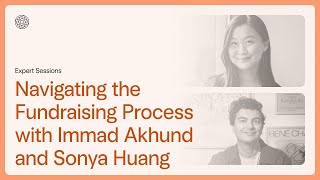
Mercury's Imad and Sequoia's Sonya Huang discuss the Series C raise process. Imad trimmed his deck from 60 slides to 14, while Sequoia hits a 95% conviction threshold after the first pitch. Both emphasize that responsiveness, clear narrative, and genuine customer traction matter more than hype.
Chapters
I'm so excited Sonia that you're here with us. And Ahmad, we don't get to do this with you very often. So what better day than on your birthday? So today what we'll do is we will run through some questions. Everyone submitted questions when they rsvp. So my team went through and we pulled out some really great ones. There were lots of really, really awesome questions. So thank you to everyone who submitted one. We'll run through a set of those and then we will open it up towards the end to see if anybody has any follow up questions, things like that. So for those of us or for those who've joined us, feel free to use the chat to submit questions or you can use the Q and A feature in the webinar. Whatever, whatever feels right. So I think with that we can get started. Ahmad and Sonia, I would love to start with just you doing the good old introduction just for anybody who may be familiar with one of you but not the other or just wants context for today. So let's kick off with that and then we will move into the questions. Ahmad, do you want to start?
Sure. I'm Imad, I'm the co founder CEO of Mercury which we started kind of end of 2017. It's my fourth startup so I've been doing various companies with various levels of success since 2006 and I'm also an active investor. I've invested in a bit more than 350 companies at normally precede or seed stage which is like a pretty broad set of companies, just things that I feel like need to exist in 10 years time that are exciting with like great entrepreneurs.
And I'm Sonia, I'm one of the partners at Sequoia. I joined Sequoia about seven or eight years ago and I focus on a few things at sequoia but primarily AI and fintech investing. And so on the AI side I leather investments in OpenAI, Glean Gong, LangChain, a whole bunch of cool AI companies and then on the fintech side I work on our investment in Nubank and most recently was delighted to lead Mercury's Series C. Amazing.
And that is why we're here today. So let's jump in. There's sort of two sections of questions. We're going to start with the questions that are kind of about the series C specifically and a little bit of the behind the scenes. And then the second half will be some more general advice for founders. We have a lot of early stage founders on the call, a lot of folks that are new, maybe Just heading out for their pre seed or their seed and on this journey. So that's how today will go. So the first question about the fundraise, let's like take an easy one. How did you two meet? What was that? Sort of like get to know you journey, like between the moment that you met for the first time and sort of that first moment of like, okay, we're going to move forward with this fundraise.
So I was looking it up and Sonia actually cold emailed me in October 2021. So did I. Oh wow, you don't remember that? So that was the first time we, we met and at that time I wasn't fundraising. But I think one thing that entrepreneurs often screw up is they, they only do talk to investors, like when they're fundraising. I actually think it's, I've always talked to investors, you know, I mean, I guess when Sequoia emails me, I'll talk to them anytime they want to know. But mostly I try to like talk to every six to nine months, I'll, I'll try to talk to like five to 10 investors. I think it's useful to build relationships and also just get a kind of pulse on the market. I think investors actually like, pretty open about like what metrics they want to see with from you and like what's happening in the market and things like that. So yeah, I was actually interested. Sonia, how, how, how much do you cold email companies and is that like a significant part of how you meet people or is it a lot of in bands as well?
Yeah, you know, it was one of my biggest misconceptions about joining Sequoia. I kind of thought all these amazing leads are going to show up in my inbox and I was going to, you know, have my pick of the litter. And then it turns out that there was actually a huge kind of adverse selection problem where like many of the best founders were actually just, you know, out there building their companies and not cold emailing Sequoia. And I realized that actually I had to go out and find them. And so one of the first lessons I learned at Sequoia was like, there's no shame in sending a cold email. I would say almost every investment that I've worked on came from a cold email, actually. And occasionally, you know, an entrepreneur will be very hard to get. And then I have to, you know, work the, work the inter, intermediaries in the network. But many of these investments came from cold emails. And so, I mean, to everyone in the audience, like there is no shame In a cold email, an investor sending one, the founder sending one. If a found, if an email is very well crafted, like it will get read. And then as far as how I met Emad, I didn't realize it came from a cold email, but I. I feel like I was aware of you, Ahmad, like from day one, from your bus ads in San Francisco, you know, you'd see Mercury everywhere. And then you have just such this. You have this amazing online presence on Twitter where you're very organic and you know, you get a sense of who you are and what you stand for just from your. From your Twitter account. But I feel like we didn't really get to know each other until we put you through the ringer on diligence for this round. Because for me, that's like the fun stuff when you really get to know somebody and what they're made of.
Yeah, 100%. Actually, in 2016, after I sold my company, I started kind of tweeting. Back then I was tweeting these lessons and try to build like a web presence, which I think has actually served Mercury pretty well. I mean, it's. I don't know if it's worth doing for everyone, but, you know, for me, like, especially as we serve entrepreneurs, like, you know, giving lessons to entrepreneurs and things like that online has been. Has been always like a useful part of Mercury's success.
Yeah, 100%. Okay. So to follow on with the story, when I guess I made an assumption or someone made an assumption in the writing of this question, but when Ahmad reached out regarding the series C, I don't know if Ahmad reach out, how did that process go? Sort of from that outreach to the decision to close it.
Yeah, it's funnily like series C or B, B or A or seed have like a similar structure. Maybe it's just the way I do things, but there's like a. There's a time initially which is like, make sure you have all the material ready. I don't think there's any point in talking to investors until you've got some data room ready, which, like, obviously when you're early on, there's not that much data in the first place, but later on we have a lot. And Series C is actually the first fundraiser I've done where there's been a big supporting finance team. Actually, at series B, we didn't have any finance team. It was basically just me. So I was doing everything. But this time, basically since December, we started actually late November, we started putting together all the data and then I Tried to practice the pitch quite a bit, both internally and then some existing investors, some friendly entrepreneurs, just to make sure it makes sense. It's funny because actually, I think one of the best parts of fundraising is you're just forced to think. Think about your business at a very high level and, you know, in a way that, like, when you're just running your business, you just do the thing. You don't really step back and go, okay, you know, how does it all kind of fit together into like, a neat story that you can present in like, 15 to 30 minutes? So that. That's like quite a. Yeah, actually we. The first slide deck we had for this Fundraise were like 60 slides. It was completely ridiculous. And then I think we got it down to like 14 or so. So, yeah, there's a bunch of prep and then, you know, the next thing is, yeah, I have like a list of VCs that mostly I've previously talked to, that I emailed and kind of kicked it off and ran the process with them. But tons of prep work before we got there.
And then when. Oh, sorry, Sonia. I was just going to ask from a mod's perspective, and then we'll do it from yours. After you reached out and, like, started the conversations from your perspective, what was that process from, like, first touch point to, you know, like, closing the deal?
Yeah, there's a, you know, again, we are a later stage company, so there's a. There's a lot of diligence that happens from like, hey, that's the first conversation. I'd love to. I think Sonia did a ton behind the scenes and one of the, I think impressive things about Sequoia is like, they, they do, I think, like probably 2x more work than everyone else to get a deal done. At least that's my impression of it from the outside. Uh, so I'd love to hear her process. Uh, yeah, but there's. Yeah, there tends to be like, I guess there's like probably three or four different kind of parallel paths. There's one which is around like, okay, you know, what's the data, what's the finances, what's the retention? Like, all of the, like, questions that a lot of that at our stage gets done between, like, the finance team and Sonia and her team. Then there's another one around kind of getting to know each other a little better and doing follow on questions. And like, I think we did like at least one or two kind of strategic kind of sessions together. And sometimes that involves talking to other partners as well. At A firm. And then there's kind of other types of diligence, like talking to customers, talking to partners, things like that. I feel like there was a fourth thing I was going to say maybe, but maybe those three. So those kind of tend to happen in parallel. And then every firm has like some process with Sequoia, eventually that kind of resulted in a partners meeting, which is like you get, you go in person and pitch, you know, the whole firm or a significant percentage of it. And then there's sometimes some follow ups and then the term sheet.
Okay, Sonia, from your perspective, what was the process like?
Let's see. Imad emailed us and we immediately, I think he sent us a deck and we saw the numbers and we're like, holy moly. And so we immediately rallied half the team and went and up and saw him in San Francis for that first pitch. I think it might have been a day or two after we, we got the email mud. And there were three of us in that pitch. We sat through it. We were all jumping out of our seats to get to sponsor the investment because it was, it was very clear that this was an exceptional business and this was the round that we wanted to do. So I remember coming out of the elevator and there were, you know, three of us and we're all like, do it. Like, who, who gets to do the honors? And then it was a little bit of a trying to figure out who would get to work with the company. And I was lucky enough to, to kind of get to get to take point from Sequoia and then, let's see. So. So in that first fundraising meeting, actually we kind of get to like a 95%. Are we gonna, are we gonna get to a yes or a no on this, on this round? And a lot from there is like confirmatory and conviction building. A big part of our process is we really want to pressure test the thesis. We want to crystallize the thesis and then seek truth is one of our principles. And so think through everything that could possibly go against the things that we believe here and really, really put our thesis through, through a lot of pressure. And if the company kind of holds through that, then, then we can, then we proceed and invest. So we walked out of that first meeting thinking we want to be investors in this company. We, I mean, we're lucky or in that mercury is used by more than half of our portfolio. That's not a scientific number. But you know, when, when we emailed, we probably emailed 50 people, got a few dozen responses immediately of like Yes, I use Mercury. I love it. And this is from some of the most like tastemaker founders in our portfolio. They're like, we love the product, we love the design. It's so different from any other bank. People were saying things like, you know, I was up and making payments in Mercury in the time that it took my account representative to, you know, answer an email from me to, to try and set up a meeting to open an account. And so it was clear that there was something really special and magical in the customer references. And then there was like, for us that's the most important part. Listen to the customers, listen to what they say. And then there's a bunch of, you know, make sure the numbers check out. Do we believe the model and the, and the investment returns? You know, since this is a fintech company, we did a bunch of kind of bank regulatory diligence. So a lot, a lot of other stuff. And then actually beyond the customer, the other biggest thing is understanding the team, who they are and what they stand for. So we did a lot of back channeling on the mod and this co founder Jason, and so that came together with, we wrote this gigantic memo, sent it to our team, we had their partner presentation, everybody was excited and we presented Ahmad and Jason that term sheet a couple days later.
So it was pretty quick. What was the amount of time would you say from like kickoff to close?
2Ish weeks. Right, something like that. That's really interesting that you have like a 95 conviction normally. 95% conviction normally after the first meeting is that if you don't have that 95% conviction is like you just never go ahead. And also what percentage of like the 95% conviction people still like don't work out by the end.
We typically will take a, take a look at the data room and do a few references just in case. Even if it's, you know, even if we feel like we're most likely not going to do the round because sometimes what we see in the data and what we hear from the customers does surprise us and it causes us to re examine our priors. And so we'll typically, you know, we'll turn over another card or two. If it's plausible we might invest. But if we're 95% sure, then we really just sprint. You know, it's email the entire portfolio immediately internally, make sure we're staffed up to really analyze the data room very quickly, things like that. And so this was one of those cases. And there, there's definitely times when we think we're going to get there and we don't because we find something that we can't get over or things like that. But oftentimes, you know, when we feel from that first meeting that we're going to get there, oftentimes that ends up being where we end up landing.
That's interesting. I think one thing that I like about, I think there's this interesting element of like a lot of the rounds that have got done have got done very quickly because it's like a two way thing. The VC has the meaning and has a lot of conviction and so they move really fast. And then on my side, often it's the investor that I want the most. So I tend to do the most work for them, if that makes sense. So I think I'm like, like it's kind of like self fulfilling in the sense that I think I'm a lot more convincing and like do more work on my side and I guess the team's side as well. So then like, you know, when.
Oh totally.
Because there's a lot of follow ups and we were like very quick on answering things because we were like, okay.
You guys were amazing at answering things. And so that was the sense, you know, I was like, I think Imad can tell that we sincerely, you know, want to lead this round because like we're not wasting your time here. Like we're, we're sincere. And I think you could tell that from how hard we were sprinting at it. And then likewise, I could tell from how, how hard you guys were sprinting at answering our questions that it was sincere interest on your end to work together as well.
Yeah, I think a collary. Is that the word for that is like, I think often, sometimes entrepreneurs kind of get stuck with investors that are just not being that responsive. And I think normally it's better to just move on. Yeah, sure, send them a second email or something. But if there isn't like a strong response after a first meeting, it's probably just not going to happen. And it's better to just like go, as Sonia said, flip another card and go talk to another 20 people rather than like get like, yeah, sometimes people are like, oh yeah, I'm doing a fundraiser. I talked to three investors. I'm like, that's not a fundraiser. That's like casual conversation.
Ahmad, I'm curious. You know, there's two different dynamics here where like you obviously were chatting with multiple funds. Whereas Sonia and Sequoia were like pretty laser focused on this deal. Obviously they were looking at a lot of Other deals. But for the purposes of this, how. What besides the sort of like, lean in from them, like, what really drew you to Sequoia? What made you excited about them? How did you decide to lean in on that process with them versus any other number of funds?
Yeah, I mean, there's obviously a few factors. You know, coming into it. We had, like, our. Our target list and like, Sequoia was at the top. And that's a combination of. Yeah, obviously a really strong brand. We sell a lot to startups. I think having, like, the best VCs as part of the round is. Is powerful for Mercury and, you know, helps with hiring. There's a lot of kind of things that come with that. Every conversation I've had with Sequoia, I feel like they're really smart about. I feel like one of the things that's really important with VCs is you really want really smart VCs because they just ask better questions. And, like, actually a lot of. A lot of what investors do is ask good questions. Like, and, like, both after they invest and before they invest. Because, yeah, at the end of the day, investors aren't working in your company 24 hours a day in the same way that you and your team are, but they can be very thoughtful in the way they probe things. So having people who ask good questions through the diligence process is really important. There's also, given the box we were in, we're doing a Series C growth investment. Right. There's not that many firms in that box. Right. Especially ones that are active right now. So, yeah, I think you can cut the universe and then pick your favorites kind of from that. So that was kind of our approach.
Okay, awesome. And then as we're talking about the Series C, but you just mentioned, like, sometimes the C is quite different from the B, from the A, from C. There was a question about. This is broad. Take it however you'd like. But the. What are the biggest lessons you sort of learned as you've gone through these different stages of fundraising? Like, what might you tell a founder that's like, oh, what's it like? You know, like, what's the difference between a C and an A? Or, like, what's a general trend or pattern that you might consider, you might tell them about?
Yeah, I mean, maybe this changes at some later stage. But one thing that I've always been surprised with is, like, how similar it is in the sense that you really, especially as a CEO, you really have to paint the picture of your vision, the future, and how this becomes 100x bigger or whatever, that part doesn't change. And a lot of the core parts of the story that like, hey, we're, you know, we're disrupting banking and banking's a huge tam. And like all those things, like, like a lot of those things are still the same. And you, I think some of those times I've pitched later on is when I've stepped away from that where I've been like, oh yeah, it's just like, look at the numbers. It's obvious. Like it's not, you know, it's because whenever someone invests, they're not investing in today, they're investing in the future. Like they're investing in like how does come 10x bigger even at CBC? Yeah, it's like, yeah, probably when it's seed, you're investing in like a super low probability that this is 100x bigger. And when it's at like, I guess CVC, you're investing in a higher probability that it's 10x bigger. Obviously we still want 100x but like the, you know, the probability, expected value times is the probability times outcome and that like flips a little bit, but in some ways it's very similar. I think the bit that is different is just like there's just so much more to talk about. At seed stage. Most of the things are unknowns and you're kind of trying to really paint mostly the story. And at cvc there's a lot of knowns, we have a lot of products, we have a lot of answers to things. And you do spend a ton of time like as I said, I started with 60 slides. A lot of it's like distilling like what actually matters here versus you know, giving like a splurge of like everything that I could talk about with Mercury.
I will say, Ahmad, you mentioned kind of having this, you know, the story being the same for each round. That is for me that consistency was a big part of conviction building in you. And just so you know, I think it's relatively rare to hear a pitch that stays so consistent at its core from the, from the seed to all the subsequent rounds. And sometimes you get this pivot here, pivot there. We're this company now. We're this company now. And that consistency and what you stand for and I think you and Jason I think especially is fond of this hundred year plan for Mercury. Just like the long term thinking and the consistency is a big deal for us. And so maybe a note to the founders out there is like as you Pitch investors, if they're a multi stage firm, they're going to hear the story multiple times and the consistency of that story and then your track record of executing against it is a huge part of conviction building for the later stage rounds.
What would you say, Sonia? I know you see a number of stages. What, how would you respond to the same question, like what do you think is the same across different stages of fundraising versus what changes? Maybe from the investor's perspective, team number.
One at all stages.
Yeah.
And that's probably almost a contrarian take at the growth stages, but I really think it's team, team, team, team, team.
When you say team at like a larger stage, are you talking exec team? Are you talking who they've been able to hire? Like what does that mean to you?
Founders. Founders and, and then it also manifests itself in who are the execs who they've been able to hire. We like to spend time with and we did spend time with I think probably half a dozen of Imad's execs. And then we also have data science signals to give us a sense of the caliber of the bench within kind of each part of the org. And so that's all a reflection of team quality. Like great people like to work with great people who have a great vision. And so to me that's the most important thing from seed all the way through the late stage growth rounds. And then I would say series B is, so I start investing typically at the series B. That's when the company is kind of just like at the inflection point, you know, starting to find lightning in a bottle, inflecting in some way. And you know, they're really looking to, you know, oftentimes it's you know, the founder doing sale, founder led sales themselves. They're really looking to professionalize their go to market motion whether it's you know, marketing, sales, et cetera because they, they got the early beginning, something special and they want to like make, they want to amplify it. And then for series C and beyond it's you know, the company has reached product market fit. It's often on a multi product journey that's starting to work. In Mercury's case, that was a big part of why we leaned in for this round as well. So the multi, multi product journey continued. Compounding at scale is, you know, a lot easier said than done. And so, and you know, in the, in the even later stages, you know, you know there's even more kind of metrics and evidence that should support the Case as well. But to me, team is the North Star.
But to be clear, when you say team, like, you don't want to see like three slides on the team in the pitch deck, right? This is much. I feel like team is normally mostly like, clarity and thinking and, like, how they talk about their business. Right?
Yeah, there's, there's. I mean, on team, I would say there's two things we're looking for. Well, no, I would say there's a lot of characteristics we're looking for. You know, how ambitious is the vision? Are they underdogs? Do they feel like they have a chip on their shoulder or something to prove a lot of characteristics we're looking for? The way we go about trying to identify it, there's, you know, two primary ways. One is the, the meeting, and the second is references and the person's background. And so in the meeting, like, we're really trying to tease out who is this person, how do they work? What do they stand for? What would it be like to work with this person? Like, one of the questions we ask ourselves is, would I be excited when a mod calls me at 8pm in the night with some Mercury emergency? Hadn't happened yet, but yeah, I would be excited. And so that's a huge part of it. And then your background, what you've done, what your references say about you. In the case that, like, you know, in the case that people are sending cold emails, like, I'll respond when I see a really well crafted cold email pitch because that shows logic, clarity of thought, et cetera. More so than a slide deck.
I think sometimes people also underestimate, like, I'm calling this networking, but, like, I'll use the word networking, but I mean, like, relationship building more. But I think people underestimate networking with other entrepreneurs because I don't know everyone Sonia talked to, but I assume it was other entrepreneurs that, like, know me because I've, you know, I've been around a while, but I've also, like, been to conferences and been to events and just generally tried to be helpful to other entrepreneurs. There's obviously, I've done it for like 15 years now. There's like a big bench of them. But. But I often feel like, I mean, this is part of the benefit of being in the Bay Area, that there's a lot of casual ways to do this. But I do think a lot of success with investors is like actually having, like a strong entrepreneur kind of relationships that can act as your references and can introduce you to investors and all that kind of stuff. Yeah.
Building that social capital. I feel like definitely one of those things. Sonia, I'm curious. You said you do a lot of fintech investing. I'd love to hear a little bit about how or what stood out about Mer. You said you saw the numbers and you were like, holy moly. But like, what stands out about Mercury in comparison to other fintech companies, other banking solutions, things like that? Like what got you really excited about it?
Yeah, let's see. I've. I've been excited about the story since the, you know, the early days. When I first heard the Mercury pitch, I was like, I was skeptical whether it would work though. And the thing that Ahmad did was he just like executed the hell out of it and showed me I was wrong and it worked. And so let me explain a little bit about, you know, what I see the story as and why I was skeptical at first. The story is that, you know, banking as we know it is broken and that, you know, there's this patchwork of other kind of financial services and solutions that have tried to become band aids on the system in order to make it better. But to actually kind of change the way that we work with money. You got to start with like the, the core banking relationship, the core checking account and that direct relationship. And you know, the thesis was that, you know, the bank account is the system of record for money. And once you're in the flow of funds, once you have a system of records for money, you earn the right to cross sell everything that touches that, whether it is corporate cards, whether it's accounts payable software, things like that. And so I love that thesis. Like you're, you're the system of record. You're in an incredibly powerful place and you can cross all these other things. That's an amazing thesis, but like, the thing that's hard is it's really, really, really hard to catch SMBs at the point of company formation and get them to open the bank account with you. Distribution is insanely hard because you can't just catch somebody who already has an existing bank account somewhere else and serve them a Facebook ad and get them to move their bank account over to you. It just doesn't work that way. And so I was skeptical of whether he could get distribution going to get to scale and reach the number of SMBs he needed to reach in order for Mercury to become a large platform company. And I was like, if you do that, if you get distribution working and if you execute on multi product, this be a massive company. I'm just Skeptical of whether somebody starting from that starting position can work. And like, IMOD absolutely proved me wrong and just executed flawlessly. I would also, I'll say, like, another thing is seeing the way that Mercury responded during the SVB crisis was really big in my book. We look for different things in different companies, but for bank, you know, quality and strength under scrutiny and the ability to be kind of unflappable in times of crisis, those are some of the most needed traits. And like, I remember, you know, I couldn't sleep when the SVB thing was happening because so much was happening in our own portfolio and it was just all hands on deck. And the way Imad and Mercury responded to that crisis, I think you guys were the number two largest recipient of fund flows from the SVB crisis. If I remember correctly, Ahmad, the way that, like, there's a customer support rep that put his cell phone number on Twitter. Everyone was calling him, opening accounts. He stayed up all weekend. The product team shipped this page that would allow you to kind of see where your money was and, like, have bring transparency into the process because opacity is what causes bank runs in the first place. And just the way the entire team rallied during that weekend, like, strength under scrutiny, one of our most important attributes we look for, but especially for a bank. And like, when I saw that, I was like, I really want to work with these guys.
To be clear, we're a fintech company, not a bank. But.
Yeah, sorry. Okay.
We'll put the disclaimer in the chat.
But yeah, that was a great moment for the team to step up. But I also think, like, those moments happen because of, like, all the background, like, prep we've done. Like, you know, we're very customer centric and we'd already scaled to this level where we could support, like, a large, large inflow of, like, new customers and things like that. So there's definitely, like, one of those, like, luck comes to the prepared kind of things.
Yeah. Sonia. That was my fourth week at Mercury, so I had a sort of similar experience on week four where I was like, oh, I. I was so pleasantly surprised because that's when you don't know what it really looks like till you're in it, you know, and like, especially with situations like that. And that was one of the moments where I was really grateful to. To be on the team. So I'm with you on that. Okay.
I feel like it was a make or break moment for. For Mercury because totally. I think, I think the SVB served a really important role in the ecosystem. And you know, it created that event, created this vacuum for something like that. Who is going to be the bank or banking platform Service asterisk, not a bank that'll support the entire Silicon Valley ecosystem. And Mercury was in position to be the challenger to go win that. But they really rose to the occasion. It could have broke either way. And they really rose to the occasion to fill that vacuum.
Yeah. All right, we are in the second half now of this session, so I want to turn our focus a little bit to some advice you might give to founders. Again, we've got a lot of earlier stage folks who are looking toward this as an end goal or as a future goal. And you all are both so, so experienced in the space. I know a lot of them. Sorry, my senior dog is getting a little senile and he's just seeing things right now. Okay, so we will start with the question of how founders should balance narrative and metrics in their early stage, especially. And Ahmad, you, you chatted about this, I think a little bit in that, in that trend and through line, but I think there is this sort of like shifting balance between how much of it is like dream with me versus like this is the data, particularly when startups are pre revenue. So. And the second half of this question is in a rapidly evolving space like AI or fintechs. So maybe how much dream with me and narrative versus metrics in a space that's changing quickly. And I think either of you can weigh in from your investing experience here.
I don't really see them as like separate things. Like, I think the, the point of the metrics is to improve the narrative. Like when you have a narrative, there's a bunch of things in it that like, especially at the early stage, you're just, you're saying their work and like, you're like, oh yeah, I think people will really want this. But whether it's distribution unit economics, sales efficiency, there's probably a bunch of different things metrics can prove. And what really happens over time is you sneak in the metrics into the narrative. So you say, yes, this is working. And now our market share is this much in this category because we've actually delivered on the story of people wanting this. So yeah, I think it's, I actually try to, especially at the early stages, you want to actually like kind of tell founders this. Like, you want to try to figure out like, what are the metrics that would make your story better and then try to like actually spend the next 18 months make those metrics better, which is like, I Mean, obviously we're talking metrics and narratives, but, like, that's kind of what building a business is, right? Like, you want to go grow that revenue or you want to like, improve your unit economics or whatever it is that makes your narrative better.
Sonia, what do you think?
Nothing to add. Great answer.
Perfect. Okay, so when you are doing due diligence, both of you, and this is fun because we've got Sonia who focuses on B plus, and Ahmad who's doing angel, probably pretty. Or Ahmad, where would you say you're generally writing checks just for mostly seed stage? I would say at seed stage. Okay, great. Just so that everybody knows, what are you looking for in a company when you're doing your due diligence? So, Sonia, I think you already detailed this a little bit. Maybe, Ahmad, it be helpful to hear from you when you're looking at preceder seed, like, what are you looking for in diligence?
Yeah, I don't do lead checks. I'm obviously busy with Mercury. So my diligence is like, way softer than what Sonia does and what a lead VC would do. I would say it's a, you know, there's kind of two types of diligence for me. It's. There's one which is like, I know the space really well or I know the founder really well. And then it's very much just like, you know, making sure I understand it and I'm excited about it. And I can like, really feel like that founder can rise to that occasion, which is a significant set of companies. I do. And then probably the other set is. Is mostly things where other people are leading the round. So, you know, there's some assurance you get when there's like a lead VC and they've, you know, there's someone you respect and they've done the work. And then for me, it's. It's a lot of. It's like, okay, you know, do I really believe that this market size is big enough? Like, to me, I'm very focused on like, how big is the market and how big could it be? And then how. Yeah, actually very. What Sonia said about, like, if someone calls me at 8pm and like, mostly I talk to founders when they call me at 8pm it's like, am I going to be excited to talk to them? Like, are they, you know, is it going to, like, I mostly invest because it's kind of fun to help entrepreneurs. Like, that's my main reason for investing. So, like, will I have a fun conversation? Like, is this a market? I'm excited about. Is it a founder that's like, you know, like authentic and they really want to like, solve this big problem and I'm going to be excited to like, be part of that journey. That's kind of like my, my intelligence process. Yeah.
So when you're from the fund side, is there anything you would add? I know you don't do a super early stage, but is there anything you would add for the early stage founders that you think most funds or leads would be looking for in due diligence that they should keep in mind even.
At the seed stage? Yeah, the seed stage. It's a lot of team. You need some story, right? There's, there's some idea of what you want to go after. But our expectation is that the store, like the market you're going after is going to kind of zig and zag for a little bit. And so we kind of want like talking about a company. Talking, talking. The market is almost for us really just more about the team than about the market. At the seed stage, it's like, is this person, have they identified a really interesting large market with market tailwinds behind them? And it often, like, as you talk through it, it tells you more about the team than about the market. So it all just comes down to the team, team, team. And when I say team, I mean founders in this case.
Yep. Makes Sonia, especially since you do AI a lot. Like how much do you worry about competition if at least from the outside, as not an AI specific investor? It feels like a very competitive category where every idea has like five companies. Is that a big factor or not that much from your perspective?
We're just vibe. Vibe investing. No, I'm kidding. It's a huge challenge. And so I would say it's really, really situation specific. And there have been times when companies have been flying in their numbers and we won't do the round because as we dig into our diligence, it kind of points to low switching costs. You know, people want to try the alternative, you know, and then we end up thinking, you know, not a ton of market cap is going to accrue to that company and they just can't build deep enough of a solution. And so like there's, there's been entire kind of categories, lots of companies that we haven't invested in because we're worried about competition. On the other hand, I would say some of these markets are a lot stickier than meets the eye. And so give you an example. Medical transcription. When I call healthcare CIOs, they're like we implemented this thing. We are not. You are not ripping that thing out of my, like, you are not ripping that thing out, like over my dead body. And so in that case, you know, there's a ton of stickiness and those people are very happy with the products that they've chosen. And so it kind of ranges on that spectrum. And I think we just have to make a judgments call on what are the market structure dynamics, what are the switching costs. Oftentimes people will tell you that they want to switch, but actually not switch. So like what do we actually see in the data? And then we kind of add that all up together to make a judgment call on whether to invest or not. But it is like it is the number one thing that we debate for AI companies because historically a lot of companies, a lot of the moat was the tech. Right. Like when we invested in Zoom, like a lot of the moat was a tech, like a lot of the telephony infrastructure that Eric Yan had built. In the case of AI, a lot of the tech kind of comes from the foundation models who compete with each other. Right. And so when everyone has access to 95% of the same technology, it really does raise the bar on what moats and competition are.
Yeah. Plus as the foundation models get better, the tech like, you know, people like all into rag and all these things and like some of those advantages get like competed.
Sam Altman had this really great line at our AI conference which I think he said publicly as well, which is like build assuming that the models will get better. And if you are excited by that, you're probably building in the right space. If you are upset when the models get better, you should probably think long and hard about what you're building. And I think that's really important. For example, Harvey, in our portfolio, they, they help lawyers with. You can think of it almost like a chatgpt for lawyers. But like as the models get better, they're able to provide way deeper document analysis for example, because these models can now reason through much longer court cases and entire purposes. And so the models themselves get better and better and better. We try to back the companies that like benefit when the models get better. There of course is the question of what happens when models just do everything. But I hope by then I'll be sipping a margarita on the beach somewhere and we'll be in this wonderful age of abundance.
Amazing. Speaking of AI, how do you differentiate for yourself as a fund between these hype cycles and these long term potential? We've been through a Few of these recently, Maybe using like 2020 web 3 crypto moment as an example, using AI as an example. Like how do you all talk about hype cycles versus sort of long term, long term potential?
That's a good question. I think it is important to understand like what are the new technology trends? And you know, AI is obviously a big one and before them I guess it was cloud and mobile and all those stuff and you know, those things just open up a whole new set of markets and often incumbents can't adjust to them. So it's important to know that. But it's, I think it's also like you can't just do it because other people are doing it. You really have to come up with your own perspective and you know, ideally you're ahead of it. Right. Like I think too, I guess Sonia doesn't necessarily need to be ahead of it as a, as a series B or later investor, but as a seed investor. Like you know, the time to invest in model companies was 2019, not 2022. And yeah, that every, every six months in AI it moves so quickly that the, at the seed stage at least the time to invest in the thing is you know, way before like the thing is just exciting to everyone. Like, you know, like if you like cursing all these like develop agents, right, like it's too late to invest in those at a seed stage. So you always like and that's actually kind of the fun part of it. It's like, okay, you know, where's, where's this going and what is actually interesting in a few years time rather than like what's interesting today? And by the time it's interesting today, it's probably too late at seed stage.
I will say even though I'm a growth investor, we, we still really try to navigate before the hype cycle as well because I, I think it's a big part of our job. And so like for example we did OpenAI in 2021. It was like pre, like more than a year before ChatGPT because we saw the technology and we were like, holy moly. This is like, this is the future. This is going to change how we work. Mallory, to your question on hype cycles, for me it all comes back to talk to the customer. Is the customer getting value? If the customer is getting value, then to me a lot of this hype is justified. If the customer is like, oh, I hope one day I will see the value, then it's a hype bubble. And so I would say there's pockets of hype and then there's pockets of value in AI right now. It's not one size fits all. And so for me it all comes back to talking to the customer to try and understand what companies, what products are actually building, things that change their customers lives.
Yeah. Okay, I'm gonna go off book a little bit and ask you both a question that has come up a couple times in the chat. I think it'll be an easy one though. So I think we've got a lot of folks on this call who are reaching out to investors for the first time. They're putting their pitch together for the first time. What advice would you give in terms of like. So I know you've mentioned a really good, well crafted cold email and you know, we've talked about pitch formation and sort of the importance of storytelling and things like that. Like what are the, what are the key things they should really be making sure are coming through in that initial either pitch or email to catch an investor's attention?
I would say it should be short. If it's long, it's like very easy to archive. Uh, it needs to very clearly explain like what you're doing and why it's interesting. And then it needs to give some social proof. Like either it can be traction, like, oh, this is growing at this much and making this much revenue, or it can be like, it's also funded by X or you know, I also worked at X. Like it needs to, especially if it's a cold email, it really needs to like sell something beyond just that idea. It needs to have like something where you can really hook someone and say, oh, that's actually like, that's an amazing accomplishment. I should really talk to this person. Yeah. I don't know what Sonia's inbox is like, but my inbox is crazy. I get a ton of cold pitches all the time. And it's relatively rare that something like stands out from that. So it is very much like a standing above the noise kind of thing. But it's doable. I mean, I think it's like you have to have a compelling hook and a compelling kind of social proof around it.
Yeah, well said. I would boil down to story, evidence, team story, and by story I mean like two sentences on why this matters, how big it can be, if it works, evidence, like what evidence so far do you have that it's working and team, like, you know what in your background gives you the unfair advantage to go build a giant company in this space?
Yeah, I'd also say like, try to get an Introduction. I mean, I know, like, that's often people like, oh my God, it's so hard. But it's not that hard. Like, I've invested in 350 companies, so there's like 600 founders there that you could probably get an introduction from. And then like Mercury has 160 investors. Like, they could introduce me. Like, there's a lot of people that could introduce you to me. And if you really can't get any of them to introduce you, then, like, you know, you need to kind of network a little harder. I don't think the bar is like that hard to find someone that will introduce you to me. And I do think it's like, I think if you have a really hard time getting there, then I think you need to do a little bit more of the groundwork to be able to get there.
Yeah, I think that warm introduction thing too. It's like such a hot button topic, I think, for founders because of the accessibility of it and because of the sort of unfair advantage that a lot of people have. But I always tell people too, like, that you're getting so many extra. Like, again with the social capital points, like getting an immediate sort of vouch from somebody really does help that recipient of the, of the intro feel like, oh, cool.
I'd also say, like, startups aren't hard. Like, if this, you, if you think this is the hard bit, then like, I'm sorry, like, this is going to be, you know. Yeah, it's hard. Just go figure it out. Like it's not. I, I don't think, like, it's hard is like a reason why you shouldn't, like why that's an excuse. Right? Like, if you can't figure it out, then like, you're going to have a hard time in your sort of.
Yeah. Okay, let's see. Okay, let's talk about product market fit for a minute. I know this could be an hour long conversation. Let's try to do it in like two or three minutes. What do you think? I think product market fit is another one that is like a very annoying thing for a lot of founders because there is no real definition and like people are asking about it. How do you sort of define it? Maybe Ahmad, you can tell a story of like, when you felt that Mercury had it or when you got that feedback that it had it, or what does it mean to you in terms of something you're looking for, as in an investment.
You know, mostly at seed stage, the company does not have product market fit. When I invest, that's not always the case, but mostly I would say as an entrepreneur that has achieved product market fit twice. It's very obvious when you have it. It's not like it doesn't necessarily leave a question mark of like, oh, do I have it? Maybe I have it. It's just extremely obvious. I think the way it shows up is like you wake up in the morning and you have a bunch of people using this thing that you're like, where did these people come from? And you don't spend at least often it shows up in distribution, I find, at least. And maybe there's some industries where it's different. Like maybe in enterprise sales it's like different but like I do think it's like an unfair and fast distribution. Even in enterprise sales it's like people respond to your emails, the sales goes quickly and it seems like the distribution get bit is easier. And because it's easier, it tends to put strains on everything else like the product breaks, the ops break and all that kind of stuff. So I think most people who've had it don't have like a question mark whether they have it. And so it's like, I think in some ways it's, it's easy to know whether you have it. I think the bit that's hard is like probably most companies come across it in a unique and different way. So the lessons that people entrepreneurs have aren't globally accessible. I think they are probably situational. In terms of Mercury, we really had it at launch and it took me six to 12 months to convince myself that the launch wasn't, wasn't like a fake product market fit. It was real product market fit. And we all, we were like, we, we just refused to like hire that aggressively because I was like, oh, you know, this might just be the launch and this might just be blah, like we should like not lean into it. And a year later I was just like this is real and like I need to like actually go higher in front of it. Because we were just like so stretched for a year because we were always like underhired for the speed at which we were growing. In my previous company it was actually our fourth pivot. It was a very long journey and it actually took even in that fourth pivot it wasn't obvious. It took us nine months of talking to customers and iterating before we really got in the flow of it. But obviously there was early signs it was working. But it was much more of an iterative path to product market fit there.
I have a strong plus one IMAN'S point on, you know, like the distribution and you kind of know when it's happening. And the way, the way I would try to bullet down is, are you pushing? Are you getting pulled into the market? And you know, we have a bunch of Sequoia isms that kind of try to encapsulate that, like dogs eating, are the dogs eating the dog food? Is there sucking sound for the thing? But it like fundamentally it's like, is the market ripping this thing out of your hands and you can't keep up with demand? Or is every kind of sell a push? And it feels like it's a push, push, push, push. And until at some point it just kind of converts into a pull. And I think that's the feeling that entrepreneurs describe to me. I have never found product market fit anything.
Awesome. Ahmad, there have been a couple questions of how did you start, how did you get mercury to the first sort of fundraising moment? How did you go from there was no mercury to you raised? I don't know. I actually don't know the story of like, was it angels? Was it a precede round, that sort of thing? Like, how did you make that the first round?
Yeah. So finally I had this idea in 2013 and then at the start of 2017, I was like, finished, I sold my company and I had time and I was like, oh, you know, I really love this idea, let me go investigate it. And I basically was like, you know, I knew how to write the product. I think everyone would believe I knew how to write a product. So I didn't need to prove anything there. And at least from my perspective, I knew people would want this. Like, as an entrepreneur, I had like this visual feeling that people would want this. So at least with, you know, enough for a seed round, I didn't think I needed to de risk like product or distribution. So I spent all my time on like kind of regulatory partnership stuff, which is like, you know, I'm an engineer, so it's not like neither of those things were like the natural thing for me to do, but I was like, this is by far the biggest risk thing. So I spent actually the first four or five months just talking to lawyers, talking to fintech entrepreneurs, talking to potential partner banks, talking to Visa and MasterCard. I just spent so much time just learning and talking to people. And then we also went and got some term sheets from some partner banks and I really wanted to show up to a seed thing because I knew it would take a long time to build it. And, you know, I wanted to raise a seed round before it. So I really, I think really focusing on like, what is the biggest risk and how do I answer that to that risk was like by far the most important thing. And you know, for us it was really all about kind of who do we partner with, how do we actually make this product and what is the kind of regulatory framework around it. And yeah, so I walked into these. I mean I did have like some, some designs and some code was done, but really the bulk of the work I did was like, I had like term sheets from some partner banks and like, I could, I could reasonably say to, you know, the seed investors, like, this is how it's going to go live and like, and this is what the economics look like and how I can do it kind of thing. So ton of it was just like this prep work and then, and then I started fundraising. And actually, I mean, some of that was also just me believing that I could do it as well. Right. I didn't like come into this idea going like, oh yeah, this is going to be easy. I was like, I have no idea how to do this. Like, let me try to figure it out. And once I got like enough confidence in that, then I started fundraising. And as part of that process of doing the research, I'd also talk to a lot of fintech investors. And the person that ended up leading around, Alex Rampel, I talked to him a couple of times because he'd actually invested in a few chartered banks and he'd been a fintech investor for a long time. And so the final meeting I did before, I was not actually even thinking about it as a pitch because I was like, hey, I literally have a deck and these ideas and this is a multi stage vc. I really thought it would be much more of a get their feedback on the pitch kind of thing. But after the meeting he was like, okay, come in for a partners meeting in like three days. And they gave us the term sheet that day. So it happened really quickly. In the end, it was like I started fundraising on a Monday and I had a term sheet like on the Tuesday, the week after. But there was like a ton of prep work and like thinking and de risking up to the point where I started fundraising.
Yeah, I was going to say, I feel like that's such a valuable story for a lot of the people on the call because I think sometimes that like pre product fundraise is a big mystery of like, well, what do I just show up with an idea and a deck and like some designs I made in Figma is that enough? And I think the point of like just because you're pre product doesn't mean you have to be pre moat or pre like conviction or pre proof points. And I think that story is just such a great example of that where like you had develop, you weren't coming with nothing, you were just coming with the most important things first and the things that it would take a lot of other people, any competitor a long time to catch up on. Whereas the product was actually a little bit of the easier piece. We all I have certainly learned from my, my time in fintechnology.
It's not that the product is easy, it's just like I felt that most investors would believe I could the product. So it was something I needed to de risk.
Yeah, that makes sense.
I built a lot of product by that point. But yeah there was no. There was. I just had to convince people I could actually do a fintech company which was the harder part.
Yeah, that's awesome. All right, cool. We are at the top of the hour. I know there were a bunch of questions that we did not get to. A lot of really good ones. So I'll see what I can do to chase Ahmad down for some, some async answers that maybe we'll, we'll share in our follow up. But Iman, Sonia, thank you so much. This was really great. I hope this was fun for you. Sonia. I hope this was a, was an okay way to spend your sick day and ah the best you enjoyed your birthday with us. But this was really great. Thank you everyone for joining and we'll share a link to other events like this in the future in the follow up email as well. So really appreciate you. And we recorded this so we'll share out. We'll share the recording as well with everybody. Thank you all for being here. Have a wonderful Wednesday.
More from Sonya

Building the GitHub for RL Environments: Prime Intellect's Will Brown & Johannes Hagemann
Building the GitHub for RL Environments: Prime Intellect's Will Brown & Johannes Hagemann



Context Engineering Our Way to Long-Horizon Agents: LangChain’s Harrison Chase
Context Engineering Our Way to Long-Horizon Agents: LangChain’s Harrison Chase

How Ricursive Intelligence’s Founders are Using AI to Shape The Future of Chip Design
How Ricursive Intelligence’s Founders are Using AI to Shape The Future of Chip Design

Training General Robots for Any Task: Physical Intelligence’s Karol Hausman and Tobi Springenberg

Why the Next AI Revolution Will Happen Off-Screen: Samsara CEO Sanjit Biswas
Why the Next AI Revolution Will Happen Off-Screen: Samsara CEO Sanjit Biswas