Phoebe Gates & Sophia Kianni on Phia, podcasting and rapid growth | TechCrunch Disrupt 2025
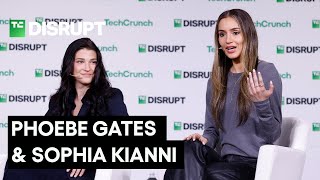
Transcript of a TechCrunch Disrupt interview (Oct 30, 2025) with Phoebe Gates and Sophia Kianni about their consumer fashion startup FIA ("Phoebe and Sophia"). They discuss founding story (Stanford roommates, class project), product focus (secondhand marketplace aggregation, AI shopping assistant, sizing insights), growth strategies (founder-led content, podcast, viral/TikTok acquisition, community user dinners), sustainability impact (secondhand carbon reduction, retained-value signals), and company operations (team size, investor/advisor network, iterative product development).
Chapters
You guys are founders of fia, the Google flights of fashion. You have a podcast together, your social media personalities, and even the name FIA is literally Phoebe and Sophia. How did you decide to make yourself so central to the brand of the company?
I mean, I think honestly for me and Sophia, when we thought about building a consumer startup, we thought about, well, what the heck do we have that's actually defensible? And number one, that's building a novel product experience that people love that addresses a tangible pain point for the two of us. We actually met as randomly paired roommates at Stanford. We were the girls spending hours wasting time shopping across different sites, figuring out the best secondhand deal, understanding if this was actually a good item to add to our collection or to our wardrobe. And as we saw every single space be absolutely overtaken by vertical agents, whether that was customer service or coding, there felt like there was this giant white space for, like, what should we actually buy? And why doesn't everyone have a personal shopper in their pocket? Because we're wasting so much money on junk. And we went backwards and really thinking about, okay, well, what can we do if we had a product in market that was actually good? How would we get this in everyone's hands if we know that larger companies can frankly smoke us with their ad budgets? And I think one thing that was really important for us and that we realized in looking at all these other companies we looked up to is people are tired of buying big labels and big brands. What they're not tired of is learning about your journey or what you're building or what you're trying. And the second we started opening ourselves up to do things like now we do every other week we have 40 of our power users come to the office and roast the app. That's when we started seeing real traction. So I think for us, it was really about bringing people in and creating a community, because we knew that in itself could be defensible.
So do you think that other companies founded by Gen Z founders have a similar emphasis on putting yourselves as the face of the company? Is this uniquely Gen Z or is this something that you think you're leading the charge on?
Well, for us, we're building a consumer tech company. So the only thing that matters is that we can essentially get hundreds of thousands of people to download our app at a $0 cac. Otherwise the unit economics don't really make sense. And so for us, for our investors, for our team, the ability for us to be able to acquire hundreds of thousands of downloads at a very, very Low cost through the podcast that we've built and through the various different distribution vehicles has been really important. And you can obviously acquire hundreds of thousands of customers by doing promotion, by doing a podcast, but actually getting them to stick, stick and retain is a different question. And so we were actually really intentional. And we started when we were roommates at Stanford. We built a product experience and we continued to iterate it on it until we actually felt conviction in betas that we had a sense of pmf. And then we didn't actually launch until after that had happened. So that once we were actually acquiring these hundreds of thousands of users, we actually felt like they would retain, they would purchase items and that it would actually be a valuable customer experience.
Experience.
And I would also say that like go to market diversification is super important. So yes, me and Phoebe have accounted for. We've done over 216 million views organically since launch. We've actually been only 80 million views of that. We've actually diversified, added in like an ambassador program. We have our podcast, we have a number of other angels. And so we really wanted to make sure that we had a lot of different opportunities to be able to reach our audience.
Yeah.
And I think especially with a product like this, people, when they're shopping really are thinking about recommendations from their friends. And that's part of what has made TikTok in particular such a powerful marketing engine where I get ads all the time for things and sometimes I end.
Up buying them, hopefully the ad.
Yeah, well, I have seen the influencer marketing content, but I think with TikTok in particular as well, this has created a culture where people are really looking for authenticity or looking like they want to have a relationship with you as the founder as you're using the app. So I'm curious if you have any hesitations around making yourselves vulnerable in that way.
Honestly, there was something really important when we first started making our content. It'd be like, oh, here's all the highlights of building fia, or here's all the shiny moments when we started to be like, well, here's the 10 prototypes we made that absolutely failed. Or here's our user dinner night where me and Sophia left wanting to cry because that onboarding flow didn't work and we realized we needed to lean in. We needed to add an image source that week. We needed to really stop thinking about other features and focus on building our patented search algorithm that now has a two second latency. Like those kind of things. And those mistakes, honestly, are the content that does best and So I think there was a bit of like an ego death that we had to go through of. At first it's like, well, I want to look good in all of our content. And then it's like, no, actually if you want people to engage with it and you want to make content at the volume that we need to, you need to be able to just pull back the curtain. And now, honestly, when we post stuff, I don't even look.
You are stronger than I am.
I'm also curious about how when you have a viral moment with a product like this, you've had moments where maybe it's one of your TikToks, maybe it is someone in the influencer marketing program and it goes viral, how do you make sure that if somebody downloads FIA as part of a big moment where you're seeing a surge in downloads, how do you make sure that they keep using fia?
So that's why for us, our number one goal really has been building a consumer product that people genuinely love that solves a pain point for them. So when we first launched we had a 8 or 10 second latency and we were still excited that we still had over like a 70% retention rate. And over the last few months we've actually refined and now we have an in house search that like Phoebe said, has less than 2 second latency and also increased accuracy. And we actually saw as a result our retention improved and so did our engagement. And that was really an investment that we made as a result of actually listening to our consumer base because everyone told us, I love your product experience, can you please just make it faster? Can you make it work better? And so we doubled down, we invested our amazing ML engineers, invested time, energy and resources into creating an experience that really was incredible. And so we are always listening. We have 40 women come to our office every two weeks. We watch them onboard onto the app in front of us, we watch them use it, we understand what pain points there are, friction. We're in mix panel every day looking at our cohorts. So we've been really iterative. We look at data constantly and we want to make sure that something is really resonating and sticking through. A combination of user interviews, but also data analysis.
And so right now, like this week working on fia, what's something that you've been trying to improve on in the app that maybe like users flagged to you in one of these meetings?
I think really for us, you know, one thing that we've been working on this week, and it's funny because on Social media, it looks like we're making content all the time. The reality is that's like an hour every Friday, and we're making, honestly hundreds of pieces of content as fast as we can so we can get back into what we love doing, which I love sitting in figma, and I love talking to users and I love figuring out hard problems of how we actually improve this and move the company forward. And I love talking to people that I think are smarter than me to hire and to bring on to our incredible team. And so for this week, like, one thing we've been working on in beta is like, you know, at the Shopping Advisor, the AI Shopping Assistant, it's not just about, hey, does it exist at a better price? What's the retained value, what are the reviews, shipping status, returns? But we actually can learn based on what your sizes are or what items you've returned in the past or kept and loved and kept wearing. We can give you advice on what size you should order in the future to make that an easier process and to honestly help you make better, more informed purchase decisions. So that's one thing we've been digging into this week and getting user feedback on those features.
Yeah, I think sizing in particular is something that, when I've used fia, I'm waiting for a company to figure out how to do something, like when there's like these AR tools that you can try on the clothes, but then it's like, well, you don't know what size I am. You don't know how it's actually going to fit on me. So it is interesting to kind of like, use that data to predict, like, maybe you're a size large in this brand, but this brand runs big. So you probably want a medium. And like, any ability for AI to do that would just change my life.
It's coming. Just wait.
Is that something you guys are working on?
Absolutely.
Sizing Insights is something we have in beta with a small cohort of our users that we'd be rolling out. And really, that's like learning and talking to our customers. I mean, that pain point you just spoke about, that's not just your pain point. I can't tell you. I've talked to hundreds of women who are like, I can't tell you how many things I return because it just blatantly doesn't fit me. And, you know, if we can see, hey, you returned that blazer last week from this brand, likely because it was too big, but you kept that one. We can give you better insights, especially if you Add your measurements on top of that. So there's just so, so much we can do. The reality is like this problem space has been completely ignored. And when we think about like the, you know, giants in E commerce today, like those were besides Amazon built in the 1990s, like this industry has not reformed. And so I'm really, really excited to see, you know, what else we can do and how else we can help our customers with tangible pain points.
Yeah.
And then something else, like on the sustainability aspect, which I know is something that is important to you both, this sizing issue is something that you could really fix. Where I've been on websites before where I have two sizes in my cart and they're like, you do know that if you return one of them you're doubling the carbon footprint. And I'm like, I know, but I also don't know what size to order.
100%. And I'm really glad you brought that up because for us, we think about sustainability in a multifaceted way. So number one, we now have over 150 secondhand platforms that we've integrated into FIA. We have over 350 million items in our in house search database, one of the largest secondhand databases in the US and we also now show people the retained value of an item that they're considering purchasing. So if you're looking at like a $500 handbag on FIA, you can quickly understand can you resell that item for 300 or $400 or, or on the contrary, if it's a fast fashion piece and you're buying it for a hundred bucks, is it only reselling for $10, does it immediately depreciate and lose 90% of its value? And we really do want to incentivize people to choose more mindfully to buy things that they actually want, things that they would enjoy and things that are actually like higher quality pieces. And that's why we're actually seeing for our users. So we have over 5,200 brand partners now and through the purchases that we've seen flow through the platform, our return rate is less than 50% of industry average. And it's really because we are helping the customer do their diligence and gain confidence in their purchase by giving them more information about whether or not the item that they're looking at is the best fit according to their preferences.
And Sophia, for those of you who don't know, you have a whole background in climate change sustainability, you were the youngest advisor to the UN in US history. And so I'M curious how you made that transition to now being in tech and entrepreneurship.
Amazing question. I mean, for me, I love working on hard problems and I love working with smart people. And when me and Phoebe, we were roommates at Stanford and we were just talking about why is shopping so difficult? Why is finding the secondhand piece that I want so time consuming? And also from the sustainability aspect, I mean, it was baffling to me. Like we have enough clothes right now in existence to dress the next six generations of humans. Buying an item secondhand actually represents an 80% reduction in carbon footprint compared to buying new and it's less than 75% of the cost. And it really felt like we could create a win win, no brainer product that would really solve our pain points and also solve the pain points of like tens of hundreds of thousands of other customers. And so I saw this opportunity where I had developed an amazing network, an amazing skill set, and I had found someone who was equally as ambitious and incredible as I wanted to be and wanted to build. And we were working on a problem that was extremely intellectually stimulating and had the opportunity to make a positive impact. And I'm so proud of our team, honestly, for everything that we've been able to accomplish in the last year.
Was there one of you in particular that was like, we need to start a company or was it you kind of came together or how did that work, work?
It's actually really funny because we had no inkling we'd ever start a company together. And I'd actually really advise anyone who's listening today, like, you don't have to think you're going to start a company. Oftentimes it comes from like finding something that you're interested in or finding a pain point. I mean, for us it was literally, it started as a class project. We took this class project on AI and entrepreneurship and every single team had to pick a different industry focus. And so we of course, as fashion obsessed girls, chose shopping and we built our original, you know, product demo was a IT for desktop where we would just hunt and find you the second hand alternative across a bunch of different retailers. And we built that actually ourselves with some peers at Stanford. And when we turned it off after the class ended, we had about 200 people reaching out and saying, well, where did it go? And the reality is that first version of the product, I'm going to be honest with you, is horrible. I mean, it would take 15 seconds for it to load. You'd be looking at a bag, we'd show you like A cane from another site. But the fact that people cared and were still interested in that horrible prototype that the two of us made, we were like, wait, there's actually something here. Like, this is possible. And then our professor from that class actually gave us a grant and that allowed us to go to New York City and to work on the company. So I think it was really a function of, like, we didn't know. And we stumbled upon, you know, an incredible, you know, problem space to build then.
Do you think that there's a role that AI can play in the fight against climate change?
100%. I mean, for us, the real opportunity that we see is that if we get people to choose more mindfully and to buy more strategically to return, return less, then it really is a tangible climate solution. From the perspective that I was just mentioning, which is if you buy a secondhand item, it's an 80% carbon reduction as compared to buying an item new. And right now return rates are over 25% and people are mostly buying fast. Fashion people are buying junk that they don't need. They're returning it and then they're reselling it. So the entire shopping and fashion industry is essentially broken right now. And, and that's actually like the bigger opportunity that we really see is that right now, like when you go on Google shopping, you're just seeing items that are being fed to you through ads that every other person is getting. But we really see an opportunity to leverage actually all of someone's like, shopping behavior and their history to create hyper targeted, precise, personalized recommendations for them in a way that's way less wasteful for the brands where they're making hundreds of thousands of items that no one wants, and then also much better for the customer because they're actually getting hyper precise, targeted offers that are relevant to them that they're going to be much, much less likely to return.
I think we're at such an interesting moment too, where on one hand we have discourse about the environmental impacts of AI and building data centers. And then on the other hand, when I was learning about the nonprofit that you started in high school, where you were translating information about climate change into a bunch of different languages, like, that's an example of something that I could have really accelerated. So we sort of have this simultaneous moment where we're trying to figure out how to use this technology productively, but then also how to make sure that it doesn't get out of hand. So I'm curious how you think about that.
Amazing question. Really interesting view. So my Nonprofit Climate Cardinals is still around today. There's now a team of four full time that run it in New York City. I'm so proud of them and I do whatever I can to help them. And what was really incredible about Climate Cardinals and really my first experience understanding how AI could be leveraged for positively when it came to climate, was we actually partnered with Google around two years ago and we used their very first, like AI assisted translation tools to automate the work that would have taken months to do. We translated the same amount of information at the same precision and quality in two months that had previously taken us over a year. And so we saved manpower, we saved time. And the reality is like the genie has been let out of the bottle and AI is here and it is our responsibility to understand how we can use it in a way that can actually make our society better. And I'm really proud of my nonprofit for actively working every day to continue to incorporate those tools into climate solutions. Specifically when it comes to education. And that's the same philosophy that we're employing at fia. This all comes back to education. You're educating the customer, you're educating young people about understanding the opportunities that are available to them and how they can make better choices.
Every day I want to shift gears a bit. So your network is absolutely wild. You are making a podcast on the Unwell Network with Alex Cooper, which that is just a great way to get to get your podcast started. And like, she's built something so big with that. And then you have Sheryl Sandberg and Sarah Blakely on your cap table, who obviously have so much business experience. And then.
Phoebe's dad just so happens to have founded a company that as of today is a 4 trillion dollar market cap. When I originally wrote that question, it was more than 3 trillion. So stock markets are crazy. Who gives you the best advice?
I mean, I think it's important to step back and be like, we're coming from. I'm an incredibly privileged position, right? Me and Sophia are in very different positions. Her parents immigrated here. I am so lucky to have my parents as who they are. They paid for my education. I have, you know, an incredible amount of opportunities. And to be able to be in this country and to start a business is incredible. I think for me, when I think about who gives us the best advice, it's people who build in our industry. Right. I wouldn't, I would say it's really, you know, people who have spent time with the consumers. So while my dad, I think he's a genius he's not the one shopping on fia.
Right.
Like, he's not hunting for the best deal across different sites. He's not comparing his wish list items for his spring break. So the people who really are, like, the ones who give us the most tangible advice is like, I mean, Sarah Blakely is incredible. She spent so much time driving literally across the country and seating Spanx in different stores. And she would stand there as if she was the sales associate and no one would know her. And she'd watch women come in and see how they would react when they would pick up the packaging, when they go in the dressing room to try it on. She would stand there and she would see if they criticized it. They hated it. They loved it. And that's how she learned and changed the product over time. She spent months actually going on a trip just in her car around the US and learning that. And so when I think about who gives us the best advice, it's not even as advice, but it's learning from what they did when they were building kind of their empires that I think we can step back and say, okay, wow, we're not selling a retail product. But the reality is that lesson of staying close to your customer and being willing to hear negative feedback about it, because that's all you get. That's all. The only thing that's going to help you grow is really important.
Yeah. And, Sophia, who do you think gives the best advice?
I 100% agree with Phoebe. No one gives you better advice than your customers. We have learned more just in sitting with a group of women, watching them shop in front of us, than any other experience could have ever taught us. And I would say that it's been such a privilege to do the podcast.
We.
We are able to interview such incredible entrepreneurs and to learn. And it's really interesting because it's does all come back to customer obsession. We interviewed Danielle Guzio, who she founded a fashion company that is now really successful. And she told us, like, she spends every Sunday, she goes into her store in New York City, and she does all the orders herself. She mans the checkout register. She talks to people. She understands. What products did you like? What did you not like? What did you put back on the rack and why? And that's exactly what Sarah Blakely did. And so I. That has been the core lesson for us. As long as you are listening to the people who are actually using your product, who are your power users, and building something for them, you really can't go wrong.
Yeah. And I think, Phoebe, you Had such an interesting point about how you are building something in such a different time in such a different industry, and people are probably always asking you, like, what have you learned from your parents? But what's something that you think your parents have learned from you?
Ooh, that's a good question.
Hopefully style. No, I'm kidding. I'd say I hope that they're getting. Yeah. Some product recommendations. What they're. I. The funny thing is now I'm considered like, I don't even consider myself that stylish. I just like building in the consumer space and building in this pain point space. But now my family is like, I get random emails from my family being like, should I wear this to this or should I wear that? Like, my cousin's emailing me this stuff. And so I'm like, great. If that's the piece of learning that they're taking away, then I'm really glad. I think that. And also just having obsessive energy and hunger. I'm a person with ocd. I am hyper focused. When I want to complete something, I will hone in on it and learn and continuously iterate on it. And so I think that's one thing is seeing that be a positive towards building a really good product.
I'm also always curious when you have such well known, like kind of intimidating big names on your cap table. It's like, are you just like calling up Sarah Blakely? Are you like dming Kris Jenner? Like, how do you get in contact with them? Like, what's your day to day way of like communicating?
Yeah, I mean the reality is like these people are our investors. So we send them monthly updates on the progress of the business, how many customers we acquired, the progress on like GMV volume. And then very strategically, when we do want an introduction or we want input into a specific problem or something that we want advice on, then we will tactically go to them. But we view these people as investors. And so we want to make sure that we are giving them updates on the progress that we've made in the business and also being respectful of their time. And definitely Sarah Blakely has been an incredible person. We have a group chat with her where we always send her updates and we ask her for advice. And a number of other people on our cap table are really similarly. I mean, these are people, people who are incredibly impressive, who've built incredible businesses and we feel very fortunate that we get to learn from them for sure.
And something I've also been thinking about with FIA is that it feels like this is just the start of something bigger. Like, you two seem to want to work together for a long time. You have this podcast, you have the company. You were thinking of various different ideas before settling on this idea. What's the long game?
We want to be the AI agent for shopping. Today we function as your shopping advisor. We're the click before you make that purchase of confidence. And we're honest. We say, don't buy this. This is a bad decision, or, yes, go ahead and buy this. This is a reasonable price. It has good reviews, it's going to hold its value over time, long term. The exciting thing about where we sit is we learn so much of, like, who are you as a customer? What's your taste? What are your interests? And to the point of having AI, we're actually able to now scalably collect that data very, very cheaply to long term power personalized recommendations. So imagine a future where every time you want to go shopping, you're opening Fiat and that's the discovery and the entry point that's going to help you through holistically your entire journey.
Yeah, and I'm also thinking about, like, speaking of Kris Jenner, she has this whole business empire. I think people don't give her credit for being kind of a business genius with creating the whole Kardashian universe. If there was like another product that. I know you're just thinking about fia, but if there was something else that you guys wanted to add to the Sophia and Phoebe cinematic universe, what would that be?
It's so funny you asked that, because we came up with, I mean, goodness, when we started that class and then even afterwards, when we pivoted off of doing the desktop extension, we came up with 50, 100 ideas. We built prototypes. We had different things that failed. And the reality is it's like, okay, there are so many genius ideas out there, but we were like, what are we best positioned to build? Where it kind of meets those, like, trifecta of like, are we actually good at this? Do we have some sort of unique talent we can bring to this? Is it good for the world? And is it like a sustainable business model that's going to make money? And a lot of those things we explored, whether that was like electric cruise ships, we were really interested. It was like taking a step back and actually realizing, like, what's the best thing for us to build and to focus on? And I think the reality is, like, via is a 24 hour job. There is no way beyond that. And doing our podcast for one hour a week that we are building anything else. That said, I think there are so many other genius ideas. We are just not the people that are at the correct intersection to build those.
I think that's such a valuable lesson to learn as a founder that you might have this idea about cruise ships, but there's someone that's probably been working in cruise ships for years that is really, really passionate about that and wants to do that every single day. And you probably don't want to be thinking about cruise ships every single day. Unless if there's a secret passion you're not sharing with us.
Sophia A hundred unfortunately, no. Otherwise we would have done that a year ago. I mean, people don't often talk about. I do think it's super important to have founder market fit. If you're building a startup and you're serious about it, you need to spend 247 working on it. You need to be completely obsessed in the weeds with your team. I mean, Phoebe and I are at the office five to six days a week. We are just working with our team every single day. And we are obsessed and laser focused because we genuinely care. We're actually really excited about this pain point and this problem. And I do think that that is a really important lesson is you can't do everything all at once. You need to focus on doing one thing and doing one thing well. And that's exactly the way that we've honestly approached, approached building FIA is we started first with one simple, clear wedge of we want to help save people time and money and we're going to do it with this browser extension saw immediate mass traction and now we're layering in additional pieces of utility in a really pragmatic and methodical way.
Your podcast is called the Burnouts Plug and I think that's such a funny name because you might feel burnt out, but from the outside it looks like you guys are doing everything. So when you are feeling burnt out, what's something that you do to try to settle back in?
Well, it's funny because the reason we named our podcast the Burnouts was because we were thinking about how when you're in your 20s, you are trying to balance everything. You're trying to balance your work and then you have family, you have relationships, you have friends. And so it's basically the question of how do you do all of this and build a extremely successful career without building burning out? Like that is the question that we were trying to answer. And we, we talk about it often, but we really believe like burnout is caused not by Working too hard, but by lack of momentum and not feeling like you're making progress. And so the way that it's been really important for us to be able to track that is every single week we on Mondays go through with our team. What is everything that we got done last week? Like, what is all the progress that we made? Even if it's not our best week, there was definitely wins. And being able to have that optimistic outlook to be able to track the incremental progress has been a huge learning for us and something that continually keeps our entire team motivated because everyone always feels the momentum. They can see every single week the progress that we've made as a team, as a company, and that they're able to continue to build. On top of that.
What can people.
Look forward to in the future from fia?
Delightful experiences. I mean, that's really everything in consumer tech should be, right? You are building a delightful experience for consumers. When consumers want to open a new application, when they're taking the time to use your product, they want a delightful and joyous experience. And so today we're solving that bottom of funnel. But this idea of like, I'm bored and I just want to scroll and shopping is fun, that's the next state where we can deliver to. And imagine having like the personalized shopper that's delightful within your pocket. I'd say that's what you can look forward to from us in the next couple months. Yeah.
And that reminded me when you were talking about consumer products and having a good experience when earlier you said that you love to just be on Figma. What other apps are you guys obsessed with? Whether it's a tool you use at work or just in general.
It's funny because we're actually on like a phone call basis with everyone on our team. I mean, we're a lean, mean team of 14. So I am. I call everyone all the time. I'm constantly. Sophia's a big voice to text person. That's controversial. Some people hate that. Some people. People love that.
I can't stand it.
She loves it. We're big Slack users. Figma. What else?
We use Notion also we've used Asana probably. Slack and imessage are where we spend the majority of our time. It is such a privilege to have a small team. It is way easier and faster to send someone a text and ask about something than to slack them. So that's been something really fun for us.
Yeah. And especially now. I was just doing a panel about teams that are in various different countries and you can make that work. And I think that's a great way to make building a company successful and accessible. But there's also something kind of magical about having that stereotypical kind of, like, Stanford dorm experience. Except now you're in New York.
Yeah. I think for us, and this is different, depending on what company you're in in person, has been fundamentally so, so critical to the lifeblood of our company. And the reason I say that is because it means that when I have a problem or I don't understand something or I'm confused about the status of something, instead of having to write someone a message, I can literally turn to my left and be like, hey, Sophia, what's going on with that? Or what's happening over here? And I think having that kind of communication is really important. For example, like, when AWS was, like, down last week and servers were slow, like, we're all in the office, like, we're all laughing because, you know, we're facing different problems or we're fixing different bugs together as a team. And you can't beat that kind of energy. To Sophia's earlier point about getting burnt out, if I work on something all night and I don't feel like it actually moved the company forward, I wake up feeling so burnt out and so exhausted. If I work all night and I feel like I did something really good, that, okay, we tried that, or we did a new experiment and we're keeping the ball rolling. I come to work energized, and I'm really excited. And that's really fun. When you have the group of people in the same office that thinking about, what can we do next? What do we need to work on today? I think that experience you cannot recreate virtually.
Well, thank you both so much for coming. This was a lot of fun, and have a great rest of your Disrupt.
Thank you. Download FIA for free in the App Store.
More from Sophia

From Dorm Rooms to $8 Million in Funding: Life Lessons from the Founders of Phia | Ambition 2.0

Language Shouldn't Be a Barrier to Climate Action | Sophia Kianni | TED Countdown