Cargo Explained: Pricing Breakdown + Live Instance Walkthrough | Growth Alliance
Spencer Tahil walks through Cargo, a revenue-operations platform, explaining its three credit types (enrichment, orchestration, storage) and showing a live instance with a 142-step data-cleaning workflow. The platform lets teams build custom automations across HubSpot, Salesforce, and Google Sheets with their own LLM keys.
Chapters
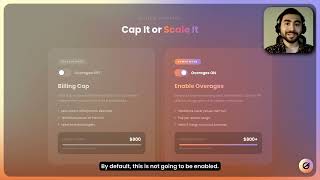
Hey everybody, Spencer Tahil here. Today I'm going to walk you through what Cargo is, why it exists, how I fell into it, and then I'm actually going to bring you into my Cargo instance and show you what you could do as of this year. So truth be told, I just started Cargo Cohort with one of the co-founders, Tariq, from Cargo. So shout out to that if you guys want to learn more in depth about what we do and everything there. But as one of the primary implementation partners and one of the strategic design partners for Cargo, I've been working with their team for, let's say, like 9 to 12 months now and implementing this across the mid-market and enterprise. There's a little bit of noise on LinkedIn going around, but I'm gonna walk you guys through exactly how I use it and how you guys can use it too. Regardless, we are on the Kartra pricing page right now, and this is their website. So you might be coming from another tool like Clay or N8N or Zapier or something like this. This is honestly a very good way of thinking about it. You're paying for what you need. You're looking at the different types of steps. Steps and the different types of like coordination and all of the different tokens and all that stuff. But this is different on Cargo. You might have a hard time understanding this. And after talking to a few people in the industry, they wanted me to explain it more in depth. So that's why we're here. So as we look at the Cargo pricing, you're gonna notice that you have a few different sliders down here, but it's one main slider. Right now we have kind of just a main slider. Let's just put it at 10,000 credits per month. That's a ton of credits, right? But what exactly is a credit to Cargo and how does it differ from something like Clay? So inside of Clay, you can use credits to do certain things, take certain actions. You can get an email address or it costs 7 credits to get a phone number, right? In Cargo, you can think of these as enrichment credits, right? And you can see that there's an upper bound right here on the estimated monthly cost for this subcategory of pricing. So here's how I would explain it. You have one slider and it's base to credits, and that's at the top. And there's a secondary component to that slider, which is a category-based system. You have enrichment credits, you have orchestration tasks, and then you have storage tokens. Why they are all named tasks is up to the Cargo team, but this is mentally how I build the picture of what I am getting when I pay for Cargo credits. So you can see that there's 3 different categories of like how you're using these credits, and there's an upper bound of those credits. So let's say for $0.08 per one credit, one credit gets you this many XYZ. 10,000 credits a month, you get 10,000 enrichment tasks. So you can think of the enrichment task as almost directly proportional to your credits. So if you're buying 17,000 credits, you're getting 17,000 enrichment tokens or whatever you want to call them. Orchestration is something completely different. Orchestration is if you're coming from an N8N world or if you're coming from a Zapier world, you're going to have orchestration tasks or steps in those workflows. And the reason I explain this is because conceptually it's easier to understand in your head. But if you're coming from Zapier, imagine you've got Zapier step 1, Zapier step 2, Zapier step 3. Those are all going to be individual orchestration tasks or nodes. Instead of Cargo, it's a node-based system. So those are 1 million orchestration nodes being fired across all of your workflows. So That means on top of that, what else is there? This is the storage. And this is where a lot of people don't really seem to understand where Cargo has the biggest benefit in revenue operations. At least this is where I got involved with using Cargo because I come from that world. Storage tasks or storage tokens. You can think of these as entities. So contacts, companies, deal records, whether that's going to be an SKU or something like that, if you guys are using like e-com, but Every single entity is going to be a storage token or a storage task. So let's say you have a CRM and you have 5,000 companies, that's 5,000 storage tasks. And let's say for every single company, you have 10 contacts for every single company, and you want to manipulate that data. So you have 5,000 storage tasks, and then you have 10 contacts per company. That's 5 times 10, and that would give you the total number of entities that you have in storage. So if you're doing this, You can mathematically say we can store a whole database in here. This is really good for go-to-market and email where you're trying to update a Supabase server or something like this. But instead of Cargo, it's all on one bill. And this is when it comes down to credits per month. And you can kind of think of this again as a slider. And through working with the Cargo team, what we've done and what they've done amazingly is make it so that if you want to continue the use of your credits or go over whatever your monthly estimated cost is gonna be, $800, you don't wanna spend more than $800 on your tool for orchestration enrichment storage, you can automatically cut your card off from billing anything over that. Or if this is running your business, which very truthfully it might be, you might be running your whole business on an orchestration platform like I do for a lot of my clients, you can enable billing past what the estimated monthly cost is going to be. You have your credit card on file and you want to keep your business moving, then you're going to enable overages. By default, this is not going to be enabled. This is something that I've worked very closely with their team to develop. So this is how I just understand the instance of how Cargo works in a in a nutshell, right? We have pay as you grow, all features. They've got like really good testimonials and stuff like this. You guys can go into this on your own. What you guys are probably more interested in, why we're teaching this in Cargo Cohort right now, is the actual application themselves. So I'm going to bring you into my Growth Alliance instance right now. I'm going to show you some of the use cases here at the instance. I have a few different agents in here that I've built directly into Growth Alliance, and you can actually see how granular you can get. Before I overwhelm you, I'm just going to show you what it looks like on the user interface. And you can see on the left-hand side, I have a sequence builder. This whole section here is a system prompt. So the same way you would go into Clay, you do an LLM module, you go into Claude or something like that, make a skill. You have the system prompt available to you on the left-hand side. And you also have the capabilities. So memory, canvas, web search, as well suggested actions. You can definitely store this in the background. So there's also agentic chaining, which is something that is not available to do inside of something like Clay right now, unless you do something called chain prompting. Regardless, you can build multiple agents and chain them back to back and give access to those other agents as tools. This is the terminology that we use. Tools are repeatable processes or agents or parts of a workflow that you can build to run over and over and over again. Think of it as a template, right? Skills, this is new. I haven't played with this yet. It's just think of like, again, think skills. Resources, if you wanna hook up your ERP, you wanna hook up your data library, a HubSpot database or Salesforce database, we have this here. We have direct MCP server access as well. And then I can also tie in the temperature as well as the, you know, my own providers. So, you know, there's no vendor lock in here, right? Like I have my own Gemini key. If you guys wanna switch models, OpenAI, Anthropic, Gemini, whatever, If you want to use their credit model for like everything there, you can as well. And then you can also show reasoning. If I wanted to just use this module just as is, all I need to do is come in and instruct it system prompt-wise. And then on the user prompt side, I just come in here and I'm like, hey, show me what I need, right? This is how an agent works. This is how a tool works in general. To show you kind of like where we are now, this is all of the API actions that are currently available. I mean, I could give you a little product demo, but you can see like all of the different providers as well as the native integrations that we have inside of Cargo right now, or that they have inside of Cargo. And you can see that zero items, uh, zero per credit, or you need to bring your own key, or shout out Swarm. I love the Swarm. You can bring your own key there as well. And so on and so forth. You can also use these like without keys as well. But just going back to kind of what the interface looks like, I'll bring you back. This is the window. This is the home screen I have. I mean, it's dark mode, it's awesome. But they have pre-built tools as well, and they have— this is what it's called, they're just called tools. And if you want to see kind of what is already in there that you can build, deduplicate companies in HubSpot. This is a huge revenue operations play. This is why I actually moved to Cargo a long time ago. Mine is a little bit more robust by this, but I will show you in general. So this is already pre-built. You can see that it's a vertical WorkflowStar orchestration-first platform, and you can deduplicate companies in CRM and when they share company information. Super huge for like large databases for entity resolution. And you can see like the workflows there. You just press next and deploy it. This is called a play. What mine looks like on the other hand, and to scare the crap out of you while you guys are watching this demo, this is my entity resolution workflow, my playbook that we run inside of Cargo. This is mapping all of the edge cases from a specific HubSpot instance. And you can see that this is on the backend. I can't show you the dataset because it's proprietary, but I am manually triggering this beginning of the workflow on top of a stored database that was originally from a HubSpot source. So correcting false associations. And then from here, just showcasing the power of Cargo in the background, right? We say, okay, we need to insert the record. This is all native and everything like this. And then we begin to insert a row if there are any entities that we can't, you know, figure out what they are. I, I don't remember exactly the logic here, but you can see that we have native nodes and you also have things and branching logic depending on where everything is going. The reason why you see the export file on a Google Sheet right now is because the client actually wanted us to like make all the edge cases go there. So this whole branching logic all on the right-hand side that we're going down, you can see that. Call, call a specific endpoint, HTTP API endpoint. And if it's not there, for instance, you know, just keep going and you can see where it goes. These are all edge cases. So edge case mapping is really, really big thing. You're gonna get limited in a lot of other platforms. This is what we've built internally for, you know, a client of Growth Alliance, but just showing you the capabilities here. I believe that this is like a 142-step data cleaning project and entity resolution project that we did. But long story short, this is what it looks like. And then there are already prebuilt plays. As far as resources, you can also attach like some of your resources here. You can make your own plays. You create your own tools as well. And then your skills are new and agents live here. So this is what the inside of an agent looks like. This is the same thing, and this is basically the pricing. So this is my like very short demo of like how I'm using it. This is why we've started the Cargo Cohort. If you would like to talk to actual sales, of course, hit up the cargo team. If you would like to talk to me about how to, you know, figure out how to clean your CRM, or if you'd like to go to market, if you'd like to orchestrate all in one place instead of having tool sprawl, hit me up. I'm on LinkedIn. My name is Spencer Tahil. I run Growth Alliance. If you need their team, of course, contact Aurelian or Tariq, and they'll be happy to assist you as well. I'm sure of it. They're very responsive. So that's it. And this is my explanation. Bye.
More from Spencer









Mega GTM Talk #2: Spencer Tahil, Brian Ragone & Pawel Nical on Where GTM Is Headed

