Clay Bootcamp Agency Secrets - Spencer's 3 keys to massive deals
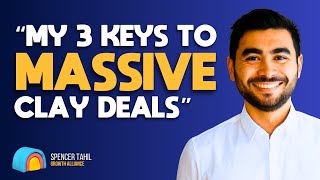
Spencer Tahil shares his approach to landing and managing big agency deals. He focuses on operational excellence, direct client relationships, and scaling without the typical agency overhead. His strategy prioritizes communication and long-term partnerships over quick wins.
The anti agency approach that I take is more of kind of like an embedding. I embed in their team, I talk to their team. One of the first things that I do and aside from setting up all the infrastructure in the first month is I go and interview every single person that I'm going to talk to. Dude, what pisses you off every day? Hey, SDR number three. What pisses you off every day? Is it like picking up the phone? Do you have like anxiety about that? What are the common responses that you're going to get? Interview 10 SDRs, put all their answers together, mash it together with some cloud engineering, get some common queries put out in an audit. Wow. Go to the growth manager, say hey, we're going to do this. Put, but what are your KPIs? Understand what he cares about, understand what pains him and then go to the CRO or the financial control and say, hey, what ROI are you projecting on hiring us? Understanding every single thing from that point of view allows you to understand even more so that you know how to communicate. And this approach that I take is like when I embed, I want to know as much information as possible because for me to get done, I just need to be efficient. I there for 90 days. I have stuff to do. You're paying something that's not very cheap.
Hey, Spencer.
Hey guys. What's up, Nathan?
Excited for this? Yeah, I, I wish I had my Hawaiian shirt on as well because it's the most like most fun you can have in a shirt that I've ever had. So, you know, but I'd already. I always wear mine before any other shirt. So it's dirty right now. It's in the laundry.
Unfortunate. But next time we can match our shirts.
There we go.
We can get some clay, like some clay boot camp merch, you know, that'd be kind of cool.
We do need to do that actually. So maybe by the time this is out we'll have fulfilled it. Well. Super excited you're here. Really excited to talk. I know I'm going to learn a lot because I've used an innovator in the space and you think about things very differently. And I think people who watch this are going to learn a ton. I mean we talked with a lot of really successful people. You're also really successful, but you just have like an approach that's going to provide a lot of contrast. So hopefully you're a little cranky and opinionated. I've never seen you cranky, but hopefully today you're like A little cantankerous and just give us some.
It's Wednesday, so this is my creative day, so I'm actually least cranky in the middle of the week. It's actually kind of funny. Yeah, I'm sorry, but I gave some hot takes. We just go through it and just see where we go. All right.
Okay.
Nice.
Okay, so quick, quick intro. Spencer runs Growth Alliance. He's super smart, very intense, very helpful. He's mentored, I think you said 12 or 13 clay boot camp students so far.
Sounds right.
He's our go to often when someone's already quite technical and they're interested in a lot of things, but, you know, one of them, CRM enrichment, prompting and just really intensive engagements with clients rather than transactional ones. Really glad to have you on the podcast. Let's dive in. Like I was saying, I see you as a. As an innovator in the space, and also, I think you're not as famous as you should be yet.
So.
Okay, I'm like, when do you post? When you post on, like, them like this. This post should have at least 200 likes. Come on, people, like, get with the program. We're going to change that.
We'll try to change that. A lot of people like videos. A lot of people have told me that they see my video, like when I'm like, take my phone out and I'm like, walking down the streets and I'm like, yeah, so this is what's. What's going on. This is why I don't like the industry. And they love that. They eat it up. But, like, whenever I try to make a post, like the other day I tried to make a post and it was like, my four mental models or whatever, dude, nobody liked it. I was like, what is going on?
That's weird.
You just have to not give it any effort. And if people love it, it's bewildering to me how LinkedIn works.
I see. Yeah. If people have to use their prefrontal cortex on social media, it's probably. I don't know. What would you say your zone of genius is?
The.
That sets you apart from.
I would probably say, like, there's a few. But if I have to, like, sum it up, it's definitely, like, in our space. Right. Like, in. In our context, my zones of genius are probably gonna.
I mean.
Yeah, Yeah. I mean, like, just in general, like, I. I would say, generally speaking, my zones of genius encompass macro strategy, like macro marketing, operations strategy. So we're looking at more or less the growth department and growth strategy and how it gets executed. And then on the technical side, it's how associ a CRM environment and then debugging, integrating in that. So when we look at, when we look at that in our industry, it's commonly known as like rev Revenue operations. Right? So being able to see the whole picture and then get really gritty and really technical and say like, hey, this is how the API works. I would say those are my zones of genius. But I just, I come from the engineering background in the business. It's like you ask why five times and you do a root cause analysis. So it's, it's just what my teachers hammered into me. It's what my parents hammered into me. It's like, just keep asking why. And I think like, that's probably one of my zones of genius is just like being able to understand why and where things work and then like blowing them up into like a macro strategy and then just kind of drilling back down and putting it back together just better.
You know, I remember reading this book many years ago, maybe probably more than 10 years ago, about gifted adults. And they said something like, they have a, it's like having a microscope and a telescope where you can zoom in and zoom out. And what you're saying, yeah, reminds me of that. Like being able to get the big picture and get into the nitty gritty and implement as well. And you said, you said something that surprised me. So your parents drilled it into you to keep asking, why are they engineers?
Or like, they're not engineers. But I would definitely say like my grandma, I mean, I would say this phrase would come from her. It's like, do you need it or do you want it? And it's like, why do you want that toy? Like, we're walking through New York City and like, why do you want that? Like, do you just want it or do you need it? And it's just like, you know, it, it. I'm more, I'm more on the logic based side. I've never, I mean, yes, I am like emotional, but like for the most part I can discern the emotions between why somebody is feeling some way versus what they're feeling. And I think like, communication is where a lot of things fail too. So just blowing that back up, it's like understanding what something is and then like, why it is that way is way different than looking at it emotionally. So that's how they were teaching me to be. Like, it is what it is. Here's the reasoning behind it. And then like why is it that way? And then it's like logic based reasoning. So that's like kind of how I grew up. I don't know if that's like sad or something, but like it was like they were always like, try to understand why it is that way. Because not every, not everybody is gonna hold the door open for you in New York City. Like, not everybody is nice. And like as a child I remember it's like I'm holding the door for some people in Chinatown and it's like they don't say, thank you. Oh, dad, like, why did I not say thing? Because not everybody is like that. And then you have to like come to that realization. It's like, ask why? So you can understand. So like, it's like, it's just like little tiny things like that, that it's like completely non contextual based on this conversation. But yeah, you just have to ask why? And it's, it's more fun that way. You get to learn more, I guess.
Love that.
Yeah.
And are you going through that process? Do you notice yourself going through that process? Like sitting down with a piece of paper and thinking through things and then like looking for bottlenecks or, or whatever.
And I actually do a lot of my sparring with Claude now. Like, I would say 85% of the work that I'm doing is like thinking and talking rather than doing. I would say if I can think about it and I can ideate a plan, then it's going to take me so much less time to actually implement it. Like go into clay, guilt build a table. Okay. Instead of opening clay, I'm going to probably open, I don't know, like puzzle or mirror or something or figma and draw the whole plan out. And then I'm going to implement it. Because if I know what I'm before I do it, then I can understand. Oh, that's why it's not going to be that way. Right. You give blueprints to an architect, they know how to build it, but without the blueprints, they don't know what they're doing. It takes them infinitely longer.
Y.
So like that's how I would explain what I'm doing. But I have like tiny sticky notes. I'm like, okay, that pissed me off today. I don't really tend to do it a lot. I usually just kind of do it retrospectively because it's faster for me to do it and I don't have to. Like you said, I don't have to use my prefrontal cortex to be able to do like a retrospective. So like every week I have an automation that pulls all of my firefly transcripts from the whole week. And I have coaching calls, I have discovery calls, and I have client calls, and I have internal calls. And based on the contacts and based on the titles of the meetings, everything gets grouped together. All the coaching calls goes into one container. And then all of those transcripts get pushed into an AI parser together. And then it gives me like here, here are all the lessons that you actually talked about today in your coaching calls. And here's all the discovery call questions that you did here. Like, here's how you answered it. And then it gives me just like a retrospective of that. That's how I do my sparring now. Just because it's. I just said it and I forget it. But outside of that, I'm not really doing it on a piece of paper anymore because it's get in the call, I talk, I do my strategy, I get out, you know, I don't have time to do. Do it so much anymore.
You know, Makes sense. So, yeah, we were talking a, a little bit ago about parents. Like, you're, you're pretty young, right?
You're.
You're still in your 20s.
I'm still my 20s. I'm not 30 yet, but my knees already hurt. But that could be like all the rock climbing up doing.
Are you like just falling from great heights?
I get off the wall and I'm like, oh, my knees. I'm pretty young compared, I would say compared to like the rest of the peers in the space. The ones that I've been running, like, you know, they've done. They were like a senior AE at Gong or something like this. And they started collegiency and I'm like, dude, that's not me. But I, I have worked in like some pretty cool marketing agencies. I'm with a few right now and I've run their go to market and I've just learned. It's just, it's not what you do, it's who you do it with. And you know, like, you just gotta be around the right people. And I feel like I'm growing and the people around me are super, super smart. They're smarter than me. I don't like to be the smartest in the room. Like, I want to learn stuff from you, dude. You know, like, you're, you've been doing this longer than me. Like, why would I not want to be in your company? You know, So I don't mind. It's fun. I have. I have a good time.
Yes, it's awesome. Yeah. One thing, speaking of people, like, I remember, I don't know how busy you are these days, but I remember when you first joined Klay Bootcamp, you were like meeting with everyone in the space and just having like incredible numbers of like, I thought maybe you cloned yourself five times. And like, I joked with people as well. Like, I don't know how Spencer. You know how Spencer does it if he's cloned himself? Like, do you. Are you still doing that pretty aggressively?
So I have, like, I have my calendar, I have two monitors up, so I'll just like, look at. So I've, I've tried to optimize everything in my workday so that I can like, leave room to be creative. So, like, you know, like, we've done one of these A little while ago, I just got on with Deal front and I did their, you know, their podcast and I was just with one of my clients actually did their podcast. I'm just like optimizing my life to just have more fun, you know, and, and not like in this, like, silly, kiddish way. And there's like 20 year old. I want to go and do this. All these cool things. But like, in a way, like, for me to do good work, I've noticed that I need to like, work hard and play hard and relax and I'm trying to strike the balance. So, like, if you're asking me. Yeah. Do I still meet with people? Yes, I do. But I'm much more careful with my time in the sense of I have meetings on Monday, Tuesday and Thursday, and then I have optional blocks on Wednesday and Friday. Like, it's a Wednesday. I want to talk to you, Nathan. But, like, you know, I wouldn't, I wouldn't open that up for everybody because it's going to cut into my implementation time or it's going to cut me into my creative strategy time or my marketing time. So everybody works differently. I. Tomorrow I have catch up call a Kleibu camp call, a partnership call, another catch up call another monthly call another catch. Like, they're there, they're in my calendar. But I think it's just a matter of spacing it out. I don't go as hard as I used to, I guess, but I do still have like, pretty crammed days when I talk to a ton of people. But yeah, I enjoy it. I enjoy talking to people. Hey, whoever's editing this video, can you put this in as a blooper? Nathan needs to get Clay boot camp merch. Oh, you can still hear me because.
Okay, that was weird.
Yeah.
It said let's see. So let's see. We were talking about. You're talking about people. Okay.
Yeah. I think the scale that I'm working with right now, and I know that you wanted to talk about. We were talking a little bit before we did the show here today about like the size of the companies that I'm working with. Like these deals are just like, they don't just show up on a silver platter. I've taken a little bit of a different approach. So it's like my approach is. I know I'm really, I could talk to a brick wall and have a great time. Like, Right. You know, like I can talk to myself while I'm climbing at the climbing gym and have a good time. But like I would say these deals, like historically in business, to business deals, like we should all know that everybody does business with the people that they like and people like people that they can trust. So when we start looking at like the higher end of SMB and the enterprise, you know, these, these relationships, it's just like, oh, who do you know that's hiring a growth person? Oh, do you know that person? If they're in the market. This is like kind of like the types of things that come up in like my monthly catch ups or like my, my quarterly catch ups with like people. Maybe they're fractionals, maybe they're people from HubSpot X Gong Ex Salesforce guys, people running Sculpt with Clay, you know, like they're, they're gonna be like, what are you doing? What are you, what's going on? And all these things. And then something comes up in conversation and they have a conversation with somebody. Oh, I was just talking to Spencer. I was just talking to Nathan. They said I should meet with you. That happens every single month, multiple times. Like how many times, Nathan, do you text me on Slack or you email me and you're like, I think that you should have a conversation with this guy.
Yeah, it ha.
Like, it just, it's good to have connections. I've noticed that like your, your net worth is your network. I think that's something that my mom told me a long time ago. She's like, make sure you talk to as many people as you can because you never know when that bridge is going to stay open and when it's going to close. But you might will make as many bridges as you can while you can.
Love that.
Yeah. So that's kind of like my approach, like I've noticed I'm much stronger relationship building and relationship caring for those relationships than I ever would be at doing implementation. Like I'm, I'm good at that but like I'm much stronger at talking about it.
Interesting.
If that makes sense.
Yeah, the, the monthly catch ups. That's an interesting way to engineer luck. It sounds like you're like you meet people, myself included, like that likes to think about luck very consciously and how you can make it happen. And that's a cool, cool technique that I'm not, I've not really tried that, that specific method but it sounds really powerful.
What I don't like about what I do is that it's completely dependent on people's hopes. Right. Like it's great in some sense. Like you can sell hope, you can sell the promise of selling more which is basically what marketing and sales does. That's GTME does. Like we sell the promise of more money. So there's like, I think his name was like Eddie, Eddie Maloff or everybody knows Alex Hermosian in the sales space, right. I'm getting flooded with his, his emails but like I don't know if you're getting flooded, but I'm getting absolutely destroyed.
The fact that he's sending so many emails and texts is news in itself. Like I've heard three or four people mention it, some in LinkedIn.
I've gotten seven emails, Instagram ads and LinkedIn ads and then LinkedIn sponsored posts and then people complaining about those LinkedIn sponsored posts and those emails. So if you think you're not sending it, if you think you're sending too many emails, you just think again going back to just my, my whole point about before I tangented onto this, there was something, one of these people on YouTube, I don't know where I saw it. It was like there's two different types of business and there's the offensive, right? There's like going the hunter killer, the Promiser, which is like marketing, sales, partnerships and then there's the defender like offense and defense. Offense goes out, educates, sells, markets, convinces, gets net new money and defenders keep the money in and reduce the amount of cost that it takes for the other people to do their job right. So it's like I'm really good at offense, defense. I've been in that position before and it's, it's all about communication. If you nail communication, if you get ahead of like the problems with like let's say an API fails and you have to go from triple verification to double verification before send the email. If you report that to a client that's paying you 15 grand a month and they're like, oh, thanks for telling me about it before they figure out what the problem is. You're the professional and I think a lot of people don't communicate when they should. They should proactively communicate. And I think that's, that's the whole job of playing defense. Especially when you're in our space. You're in like an agency space. You need, you need people that are going to over communicate, even bad news and, and being able to kind of like salt and pepper that thing in. It's like really nice. You know, you have to, you need to pick somebody that's going to be really good at communicating. Makes sense and executing.
Right.
And usually they're not going to be the same person. It's going to be really hard to find somebody that's really good at talking and really good at doing. Those are unicorns. No, it's hard.
Talk to me about these. You've closed some of the biggest deals that I've ever heard of in this space, in the agency space. Or you know, I know you, you say anti agency, but like, maybe you can talk about what you're doing differently there.
I don't know if a lot of people that are like going to get this far in the podcast are going to actually know this about me, but it's a fun fact. Like I used to be a freelancer. I used to implement HubSpot for a diamond agency a long time ago. I can't say who it was for, but basically I was their head implementer for HubSpot. And that's where I learned everything. I learned everything by doing it and messing up and almost deleting half a million contacts. Yeah. So, and then from there I ended up actually in a management position at that agency. Used to be something called Captivate. But the clients, like we had clients coming in and out. You said something that like you hear me say a lot. It's like I take an anti agency approach and it's because when I was in this implementer seat, when I was in this project management seat, I saw a lot of things that just really just irks me. And it was working under people that, you know, didn't see it from like fighting fire from the ground level. Like, okay, they don't see the AI, they don't see the implementation plan, they don't see this. They don't really care. They just see that it's going to get done on timeline or it's not going to be. And the approach that I'm taking is to kind of blow up the whole approach of delegation. So when somebody comes to me at Growth alliance, they believe in me. You know, it's really hard for somebody to hire me and my team if they don't trust me. Right. And this is the problem that a lot of like beginning agencies like, like, like have. It's because it's very founder dependent. Even, even if you're in a web development agency, what ends up happening is the founder, he's a great web developer for instance, right. He hires all the junior developers that are going to, you know, he's going to delegate the work out to he, he doesn't have to do any of the work he has. All the respons ends up happening is that he still has to QA all of the work. Right. And The R, the ROI on him delegating is I don't know, maybe 40%. Like maybe that's his margin. If he does all the work it's 100%. Right. So but when you delegate, you risk the quality. And that's where a lot of like agencies are like failing. And that's why a lot of agencies churn their clients. It's because quite frankly it's either the quality goes down, the results aren't there or the communication sucks. What I'm doing is, I'm just saying hey, if you're going to work with us, we're going to commit for 90 days and these are the things that are going to happen every two weeks and every single week we're going to talk to you. On this day at this time it's going to be scheduled and on Thursday we're going to have a catch up. You know, like I don't let people, if you're not able to communicate before we work together, I don't have any belief that you're going to be able to communicate when we work together. And I think that a lot of people see the green money, they're like whatever, 10, $20,000 a month and they're like okay, I can do it, I'm going to take all this money. And then they have, they have scope creep. So the anti agency approach that I take is more of kind of like an embedding. Like I embed in their team. I talk to their team. One of the first things that I do and you know, aside from setting up all the infrastructure in the first month is I go and interview every single person that I'M going to talk to dude, what pisses you off every day? Hey, like SDR number three, what pisses you off every day? Is it like picking up the phone? Do you have like anxiety about that? Do you just like, you know, what are the common responses that you're going to get? Interview 10 SDRs, put all their answers together, mash it together with some cloud engineering, you know, get some common queries, put in an audit, go to the growth manager, say hey, we're going to do this. Okay, but what are your KPIs? Understand what he cares about, understand what, what pains him and then go to the CRO or the financial control and say, hey, like what ROI are you projecting on hiring us? That's usually happening in the discovery phase. But like understanding every single thing from that point of view allows you to understand even more so that you know how to communicate. And this approach that I take is like when I embed, I want to know as much information as possible because for me to get done, I just need to be efficient. I'm there for 90 days, I have stuff to do, you know, and you, you're paying something that's not very cheap, you know, to be able to get an roi, we just work backwards. We go from desired outcome to activities that we have to take to the objectives. And that's how I phase all of my contracts out, all of my agreements. It's every two weeks. It's sprint, GTM track, ABM track, revenue operations track. 14 days. 14 days, 14 days. You know, like every track and every single 14 days there's a, an objective tab with all the bullet points. Activities, activities and then desired outcomes. And outcomes. All they care about is desired outcomes. Project management wise, I have to take care of the activities. And then the objectives were both joint, we're both joint aligned on, and then they signed the deal. And that's basically like how it works. I come in and I'm like, I'm reverse engineering everything that they want to do. And I won't actually even sign somebody unless I'm very confident, first of all, that I'm very confident that I can solve all of their problems. If you just want a CRM enrichment, I'm probably just not going to touch it. I'll be like, here, here's the tool, here's how much it's going to be. Here's my partnership discount. Go sign up, I'm going to walk you through it. I don't want it because it's a distraction for me. I like to play in the big sandbox, for instance. And I think a lot of people at that level like that white glove. It's just a boutique agency. I've always enjoyed it. I don't like this copy paste, put everybody in a box kind of thing. It's not for me. So that's kind of what I'm doing now, if that sums it up.
So you're saying no a lot.
I don't think that the power of saying no. Ooga booga, you know, the power of saying no is awesome, but it's knowing when you need to say yes. And, and you should be a lot more careful about saying yes to things, both in work and in life than you would say no. Because a lot of the problems that you're going to have are going to actually come when you say yes. So be sure that you pick your problems. You know, just in general, what are.
Your filters for saying yes or saying no?
For clients?
Sure.
Yeah.
Or you could whatever. Yeah. If you have an interesting life example.
Okay. I would say for clients. Well, I mean, I work, I would say, like there's three different people that I talk to in a general landscape. Right. There are the clients, there are partners, and there are team members. Right. Like right now, probably by the time this is published, I'm going to have a full time hire. Up until this point in time, it has just been me and hiring somebody. I had to find the right person. And I think when you're looking to hire somebody, you need to find somebody that you can have really difficult conversations with and that's hard to do. I am a nut job, that's fine. I'm direct, that's fine. But if somebody that I'm working with is not able to discern the way and the reason why I'm talking about a certain thing, we're not going to be a match. Right. If you're really good at your job, but you suck at communicating, what's the point? If you're really good at communicating but you suck at your job, then why am I paying you other, you know, to manage? Right. So, and I think like you take this mentality of you build the people, you build your circle around you the same way that you build a circle of friends. Like, you can't choose your family, but when you're running a business, you choose your family. That's the trick, you know, like it is, it is my main job to protect my team and my partners from people that are going to talk down to them. And with clients, my filter for saying no are if they give me headaches before we work together. I guarantee you that they're going to give me headaches when we work together. And for my sanity, I'm going to say no, because I can't work under that. And maybe that's a little self selfish, but there's a price for my sanity and it is triple of whatever I've quoted you. Double it and give it to the next person that's going to be the person that I'm going to bill. So. And I think like, that's the funny, that's the funny part is people don't understand, like, how much are you willing to sell your time for? Mm, I sell. I still sell my time. I have to pay myself. You have to pay yourself. But like, what is the price of your insanity? Okay, now double it. That's how much you should be charging an hour. So like I know people that are charging $900 an hour. I mean, like, look at Jordan, like Jordan Crawford, like thousands if not hundreds of dollars an hour. But he's awesome. I take shout out to Jordan Crawford, but like I text him on LinkedIn, Mike, hey man, like, how'd you do that? And he like writes me a wall of text. But if I want to have a call with him, it's paid. And I think that's great because it lets me respond and him respond async. And we don't really encroach. Like people don't really encroach when you're texting, right? When you're having a call with somebody, especially somebody in like a leadership or like somebody in a managerial position, what ends up happening is that they fall out of their flow state. So I have to be really careful that when I talk to my clients and when I'm saying no to my clients, that they understand, like, hey, I'm also busy. And I think like having a mutual respect between parties, whether that's going to be a partner, a client, a team member, somebody like you, who I work very close with. I think it's very important to understand this is how I react to things. This is how I'm not meaning it to be in this way. I just believe that it's going to be super direct. Personally, I prime people, I say, hey, listen, I'm just going to tell you how it is, but also at the same time, let's mutually respect each other. Because if we can't mutually respect each other and we can't work on that together, then I'm probably not going to be the right partner for you and you're not going to be the right partner for me, and that's fine. Again, knowing when to say no is really important. Picking your bag of jelly beans is really important. I mean, you know, you don't want the Harry Potter jelly beans, the one that tastes like, you know, like vomit or something. Right. You want the ones that taste like cotton candy. So pick your bag of jelly beans. How many vomit, vomit tainted jelly beans do you want in the bag of jelly beans that have like cotton candy and stuff? Is it 1 out of 10 or is it like 10 out of 10 problems that you're dealing with? So you. Sorry for the disgusting reference, but like, this is, this is.
Yeah, sorry, go ahead.
Like this is realistically, like how I think about things. It's like if somebody's giving me, like if a client is a prospect, is giving me a hard time before we're, you know, going in on something, it doesn't really happen a lot anymore. But it's like if somebody's giving me a hard time before they're even paying me, imagine how they're going to act when they're paying me and vice versa. Like if I'm doing consulting for somebody and they're like, I don't think that that's right. And I'm like, listen, I'm just here to help. That's the philosophy I go with. I know it's kind of getting like philosophical on my answers, but it's. I would say money is money, whatever. Like if you're an agency, you close $3,000 deals and you close 20, 20 of those, you're doing great, whatever. Like, I would rather just not stretch myself around 20, 20 different people. Yeah, I'd rather quadruple that value, charge 12 to 15,000 and just focus on four. That's a personal point of view. Yeah. Other than that it's just work with cool people. Do cool, don't stress out, have fun. Like if you can eat well, exercise.
This is like turning into a poem or some. I've seen this videos. There's this like guy dancing. I forget, I forget what it is, but it reminds me of that the desiderata narrated to someone anyways.
Yeah, whatever.
So you've helped like 12 or 13 people at Klay boot camp. And it can be pretty intensive work with people. So it's, it's not a small number of people. And you also talk to a lot of people in the space, et cetera. Like what do you see most or many new agency owners doing wrong that you have to like, say, hey, no, you shouldn't be thinking about it like that.
Lack of focus, lack of operations. They know how to play offense, they don't know how to play defense. And I think, like. Like communicating. I think a lot of people bend over backwards and they don't, you know, like, for instance, there's a few clay bootcamp students that I have right now, and they say, like, oh, we're charging around $4,000 a month for, you know, sending out four campaigns a month. We're doing two campaigns every single week. The client demands that we talk to them three times a week to talk about the progress. Be like. And I said to them, I was like, listen, dude, like, that's a lot. Like, personally speaking, that. That's a. Like, you're not full time. You're contracted. You're. You're business. A business. Like, you need somebody full time. That's. That's fine. But what I see a lot of, like, the new agency owners doing wrong or like, you know, somebody that's just starting out is not focusing on the defense and not focusing on their sanity. And what I mean by that is that they just don't know when to say no. Like, they're. They're afraid of saying no because they don't believe in themselves. And that's. I think that's generally what it.
So much mindset.
It's literally, Nathan, I swear, it is just mindset. And like, money is just another zero. That's all it is. Like, really? That's all it is. And when you believe in yourself, you can say, like, dude, listen, this isn't going to work out. And then you give the ball to them. Be like, no, I don't think that that's a good idea. Here's my reasoning. Why. This is the professional point of view. This is my personal point of view. And you can delineate between those two. But I think, like, when new agency owners are like, somebody that. Let's just give the example. Like, when somebody is coming in from a senior SDR position or a senior AE position, they start a agency. We see this all the time in the space. They're looking at growing. They're looking at sending their own outbound messages. They're looking at learning all these things. Okay, but, like, what is your lead magnet? Like, what. What do you. What are you going to give them? And. And I think, like, a lot of people don't think that far ahead when they're first starting, but also when they do win, the clients, they're like, okay, I got to get more money, I got to get like, you know, like, dude, like, make your clients happy. Ask for a testimonial. Slow down and just be like, ask them to introduce you to other people. Yeah. And like, full stop. And I think, like, people go too fast, People delegate too fast. You know, like, going back to what we were talking about. Like, you know, the agency owner with like, the web development agency that carries the team. Like, they do 80% of the revenue, they do 20%. You know, like all these different things. But, like, when you delegate too fast, you lose quality.
Yeah.
That's one mistake that I see a lot of people making. They're like, I need a full time gtme. This is not just agency owners that have this problem. These are actual full time companies that I talked to. They're like, we need a. We need you full time, dude. You don't need me full time. And the thing is, agencies think that they need to pay full time for talent when they're not even clear on the scope. How can you tell somebody what to do if you're not even sure what you need them to do? How are they supposed to know what their job description is? And I think it's the same exact problem. Flip the script the other way. When they go and try to get themselves hired by somebody else, they write a really generic scope of work and then they get scope creep. And scope creep is basically when a client comes to you and says, oh, I want you to do more than what's written in the agreement. And, you know, just to make them happy, the agency owner will just say, okay, yeah, because they're paying them. And I think, like, knowing when to say be like, nope, this is what signed and when to stop. I think that's a huge, like, problem. Like, that's. That's a very big thing that I'm seeing, especially with, like, Clay Bootcamp students. It's like they just want to keep the client happy. And they'll do anything to keep the client happy, including not believe in their selves and their abilities.
I totally agree with what you're saying about new agency owners. It's like, I think it's especially people who've not done a business on their own before they close the first deal and it's like, yes, it's amazing. They close the second one and then like the third and fourth and fifth, they come really fast. If, like, you're not used to saying no yet, you don't realize that you have capacity limits. Because before the, the bottleneck was that you just didn't have clients and people are really hungry and people have to like almost always overeat and then they have to hit the brakes. They get a, you know, like a stomach ache sort of, sort of deal. And I think maybe we'll be talking about vomit again soon.
I can also add to that answer, like, what are the most common problems that a lot of like new business owners that I talk to are facing? What they get wrong is they focus too much on the micro and they don't focus too much on the macro. What I mean by this is when you're looking at a marketing strategy, you usually do top down and then you figure out what initiatives you're going to take, like KPIs.
So you say you start with the goal that the, the CRO or the CEO or whoever wants to achieve.
Yeah. And I think realistically when somebody is making a hiring decision, let's say somebody is hiring somebody like me, a growth alliance or something like that. Right. They are already going to have an internal precedent to look for somebody that has done something already. Right. In, in our space, in the go to market revenue operations space. But if I just say to them, if they're like, we need somebody today, this is a rush. Okay, like how urgent is urgent? Is it like two days, two hours or two weeks? And I think like this qualification matrix is something that I learned a long time ago when I was at a different agency and I was like talking to a lot of people. It's like framing is huge. And I think a lot of new business owners don't understand how to do framing very well. And by that I mean what does the timeline look like? How urgent is it? Is it two hours, two days, two weeks or two months?
You mean the, like the frame in which the, the problem resides?
Exactly. Like, is this something that you're, is this something that is like business stopping? Okay, like let's do it. You know, like, but most of the time it's not usually it can wait until Monday morning. Right. Like, and I think a lot of people are going to understand like you're going to work on a Friday night at 1am to fix something by Monday. And like you're going to respond to that email on Friday night at 2am and then they're like you're rushing to get it out and they don't look at it until Tuesday in the morning. Like, come on. Like it's not that urgent. But at the same time there are some urgencies that need to happen. And on the micro macro kind of Scale. When somebody is doing hiring for somebody like us, we need to make their decisions easier. Again, going back to your concept of people don't like to think, don't let them think. Do the thinking for them. Make it easy for them to buy your services. Say, hey, this is the problem that I'm going to help you solve. I just want to make sure that I can give you the best quality. And for me to do that, I can only start you next month on the first or on the second if you really want me. Like, can we. Can I continue to support you up until the day that we start? And then you guys don't have to pay anything for the next three weeks. Like, is that fine? Like, maybe I can just join a meeting with you guys. I don't have to go hands on keyboard till then, but I just need to ensure quality and I need to ensure that I treat my own customers fairly before moving on to you guys. 9 out of 10 times that end client is going to be like, you know what? That's super fair because I don't want. I don't want to get down, you know, downgraded too. So when you. I. I think it's all framing. And I think, like, the new business owners are focusing too much on, like, month by month or like day by day sales or day by day, like, marketing strategy. And they're not thinking of what's this going to look like in three months, six months. Yeah. Whether that's going to be like, marketing strategy, clay implementation, stuff like this, or it's going to be like onboarding new clients or sales or stuff like this. They just not. You need to think bigger. And I don't think that when you're starting something new that you have the mental capacity to be able to take everything on at once. Right. So I think you need to learn how to pace. And this is like something that I tell Clay Bootcamp students would be like, don't do too much. At the same time, prioritize what is actually going to move the needle for you and for them.
Yeah.
Try to move both needles at the same time. And if it's not important, delegate it. And if it's even less important, deprioritize it.
Yeah.
You know, not everything is going to be important.
Totally. You talked to me maybe last week or the week before about your journey in increasing your prices. Can you talk to me about that and how you did it differently than.
Than other people? I just asked for more. I was like, you want to really know the real reason it's I mean for instance, like not to be arrogant in any sense. Old mentor of mine, her name is Anna, Anna Burger, shout out to you. We were serving on a HubSpot project and working on a few different things, but she as well as one of my old clients said, even if you got, if you doubled your prices, you're going to be happier, so double your prices. And instead of doubling my prices, I tripled them. And it was quite frankly what has led me to do this year after year. I increased my prices year after year because I can, because I know more and also because of inflation. Nobody likes inflation. But the reason why I initially started to increase my prices was because I got so many upwork messages because people were like, oh, he only cost, you know, 50 something dollars an hour, like I'm going to milk him for every hour during every month. And that meant I was on call for 50 bucks an hour to four different clients at a time for HubSpot stuff. And I was like, Anna, what do I do? And she said, double your prices and see who stays. You're going to do the same amount of work or less, but get paid around the same amount. Even if half your clients drop you right, you end up doing half the amount of work and making the same amount of money. So you know, like logically I was like, Anna, you're a genius. And I doubled my braces that year in the go to market space. It's like quite frankly back in, what are we in August already? And like back in November I had it very transparently, I had an agreement and it was signed. Six month agreement for $6,000. It was signed. We did great.
$6,000 for six or six months for $6,000 a month. Or like yeah, okay, gotcha.
$6,000 a month for six month commitment. We were literally just on call for doing go to market stuff like email infrastructure, setting up the domains, making sure that everything syncs into their HubSpot instance, everything like this. And after December the, you know, the contract ended up closing and they actually referred us to somebody else and said hey, we got, we were paying around 18,000 for the quarter, so it's six times three. And the new referral came in and they asked for the same prices. Now that doesn't really work. I'm going to give you a discount because I know you, because you're a referral, but that doesn't really fly. So out in March, what of, I think of 2025, like I ended up, thank goodness, like it came on a silver platter. At the perfect time. Ended up in a few discovery calls. And two of them closed. One of them was a referral, one was a direct. A direct booking. And I was like, I wonder how much money I can get. That was genuinely how I talked to myself. I was like, I wonder.
Actual curiosity.
Yeah, I was like, literally just curious. And, and I was like, we're gonna go from 6 to 18.
They don't know. Or.
And you know what? You know, Nathan, I'm not even joking. You want to know what happened? They came back and they're like 18 is too much. Can you do 12 plus commission? And I was like, yeah. I mean the commission model added up until 17,500 if I hit on target earnings. And we, we pretty much did. But like, and that, that was, that was it. I shot my shot. You should shoot your shot. I mean like, don't go so hot that you over blow it. But like be reasonable. And I was like, I know that for instance, like a marketing agency, for instance, is gonna spend anywhere from 5 to 45% of their net revenue on marketing and on enterprise. Like the larger the enterprise is or the larger the SaaS company is. I mean, look at Salesforce. You know, look at some of the companies that you've probably worked with or the people that are listening. Like the people, the companies that you know about, the more amount of money that they have, the more amount of money that they're spending on brand advertising, the more amount of money they're spending on sales because they're playing offense, they have the defense, they have everything else. They have the operation. So why the hell would they not throw all their money at office sense. That's why I'm going up market, because I know where they're spending their money and I can just get away with actually just asking. And I think like the amount of work that goes into a twelve thousand dollar contract versus a three thousand dollar contract every month is significantly larger. It is more white glove. You're. You're treating four different departments, three different initiatives you're doing. I'm doing revenue operations, ABM and go to market. But you know, like I'm crushing that and like I don't. I have to tell people like, hey listen dude, I can't take you till September. Like it's, it's like there's too much on my plate. We're migrating Salesforce just like, God, I'm sorry. Like I'm. I'm happy to support you in the journey until we get there. Is that okay? Yeah, like can you send me some like, materials. Can you tell me like, what I need to sign up for before then so I can get everything paid? Like I'm gonna get, you know, like, stuff like that. And I didn't overblow it. Like I, I was aiming for 12 and that. And I was like, screw it, we're going to Anchor High. And I think it's the job of both people of both parties, not just like me as an asking party and you as a purchasing party to ask, why does it cost 12 grand? Well, is the 12 grand worth the problem that I'm solving? Are you going to make your 300% ROI on this based on these projections? Maybe. But again that's up to you to quality control. And I think like being a partner in the buying process is something that, where my competitive edges. I will just sit with you for six hours for the next six weeks and I'll be like, tell me about all your problems. Let me come to your Scott Weber office in Prague. Like, I lost a deal. I've, I've lost $20,000 deals. I know a few people that I've lost them to. I've had conversations about the lost deal. And then you know what? I got a coffee with somebody that I lost a deal to because I priced too high. They said the problems exist. You nailed the discovery. Right? Now it's not a financial priority to spend the money on that right now. Like, can we stay in touch? Sure. The other day I got a coffee with him 20 minutes away by tram and it's like, we're, we're still good. He's got my WhatsApp number, but it wasn't a big enough problem for them. And that's fine. When you discover your pricing strategy. The pricing has to match the problem and the solution has to match the system. And if any of those are misaligned, then you're probably not going to close that deal. If that makes any sense.
For sure.
If it's just a database enrichment project, just go do it yourself, dude. Like, I don't. It's so simple that it's like fine, like just here. It's not something I want to take care of, you know, Focus. Just focus. Like say no. That's what I do.
There's so many clips in here. The hula dancing and the Focus, focus. Just say no and focus, focus, focus.
You're gonna find this somewhere on the Internet and be like, oh, God, who is this guy in a Hawaiian shirt? What else you got for me? I know we have more questions.
I Think probably. Last question before we go. I'm curious about this as well. I know I have an idea but there are very particular things that you like to do and also things that you don't like to do. And I know that you've shared before one to one, like one on one with me a bit about how you're partnering with people so that you can focus on what you like to do. I'm curious like how your business model or how you've like how you structure who does what with your engagements over time, like how that's changed quite frankly.
The reason why, and Nathan, you know this, the reason why we started talking was because there's not enough quality talent in the go to market space. And you are very prevalent on LinkedIn. Like I saw your face and was like, oh my God, dude, this, this guy Nathan, I got to talk to him because he has what I need and realistically what I need is people that I can trust and that have already been pre vetted. Right. I don't know if you know this but like from a very businessy point of view, I do remember when I was talking to you about the, the placement, you know, like the training at work and then the placement idea that I had a long time ago, it was very prevalent that it was riding on. One fact is that we have quality talent in the marketplace. It didn't end up coming to fruition but what ended up happening was that I can help you like teach people which I'm super like ecstatic about. When you are delegating work out, let's say you've sent over people that you think that would work well with me and stuff like this and, and they do, they're like actually ended up perfect matches. What I look for on delegation side is the ability to free thing but also to be able to be coachable. Everybody always says like oh you think yeah, like be like like not, not.
To need like step by step instructions.
On you know like I'm very particular and I can be very direct. And going back to what we were talking about, like how do I delegate out to people. The guy that's coming full time with me, his name is Jonathan and he's awesome. We used to work together a long time ago and operationally he's all there, right? But philosophically, the conversation that we had, we were playing video games together and he said hey man, I, you know I, I sold my agency and like I was like what, what do you want to do next? Right? And he's like oh, I Don't. I don't want to talk to a lot of people anymore. I just want to be hands on keyboard. And for me it was, dude, that's like a super easy decision, right? Like I get to work with somebody that I'm already friendly with. Like got to work with a guy that's sharp, you know, that knows how to record things, that has run his own business before incrementally better than me at these things because he's done it before. And so when I am trying to delegate things out or when I'm trying to hire somebody, and when you're trying to hire somebody to try to do things that you don't want to do, I think the best, easiest way to do it is look at the things that you are not good at or that you are very good at and either teach them or coach them, hold their hand, make sure that they're doing it the way that you want it to be done. Take feedback, take critical feedback. Host sessions internally to be able to teach. And you learn too. Like some people like teach me about stuff in my, in our internal calls. Yeah, like I, you know, like I don't know everything, but I think that you should be around smart people. And I think when you start to talk about the positioning of how do you delegate tasks out to somebody in an agency? It's how instrumentally and operationally how does your agency work? Is it like you have a production pot? Is it like a creative design agency where you have a production pod, you have a management team and then you have the client, or do you have a different operational framework where it's pod style, where you have seven accounts assigned to one account manager and five people on production? Or do you have something where it's like account manager, strategist, operator, or do you have, you know, like all of these different, you know, options? So I think understanding from a leadership point of view, which again, like a lot of people that are probably listening, understand this is you're the manager, how do you want to manage? Like how many people do you want to talk to every day to figure out the micro, the strategy, the email domain that has been flagged, that is below 90%, who's going to know that information? The specialist is going to know that information. So I think you being a generalist and understanding the depth of each specialist and how they work well together and how they don't work well together is your job to figure out as a manager and somebody that delegates. And then as far as like how I run my ship, it's role based because businesses should not be built on the back of a single person. So I've had to split my personality and my working personality over into. No, seriously, like, I literally have to split my working, my working personality up because I'm going to end up paying twice. And that's what a lot of going back to it. That's what a lot of new agency owners do. They hire somebody and then they end up doing the work anyways. So you're paying twice, you're paying for the person, and you're paying for your time. So, like, just delegate. What I ended up having to do was splitting what I'm doing every day as a freelancer and going into saying, hey, like, actually I do the account management, which is communication. I do the implementation, which is the actual work, and I do the strategy. Again, the actual work. Which one of those 3am I really good at? And I don't mind doing probably the account management and the strategy. The implementation I can do, but I would rather hire somebody more technical than me to be able to do something and then learn the strategy of why. So I think you pick your poison and you manage the way that you want. But at the end of the day, you should be doing what you. You are really good at and you should be delegating the rest if it's going to take you more time to figure it out, if that makes sense. Because everybody has an roi. You have to. You have to calculate it, you know, so that's, that's how. If that makes any sense to you. I think it got too philosophical now. I'm sorry.
Well, that was really awesome. I think people are going to get a lot from this. I'm sure you'll get some people reaching out to you with questions. You'll get a little bit more famous. You go. Go from 400 to 4,000 to maybe 5,000 followers after the podcast. You know, all sorts of good things. Probably not the last one, but. Yeah, anyways, anyways, this has been super fun. Spencer, thank you so much for, for taking the time and sharing your wisdom.
Yeah, you're more than welcome. That's always fun. Hopefully somebody doesn't die of boredom with my philosophy and my life stories.
No, this is great.
This is great. All right, thanks, Spencer.
See you.
Cool. See ya.
More from Spencer









Mega GTM Talk #2: Spencer Tahil, Brian Ragone & Pawel Nical on Where GTM Is Headed

