S2E6 | The GPT App Store, Founder Mode & Riding the AI Wave with Marek Mrazik & Spencer Tahil
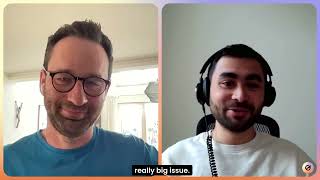
In this episode Spencer Tahil interviews Marek Mrazik, a veteran agency founder turned AI‑product entrepreneur. Marek recounts his 20‑year journey from building a traditional advertising agency to creating two AI‑powered SaaS tools—Contentino, a social‑media approval and collaboration platform, and Alfred, an all‑in‑one operations assistant for agencies. They discuss how the rise of large language models (LLMs) is turning manual admin work into automation, the strategic importance of the newly launched ChatGPT App Store as a distribution channel, and the need for founders to adopt a hands‑on, risk‑taking mindset to stay ahead of rapid AI‑driven disruption. Marek shares observations on shifting talent needs (AI‑augmented copywriters, engineers, and consultants), the balance between content volume and quality, practical AI hacks (e.g., using ChatGPT’s voice mode for LinkedIn interview videos), and advice for other founders: experiment personally with the tools, build at scale, and embrace the current era rather than fear it. The conversation ends with Marek’s concise advice to enjoy and embrace the transformative moment.
Chapters
Hey there, everybody. Today I've got a very special guest, and actually I'd like to say friend. His name is Marek. I'm going to let him introduce himself. And luckily we've actually met in person here in Prague not so long ago. But the floor is yours now, and then we're going to dive in.
Yeah, thank you for having me. I feel very fortunate to be a part of this show.
So Marek, I always joke that when we met you, I used to call you Mr. Frost. And it's not that inaccurate for everybody listening. Mrázík translates that there's a folktale, right? It's Mr. Frost. So We're not going to focus on that on this episode, but what I wanted to dive—
let's defrost every, every, uh, thing that is, uh, that is, uh, maybe a part of the conversation.
Yeah, so it's going to be interesting conversation today because Monika and I have spoken for a while about these different ideas. And actually, we, you know, I know a few of his companies, Triad Advertising as well as Contentino. Um, I'll let him give some background on there, but there are some fundamental shifts that are happening and some recent events that have actually led us to talk about it in public. Marek, I'll let you introduce kind of like what's been going on behind the scenes on your side, and then we can dive on top of that.
Maybe before we jump into what's happening right now, just a couple of background for myself. I started my first agency 20 years ago with my partner. We've grew it to about 50 people. Then we start another agency in Prague, Czech Republic, and then we started building a group of companies on top of that. We have also a software studio product that's building products for different companies. And about 5 or 10 years ago, I realized I like more how agencies tick from inside. So how the processes work, how the operations work, and tend to make it well, well-oiled machine. This is like what is really making me happy to see things working smoothly. And I'm doing it through technology. So we started our first product, which is Contentino, which is social media approval and collaboration tool. And then I started another tool which is called Alfred, like the butler of Batman, which should be helping agencies with all their operations from finance to project management, like everything. So this is what actually is taking me the biggest part of my work life apart from being on board of those other companies that I still own as a part of the group.
That's great. And I think like what drove me to actually have an initial conversation with you I would say many, many months ago was actually Alfred. And I come from that background. So it's like agencies really struggle with operations and SaaS companies don't really have the muscle to be able to do their own marketing or their own operations. They're really focused on like acquisition, customer retention, kind of driving pipeline, showing investors that they have, you know, demand and stuff like this. So I think your, your mindset and mindset, my mindset are pretty similar in the way it's like just operations, like build, build, build, build, build, make it cool, be bullish on the new stuff, try experiment, do the cool stuff. But I mean, it's like, it's already changing, right? Like I work in AI, you work with GPT a lot. It's, it's, it's crazy in my opinion.
But it's shifting in a good direction. Like 5 or 10 years ago, we were building a tool for every, every process or every, every struggle or pain in the agencies I found. And now it's far more easier and it's tilting towards automation. And this is actually what, what you and I have quite in common. Like if I see something that should be automated and it's being done manually, it's, it's killing me. Like, you know, so many people come to advertising industry to do the marketing stuff, to do the creativity. And then they end up doing the administration stuff, like sending quotes and invoices and getting sense of this all. And this is such a pity to spend human creativity or capacity to do automatic, automated.
Do you think that, I mean, like you love using GPT. I know that that's your platform of choice. Do you think that today it's like this creativity is going to be less and less available as we like go and scale? Because on my side, I feel like I can out-prompt my ability to be creative, but I still want a marketer. I want somebody that's, you know, knows color theory or something like this to understand, like, look at it, be like, nope, that's crap actually. So have you seen any patterns recently where it's real marketers are actually getting less abundant?
I think lazy people are getting lazier and curious people are getting more productive. This is what is happening. I see the whole— any, any element, like, it doesn't actually matter which one of those you are using. But I see this, you have, you have another, another tool in your toolbox that you're actually using. And the question could be posed like, 20 years ago, people were doing things without Photoshop and with Photoshop. Suddenly, like, doing things with Photoshop was far more easier than taking photos and, and retouching it somehow manually or something. So, so, so many features are inside Photoshop already that are, that are AI-enabled. And nobody actually asks whether you are using AI or not using AI. It's just another tool in my perspective. These are LLMs and automations and all this stuff. It's like if you aren't using it already heavily, you are behind your competition.
So do you think, I mean, you told me in the last time we chatted that you talked to McKinsey and they kind of told you something that was like very interesting. And I'm forgetting exactly how you told it to me. You said like, if you're not aggressively expanding, you're stagnation, you're in stagnation.
Actually, I was not— I was talking, I was speaking to a guy who used to be a McKinsey consultant, and he told me that consultancies are actually being replaced by AI. It's very far-fetched, but anyhow, there are so many things that you would run for a consultancy to ask. Now you just have it on your fingertips. Similarly with psychologists and lawyers and things like that. Surely I wouldn't outsource all my legal or all my consulting on everything to, to only, uh, uh, those tools out there. But you wouldn't go for them with the silly questions, right? Or you would come to them far more prepared, which before that you, you would like, I think nobody really enjoys having the first, second conversation and talking the one-on-ones of anything. So once you come prepared, it's far more smooth, right?
So. I think, and this is like what I tell a lot of the people that I coach and that I mentor is like, hey, listen, like you have a syllabus, you have, you know, we've put together a project plan and it's like quite interesting. They're like, oh, well how do I start posting on LinkedIn? Or how do I start, you know, learning AI? It's like, dude, ask AI. Like, you know, like ask the program that is the culmination of 2 million brains. Right. And I think like that's the advantage of like what you said of like the curious people becoming more productive. This is, this is like very interesting to me.
Absolutely. I like to find hacks and tricks how to do things easier. And one of, one of them, which is replacing, actually there's no role, it's replacing, but it was a, it was a nice idea how to make quite nice high quality LinkedIn videos about the topic. If you don't have an interviewer who is interviewing you, you just start ChatGPT with voice mode and you just talk with him about, he gives you the topic and he's leading you through the interview and just you record yourself and you have a very nice video afterwards. Like you would have an, you prompt him to be a New York Times or Time magazine interviewer, interviewer, and, and it actually runs you through the whole thing. I think it's many people are using it the wrong way to, to really create high volume crap, which is actually, it's like with all the internet, once it came, it got polluted with spam and, and literally crap. And it helped a couple of people to do really good, interesting stuff. So.
And I think like that comes back to, it's like what I see in the industry of like go-to-market and go-to-market engineering revenue operations is not the same of like what you would be seeing kind of like when you open your computer every day, it's completely different. Like what I see is like people say like, you just send emails, you do this crap, it's crap, crap, crap, crap, crap. Here's the automation that doesn't work. And it's like when we started talking, me and you, it's like you saw that I had a recording, you and I had Fireflies in the call. You're like, oh, we want that. And I was like, okay, like it has to be custom, right? So it's, uh, and I think the content, it makes— what I'm noticing is that there's 100 times the content, but there's not 100 times the quality. And I think like that also echoes in like consultancies and then the marketing agencies and the SaaS companies that, you know, like how many times recently in the last year have we seen the SaaS companies and we just see, you know, one of us, an Amazon server go down or something like this, or GPT go down. It's like their whole app doesn't work. Okay, well, great. You're a GPT wrapper. Like you don't have 100 times the quality and it becomes like a really big issue. And I'm very wary before I buy stuff now or like before I use products. Like how is your data process? Like where are your creatives? Like, you know, stuff like this.
But even with GPT wrappers, I actually, I think it's a good idea. Like it's another playground that was created by ChatGPT. Very similarly, then Apple created a whole ecosystem about apps. Like if if the Apple servers would run down and App Store wouldn't work, it would be actually the same, right? So I think actually I wouldn't push down the GPT wrappers because they provide another value, which actually GPT itself isn't able to provide. In my opinion, GPT is like maybe electricity, the cables, the whole infrastructure. What you build upon them is actually the real value, right?
So you're building an app. On the GPT store. I know that. Why are you bullish on it is the real question because you're coming from the content side and you're coming from like the operation side, but you've completely flipped from like the last 2 months that we've talked. You're like, oh, we're gonna release the app. And I was like, oh my God. You know, like.
This is quite a new thing. And I'm like, if you want to be successful, you have to ride a certain wave. Our agency is Double or tripled in size when social media came live. We were an agency before, like maybe for 5 years, and the whole digital agency boom made us expand dramatically. Similarly with Contentino, when we started, the space was actually like a new playfield that wasn't acquired by anybody. So you could grow far faster than in a crowded market. And what's happening inside, what's happening in the last 2 years, that those new spaces open every week. One thing was ChatGPT itself, then custom GPTs and things like that. But still it wasn't, I think, in my opinion, it was, it wasn't a marketplace. And when ChatGPT disclosed that they will be opening an app store, very similar to the Apple App Store, like I remembered, this is what I have already experienced. Like this is very similar. Then Facebook opened their app store for apps. Many mediocre or working, for example, games just jumped in onto the train and grew rapidly. Only because they got this distribution. Very similarly, the Apple App Store. And a similar thing is happening right now with ChatGPT. And once they— the App Store is already live. They open it to everybody in the end of the last year. We already submitted our app. And like what I love about it, people spend so much time within ChatGPT. Like I track my time personally. And I see my rate of using ChatGPT a week is like this. So, so people started using for one, one, two use cases, and now I'm using it for, for actually everything. So what actually ChatGPT done right, right now is to allow developers to build up directly into ChatGPT. So for example, you're chatting, making, for example, social media content, and you just write, I would like to see how this post would look like. And it runs the content in an app and it shows you how the post would look like real real live preview on the particular social media network. Or like, let's export this post to my Contento account and it's fully automated. You don't have to copy paste. Like, I love copy pasting, but I love more getting rid of it, right?
Yeah. So you're not like scared of like moving, like for, I mean, I know that you're like super bullish on technology, but like, I know that there are a lot of people that are super scared to take that risk. Like what was the inflection point for you?
I'm quite scared of everything. Things are changing so fast that I think we might not have an— like, we have more than 100 people inside the group, within the agencies, the software studio, the product, and all this might get extinct in 1 or 2 years. I think it will not if we do the right things, but engineers are partially being replaced by AI. Creatives, strategists are partially being replaced. And SaaS tools are being replaced by white-coded tools on Laravel. Within a couple of days. So many things that we have built in the span of multiple years might get irrelevant. But if we jump on the train a good way, it can actually be the wave that will put us there. Imagine like now Contentinews is used by thousands of users, but ChatGPT has 800 million weekly active users. So imagine the distribution once you're in their app store. And once you have a question like, how would this post look like? Or build me 20 posts for my social media profile, and it will promote you. What if you use Content Hero for this particular thing? So it's a massive distribution channel in my perspective.
So I know that you're— for me, I— so like, for me, like, I do everything by myself. It's like, you know, like, I have a video editor now. I have a video editor, but for the first season I didn't. I did everything by hand. I was like, oh, taking me way too long. With being creative, it's like, dude, I can draw a stick figure on paper and be like, this is my art. But, you know, and I give credit to, you know, everybody at your team and everybody that is creative, because that's just not how my brain works. And I feel like I, you know, I have this conversation with my girlfriend, like, to be very frank, it's— she's creative, I'm not. And she says, she's like, well, like, you're gonna put people like me out of a job. And I'm like, well, then you just have to get better. In my opinion, you have to adapt. But also, I do think that the more— the farther in time that we go, I feel like, you know, hand-drawn paintings, you know, these, these old pieces of art, they're going to become more valuable because you actually have human capital. I feel like once everybody has access to the same amount of tools, nothing really sticks out. I mean, like, there are different types of people that know how to use different types of tools, but I think actually the value of human capital will go up?
I mean, they definitely will. A good example is the app Suno, which is making a song on any style, any topic. And it might actually disrupt the music industry. But I was listening to a podcast from a music producer and he was like, this is crazy. All the professionals are using it because they just record their voice and the idea. And they use it for exploration. Uh, similarly that you are using Photoshop for you, it's just faster exploration. Like, okay, this doesn't work. If you are doing it by yourself with a painting, it just takes a week to do the thing, and then you realize, oh, this isn't what I really want, so just roll back, and it takes you time. This is the same thing, just, just quicker. And again, the same thing, two approaches. One is, this will kill us, and the second is, this makes me more productive. I can explore more ideas, I can make a better song because I hear more ideas actually. Sure, there are some, there are, I'm, I'm sure there are some really exceptional people like Freddie Mercury who had it all in his head and he actually doesn't need any tool. He was just hearing it. But, uh, I think he was one in a trillion. And if you're only one of the million or one of the thousands, this is making you, uh, so, so much effective.
So I, and I think like this is like quite interesting because you're stepping back into Contentino after what, like a decade or 10 years?
Yeah.
Yeah. And so it's, it's interesting because I'm hoping that people at Contentino listen to this, uh, podcast. Um, if you were to say something to them, you know, about like what's coming up in the industry, like what would that be, for instance?
So why I stepped in, like I found Contentino inside the agency. We split it off. We have some really great people running it for a certain period of time. And after a period of time, it just got stagnated or stuck, and the growth wasn't like it was in the first days because we were missing the wave. And this time is the time again with a disruption almost every week. And I realized that at this moment, you just have to be far more quick, curious, testing, challenging, and actually be bold and maybe put into the test or make high risks. And this is something that only a founder can actually do. Like, okay, I'm able to risk everything and go to the ChatGPT. It might actually break us or it might double us. And this is something that the paid management team is hard to actually do. And I've seen this pattern in different kind of SaaS tools, like the CEO of Intercom has the same Same thing, he stepped back into the CEO role about a year ago. He totally rebuilt the company on top of AI. And because he just saw that the thing they have built with hundreds of millions of revenue might get disrupted by anything built on AI. And I think they are doing far better than 2 years ago because he's actually doing things hands-on because only once you play with the clay, then you really know what is, what you are able to do. Same is the CEO of Airtable. Like he has a great podcast in Lenny's podcast about an individual IC CEO, like individual contributor CEO. Like you have to do some of the things by yourself for you to lead everybody. I cannot imagine a CEO who doesn't use LLMs every day. In a big extent and is expecting from his— "Let's leave this to the junior ones who are so curious and technology savvy and things like that." I've seen it 15 years ago when digital came in and social and big companies, corporations, they were hiring digital specialists and social specialists, but the CEO wasn't on— the CMO wasn't on Facebook by himself. And it was quite a curious situation that you are pitching a big social project and they are not understanding the dynamics of the whole thing. Because they don't live in the space. So only once you totally understand the space you are working in, you can actually make good decisions.
So do you think that CEOs are inherently going to be less creative than a founder would be then?
I mean, there can be a founder that is a CEO as well, sure.
Yes.
Uh, it actually doesn't matter. I think there are people that are curious and risk-taking and people who aren't. And it's a 2x2 matrix. So you can, you can have both of them. But in this, in this time, I think it was the Airtable CEO who mentioned a very nice thing, like, this is the time where you really roll up your sleeves and start to do everything, try to test and do everything by yourself. Because there are literally hundreds of very intelligent young people who were born with AI. Like, it's only 3 years, right? So in Y Combinator, there are startups that are founded and backed by Y Combinator that they haven't coded regularly. They just jumped into the white coding era. And this is something different. It's like my parents didn't grow up with a computer. I have grown up with a computer. There are people who have grown up with smartphones. They didn't see the change, right? And they are like young people right now. They literally started with the toolset right now. So the older people, and I mean 30+, which is not that old.
It's not that old, man.
They have to make the shift because the young ones, the 20-year-olds, they are literally working 356 days a year, 12 hours to make their AI startup work. And if you're not doing it, I think they will overrun you.
Yeah, I mean, like, you're doing 12-hour days, right?
I had this I backed down a little bit and also for the team, I stepped into the CEO role in September and we really had to catch up a couple of things. So I started what I call a sprint, a crisis mode sprint. And we were with the team and I think I got really good support from the team in this perspective. And I told them like, yes, this is the startup and speeding up of the company will be a little bit hard, but bear with me. And what I was super happy to get in return was sparkling eyes. Yes, this is, this is, we are able to do this and this is going to happen. And okay, we can also do this. And then they started coming with ideas, but you cannot sprint for a long time. So we've backed them to proper running, not actually walking or a slow pace, but I'm really in favor if something is really changing. You have to just be fast at this certain point to be in front of your competition for a certain period of time. You cannot do it over 10 years. You actually don't have to do it over 10 years. You have to do it in the very moment. I think these 2 years, the last year, then the next one is really going to change a couple of things in marketing, in sales, in processes everywhere.
I feel like I share the exact same view. It's, you know, it's like I sit on this industry of like AI and artificial, you know, artificial intelligence and applied artificial intelligence. Oh crap. There's like, you know, this new methodology of like prompting Claude or prompting Gemini or contextualization. The problem that I seem to be having is the positioning on top of this like really shaky mountain where it's like continuously changing underneath our feet. It's continu— you have to continuously adapt. It makes it hard for us to stay on the top, in my opinion. You know, it's just myself, one other person. But what I'm noticing is that a lot of people just don't understand the full capabilities yet. They're still stuck in this mindset of, hey, like let's, let's hire 5 virtual assistants to do the job instead of building out an automation or, you know, one AI agent or something like this, right? Like let's train it on all of your wins. And I feel that this is when I get into conversations with people like you, like when we were speaking at Alfred and everything, it's like these are things that need to be solved. They're just not big enough priorities at the at the time, right? And it's expensive. Again, like you hire consultants, you hire like teams, you hire agents, SaaS companies hire agencies to do their marketing, XYZ, right? And I can understand how it can be super scary, not just for me, but for people that are going to make those hires too.
I know I'm not sure whether I understood your point. So what is the question?
There was no question. It was just me rambling. Sorry.
No worries. Like I think it comes back down to the same thing that I already mentioned, that people are like— people, I'm scared, I'm admitting it, everybody is scared. If somebody tells you he knows what he's doing, I think he is most probably lying because nobody should actually know what's going to happen in 2 months' time. But there is this, like, when it all started, I and many, many people around me got quite frustrated because they were like, okay, now we can do this, and they were building it for 3 months And then ChatGPT released a new feature and it was obsolete. Like, for example, the meeting recorders and things like that. It's already inside ChatGPT, right? But still, what kind of meeting recorder are you using? Note-taker? Fireflies?
I'm using Fireflies, yeah.
You can do it in ChatGPT. Why aren't you? Because it's the Fireflies and Fathom and many of the other ones were able to become a brand. It's actually, it's actually a GPT wrap, right?
It's a lot more to it, but yes, what they're trying to do is integrate. Yeah, they're trying to integrate it into, you know, everything be all in one stack.
And it might get frustrating that the big ones will release a functionality that will get you obsolete. But when you are doing it, you are learning so much. And firstly, you are able to build your brand far quicker than you were before. And I'm I'm also using Fireflies. I actually don't know why. I tested a couple of tools maybe a year ago or so, and I stick with it, and I'm there. I'm quite locked. And even though ChatGPT, it would have to build a far better functionality for this particular use case, the vertical of meeting recordings, and with a great UI, but they have so many fights to to fight that they cannot pick every, every vertical. So if you are a technology person, this is a great opportunity. Pick any vertical and do it really great. How I'm using Fireflies the most, actually, I'm only the, the thinking that it's on every meeting and I can go back and ask a question. Like, I'm asking questions. There's this chat, like, what time did we agree to meet? Like, only this thing, it's making me peace of mind that I don't have to note everything down. It's just there. And I'm not thinking about the automations you can do with it. And even if ChatGPT would roll out a functionality like this, for them to catch up with those tiny little details, delights that they were able to build and listen to the users and the problems, they surely might copy everything, but they cannot fight every fight on the planet.
Yeah. And I mean, it's the same. Like I have everything. If it's not on my phone, I probably won't use it. It's like the reality of like Slack. Okay, great. It's on my phone. LinkedIn. It's on my phone. You know, I can now I can record while I'm walking too, because I bought myself like a little camera, which is like pretty nice. But if it's— if I can't do something quickly on my phone using like Claude, it becomes instantly not easy for me to use. I mean, granted, I do sit down at my computer every day, like all day, every day. But I feel— I genuinely feel like there are so many people that are chronically online too. Like I don't go to bed until 11. I mean, that's like, that's my fault, but I just feel like there's more work to do sometimes than, you know, like now we have like artificial intelligence to do a lot more work, but by doing more work, it produces even more work because you have, instead of, instead of writing like a 10-page proposal, okay, now you can have Claude or GPT produce your proposal for marketing services for like 40 pages. And it's, it's everything that's gonna happen in the next 1 month, 2 months, 10 months, you know, something like this. But then you have to QA it. It actually, in a way, kind of produces more work.
It's like that. And AI is helping you to deliver more, but it's actually your decision how long you work. It was a year ago, it was 10 years ago. Very similarly, when email came, some people were communicating with their friends via post, right? So they were able to write a letter, like 2 letters a week, or what. Now with email, they, they can do it 10 times more. So it's up to them whether they stick with 2 messages or they go to 10 messages, or go to, by the time, Facebook and communicate with people, right? So just get in touch with more people. If this is what is making them happy and they are about socialization, this is a great tool that actually helped them in the first days to, to really socialize. Does it Does it mean they will spend less time socializing? No, because they love socializing, right? So if you like working and exploring, it just makes you faster in it.
So I know that I don't want to be respectful of your time too. For other founders or other leadership teams, very recently, like you're making the change. It's like for other founders that are approaching this year and, you know, we're coming up halfway through kind of the 2-year cycle of like innovation, innovation, experimentation, you know, stuff like this. What advice would you give the founders going forward, at least over the next year in general?
I think most of the one most important thing in my perspective, I already mentioned, like roll up your sleeves and play with it by yourself. Only then you really know what, how things work, because there is so many scary and intimidating things like in this space, like orchestrating, training, et cetera, et cetera. So like even by some of them, I didn't try myself. So it's like, okay, this might be complicated. Is it? But it actually isn't. Invest a piece of your time to upskill yourself, to know what, how the current world ticks. So only if you play with the tools, you know how they work. So this is the single most. And to the companies, like I think this is a, this is a time where you can really do things at scale that weren't possible. And it's really great. Jason Lepkin, the founder of Saaster, was sharing an experience that they scaled down their sales teams from 10 people to 2 people. One person is a sales rep and the point 2 is a girl who is maintaining an army of 20 agents that are doing particular roles. And he was sharing really concrete insights, what are the agents doing. And one of the agents actually is that before they had their reps, There was a list of potential sponsors for the conference. They were not big enough for the sales reps to go after. So they trained an agent to talk with the, with the ones they, they were left before the door and they had a 70% reply/conversation rate and it went really well. They get a new revenue stream only from the long tail of their potential sponsors only by automating this stuff. And this you wouldn't be able to do it before, or maybe like, I'm thinking Contentino, there are so many questions social media people ask and our content team is not able to create an answer to every question, right? And it's quite easy to do it with ChatGPT, right? So they are able to do tens of Q&A type articles, but now with fully automation, you can do hundreds, thousands of them with really, really good quality. Once you do it correctly, like it doesn't mean you just drop it into ChatGPT and you are posting the first answer, right? But if you do it correctly, you can do anything at scale. So my leitmotif for this year is like, anything I'll do should be at scale or expandable. Otherwise, it just is for the 2000s.
That's like spot on.
But I mean, like, I'm stating the obvious, right? To be frank, hopefully this will not surprise anybody.
I hope not. I mean, I feel like the people that are going to be watching this or listening to this conversation are going to kind of like know half of their stuff.
But I think in a sense you have to, even me, like I had to listen it. I knew this was possible a year ago. I really have to listen to it 3 times by a person that is really an authority. Like, okay, if this works for him, him and him, like, yes, I have to be doing it. And some people jumped in the train. Far earlier than I have. And I envy the decision and the curiosity. And I think like, you just have to jump in.
So when have you, when have you, I mean, I don't know if you've done any changes recently, but when you're thinking about like hiring either now or in the past, or maybe even in the future, are you going to consider just building agents or building AI agents before doing a hire nowadays? Do you think it's like the proper way to look at business building for scale?
I think if I would be in a far bigger company, like Contento is a team of 20 to 30 people around. If we would be hiring, like it influences hiring quite a lot, but it influences hiring in a way, like if I would find a person that is understanding the current world, I would dare to hire him right away. This is really great because he can do things at scale with the tools. Would I hire a copywriter to write articles? I wouldn't, but I would hire a copywriter to oversee the articles that are done automatically by AI at scale, because this is the way how the current work actually works. So it influences hiring a lot. And even like, I think this question is posed quite a lot with engineers and hiring engineers, and the LLMs are making development quite faster. This is true. But I have nowhere have I seen that people stopped hiring developers or engineers because they are just faster, they are able to do far more stuff. Maybe this will change in the next years, but I think if you use the correct tool stack, you are far more likely to be employed and valuable to any company that you are approaching.
If you, um, if you are up, I think, and this is like something quite interesting about like not hiring copywriters, but you would hire, you wouldn't hire a copywriter to write something, but you would hire a copywriter to quality assure that that thing that has been written is good. This is super interesting to me.
Yeah. I mean, like even writing, like it's very important to write. And, uh, but I wouldn't actually, I would hire a copywriter or also to, to write articles with the tools. Uh, her. I have also shared in a newspaper and like, I'm not thinking that the journalist would be getting extinct because creating of text is being done by AI. The real thing that journalists do is thinking, taking out, like spotting topics, finding those topics in a, like a needle in a hay. This is their real work. The writing part, some of them might like it, some of them even don't like it. Similar with engineers, like, engineers are people who like solving problems, and so many people think they just love to write code. If you talk with them, like, I study computer science, I have not coded myself for a very long time, but in my opinion, 80% of people don't like writing the code. They want to solve problems, and if these problems can be solved in a speech manner, they are doing engineering.
Yeah. And I think like, this is like the mission that I'm on is, is, you know, like I hired Jonathan. I think that you've met him maybe once or twice, but you know, when we had that initial call and he told me that he sold his agency, I told him, I was like, all right, come build cool shit with me. And he's like, okay. And you know, like every month we talk about it. I was like, hey, like, how do you feel? Like all of this stuff. He's like, yeah, this, the stuff that we're building is awesome. Like it's super cool. I've never built it before. You know, I'm writing a book because I learned how to do prompt engineering. And for me, that's just, that's super cool, right? It's like we get to build cool stuff, but it's also useful, right? It's not just like cool or fun to look at. It's, you know, it's in a way it's creative. It's my way of being creative of solving a problem. Can I draw? No. But can I creatively solve a problem? Yes.
I'm touching back to the topic that you mentioned that your girlfriend is You think your girlfriend is creative and you are not. I would challenge that. Like so many people, like there are so many ways of creativity. And I think this particular shift is giving power to the people who have this systematic-ish technological orchestrating kind of creativity, because this is like system thinking creativity by itself. And I think this is making us really powerful. And even we can again call ourselves creative. And it was the same with, with the social media. When social media came in, the creativity was a privilege to very few copywriters or art directors in creative agencies. And then we started hiring. We were actually the first agency in the region to hire a social media specialist, about like maybe, maybe, maybe one of the first. And I realized that it was young, hungry, hungry girls and boys that were like, we would like to do social media. We are, we don't have the skills or expertise to do proper advertising at the moment. And they were like newcomers to the industry. And this, I think this changed quite a lot. We had so many social media people who started as social media. They then became strategists, became head of marketing in, in big SaaS companies like Exponia, things like that. And they really literally started as a social media person. And this was a playground that you could— was changing very fast. And actually some of the experience those experienced people have was slowing you down. Because you already had like, this doesn't work. But in social media, you could just do 10 videos and see which of them is working well and then boost that one instead of doing pre-tests and, and, and like the whole preparation part and being sure this is really good. Like this is how you were, how you were recording a TV commercial, right? Because there was no way of testing and digital just flipped it totally upside down.
I think as we wrap up, what I wanted to ask you that I didn't ask you, like, formally before was, you know, there are countless things that maybe keep you up late at night. Maybe you're lucky, one of the few that actually sleep well every night. But if you were to give one piece of advice just to everybody, you know, like, you know, 4 or 5 sentences worth of advice, what would it be? Other than being creative and ambitious, what would it be?
I don't know if it's applicable to anybody, but like, enjoy this time. You'll be looking back to this time. It was so incredible. It's happening right now. So don't be frustrated and enjoy it. Actually embrace it.
That's nice. Okay. Well, where can everybody find you, Marek? I know that we want to wrap up.
Actually, I'm not the big personal— I don't have a big personal brand. I'm only in LinkedIn, sure. But if you, if you want to find me, go to Alfred.io or Contentindo.com. Test those tools. If you have feedback for any of those tools, please write me on LinkedIn. I'll be happy to listen to every kind of idea because this is what— this is actually what's not keeping me late at night, but this is what's fueling me is like getting ideas and turning them into life. So if you have anything, happy to connect.
Awesome. Well, appreciate you jumping on, Marek, and hopefully see you soon here in Prague.
Thank you very much. It was a really cool talk. Thank you, Spencer.
Awesome.
Thanks. Good.
More from Spencer









Mega GTM Talk #2: Spencer Tahil, Brian Ragone & Pawel Nical on Where GTM Is Headed

