The GTM Market Moved. Most Programs Didn't. | Live Practitioner Roundtable
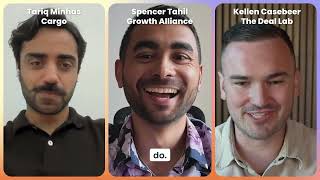
Spencer Tahil, Kellan Casebeer, and Tarek discuss why most GTM programs haven't caught up with shifts in AI, tooling, and data infrastructure. They warn against chasing 60-day wins and emphasize a goals-first framework instead of jumping straight to tools. The industry is fragmenting between technologists and traditional strategists, with speculation about private equity consolidating thin-margin agencies.
Chapters
I guess we have like a small agenda and I don't know how charged you guys want to take it, but I feel like we always talk and now we're just going to get a recording of it, which is super nice. For everyone that's actually listening, I think we only have 3 or 4 people right now. Who are we? What do we do? What do we actually do? What do we tell our parents that we do? What is going on in their industry? What are the services we see in our competitors? Like, Callen, like, you're such a bro to me, but like, at the end of the day, we serve the same market, right? Buyer behavior, outbound numbers right now, like, is 1% even good? Team structure, is there a best practice? And then like the spicy hot takes. That's kind of like what I have on my agenda to just chat about, but we'll just see where it goes. Nice. Hi, audio. Anyways, Kellan, Tariq, shall we just continue our conversation? Oh, it was Tariq.
Yeah, so, uh, it was Tariq. So we should go through who we are, what we do?
Yeah.
Yeah, uh, my name's Kellan Casebeer. I'm founder of a business called The Deal Lab. Started about a little over 3 years ago. Basically, we help people figure out outbound. So a lot of times it's like niche segmentation and messaging. Um, and then I also run a community called GTM Cafe that's like a bunch of GTM operators hang out and congregate and talk about stuff. That's how we all got connected, I think.
Should I go next?
Yeah, do it.
Rip it. Sure. So my name is Tarek, part of the team building Cargo. Cargo is what— it's GTM infrastructure. What that means is if you're in GTM right now and if you've hit a wall either with the UI that you're using or maybe the CLI that you're using, we build the layer just above that so you can build things and forget. And so that everything you need to make sure your workflows, your agents, your data unification runs on its own without you having to babysit the plumbing. That's basically Karo. And so, yeah, I mean, I've been working with Spencer quite a bit, Kellan more recently. We always have great chats and we thought we should have them publicly every now and then.
Yeah. And I guess last but not least, me. I'm Spencer. I run Growth Alliance. Again, I know Kellan's a bro. I meet him all the time in GTM Cafe and Tariq and I have been working together for I think a year or so now at Karo. So we just launched Cargo Cohort a few, few months ago and it's off to a great start. We get to— Kellan came and joined actually, which was awesome. But yeah, time to make the chat public for the boys. Guys, where do you guys want to start? What is the, I guess, what is, what is going on in our industry? Because I feel like there's so much going on. Kellan, what are some patterns you're seeing?
Yeah, I mean, I consider myself not honestly like the most early adopter of things, you know what I mean? And I think that there's like something I observe a lot of is like tech, like, change. And so people get excited about kind of like what might get easier. But I think that that's like really downstream of like what we're trying to accomplish and sort of like what accomplishing that looks like, whether you're like automating it or using AI or you're manually doing it with like pen and paper or whatever. And so to me, one of the big trends is like people getting excited about like what they can do versus like what they're aiming at. Right. And then like the measurement of success maybe is like nonexistent and it's easy to waste a lot of time kind of like spinning your wheels or be circular in your thinking where you're like, I can do this. You do a little bit of it and you're like, oh, wait, what should I actually make happen? And they're like, well, what can I do again? And you're like, oh, I can do this. And so, to me, you have like one archetype of person who's like the technologist that's excited about what's possible, but is like not connected to like what actual like meaningful goals are. And then I think you have a bunch of people that are sort of the like legacy, you know, sales marketing types that might be like really connected to what it used to look like. You know, what, what are the goals we're aiming at? You know, these people have been like deputized by founders to go make certain outcomes happen., and I think they're seeing like, hey, the playing field's changing and like how we operationalize our ideas is changing. And I think the market hasn't like reconciled that yet, you know? And so I think you're seeing people who are like the legacy, like kind of strategists, thinkers of the space increasing their like technical capability. And that I fit that camp strongly, you know what I mean? And then you have, I was at an event last night and there's like a MBA student, ex-programmer at like this Apollo event learning go-to-market engineering, you know what I mean? And, and there's stuff like that where I'm like, dang, okay, so like, like really serious, like technical people in architecture types are getting into this stuff as well. And so I think that those are going to clash, and I don't know what the reconciliation of that will be. But I think that that's part of what's exciting right now is we're in this time where it's waiting for the ball to drop and be like, OK, what's going to happen with this as this does play out?
I think Kalina said it very well. I remember, Spencer, we did a talk a couple of months ago that got released recently with your new season, right? And we were saying, hey, where is the cutting edge in GTM? And the story arc is very interesting. So 2 years ago, let's say orchestration tooling, it was very important. This was the value you bring to the table as a GTM operator or an agency, et cetera. I think today we've matured to a point, and credit to the GTM world for going so quickly on this, is we're in the process of replacing sort of automation with, let's say, smart collaborators, right? And those collaborators are architected in GitHub repos and agents that sort of work with us, sometimes better than us. To, you know, build GTM engines and keep them running. And so we're now in this game, at least the cutting edge of the game, is how well you can build a memory architecture around yourself that can learn and mimic what you do as a GTM operator very well, and then do it at scale. And the people who are doing this really well are sort of killing it versus everyone else. At the same time, there's a lot more noise about people publicly building what they're doing in the memory space. There's a few people really actually doing it. And I think the tooling is also following that trend, right? So it is very interesting. I think it's a new phase in how we do GTM and what gets valued. And of course we will talk about it later in this episode. But if you compare the GTM world to the rest of the other sectors doing adoption, we're going much faster than everyone else.
I think something that actually came up on that too is like, if you think of like the old, you know, like when I got hired as an SDR, I was one of 10 reps, right? And if you think of what that meant, it meant like you had your territory, you know, you had your like TAM, let's just say, right? We were like US and you distribute across those 10 reps.. And so any given account, the success rate of that account is, is very much so predicated by who, what rep the patch is, right? And what that meant is on a company to company level, you are beholden to like the talent of the people and it's distributed, right? And you're gonna have like Pareto distribution inevitably where 20% of your reps are gonna be much better than other of these people, but, and they're gonna get probably like a balanced or like a slightly in their favor edge. Yeah, no, totally. Exactly. And from the rep side, like the territory you get matters too. And so people are like very beholden to each other. And to me in that instance, it's almost like lottery tickets, right? Where like you hire 10 SDRs and you're like, I don't know, like 3 of these guys are gonna fire in a couple months. You know, some handful of these people will be on this team until they choose to leave. And then a couple of these people will probably promote up into AEs and like they'll ascend through the org, right? And I think that in that universe, the choke point, like what's the scarcity is time, right? Is like Kellan can only do so much in a day and we want more than that to be done in the day. So we need to get a bunch of these guys and we gotta get, have a whole team and they need a manager and they, and now you have like effort into like corralling these resources, not even just doing the things. And to me, like with the tech, you know, the, I see like to me the main thing of AI technology is like the prompt, you know, the delivery on scale where all of a sudden it's like, hey, if Spencer is the person on the team, they give him an account, he has the highest likelihood of converting this. As a, as a business, if I'm VP of growth, I don't know what my excuse would be not to give you those accounts. You know what I mean? And so I think that it's like the 20% rep is going to become the, the owner of the whole TAM. Um, And I, you know, to me that's like, that's like the trend of where things are moving, but some of the companies don't know what great looks like. Some of them don't know what the technology looks like to deliver great.
Well, and I think like the problem is like what I, I mean, we all serve different markets, right? Like I sit on the enterprise side and what I'm noticing is that like, yeah, AI just accelerates the slop, which is a huge issue. And yeah, the highest leverage is time, but it's also precision. And, and, and like what I'm noticing is like, oh, can we just plug in Clay into a system? Can we just plug in Claude Code? It's like, yeah, you can, but what's the strategy behind it? And so like, and even with like my engagements now, like nowadays, what I've seen shift is from the, from the year that I've been doing this like very intensely is no longer are like larger corporations wanting to buy like service packages done for you. They like really want to be like a done with you model. They want somebody like that's fractional, at least from like what I'm seeing. And they want somebody that's going to like hold their hand, show them best practices, show them kind of like how they can do it themselves so they don't have to be reliant. I think like there's still space in the market for people to be able to say, yeah, we just want somebody done for you. And I think like that's maybe like more of the traditional agency model. But from what I'm seeing is like a lot of these, a lot of these like upper end B2B companies as well as enterprises, they're going to have the firepower in-house. They're going to have the manpower in-house. They're going to have the budget to throw around and API tokens and stuff like this. But at the end of the day, like what they want, in my opinion, is leverage. It's like, we are, we are going to move from like a go-to-market spray and pray to an ABM style. At least that's just my prediction here.
I think I would say, don't they just want out? Cause to me it's like people want outcomes and they confuse themselves thinking like, oh, I should do X tactic.
Yeah. And then I, yeah, exactly. I mean, like nobody really understands what the fuck account-based marketing is, to be honest with you. Like we have this discussion in one of like my client calls. It's like the VP of marketing defines ABM as like putting ad dollars towards a specific subset of accounts, whereas like the VP of like sales is like, oh, ABM, those are our top 100 accounts. And like that, those are the only, the definitions are not standardized across the board. And I think our whole industry is just like kind of screwy in this regard.
Well, that's why I even think like the GTM engineer thing, if it's that, it's like a lot of these people, like my, I have like a framework how I think about this, where it's at the top is like goals. Like what are you aiming at? And basically every other thing should point back to like, what are the goals that we're aiming at? Under goals is like strategies to me and strategy would be a concept, like a, not like an abstract concept, like an idea that we believe in to achieve these goals. Right. And so, and that's kind of like the quarterback comes in there where it's like, hey, we need to score this play. This is the play I'm calling, or the, you know, like I'm calling this play. Right. And someone has to take ownership of like, I believe if we do this, this outcome will happen. And not just like this, I, you know, and then you have to do tactics and tools. Like what does it look like to carry that out? And I think what a lot of companies do is they have people who are like, I have an idea of a goal and I have an idea of like what I think the strategy should be. But if they can't articulate it, you can't execute it. Right? So if someone goes, I want to do ABM, but they don't actually articulate it, you might, you know, like you said, like you might, you might go and name your top 50 accounts, handwrite them cards to 8 stakeholders each, like, you know, all these things. And they're like, no, no, no, I just want you to put ad dollars. Why'd you waste all that time? Right? And so to me, there's this translation error that exists in go-to-market where there's the goals companies want. And sometimes you have people who want a goal, they don't know how to articulate how to achieve the goal, but they're responsible for it because of their title. And they're not gonna go and be like, I don't really know what we should be doing, guys. What do you think? So they're gonna be like, all right, what we're gonna do is, and they go command. And then the people under them are like, hey, look, I'm like in the day-to-day, but this is my boss and my boss says to do this. And they oftentimes what happens is the, they don't do exactly what their boss asks them to do because they don't believe in it, but they also don't do what they want to do on their own or what they believe in because they think their boss doesn't. And so they do something that no one believes reason, right? The boss doesn't want them to do this. They don't want to do this. They do, they split the difference. It doesn't work. And then people either blame the rep, fire them, turn someone else in, or they blame the strategy and try a new strategy when in reality it was just like, hey, no one did the thing that like, no one believed in this. Like, why did we do this?
I think it's a huge issue. I think this, I, I mean, I talk a lot about this in like Cargo Cohort and like Clay Bootcamp too. It's like, if you cannot translate a desired state into a project plan, you're pretty much screwed. Like for any, for anything, like you need to learn how to communicate. And I think like that's one of the biggest things that I've had to learn, especially like here, is that a lot of people come with their own opinions and sometimes what one person says is not actually the truth. So when I onboard people, it's more about like, oh, let me go talk to these 5 other random people just to make sure that like every, everybody's like kind of aligned though.
One of the points I bring up with people is, so like in B2B, you can't win in your next 6 months. So if someone hires you, there's no version of what you do in your next 6 months that is like the total outcome. So really, and people often are so worried about like, hey, I wanna test the next 60 days. And so to me, you have a bunch of people in these like micro cycles of like hyper transactional. Whereas an example, imagine someone were to hire us 3, right? And like if someone were to go, hey, I'm in a really tough spot. I don't know if my company works at all, but I'm gonna commit to you guys for 12 months to make this work. The way we would approach like the problem and solution and testing and like actualizing towards the results is completely different. Than if it's like you have a 45-day sprint to make something happen. And so I think a lot of the buy side of the equation also imposes these like artificial constraints of like time and rush. And so you get people maximizing for the next 60-day outcomes instead of maximizing for like compounding benefit, right? And like Titan X gets this super right. Uh, I, I was, I was late on this 'cause Joey was showing me some like inside baseball stuff just now, but basically their part of their framework is like the follow-up, right? And the whole thing is like instead of forcing like every connection to make it like a binary, like they take the meeting or they hate us and we, we, we go away. They're perfectly happy to have the activate, which most teams don't measure, which is just like, do we have a quality conversation and let it end? And they have a whole framework about re-engaging activations and have the throughput math to show that like, hey, if you have your reps call, have a nice conversation, be like, hey, honestly, Spencer, like, I don't have a good idea of like what I should be suggesting here, so I'm gonna let you go. If it's okay, maybe in the next 2 weeks I'm gonna follow up. I'm gonna put some thinking behind this. If you're like, dang, that's really nice. Yes. And I call you again through the roof. Right. And so that's the kind of thinking that I think like, you know, like a real go-to-market strategist says like, a really strong understanding of sort of like market dynamics and like product and some of the like technicalities of like pairing these things, they're gonna be able to create systems that are like aggressive to attack the market index, like do proper follow-up. And I think that the people that don't have that grasp of like the environmental factors, I liken it to a bow and arrow. You know, they have a quiver and they take the arrow, they pull it back and they launch it and it just goes. And the next arrow has nothing to do with that. You know, that's not a feedback loop. You're just shooting arrows, you know? And so, And that's like you said with the project plan where it's like you could come in and be like, I transformed this data, I found this, I scraped this. I, and it's like, look, if this isn't like a business was trying to reach this audience, this was the thing that wasn't working and this is what worked. Like, that's what matters. And sometimes that makes it like uglier, dumber, you know, plenty of times I come in and see someone trying something that like reads cool and strip it down to something that's kinda like, really, is this? And then it, it rips, you know? And you're like, look, unfortunately, like if you care about what works, you don't get to be the same level artist as if what you care about is like how cool you think this stuff is. You know, cool go-to-market isn't what works. What works is cool, in my opinion.
Actually, it's very funny because in the cohort we have this conversation all the time. I mean, the biggest alpha you get from CARGO is like, let's say, architecting a good context layer, a unified data model, and then you build something on top, right? But that's an investment your client has to agree to upfront. And so the— our partners who do really well are the ones who don't let the client sort of lead them to these short-term sort of outcomes. Typically speaking, we see people who are successful are people who are very opinionated and educate their clients and then sign up to the mission. And as Spencer said, the general trend is towards more advisory, fractional, embedded GTM. And the people who are, who are still doing those sort of templatey things that seem cool for their clients, short term it works, but overall they just lack to differentiate with the rest of the market.
Yeah, there's no, I mean, one of the things is like there's no company that has like an, yeah, there's just the, like there's a maturity curve to your go-to-market. And there's times early on when like a very like, uh, you know, hyper outsource, like, and, and, you know, my work, I do this with a lot of people, right? We take people who are like, hey, we have this idea, we're trying to make it work. Or maybe like, hey, we have some customers, we want to get to where we have reps and we want to do like a half step. You know, that makes a lot of sense. But if you're like, hey, we have 50 reps, you know, that, that company's not going and like having someone email everything, nor should they, because they have enough data and time in the market that their CRM should be full of a bunch of useful things. That everything is technically a follow-up.
Well, I, yeah, and I, well, hot take here. I think that a lot of companies that we all do business with actually have no idea who their target addressable market is and how to activate them from like a closed lost state. Like the, the, the type of engagements that we do, and I'm speaking in general, at least I think, I think I'm correct on this, is these companies with 50 sales reps, right? Like their pipeline is full. They have 50 1,000, 5, like they have 500,000 contacts inside of their Salesforce or their HubSpot instance and they've just failed to convert. And I think like that's genuinely a huge problem when we start to have like that great, like huge number of volume just sitting and dying. Then you get people that are able to do like CRM enrichment, but I don't, Kellan, I don't know if they come to you like companies and businesses come to you and they're like, oh, can you enrich our CRM and can you, can you do contact enrichment with, with Clay and Cargo and stuff like this? When they come to me and they say, yeah, can you, can you enrich our database? And I asked him, I was like, so what's your revenue activation plan? Like, how are you going to make the money back from investing in this data? And they're like, I don't know. Like the CRO said that we needed to like clean up our database. And I'm like, but that's the only strat— like you guys are going to spend $10,000, $20,000, $100,000.
Everyone's spending $100,000, right?
Yeah.
Yeah.
I got a few zeros, you know, right? And I actually refused to take it. Like I could do, I could do a CRM enrichment overnight with like cargo infrastructure and like Tariq has seen me do it. But the problem is, I feel bad and I tell, I tell them, I'm like, if, if there's no way for you to make your money back, then why are you doing this? I actually, it's unbelievably simple of a concept.
As a business owner, something that you just hit on that I think is like worth noting, just cuz I know, you know, people will listen to us and be like, I'm trying to create an agency and stuff. What I, I tell people, every dollar you take multiplies your reputation and you need to be very careful about what you do with your reputation because of exactly what you just said, where it's like there's people that will say, I want this and I'll pay you this. But you know, be careful about the person's like, I have $20 grand for the person's gonna enrich our CRM because I'm sure it's gonna work. And then you're like, what are you gonna do? And they're like, I don't know.
Right?
Because that's the person that if you take the money, you do exactly what you said, they're gonna go, I worked with Spencer, he took $20 grand, we hardly got anything out of it. I don't know why I did that. And so to me, again, because it's such a long game, right? Especially like the earlier are in this, a lot of us go-to-market engineer type people are like kind of on the, you know, at least in the first half, if not first third of sort of like what we're gonna be doing over our lives. And I think, you know, again, it's one of those things where it's like there's a lot of people who are maybe like, a junior AE or an SDR, they see an opportunity like 2x what they can make and they start going and selling like cheeseball BS projects to people who don't know how to buy it because they don't know what they're doing. And all of a sudden you have this thing where people are like, oh, are these agencies BS? Like, are these people scamming? Are the, you know, and it sucks because it invalidates some really good quality stuff and like nuance to it. So anyways, I just thought, I think that's a good call out to be like thoughtful about what dollars you take in.
Appreciate it.
Yeah.
So both of you are sort of mentoring and advising these early stage agencies, right? And how to break into the market. And this is a very common trend. Like you're just starting the agency, you will do whatever the market wants immediately. You'll sell a use case over 3 weeks, you'll get the money, you'll go to the next one. That's how you break in. What is your advice to these young agency founders on how to properly make a name for themselves? So they have the liberty to choose, okay, I'm going to do this kind of project because it's a system and I'm going to say no to your fatty admissions.
I got one on this. Yeah, yeah. There seems to be a number that's in the back of a lot of my students' minds, whether they want to admit it or not. It's the $10,000 a month mind. And, uh, Kellan, you've probably experienced this many times when you're coaching and mentoring, and it's like, how do I make $10,000 a month? You know, like that, it's like life-changing amount of money. Yes, it is a lot of money, but at the same time, like, why are you doing this? And I, and I always come back to this, and I don't know where I got it from, so oh well, but I like to think of business as very personal. Like, this is my business. Kellan, it's your business. Like Tariq, it's your business. Like we all have heart in this. Like, I'm sure we have been kept up late at night because of the decisions that we've made or we haven't made. What I like to think about is where do I sit on kind of like the scale of ambition versus desire? Like, sorry, ambition and curiosity. Because if I'm super curious about something, then I'm going to pursue it. I'm going to like actively learn about it or at least passively learn about it. And if I'm ambitious about something, then I'm also going to drive myself to learn about it, to practice it, right? If I'm not ambitious or curious about a specific subject matter, then I'm probably going to pay somebody to do it for me if I need to get it done, right? And I think the best advice that I was given a long time ago was to line up your desires and your curiosities with somebody else's opposites. And so when we say opposites attract, you're going to go and find a business that is not going to be capable of doing their own marketing operations. You're going to find businesses that are not able to set up a Postgres server or, you know, like a table or even like Cargo instances. Okay, so what do we go do at that point in time? We go and give them that service, right? It's like if they're going to build that in-house, that's a whole different structural issue. But what are you curious about today and what are you ambitious about today? That can change. We all change. Like you get older, whatever, you have different priorities. But that is my advice is Just figure out what you hate and figure out what you're not curious out on and do the exact opposite. And you'll very quickly align on the fact that this is what feels good. Business is a very personal journey and I don't think a lot of like mentors and a lot of people talk about it like this, but the reason why I support like you both is because we are all aligned on like the same ethos. It's like, I know you guys take it personally, but you guys have boundaries and I think being able to also have boundaries for yourself and your business is very important too. So it's like, screw the tools, screw the agencies, screw the market. Like, you do you, boo. And, and like, that's, that's the reality of the world. That's how I look at it. It's, I used to be super pent up and I started to just say, you know what, that's not for me. And luckily I've, my business has thrived and I'm happy because of it. But I know that other people are in different financial circumstances and that's okay. You sometimes you gotta grind and we've all been there. Yeah. So that's my advice.
Yeah, that, that was good. That was good. It's like different than I would've said it, but I agree with all of that. Like the lens, cuz the lens that I, I would lead with, which is like slightly contradictory, but I tell people all the time, like I call 'em lenses cuz you can apply like that lens and there's a bunch of truths to it. And then I'll give a contradictory one, but I think they like still work, which is I think like focus on what the market, like I, I always say like the market exists even if you don't. So if every practitioner of go-to-market disappeared today, The market, you know, these businesses still exist, they still have problems. And like the, the thought analogy I use is like, imagine, you know, Spencer, your wife brings you to a barbecue and she's like, this is Susan and this is Susan's husband Bob. Right? And you're like at this weekend barbecue and like, so you're gonna introduce yourself and like, oh, hey, I'm Spencer. I do like, and like, what's Bob gonna do? He's gonna go like, oh, hey, I'm Bob. Like, I'm a garbage man. What do you do? Right? And so this guy's a garbage man. You're not gonna, you're not gonna get into tool, you know, like you said, you're not gonna get into like this weird minutia. So you're gonna like, yeah, I basically, And people kind of like complain, they, you know, I say they bitch about their job, right? So they'll be like, I help businesses grow. It's tough because everyone just knows what they want. They're not really to invest in like the, the thought process to get there. And they basically ask me, Spencer, just make it happen, right? That's how we articulate our job, right? And so to think of like, that is like the, the subconscious presence level of like, what do I do and what's challenging about it? And then if you, and so like, that's, that's just what's readily available. So imagine if that's your state of mind, someone coming in and be like, Spencer, when you try to upload a CSV to this, is column mapping— no, no, no, no. That's not how people experience the world. You know what I mean? It's like, hey Spencer, when you get the list from the event and you wanted your AEs following up with it 10 minutes ago, how, you know, how painful is that 30 minutes of mapping fields, dot, dot, dot. Like, you know what I mean? And that's speaking much more to like the— and so for me, I always say like, think of like the market exists even if you don't. What is the way they would articulate their problems and get really good, especially on the front end, at just finding people with problems and working on their problems. And I say it is like, don't like basically assume that whatever skills you have is useless in terms of product for these people. So you might be an amazing developer, but you could build a terrible product, right? So like as a go-to-market practitioner, you might be like, I've gone through the bootcamps, I've learned the tools. Like I, I know a bunch of this like tactical, you know, I watch all the YouTube videos, but I think where those people fail is they go, they, they might say things like, what should my offer And it's like, well, how many discovery calls have you gotten turned down on? Like none. It's like, okay, you don't need an offer. Go find people with problems, ask 'em what they're working on. And like, I would literally, you know, so for me, when I started my agency, my first customer, my lens was, I'm not gonna take a customer on until they'll pay the full price. And I would just go to every single person. I said, hey, it's gonna be $5,000 a month. This is what I'm gonna do. If someone were to hire me full-time, it would be 3 times as much as that. And I'm not doing anything else but this. First person is gonna get 100% of my focus. Every other customer after this is gonna be predicated on my ability to point at this and say, this wasn't a mistake, and you're gonna hate me if I do a bad job and you're going to fire me really quickly, which is a good pressure because it means that we both have skin in the game. We're going to make this work, right? So sign that customer. The next like 3 cut. So the next customer I went to and I was like, hey, I don't know if this is going to work at all. So if you just cover all the costs, I'll just do this for free. I just need a second proof point. I'm not doing anything right now. You know, and, and so, and I see way too many people, you know, like you said, they're coming in and they're like, how do I make $10,000 a month? Right? Like, and that's like a me thing. That's what you'll derive from the situation. You know, and the classic Josh Braun is like deposit before withdraw, right? And so it's like, I've never met some— I've always said my mantra is everything I'll ever receive in life is on the other end of something I'll do for someone else. And I have taken that extremely seriously. Like I sincerely do not look that much for like self-extraction. Like I have, I use the word faith, like faith in the system that I will blindly look to be like inject value into the universe. And I found it like comes back properly. And again, a lot, and I get it because if you're starting and you're like, I need to make some I need to pay my rent. Like, how do I get to that $10K? And it's really, really, really hard. But I think it's like, find people with problems, be helpful. Don't focus on like the extraction side yet, because if you have a reputation where it's like, if you go to Spencer, he's going to hook you up. Like, hey, if you have those types of questions, Spencer is your guy. More life-changing than like anything I've experienced, you know what I mean? To become that. And I think you can only do that with time and consistency and like doing people the right way, which is really, really, really, really, really, you know, I, I like, I had just had a kid and I have a mortgage when I I started my business, you know what I mean? And I was staring down bills going like, yep, not paying the credit card off this month. You know, hopefully next month we make some money and stuff like that. And it's really scary and it's really hard. But again, on the other side of that, it's like, I think I'll never have to go back to like that level of beginning, like probably ever, you know what I mean? And so it's like this hurdle that is there. There's a lot of people at square one and to get to that next thing. So there's different approaches, but that's the way I think to me, that's like the, you have no one to help you. You just gotta figure out yourself. Like that's the way I would to do it.
Interesting. When you speak to these new sort of agency founders, right? So people with ambitions, but they're still starting out. How do you, how can you tell if they're going to become something big in the industry? Like what's sort of your checklist mentally that you're checking off to say, okay, this person is going somewhere?
For me, it's like, do they do things I suggest to them that weren't what they wanted? Because that's the deposit versus withdraw. If I tell them to, like, if they come in and they're like, hey, I'm trying to do, you know, hey, I'm trying to get to $10K. I was thinking I should find the people. That recently raised and I'm gonna reach out to them and I'm, and I'm like, no, no, no, hold on. Like every single person's thinking the same way. You should just reach out. I tell 'em like, go do Loom videos. So usually I'll tell someone something like slower, lower volume, more manual. And if they like come back with, and honestly most people that do that come back and they're like, I have 2 meetings booked. Like, this is sick. But like if they were to come back and be like, I, here's my videos, I'm getting no responses. I would like never leave them hanging because I would just be like, cool. Like you invested in this. Like I'm gonna make sure this works for you eventually. Usually it would be like, trying to get to 10K, I'm gonna go suggest this thing. And then someone comes back like a month later and they're like, I have my first customer. And they'll explain some crazy, like, dumb situation. I'll be like, how'd you get them? And they're like, you know, not what I suggested. And it's like, yeah, yeah, exactly. Like, that's what happens.
I would, I would say on my side, if you send me a damn good follow-up email, I know it's like super old school. I'm like, my mom is gonna be like, yeah, I told you so. But like, uh, she's like, don't ever forget to send a good follow-up. And like, you will get a job because you send a follow-up and And I would be damned if I said that was bad advice because it was really good advice. And, uh, yeah, the best people I know and the best business people I know have just sent follow-ups. Very detailed, very high-level, digestible, affordable follow-ups. And I think like that is the pinnacle of like really showing like ambition, like not, I know it's like really small thing, but like if you want a job, you're probably just going to chase it, right? Or if you want like a gig, you're gonna chase it. If you want a project or a contract, you're gonna chase it. And like, I've sent, I sent a follow-up. I had a student in May last year and I sent like, he's like, oh, we're gonna talk in like August or whatever. And I sent a New Year's like holiday follow-up to like everybody. And I was like, hey guy, I just wanted to say like, happy New Year's. Merry Sylvester and like every like Merry Christmas and all of that. And he's like, oh man, I meant to text you. Like, I actually need your help. Like, can you start like next month? It was like 6 days away. It was like January 1st. We won the project from like a literal 6-month project, like follow-up. And he was like, I wouldn't have known who else to go to. I was like, just send the follow-up. And that goes for like students, that goes for like people doing their own business. Just be, I think like be super loud about what you think is right. And if you are wrong, people will tell you they're wrong. But hey, that's free engagement.
Like that. Yeah, that was good.
I have a question for both of you though. If you guys, if shit hit the fan today in your own businesses, what would be like the first 3 things that you guys would do?
Meaning to fix it or to do something else?
Do something else.
Okay.
Or fix it. One of the 2.
That's your first 2 steps, right? Fix it and then do something else.
Yeah. Well, and that's, I mean, what I'm curious, yeah, yeah. Because like, to me, it's like, it would be different to like, you know, yeah. Like if I was fix, because like to me to like fix a business is like, okay, like cut, you know, strip overhead, like, you know, build from square one, so to speak. I think, okay, so not exactly what you're answering, but like, I'm gonna put this out there. One of the things that I think there's a huge opportunity in the market for is like a PE roll-up of agencies. Like I've been saying this, like all of my agency friends is like, there's like 50 agents, like there's basically like 50 agency founders. This should be like 3 competing mega GTM companies and are instead are like fighting over peanuts with each other. You know, and I think the ego thing is like the part that like would be really hard. Like all of us, you know, we, you can't have like 30 CEOs in one company, but I just think like there's a world, like I think there's a really cool business that could be had if you had like 8 S-tier practitioners that had some finance, something like that. You know, I don't know. I don't know. But like, just, I think that you could have something like, imagine like forward deployed on-site, US only, like, you know, I, I could do this in San Francisco only as an example, you know what I mean? And so I, I just think that there's versions. A lot of the agency people were like an SDR, maybe an AE, and now have like a business. And so a lot of us like don't know the stuff the way that other people would. And I think that having some like institutional finance and like mentorship behind some of the sort of like skillset of a lot of these people. I just strongly believe in that, like something, something around that. But again, I don't know it well enough to like exactly articulate what it should be.
But if I was to challenge you on that, Kellan, don't you think like what you guys do is very strongly opinionated, right? And so when the client is buying your services, they're, you know, mostly buying you and your thought process and then the services, you know, in that order. If you build these 8, you know, PE-backed companies, you're more or less, you know, it's a cookie cutter. Like there's 8 cookie cutters.
Let's say. So it would be like, imagine like, and let's, let's make the number 5 to make it easier. Let's say you find 5 agencies doing about $1 million each. 3 of them cash out and become like operational employees of this larger entity. 2 of them roll up into like the co-founders. All of them have a bit of equity across the thing, plus private equity comes because one of the issues too is a lot of these businesses need to take the cash out every month, at least at first. Right. And so if someone came in and you're like sitting on like a $2 million checking account, that you're then getting to operate off of, I think people could play a longer game. And I think like, you know, again, like a cohort of 5 of us sitting down to figure out the architecture of like a GTM solution. I think, I believe in, you know, I believe in like the, it's essentially like, uh, capitalistic forces, but instead of it being like driving to the bot, like, 'cause right now it's like uneducated buyer. They're talking to a bunch of people saying a bunch of different things. A lot of those people are competing on like pricing and they're, it might be like Kellan selling a deal and offloading delivery. To people that are not the person that you're not so like excited about. And I think a business that isn't that could be much more explicit about like, this is the only people that touch your stuff is this, you know, again, like we can be on site, we do, you know, quarterly in-person reviews, you do. And so I just think there's a version of like, you know, biannual commitment made, you know, like, I mean, some of this stuff is like a little out there, but just something much more like, uh, McKinsey of go-to-market than like agency bro-esque.
I mean, that's what I'm trying to do.
I, well, and that's what I mean is I think a lot of us are like thematically there, but again, I think the thing that's missing is that like there's a bunch of like, how many customers could you take on today? Right. You know what I mean?
That's, that's the issue. You're limited by high quality volume, uh, high quality supply. I think that's a huge, like you're saying that is a, it's an issue of, it's an issue of like, uh, quality demand. I think it's an actual issue of quality supply.
No, no, no. I, well, I think it's like, I think the market is extremely inefficient right now. 'Cause there's like infinite demand and there's like a good amount of supply. But the supply, like, imagine, okay, so if we're to say like us three are just really, really good at this, what percentage of your day is just doing world-class go-to-market versus all of the other things? And so a centralized entity would mean that like in theory you could take 6 people's billing and consolidate it against like an outsourced billing person. So now those 6 people, if 10% of our time went to handling financial tasks, we can now have billable hours against that. And so I just think that there's like, like there is efficiency to be gained in an entity that distributes stuff, but it would, it would, to your point, require collaboration in a way that is not super common because we have a bunch of like hyper-opinionated, like giga, like fractured people. But that's why I think there's this opportunity where it's like, if people could come together and collaborate, you know, be like the framers of this like mega GTM entity, I think, I believe there's opportunity there. I'm not pursuing it, but I keep putting it out there because I think it's gonna happen.
I mean, there's a financial angle to this and an organizational one, and I get the logic,, right? But building a centralized entity means that we can agree on a canonical view of what works in GTM, right? I mean, that's really what McKinsey did, right? It's, there's a McKinsey way of doing things. Do you think this exists and what are the elements of this in your opinion?
I don't think it exists, honestly. I think the whole thing about this, I mean, I think on paper it sounds like a consultancy co-op where like all of the, like all consultants kind of like fractionally share the agreement and go under a consultancy schedule. Like I did this, like we do do this, like my company me, like when some, like, you know, different company needs like me for revenue operations, like I will go and consult, but like that doesn't scale the business. That eats my time personally, which is taking it away from the business. So like it's, it kind of comes down to what are they purchasing? Are they purchasing my hours and my time? Great. Now I'm just an F— like a full-time employee, which is not why I started this business. Right. And I think like there is, there is a point to be made there. I think like all of these CEOs, they started their own business because they are completely against that way of working or that way of life. I mean, like, say what you want. I think like we all started our own thing for a reason. I think the generalization of there's only one way to do business and there's only one way, there's like one best way. Like, yes, there is a McKinsey way, but then what about KPMG? What about EY? Right? And I think having 6 managers or 6 strategic-level people in the room has its merits, but what is going to be done on the technical side? Like, who is going to install it? You're like the hours that I need to spend to develop a strategy nowadays. Like all I do is my onboarding. I do my discovery, I do my onboarding, I put together the strategy. The spec is around like 25 pages long. That's the whole strategy for like 3 months. And then like, yes, like I have like Jonathan inside of Growth Alliance. He like, he implements everything, but that's his role. He's CRO and CTO. So I think like when we start to think about what is the best way of doing things, everybody will butt heads. And I think like all businesses are different. And I was just talking to somebody about this earlier today. Whenever we talk about revenue operations, because every single business is different, every single CRM is inherently going to be different. And that means every solution and every consultancy solution is going to be inherently different. I think the huge problem is that like a lot of agencies, like, tries to put like force a square into a circle hole a lot of the times. And then the end customer kind of just gets screwed because not all of their their problems are being solved. Like they have a star-shaped problem and they're getting shoved into a circle-shaped hole and then they're like, shit, like we hired an agency for $5,000 to $10,000 a month and they didn't do anything. But like, what is the difference if we take that and we put 8 A-players into a room? Like maybe it's not gonna solve the problem, but why not just hire 8 consultants at that point in time? Like I, I think I disagree with like the idea. I, I agree with the idea of it, but I disagree with the way that it was like, it would like function in the way that's like you are like, like I know Kellan, like if I, if I need somebody to do like experimental go-to-market, market message fit, like bro's going to Kellan. It's like if somebody needs to do like, you know, like context-aware like things or like adio, I'm gonna send them to like Jacob Dietl or like Joe Hu. I would hope that somebody sends me like revenue operation stuff, but that's how I see it. I feel like every practitioner and operator is really good in like one deep discipline and then we're all kind of generalists in like—
Wait, wait. Okay. So that's why I'm like, To me that, that goes, cuz that's ex— like, so, okay, so my lens, I would use the analogy of like a military, right? So like you have the US military and then you have like, okay, you have air warfare, you have water warfare, you have land warfare, right? And you have like leaders of these. Under that you have like geographical presence, right? So like if you're storming the Beach of Normandy, you need like a top person. And, and to your point, every situation is different. Every battle is gonna have uniqueness and you need to have adaptability on the fly. Which is why productized services fail. Sincere form of like what these people need is like a general boots on the ground, not just taking like the narrow sliver of what they think they want, but like taking the whole thing and, and contextualizing. It might be like, okay, we're gonna run this, you know, we're gonna do this sliver of thing right now. But doing that in the context of all that could be done instead of doing the sliver because that's what we do to me is extremely different. And I think that to your point, having like a thing where where basically technically everyone could kind of do everything, but when it's like, okay, cool, this is like a heavy RevOps thing. So Spencer should probably be like the architect behind this and like, hey bro, let me know like where you need segmentation and messaging stuff plugged into this. But like, this is your client right now. You, you run with the ball. You know, I, to me, that's where the advantage would come from because right now, like how, what percentage of my time am I just thinking creative segmentation and copy? Not that much. Right. And if that was 80% of my time, it would The, you know, it's like, I'm, I'm sure as an example, one of my, one of my competitor friends, someone we all know, he sent me some stuff yesterday. I rewrote like 30 campaigns for him in less than an hour. You know what I mean? And they're all better than his. And so I think he probably spent like 5 hours on this. And in like 30 minutes, I made them all better.
You know what I mean?
And I don't know that the, you know, the outcomes, like his might perform better. I have no idea. But the point is like, there's such asymmetrical advantages to some people in some skill sets. That I do believe that if you had a way to have client acquisi— 'cause it's also, we all do client acquisition and then delivery. That's inefficient and admin. So if you basically had an entity where you had like a co— a founder that did all the deal making, you had a founder that was like running the business, and then you had like a founder that was like the solutions side. And then if the operators in the business basically technically could all do their own agency, but if the, if everyone in it was committed to like, we're not trying to do our own agency to cash flow out, but we're actually trying to build a presence that is like an undeniably like more concrete structural player in the space. I believe that that's doable.
Do you think— I agree with the element. Sorry, Spencer, I'm cutting you. I do believe in the fact that the market is very inefficient. There's so many small players surviving on those little margins that it's very hard for the market to sort of annihilate bad methods. And so like the military example is apt because militaries get annihilated, defeated, and reformed all the time, right? Because they're big enough. And so when they fail, the impact is large enough to spur a revolution. I think if you had a bit more consolidation in the GTM agency space, bad methods would just get rooted out because the cost of failure would be higher, and that would make space for new people to come in and make their presence. So that part I agree with, and I think organically it is sort of forming because you do see a lot of agencies subcontracting for other bigger ones, right? So organically, people latch on to people, other people who are just better in that sub-skill set. So they don't acquire for that method, they just go and implement and they stick to what they're good at.
Do you think that the idea of subcontracting and white labeling is inherently bad, and especially Especially like in this industry, do you think it's bad?
Okay.
But that's like a personal preference for me. I just see it as I believe there's a lot of not transparency. Like I think there's a lot of like intentional misdirection of understanding, right? Which is like kind of different than lying, but like spiritually to me it's not exactly. And so I think, and I think a lot of people buy their idea of what they want. They don't actually understand like what's going into getting it. And if they perfectly understand the whole picture, I don't think it would be as You know, and so to me, that's where I don't like it. Like, I don't inherent, like, you know, there's, I have, I have technically my largest current client is like white labeling me, but they're like a big lead gen shop that does calling mostly, and we're helping them do email stuff. Right. And so this is like white label subcontract, but it's like the entity that their clients have trusted them with is like paying a premium to seek like really good thing. I love that. What I don't love as an example is I get things in my inbox. They're like, hey, Kellan, we're I saw you do cold email. Would you like to add content writing? We're currently ghostwriting for 8 other lead gen agencies so that they can add an extra $800 a month service line item to their clients. And then I look at LinkedIn and I'm like, wow, everything looks the same and it sucks and it doesn't read like my friends that I know, like this isn't them, this is someone else. And to me that like makes the world worse. I see it as like pollution personally.
So I, I don't, I don't think the idea of contracting is bad. I don't think the idea. Of white label engagements is bad, but I do think that it should be transparent to the buyer because this is a huge misdirect. And it's like, we're not going to solve this in this call because this agency world has been around for a long, long time. I think like everybody has to make money and they're going to do it either way. I think the issue of like when we start to talk about partnerships is that people don't formalize their partnerships and they don't talk about them. Like I'm very open with the way that I like Tariq and I work together. Like we're partners, but also at the same time, like we've both sent each other like contracts and leads and people. And I think that's the way bilateral partnership should be. You know, what I actually have an issue with, this is a hot take, is when tool companies and SaaS companies, they're like, we're going to give you free access to this tool, but we want, and like, we're going to give you like an X amount of whatever this, but like you have to make content twice a month or like once a month or something like this. I have like pretty be, especially if I'm not a user of that platform and it's just like blanket UGC kind of like this. I have a, I have an issue with this. I wanna, I wanna recommend tools that I like, I really recommend, but again, a lot of people are just gonna take the payout. They're just gonna like, just do it.
One thing on that, because like my put, and then I'm curious, Tariq, your thoughts, but like, 'cause my lens on, like, I, I've always, my content strategy has always been, I hate transactional, like promo stuff, but ideas are not dependent on the tooling, right? Like goals, strategy, tactics, tools. And so tactics and tools lives here, and I just use that as like a medium to talk about strategies. And so I've always just used it, like, I'm not necessarily gonna be like, hey, I think, you know, I have like this like mechanical keyboard. Like, I wouldn't be like, I think this is the best keyboard and you need this keyboard. But I might be like, I recently got a new keyboard and I wanna show you guys the way that I think about typing and how like actually typing versus using tools like Whisperflow helps me, blah, blah, blah. And so then it's kind of like doing, and 'cause like, I agree, you know, I don't like to Perception, right? So like, I like clarity, but I also don't like transactionalness. And I think a lot of UGC is kind of like, you know, if you think it's like the goal is like, okay, my goal is to say X tool is good. How am I gonna do that? I'm gonna show off the features and then I'm gonna say it's good. And for me it's like, okay, you know, take Cargo. It's like if someone would, you know, there's all these people who wanna like clean up their CRM and have a better understanding of like who they should reach out to and why. Right? And then I might like pull up a Miro board and be like, so fundamentally you have like these different pockets of the market, different segments, different personas. Some of these people, you wanna know some of this, some of these people this, da da da, and like sell, like teach them an idea and then go, if you're using Cargo, the way that you would actually build that out, da da da. And so then to me, what it allows for is like, even if you don't use the tool, you can benefit, but it also shows how the tool can carry out ideas. I don't know. That's just, that's my defense of that idea.
I think it's also a case of you following the market, right? So the GTM world is still very nascent and it's been very much starved of good infrastructure, good tooling to get the right job done. And then we have this sort of plethora of tools, almost all doing the same thing. Right? So it's very easy to get pulled into saying, hey, I've discovered this tool and it's the solution to every part of your GTM problems. So just buy it and it's going to go. And people listen to that even with the, this whole cloud code wave is working really well because people think that's the solution to everything. But I think now we come to a point where tooling sort of becomes table stakes because everyone sort of has their version of the tool to get the job done. And people are less obsessed with the idea eventually. So my, my, my take is eventually The content will also sort of skew towards, hey, this is my approach. This is what I tried. This, this worked. Does it not work? The tooling is just a, it's just a detail. You can have a look at my open source repo if you wanted to. And there you go. So I think it's just also evolving with the space as we go.
Do you, do you feel like, Kellan, I mean, like you own like one of the, well, you founded, sorry, you don't own it because it's not paid, but like, uh, you founded like GTM Cafe. So it's like not sponsored, no membership fee. Like you have a very big voice in the sec— in like our segment, but do you feel like whatever you, like, if you contradict a wall of people that are like, that don't have your authority in the space, do you feel like your authority can overlap on like 5 or 10 or 20 people in a thread and be like, yeah, I'm actually using Titan X, or I'm using this tool and I've had a really good, a time with AI ARC. Yeah, I've had a great time. And then this is like part of this, this whole, like, How much does the whole thing regarding dark social, like really, is it really present? Because I'm in Discord channels and I'm in like WhatsApp groups, I'm in your Slack channel and it's like, I had a great time with this tool, this tool is shit. I had this one, the customer support sucks. The tool doesn't work. Oh yeah, they advertise, but it doesn't, it only refreshes every 60 days or something, right? Like, do you feel like that is like, do you feel like your authority in the space like actually is able to skew to a lot of these smaller players in the market right now? And do you think that, and do you think that's a huge problem if, if anything?
Yeah, that's, that's a good question. Like I think there's a few things in that. Like I think I'll, I'll first speak to like general dark social. Like I think the dark social idea, I, I buy into it completely with a caveat of like, I always say like people, a classic like Nassim Taleb quote is basically like anyone who gives you two reasons for something, like they're BSing you because anything that's worth doing is worth doing off one reason alone. Right? So it's like if you're hung, like I'm hungry, so I ate something. It's not like I'm I'm hungry and I'm not gonna travel again anytime soon. And I didn't know the next, like, you only need one reason, right? And I believe that in messaging as well, where like, so someone could, as an ex— example, be like, I need to increase my meeting booking rate. And so I believe that my team should add cold calling and then they're gonna go like look at dialers, right? And if that person's like in a thread and they're like, I think Nook sucks. Like you should use Frontspin and they trust that person at all, which oftentimes those communities have like built in like, you know, like groupthink trust kind of stuff, right? And especially if you're like one of the, you know, top 10% member in that group, right? So like, you know, Jesse Oletz, like Sassy Yacht Club on WhatsApp, like that was, you know, a lot of like my group, I actually consider like GTM Cafe kind of downstream of Sassy Yacht Club. I just hate WhatsApp, but like, I definitely think the influence is there, but I think people like, it's almost like that just exists no matter what, you know what I mean? Imagine like I could be like going out and be like, you know, with my family and I could be like, oh, I'm hungry, babe, why don't we go here? And she'd be like, I don't really feel like that. And like immediately that could have like infinite influence over the situation, not because I always obey my wife and blah, blah, blah, but it might just be that like my intensity of care for that situation. Right. And so I think that you can have the nudges. I don't, I don't really think, like, I don't think that there's like these like backdoor orchestrators, right? Like, it's not like I could like collapse a company tomorrow or like artificially inflate a company to like crazy revenue. But I do think that there's like influence and a, and a lot of people are not explorers. You know, most people are not looking to like, what is the question in first principles, like derive a truth. They're just like going, you know, who's someone that I believe knows something? What do they think? And like, that's good enough for me to just like next step operate off of.
Super interesting. So I think realistically, like what, what I have a huge problem with, like right now in, in our kind of like community circle or whatever, is that there's no real north star. Like you said, Callen, there's no new, there's no, no new consolidated strategy. There's no right solution for the job and there's also no person to like light the way. How are you, I mean like separately, like how are both of you guys kind of like in interesting and educating your potential clients and how are you pushing them like in the right way, quote, quote?
Yeah, I think I, I have my framework, right? So I just point back to like goals, you know, it's like if you believe in the goals, strategy, tactics, tools, then I basically align on like what are the goals you have in thinking bigger than just like like, you know, you're the head of sales development, you want more meetings, but like, what is like at the very tippy top of the company? What are you trying to aim at? Where if this happened, nothing else downstream would matter. And then start to break that down. Right. And then I like to give options, right? Like, I don't like to be like, okay, you wanna double revenue? Like, this is what you should do. I like to be like, you wanna double revenue? 4 different threads we could pull on that might influence that and start to like kind of open up so that there's like collaborative ownership of like, this is the idea we believe in. And then I become like an operational arm of that idea. So I see it as like, if I can collaborate in thinking so that they're aiming at something different than if they were working with me, then they're not going to want to like undercut me on the op side, where if I'm selling a commodity, you know, goal, then the inputs, you're going to be like, okay, like, how do I minimize costs, I guess, because it's the same.
I think one of the patterns that I see working well for the people we interact with is they manage to build a system that gets embedded into their client's stack, wherever that may be, and manages to grow with the situation, right? So there's a compounding effect of that stack operating in your GTM learning what works, what doesn't work, and what you like, and getting better at it. And that's just great reputational credit that will buy you your next funnel of clients as well. And so what we see are the winners in this sort of agency market that we interact with are often repeat winners. They will win repeatedly based on the reputation they build every time because their systems that they're building are compounding at their clients. And of course, that's a long-term investment, right? That's just, that's not a 3-week mission that you'll walk away with a great ROI. You have to convince and then invest with your client to build the right architecture, build the right systems. And then have, you know, have them report the ROI. So I feel like this is today what I see as the key to winning in this market.
Start backwards basically is what we're all saying. I think it's like try to figure out the desired state, map it, put the dependencies in place, translate the project map. If we're the right solution, buy it. That's what I try to tell our people as well. Can't make everyone happy. Cool, guys. I think we made it to the hour mark so quickly, actually. So guys, thank you for coming. This was super fun. At least we got a, finally got a recording together.
Yeah, dude. Thank you for hosting. I mean, thank you for like, you know, initiating this. This is fun. This is good stuff.
We can do it again sometime.
I'm going to go, I've had some investors with that PE idea. I'm telling—
Do it. No, I mean, I, I, I, me, that's my, like, that's my, I'm going to be a cowboy for a while first, but like, if I was sitting on like a bank account right now where I was kind of like, ah, what do I want to like that? Because I think it would be really fun too. That's the, that's the other piece of it is just like, imagine a business of like 6, you know, you and 5 of the people that you think are like the the best other people are doing this. Because again, a lot of people are kind of like, you know, like distributing their skill sets differently versus sort of like multiplying them together, I think.
It's like building an all-star football team, right? You have Ronaldo and Messi and Neymar and everyone in the same team. And obviously that's going to be a big mess, but it'll look really shiny.
Oh, that's, that's actually a perfect— it's like, okay, so the way I put it is like, I want to build— yeah, you want to build the like Neymar, uh, Suárez, Messi frontline. Line and you're trying to avoid like, how do we not have Ronaldo, Benzema, like Di María or whatever, you know, like, like you—
I can see where your sympathies lie.
Yeah. Well, well, it's for me, it's just more of like Madrid is like the, you know, Madrid to me, Madrid is like the default state of the average agency owner. And that Barcelona team is like the people that could like eat it and be like, actually, we just want to, I mean, like, so I'm in the Bay Area. So for, for us, it's actually the Warriors, right? It's like Steph Curry contracts below what he could, so he can have Jimmy Buckets or so he can have Klay Thompson or whoever around, you know, hopefully LeBron maybe this year. I, uh, yeah, same idea. I, I, I just think, 'cause I think it would be interesting. I, again, like, I don't come from that world exactly, but it'd be interesting to think about like market share. Like, could this entity spend 3 years running in a way to just establish itself in a way that like in the future it's really hard to compete against or something like that? And could then the entity, 'cause if instead of trying to like cash flow out, it was like, you know, take a normal salary but try to build the business. I don't know, maybe one day if you go find the money.
It's a good exercise. Kind of, well, I'll get back to you.
Yeah, we could build something. I mean, Kellen, we did see that giant long LinkedIn thread the other day that we had our own opinions on. Remember that one? Yeah, yeah, that's, uh, that's a, that's probably fine.
I really do think, I think in the next 2 years there'll be at least one. There's got to be. They, they kind of, I mean, it'll basically, it's like what was Science and Belkin, some of those big companies that are like that. I just think having like a GTM-E, like kind of an AI technical native version of that could work. I also think Joey Gilkey might be another to invest in this.
It is literally just another agency, dude, with more money.
No, I know, but the difference, the difference, most people start an agency and they basically like have no money in the bank. They run at a loss for a little bit, and then when they start winning, they're so desperate for that and it pays back the loss that they're very like cash flow oriented. And I think that if you had outside investors that put capital in, you could delay that enough to actually work on like penetrating and like saturating the market versus like short-term outcomes personally.
And that's why you— I mean, think about it. That's how the magic circle law firms or the equivalence came up, right? So it was a very similar thinking. Instead of being a small town lawyer in your little cabinet, you, you know, you pull money together and you invest in that brand and over time it pays manyfold. So the idea is there. I think the central assumption is, is this a commodity that you can centralize or not? And that's the big thesis.
I think data is still going to be the hunchback whale of the commoditized commoditization sector. Like everybody's going to have access to the same data. We see everybody's using the same waterfalls, like data, whatever. Whoever has the fattest wallet's going to get the best verification. Like we all know this already, but I don't know. That's not like, I see the moat being strategy. Like you, like you guys are both saying, you're going to get top tier talent. You're going to get the top kind of like smartest minds in the world, like, or in the sector. Sorry. Right? And you're, you're gonna try to get 'em all together and be like, hey, I'm gonna give you money and you're gonna take that money and you're gonna hyper-expand and then you're gonna go and absorb other agencies and you're gonna go absorb. But like, I think it would just, it could go both ways. Like it could either cannibalize the whole sector or it could do the sector really good, really well.
Because I also think, I mean, imagine if this entity, like you could have an L&D arm. So what if you could start hiring $50K SDRs and actually turning them into the talent level of $250K GTMEs, but pay them $120K? 20. Like I, I used to coach soccer at like a really high level, right? And like, I'm a pretty good like coach and teaching is a skill in of itself and a lot of GTM practitioners suck at it. And so a lot of people have their own excellence but can't articulate their excellence. So it's contained to just them. But if you can actually distill their excellence down into frameworks and principles and actions and then train other people on that at a lower cost. So I, I just think that like resourcing it and elongating the time horizon for win would allow to like invest in the business in a more like sincere way. Because again, right now what happens is someone sells it. So it's like the person that wants to make $10K a month gets till they're at like $25K, then they go hire someone as cheap as they can and they know that their revenue, like, you know, 80% of the revenue could be gone any moment. And so you're like extremely beholden to the moment. So you're kind of like always optimizing for right now, never optimizing for like long. I mean, like as an example, it's like I don't do anything to sell. Like I don't, I don't do outreach. I don't do follow-up. I don't, I don't, it's just like the deals that happen are like the deals that happen, right? But imagine if I spent literally 100% of my time making deals happen. I could probably, you know, I could sell probably $8 million or more a year, I bet, in GTM services.
You know what's really interesting? That everybody, like all of these companies are hiring, but nobody wants to hire us. I mean, like they will hire me to do like sprints and stuff, but like by the time that somebody posts a position for an internal go-to-market engineer or go-to-market strategist or marketing operations role, I feel like they've already made that decision and they're like, mm, no, like we're not, we're not gonna hire like an external. And, and I think it's just like what it comes down to is like, what do you want to do? Like, do you want to stay external or do you want to like go internal? Like, I like being embedded, but a regular agency owner maybe go a different direction.
Like, maybe they're going to want— That's what I mean about like, I think the regular agency owner basically is like too self-interested, not serving the audience. And that's why like you're like those people that want the embedded thing. I think if you could go to them and be like, look, we're the best 6 people that do this. We don't do it for a single person, because it would cost more than it's worth and like there's too much risk wrapped up in that. Because if you're this thing and you're like, you, you could do things like, we'll give you a free 1-month pilot. You just have to sign on the front end that like if it clears your criteria, you auto-sign for a 2-year commitment at $15,000 a month.
I, I still think, yes, I think it's a good idea. I have a problem with the industry of, and the job title of a go-to-market engineer though.
I, I do too. I don't like it.
Like, I hate the title. If you call me GTME, like, I will refute and be like, no, we do go-to-market strategy.
That now.
No, please don't kill him. Yeah, but like, I don't think, like, I have a really big problem with the title of go-to-market engineer because there's no succession path. Like, what does a go-to-market engineer become?
No, I know.
And there's no prerequisite path. Like, where do they come from? Right. And I think like a lot of people are coming from different disciplines. Like, yes. Like, do we know how to use Clay? Yeah. I think like all of us know about Clay. Like some people are, more people are learning Cargo. Like then you have like other players like popping up, but not a lot of people know how to use HubSpot. Spot, they can open the tool, but they don't really know the best use cases. Can you use Adio? Yeah. Is a lot— are a lot of YC companies using Adio as well? Yeah. But does that make the people that are implementing those tools experts at them? And I think like that's a huge problem because I think like the stigma of a go-to-market engineer with a $250,000 pay stub in San Francisco at a YC-funded startup, that is ridiculous. Like what, what are the prereqs? And I think like Alex Lindahl and I think a few other people put together a giant report of like the state of GTM or state of GTM engineering or whatever it was. That report was really well written because they had—
was it Garrett? Wait, is this Garrett's?
Garrett? Yeah. Garrett and a few other people put that together. And I like the fact that they did a report on like the progression of like revenue operations managers and like GTM strategists and stuff like this because I think like that's, that's the proper path. Like you're either an AE that has been responsible for a team and hitting metrics, or you're a marketing strategist, or you're a revenue operations person, somebody that's built the backend architecture. And I think like, if you've done all of this, yeah, you're qualified. But I don't, I don't think like putting together spreadsheets makes you a GTME. Genuinely, that's the problem I have. Like, how do you define it? We can't make a conglomerate if we don't know what the definition of the conglomerate is, first of all.
I think what helps is there's a lot of people in the sales organization being disrupted by what's happening. And so you'll have a lot of good candidates actually coming from the industry to hire from more and more actually.
Yeah. I see the sales guys that I work with, either in like small companies, they have like an, they have like a curiosity to like learn about the tooling. And then at the larger companies, like with like 8 or 9 AEs and like 3 or 4 SDRs, they're like, oh yeah, we're using Claude, but like with MCP, I'm like, oh, what MCPs are you using? ZoomInfo, Salesforce and stuff. I was like, oh, what are you using? Like Apollo? And they're like, yeah, we use Apollo, but we open it by And it's like, they know about something like Clay, but just because you're using an MCP with Apollo, does it make you a GTM? Like, what, what is it like, what is the current definition? I think that's what I have the problem with. These people want to do the job with technology available to them. That's the ambition, but are you going to do it full-time? Is that like that? You know, whatever. I digress. I could go on about this forever.
Shall we wrap up, guys? I need to jump to another meeting. Yeah.
Well, nice to see you. This is a mega GTM talk for sure. And, um, let's do it again.
Look forward to it. This was fun, guys.
You guys be well.
Peace.
See you guys on Friday.
Yeah.
Ciao.
More from Spencer









Mega GTM Talk #2: Spencer Tahil, Brian Ragone & Pawel Nical on Where GTM Is Headed

