Corporate vs. Federal Grants: Which Non-Dilutive Funding Actually Wins? | Kat Weaver + Stacy Chin
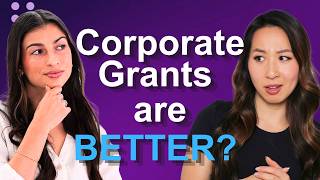
In this interview, Stacy L. Chin, a federal‑grant specialist, talks with Kat Weaver, founder of Power to Pitch, about non‑dilutive funding for startups. Kat shares how a fire that destroyed her first business forced her into pitch competitions, where she won a $7,500 corporate grant and discovered a whole ecosystem of free money. She explains the four main categories of corporate funding—live pitch competitions, cash‑grant applications, in‑kind service credits, and the traditional government grants—highlighting their speed, low‑stringency, and repeatability. Stacy contrasts this with federal grant programs (SBIR, NIH, DoD, etc.), which involve multi‑month applications, large award sizes, strict eligibility, milestone‑based payouts, and heavy reporting. The two discuss strategic alignment: corporate grantors want brand‑friendly PR and a simple growth narrative, while federal agencies pursue specific research missions. Kat offers practical tips—read eligibility criteria, keep answers concise, follow exact formatting, and treat the process as a part‑time supplement rather than a full‑time job. She also shares resources (LinkedIn/Instagram, free templates) for founders to get started. The conversation ends with actionable advice for founders to identify 1‑3 grant programs that match their mission, allocate a few hours each month to applications, and leverage Kat’s free guide.
Chapters
Guys, do not go for corporate grants. They're just a waste of time. At least that's what I originally thought. But then I sat down with Kat Weaver from Power to Pitch, and she completely changed the way I saw this world. Let's see what she had to say. Kat, how did you get into the world of corporate grants?
Well, all by accident. If you really want to know, like, the hardcore story behind it, I quite literally lost everything in my first business to a fire. I had no network, no rich aunt or uncle lying around to just throw money at this and restart the business.. So I had a professor say, you should do a pitch competition. And I had no idea what that meant. I would've rather honestly ran off stage and like, yak instead of go talk, talk to a bunch of people. It was not an initial skillset that I had, but it was really my only form of survival. And so that day was the seed and I got $7,500 in free grant money to kickstart the business. And it made me realize, okay, one, there's someone besides my mom who believes in this business. Two, there's so much more free money out there that most founders don't even know about.
That's really inspiring. Something that didn't go well, you actually turned that into something that actually went well. Now that's kind of your brand around it, which is fantastic. So what exactly is a corporate grant?
Yeah, so I really say there's 4 types of grants. So as you know, you're superwoman on the government sector and beyond, but the 3 other types of grants that are really out there are the pitch competitions, which are live pitch events for this kind of literal free money. A true grant is free money, no strings attached. The second is a— I call them a corporate grant, where organizations like, you know, even Amazon, Progressive, FedEx, Verizon, they give away free cash from a written application that's anywhere between 1 to 25 questions on average. And then they announce a grant winner and send you a check in the mail a couple weeks later. Other than that last kind, it's not necessarily cash, but they're in-kind services. So I tell founders not to knock those opportunities because for example, I got a $5,000 free legal credit. I got to use that for trademark and patent support. We had a founder get $10,000 in PR credit. So it might not be direct cash in the bank, but it's a service that you would spend that value of towards something that should end up being really strategic for the business. So there's pitch competitions, the corporate grants, and then the in-kind services on top of the government side. But Those three have way less strings attached, faster payouts, and more opportunity than some of the government side, even though it's great. It's just more niche compared to some of the corporate grant side.
It's sometimes even like the accounting or the legal can be super expensive. So having anything free, especially in the early days, is really, really valuable. It's just so different than like my world, federal grants and contracting. I think maybe it'd be helpful just to walk people through the differences, like maybe the speed, the flexibility, the marketing, the mission, and how to access these funds. How does that sound?
That sounds Perfect, because like, okay, for just to give a contrast, in your world with the grants and type of funding that you are supporting on, what is the average timeline for application submission and then potentially receiving the funding?
So the best thing about Nana Louvin, the World Federal Grants and Contracting, you can go anywhere from like $300K to multimillion dollars, even up to $50 mil, but writing the application would take months. I would tell people just getting a $300K application It takes pretty much anywhere from like 3 to 4 months just to put together an application that's crazy competitive. Then when you hit submit, you won't hear back for sometimes 6 months before you even know whether or not you got awarded. And then once you are awarded, there's even more reporting everything down the road. So it's a long-term game. And so that's something that founders have to weigh out when time is of the essence, especially in the startup world.
And then it's more of like a credit and debit system on that side as well. Like you have to get, if I'm mistaken, actual things that you wanna spend the money on approved. It's not like, hey, I want a million dollar government grant. All of a sudden get a check of exactly $1 million, right?
Depends on the vehicle as to how you get the grant, right? So sometimes grants, they're a little more loosey-goosey than a federal contract. Here's a pot of money that we're going to give you. You have to kind of ask for the money as you go along to your progress. You go for a federal contract where it's more based on milestones. So we're proposing we're going to hit these success metrics and that's going to be tied to the payout. And so they're kind of keeping a closer eye on you as to what you're doing, how you're doing it, and if you succeeded before they release the funds.
So the corporate grant world, pitch competition world, is so, so opposite of that, and now in the best way. Now granted, there can be prize money on the, the, your world where it's up to like multi-millions. Now on the corporate grant side, pitch competition, in-kind, the prize money is on average between $1,000 and $150,000 at the very, very high end. People don't usually tap out on that $150,000+ range unless they've stacked multiple checks and pitch opportunities. But the founders who win one end up winning 4 or more because of— it's a very copy-paste repeatable process. And in terms of timing questions, the corporate grant side, it's between 1 to 20 on average. So you can knock out a whole application in under an hour in one sitting, and it's similar questions across all of these. So I personally won 22 of 23 grants I applied for, for my first company, the corporate grant side. That was over $170,000 in free money that no one asked what I did with it. I didn't have to pay it back. I got a ton of free PR and mentorship behind it, and Every single check got sent to me within 1 to 2 weeks on average. And the crazy part is after that, like, these organizations, they're volunteering their time to give the money. It's not— they're not in the business of reporting and milestones. So you didn't hear from me, but kind of things can change, and they really don't have the bandwidth to keep checking up on you and force you to put it in a specific bucket of allocation that maybe you said you would. Obviously the organization wants you to grow and scale the business, but from, let's say, the application goes live to— when they close it to when they pick a winner can be anywhere from a few weeks to a couple months on the longer end. And then payouts are literally within a few weeks to a month because it's small check sizes that they send pretty quickly. So there's not as many stipulations around these, and that's why I tell more founders the real criteria is if your idea stage— literally zero in revenue up to $1 million in annual recurring revenue— you are missing out if you are not considering corporate grants as a strategy. But not just for the money, there's so many other bonus perks behind them that most founders don't think about.
I would love to learn more about like kind of the strategy of which one do we target, because in the federal grants and contracting world, if you go for any different federal agency, they all have their own different mission statements. So if you can imagine, uh, National Science Foundation wants something innovative and something new in the scientific and research field versus the NIH or the National Institute of Health. They want something that would be groundbreaking to make healthcare better. Then you have like the DOW or the Department of War where they want something that's dual use, that can help the military fighters. Is that something similar to the corporate grants world?
You know, there are some stipulations, but on a much lesser scale. They're mo— all of these grantors, essentially, they're— they've got an agenda behind it. It's because they want the PR and marketing to say, hey, we did this great thing for these founders, and they get a write-off. It's not always out of the pure goodness of their heart. I mean, it kind of is, but also, who cares, because it's a free check. But what I say to founders is like, you absolutely want to be somewhat aligned to the mission organization. But there's some funny cases where this is a real incredible grant where the Botox, like, injectable found— like, they have a foundational grant and they give $20,000 to a bunch of women every single year, and their mission is helping women feel more confident. So it's not that you have to even be in the beauty space. I've had one founder who runs a plant subscription business win $20,000 from the Botox Foundation because they aligned what they do with helping people feel more confident in their homes and healthier and all of that. So you can kind of tweak the language pretty easily, and the questions are short, like I said, between 1 to 20-ish on average, and there's usually a max word or character count. Of like around 100 to 250 words, because these organizers, it's not their job. They're typically donating their time to go through the applications, and they're then just really looking for some basic alignment on it. In the terms though, I tell every founder this, a lot of them get frustrated when they don't win. Most people are lazy. They won't actually read, hey, have a minimum years in business or revenue or be in this region, or what, like very maybe 5 basic points. A lot of people don't read that. They see money, they go to apply. But the founder is unsure, I always say to email the org. Like, for example, a more common stipulation is like have a co-founder. At the time for my first business, I didn't have one, and I emailed and said, hey, I think I'd be a great fit because of X, Y, and Z. I see the requirement is a co-founder. I don't have one because of X, Y, and Z. I ended up getting accepted and still winning the grant. So they can be even a little bit more flexible, which my understanding is they're not as flexible on your— in your world because they very clear criteria unless I have that wrong.
In federal grants and contracting, there's just a lot of red tape as to who can even apply. And so, for example, in a program called the Small Business Innovation Research program or the SBIR program that I do a lot of work in, there's a lot of different things you have to check. For example, are you a small business, which is defined as a company that has less than 500 employees? Are you in the US? And they want to make sure, you know, is your team majority owned by US citizens or permanent residents? And so a lot of founders or startups that have foreign entities may not qualify just on those stipulations. And because these are research grants, they want you to pursue R&D efforts. So if you're doing like an e-commerce store or consulting business, you may not qualify. Is that the same in your world?
Not really, because you can email them and be like, hey, I think I'm a fit. What do you think? And they might go, great, apply anyways. It's a lot more casual than your side of things because they might say in the terms, for example, like FedEx, I won their grant years ago. There was a bunch of people who don't ship a product still apply for a grant coming from a company who ships products for a living. In their terms, you must have registered for our free site and be shipping a product. Maybe like 70 to 80% of people who applied weren't shipping a product or actively shipping one, which is so shocking. So 10,000 people apply each year. You can get to like the top 100 applicants pretty quickly because the majority of people don't read, they're lazy, or actually align themselves. But that's like a really basic stipulation. They're not as complex. And there are some that are like, hey, must be a women-owned or in business for this long or have a social aspect to your mission. Or, you know, I would say the biggest criteria for anyone— like, I've even helped everything from a photography business to consulting to granola to a podcast to you name it get a grant because you— the goal is that you prove that you want to grow the company. That's all the grantor really cares about and want to see. So a year later, I say, think about if they're going to do a PR feature one year from now, what are they going to brag about? Can they say, look at who we helped? Let them brag. That's what you want out of it. And a lot of people don't go with that lens. They apply in a way where they share what they want to hear from themselves and brag about the company versus take the lens of like, this is what the grantor wants. And it's like, I'm sure like, hey, the government wants and needs these things. So it's similar in that aspect. But on the corporate grant side, it's not as strict because they're just trying to like churn through opportunity. And it's a, it's a lot, lot, lot less cash. But I'm curious why that these applications, I know I know it's millions of dollars, I know it's sensitive, but why does it take months to apply?
Like you said, people just want the money. They don't want to put the work in. They might not read all the different requirements, but I tell startups, for— to go after these large multimillion-dollar grants, they want to make sure their money is used well. And so give the reviewers the confidence that you know exactly what to do with the money. And sometimes for these super complex projects that are multi-year long, whether it's making a new therapeutic or going and developing a new manufacturing hub, it takes a very long time. In those timeframes, What does success look like? Who is on your team? Are we bringing in partnerships or consultants to help fill the gap? And so a lot of these little, like, details has to be thought out in order to put together a really strong application. I also recommend having the founders talk to their program officers before they even write a word, because you don't want to waste your time applying for these big applications if they're not even interested in your idea. Do you recommend that's something similar to corporate grants as well?
Absolutely. And I'll tell you, we had one founder who reached out and was like, hey, I would like to apply, I think I'm a fit in the organization, said, actually, no, you're not, but here's another opportunity that we think could align with you. Because they asked, they won $10,000 from that opportunity, and it was like, they didn't— it wasn't even on their radar just because they asked. But I'm curious, what is a— you said it was a program director, or like you get assigned someone when you apply? What does that look like?
Every agency operates differently, and each agency has like this lead for a program that they want to fund. So for example, for the NIH, they might have an institute for cancer, an institute for aging, an Institute for Neurological Diseases. It's always important to go and find that person that's in charge of the program. You can Google them online. If I want to go for an NIH grant, Google who is the NIH program officer of this agency. Go in, say hi, make an introduction, and ask them for a call because that is kind of their job. They want to talk to applicants and see how they can guide you in that whole entire process.
I had no idea that's how that worked. On the corporate grant side, so like for example, let's say it's one organization like Verizon or AWS— the people reviewing the application probably never had a business and are volunteering their time. They weren't hired to review that and make and bring on successful applicants. They're just being shuffled into the process. And what a lot of people don't realize is so there's this one organization I won't name names but when their grant season comes around for this one grant that happens once a year they lock themselves in boardroom everyone gets how many hundreds of applications each day and they filter filter filter filter filter. And they have these criteria and they just sit there and they're looking at the same language and the same fluffy answers. And so the people who are more specific and tactical and speak as if someone is not even a business owner or knows their industry is the real key. Because I see a lot of founders try to get very technical, and I'm sure they should in the applications that you're looking at. But with these corporate grants, they're usually pretty general. Like Progress— the Progressive grant, for example. That same founder who won Botox also won the Progressive Insurance grant. They were on progressive.com. They used a similar application. And Progressive of probably like they don't care about the business. They care about, is she a good potential fit for Progressive to represent the brand? Could they do a PR feature on her? Will she do the most right by the money? And that's really all they care about. It's like a low bar. And so that organization where the, the team kind of like locks themselves up, and every grantor, they'll have kind of these filters like submit your pitch deck. Some people are like, oh, screw that, I don't wanna do a pitch deck or whatever. Okay, filter one. Or Submit an elevator pitch video. Oh no, I don't want to be on camera and film myself. Filter 2. And then filter 3 is the time limit. So let's say submit a— it says submit a 90-second pitch video. If you submit something that's 92 seconds and they get 10,000 applicants, what do you think is going to happen with 92, 91 seconds and over? Doesn't even get looked at. And so it seems harsh to some people, but it's like, hey, when there's a lot and you didn't follow directions, they're purposely testing you on those questions to filter out the people who have like really paid attention and put forth effort.
There's very particular details that you have to follow to the T. These documents have to be this page limit, you have to use this font size, make sure the line spacing is 1.0. Anything that is outside of that range, it's easy to just reject you or withdraw your application. But it seems like in the corporate world, the— your job is to kind of stand out from the crowd and really think through your strategy and what's your narrative and story. And it's kind of the same for some SBIR grants, but there's also SBIR contrast that can work in the opposite direction. Whenever the DoD puts out new topic areas looking for very particular dual-use defense agencies, whether it's from the Army or the Navy or the Air Force, etc., etc. A lot of the times these agencies have published a topic for a company that they have worked with or have been talking to for years. And so a lot of these agencies, especially the Navy, they pre-vet their companies. You really want to get dual-use DoD or DoD CIBER is to really talk to the agencies and get that in to get them really interested in your startup prior to getting the published grant out. So there's a lot of lobbying and does go into these larger federal agencies. And this is true when you're going for the $20, $50 million contracts across the board.
It sounds pretty political, which like I guess I kind of get, but I had a founder complain the other day. She's like, I haven't won. I've gotten to the finalist of, you know, these few things. What's wrong? Why is there so many politics around being this and that? And I was like, well, one, let's look at your application. And two, it has nothing to do with politics that are thinking that you have to pre-network with the judges or anyone like that. It had everything to do with the questions that she answered wasn't directly what they asked for. The people who won gave them exactly what they wanted on a silver platter— short, concise. They said essentially was something like, you know, what would you do with the money? And she talked about how great their social mission was, not what she would do with the prize money. So it seems really obvious, but it isn't to a lot of people. And there's not much politics involved with these corporate brands because they don't care that they know you before. They don't care that you've networked or emailed or on social media. It is a totally open application. You just have to be direct, align with the terms, be respectful and kind human being, and not ignorant about their process, or be bombarding them too, too much. If you have questions, ask, but they're not needing you to like lobby for your business before you apply, or kind of have this secret in, because they don't kind of— they don't operate on those biases. They don't have the time to.
I mean, overall, Kat, I feel like this is such an incredibly insightful conversation. I think this breakdown hopefully will help startup founders understand like the differences and the similarities between corporate grants and the federal world. If a startup founder wants to start thinking about pursuing corporate grants, how would you advise them getting started?
Excellent question. I would say go find me on LinkedIn or Instagram at Kat Weaver. On Instagram, I am Kat Weaver, and I'll send you one of the free trainings or breakdowns we've done to kind of think about it and make sure that you're not going for 20+ at a time or Googling until your eyes bleed. The trick is to find 1 to 3 core things you align with, get feedback, build your bank of answers, and when you do that right, they become copy pace. It's exactly what I teach founders on, but it's not about going for everything at once. It's not about volume. It's a quality over quantity game. So I encourage founders to not think about going for grants as like a full-time job in the corporate grant world. It's a supplement. It's not recurring revenue. It's not going to be the, the only thing you do for your business. Think about spending 1 to 2 hours every other week, or even a couple hours a month, and you'd be surprised how far that will get you because it's a pretty simple process when you break it down.
Strategically, pick the ones that are a good fit and then just go because I mean, either way, corporate or not corporate, it does take time and energy. And as a founder, you're already like pulled apart in so many different directions. And hopefully you have a better idea of like what does that strategy look like for you and kind of help them in your non-dilutive fundraising journey. And with that, Kat, thank you so much for joining me today. Any other way besides your socials that people can find you or reach out to you?
I learned so much from this. I can't wait to share this with the founders that I support because I get questions on it and I'm like, I know a girl and this is your girl kind of thing. But I have a really a really great guide on the pitch format to use to copy and paste. So if you tell me that you came from Stacy L Chin, send me a DM, uh, that you listen on whether it's LinkedIn or Instagram, and I'll send you that pitch outline. I have a free template for it. I don't gatekeep on that side. Um, so just send me a DM on LinkedIn or Instagram and I'll get it your way. Beautiful.
I will link all of Kat's socials in the description below, so make sure to check her out. I'm sure she'll be a great resource for you guys. And with that, thank you so much for joining us today.
More from Stacy

Applying for NIH SBIR in Jan 5, 2027? You Should Be Starting NOW. Here's why...



How to Get Invited to Apply for $305K in NSF SBIR Funding || Step-by-Step Guide




