SBIR Grants vs Venture Capital – Which One Is Right for Your Startup?
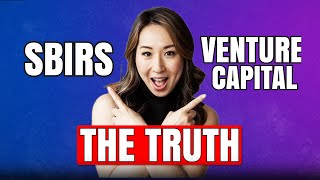
Stacy Chin compares SBIR and STTR grants to venture capital across six dimensions: ownership, timeline, effort, risk, eligibility, and long-term effects. Grants keep you in control but move slowly; VC is fast but dilutes equity. Many founders use grants to de-risk technology before raising VC.
Chapters
Are you a startup founder torn between chasing governmental SBIR grants or pitching to venture capitalists for funding? It's a classic dilemma: non-diluted grant versus equity-fueled venture capital. On one hand, there's free money from the feds with no equity attached. On the other hand, there is a chance to get millions of dollars from investors to scale fast, but you have to give up a slice of your company. So in this video, we're breaking down the SBIR and STTR grants versus venture capital across ownership, timelines, effort, risk, eligibility, and long-term impact. So by the end, you'll know which path is a better fit for you and your startup. No fluff, just real talk on money control and what it means for your startup. So let's get into it. Hey guys, welcome back to the channel. If you're joining us for the first time, I'm Stacy Chin, a professional federal grants and contracting consultant who has helped to raise over $40 million of non-diluted funding for startups developing innovations in climate, healthcare, and defense. All right, first, for those who don't know, SBIR and STTR grants are US governmental programs that fund small businesses doing R&D work. Rent money to build innovative tech without giving up ownership. More on that in a second. All right, now with that out of the way, let's dive right in into the SBIR versus VC smackdown and how they really compare on the things that truly matter to you as the founder. Both SBIR grants and venture capital can fund your startup, but they come with totally different strings attached. Let's break it down across 6 different key factors. First, ownership and equity. Here's the biggest difference: SBIR and STTR grants are 100% non-dilutive. Uncle SAM hands you the money and you keep every ounce of your equity. Venture Capital, whole different story. You give up ownership. Investors take a seat at the table and they wanna stay in the big decisions. By round 3, half of founders are kicked out of the CEO seat. So do you wanna stay in full control or start sharing the wheel? And here's a timeline and speed. Think about the speed of money. SBIR moves slow and steady. Apply, wait for reviews, and maybe 6 to 9 months later you see the cash. VCs, it's unpredictable. You might get checks in weeks, weeks, months, or maybe years later. But if you need money fast, VC might be the move. But if you got runway to play in the long R&D game, SBIR works. Here's the effort and process. Raising VC is basically speed dating. Pitch deck, coffee chats, endless rejection. It's all about charisma and connections. SBIR is more like a giant homework assignment. Long proposal and budget form. Every detail has to be perfect. Both take serious work, but in different ways. VC is a hustle of meetings. SBIR is a grind of paperwork. How about the risk and odds of SBIR win rates? About 10 to 20%. So not too bad. VC? Way tougher. Less than 1% of startups get funded. Either way, you can still put months of hard work and still come out empty-handed. But here's the kicker. Win SBIR and the money is yours. No strings, no equity. Win VC, now you get investors expecting you to grow like crazy or they'll take the wheel. When talking about eligibility and fit, SBIR isn't open to anyone. You have to be a US-based small business under 500 people and working on legit research and development effort. Consumer apps or non-technical services? Probably not the best choice. VC, meanwhile, doesn't really care about the rules. They do care about growth and scale. So if your VC can't 10x, most VCs won't touch it. And here's the long-term implication— rather, the real aftertaste. SBIR funds R&D in stages. Lets you keep ownership and grow on your own terms. But the money runs out and you eventually need private capital. VC flips it. You get millions upfront to go big, fast. But if you're locked into the fundraising treadmill, multiple rounds, dilution, and an exit plan that's not optional, SBIR is a steady launch path. VC is a rocket ship. You can't just hit pause once you're on it. Now, before we move on, a quick reality check. These two funding routes aren't mutually exclusive. Some startups use both, and this is highly encouraged. For example, secure an SBIR grant to develop prototype and later raise VC to commercialize and scale once the tech is proven. There's no one-size-fits-all strategy. You might ultimately leverage a mix of funding sources, but deciding what to pursue first or primarily comes down to where you are in your startup and what you need right now. Now, with those differences in mind, when is an SBIR or STTR grant a better choice for your startup over a VC? And here are some telltale scenarios. Where going for the grant is likely your best bet. D-tech and R&D. If you're building something truly new— biotech, AI, materials, aerospace— SBIR was built for you. It funds high-risk R&D when VCs won't touch you just yet. A Phase I grant up to even $300,000 can buy you lab time and prove your idea works. Keeping ownership and want to stay in control? SBIR is 100% non-diluted. No board seats, no dilution, no giving 20% of your company. You can hit the milestones first, de-risk your tech, and then raise at a higher valuation down the road. When considering time and effort, grant— hey, patience. Applications are long and funds can take 6 to 9 months to even arrive if awarded. So if you got savings, side revenue, or can afford the wait, SBIR is worth the grind in my opinion for free money. In terms of fit and credibility, the project has to match an agency's mission like the NIH, the DOD, or the DOE, and you must be a US small business. For academic spinouts and scientist founders, SBIR is practically tailor-made in winning at major credibility with customers and investors. When considering the right size funding mechanism needed, if you need a couple hundred thousand dollars to build a prototype or collect early data, however, that's perfect for SBIR application. However, if you need $5 million tomorrow for manufacturing, BIR just won't cut it. Grants are staged, smaller checks designed to move your R&D forward step by step. Now let's flip the script. If you're wondering when venture capital is, is the more suitable route than grants, there's definitely situations even when there are strings attached, this might be a smarter play for startups. So for example, if you're in a startup where speed matters and the market is moving fast, and if you're required to scale pretty much yesterday, then VC is the right fuel for you. Grants take months and come in smaller amounts, while VC can drop millions in your account to hire, expand, grab market share before competitors catch up. VCs can be great if you need big capital, for example, manufacturing line, clinical trials, or a big marketing push. SBIRs cap out at the hundreds of thousands of dollars in a Phase 1 application, whereas VCs can write multi-million million checks and keep funding you through multiple rounds. Sometimes for capital-intensive ventures, VC is the only choice. Also, if your startup is not research-driven, maybe VC is the best route for you. Think consumer app, marketplaces, or non-technical business model. Here, SBIR won't likely fund you. VCs, however, may love the growth potential. Plus, if you're ineligible for an SBIR, like a foreign team, too much existing equity sold, etc., VC is kind of where you have to turn to. And also, the best The best VCs bring more than just capital. They can also bring mentorship, network, talent, customers, and also follow-up investors. That kind of smart money can change the game, especially if you're a first-time founder who needs guidance and industry connections. So how do you know if you're ready to ride VC on your rocket ship? Think if you are a startup that's entering fast growth, want board oversight, dilution's okay, and you're aiming for a big exit, then VC might be the right avenue for you. If your dream is to build a unicorn and even if it means owning a smaller piece of the bigger pie. Venture capital is also the way to go. Just know this is high risk, high reward, and you're signing up for a wild ride. So here's a recap and some of my final thoughts. So when considering going after SBIR grants or venture capitalists, you have to choose the path that's best fit for you. It's not about which is better universally, rather what is the right fit for your situation. SBIR grants are non-diluted. That means you keep your equity, but they're relatively slower to get. It might be best for early-stage R&D-focused startups that need to prove their tech. They also require writing and patience, but come with no strings attached. No repayment, no loss of control, you know the drill. And SBIRs can be ideal if you want to retain ownership, have a project that fits an agency's need and mission, and you can take time to develop your innovation. These grants can shine when you need to de-risk your technology on a modest budget, and they can act as a springboard to later investment. Investments. However, venture capital can provide a large infusion of money in return for equity, and it's all about speed and scale. VCs are well suited for startups with big market potential that need to grow fast or require significant capital to get off the ground. VCs can also accelerate your timeline dramatically and often bring valuable mentorship and networks. But at the end, you do have to give up some control and autonomy in exchange. And maybe that makes sense, especially if you're chasing a big opportunity and if you're comfortable with the high expectations. It might need more funding than grants or bootstrapping can offer at this time. Keep in mind, these paths can be combined or sequenced. Many founders get the best of both worlds. For example, using SBIR funding to develop prototypes and then raising VC to commercialize and scale down the road once the risk is lower. At the end of the day, there's no rule that you have to pick one forever. And the key is to match your fundraising strategy to your company's stage and your personal goals. If you found any of these tips helpful, I would greatly appreciate it if you like this video and subscribe to this channel so that you can learn new ways to keep your equity throughout your fundraising journey. And don't forget to check out our website at keepyourequity.co where you'll find more resources, templates, and advice on how you can secure non-dilutive funding. Thank you so much for joining me today, and I'll see you in a video very soon. [MUSIC] [MUSIC]
More from Stacy

Applying for NIH SBIR in Jan 5, 2027? You Should Be Starting NOW. Here's why...



How to Get Invited to Apply for $305K in NSF SBIR Funding || Step-by-Step Guide




