Building the Future of AI: Insights from Stefan Wendin of AI Sweden
Podcast interview (Builders) with Stefan Wendin, Principal AI Engineer at AI Sweden, about accelerating AI adoption in Sweden. Wendin recounts his eclectic career (from restoring churches to working at Neo4j and AI Sweden), argues that 2024–25 marks a shift from PoC to production-driven AI, and attributes rising adoption to commercial pressure and advances in transformer/GPT-style systems. He identifies common obstacles (culture, poor human–AI interaction, retrieval/data issues, consensus-driven slow decision processes), outlines routes to faster value (small senior teams, build-your-own systems, workshops tied to real queries), and discusses public–private collaboration, change-agent networks, hiring for grit (talent+agency), hands-on experimentation, and the importance of committing to projects to learn by doing.
Questions this video answers
August 13, 2025.
Principal AI Engineer at AI Sweden.
Chapters
Hello and welcome to Builders. Today we have the pleasure of hosting a truly visionary guest, Stefan Vendin, Principal AI Engineer at AI Sweden. AI Sweden is Sweden's national center for applied Artificial Intelligence with the mission of accelerating the use of AI to strengthen Sweden's competitiveness and benefit society as a whole. It operates as a collaboration between the government, industry, academia and the public sector to drive AI innovation, research and adoption. Stefan has spent over two decades at the intersection of business transformation, AI innovation and strategic leadership. From restructuring and modernizing global enterprises to fostering a culture of experimentation and data driven decision making, his work has pushed the boundaries of how AI can accelerate change. Stefan, a really, really warm welcome to the podcast. How's it going?
Very good. And as being natively Swedish, I'm already blushing about all of the nice things that you said. So I'm going here being like, oh, no, no, no, no, not me, not me, not me. So still Swedish. Good thing in that sense.
Lots to live up to in the episode then.
Yeah, yeah, let's do it. That should be fun indeed.
Yeah, let's get to it. Before we dive into the big ideas shaping AI innovation and everything today, let's start with your journey. Can you walk your career path, the experiences that led you to AI Sweden today?
Oh, yeah, this is. Do you want the full story? Because it's kind of a long one. It's going to be 45 minutes of weird shape.
See if you can compress it somewhat.
As a little boy, I was always interested in kind of why people were doing certain things, like why did we believe in God, for example? So with that comes, of course, great buildings and structures and procedures and processes and culture. Right, right. So then I started. So my first education is pretty much that, restoring old churches because of my interest of chemistry, art and history, which is very fun because if you think about it, imagine you live in a wooden shed with kind of damp soil floors. You come into this church, it has the marble ceilings, it has the acoustic of angels. You know, you got the colored lights coming in, the gold everywhere. Of course, at that time, that's kind of like wow, right? It's already wow now for us and we're kind of spoiled, Right? So in that sense, I think a big part of that is that the tool and the spaces we created at the time then recreates us as humans, which is exactly what I then ended up doing. Now, right on the other side of it, I built some tools that redefines what it is to be a human. So my journey from there is Going from there. Then all of the kind of digital waves start happening. I went onto that train and always kind of curious. A lot of people in my career was always like, oh, let's build a smart AI. But I was already there. Start thinking. Kind of inspired by kind of Ray Kurzweil, he released this cybernetic poet, which is one of the funniest kind of bots of writing poetry in any preferred poet style by just like guessing the words out, right? And the interesting part, since it's poetry, then we look upon it and don't expect it to be correct in a semantic meaning. It's okay to write things strange in poems, right? Especially if it's old language. So then we go, oh, this is so creative. So then I started thinking, do we even know what is a good answer? Do we know what is intelligence? Do we know what is creativity? So I spend a lot of time, like building kind of almost super simple systems, but trigger that kind of perception of reality that we don't really get as humans. Which kind of led me into this kind of very narrow field. And from there on, I mean, I joined Neo4j, a graph database company. Spent a couple of years there, kind of building out that new space, which was super funny at the time. And then I left to work even closer to AI. So I think, yeah, just a random chaotic period of interesting things. But yeah, we can dive, of course into it more in detail if we want.
But yeah, yeah, no, but really interesting. Yeah, from the physical to the digital as well. And we'll touch on that a bit later as well. But diving into AI and AI adoption among Swedish companies, first and foremost, I think I was reading, I believe it was even on AI Sweden's website that AI adoption has more than doubled in Sweden over the past year, rising, I think somewhere around 10% to like 25% or something like that. What factors do you think have contributed to this increase in adoption among Swedish enterprises?
Oh, this is a good question. If I only had one single answer to this one. But if we think about it, right? So I think I stated last year was the end of the poc, meaning, you know, before everybody could. Well, it was almost like you see the POC as the end goal, but the POC never give you money. It's just a playground for adults very often, right? So what happens is I think the boards sort of go like, okay, you played around, now show me the money. And the only way to get the money is to go in production and start fixing things, right? So I think one Part is that another part would be greatly attributed to the rise of the transformer architecture and then what's doable on any of the GPT systems, meaning now it's so much easier to interact with it. And this is now like weaved into a lot of other things. So I think that would be one part as well. So it's a combination of things. But I think one is driven from a purely commercial and aspect, like we need to do this, if not our business starts kind of. Oh, so it's equally as the digitalization, right. You had some sort of old, then you have the new. And of course if it was like this old new, it would be simple. The tricky part is that they go on top of each other. It's like two tactical plates moving and you need to figure out when do you jump. And I think we're in that space. So I think one part is kind of, you know, holy crap, we need to do it now because we're going to lose business. The other one is like, oh, it's kind of easy, it's kind of fun, it does a lot of things. Oh, it's so stupid sometimes. So I think it's a balance of joy and joy and kind of, you know, panic almost in that sense.
Yeah, go on.
Sorry, go ahead.
No, I think it was an interesting point that you mentioned about kind of, you know, the somewhat pressure from above as well, trying to get stuff into production. And I think this is part of the situation as well where I think the challenges still remain, right. You can get from your PSA playing around into production, get it released and trying to get value from what companies have been working on. But these challenges remain because I think despite this growing adoption that I mentioned just before, 7 of 10 organizations report that they yet to realize like a tangible value from the AI projects that they've been working on. This is quite a number. So I mean, in your experience, what are the common obstacles organizations face in kind of actually realizing the value?
No, I think again now. And now I'm happy that I told you the story about why I'm obsessed with studying culture. Right. And how we interact with tools. Because I think this is partly one of those things. So a very common approach is from the kind of C level. Okay, Everybody in my company should get like a business or team or enterprise license for ChatGPT. Now we're going to make millions and then nothing really happens because that's not how it really works. Right. So I think that's one approach and that's why we don't see money. So one of the things that we do on my other job, which as head of AI at Turian, is that we have a shared meeting. So we usually do this. So we have this internal kind of tool that we use. Uh, so every week we sit down and we look at the actual queries and the responses and then we see, okay, is this kind of, Is this a bad query or question? Do we need to educate how we work with the tool or is this a bad retrieval? Because I think there's going to be both and it's not going to be.
You'Re looking from both sides. You're looking. Okay, here's exactly.
Because then we see people start doing this thing. It's an error and it's kind of obvious if you know about how to work with the system, but then people don't know that. So then it's our job to take that into the adoption approach and then reteach them. We see that a lot of people are doing X. This is the way to get to that answer in a much shorter and better way. So I think that's the kind of more approach that you need to be able to do. And that's why I suggest again to build your own system. Because the problematic part is then you don't have that data in any of the bigger things. So for me, that's actually how you can get really close because then you're actually talking about the thing that people are working on that very same day. You can run a workshop and you can open it up and oh, now I see what you asked. Let's do it like this. So that's how I think about it. Because one of them would be a retrieval or information problem, the other one would be kind of interaction or behavior problem from the human side. So figuring out which is what and then work on them simultaneously. And I think that's why you start seeing value. And if you see value from an individual level, you're going to see value from the company level. And I think the other way, if you just look upon the license part of these things, right? Oh, here you have all licenses, but what does that license actually do if you're not trained on how to use does your job that you're supposed to be doing already. So people are not going to really say, I made ChatGPT do my job and then I went to the sofa and had a coffee for half an hour. Of course you're not going to tell that to your boss. And I think that's lies in the nature of why we don't see any improvement because you built a system where punish efficiency is being punished rather than the opposite.
And, and talking of efficiency, how do you see AI transforming operational efficiency in certain sectors? I think in Sweden with Klarna for example, I mean this is a very good example, they've been able to kind of reduce or significantly reduce customer query resolution with an insane amount. I think it was over 10 minutes, down to two minutes or something.
They also build it on an insanely cool technology in Neo4J which is fun, where I used to work. So well aware of that case.
How do you see this kind of transforming sectors? Finance sector, but also other sectors?
I think Klarna is a good. Because what they do is that they are opening the lid to what a modern enterprise should act like. Right? Because before you're usually very heavy on the operational costs. It's a lot of maintaining things, it's a lot of buying licenses for everyone and this very slow moving things. You buy services that are a nightmare to manage and are super complicated. But what they are doing, they're acting very much like a startup in that sense. Like okay, what do we need? Oh, we're just going to build it internally because we only need that part. So now we specifically build that and it's actually shorter and cheaper to do it like this. So it's all about a game of speed. And I think that's what is interesting is there's a couple of these companies but I think Klarna is one of the ones that is clearly out there showing that because this is what we see. We see a wave of new companies that growing ARR in insane percentage over time. They're growing from zero to I don't know, 20 million USD in two months which is unheard of. It used to be a 50% growth and that was good. But now we're in the thousands of percents which is completely insane. And even if you look at OpenAI, it's still growing in like a hundred and something percent which is like how can you do that at that scale? And I think that's the power of an AI native company which doesn't really care about this is how we do things. I was like, no, that's how you did things. We do it like this, okay? We cut the time by like, you know, 3, 75% is off now we just do it 25% of the time and it's going to be a whole other value game. So I think that's actually an interesting thing. And I think we are standing onto a verge of something that's going to be very shaky, to be honest, because what we're now starting to see is this idea of Jensen Hang famously said, AI will not take your job. A person using AI will take your job. Which I called the BS on the first minute I heard it. Of course he said that because makes money on those, on the hardware where it runs. Right. But what is interesting now it we are seeing people getting laid off by this new system that actually just cover departments all of a sudden it's like this whole function is not needed anymore and that is causing massive problems. I would say it will cause massive problem not only for the enterprise, the individual, but to society as a whole. And I think we'd rather have to start talking about those. I think would be very interesting and scary.
Yeah, yeah, both interesting and scary. I think it's an unknown and I think a lot it's moving at such a rapid pace that the kind of consequences are sometimes ignored, of course, but sometimes those kind of dealing with the consequences can't be considered at the pace of the actual work the deployments are being deployed. So I think that side of things scary. But we were talking when we were off air, you were mentioning that you split your time between south of Sweden where you live, but also Stockholm when you're needing to talk to politicians and everything. And I think the Swedish government's AI commission writes, I've been reading how it's emphasizing the need for kind of proactive action to avoid it falling behind in AI development. And what role do you see for public and private. Public private partnerships and accelerating AI adoption and innovation in Sweden?
Oh, this is interesting. I think, I mean it would be like with any. So one of the projects that I run, it's one of the largest one at a Sweden, which is about accelerating large scale AI or machine learning things or getting to value faster. Right. So I think a lot of that collaboration is that we can learn from each other. And that's of course obvious, even if it's public or private. Right. But I think just sitting down together and see how did you solve it instead of every single one starting from scratch and having to solve every single problem together. I rather see it like, okay, let's come together, let's start to solve this problem, create best practices. And this is a way of doing it. Okay. We get stuck with the data track all the time because legal shuts us down. Okay. But that's the job of legal. They're working with risk. The best Way to not risk anything is just to do not anything until you're dead, which is then the problem. You're dead part is now coming like a freaking train hitting us, right? So I think one big part here is to openly figure out where do we collaborate and how do we collaborate, instead of saying you are this and we are that. Because this is equally true in the same sense of I tend to work with large enterprises and startups to the two extremes. And the interesting part is that people are like, why are you working with these? They're so different. I'm like, this is the same one have too much admin and process and now they need to get rid of it. The other one has zero and they now are grown so they need to add it, but they don't want to add anything to break it. The question is then just simply what type of admin helps us and what does not provide any value, which is just the things that we do because has done it right. So I think a lot of the learnings can actually come from ignoring that we are different and seeing just where are we the same. And then work on those and then whatever that are different and regulated by laws and these things that's going to be there anyhow and it doesn't really matter. Then if you need to follow those, you do it. If you have a startup which might not fall under the governmental rules on how to store and do things, then you have another thing. But you can still learn from each other. So I think that's the thing. Instead of going, I cannot learn from you because you're totally different. Of course you can. Everybody can learn from everyone. That's the whole beauty of it. I think that's also where it's too fun because somebody would go, why are you doing like that? And then very often the answer is, oh, but that's how we do things. Yeah, but why are you doing like that? That's like completely.
It should have been that way, right?
Exactly. And then, you know, somebody comes in, is like, oh, we're doing like this because we don't need any of that. And it's like, oh yeah, maybe that's the way. And of course you want to find a balance on kind of putting in new stuff and so on. But I think there's a lot more to learn and there's also a lot of kind of government agencies and these things in Sweden that are doing amazing things. I usually say that I don't even know what it says, but it's like the one having the Courts. So the government entity for courts, they're my favorite startup because they're doing everything right. They don't talk about anything, they just build things. They have this guiding principle. If it's helping somebody today, we should build it. If it's like research, that's for academia, we don't do that. We're helping people right now right here. And they're shipping things and they're ugly, but they are providing value. And then of course, you can always make it look pretty afterwards. So I mean, it's just kind of letting go of your own bias about who should be the cool startup, I guess in that sense.
No, some really, really interesting points. But on the topic, what would you say is the, how to phrase it, the quickest or the not necessarily the best route, the quickest route to value for such companies?
Yeah. This is actually because there are these.
Kind of best practices to follow. You've been mentioning how, you know, these bigger companies, smaller companies are not always so different. Like a lot of people like to think they are. But if we talk about kind of best practices as to kind of how, how people can really get to value in the best way or the fastest way possible, how can they do that?
No, but I think again, we're hitting now a very interesting part, right? Because very often I hear people saying, oh, but this is a great idea, but cannot Google do this? And in theory they could, but this is where we don't understand how a large organization actually work because there's going to be committees, they're going to be meeting about the meeting, about the meeting, about the meeting, meeting, and then, you know, six months down the road, nothing has really changed. Right. Where if you look upon, especially in the kind of AI startup that's now coming out, it's like super small team that punch way above their weight class. What is interesting when you start looking about this is that most of these are technical people, meaning they have some sort of preference for. Oftentimes if we generalize, talk about groups, you shouldn't do that, but we'll do it anyhow. So they will index much more on the logical side of things. Right. Because they like engineering, they like programming, and so by that definition they would think logically in slightly different ones. So I mean, it's a classical example. It's like, oh yeah, we have this feature here, it's a green pen. It actually doesn't deliver at all. Should we just kill it? And everybody's like in one meeting? Yeah, let's kill it. It's nothing big however, in the large enterprise this is like, you know, a lot of other people with other backgrounds need to now be included in the decision making. So you're adding padding of padding of padding, meaning that you can't move fast. And I think that is the number one thing that you need to look for. What is it that is actually needed and how can you put that? I mean there's this old analogies of this. You know, you have one person sitting on the, on the kind of the seat there and then you have 10 people rowing or you have 10 people sitting on the saying oh, row faster, row faster. And you have one person rowing. And I mean it's exactly like this if you go into organizations, right? And I think is this, you're getting.
Out here like this kind of consensus driven decision making.
Yeah. And I'm from Sweden, so you can imagine we're the king of consensus. Right.
But I mean your view then is that it slows, it slows down organizations down too much because it's often seen as this kind of. It's often seen and I think like you mentioned in Sweden, this consensus is something good, right? It's a virtue for most organizations. And obviously you're challenging this perspective in saying that slows companies down too much, right?
I mean it's of course not a binary thing here. It's not completely bad. I mean it's a beautiful thing including people to agree, right? It's very beautiful. But I mean if you kind of use the kind of talent matrix, right, where you take people that have high talent and you have high agency, that would be like the game changers, right? If you put a game changer that is used to build things fast and have extreme amount of talent, but if you forces that person to work in a slower process, meaning the agency of that person goes down, you're literally building what is then coined as a frustrated genius, right? And equally so what companies very often do they put maybe like one of the common one is like oh, let's take X from marketing or let's take Y from sales and put it in the AI team. The thing now we have a person that within its space is a game changer. So it has high talent, high agency, but now it's put into a new context where it has zero talent. I mean in the best of world it used ChatGPT once but that's the only doesn't know anything about building AI system. What now happens is that person have a very low self esteem all of a sudden. So I think It's a balance of understanding what is needed at what space. So before this I was always the classical kind of speedboat analogy of innovation, like you need to be in a speedboat. So I was actually my entire life I was against that thing. But now I think actually in this paradigm it moves so fast. So I'm starting to reevaluate if the speedboat actually is working better because maybe a big part of what used to work will necessarily not work tomorrow, and therefore the speedboat is actually good. So it's like that classical old book like orbiting the giant hairball, where the old organization is the hairball and you need to just keep orbiting because you cannot come too close. Then you get tangled up, right, in processes and crap. It's a classical old innovation book, I think from the 80s or something, but it's still very relevant. And I always feel like before because it was so slow, it wasn't really a problem. But now at the speed of change, I would say that speed is the number one thing we should prioritize and therefore we should ask ourselves, can we afford the extra padding of 10 or 20 meetings of consensus of a freaking green pen or a button or a functionality, or should we just kill that move on, build the next one? And I would argue maybe that is the better way. So a small senior team with super high talented people actually can move the needle much faster, which is interesting, especially if you look actually on now. Maybe I'm going ahead here, but I mean I did a study, I think it's very interesting with any of the tools helping you with programming. So any code developers? Right. So first, early on I was very fascinated, like, oh, can I take people that cannot code and now give them a tool and now they can build something which is like super fun. You can look at the bolt, the cursor, lovable. And even chat, CBD and any of the bigger ones and it's like super impressive. Now my father can actually build a webpage which is like fun. He doesn't know how to program, which is kind of fun, Right? But what I notice is that if you take a person that actually knows how to do this, that person, because the previous one has a one to one, right? Someone can do something they couldn't before. But now if I use it, I can actually do it like 1 to 10 or 1 to 15, I have a much higher price. And this is again playing down to that speed going there. So I think we are seeing a lot of these already coming. And I think this is just the Tip of the iceberg. So let's see where we end up.
Yeah, yeah. A lot of people Talk about the 10x developer or whatever it is, right?
Yeah, yeah. And I mean, we see it also, like the peak of people recruiting engineers. Right. It's like super peaking and now it's going down again because you can get so much more out of it, which is very, very interesting.
Yeah. And I think the interesting thing is that you can get a lot more out or productivity increases and also consumption increases as well. It's kind of a paradox.
But then we come to another question. What should we do with all of this productivity? And are we built for productivity? Which is the next question. Are we built for running and how long can we then run in this space for? And who are the ones that can run at that pace? Because I think this is also where you start seeing, I mean, like, people that almost, like, are totally fine with uncertainty and high risk. Right. Which is not the traditional organization. The traditional organization with a quarterly report. It's built upon, you know, high predictability, low uncertainty. Everything will happen as it always has. And now we are in. Just go.
Yeah.
Which would be very fun.
Your forecast for the year and then all of a sudden changing after month one.
Yeah, yeah. And no, I think this is the bigger part. Like, who are those people and how do we handle the rest? Because the rest is the normal in this case. Because I think that's also a very serious topic that we should talk about more and finding ways to kind of educate. And this is why going back to your thing about talking about AI adoption within organizations, like, okay, just giving people the tool, it is not enough. Because that's just a tool. If you get a hammer, it doesn't mean that you can build a house. It's kind of obvious that you can't. But why are we treating it like this with AI, which is kind of. So I think a lot more in the actual adoption and the usage and, like, sitting there being curious, like, what is it that you're trying to do and why? Have you thought about doing something else? And if so, what would that be? Kind of, that approach, much more fun.
And talking about. You mentioned a hammer there. Like, beyond AI and business strategy, you also have a deep passion for building things, right? Yeah, yeah, I've heard synthesizers, fireworks, other kind of experimental projects. Can you tell us about a personal project, then, that's significantly shaped how you approach problem solving?
Oh, my God, this is dangerous. Yeah. So I blame my parents. Divorced parents, classical 70s kids. I said to one Give me the little chemist. I said to the other one, give me the little electrician. And then you can just imagine what happened. So the first thing I did was blowing up the house. Let's not go into that. But I think actually one piece of technology playing into this would be music. Because it's always been close to my heart. And I remember not really fitting in. I had a very strict piano teacher hitting me with the chopsticks when I was angling my fingers wrong. And it was just like freaking nightmare. I was like, oh, I don't want to do this. But I supposed to do it the classical. But then I started going to. There was a. Like a music store. So I started going there to find like technology things, I guess first because it was just like a curious. It was like, you know, lights flashing and it was like mysterious in that sense. But then in there I found a musical instrument that literally blowed my head out. So I found the sampler. An instrument that doesn't even have a sound. Which is like the concept is so bizarre at the time. It's like, how can it not even have a sound? How can you have an instrument that doesn't own its own sound? That's the only job of an instrument. What the hell is this? So then I started figuring out and then all of a sudden I was like, everything is sound, potential sounds. And this is also the foundation, which is one of my go to methods today. Because what happens was that I started hammering on everything. Oh, I wonder how this sound. Ding ding ding dong. No, no. Oh. Techno track loop that. Oh, it works. You know, just hammering and trying things out because there wasn't any best practice. Nobody has done anything because it was so completely new. It was like the wild west. It was just like walking into the unknown in that sense. Right? So I think that is one of the things. Because what is so interesting about it is that literally you just take something and you combine it in new ways. Which is one of the most common ways of creativity. So I would argue that would be one of my favorite ones. But then, you know, growing up at that time and then, you know, everybody became digital. Meaning they sold all the old analog synthesizers. Meaning a kid like me obsessed of electronics could then go and buy this old kind of Moog synthesizers and you know where, where you don't have a pre programmed sound, you need to patch your own things. And I was like, what is this vcf and what is the difference with the vca and what are these names? What are the acronym stands for? And they start to read up on electronics. And this is me being 10 years old, like obsessing about these things. Oh, this is how you wear it. And what happens if I Dr. This to there? And so I think a lot of that kind of experimental, kind of, you know, what if instead of saying no.
Yeah, and this kind of hands on, this hands on kind of experimentation, this creativity, how does it influence the way you lead teams and drive innovation today?
I think one really good opportunity was actually at my time at nio, right. So I remember. So basically what we could do is that we can run graph algorithms at scale, which I could see if we ignore the scale. Part previous in my home, built graph in Python or whatever. They were not fast, but I can do a centrality calculation. And I put it on and I went back the day after and then I looked upon it. That's how I worked as a data science. You let it run and then you go home and then you come in the morning and the next day, yeah, it's either failed or you had the result that you wanted. Right. But if you think of that approach, right, because what happens then is that you actually are not looking for the unknown, you're just proving that you can find what you're already looking for. So I got this question. It's like, stefan, why are you always using Levain as the community detection algorithm and none of the others? I'm like, that's just what I started to use and I know how to use it. And that's what I do. It's like, but why are you not using the other ones? I'm like, a very good question. And then I was thinking, like, we had 10 of them at the moment in Neo in the suite, which is now very funny, because then I was like, yeah, but it takes like less than a minute to set it up and run it. All the representation is very visual, so I can already put them side by side and compare them. So then I just run all of them and then I start going, oh, I didn't know. I wanted to know that. Which is the whole kind of cool thing about these things. So this comes down to this idea that we don't know what we don't know which. I also named my company. So I think that is one part how I work with teams. Because very often we set the bar extremely low because we set the bar on what we know that we can achieve instead of having this continuous progress going in. And this is sometimes hard for a team, because if you think of the normal enterprise that's built on. We gonna now scope out to build X and now we're gonna staff to build X. And then when we have build X, that's finished. But this other approach is rather a continuous improvement over time. Right. There's no finish line. You just keep running. And it goes back to that old kind of Nike analogy, like if you went out running when you first said you would be done by now, so it's just about just crunching it. Right. So I think that's the kind of thing that I want to put in in my teams. Like this kind of, you know, structured chaos or curiosity in that sense. Like, because very often, like, oh, we explore one thing and it's like, oh, if you're curious enough, it's like, what is that? And that leads to, oh, this one and that one and this one and that one. And all of a sudden you're ping pong ten times further away than what you normally thought you could do. Yeah, of course you're going to hit some roadblocks and then there can be things that cannot be solved. But I mean, I think we have so much more greater potential than we actually allow ourselves in the modern organization.
It's a nice way to put it, that kind of structured chaos. I think. And with tech landscape evolving at such a fast, unprecedented pace, really adaptability is also a key skill.
Right.
How do you cultivate a mindset that embraces change, like both within yourself, but also within your teams?
This is actually also a very tricky one. Right. But I think the thing with change is that you need to practice it before you need it. Right. If you're practicing on. I mean, there's this guy, Fred Luskin, I think he did a study on human thoughts. And I think like 90% of our thoughts is kind of repetitive, which is kind of bizarre because what we're practicing on is staying in status quo. Right? Yeah. We are going on cognitive behavior therapy to be the same. That's what we do. Right. Efficiency, optimizing machines. But I think the interesting part is that you can actually practice unchanged by just practicing on doing small things. I mean, go to a new restaurant for lunch, go up at another stop on the tube on your way home and walk another street. It's just the small things, because it comes back to this idea. And I remember I used to hate improv theater and then I loved it because I looked upon it wrong. I looked upon it. I wanted to be competent. But it was never about being competent. It was never about me having the right answer. It was about Me allowing myself to be changed by things I could not control because I can write up the perfect script in my head what I should say. And then you Lee comes in and you just say, I'm joking. It's actually opposite around and then it's just flipped. I have to just allow to be changed. So I think any of those things where you can actually try those in safe environments, it's a good thing. I like also I tend to do a lot of small things because the tricky part is that I think oftentimes we set aside like now I'm going to become good at X or now I'm going to start reading and now it's going to start doing that. So I like to find things in way that I can actually do 10 times of the small amount and then figure out which one I like instead of sitting there thinking which one I like. So the reading is really good. I would use a bunch of technologies like the Blinkist or whatever that does the 15 minutes version of a book. So instead of me having the classical 25 books that I need to read, which is now my anxiety pile that I keep looking, I'm like, oh, piling.
Up and up and up.
It's just becoming higher and higher and I'm not good enough. I'm so bad I start punning myself. Right. Instead now I use those and then I said, okay, I put, I can't afford to put any book in there because it's 15 minutes. I will go to work and then that's it. Right. So if it was really bad, I just going to leave it. It was 15 minutes, I don't care. I can afford to lose that. But then when I find the ones that I really like the ideas of, I go back and I do the full book. So it's a way of allowing yourself to explore, I guess, more potential avenues. So I think any of those things is interesting. But I think again the tricky part with organizations is very often time that these things aren't in the KPIs we have finish x sell y do said it's not about eff things up because literally that's what doing new things is. I mean, if you are to do something new for the very first time, the likelihood is going to F up is very high, which is totally fine. And it should be fine because that's the only way. I mean, remember when you went biking the first time? That was not fun. That was a real shit show. Right?
Cuts and bruises galore.
Yeah, yeah. And now all of a sudden we don't even think about it. But we need to kind of have that kind of thing and find structure for that and allow us to go into the water, allow us to go onto the bike, allow us to go into that environment instead of sitting in the window and looking, oh, there's a bike, there's a person swimming, there's a person doing xyz. Be that person, just jump in.
So are there, are there any industries or you know, particular companies, maybe even, even outside of tech that you admire for their ability to kind of manage change effectively?
Oh yeah, actually very cool. There's two that I worked with. I'm not sure if I can mention the name of them, but we did a very cool project with one of them.
And what industry is this?
Yeah, that's a good question. No, I don't want to mention it because then people can look in my LinkedIn and they can figure out which one it is. So it's a large company, we start like this and you can do it for any company. Right? So this is a large company, right? And they're trying to change. But you know, people does not change the way you want. People doesn't read pamphlet and said, oh no, I am change, I am a new person now. We don't have a switch, right? No, of course the way we change is that we do as others that we look up to do. Right. This is the law of diffusion of innovation, that classical kind of bell curve of the early adopters, early majority and so on. Right, Late majority, the laggards. So we start thinking about this concept. So what we then built is that we start first investigating using a language model, kind of condensing out the behavior types that we would like to see, the behaviors that we see. Like this is actually part of a changing behavior. Right? So that would be one thing that would be, would be like a person that can talk about the product, which is a very technical product in a non technical way. So other people without domain knowledge would understand it. Meaning a storyteller Persona in that sense. We have the classical kind of well of knowledge in the company. You know the person that like oh freaking. I don't know where to, how do I answer this? Go talk to xyz. Yeah, yeah, we all know this Persona. So we mapped out a couple of these and then we let people just without knowingly nominate whoever they thought was a good storyteller, exchange agent, a well of knowledge and so on. What is now very interesting that we then use PageRank, the algorithm developed by Google or Sergey, and Larry Page early on, before Google, I guess, or that was what became Google, I would argue. But then we use that so we rank literally. Because if you think I'm a good change agent and a lot of other people also say so, I should be kind of okay of knowing what a change would be. If people think I am one, then my saying would be greater than that. Right? So Maybe I have 10 incoming, then I can use eight of those incoming to send forward. So whatever I say is then worth not only one world, but eight. Right? So then we start doing that. On change, what we now have is a network of change within the larger organization. Now we can add location to this. Now we can see if there's a location which is over replicated, meaning this is where change has happened a lot. We can also add the additional team members. Now what we now see is that, ah, here we have a large office, we have lots of people. We have only one person that has starting to showcase this or people believe that that person has that thing. And then what we can do is say, okay, what is the now most likely other person to get this? So we can now start supporting the ones that actually are driving change. Instead of supporting a hierarchical structure of middle management like Lee, go to your department and start to change. Instead maybe there is somebody in your department one or two steps down that is like crunching this. That's the one we should support and we should go to you as a leader. Oh, Lee, you have this person in your team that's doing awesome things here. Support them. Here's the budget, here's the team, here's how we can do it. So actually looking upon where is change happening and how can we now encourage that instead of forcing everybody over the kind of equal border almost like, like a snowplow, like now it's time to change, rather going like, okay, change in the pace you want. So a more natural way. Which is like one of my really funniest projects. It was super fun to do it in that sense. So very good project in that sort of the point that New York Times even ping me up, which was a fun story of me being Swedish again. I hang up actually on the phone I was like, this is a fake call. Okay, goodbye. And then I got a LinkedIn. It's like, oh, there's this guy from New York Times trying to call you. But you keep hanging up.
You keep hanging up.
Yeah, I thought it was a scam.
Can you ask them to call me back?
Exactly. I'm sorry, I'm sorry, but I Think that is one way of actually working with change in a large organization. I mean if you're in a smaller like family kind of company or 20 people, then you would know this, you would know who is in the forefront, you would know who is in the background and then you would act like this. But in the larger organization we start to adapt this kind of boxy behavior. It's like you're in this division, you're in that department, you are blah blah, blah. You have to do this now because that's how we designed it, which is a very unnatural way of doing it and a very non organic. It's like brute force almost. So I think that's how I work very much with it. And it's actually a very cool project.
Really, really interesting. And when it comes to hiring specifically, you've spoken a bit before as well about hiring for grit, I believe you've got. It's been termed like hiring for grit over purely kind of technical expertise. How do you define firstly grit in the professional setting?
Yeah, no, like in, in the best. And now we go back to that model again. Right. So if I can have talent and agency, which is the grit, Right. That's the best one. But I mean then those people are also the most sought after. Right? So what you can do, I mean since talent very often is something you can learn, right. Wherever grit is a rather behavioral way of handling things, it's much harder to change that. You can of course send a person to therapy, but that's not likely to happen anymore.
It's more a personality kind of trait.
It's more of a long term personality trait. In that sense you can always learn a new programming language or so things. But if you don't like to work in a certain way, that's, that's just in your core operating system, which is me as an employer should not mess with that. I would argue almost it's not for me to decide. I can ask you to learn about a new language, but I mean otherwise it start to become very strange. So yeah, I tend to look for grit. And the reason I look for grit is that most things with a person with high agency they can learn new technologies if they're curious enough. And if I foster that thing, so that's how I reason about it. And then how do I find these people? And I mean like exactly.
That was going to be my next question. How can you not just find them, but effective ways for hiring managers to assess grit in candidates. Because practical proficiency is kind of. There are tests all these Things that you can do. But grit, how do you assess for that?
No, but I mean like there's no foolproof way as of anything. But I mean the classical one is I usually look for two things. You can always, early on in the career, look if they have done any of the very hard, shitty jobs. The classical kind of okay, if you're working in a bar or if you work at the runner at the large store, if you work as a photography assistant even, that's a shit show.
Every day they work their shift.
Yeah, they pay the dues. If they stay there for a long time, they could handle that amount of pressure, right? Then of course they can go on another way. So that's one part, but it's also on the rest of things. I mean anyone that had, I would argue some sort of successful customer facing engineering role, for example, that comes with the caveat of unknowns. Unknowns. And she chose coming thrown at you, meaning that you need to just be able to handle them. You need to go. So the classical. I had my own old boss in Neo Gopal, he said like one time, Stefan, you're like the opposite of most people. Most people say, oh, there's a fire there and then they run. You say, oh, it's a fire there. Let's go there and turn it out, let's get water, right?
So it's like, let's run to it.
Let'S run to it. And I think it's like two type personality. So I think look for any of those kind of roles or scenarios, that's what I would do. And then again assess it and then be open. That very often times is that, you know, a certain company attract a certain type of people because they work a certain type of way. It's not that one is better than the other, they're just different. I mean, we can do an extreme example just to make fun of this. I mean a person going to work for X with Elon Musk, they would favor a certain type of culture. And a person working for the tax authority in Sweden, they would favor the exact opposite of that very same culture. It's very simple to see who is. And if you have worked on the tens of these, you will fit in there. And if you have worked on 10 of that, you will not fit in there. One is not better or they're just different. So a lot of this is letting that thing out. And then as I do oftentimes I look within my network because I think this is how we organize as humans. Friends of friends of friends Right. So that's usually what I do. And that's also how I look for job myself. Very often when I come to a term of changing my career, I ask for my friends, what do you think I should do now? Give me all your stupid ideas. And then I just start trying them and some figure out. And so I'm like, oh, this is interesting.
And on the point of grit as well. Can you share any example where this kind of. Because I think of perseverance, I think of resilience and stuff like this, where this made a bigger impact maybe than the person's technical proficiency or ability.
Oh yeah, there's actually a very fun. I did a very fun early on experiment, not very scientific, I must say now, so you don't get your high hopes. But I worked with a school in that's called Hyper Island.
Yeah.
So there's some sort of, you know, digital hardware or whatever they like to call themselves. So I always complain like we need to do a little bit more advanced coding. So then I had this stupid idea which I do often have when the rise of ChatGPT coming, and it's like, maybe now I can actually help them to build some sort of graph neural network. And then I was like, okay, how many is in the class? And there were 50, which is already too big of a class, right?
Yeah, it's a big class.
That's a big class. And then I was like, do I have a week? No, you have three days. Okay, so I have three days and now I have 50 people. This is start to look like a nightmare. This is going to be impossible. Right. So what I did, I went to Spotify, I get the data set out of the music that I have. Then I messed with it because I have never yet seen a perfect data set. Right. So I messed with some of the details, so they need to fix it. So then I said, okay, with the help of ChatGPT, you will now just go for building your recommendation system built on a graph neural network. There was two persons, one that had some HTML kind of background and one that has SQL, but that's it. So 48 with zero knowledge. Everybody also hated coding, which is even more fun. So this is like a nightmare now. It's somebody calling us. So sorry for that. So what I did was then I let them go ahead about this. And the fun part is that at the time chatgpt was then trained on the old syntax, the version of Neo, and I wanted them to use the new version so we can run one of the neural networks that I wanted to use. So they had to go into the documentation, meaning they have to do a memory prompt for all of this and then fostering this that it's not about you doing it perfect, it's about you just getting something out there. So this is an impossible task. And I couldn't believe it. But after, on the third day, I had 12 teams presenting not only a recommendation engine recommending, which is the obvious, like if I listen to Taylor Swift, the recommendation is not listen to more Taylor Swift because I already did that. So it needs to be something that I don't know that I want to know. Right. And they all manage that in some way, shape or form. So they have zero knowledge. But by just pushing this they were actually getting to result. Was it stable code? No. Was it a complete mess? Yes. But the fun part is that every single one afterwards said, wow, now I really understand the value of this AI paradigm and that is actually kind of fun to do this. I actually will take a course now at the university in programming, which is kind of cool, right? So I think for me it's about sometimes it's just go in there and just pull and do things. And I think that's the story of my career. I have stupid ideas and then somebody asks, is this even possible? And I said, yes, of course it is. And then I regret it and want to kill myself and then I just fix it because most things are fixable.
Indeed. And I think it's back to that kind of builder's mindset, right. That we were talking about earlier. One of the last questions for me here, what lessons can AI engineers, business leaders as well learn from this kind of hands on experimental approach that we've been talking about here to problem solving as well.
No, I think the number one lesson is start doing it because it will not happen if you don't force yourself.
And it's uncomfortable and it's easier to do for yourself. You have this kind of deep passion for building. Right?
But literally, yeah, I don't know why I had this, but I think the thing is just like put yourself in a bad context promise trick to kind.
Of start to just get started.
Oh, this is good. Actually one thing that I rarely published any LinkedIn post or anything before a couple of years back, but then I had a conversation at the dinner with someone because it's like it's very easy to have a perfect thought in your head because it's always perfect in here. But what you can then do is commit, commit to publish. And that could be an article it can be going on stage talking. It can be going on a podcast like this, because then you commit to something. The goal is not to be perfect. You can have that as a goal. It will not be perfect. I mean, there's gazillions of things that I wanted to say in a more proper, elegant way in this podcast, but. But this is how I am. This is how I am. And therefore, I learned by doing this. Right? So I think one way is to just commit to something and then say, okay, we will go and present this on this date and then reverse engineer from there. Because other than that, you're just gonna coming up with excuses why you will not do it. And go back to that Nike quote. Right. If you went out running when you first said you would be done by now. Yeah, yeah. So I think that's kind of the only thing. Just commit to something and then work your way up to that and fix it. And I think that's the only mindset. I mean, there's no other way, I think. I mean, we can plan and we can make perfect plans, but it's like that classic on Michael Tyson. Everybody has a plan until they get punched in the face. And now there's a lot of punching in the face in this space. Like, every single time you come up with a business idea, boom, there's a new startup. It's just punching all the time from all angles. Absolutely. Yeah. It's just like. So it's just like, get out there and start doing. And a good thing is to commit to others. And you can just publish it on LinkedIn. You can publish it on your Internet or you can say that you do a Friday session on a topic at the office. Just commit to something and take it from there and see where it leads you and be a little bit curious. That's my only kind of way of doing it, I think.
Really, really good piece of advice. And is there anything else you'd like to add, Stefan, before I wrap up here?
No, this is the hard part. I don't know. What could that be? And now? I don't know. Now.
Anything. Anything you want?
No, I think again, also super fun to come here and really liked your questions got me going. So I think if there is something, then just be a little bit more like Jim Carrey, you know, the movie yes, man. Just say yes to things because you can spend all time.
What's the worst thing that could happen?
Right? No, but what is the worst thing? Right? I actually accomplished one of my life goals by just being this ignorant and stupid. Which is kind of fun. Oh, this is a fun story. Maybe we shouldn't do it at the end, but let's do it. You can cut it in the front. So, you know, I studied like the architecture, buildings and stuff and this in Rome. And then from there on I'm like, okay, this is not a proper job. You know, Blonde Stefan went down to Rome. And then I was, you know, I'm going to drink wine and I will make out with girls. It doesn't matter. I'm shy because the blonde guy will have success in Rome. Then my old colleagues, they were just snoring. I'm like, okay, this doesn't turn out the way I wanted. So then I wanted to do something real. So I started doing a lot of photography. At the time, the number one thing that I could do was to publish in fashion photography was to do a cover for Italian Vogue. Right? It's completely insanely. Like, this is like going to Mars, right? It's impossible. It's like that level. It will not happen. This is before Internet. So what I started to do is like collecting phone numbers to people that I know that might know someone. This kind of, you know, six degrees of separations. Like, how can I get to the editor in chief? Then I'm like super nervous. Also very bad at English and my Italian sucks. I call her up, like, super nervous. Like, hi, this is Stefan. I got your number from xyz. I'm looking to book an appointment. I'm available on Wednesday at 1 o' clock or Thursday at 3 o'. Clock. That's the only thing I can do in this week. Which one works for you? And she's like, first day, I guess. So she just said jess, which is like completely stupid. Yeah, I went there, I showed my stuff and she was like, oh, this is an awesome picture. It was with a Swedish famous model. It was an unpublished version. So she's like, oh, can we copy this one? And I'm like, okay. It's kind of cool that he actually stole my idea for Italian Vogue. This is kind of bizarre. Kind of cool. Didn't think so much about it, you know, months passes. I moved from there. I moved to Paris, I moved back to Sweden. And all of a sudden the agent from the Silas called me. I was like, stefan, why haven't you said anything? I'm in Press Stop, which is one of the largest magazine shops here. The picture that we shot is all over the entire store. It's on Italian Vogue. It's like, what happened? And I'm like, what are you talking about? I don't know anything about this. So then I went there and it was. It wasn't the actual cover, but it was a special part about the ethics of wearing fur or not to wear fur. So I took a girl with fake fur and then I wrote a long text about it and then they built like a small extra pamphlet about that. But this is then coming down. So if I wasn't. If I weren't ignorant and stupid enough to invite myself over, that would never have happened. So very often it's just like putting yourself out there, which is the best thing of doing. So if there's something I would send out with everyone, it's just put yourself out there, commit to something and see what happens. Because we think we have the evidence what will happen. It will be failure. It will be that and it should be this. It's like none of that matter. It just need to happen. That is what matters. The more time it happens, that is what's going to count. Not that it happened and not if it was good or bad.
Yeah, really, really nicely put, Stefan. And yeah, thank you so, so much for joining us on the.
Thank you for having me.
It's really nice. Can I get your perspectives on action over consensus, but also the importance of grit? I think it was a really interesting part of the conversation as well. So thank you so much for joining and sharing and we look forward to seeing how you continue to drive innovation at AI Sweden. As well. So, yeah, good luck there.
Thank you to our listeners.
Thank you for tuning in. If you enjoyed this episode. Don't forget to subscribe, Leave a review, Share it with fellow builders. Until next time, keep innovating, keep experimenting and most importantly, keep building. See you soon.
Sa.
More from Stefan
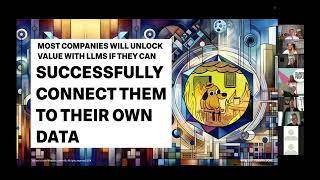
Webinar - Maximizing AI Impact Through Data Quality and Advanced Strategies, with Stefan Wendin