Competitive Advantages of AI to Enterprises with Stefan Wendin
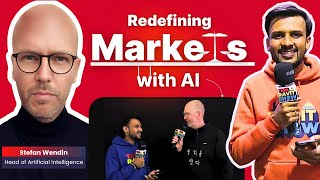
Short interview (Robert Show at Data Innovation Summit) with Stefan Wendin discussing enterprise AI adoption. Wendin emphasizes data engineering as the primary competitive advantage, the need to connect LLMs to tools and enterprise data, the practical view on AGI as behavioral change rather than a single model milestone, and the rise of small/local language models enabling experimentation. He also describes his company/brand phrase "You don't know what you know" and invites LinkedIn contact.
Chapters
All right, welcome to the Robert Show. I'm here at Data Innovation Summit and look who have with me. Stephan, welcome to the Robert Show.
Thanks a lot. Super nice, super nice meeting you.
Awesome. Today we're going to talk a lot around AI about what's happening in the data space. But not only just that, also would love to know about what are you working on. Would you like to start with a quick introduction just for our audience and also what company which is your company? I want to know about the name as well, so.
Yeah, yeah, yeah. No. So what I do my early is I help large enterprises to then scope out their AI program and then initially get it going. Meaning what I do, I work with the board to set up the longer plans at the KPIs, but then what I do is then start running it as an interim kind of AI officer. And you mentioned my company name. It has a very long acronym that a lot of people like. What are this? What does it even mean? So the company name is you don't know what you know. You don't know what you know. Exactly. It comes from a long time client of ours, a very big one was going to space and they had lots of information and most likely they could answer the question. However they couldn't because all of the information was hiding in the different silos. So we kept saying, you don't know what you know and then that becomes the tagline. And then I got known as the you don't know what you know guy. And then that kept on going and then here I am.
Wow. I love it. I love the, you know, the story behind it. Thanks for sharing that. Also quickly, because you work with a lot of large enterprises and a lot of large size companies. As an AI officer, I would love to know a little about, you know, from an enterprise perspective, what is the competitive advantage in AI? Yeah, how are you kind of bringing that on board?
Yeah, I think it's super interesting. So what, what happens is that we went outside and I usually call this is the year of the POC dev. All of the POCs has to go to the side. Either you prove value or you're out. With that said, we all know that the only way to prove value with especially language models is that you need to connect it to either tools or your own data or both. Right. However, then we're back to data engineering and I guess that's why I am moderating the M9 stage, because I think the most important part is to get your data right and then you can start building agent and even agents that clean and structure your data. Right. So I would say the only advantage would literally be data. But then the problem is this is also the one that is very often overlooked. It's not sexy. A lot of people go like, why are you on the data engineering stage? And that's why.
Yeah, no, I think that's a very good perspective and a good point there. Also, in terms of since we are on this topic, when do you think we'll reach AGI?
Oh, even better. This is a trick question because a lot of people talk about this often, right? And I usually say, but why have we not already reached it with the combination of things? Because if we think about a lot of these things, there's not a single model, but there are models working with reflections and tools and planning and multi agents and sort of things. So I would argue isn't the question really, when do we stop acting like robots? Because I, I mean, take a simple use case. Let's take a recruiter. There are a lot of people here looking for jobs. So the recruiter put out a job ad. It's so annoying to write it. So hen is then using a language model to make a very long one. The applicant then reads it, it's too long, summarize it using a language model, send it in, and then the recruit talent officer then use the language model again. So what we're doing is literally we are the API for AI. So I think the question is, when is the time we stop acting? So maybe you can answer this one. Do you have any idea?
I think, to be honest, in terms of human plays a very important role in whatever we are doing. And we act as APIs. You say something pretty interesting because a lot of enterprise leaders also feel that what's the next step in terms of us implementing AI, who are going to be those agents?
But I think this is the point where I think it's like super interesting, right? Because we very often focus on technology and we build technology. But what is equally, and maybe even on an enterprise level, more important, how does technology in turn rewrite our behavior? And so when we implement technology, how does that rewrite us? And then this is where we, we will never come to AGI because we build new tools, the tools build us. So we're just pushing this.
This is amazing. I'm totally aligned with what you're talking about. And also quickly, in terms of the LLMs as well. It's been almost a year since we've got into the adoption phase. What do you see what's Coming up next, there are Obviously so many LLMs out there and so many companies obviously building their own as well. What do you think about it?
No, I mean, it's like insane. I said in my opening remarks, the only thing that is growing on the speed faster than the new models coming out is the LinkedIn AI experts. But one thing that really shook my mind, I remember in the top of the year, so I was in South Korea spending time, I sat down with the CTO of Upstage, they have built a fantastic model called Solar. And then they showed a little bit what they're working on. So we looked upon the small models, which is now the hype thing coming, and models running local on your Mac or on your phone. And to be honest, I was mind blown. I couldn't compute. This was like the same experience of being on the Internet, speaking to another person in another country. I'm like, where's the connection? And I was like, I want to look under the hood. There is no cable here. There's no WI fi. How can this work? And I think this is the thing that we're going to have to talk much more about because that in combination with the large ones, this is where we start seeing that. And then I don't even know where we're going. And we go back to the previous questions like, how will this rewrite the way we work? And I think one thing that I see a lot is that it's not that obvious that my colleagues would be a person anymore. I would say that it would be a mix of different things. So I don't know, we're in for a hell of a ride.
I would argue this is very interesting and definitely, I think obviously LLMs is one thing, but small language modules is the new and trending thing.
Yeah, no, it's just that it's all of a sudden becomes so accessible and so easy to chew. And it's just like. Because that's the frequency, right? The more you can actually do it, I mean, if you have something very big and very expensive that takes a lot of time to fine tune and train, then there will only be for a few, but then there will be a very structured way. So what I like with these small ones is that it will allow for a lot of people to do stupid things. Because when we do stupid things, there will be like, you know, 1, 2, 3, 4, 6. That didn't work. And then there's a brilliant coming out of that. So we will stumble upon the most crazy innovation by just literally playing around. Because that's how we come up with things very often. Also broken down. The genius sitting there alone in the chamber, thinking forever and coming with a brilliant idea. So go out, break things and have fun because that's going to change the world.
Fail and fail faster and then learn again.
Yeah, exactly. Exactly.
That's awesome. One last thing for our audience. If they want to reach out to you, they want to learn about, you know, obviously, what's your company name?
You don't know what you know. Yeah, exactly. You don't know what you know. You know it already and then you're hesitating.
Yes. So if they want to reach out, learn more about, you know, LLMs, AI and in general as well, where can they reach out to you and learn more about your company?
I think the easiest would be to go to my LinkedIn. I tend to connect with everyone. If you're not overly selling, then I will be slightly restricted. So that's the kind of cliffhanger there. But other than that, I think the network is the most important thing in learning. Right. So sometimes I am the one learning and sometimes you're the one learning. And very often we don't even know which way because it's going both ways, which is the cool part. So for all of you out there, just connect. Find me on LinkedIn. There will be a red background on the picture. You will see a guy looking like Steve Jobs. That's the irony joke. And then connect.
This is awesome. Stephen, it was such a pleasure hosting you on the Ravage Show. Thanks for sharing all the great insights.
Yeah, likewise. Super. Have a good day.
Thank you.
You do.
More from Stefan
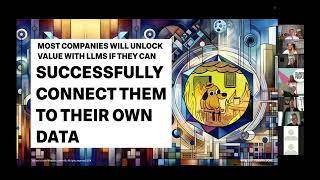
Webinar - Maximizing AI Impact Through Data Quality and Advanced Strategies, with Stefan Wendin