Mindset MasterClass Session 1: I'm Not Stuck Unless I Stop.
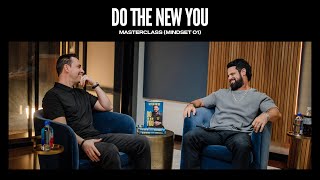
Steven Furtick and Brendan Burchard explore the mindset "I'm not stuck unless I stop." They argue that change is a process, not a moment, and present a four-gate model: awareness, acceptance, accountability, action. Doubt signals you need to learn, not quit.
Chapters
Foreign.
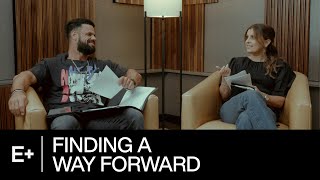
This is something I have looked forward to for a long time. My friend Brendan Burchard is here and I'm about to tell you why. This is the do the New you mindset masterclass and Brendan is one of the world's leading high performance coaches, New York Times best selling author, multiple New York Times best selling books, and high performance habits. Maybe one that you're familiar with. And not only is he one of the the leading keynote speakers in the world today, not only has he coached celebrities and athletes, but he's my buddy, man. We've been hanging out, getting to know each other and riffing on ideas like these in the book. And I remember when I met you, we were doing Elevation Nights and you came to see me in la.
Yes.
And you walked up to me and said, I'm vibrating. That was amazing. And everybody with you said when you were preaching tonight, Brendan was the first one of all 12,000 people on, on his feet in the whole arena. And I'm like my brother. And not only do you love God, but you help millions of people. Of course, Founding Growth Day recently. And I want you to check out all of those things. But this is for you. And I haven't let you say anything yet, Brennan, but I know you're just as excited as I am because we're both on level 10. Really though, thank you for coming out because I want to cast a vision for what we're about to do over the next several weeks. I think this is going to be life changing. I think it's going to be life changing for you. Regardless of whether you've read this book, do the New, which is based around six mindsets to become who you were created to be. And this is where the intersection of what we both do to help people comes together. You're a coach, I'm a pastor. And I think sometimes the people that we preach to and share with about the scriptures are frustrated with us because we give them the truth. You know, God is for you. All things are possible to him who believes the love of God is greater. All these truths. But sometimes they're wondering, can I get the tools to help me apply the truth? It's like you're showing me the blueprint, what God's word says, Right? You're showing me the raw materials that I have Jesus, I have salvation, I have the Holy Spirit. Great. Now where are the tools so I don't freak out when my kids and I don't freak out when I run into this situation or this temptation that I've been fighting with for seven years. So I want to kick off this master class for you that we're going to be sharing over the next several episodes on each of the mindsets in my new book with an email. And I hadn't shared this with you, Brendan, but this is why I brought you in. And you can speak to this directly. I know you can. One of my staff members sent me an email a few weeks ago. I preached. And she said, pastor, I was so mad at you when you started preaching this morning. I'm like, oh, she's about to quit. And she goes on, I was mad not because I was convicted by what you were sharing. I don't need you to tell me. I'm already aware of what I struggle with. I'm well aware of the anger that I have deep down. And I've got plenty of examples like you shared about lashing out at my husband and my kids. I've been dealing with it in therapy for years. So when you started preaching and I was just talking about dealing with the things that hold you back, like I talk about in the book, I literally said to myself, yeah, but are you going to tell me how to fix it or just talk about it? What am I supposed to do to fix it? Pastor, I need you or my counselor or someone, Brendan, you're that someone today to give me the steps and the things and the tools that I need to add that will fix this thing inside me that I hate about myself. If someone will just tell me what to do, I will do it. And then she goes on to say nice things in the email, but I feel that for the people that I preach to, because a lot of times, and you may just put in the comments right now, like, I get it, if you've ever felt the frustration where we're talking to you about do the new you, and you're like, great. How you're a new creation in Christ. Yeah, great. How do I walk in the identity I have? Well, it's all about your identity. Walk in it. How you can take down Goliath. God has given you a sling. What is my sling? Can you break that down for me? You're standing in front of a Red Sea obstacle. You have a staff in your hand. God can bring you through it. Awesome. What exactly is my staff? And where you come in, Brendan, is you have so many amazing frameworks that you give people just freely. They flow out of you. Blows my mind. That helps us take it from the abstract, the theoretical, and to really get it into our everyday life. So that's why I want you to help me with this. Do the new you to really serve the people and help them get the tools behind the truth.
Well, I'm happy to. And her email, I think, is one of those emails that indicates why this book is going to change people's lives. Because you do that, you go deeper into mindset than you're able to sometimes in a sermon. You know, a book is five, six hours of your voice sermon. You maybe get 40 minutes after you talk about where lunch is going to be or whatever. But I think what she's bringing up is the difference of going through all the gates of change that we have to. So she's saying, I already know this. So she's in awareness. Like when we want to change something. Awareness, break it down.
Gates of change is in itself an amazing framework. Go into that a little bit.
So there's four gates of change in human behavior. The first change is self awareness. Oh, this is what I want. This is what I'm like. These are the results I'm getting.
Why?
And you're just learning about yourself and you're observing your patterns, your behavior, your motivation, your mindset. You're learning to listen to your thoughts. You're kind of starting to accept feedback from maybe your wife. Finally you're starting to hear that when the kids say that you're upset too much, you're like, that's kind of true. You can start to see yourself. And in her email she's saying, I see myself. I already know that. So first gate, though, that's often the biggest hump to get people over. They can't see themselves. They're stuck in old patterns, old visions of who they are. They don't see themselves as they are today. And a lot of coaching, a lot of my work is just get them back into today. Like, how are you acting really? How are you feeling really? Do the people around you really know what you think and feel, what you're after? And it's almost always, no. My spouse doesn't really know me. Oh, she doesn't have awareness. My partner doesn't understand how stressful my job is. They don't have awareness. Almost every complaint we have about ourselves is lack of awareness. And every complaint we have about other people, we think they don't understand. So we gotta meet people where they're at with awareness. She says she already knows. So now the next gate of change is acceptance. Now I learned to accept myself. Now I learn to do the new me through the lens of Christ. Yeah, I Learned to understand that I have grace and I've been given grace. I understand that, oh, who I am is not bad. As you say in mindset number two in the book, I'm enough. And very few people ever cross that chasm. Very few people. It's why in a sermon, you can talk about how difficult our lives are and how much we can hate ourselves. In your book, you talk about how hard you are on yourself, how sometimes you get mad at yourself. That's the stuff of self acceptance. And very few people ever get over that. What she's asking for is, well, I want to skip that part and let's get to the next stage, which is the next gate of awareness or the next gate of transformation is accountability. Oh, it's on me. It's my life. I need to shift it. But also, sometimes accountability is asking for help. And accountability is saying, I've taken myself this far. Now I need God. I've taken myself this far. I need a therapist. I've taken myself this far. I need help, honey. And accountability is a big one because it says, I'm responsible for my life. You talk about in the book taking ownership of your emotions, taking ownership of your day, taking ownership of your time, taking ownership of your calendar. That ownership and that accountability, that's hard to get people. Anyone who employs anybody today realizes, like, accountability and ownership is the hardest thing to give to somebody. Yeah, they want a job, they want a task, but ownership, that's difficult. Last gate to change is action, which is where funny people always start that with me. They go, just tell me what to do. And then I gotta back them up to awareness. And then they get frustrated. I thought. I thought this would go faster, Brenda. I said, oh, you want to know all the steps, but you're still blind to yourself.
Wow.
You want all the steps, but you still hate yourself. You want all the steps, but you're still blaming everybody else. We got an awareness, acceptance, accountability problem. I can give you the steps, but it's why people have the diet and they don't do it. It's why people know how to save money. They don't do it. It's why people have the ability to get healthier and improve their relationships, but they don't do it. They are still not aware. They don't like themselves and they don't own it yet.
So I haven't been through the first gate yet. I'm wanting you to bring me around the back secret entrance for change. Not that I want a shortcut, but I just want to f And it was important to me that in the book I start out with the idea that the new you I even saw in a plastic surgeon sign the other day, you know, new Year, new you. And I'm like, no, no, that's not the level of new you that I'm operating at. Like get it tucked or whatever you want to do. I'm not against that. But what I'm talking about in this book is a little bit different because, okay, I see this cultural idea which goes, just do you just do you like, you know, that's the number one goal in life is to express the current version of who you are. And so if you're not a morning person, don't get up in the morning. If you're, you know, if you're not a patient person, just do you. You're basically given this license to do.
You often under be yourself or live.
Authentically or even the phrase live your truth, which might be a good phrase. I don't know, it depends on how we mean it. Because what if what I'm calling the truth is actually a trap? Like I'm this kind of person and I'm just doing me. No, that's the worst patterns that have formed a personality that God can actually work with and change and mature and grow. Like the seed doesn't just sit there on the shelf and say, I'm just being me, I'm just a seed. Well, if it does, it will never reproduce. And I'm concerned that a lot of people are trapped in a seed form of who God sees them to be because they've never gone through the process. So I call do you or live your truth as you see it right now without letting God speak his truth over you, I call that the trap. But then for those who are kind of like me, who are I need to change and I need to accomplish and I need to actually do something to earn my breath on this earth. And I tend to start every day, like you said, from a very self critical place. Like what have you done for God lately? What have you achieved lately? Are your best days behind you? Well, then I get on the treadmill of future you. And so my YouTube shorts are all full of future me. You know, 12 pack abs, ice bath in the morning while I pray and meditate and quote Ephesians in the original.
Greek and go on vacations and everyone's happy around you 24 7.
But while they're happy around me on vacation 24 7, I'm also writing a best selling book about ice baths, meditation and you, you know, it's just unbelievable, like, how exhausting that can be. So you've got do you, which is a trap because you haven't fully met you yet. You have no idea what God has put inside of you. And then you've got future you out there somewhere. When I get it, when I achieve it. And to me, it hit home from Jeremiah 1:6, where God said, I've given you this calling. Jeremiah is a prophet that God is going to use in a great way, but he's not going to see a lot of external success immediately. He's going to lead this legacy. And God tells him, you need to go to everyone I send you. Do what I command you. Do not say, I am only a youth. Don't just do you because there's more in you. But then he says, before you were born and formed, I knew you. And I knit you together in your mother's womb. And when I read that I knew you knew, I realized I knew you before. The new me is history to God. The person I'm becoming, God already knows. And now we're working it out together. And to me, that's exciting because now it's a partnership, it's a collaboration.
It's also exciting because it's a mystery. It's a mystery. It's a. Oh, I haven't discovered that part of myself yet, which I think is really important for people because when you say, do the new you, well, a lot of people say, yeah, I'll do me, but they're jerks. Then the consequences of their behavior, they're so unaware of it that they're repeating a pattern of their preferences. Not of their real strength, not of their real spirit, not of their real power. So they're living in a preference line. Well, I like it this way. And what they're doing is they're just running patterns of comfort over and over and over. That's who I am. No, that's what you settled into. Not been summoned up to.
Wow.
And so my job as a coach is go, oh, you settled in over here. You think this is you because that's your preference. Or you read your Enneagram one time. So you go, you took that 15.
Minute test and now you know all there is.
Yeah, you think you know your personality. Or we all think we know our history, but we all learn that we have terrible memories. We all learn that different circumstances will make us act differently. And a lot of people then go, wow, I don't really know myself as much as I thought I did. Or they hit 35, they hit 40, they hit 50, 60, they go, I thought I knew myself, but if I knew myself, why am I Miserable at 40?
Yeah.
And then they discover, oh, I've been running this route. These patterns of comfort and preferences. But sometimes in different situations, something more is demanded of us. You know, in an emergency situation, a wimp can become the hero. And in conflict, somebody who has that immediate desire to fight. If they fell in love, they're more calm. And so situations can change us. And what we start to realize is, oh, we are changeable. We are changeable. And what I like about the, you know, the way that you've written this book is it's predicated on you can change and you can shift. But it's not just change so that you could do the, you know, the popular ice bath. It's no, you're going to tap in to something that maybe you didn't even know was there yet because you've been so blinded by your disgust of yourself. You've been so confused by the noise of the world. You might not even know that spark of genius or that spark of beauty. You might not even know who you really are yet. But he does.
Yeah.
And there's mystery in that. I think there's intrigue in that. It's like, oh, wow, there's another part of me I can learn. And there's another part of me that can be summoned to handle the difficult situations here. But that can't happen unless I tap into Faith. And you do such a good job in the book with that.
So the language you're using is just inciting my mind. So I want you to put a couple things in the comments, okay? And I hope you're taking notes on this. This first, I want you to write, I am changeable. I am changeable. And I want you to put that in the comments right now because maybe you've stopped believing that. Okay? It's one thing to want your situation to change. I want to live in a bigger apartment. I want to own my home. I don't want to rent. I actually want to be in charge of something around here rather than having to do what I'm told. I actually want to see this thing in my knee, you know, clear up. The doctor said three months. I need it in a week. I'm sick of feeling like this. I want the situation to change. But the premise of do the new you is that the main thing that God changes through anything we go through is us. And if you have believed the lie that the you you have met so far is all there is to you. I think we want to come to you with an announcement. You haven't really met you yet. The two things we just said, if you put them together, will change your life. Because I said that the you that God sees is history to him. And then Brendan said, but it's a mystery to me. I haven't met that version of myself yet. But God has, and I love it because it's exactly what I'm trying to say. It's history to him. He's already seen it. He's not waiting for me to become someone he could love. I used to feel like that. I think a lot of people who believe in Jesus feel like there is a version of you that is patient and kind and loving, and God will really like hanging out with that guy, and he can really use that person. When you become that, then God can use you. That's not how God sees it. It's history to him. He's already seen it. It's just coming forth in your life. So what's a mystery to me is history to him. And apart from just rhyming like, it gives me a new tool for what I want to become in my life, it's not just let me grind to get there, and then I'll be worthy of love. One of our favorite authors, Richard Rohr, says that most of us were taught that basically God's love was a reward for when we change, that God will love us more when we. But actually, he says God's love is the resource by which we change.
Oh, I love that.
So it's not something that we're changing for so that God will love and accept us more. It's something that we're changed by. It is the resource.
I love that. I think that is a big part of. Of my Christian faith and discovery was, oh, I don't have to go earn his love. Like, I was already saved by grace. Like this idea that you. That acceptance already happened, right? That the sacrifice and Jesus experience opened up the grace that allows me to live through that love, then I didn't have to earn it and then have it and then enjoy it. It's like, oh, it's here, it's available. It's been granted. I'm accepted already and I can act through that. And that's hard for people because we don't like ourselves so often. So you say, oh, yeah, yeah, yeah, yeah, God likes me. Sure, sure. But when you really step into that and you realize you're already Accepted. And now you act through acceptance versus acting through earnings. You're a different power. You're in a different place. Right. When I walk on stage, if I'm acting through acceptance, there's a personal power, there's an authenticity. There's just a connection there that's different. If I think I gotta go get the roar, I'm scrambling the whole stage. I'm scrambling for the roar. I'm scrambling for the roar, the acceptance, right? You're doing things to be accepted, to get the praise, to get the honor. And then the fact is, when you do get the praise, when you do get the honor, when you do get the roar, you feel empty because you weren't acting through acceptance. You were scrambling to get it.
That's it, man. It's really about whether you are chasing an acceptance that you think will be given to you as a prize. That's the treadmill. Or whether you're coming from a place of acceptance, knowing that, well, since I'm already accepted, since I've already been given this, I actually want to live more into that. Because you talk about summoning yourself. And one thing about Christians, sometimes if something sounds a little bit technical to us, it just blows our mind. Like summoning. Is this a seance? Am I some calling up the ghost of myself? I don't think about that, but I love it because it helps me to understand that every day I wake up and this is one of my favorite parts that I wrote in the book. I'm deciding a bunch of things. You know, am I going to wear this black T shirt or that black T shirt? You know, like, it's going to be black T shirt, but which one am I going to. Am I going to do three sets of this or four sets of this or no sets of this in my workout? You know, whatever, whatever. But the biggest decision is, which me will I be? And I think that can sound schizophrenic to people. Like, what do you mean? Which me will I be? I'm deciding that right now. I decided that an hour ago. I will decide it again when I see my kids tonight. And we decide that over and over again. And maybe this would be a good place for us to get into the idea of summoning the self that God sees into the first mindset in the book, which is, I'm not stuck unless I stop.
Yes.
And I'm going to give you these mindsets, and Brendan's going to help me unpack them over the next few episodes of this masterclass. But I want you to write the first one down, even if you don't believe it. Okay, you don't have to believe this. Just get it down and then let's argue about it. Okay? Write in the comments, I'm not stuck. And just put that in the comment. Even though you're like, I am stuck. I'm literally stuck. I'm totally stuck. I'm something else that rhymes with stuck, but I can't say it on YouTube. I'm really, really stuck. Okay. That is a challenging paradigm for people because if you look in the Bible, Paul and Silas seemed stuck in prison, but they praised God and the chains broke loose. You know, Gideon seemed stuck in a winepress, but God spoke and he became a deliverer. Moses seemed stuck as a murderer, running as a fugitive on the backside of the desert, and then this burning bush. And God had 40 more years of amazing things for him to do. And all of these people felt stuck. So I want you to tell me, what were your reflections on this first mindset? I'm not stuck unless I stop. Do you agree with it? How do you see it? How do we summon our way through that? And let's really dig into this first mindset.
I love it. I love every section of this chapter because it reminds you that everyone feels stuck. I think one of the things you did great in the book is that people see themselves in it constantly. You go, I do feel stuck sometimes in my relationships. I just feel stuck in my head. I feel stuck in my career. What am I going to do? And a lot of people, they feel like that stuck is permanent. Like, hey, I'm working hard, but I'm stuck. So there's not lack of action for them. They're like, I'm going to work, but I feel stuck. You know, I'm working hard, but I'm not earning more. I feel stuck. And what ends up happening is the more you feel stuck, the more you spin and doubt.
Wow. And so when you're stuck, you spin. Write that down. When you're stuck, you spin.
Yeah. And people always mistake the signal for doubt as a signal to stop.
Tell me more.
But doubt is not a. Doubt is not saying stop. Doubt is a signal to learn. And when you change that frame in your mind, everything changes in your life. I'm so doubtful. Doubt doesn't say, well, stop and don't learn anymore. Doubt is literally, I don't know. So the only way to actually figure it out is get in motion. Try test like, doubt is the entrance to the scientific process. Doubt is the entrance to faith.
Wow.
And so when you realize that, like, oh, I'm having all these doubts about this thing, the next thought should be, well, I'm going to have to do something to discover the answer. I'm gonna have to do something to discover the truth. I'm gonna have to do something to test this hypothesis.
Will it break your flow if I ask you something about that?
No, I love it.
Yeah, go ahead. Every religious person in the world is pulling up James1 right now going, but the Bible says, let he who hath faith ask and not doubt. For he who asketh in faith shall not receive anything from the Lord. He is a double minded man, unstable in all he does. And I always thought that verse meant not, you know, don't have doubts or don't feel doubts. I thought it just meant go through the door of your doubt to get to the other side and find your faith.
Right, right. Well, I think a lot of themes of the Bible are do not be afraid, or as you taught me, be strong and courageous. That presupposes some doubt.
Right.
Most of the Bible presupposes we have doubts.
Yeah. If he says be strong, I must feel weak because I wouldn't tell you to sit down. You already are.
Yeah. He didn't start the story. Gideon doesn't start the story. As you know, a mighty warrior, a champion and a warrior. He starts in the wine press.
A wimp in a wine press.
Yeah. David doesn't start the story with the sling. I mean, so you have to go, oh, each of these stories starts in a place often of doubt.
Yeah.
Or discouragement, despair, division between people. We have to cycle through that. But the thing is, I always say, well, that's why there's another verse. That's why there's another chapter. It's why there's something more. It's like the story might begin in doubt, but the story doesn't stop there. And we have to remember that in our own lives. And so what I loved about this first chapter where he's saying, I'm not stuck unless I stop, is you unlock a lot of reasons that people should not stop and realize that they can change. I love how you talk about you can defy your default, that maybe your default was to stop or to do these bad, negative behaviors. But you can work your way through them. You can change, you can shift. And I think that's a hopeful message for a lot of people because they really do believe that they're stuck. And stuck is a place of permanence when what your book is teaching Them stuck was a mindset. And you can change your mind, so you can change your life.
Yeah. You know, when you say stuck, you're probably thinking of all the people that you've coached who basically thought they had gone as far as they could go. You know, whether that's in their business or whether they had wrecked their personal life building their business. And part of what you do is to walk into somebody who goes. And I've heard you say this phrase before. I love it. You go, I've tried everything. Right, right. And you go, oh, yeah, everything. Yeah, I've tried everything. And then walk through it, because you have an exercise you make people do that I love.
Yeah, I tried everything. Awesome. I'm so excited. And I get really encouraged for them. I say, well, if you tried everything, show me the list. And they go, what do you mean? I said, well, show me the list. You tried everything. I mean, if you tried everything, then you must have kept a list really detailed of all the things you tried. Because of course, you'd have to know what's mutually exclusive. You'd have to know what you tried and didn't work, and you'd have to adjust and do it over and again. So show me the list. And most often people go, well, you know, I tried once or twice and I tried the same. Well, I asked my boss for a raise on Monday. I asked him on Friday, asking the same way every time, all the time. But I've been asking. So you've been asking, okay. But you haven't been adding new value. So it's like you tried one strategy and you hit it 50 times and you didn't adjust it from another way. You haven't tried everything. You tried what you knew. You need to get perspective or approach it in a different way. And I think often, too, people, when they think of stuck, they think of just negative things. I'm stuck in a bad marriage. A lot of people are stuck in a very happy marriage. And what I mean by that is they don't need to leave the marriage. They have to learn to be different, try a new angle to find the happiness, the fulfillment, or the intimacy in the marriage. So what I mean by that is sometimes people, they're stuck is really they're just at a plateau. They're actually successful, they're actually doing well, things are good. And a lot of high performances are going, oh, you're just playing, you're doing well. You're actually high performing. But there's this next level for you. And I think that I actually Got that out of the book as much as I got out of, oh, I'm in despair, I'm troubled, things are bad. What I also took from the book was things are going well. But there's a new level for me when I'm in a greater connection to my faith. Speaking about plateaus, you have this great statement in the book. Don't argue for your limitations. What do you mean by that? Because I think a lot of people, they are stuck, but they're stuck in their own limitation.
I heard a motivational speaker say it one time. He said, if you argue for your limitations, you get to keep them. And that convicted me because I realized how many times I do it. And I don't know if I'm arguing with God like Moses did. God, I can't speak, you know, send somebody else. I don't feel like I'm arguing with God. I feel like I'm just arguing against myself. And I realize what I'm actually agreeing with in that moment is the enemy's view of me.
Yes.
And I don't mean limitation. Hey, you've never picked up a basketball, but you can play in the NBA and you're 54 years old. That's not the kind of limitation I have in mind. I mean the kind of limitation that is rooted in a lie where, you know, God is calling you to be this kind of person and to make this kind of impact. Or you sense that he's giving you a glimpse and giving you a step to take. And then you start building the case against yourself and gathering evidence for why there's a deficiency in you. And so the quote just blew my mind. If you argue for your limitations, you get to keep them. You live small, you stay in that space, you actually begin to fulfill that prophecy. Not the prophecy of God over your life, but your own prophecy. You start to fulfill the enemy's prophecy over your life that you'll never be this and your dad wasn't that. So what I did, I took that quote. And in the book, I take it a little further. I say if you argue for your limitations, you get to keep them. But if you agree with God about your potential, you get to grow into it.
Oh, that's good.
Grow into it.
That's good.
You know, that's the whole sermon. Put it in the chat. Grow into it. Because growing into it means, no, I'm not it right now, like, any more than I was 5, 9 when I was 5. But I get to grow into it. And I think that first step of agreeing with God about your potential is to go, God, you know what's in me. I don't. And that's why I'm very wary of just the know thyself philosophy. Right. Like know thyself is great, but how about part two, Grow thyself.
Yes.
Yeah. Because that's the, the, the outgrow of reflection and awareness and self acceptance is that I'm going to grow into who God knows me to be. That's the message of the book. I was writing this book to myself in places going, do the new you, the you that you don't know yet, but that God already does, the one that he chose. Yeah.
And have faith in yourself as. Equally as maybe he has faith in you, which is a hard thing to grow into.
Well, think about this.
You're growing into faith of yourself, which.
Is very hard for you, of yourself. Because people will say, don't believe in yourself, believe in God. Here's the problem I have with that. Who made you? If God made me and I don't believe in me, what he called me to be, then it's Him I doubt. And that really helps me to get past this sticking point where I feel like, well, I just don't want to hype myself up and say that, you know, I can do great things. Well, I can do all things through Christ who strengthens me.
Yes.
So I think the two go hand in hand. That's why I was passionate to get this masterclass going, to get people out of. And to get you out of this mindset that says, well, God is great, but I'm no good. Okay, yeah, we're all sinners. We all need Jesus, we all need forgiveness, but we've been redeemed by Him. So what does that speak of us? That he paid that price for us? That's the limitation. I want you to grow beyond this view of you that only sees you as flesh and bones and mistakes and disappointments and to grow into the image of God that you were originally created to be.
So good. I thought of when I was reading it, the angle you took on. Don't argue for your limitations. Which was also, you were saying, be careful about justifying all your vulnerabilities and your challenges and what's wrong with you, because it's easy to go, well, I'm not a good communicator because. And soon as you say, because, you enter the world of either blame or self comfort to say, I'm not a good communicator because my parents were mean to me. And so I always Tell people, listen on limitations. Always listen for the word because I'm like this, because. And you'll often add a negative thing. My parents were like this. They didn't believe in me. She mistreated me, they cheated, they stole. Or we're doing it for our own comfort because we don't believe we have empathy from the world. So sometimes when we share our limitations and our vulnerabilities with people, what we're doing is we're reaching out. We're saying, hey, you know, I'm, you know, let me just be vulnerable with you real quick. What he's doing. Could you please see me? Can you recognize me? Because I'm not feeling like I like myself or I'm not feeling good, seen, heard, or I don't feel like the world is fair. So let me tell you this thing that's unfair for me. Could you see it and acknowledge it and say to me, oh, yeah, that is unfair, or, oh, I understand now why you are like that. And the whole conversation suddenly does something funny. It justifies and sets concrete around the limitation.
Wow.
Suddenly we have verbalized the reason, because we've verbalized the reason for the limitation and now we coalesce around it and we actually just made it stronger. And so empathy can be like that, which we don't talk about in the modern world. Sometimes overly placating to people's vulnerabilities or limitations and staying on it and stewing on it all day doesn't actually move them through. It's often the difference in my career of as we'll share the difference sometimes between a therapist and a coach, both absolutely necessary, and I'm a huge mental health guy. But there is a difference. Sometimes we'll spend more time over here in a therapeutic context, and a coach is going to try to move you through that limitation a little bit more aggressively. Not that either is right. Both can be really wrong. But I think it's just a casual way to say to people, be careful of just always talking about the limitation and arguing for it and seeking the empathy and understanding. Understanding and comfort. Because all of a sudden you miss the ability to move through it. And I thought that the movement through the book that you took people on was so powerful because you didn't let them sit there.
Well, thank you for saying that. Because when I wrote the Mindset, I'm not stuck unless I stop. I thought this could come across really callous to somebody who just found out, like, I'm never going to be able to have children or I'm Never going to be able to fulfill this dream, or I'm never going to have my health back like I did before, or this person has gone out of my life. Like, I lost my dad. And in this area of my life, I do feel like there is a limitation. Well, there. There is a loss. But I'm trying to get you opened up. And anytime I talk about this, I can't help but think about Moses and the children of Israel at the Red Sea, right? And they're like, okay, God, help us, help us, help us. And they cried out. And Moses says, don't worry. Stand still and you will see the salvation of the Lord. Right? Next verse. God says, why are you crying out to me? Tell the Israelites, move on.
So it sounds spiritual.
They're crying out to God, the Lord will deliver you, and he will through you, moving through it, right? And I love that about personal development. I love that about having a coach to help us through these things and bring our faith into motion so that we can actually see faith without works is dead. And that God promises to bring you through it. Before Brendan gives his closing thoughts on this first session, I'm not stuck unless I stop. What stood out to you? I want to know. Was it the gates of change that Brendan mentioned? Which were revolutionary for me, right? Because I say things like, God, I want to change. Help me change. Change my heart. Oh, God, I say that, and then I don't even realize he's doing it, because I think it's starting with action, but it's starting with awareness, acceptance. What's the third one?
Accountability.
Accountability.
And then action.
And then action. Maybe that was just a total shift for you because maybe you've been like, just tell me what to do. And it's like, first God needs to show you who you really are, who he really is, what's really important to him, the priority, the real root issue. You're going, well, see, what I need is I need more people to believe in me. It's like, no, no. The awareness is, I don't believe in myself yet. I don't believe in myself because I don't believe that God really loves me. So maybe that was your major takeaway, or maybe it was just realizing that that stuck is sometimes a story or sometimes that I have plateaued and I'm in the prison of plateau.
That's good.
And I'm not trying to go higher because I don't like where I am. I just want God to continue to grow me and use me. But I want to know from you Brendan, what do you think is our biggest takeaway for this mindset and for the message of the book as we launch it?
I think number one is you say, if you're stuck, don't stop. You have to keep engaging the world. You have to keep trying. You have to learn new things. You have to put yourself out there. It's going to be uncomfortable. So we're going to talk about that discomfort in, I know, future sessions here. But I think it's two things. I think one, and I'll go back to my word of summoning, because I do think that Christ is within us, but we do have to summon that connection and summon that feeling that. Because we've overloaded and heavied it down with our own doubts and our own despair and our own bad food and our own negative thinking. And so it's one of those things. Remember that beauty and that faith and that truth and that eternal power is in you. But you have to pull it up like your book is an active book. It's one thing I loved about it. It's like you can engage in your personal development in a very passive way, or you can take what psychologists call high agency and say, oh, I'm gonna take back control a little bit.
Yeah.
And sometimes taking back control a little bit, meaning, oh, I'm responsible for summoning this relationship with my God at the next level. If I wanna experience the next level of life, I gotta take, like, it's there. But, you know, as humans, we pile so much junk on it, so we gotta kind of sort through that and summon that up a little bit. And I also think that what I've learned from the book is that through all the different, you know, all the different stories is how many of the Bible's characters and people are truly being called and they're being summoned. David was summoned to another level.
That's right.
Gideon was summoned to another level. And you realize, wow, I might not even know I'm being summoned. Maybe it's time for me to listen.
That's God calling you.
Yeah.
You feel that call to say, like, I want to lead you to be more patient. I want to lead you to be more generous. You know, I want to use you in this season to help somebody get through what you went through. That's the voice of God. We talk about the voice of God. What is it? It's that summoning. And when you say summon yourself, the self that God knows, the truest self. I think of Paul telling Timothy, stir up the gift or fan into flame the gift that is in you. Isn't that a beautiful verse? That is good because it means God put the gift in me, but I've got to summon it, stir it up, fan it into flame. Not because I'm trying to take control away from God, but because I realize he's in control. He's given me this life. I'm accountable for it and everything else that I tell myself about why I can't. It's just an opportunity for him to show himself. Yeah.
You're being asked to renew your mind, renew your attitudes. So you're asked to do that. And that is that choice to, oh, I want to shift my life. I'm going to do that. I'm going to have to take control of my mindset again. And I can't wait for these future sessions because you've done it so great in the book.
Well, we gave you a mindset today that you can unpack. It's definitely the starting place for you to say, I'm not stuck unless I stop and just put it in the comments before we go. I'm not stopping, so I'm not stuck. I'm continuing to grow into what God spoke into me.