Mindset MasterClass Session 3: With God There Is Always A Way, And By Faith I Will Find It.
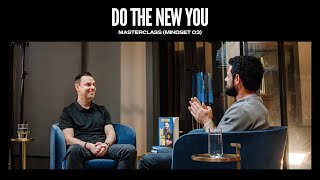
Steven Furtick and Brendon Burchard discuss the mindset 'With God there's always a way, and by faith I will find it.' They cover stopping catastrophizing, reframing 'what if' questions from negative to positive, and using small actions to open doors of opportunity.
Chapters
Say this out loud. With God there's always a way, and by faith I will find it. I know it's a lot. I'm going to give it to you again. With God there's always a way, and by faith, I will find it. That's the third mindset in my book, do the new you. And I'm excited to have my friend Brendon Burchard with me to break down these mindsets one by one. We've already hit the first two. You can go back and watch all of those. They're available for you. The first one was, I'm not stuck unless I stop. The second one was, christ is in me, I am enough. And this third mindset, with God there's always a way, and by faith I will find it. This is a sticky note that I wrote to myself. Okay, so imagine this. I'm somebody who catastrophizes, meaning, like, I get the worst worst case scenario. Not the worst case, the worst worst case scenario. I line up all the worst case scenarios and then get the worst one. And I trip myself before I set out to do something, almost assuming like it's just going to backfire. And that's a natural inclination I have. And people are often surprised when I say that because they're like, you're a man of faith. It's like, no, no, no. Faith is my decision to trust that God is going to make a way. It's not my natural habitat to just believe that everything's going to work out. Holly is more of a it's going to turn out, it's going to work out. And so when I say this mindset, I don't just mean you're always going to get your way or it's always going to happen how you want it to. What I mean is, even when it feels like it's over with God, it's not over. You know that even in the seeds of a failure come a future success. That even when it looks like rejection. I heard one preacher say it's redirection. Said it with that country accent, you know. And so I want you to get that right now that there's always a way forward. And Brendan, of course, if you haven't met him yet, he is one of the leading performance coaches in the country, in the world. And not only has he written great books like High Performance Habits, but he's coached people from all walks of life. And so what we're trying to do is get out of this state of mind where we think that believing in God is just abstract, but then we have to do it on our own during the week. No. God wants to go with you to work. God wants to go with you to the courtroom. God wants to go with you into the doctor's appointment. God wants to be there with you as you're strategizing and as you're planning. God wants to be with you in all of that making ways. I think one of the ways that he does that is through bringing people into our life. So, Brendan, what do you feel like as a coach as we talk about focusing on possibility and finding a way forward?
Well, I heard you say that you catastrophize and that sometimes your immediate places to go there in holidays is different. I'll give you the subconscious that's happening there. And it's so easy. Everyone can write this down. If you consistently struggle to be positive or to be happy or to move forward, what's usually happening is you're using the phrase what if? Followed by a negative statement. So catastrophizing sounds really fancy. What it means is you say what if? And you just add a negative statement. What if she hates me? What if it goes bad? What if they don't like this? What if I'm ruined? What if I'm rejected? So what's happening is your inclination isn't that you just have a mental pattern that that's where you go first. And what people need to realize is that might not change some people. That's just. They're built that way. It's going to be what if? Followed by negative statement for them. What you have to teach them is be self aware of it.
Wow.
I keep filling in this negative blank. I keep filling in. In the negative blank. I keep filling. What if I can balance it out and fill it with a positive blank?
Yeah. Yeah.
What if she does say yes? What if I can handle it? What if. What if God is guiding me to follow this? What if he will be there? What if he precedes me?
Yeah, come on now.
Once I say what if he precedes me, tell me I'm not moving forward.
Yeah, you.
But if I say, what if no one's there? What if no one believes? What if you're frozen? What if he precedes me Now I move differently in the world.
Yeah. It's like fuel. Like I just had the two words frozen or fuel. Like, is what if freezing you or is it fueling you?
Yeah.
You know what I'm saying? Like, one makes me go, I can't go down that road because what If. Well, I have so many illustrations in the book about my kids, right?
Yeah.
And one time I was doing this to Graham, well, what if we show up and, you know, the line's too long, and he goes, well, what if we go home? It's not that big of a deal. And it's good to have that little Graham interrupt in my mind. Well, what if. I also share a lot of examples in the book, and I'm really glad that you brought this up about flipping the what if? Just put that in the comments. Flip the what if? Like, basically just, what if it works? What if they actually do, like, my idea? What if it leads me to something else that was better than the first thing I thought. All of these things, you have to bring them in creatively. So when I'm getting ready to preach a sermon or a songwriting session that we go into, especially if there's other people involved, you always start with the question. And I don't mean to use any crass language or anything like that, but sometimes you feel like your idea might suck. And I put in the book, you know, what if this sucks? What if we throw out this idea? And everybody in the room goes, yeah, that's really. That's really. No, it's a worse feeling, right? This fear of rejection. And I use it, even though many people are dealing with things much more dire than a song lyric or a creative idea. But I use that creative process to talk about just changing that question a little bit. Like you said, instead of, what if this sucks? What if it succeeds? And then I break down how sometimes something that sucks becomes the seeds of something that actually is going to be great in the future. So it's kind of like an endless, well, what if it doesn't work? But in the process of that failure, I develop some character or learn a lesson that I carry forward. And it's the idea with God, there's always a way, but it won't always be the first way I try. You know, sometimes it will be through the doorway of a. No, the doorway of an embarrassment, the doorway of a disappointment, that I actually find what God had for me all along. So for me, the mindset is big because it opens my eyes to know God's doing something. God's using me somehow. God is setting something up because that's who he is. That's what he does. I just haven't found how yet. And that's a really different starting place.
Yeah, very different. And if you can teach yourself to say, with God, there's a way, and you don't say that with God there's a way and it must be right now because that's where we get really stuck. Well, it's not right now. And then we get frustrated and we quit. Yeah, well, see, he didn't give me the blessing today, so he must not exist. This is what people do. Yeah. It's like an immediate.
We turn it into Burger King. With God, there's always a way. Right away.
Yeah.
Remember your way right away.
If they don't. Yeah. If it's not right now, right away, they get so frustrated. And part of maturity in life is learning to play the patience game. And realizing what we're doing today may be setting up something extraordinary years from now. Right. A lot of the payoffs in the Bible were decades long, generations long. And when you can realize that and stop being in such a hurry, but be diligent, life gets a lot easier. I think I told you one time we were just jamming on one of our Friday phone calls or something. I said, almost, almost all of disappointment can be removed when you remove time. I love that almost all of stress can be removed when you remove time. A lot of our feelings are a function of time, like now. And I just always go to my mind, okay, what if this could turn out well in a few years? You know, when I started the podcast or the videos or the blogs or all the stuff that we do, it's like, what if this could turn out well in the future? And that longer term thinking is what society misses now. Because if we have to wait for three minutes, we just start scrolling on stuff like we can't even fathom being patient and sitting through difficulty and sitting through challenge. And I think that's a big part of realizing with God there's a way. But that way might emerge over a period of time. And if you can trust in that, that's the stuff of faith is true.
Because, you know, James talks about the patience of a farmer when he talks about faith. And I thought that was such an interesting phrase. You know, I said it one time when I was preaching that we have a crock pot God, but we have a microwave mindset. And as we go through this mindset shift of do the new you, I don't want to set an expectation that, that God's going to make a way right away because he may not. You know, Jeremiah 29:11, he says, I know the plans I have for you. Plans to prosper you, not to harm you, plans to give you hope in the future, but right before that he says, After 70 years are completed in Babylon, that's a whole generation. And so we do have to think not only with faith, but with patience. I think when you said to me, if you remove the element of time, it takes away disappointment. It took me five minutes to realize how powerful it was, what you said. Because think about it, we're going. I thought God was going to make a way, but he didn't. How do you know yet?
Right.
How do you know it wasn't the way?
Right.
You know, we won't stay on the path. We just want to get off on the next exit. And what does that mean? Because, again, a metaphor. A metaphor. Well, when I say path and exit, I'm talking about moving forward in the last thing that God spoke to you to do or continuing to sow seeds in the place God has planted you, whether that means your prayers, your kindness, your showing up, your discipline, your diligence, whatever that means for you, the mindset to get out of this mentality that says, if I don't see the way right away, then I'm going to turn around and try something else. It's the enemy of your faith. And I'm not coming to you on this saying that. I've never done it before. I have. I felt so frustrated. Is a temptation for me to want to judge the success of something based on the immediate impact that it makes, based on the immediate feeling that it gives me or whether I can quantify it. That's why I love my little corny wordplay about suck seeds. It's like the seed goes down into the ground, breaks apart, goes through trauma and comes back up after water and light and fertilizer. And so our faith is like that. That's the way God germinates, the things that he puts in our life.
Yeah. And then what we do is we get in trouble because we start saying, well, what if this turns out and it's negative? And I want to jump back in that because I think we usually add three things that really ruin it for everybody, which is. The first one is associated with our fear of loss, pain. Well, what if I do this and I lose prestige, I lose status, I lose the respect, I lose money, I lose time. And so we start saying, well, what if I do this and I lose this and I lose it now? And it's just. And it's black or white thinking, what if I do it and it's loss? And they're not thinking, well, what if I do it and it's a gain. What if I do it and it is planting that seed. What if I do it and it has a positive impact? What if I do it and I gain money, wealth, or all the other external things people think that they want? It really does change the brain. So if you hear yourself saying what if negative and it's lack, challenge yourself to balance your thinking. This is a lot of part of maturity is you learn to balance thinking. And when you're younger, it's black away. And when you get older, you can apply nuance and you can say, oh, what if this turns out terrible? It might. Okay, could I handle it? Well, what if it turns out well? Well, I'd like it. And so the first thing is we say, what if loss? The second thing is, what if hardship? What if I can't handle this? What if it's years of difficulty? What if, you know, I don't survive this? What if I go through this and it's so painful and instead say, well, what if I grow through this? What if it's not just hardship? What if it's challenge and character building? What if it's strengthening me? What if it's making me sharp? What if it's difficult? But that's the thing that makes me stand out later, again with time. And the last one is, what if the outcome is bad? Like, you know, you said to Graham, well, what if there's. What if we drive all this way and it's just a long line and you have to say, well, what if we drive all this way and it's a short line and you have to change it and flip it, as you said earlier? But also, what if the outcome is good, but it's good in five years? What I'm trying to encourage people is a lot of the mindset is the decision to start the journey hoping and trusting and having faith that things turn out well later?
That's beautiful.
Not on Monday, like you start lifting. If I start lifting tomorrow, I don't look like him tomorrow. You know what I'm saying? It's like you have to give yourself this time. And I think that's where a lot of our pain and, and all of our mindset destroys us, is we want it so fast that we won't begin the longer journeys that have the bigger payoffs.
We won't begin the longer journeys that have the bigger payoffs. Yeah, because I'm so focused on what's right in front of me or I'm holding on to something that was. And don't you think a lot of times what keeps us from Seeing the way God is making is the way he did it last time.
Right.
And so we're holding on to the way God used to do it. And I'll give an example of this.
Or we thought he did it.
Oh, yeah, we can go there, too. Which one should I go with? Let's see. I like yours better the way that we thought he did it. We have so many misconceptions about what God needs to use to bless us or what we need to move forward. Right? Like, okay, I need a team. Someone might say, and then I will start this thing. Or I need somebody to come along and support me or back me or finance me. Or I need this perfect church. Or we get all this list of what we think we need for God to do it. Right. And so we're holding onto that. Don't you think that a lot of what keeps us from moving forward is what we won't let go of, our idea of how it should be, our idea of the way we thought God was going to make. I thought I'd be married and I'm 25 and I was planning to get married at. Well, that's the way I thought God was going to make. So I love what you said. Like, not only what God did in the past, but what I thought he was supposed to do.
Right.
And now I can't go forward. So let's have a little therapeutic coaching. I know you're not an is the psychologist or a nutritionist. You know, I know that you're a coach. So let's coach somebody in faith who won't let go of something that they thought was supposed to happen in order to go forward into the way God is making. They can't even see right now.
Yeah, I think too often our vision becomes myopic on what was and we're operating from here. What we should be operating from is our potential and into our future and the best of who we are. And so I always tell people, never limit your vision for who you can be based on your past stories or your current circumstances. Because every great successful person there was that part of their story where they were broke down and out struggling and they just didn't choose to live there. They choose to work through it because they believe something good would happen. And so I think the first part is going, where is your vision and where are you operating from? Are you operating from the past time zone or the current struggle time zone, or are you living into and being the best of who you can be for the future you, which is what Your book is about. Yeah, I think that's really powerful. Where are you operating and where's your vision? And then we also have to set up these rhythms in our life where we choose to release the tension and the disappointment.
I love that. Rhythms where we choose to release our tension and disappointment. What are your rhythms of release? Write that down in the comments. Rhythms of release.
Yeah, because what happens is, you know, inevitably stuff builds up and we get disappointed, we get angry, we get hurt. And if we never release that, it's like a pressure cooker. And one day it will release and it will release in a pipe burst. It will release in an inappropriate way for people. That's why therapy is so powerful. You go every week, or you talk to a coach, you talk to him every week. It's a place that you go to release your thoughts and your concepts and your frustrations and your plans. But it can't just be releasing. It has to be what I always call you. Release the tension of that and you set the intention for what's next. So I'm somebody, I have to do this every hour. I'm easily distracted. I'm so enthusiastic. I want to do this, I want to do this, I want to do this. And I know this about myself. So every hour, no matter what's happening, when I'm working at my desk, every hour, a little timer goes off. I have it next to my computer, press it, start 55 minutes, stops, and I push back, close my eyes, and I just start breathing. And I release the tension in my body. And I just repeat this little mantra to myself. Release, release, release, release. And I might only do this for two, four, five minutes. Just release, release. Trying to release all thoughts, all feelings, all emotions and tension in my body. Once I feel like I'm in a good place, open my eyes and ask, okay, what's my intention for this next hour? And I learned that in helping a lot of people through grief and trauma. You know, sometimes we think our vision has to be this huge new thing, but when you're really struggling, what's the intention for the next hour? You know what? I'm gonna go pick up the kids and I'm gonna share some love with them. That's the intention for the next hour. But I don't wanna go pick up the kids carrying all that stuff. So I always say before every significant interaction with somebody, if you can just release the tension. I teach people all the time, if you're the one who goes to work and you come home to your partner or your. With the kids, when you pull up at the house, tell you what, put the chair back, close your eyes, do a release meditation for about five minutes and say, what's my intention? Oh, my intention is go be a good dad, go be a good mom, go be a good provider, go be a good servant, whatever it is. And these little moments that you're just releasing all this frustration and this tension, because people carry a lot of tension and they get lost in the tension unless you release that. You know, you can use the metaphor of releasing baggage, but I don't like that metaphor as much. But just releasing the tension and setting intention, it's a constant recalibration into the future and into your faith. And when you can recalibrate into my future, into my faith, then I can survive this moment.
Now, what I love about this is how you broke it down and shrunk it. Because sometimes when we talk about letting go of the past, moving forward into the future, which is a lot of what this mindset is about with God, there's always a way, by faith, I will find it. We set that finder so far out in the future, five years from now, I want to be here. And sometimes what we really need to release happened five minutes ago, not five years ago. And I love that you used the word rhythm. Because I like music so much that I thought, well, that's brilliant, because I've thought of letting go of what was as something I do maybe once. Like, I let it go, God, how they hurt me. I let it go, God. But when you put it in the term of a rhythm, that's not a rhythm. Unless I do that. That Right, that. Right, that. So letting it go isn't letting it go unless I let it go. Every time it comes back up.
Yeah, the stuff that your parents did or something that frustrates you, it's going to come up over and over.
And you let it go over and over.
You got to let it go over and over. So this belief that one day you're completely spiritually free of all pain and problems in the past, maybe some people have that. But for most people, the difficulties of life happen on a recurring basis. There's a rhythm to that, too. And so when it comes up again, oh, you know what? That's my old demons. They're fighting me again. Oh, you know what? That's that old behavior. I used to do that because he taught me to do that or she said that. And so as it comes up again, it's an active release process. You're actively releasing but here's the thing. If you just release it and you don't set intention for what's next, you'll keep falling prey. It'll keep pulling you back in. You have to set an intention that is higher or part of something that is higher. And that is what I meant by you have to set intention to your future and your faith over and over and over. It's like recalibrating back into him, back into spirit. Because these things, often, they're dispiriting, and you got to connect to the spirit again. And so release the dispiriting things, tap back in to the spirited things. And when you teach yourself to do this over and over and over again, you suddenly realize, I got a pretty good mindset.
Yeah. Because if our brain is operating off of the neural pathways that have created our thought pattern and our mindset is to think a different way, then we can basically say that seeing the way that God is making is a product of thinking the way God thinks. So we're possibly looking at something right now that would be an opportunity. Or you could reconcile, or you could actually have love in your life or support in your life. And you're telling yourself you can't. And the reason you're telling yourself that you can't right now is because the way that you are thinking. I like how we call God a waymaker, but there are also God blockers in our life. Like, think about if God is the way maker, there are God blockers. Those are the thoughts. The thoughts that cause us to say, well, if it would have happened five years ago, I'd believe it, but it would have happened by now if it was going to happen. Or things like that don't happen to me. They don't happen for me. They happen for others. Or maybe somebody told you. Like I remember my dad was. We. We both shared about our dads today. And I learned a little bit more about your dad. And I didn't tell you much about my dad. We just realized our dads both went to heaven when we were about the same age, about 32 or 33 years old. And, you know, my dad was. He was a passionate guy. One time somebody was telling me, you'll never be able to go to college. You won't be able to afford it. And they were saying, I didn't go to college. And so you're not going to go to college, and you need to make peace with it. It sounds like a weird thing for somebody to tell a kid, right? And it kind of was. I was only like 10 or 11. Oh, wow. And I don't even know why they were saying that, but my dad goes, shut your stupid mouth to this other person. And this is not probably recommended parental advice. He said, if I have to kill somebody to get the money to send that boy to college, if he makes good grades and wants to go to college, he'll go to college. And I got a scholarship instead. So I went to college. He didn't have to kill anybody. The story doesn't have a weird ending where then, that's the day my dad died. The point of it was that he wasn't going to have me. Limited. We've talked in the previous mindsets, and I want you to go back and watch all of them because we talked about, I'm not stuck unless I stop. We talk about coming from abundance in the mindset. Christ is in me. I'm enough. But now we're moving deeper into this. To say, are your thoughts the result of seeds that someone planted and that someone wasn't God? And if they were, can you go back by faith and uproot those through the process? Well, what does that look like? I love Brendan's handles. Release the tension. Set the intention. The intention of what? The intention of your future and your faith with God. There's always a way by faith. I will find it. And maybe that's why you haven't found it yet, right? Because you're not looking by faith.
Right.
You're looking by sight. And so I don't see it. And I've never seen it, and I've never been it, and I've never done it. But this mindset is by faith. I will find it. So how does faith open up your eyes to possibilities that were there all along? And how do you tap into it? Practically, because a lot of people will say, so I'm just supposed to, what, lift my hands? I'm just supposed to quote a Bible verse? Well, yeah, all that's good.
Yeah.
But there's an actual way to activate faith too, that's practical. Yeah.
I think you began, if you are looking backwards, look backwards and notice that all the big moves in your life and all the big random things that look so random, they happened when you were in motion. You were in motion and serendipity happened. You were in motion, and you met this person who gave you this lesson that helped open this door later. It's like Steve Jobs said, you never connect the dots until you look backwards. And I think that when you do look backwards, you start to realizing, oh, Wait, Wow. God's grace is right there. I never thought about that. Huh? God opened the door right there. I didn't know that. And what happens is you start to realize that all these things have already opened for you. But they always happen when you're in motion. You made a decision, you went for it, you tried something and some big lesson or a failure or a pivotal point happened. But they always happen when you're in motion. And so when you trust in that, you say, interesting doors. Looking backwards, I can see doors open. When I was in motion, let me get in motion now, because I want new doors to open. I want new doors to open for me. So I have to be in motion. I have this belief, I have this desire, I have this dream move. And you write so eloquently about this in the book. It's like, move, because when you move, the doors are open or you're gonna bl through them and discover something. But for the most often, I think that what people discover is, wow, when I get in motion, amazing things start happening. These random people come into my life. That's when I met my wife, or that's when I met this business partner, or that's when I got that first sale that led to this sale. And they can start connect, connect that forward again with that trust and the faith that will happen again. I think coming from that standpoint, it's like it's evidence based on. There's a lot of evidence that great things happened when you were in motion. And a lot of things when you were stopping yourself, fearing yourself, you know, laying on the couch week after week in self pity, there wasn't happening. None was happening. You were on the 17th, bag of Cheetos. Nothing happened. But when you got in motion, oh, okay. You got tired of sitting around and you tried something, something opened. So I think first stepping into that, the smallest motion, small motion, get out of the house today. Get the shower today.
I didn't tell you this story, but I'll give it to you now. And maybe I've shared it publicly, but I don't think that I have. I feel like I should, though, when it was time for me to write this book. And I felt like you're either going to do this now and write this because the message was coming alive in me, but I had become pretty discouraged about the writing process. You know, going from the spoken word, which I'm more comfortable with, and I have a lot of muscle memory with, to the written word and the way I would judge it, and I would Think this is not very literary. So everything in me was telling me, you're not. You're not an author. You know, back to the identity. Christ is in me. I am Enough arguing for your limitations. All of these mindsets build on each other, Right? Which is really why I want you to share every session and read the book. But the book actually was completely stalled out in my mind. I tried to write another book. And I remember the day that I had a blank afternoon on my calendar. And something told me that today was the day to set the book in motion. And when you said motion, something jumped in me, because I wanted to say this for the person who is like, I know that there's something that God has put out in front of me in my future, but I am completely paralyzed by what I feel. And here's what I did that day. I went in my closet, I put on a suit. I never wear suits, but I put on a suit. And I drove to my office, and I called my literary agent, and I stood there in a suit, not on a zoom call, a phone call. So why am I wearing a suit? To set it in motion. It was my way of saying to myself, I mean business. And this wasn't when I was 23, just starting out in ministry. This is recently that I had to do this for myself.
Yes.
To let myself know, we mean business. And the series of meetings that were set up on that day, standing there in a suit that was, by the way, a little too tight because I hadn't put it on in a couple of years. And as the suit squeezed the blood out of me, the faith began to flow. And one of the reasons that the book is here today is because, like I said, instead of sitting and waiting for God to deliver away or make it obvious, I chose motion. And I think set it in motion is a great thing to add to this mindset. It's not just the mindset, but it's setting that mindset in motion, that even the smallest step of putting on a suit, even the smallest step of setting up a call, even the smallest step of flushing it and telling somebody to ask you about that addiction and asking somebody to check in on you. Did you set up the meeting with the therapist that you've been saying you're going to do whatever that move is, a lot of times I think the paralysis of the entire path blocks us from the next step.
Yes.
Because if I'm looking that far out to see, well, God's going to make a way, and then it's going to lead to this and this and this and this. We are essentially trying to calculate the next five ways that God is going to make when all we really need to do is step through the door that's open right in front of us. Yeah.
One small thing. You didn't say, I'm going to go to the office today and write the whole book. And you didn't wait to know the final chapter before you start the first chapter. You just said, well, today I'm going to call my agent. You know, just like that one. Those one pivotal steps, we discount them in the real time. But looking back, you're like, man, I got to tell this story of a friend. And when I got my suit on, I called my agent. It's like, these are pivotal step. The first step is always this pivotal step that we look back to. And so I just want to encourage everybody as you're listening, if there's something you've been wanting to do or dreaming to do or thinking you should do, don't think you need to have the total picture. You don't need to know the whole book. You need to take that first step, write that first page. It's always the pivotal thing in people's lives. They always look back. I'm so glad I did that first thing. And I think a lot of people is maybe each morning that's your first thing. You know, every day you're gonna, what's my first thing today? What's my first action today? What's something I can do today? What's something I can do today? And worry less about destiny? And where does that add up perfectly? And just go, I'm going to set things in motion. And he's really going to pave the way for me.
Yeah. Like he told Abraham, go to the land, I will show you. I'm like, huh? Show me. He's like, go. Well, you said you were going to show me. Yeah. As you go, it reminds me of those doors that they don't open until you get close to them. It reminds me of walking in any store with the motion activated door. Maybe God opens doors like that sometimes to where you can stand and look at the door and pray about the door. You can even do a study on what the door is made of. What type of glass is this door? You can measure the door, but until I am walking toward that door, it doesn't open. And the stories we share about writing a book, or the stories we share about our own lives, or even the stories that are in the Bible, all of those are meant to encourage you that God is a waymaker and he's with you. So when you say this mindset, with God, there's always a way, and by faith, I will find it. Don't get so focused on how you have to find it. Focus on that God is with you. And if God is with you, you will find it. He'll show it to you as you go. So let's break this down one more time before we move on from this mindset, because I do want you to move on. I don't want you to move on, meaning you forget it. I want you to move on it. I want you to move on this mindset and go, okay, what would I do today if I believed God was going to make a way? If I knew that he was going to make a way? What would I do? And then you do that next thing today. Make it small. Remember, Brendan said it's releasing the tension, setting the intention, and he does it every hour. So this is my heart behind this mindset masterclass that we get it minute enough and manageable enough that you can actually act on it right now. Like, you can turn me off before I even finish this. And go, I already know what it is. I already know what I need to take. And you only walk one step at a time anyway. So I'm walking forward, and this is my next step. If you will do that enough times, guess what happens? You get a rhythm. A rhythm. A rhythm. A rhythm of release and revelation. As you release what you think you need to know, as you release your need for certainty and embrace your faith, God shows you what's next. Go to the land. He will show you. I'm so excited you're on this journey with us. Know that the waymaking God is with you. And we're going to be back in the next session of do the New you the mindset masterclass. But in the meantime, know that with God, there's always a way, and you're going to find it in time. Don't give up.