Mindset MasterClass Session 5: My Joy Is My Job.
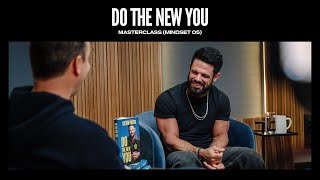
Steven Furtick and Brendon Burchard discuss joy as a daily practice, not a feeling that happens to you. They explain how thoughts work like turbines to generate energy, and offer concrete steps: practice gratitude through mantras and verbal praise, journal, exercise, and guard your attention against comparison and judgment.
Chapters
Welcome back to the do the new you mindset masterclass. By the way, if you're this far, you might as well know there were some alternate titles for this conversation between me and my friend Brendon Burchart. Brendan is one of the most sought after performance coaches in the world. So I thought we should call this segment holy ghost life coach. And he was like, yeah, no, what about mindset masterclass? I'm like, yeah, yeah, but what if we called it, like, what have we called it after amen, you know, because that's my heart. Like, we all say we believe this. And in the book, I'm giving you six truths to say over yourself. But after you say amen, like, yeah, I believe our last mindset. God is not against me. He's in it with me, working through me, fighting for me. I believe with God there's always a way by faith I will find it. I believe Christ is in me. I am enough. I believe I'm not stuck unless I stop now, after I say amen, which means so be it, what action do I take? Right? And we're putting these conversations together as a gift to you to take you deeper into what we shared in the book. The six mindsets to become who you were created to be. And this mindset, I really do need a life coach because I'll tell you what, putting this in the book, to me almost felt like an act of hypocrisy because the mindset, this is the shortest one, I guess, and the hardest one for me. It goes, my joy is my job. And it's like, I don't really want to call joy a job. Joy is supposed to be a sensation, right? It overtakes me with a bite of a Hershey bar or with a glimpse of the sunset. You know, it doesn't have to be something decadent, but joy. Joy is this rush that I experience that comes from an event. And the more I study it, Brendan, in the Bible, the more I study it in life. I'm really hanging on to that quote from Brian Wilson from the Beach Boys that I put in the book. And he's had mental health challenges that a lot of people know about. But, you know, the Beach Boys music is so happy and so sunny. And he looks at the documentarian in this movie that I saw about his life, and he says, you know, I found out happiness is really hard work. And that hit me. I'm like, yeah, if we're just chasing happiness as an end result and not really taking responsibility to own our emotions, that's what we want to get into a little bit today with Brendan, how to own your emotions so you don't run around saying stuff like, they didn't make me happy or I left that company because it wasn't making me fulfilled. Well, happiness, fulfillment, all of those things aren't something that someone else can make you. And I think that ownership process of our own joy is a lifelong process, a moment by moment process. You know, in the church, people say, they stole my joy. Then what in the world were you doing putting it where they could steal it? You should have locked it up. You should have had it somewhere safe. You should have put your joy somewhere other than just how somebody else treats you. But really, like I told you, in so many of these mindsets, these are the things that I preach to me because nobody is going to vote me for the naturally happiest human alive. That's not my disposition. That doesn't mean that it can't be my destination, though. I can become more joyful, I can become more grateful. I can practice these things. And that's why I brought the world's best life coach to help me. So make me happy, Brendan. It's your job. Make me. Make me happy. Make me joyful.
I don't know if I can make you happy. I'll start with the coaching piece. Yeah, he said a second ago, they stole my joy. And a lot of people say that. I say, no one stole your joy. You gave them your attention. Wow. That's what happened.
You took your. That's what happened.
That's what happened.
That's what happened.
No one took it. You gave them your attention. You gave them your belief. You gave them, you know, your thought pattern instead of owning the fact that you control this, you're the gatekeeper up here. You're the generator up here, you're the commander up here. And when you know you own this, you start to own your emotions. And I always love to tell people there's a difference between emotion and feelings. Different. A nice way to think about it is we have impulsive emotions and we have ongoing feelings. And let me give you the difference. If you go into a haunted house, right, and someone jumps out from the corner, that fear that hits you, that is automatic. It's physical and it's impulsive. Fear just hits you, you get scared, right? But if you go home at night, and now it's 7 o' clock at night, you're safe in your house, the doors are locked, your husband or your spouse is there, things are good, and you still you start kind of getting spooked. I feel like something bad is going to happen. Now, that ongoing feeling you're generating that with your thoughts, the first one, immediate fear. Scared. That's impulsive. That's automatic. An emotion is like. That just happens in your body. But psychologists found emotions pass usually in 90 seconds to three minutes, the emotion actually pass. Now our thoughts really do take over. And our thoughts are forming a story. Our thoughts are telling us what something means. Our thoughts are either taking command of us or we're going to take command of them. Because we can say, wait, I'm in the house, everything's okay. Oh, I just got scared earlier, and I'm holding on to that. Unhappiness is very similar. Something can happen. It's an unhappy situation. Someone was mean to us. You know, something awful happened. It makes me feel bad. There's grief there, there's hurt there. And we can feel that. Like in that immediate emotion, I'm just like, oh, I feel bad. But if later on, it's an ongoing feeling of unhappiness, I promise you're architecting your thoughts in such a way that's creating the ongoing happiness. So think about it. Is the situations of your life, the bad events of your life, are they still dragging on in the feelings of today? That's where we say, oh, I gotta take back command of the architecture of my thoughts here. Because that's what's really screwing me up. That's what's stealing my joy, is I'm not architecting the thoughts that would give me that. And then you hear me teach all the time, I'm always sharing this idea that my dominant metaphor in my life is about a power plant.
I love this. Y' all listen to the power plant. This changed your life. This is crazy.
This changes my life every day.
Yeah.
And the idea is, you know, the power plant doesn't have energy. It actually generates energy. So technically, a power plant takes energy from one level of resource, a rushing stream or solar or whatever. It's taking energy from one level, lower level of utilization. It's transforming that energy into a higher level of utilization, and it's transmitting it. And I love it. Because the power plant doesn't have energy. Oh, it's. It's taking energy from one lower level. It's transforming it and transmitting it into a higher level. That means I can do that in my own life. You know, I'm feeling a low level of energy today. I don't have motivation, I don't have joy. I don't have Love in my heart. Actually, I woke up kind of grumpy. Well, that's a low level of utilization. It's my job. How do I take the energy of the world or my situation, my life, my relationships? And how do I take ownership as a power plant? And how do I up level that? Why do that with my thoughts? My thoughts are my turbines. My thoughts are the thing that can spin that energy up into a higher level. And now I can be a person of goodness, I can be a person of cheer, I can be a person of joy. And it is that choice to be the power plant of the feelings of my life that has made my life more fulfilling. Because before that I was at the whim of everybody else and everything else. Because see most of the world right now, it's a pretty low level energy. There's a lot of division and vitriol and hate and us against them. It's low level. But you can say, I'm not going to live in that mud puddle. I'm going to take the water out of that mud puddle. I'm going to turn it through these turbines of joy and faith and reasoning and logic and a desire for an extraordinary life. I'm going to spin that up and boom. I'm going to feel different and transmit different.
Yes. See, man, now you make me want to be in church. I want it to be 10 o' clock on a Sunday morning. I want a Hammond B3 organ because I want to talk about the power plant. And Jesus said, you will receive power when the Holy Spirit comes on you and you will be my witnesses in Jerusalem, Judea, Samaria. What's that? That's taking the power and then transforming that power into a witness. Yeah. So you see what he just did? He said, I'm going to give you power from another place. And then I want your faith to be the turbine by which you take what I've given you and take it to the world. And that's so much more empowering to me than it is to sit there and go, lord, give me joy. I'm trying to get people out of this pattern that we have. Brendan sometimes of going, lord, give me joy, give me joy, give me joy. And the Lord gave you somebody to help that would have brought you joy if you would have helped that person. And I also think that we should talk about this. Isn't the happiness that we want often hidden in the thing that we resist?
Wow. Say more about that.
Well, I have had so many times where it was the exact thing I didn't Want to do that gave me the mood boost that I needed. You know, I'm sitting here thinking of all the things we try to do to be happy. You know, all the things that I've bought to try to be happy, all the things I've done to indulge. There's a time and a place for that. But there's also times where maybe there was somebody that was put on my heart to call them and check on them. And three hours of prayer wouldn't have done for me what reaching out to somebody and saying, how did it go? I know you had the thing, man. How did it go? You remembered. Yeah, I remembered. My natural instinct was I need somebody to call and check on me. Maybe I'm even sitting around feeling sorry for myself that nobody's checking on me. The last thing I want to do is reach out and check on somebody else. And I notice that God hides the resource of joy in the act of obedience. It's kind of like, wow, do the thing that you don't want to do, and you will receive the thing that you need. Like the Bible says, give, and it will be given to you. Holly preached a message one time that we kind of worked on together called give what you want. And the feeling of it was, if you want joy, like you say, generate it. How? Through loving somebody. And so I think this idea of happiness as an end game is killing us culturally. Something that we chase that's out there and it's marked by acquisition, or it's just in a pleasurable experience. So I've heard a lot of preachers get up and say, well, the Lord don't care if you're happy. He wants you holy. The Lord don't want you happy, he wants you holy. And then that same guy ends up cheating on his wife three years later. Why? Because there's something in us that if we don't feel fulfilled, it comes out sideways. He's up there. God doesn't care if you're happy. God doesn't care if you're happy. But secretly I'm miserable, and I'm suppressing my misery, and I'm trying to keep these rules that I'm just trying to be holy, be holy, be holy. But wouldn't being holy and being like Jesus and letting God's character flow through you make you more happy? So I'm really against this false dichotomy of, well, it's not about happiness. No, that's not my ultimate goal, but it's the byproduct of living the way God wants me to live. And I've always wanted to ask you if you agree with that. We've never been able to talk about it. That happiness often comes as a byproduct, and it evaporates when it's what we're after. But it comes when what we're after is doing what God has called us to do.
100%. It's in our language. It's full engagement. When you engage something, whether you want to do it or not tends to be positive. Emotions come from it because you chose to engage it. So, you know, I don't feel love. Okay. Engage in a relationship, and all of a sudden, like, love starts happening there. Yeah, I don't feel motivated today. Engage in doing something, and that motion generates motivation. And so I think you have to think about it. Like, oh, I. I want a feeling. I want something good to happen. Well, I have to engage in it. Like, I never feel like working out. I'm sure we're different on this. Like, I have to force myself to work out. But once I start, I feel. I keep going.
Do you force the feeling?
No, I just go. I discipline my mind that this is good for me. Even though I don't want to do it, I know it's good for me. And if I engage in things that I know are good for me, God amplifies it, and the abundance happens there. I don't feel like working out, but when I do it, all of a sudden, as I'm getting it, maybe 15, 20 minutes in, I'm like, I'm liking this. This is going good. And so doing the things opens you up. So doing good things for yourself opens you up to more of those things. Most people are actually happy. They're just unhappy that they're not happy all the time.
I'm unhappy that I'm not happy all the time. That's right.
People mistake it. It's like, well, I'm supposed to arrive at some kind of destination someday where I'm. And all of a sudden, one day, I'm perfectly happy, and I'm perfectly happy. I'm perfectly content all day. I'm never hungry. I'm never mad. I'm never irritable. I don't cuss in, you know, church, and I don't cuss in traffic anymore.
I'm perfect.
And that's. We think I'll arrive at this destination of a perfect feeling. And the thing is feelings, just like everything we've talked about, it's generative. It's always gonna change. It's Gonna change by the situation. Cause emotions are gonna naturally come up. Everyone struggles with emotion. Everyone struggles with, I wish this didn't have to happen, God. And when we got. When we say, you know, when we tell ourselves this story, that this shouldn't have to happen. Sometimes we don't know. And sometimes happiness is recognizing that there's not a perfect destination or perfect state that we have to consistently. Because of that, we have to generate as much as we can. We have to become the power plant again. We have to find and fight through the. To generate the joy and the forgiveness. We have to, like, try. When I read this chapter, I was like, I hope everyone will buy this book. Because it's your job to do that. The natural happy state that lives forever doesn't happen every day. You have to take as a job. I have to put myself in a good state. I have to summon the best of who I am. It doesn't happen by default. We wish it did, and that's why we're unhappy.
I'm giggling a little bit, man, because it's funny how you'll start saying a scripture, but you're not quoting it, but you're saying the scripture. This what always happens to us. Like, you're saying, I have to generate it, and it's my job to do it. And I'm thinking of how most of us wake up and we're like, it's just one of those days. Like, in the first five minutes, we decided, am I feeling today's gonna be a good day, or did I feel like the room was a little hot and I woke up sweaty? And so it's just gonna be a day? Like, it's just gonna be a day. It's gonna be a day. I can tell. You know, and we're starting to try to predict our day in the first five minutes. Whereas the scripture says, this is the day the Lord has made, I will rejoice and be glad in it. Now, the first one is a fact. This is the day the Lord has made. If you got another one, that's a starting place, right?
Yeah. I will rejoice.
I like that. That's a decision. I will rejoice. Which rejoice is kind of like bringing joy back again, isn't it? It's kind of like a turbine. It's kind of like cycling back through what you've been given. It's like, okay, God has been good to me. And I know there's like, a lot of teaching out there on gratitude, gratitude journals, gratitude practices. Here's my Confession. I do gratitude practices gratitude journals, but I have a hard time feeling it. It's almost like I have to force it. And when me and Holly were getting away last summer, she saw me doing my gratitude exercise, and she said very lovingly, not in a judgmental way, I think it's awesome that you do it. In fact, I give an exercise in the book called Grateful eight. Because my contention is that a grateful heart is a stable heart. So the best way for me to get back grounded in God and who he is is to begin to express thanks. So I walked through an exercise in the book, but Holly was watching me do the exercise, and she said, do you ever just feel grateful, too? And I was like, yeah. Like, yeah. But I realized it's when everything is just right, everything is completely aligned the way I want it to be. And what she was trying to get me to see was that if gratitude is just in my head, I should be grateful for these things, but it doesn't penetrate my heart, then it's not really going to soak in and change how I see the world. And she is much more naturally happy than me. Like, happy Holly and Sullen Steve. And the Lord put us together to help each other. Right? Or serious Steve. Maybe that's a little bit more complimentary. And it's not that I don't feel it, man. It's not that I don't have moments where I look and say, God, I can't believe you've been this good to me. I can't believe you've let me do this. I can't believe you're letting me share with people like this today. I can't believe that you've allowed me to make any difference in the world. I feel that at my core, but it gets buried. And I think what we need help with isn't just like, you should keep a journal, and it should say, five things I thank God for today. It's a little bit of how to let that go deeper and how to penetrate past the stuff that blocks.
Yeah, let me help with that. I think it's important, and I think this is going to be a big shift for a lot of people because we've been told as a society, you know, make sure you do your gratitude journals. And by the way, I'm a huge journaler. In my software, we built mindset journaling. It's something I deeply believe in. However, we've been taught this idea that gratitude is something you capture at the end of the day. Right.
Get to the end of the day.
Do your gratitude journal and you'll be happier. Now the science actually shows that's true. You can improve your gratitude and your sense of happiness by single digits by consistently at least three times a week, journaling about the things your gratitude. Most people say, do it at the end of the day. I think a lot of more positive psychologists say, do it at the beginning of the day, capture your gratitude. And I was kind of got rubbed wrong by that because again, I'm the power plant guy, I'm the generative guy, I'm the high agency guy. I go, I don't want to just capture things because there's an intellectual thing that's happening there. And for some people, like yourself, I'm gonna guess on this, it's like things will line up and when you think about it, you're like, oh, yeah, I am kind of happy. But you can't intellectualize happiness and gratitude for a lot of people. They have to generate it. Let me give an example and also give you and the whole team here a lot of praise. During the pandemic, I was not feeling happy and I was not feeling grateful. And I was having a difficult time. You know, I went from doing these huge seminars with thousands of people eight times a year to being in this back room on this island we were literally living on. And I was feeling kind of lonely and attached and wasn't feeling good. And I was like, I gotta get out of this funk. So I'm trying to write. I wrote a book. I was doing my gratitude journaling. Something wasn't hitting. The Blessing comes across, somebody text me the Blessing, the song. So I listened to the Blessing and I was like, wow, that's really emotional. This song's really emotional to me. I don't know why. And so that day I thought of, you know what I need to do? I need to generate gratitude in a different way. So I put my earphones on, I put the Blessing on replay. And I thought, who are the three people I love the most in my life? And I went on a walk, probably 20, 30 minute walk on that song on loop. And I thought of the person who I was grateful for while listening to music, while moving.
Nice.
And I was flooded with tears, man.
Wow.
I mean, I cried. I think I cried for two hours.
Yeah.
And so there's a difference there for a lot of people listening. I want you to capture this for me, generating happiness and gratitude. I had to kind of go multimodality on it. You know, I can't just sit there. I'm a You know, I gotta move. I gotta get some music in. I gotta visualize. And all of a sudden it's like. It's like a movie. It's like the clouds open up and God hit me with the light, you know? So what I want to encourage people to do is sometimes if you don't feel gratitude and you've done the gratitude lists and you intellectualize and you think about it, is there a song you could play? Is there a gift you have, you could engage in? If you're musical, could there be music that you're participating in or listening to while you capture a person in your mind? While you maybe think about God, while you maybe think about your mom, while you think about your dad, you think about your lover, your spouse. Just draw them to mind. Think of all the reasons you're happy for them, but do it as an activity.
Go.
I'm going to generate the feeling and the emotion of gratitude right now. I'm going to flood myself with that. And now that's very different than sitting down for five minutes.
Very different.
And it will shock you if you can do that literally two, three times a week. Life feels differently because now you're coming from that place that's way more emotive than just intellectual. Does that help?
It helps a lot because it opens up the options. I struggle to teach about this because I struggle with it so much personally. And you can feel like if you struggle with something, then you can't help someone else with it. Almost like you feel like you're five foot four teaching people how to be tall on airplanes and, you know, be comfortable. Like. Well, I've never actually been in that situation. And so for me to teach on the hard work of happiness was a little challenging until God showed me something. Is that, no, you're the right person to teach a lot of people this just because you're not naturally happy. Whatever causes that, and I'm not here to break it down medically, and we're not here to deal with clinical depression. Our goal is to help you today get some tools so you don't just throw away the good things in your life because they're a little wobbly. When you get some tools, you realize, oh, this table, it just needed to be fixed a little bit. It's funny, I'm using a handyman illustration because I'm bad at that, too. I'm not a handyman. I'm not naturally happy. Matthew, what are you good at? I think I'm all right at talking, but here's the point I don't just trash it just because there's a problem with it. When I have tools, it helps me go, oh, oh, oh. My life has a lot for me to be excited about. There is a lot for me to look forward to. There's a lot of joy for me to access because I know the darkness of depression. I know the despair of I'm never going to feel good again. I also know the feeling of, wow, I got what I thought I wanted and it didn't make me feel like I thought it was going to feel. And then I felt guilty. Look at all that God has given you and you're still not grateful. Look at all that God has given you and you're still not grateful. Well, now, not only am I lacking gratitude, but I'm loaded with guilt. That's going to help a lot. No, no. You don't need condemnation. You don't need shame. You need some tools. You need some steps you can take, and you can take them every other breath if you need to. Just that quick. You might have to shift that realization that capturing gratitude is one thing and creating it is another will change your life because it is the difference between feeling hungry and wanting food. Oh, I need joy. And knowing where the fridge is and that it's always stocked and you can go there anytime you want. Now, if you have a heavenly father that loves you, and I believe that you do, and if he provides for his children, and I believe that he does, then every time you open the door through thanks and praise like, I'm a singer. Brendan, I know you love to sing too, but you know you don't sing as well as you dance. But we'll talk about your singing and dancing off camera in the bonus session when you give your dancing masterclass. It's amazing how often the enemy will keep us shut up and silent. And one of the things I really want to suggest to you is verbal out loud praise to God, especially at the moments where you feel absolutely stifled by the stuff that's going on in your life or you feel very, very tempted to hide from your life. I want you to contradict the enemy out loud at times. And this is not something I go into in detail in the book because it's difficult to talk about out loud on the written page. But I can do it right now with you. Just try out loud every once in a while. Just beginning to say, thank you, Lord. Thank you, Lord. Thank you, Jesus. Thank you, Lord. You'll find your own things to say. I have so many more mantras. There are six in the book. And the word mantra, by the way, is not a Buddhist word or a New Age concept. It's actually getting God's word to become flesh in your life. When you speak the word of God, you join God who said, let there be light. And there was. When you begin to speak light into your life, you begin to see all of the good things that are in the fridge. That light comes on sometimes when you open your mouth, it sheds light on what God has given you. And you go, oh, there's a lot here. There's a lot here. One of my mantras that I began to confess last year because I was dealing with a little frustration for some things that weren't developing as quickly as I wanted. So I just start saying, I abide in Christ, and everything in my life is coming up lovely in abundance at just the right time. I didn't feel that when I said it. I felt like, why hasn't this happened yet? I'm so sick of this.
Lovely in abundance, lovely.
And lovely is not even a word I would use. Do I look like guy who walks around talking about lovely? I like it. That's Stevie Wonder's word. Isn't she lovely? I don't say lovely, but it felt good to say. And I'm like, wow, it's beautiful. I'm feeling ugly. Let me speak lovely. And so if you can contradict the enemy sometimes out loud, people like us, I know you're there. It's like, I am not the happiest, clappiest person in the world. If you see me smiling sometimes, it's because I have to remind myself to smile. Abby joined the photography team at our church recently, and she's taking pictures of me on Sunday, and she comes to me and goes, dad, we're supposed to capture you smiling for the thumbnail of the sermon. You gave us one smile today in an hour of preaching.
That's fine. My team's the opposite. If you go to my YouTube and try to screen grab anything, I'm like a happy clown. I'm like. And they're like, we can't get you without your mouth open and your. So we're the opposite and never get.
That's why you're the clown.
But my team also complains. They're like, can you just hold your face stoically for a second so we can get the shot? Because I'm so.
If we were ever chemically combined, we would be the exact smile to scowl ratio that is designed for a thumbnail. And the point is Man, I'm not talking about superficial stuff here. Get it out of your mind when you think, well, happiness is based on what happens and its events, and joy comes from deep down within. All you're doing right now is just switching definitions in order to avoid dealing with the real source of it. The source of it is not what you call it, happiness or joy. The source of it is not these things that we tend to put, you know, right out there at the surface, like whether I'm smiley or whether I'm extroverted or whether I'm introverted or whether I keep a journal or whether I do it in my heart or whether I say thank you to people or whether I'm more of the kind who doesn't really give that much praise. None of that is what we're talking about here. We're talking about owning the emotions God gave you, because here's the shift. You have emotions. They don't have you. And I know sometimes it feels to us like, man, something else just took over me in that moment. I'm just, like, suddenly so sad. Or I saw that picture and it reminded me, or I got that text and it just made me so angry. And when I say my joy is my job, I'm not just talking about happy feelings. I'm talking about your peace, your contentment, everything that comes with joy. The whole bundle. I'm saying take ownership of that. Start with your language. Where are you saying, they made me mad? Or as I shared with somebody the other day, they put me in a bad mood. Wow, they must have been really big. What do you mean? They picked you up and moved you from where you are to a place called Bad Mood. Where is. Where is Bad Mood Ville? While we're at it, like, we're exactly. No, they didn't put you in a bad mood. And the more we get into this mental management.
Yeah, this is a huge piece.
And get away from this thought of either God made me happy or God didn't make me happy, or I'm this type of person or I'm that. No, do the new you. And a lot of that comes with managing your mind. Yeah.
And you said it earlier about peace. And our friend Trent Shelton talks about protecting your peace. So I think the first part of our conversation today has all been about. About generating it. About generating joy, generating the emotions we want to feel. Being the power plant. But there's another job we have. So if the first job we have is being the generator, the second job we have, which is really important today, is we Got to be the gatekeeper, the gatekeeper of our joy and our happiness. He talked about the enemy and sometimes the enemy is taking that. And we constantly continue abusing ourselves and taking away our own happiness by engaging in things that we know are bad for us or are not good. I'll give you a convenient example right now about social media. A lot of people don't understand that all of social media research has shown it doesn't make us feel good. If you're generating and you're the creator or you're doing it to create relationships, it can be a very positive and entertaining thing. But for most people, actually creates a low level of anxiety and stress. Because here's what happens when you're scrolling and this is really important to understand. If you're in a bad mood, be careful about disengaging from the world and going to social media. Here's what they found from the research. This is amazing. When you're scrolling, every time you scroll past something, the brain has to do three things. First, as you're scrolling, the brain has to make a judgment, a decision. Is this worthy of stopping and paying attention to? Is this worthy of my attention? So immediate judgment, is it worthy? Is it good? Do I like it? Judgment. Second thing is comparison. Am I like that? Do I do things like that? Does my house look like that? Does my kitchen look like that? Did I wear that thing like that? So we compare and then the third thing is we end up having what's called contempt, which is division. We go, well, they're like that, I'm not. And so think about that. Most people scroll past over a thousand posts a day. So a thousand times you just wired your brain for more judgment and for more comparison. Now, would you ever go to teenager and go, here's what I want to do. I want to train you all day to be more judgmental. I want to train you all day to compare yourself to more people. We know those are negative behaviors, but we do them. And most people are on now social media an hour to two hours a day. Consuming, not generating, consuming, just like blindly scrolling through. And you have to understand you're not being the gatekeeper of your own peace and your own mind. Every time you're scrolling through, you're training yourself. This is not scrolling passively. This is training. You are training yourself to be more judgmental. That's why you're unhappy. You judge everything. Why is everyone so judgmental today? Because they train themselves a thousand times a day. Why is everyone comparing themselves? Why do we have us versus them. Because we're comparing ourselves all day. We're not gatekeeping our mind. It's just like when you hang around bad people. And I know that's a bad phrase to say bad people, but, you know, people whose behaviors cause negative results in your life. The more you hang around them, the more you become like them. Well, the more you live in a land of judgment and comparison, the more you become that. And it steals your joy. You're like, well, it's stealing my joy. It's like, no, you scroll away your joy. And so I really want you to be attentive to that. Pay attention to the news you consume. Pay attention to the people you're hanging out with. Pay attention to the quality of what you are consuming. Pay attention to the quality of your entertainment. Because all of that is either poisoning the well or it's empowering you. It's lifting you. And I think that that's the number one reason most people aren't happy is because we live in a consumptive society and we're in that consumer mindset, and we're just taking everything in. And now we're comparing ourselves and we're judging everybody. It's hard to be a happy person. If I got to judge all day, if I got to compare all day. And I'll say this last piece about it, it's mentally exhausting. Remember, it's a thousand decisions. I just made a thousand decisions.
I like them. It's worthy of my attention.
No wonder. No wonder you get at the end of the day and you're like, I just don't know why I don't take more action. I don't know why I didn't decide to write that book. I don't know why I didn't decide to write the song today. I didn't know why I didn't. You know why you didn't decide to do anything? Your decision. Bank account is bankrupt.
Yeah.
Because you gave away all your decisions.
To each scroll and you didn't even know it.
You're mentally fatigued. You're not unhappy. You're exhausted.
And I think it's a thief in the night. In other words, we don't see it happening.
Right.
It doesn't break in in the middle of the day. Hey, here I am to steal your joy. I had so many, many thoughts about what you were saying that I will not possibly be able to recap it as well as you just said it. But let me ask you if I heard this part right. Judgment destroys joy. When I'm Wired for judgment. It destroys my capacity for joy. And number two, sometimes I don't lose my joy. Like, oh, I've lost my joy. What happened? No, I leaked it. Little by little, scroll by scroll, swipe by swipe. Thing that I took to heart. By thing that I took to heart. Why that's important to me is I don't want to just approach this like a crisis management situation, when really it's about decisions in the moment and training yourself. The training piece is huge because I'm not only taking responsibility for my emotions, but the fact that if I'm not in a good place, I am not going to be any good to or for those around me that I'm called to serve. So for those who think it's selfish. Yeah, I get it. The idea of just be happy at all costs or just make yourself happy or after all, you deserve to be happy. Yeah, that can start to get kind of empty for those of us who know that there's a bigger purpose. And sometimes I'm supposed to be sad because what I saw was sad. What I went through was sad. Sometimes I'm supposed to have seasons where I don't feel the most excited. And some of those fallow seasons in my life led to the more fertile seasons. And I have to learn to embrace that. So my joy is my job. Doesn't mean I'm always reaping blessings and singing praises. No. Sometimes it means I'm sowing in tears.
But guess what?
The Bible also teaches those who sow in tears will reap in joy. Now think about that. What is sowing? It's work. And what is the consequence? Joy. I reap in joy when I sow in tears. Which is why I want you to work on this. That's why I go to therapy. Yeah, yeah. That's not a confessional. I'm actually saying that like I tell you that I do physical exercise, of course I work on my mind. Of course I have to use that thing all the time. I don't have to do bicep curls to live, but I have to think to live. I have to think to speak. I have to think to process my life, to decide what to do, to figure out how to respond. So of course I'm going to find a gym for my mind. As a man thinketh in his heart, so is he. You owe this to the God who gave you life to take the mind he gave you and manage it and just get this as a baseline. It's mind to manage. It's mind to manage. You hear this saying, sometimes in physical exercise, you can't out train a bad diet, right? That's like a real popular thing. I just heard this in our conversation. Brendan. You can't out gratitude a bad gatekeeper if you're just letting stuff in. Letting stuff in, letting stuff in. You ain't gonna fix it with a journal for two minutes, even if it does have a cat on the COVID.
And catch, you've poisoned yourself all day and you're shocked. You're not healthy.
So let's stop letting it in and then just trying to pray it out. Let it in, pray it out. Of course, we all have to deal with negative things. Of course we're all from time to time gonna watch something. Of course, this is not black and white. But what is important is that you make a decision to own it. And I just want everybody who's a part of this. I feel like this do the new you mentality, it starts out sounding surface, like, okay, yeah, I'll do the new me. I'm going to have my running shoes. I'm going to get after it, you know, new me, new me, new me. I've heard it before. And then you start to realize, oh, it's not just that I'm going to start doing things different is that I am going to discover the me that was there all along. And I just want to give you hope for this, that I believe there is great joy in your future. I believe there is great joy in your present. I believe that there are amazing things happening in your life right now. It's okay if you can't see them. I get to a place every once in a while where I feel like I can't find anything that goes right. But the difference is, what do you do when you find yourself there? Do you stay in it? Do you blame it away? I want this to be a pivotal moment in your life where you make the decision. My joy is my job. It's very difficult to have breakthrough and blame at the same time. And I want you to get through this. Whatever the sadness was, whatever they did to you, whatever caused it, I want you to see that there is life beyond it. So for all of us who don't wake up singing the Hallelujah chorus, for all of us who don't wake up wanting to even see a human being, for all of us who feel like our mood does this and that and the other, just know that God is with you in all of it, and he wants to bring forth joy, even if it means you have to sow in tears. I want you to get your hard work of happiness mindset. Stop thinking it's something that's just either going to happen or it's not. It's something that's going to come from somewhere else. Be a power plant, baby. You got power from on high. The power of the holy spirit lives in you and the turbine. That's your tools. Whether it's gratitude, whether you're going to put on headphones and walk through exactly what Brennan did, bringing gratefulness for people in your life into your movement until you realize God has been good to me, that you'll do it and do it and do it again until it becomes a part of you. The apostle Paul said, rejoice in the Lord always. I'll say it again, rejoice. And again and again and again. It's not a one time decision. It's a commitment in every moment. I hope this helps you today. I hope you feel happy right now. But if you don't, you know a few things to do to help you get there a little quicker and stay a little longer. I'll see you next time.