Accepting First-Time Airbnb Guests? Here’s What Hosts Need to Know
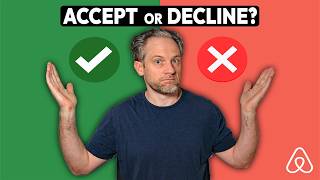
Tim Hubbard breaks down whether Airbnb hosts should accept first-time guests. Over 10 million new guests signed up in 2024, many traveling for events like concerts and the Olympics. New guests carry slightly higher risk but less competition, so smart protections like security deposits, smart locks, and noise sensors can make it safer.
Questions this video answers
Over 10 million new guest signups in 2024.
Over 50,000 guests over the last ~10 years.
Approximately 2–5%.
Wavo.
Noiseware and Minute.
Chapters
In 2024, Just Airbnb saw over 10 million new guest signups. So the question is, are you capitalizing on that? My team and I have managed over 50,000 guests over the last 10 years or so. And we've learned a thing or two about hosting first time guests. New guests are joining Airbnb every single day. Millions in fact. But should you be the one to host them? In this episode, we're going to break down the pros, the cons, and some best practices for accepting first time guests. Well, also share some smart policies that are going to help you protect your rental while they'll help you maximize your revenue.
Why is the idea of accepting new guests important? Well, because there's a lot of new guests. Just last year, Airbnb had over 10 million new guests. And now, while not all of those were in the US a lot of those were global. That's still millions of guests that stayed in properties for the first time in the U.S. now we are able to identify a little bit where these new guests decide to stay, who these new guests are. And so a couple points there. One is that if you have a brand new listing that has zero past guests, well, new guests are more likely to stay in listings that have no prior reviews. And the amount of guests staying at properties where a super host is hosted them is much less because a lot of these super hosts have filtered out the ability for new guests to book at their property. There is a filter within HostAway as a host that you can check and it says your guest needs prior experience. So a lot of super hosts that have been through the challenges sometimes of having new guests have decided to opt out of this. But we know that there's lots and lots millions of new good guests staying at our property each and every day. And the problem is not with the new guests. The problem is with your setup and your operations and how you're vetting these guests. We also see that more, more new guests are staying during times of high demand. So if we think about Taylor Swift coming to town, for example, and all the hotels get booked up, well, these guests are often not going to stay in the hotel because they're not available, but they still want to see Taylor Swift. So they broaden their search and they end up staying in an Airbnb and they very often end up really enjoying it. Or think about the Olympics happening in a city, for example. Any sort of big event is an area where a lot more new guests are going to come. And during these high end times, these new guests are paying Top dollar. And so if you have them filtered out and they're not able to see your property, well, you could be missing out on some really high income days. We also know that younger demographics really enjoy experiences. They really enjoy traveling more. Not to say that older generations don't. I think just globally speaking, everyone is traveling more because it's easier and because we have more options. But a lot of younger people are showing up for the first time as new Airbnb guests and it may just be because they've actually passed the age range where they can book themselves. So this is a really important topic. Yes, first time guest does cause a little bit of uncertainty, but there are some easy ways to combat those potentially negative guests. Let's talk about the pros and cons of of hosting a first time guest. So one of the most clear pros is that there's less competition from other hosts. Let's just take 100 properties and if 40% of them have filtered out or prevented first time guests from staying, well then that means instead of you competing with 100 properties, you're only competing with 60. So that is the first piece. There's just less competition. A second pro is that a lot of times when a guest stays at your property, they end up really liking it. Right. Airbnb didn't grow to have hundreds of millions, millions of guests from people that are having bad experiences. And so you can create some really good loyalty with first time guests. If they stay with your property, they had a great time, they went on vacation with their family, they may book your property right away for the next year. And so this can help with repeat guests. Many guests are just simply new. They're not risky. And we know this. My team and I have managed over 50,000 guests. We of course have had some challenging guests, you could say, but we've hosted lots and lots of first time guests. We have a good process in place and I'm going to provide those tips for you here in just a second. But had we never accepted those guests in the first place, undoubtedly our revenue would have been impacted. Remember, you were also a first time guest at one point. Just like me. I stayed in my first short term rental, I think all the way back in 2012. And of course, this whole short term rental space has really changed my life, changed my world. It's all that we do now. If you're new to the show and you didn't know, my team and I manage properties around the world. We're in dozens of cities. We would love to help you with yours. If you're interested in learning more, you can go to striches.com There's a little partner with us button. We'd love to chat with you, see if your property makes a good fit. Let's go ahead and jump into the cons, and the first one is simply that we don't have any prior information or knowledge of this guest past booking behavior. We have no reviews to go back and look at and see if hosts were praising them or they had something negative to say. But if we look at the numbers, the numbers of bad reviews that new guests are actually receiving, it's very, very small, somewhere between 2 and 5%. And part of that bad review might be your fault. I know that sounds a little crazy, but it might be that you didn't set the right expectations. And so this guest is brand new. They've never used the platform before. And maybe your listing didn't talk about everything that it needed to. Maybe you're sort of assum that your guests would know certain things with the check in or whatever it happens to be. The reality is, is if we have a new guest checking in our property, we want to be proactive. Maybe you send a little message that says, hey, really excited that you're staying in your first Airbnb. We hope that your stay with us will be memorable for years and years to come, whenever it happens to be. But you can lay that out for them, let them know that you're there if they have any questions, knowing that they're new to the platform. So yes, there is a con there. We, we don't, as hosts, have any historic information. And actually the likelihood of one of these new guests breaking our house rules or our rental agreement, it is a little bit higher than a seasoned guest or someone that's used Airbnb a lot before. Again, this could go back to their expectations. Maybe you have a house rule that says take out the trash at the end of your day. And they've never stayed in an Airbnb. They're used to hotels, and so they don't take the trash out, which you shouldn't be asking them to take the trash out. And then essentially they break your house rule. New guests are also going to lead to more support calls. So again, they're new to the platform, they don't quite understand it. And if there's something sort of out of the ordinary that happens or it doesn't meet their expectations, they're more likely to pick up the phone and call Airbnb support because they're used to coming from other platforms, or they're used to just booking hotels where they can pick up the phone and call reception. Let's go ahead and talk about some of the policies that you want to have in place to make sure that you're protecting your property. The first one is to require them to have a government id. Make sure that you've looked into your cancellation policy and you have one set up that fits well with your property. A lot of times we want to take the average cancellation policy in our market, if we have a super strict one, but everyone else has a very flexible one, then that's going to limit the amount of people that want to stay at our property. So take a quick look at that. And of course, we want to have some protection on our property. Right. If you want, we're on Airbnb, then we do have their air cover, which can be really helpful if we're accepting new guests on a platform outside of Airbnb. Well, then we either want to have a security deposit or we want to have some sort of damage waiver where we're charging the guests, and then we're purchasing insurance on that specific reservation. We use a company called Wavo with a lot of our properties. The next step we want to take is make sure that we have some of the normal home automation devices in place. And the first one being a smart lock so that each of our guests have a unique, unique code. It expires after their stay. But you can take it a couple steps further. There's some really good technology these days by a company called Noiseware, another one called Minute, where you can put these noise sensors in your property and they will trigger an alert if it goes over a certain decibel, a certain volume level, meaning maybe they're having a party or they're just getting a little bit rowdy. These devices are even better now. They can detect smoke, marijuana smoke, in fact, which, depending on the state, maybe it's California, which I pick on quite often, but I am from there originally, and it is legal to smoke there, but it's not legal to smoke in your property. Right. So you can install some of these devices to make sure that those things are protected. If you have your instant book turned on, then you still want to reach out and ask your guests some questions. A very simple one is, hey, what brings you to town? We're excited to host you in XYZ City and just do a quick overview of their profile. Make sure that there's nothing kind of funky that stands out there. There are of course, some red flags that come up. So let's go ahead and jump into those. I want to give you my recommendation. And then also these red flags, sort of warning signs that you can use to make sure that your first time guests are great guests. So our recommendation, it's probably obvious, but yes, you want to accept new guests, but you want to do it with a process, with a system for making sure that you don't have bad guests checking into your property. One of the first pieces there is just making sure that your house rules, if you're on Airbnb or your rental agreement, has everything that it needs. And now if you're not sure exactly all the house rules that you want to have in place, we've got a copy of ours, the house rules that we use down below in the show notes. You can get it for free. You can also download at our website, Strictly, where we've got a whole bunch of other free resources for you as well. Let's talk a bit more about some of these red flags. One of the big ones is a last minute booking because you have less time to do some of this verification. You have less time to send out that welcome message and get their response. Sometimes they're not responding as well, which is another red flag. So last minute bookings and no communication from your guests is a red flag. Now remember, yeah, take this with a grain of salt, right? This guest is new. They've never used the platform before, so maybe they set it up, they instant booked your reservation. They didn't really think that there was other pieces to the reservation. But communication from our guests is a requirement. If a guest does not respond, if we don't have a way to get in touch with them, well, then we can have those reservations canceled penalty free. Another red flag to keep an eye out for would be an inconsistent guest count. So let's say you've got a beautiful, awesome property right next to the Ocean and sleeps 16 people and one person books it. Again. This is one of those messages you want to send out. Hey, we noticed that you booked our whole property, but we're only showing one guest. Can you kindly update your guest count again? If it's just crickets and you don't hear anything, then that's a red flag. Another red flag is if someone's booking your property and they are local. We've talked about this one a lot in the past. We really learned our lesson during the COVID days when a lot of my properties switched from, from not really accepting local guests to only doing that because there was travel restrictions, and this is where a lot of our policies and stuff came from that we use today. We actually have a house rule, and again, you can get a copy of those, but it says if you're a local guest, you need to contact us first. Unfortunately, this isn't one that can be enforced with Airbnb, but it does help. And a lot of times local guests are contacting us. Sometimes they might say, oh, you know, my bathroom's being renovated and. Or my house is being renovated and we want a place to stay for a little bit. There's lots of totally legitimate reasons, but a lot of times there's some not so legitimate reasons where maybe someone wants to do something in your property that they didn't want to do in theirs. So keep an eye out for local guest bookings. And lastly, one last suggestion. Make sure that you offer a warm welcome for these new guests. We want this industry to grow, right? We want millions of new guests to be signing up and having great experiences. We are in the hospitality industry, so make sure that you're providing a great guest experience. So don't limit your property to just experienced guests, and by doing so, limit your overall revenue. Just make sure you have a couple of these processes in place. I hope these tips helped, and if they did, if you haven't already, if you consider subscribing to the channel, leaving us a like, that would be greatly appreciated. We'll see you in the next one.
More from Tim

Airbnb profit insights to get your business ready for sale! #podcast #realestate










What Most Successful STR Investors Are Focussed on Today: From a 300+ Investor Meetup