Short Term Rental Trends, Hot Topics and Market Updates with Russell Gray
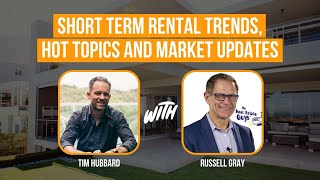
Interview-style transcript (Boots on the Ground) from December 2022: Russell Gray interviews Tim Hubbard of Rest Methods about short-term rental investing. Topics covered include market segmentation (geography, demographic, product niche), occupancy trends post‑COVID, growth of medium/longer-term stays, tax considerations for short-term rentals, geographic opportunities (U.S. and international, e.g., Colombia/Brazil), and the impact of rising interest rates on deal underwriting and financing strategies. Practical focus on operations, management quality, and training/resources offered by Tim.
Chapters
Foreign.
Hi, this is Russell Gray, co host of the Real Estate Guys radio show, here for another edition of Boots on the Ground. And we're going to be talking about short term rentals with our expert guest Tim Hubbert from Rest Methods. Hey, Tim.
Hey, Russ. Good to be here.
It is so good to have you. We go back a bit. We met each other, I believe, on one of our investor summits. And were you a short term rental investor at that time?
Yeah, I have been, I think I've been on seven summits and I've been investing in short term rentals for about seven years. So.
Okay. Yeah, you know, I love going on the summit because I never know who's going to be there, who I'm going to meet. But so many interesting people. Since then, you've started a training program which we'll talk about in a little bit. But what we like to do with Brooklyn Boots on the Ground is we like to take a look at a niche, in this case short term rentals, and get a state of the union. I, I think for people who are maybe aren't familiar, the most common term, the way everybody understands is Airbnb. You say Airbnb, everybody's like, okay, I get it. But Airbnb isn't the only way to do short term rentals.
Right, Right. No, that's, that's totally right. I mean, short term rentals have been around for forever, you know, like as long as hotels really. But Airbnb really.
Created a lot of exposure for the area. So we have other sites like the RBO and HomeAway and a lot of the traditional hotelier sites now, like booking.com have what people would think of as an Airbnb available on their sites now, too. So it's really just gained a ton of exposure all across the board.
Nice. And so you found an interesting way to do this. A lot of times when people think about real estate investing, any kind of real estate investing, they think it's very hands on, on. You buy properties right next door or in your neighborhood within driving distance, you're going to be out there checking on it, working with the tenants, dealing with issues, maintaining the property. But you haven't structured your business that way. Tell us a little bit about that.
Yeah, well, I got into real estate in the first place to, to have some passive income so that I could travel. I love traveling. And that's kind of in a roundabout way how I got connected with short term rentals, because I was staying in them for years and years while I was investing in Traditional real estate. And so really, I mean, things can be passive with traditional real estate or they could be not passive. It just depends on how much we want to let go of and how much we want to delegate and the systems that we set up. So I don't spend a lot of time in the day to day operations with, with any of my properties really.
Well, you know, when, whenever we say the word markets, people automatically think geographies. And you're in multiple geographies, even international. But, but it is also demographic. Which clientele do you serve? And then it's product niche. And even within the product niche of short term rentals, there's different niches. So I think it might be kind of fun to talk a little bit about each of those different markets. Because real estate, all real estate is local. It's very nichy. It isn't like an asset class like gold or silver or oil or wheat or shares of a stock that are traded same price everywhere at all times. But every, every market, every demographic you serve, every sub niche has its own nuances. And so you have some ideas about markets and, and who you're serving. And this is germane because we're potentially standing on the threshold or some people would argue we are in the middle of a recession and stock market's been down. The wealth effect isn't there. Home prices, equity is going away, interest rates are high, you can't borrow as easily. And that all is a drag on the economy, which is I think what the Fed is trying to do. But that translate into all businesses, including short term rentals. So what are you seeing out there as we're sitting here in December of 2022?
Well, a lot of people are having slightly lower occupancies, but of course some are having much lower occupancies than they were before and some are doing better. So it comes back again to the fact that not all short term rentals are created equally. Just, just on Airbnb, for example, they've broken their search algorithm out to I think at least 53 different categories of short term rentals. So I mean everything from a tree house to an oceanside villa. So that's the first thing we have to think about when we think about just how are short term rentals doing is that they're, they're all different. A recent stat, actually yesterday I was with a pricing company that pulls pricing for investors for owners to dynamically price their properties, to change prices every day. So they have a lot of good data, right? They need data on Events, they need data on occupancies, all these things. And their stats on a nationwide basis were down 4.11% of the occupancy levels is from what they were seeing. So again, that's going to vary a lot depending on the type of short term rental you're invested in, the type of market. I think after Covid, Russ, you know, we saw a lot of people leaving big cities, right. We saw a lot of people buying vacation homes and money was easy to get back then. And, and so we saw a big increase in supply while we saw a decrease in supply in a lot of the cities. So I think it's kind of reversing. Again, we're, we're seeing a little more stability in the cities and a little less now in some of those bigger vacation home rental areas.
Well, because of your network and the students that you've trained and I'm sure all the people you stay in touch with, plus the research that you do just for deciding on what properties to keep, what properties to add, what properties to jettison. Where, where are you seeing within those niches? What is there a sweet spot? Is there something that has been resilient in the face of a softening?
Well, I think so. It comes down to supply and demand, right? So there's some places that are very heavily restricted for short term rentals. And if you happen to have a permit and the supply is limited, well, those types of areas could do really well for a long time because the demand's always going to be exceeding the supply. But if you're not in a situation like that where you happen to have a permit, no one else does. I like to invest in cities where they're attracting more people for the most, most amount of reasons, you know, and to me that makes things a little less risky.
Right.
Versus a vacation, a purely vacation rental, for example, where people are only going there for vacation. So you know, some other reasons why someone might be staying in a short term rental is if they're moving to a new city and they want to check it out, if they're going somewhere for medical, if they are visiting family. You know, there's a whole host of reasons aside from work and vacation, why someone might stay in a short term rental.
Well, it's interesting, when Robert and I do field trips, when we go into different markets, we talk about migration patterns. Net in migration, do we have more people moving in than moving out here? It's a little bit different because you don't need people to come in and become permanent Residents, you need people who are wanting to come in and spend time there for whatever reason. I'm in Arizona. A lot of snowbirds come down here in the winter because it's, the weather is, you know, I think it's really cold. But for people who have been living in minus 20, it's paradise. And I totally get that. And so the Phoenix market and some of the suburbs has been a pretty good short term rental market. My daughter actually opened one here in Gilbert and she's been doing very well with it. And so the other thing we look at is drivers. You talked about multiple reasons. And so we look at what pulls money in from outside economically. In this case, it's what would bring people in for tourism, I suppose, or other reasons, medical procedures and whatnot. When you're out there looking right now, do you see any trends as far as is, is, is, is vacation tourism up? Is it down? Is medical tourism up, down? Are you looking at anything like that in some of the markets that you're, you're looking at?
Yeah, medical, for example, something that, that I always like to look at because we have an aging demographic. And medical is something that's really important. It's going to be for a long time. So those are markets that I feel like have a, that's really strong, fundamental, you know, at least for the foreseeable future.
I look slightly less at vacations actually. When I started with short term rentals, I was sort of catering to someone like myself, you know, that was working remotely for, for business reasons. And I'm traveling by myself a lot of times. So those are the properties that I've sort of focused on and, and I like them, you know. Now one other thing that happened after Covet is that a lot more people have the ability to work remotely. And if someone was living in a place that was really expensive and they can work 100% remotely, they're very likely going to be looking for a place that's more affordable. So affordability is a really big thing that I look at in any market too, because we're seeing a lot of people move to more affordable places. So another interesting thing that we're seeing too, Russ, is there's almost like a merging happen between long term stays, so your lease and short term stays. We're seeing a lot of medium term reservations happen. You know, people are staying for multiple months and I think because we can work remotely, that's, that's really pushing that segment up. It's Airbnb's fastest growing segment or their long term stays over 50% of their bookings are for a week or more and over 20% of all their bookings on Airbnb are for a month or more.
And interesting. Yeah, well that has some tax ramifications. As I'm sure you know, if you have an average stay of seven days or less, it's considered active income if you're materially participating. And it's only one of a couple of areas of real estate where you can get that active loss. Residential assisted living is another one. In fact, it was one of the hottest areas. We went to the imn, can't remember Information Management Network I think is what they're called. But they do these real estate conferences. They have a short term rental conference coming up in January of 2023 in Miami, but they did their single family rental forum in west in Phoenix, just here in December, earlier this month. And we went and we always go to see what the state of the thought is where the big thinkers, the hedge funds, the big money players think the best opportunity in real estate is in the single family home space. And with short term rentals. One of the reasons we wanted to talk to you because it is one of the hottest, the hottest niches. So it's really, really interesting about that. But if it's, if it's short term, truly short term, seven days or less, you can get write offs against your active income. If you go seven days or more on average now, it becomes passive. So is that a consideration for you? I guess you're considered full time. But for any of your students, is that something you consider when you're thinking about how to organize your property, whether to accept those longer stays?
Yeah, absolutely. I mean I've been a full time real estate investor for 12 plus years, so that hasn't affected me as much. But you know, if you have a doctor, for example, and this becomes very, very important, you know, if their tax rate's 40, 50% and they can offset a lot of those dollars by getting a short term rental and qualifying to materially participate in one of the believe seven different ways that you can actually qualify and that becomes a huge, huge win. I mean even if you just look at that property as breaking, even if that allowed someone to save 40%, you know, or to, to offset that income, that can be a really huge win. So really important thing to look at.
Well, especially now we've got this is in 2022, the last year of 100% bonus depreciation, one of the gifts we got in the major tax reform. It starts to wind down. Meaning in 2023 it's 80% bonus depreciation, but still pretty considerable. So someone could come in and open up a short term rental and make sure they only take those seven day or less bookings and keep their average down and materially participate and then take those big deductions. Then later on when they don't, those deductions have already been taken. They could probably switch over and start taking those longer bookings and maybe go buy another one, a new one with a fresh depreciation schedule and do the short term bookings and do the same thing and keep, keep kind of grinding out those tax benefits while you're accumulating a portfolio. I don't think anybody wants to walk away from someone who's saying, hey, I'm willing to pay you every night that I'm here for the next 90 days. I think, you know, you don't want to let the tax tail wag the investment dog. Sounds like a pretty good deal to me. So let's talk a little bit about geographic markets because I know you're kind of an international man. I think you're recording right now, you're sitting in Columbia as I'm sitting here in Arizona. But where are some of the places you have properties now? How are they doing? And are you, are you looking at other places? Are you looking at getting out of other places based on what's going on in the world right now?
So I'm in California, Oklahoma and Tennessee in the U.S. and then yeah, I have property here in Colombia and also in Brazil. And.
I've been slowly leaving California actually for quite a long time before I, you know, I guess six, seven years. That's where I started investing in. As numbers changed there, you know, I was sort of searching for better, better returns and also maybe safer, more landlord friendly places. So that brought me out of California and I've slowly kind of been, been leaving there. I think there's a really. So the markets I'm in though, I would say Oklahoma and Tennessee, those are very, they're not super cyclical markets, you could say, you know, so they, they're not, they're not the ones seeing the massive appreciation, which isn't something that I'm investing for anyways. It's a nice side benefit. But these are places that are just moving along steadily, that have good employment, that are growing, they're affordable and so. But outside of the U.S. you know, we actually have a really interesting opportunity right now. I mean, our dollar is strong. It is really strong.
And like down here in Columbia, for example, a partner and I, we're starting on a small development, a little community of Airbnbs, and we get to build in pesos. And actually, a unique thing about here in Medellin is we're going to be charging in dollars. So it's a, it's a really good opportunity. There's not a ton of places I've found like that. But another reason we're bullish on this is because a lot of people are working remotely and we're three hours from Miami and they come down here. You know, anyone comes down here, nice quick flight, direct flights every, every day, and they're dollar goes so much further. So that's an interesting thing happening as well, really, in the whole world.
Yeah. Well, certainly the strong dollar has created some anxiety in international trade, but for Americans who can invest internationally, it actually, to your point, creates a lot of opportunities. So that's exciting too. Okay, so let's wind this thing down with a couple of just hot topics or key points, because again, boots on the ground update and we'll have you back. Certainly call us anytime something changes. You think you want to get the word out, but we like to check in from time to time. But if you could look back maybe a year ago compared to today, are there any major trends or differences, changes that you've seen that are notable for people who are either in the space or interested in getting into it?
Yeah, I mean, I'd say if we look back a year ago, I mean, there was a lot of people were buying second homes, vacation rental homes, and so there was a big increase in supply there. And I think that, that that segment could be challenged quite a bit more. But another interesting thing about short term rentals, Russ, is that every market's different, of course, but every short term rental is different. So it really comes down to how we're operating our properties. I mean, we could talk about a market that's really struggling, but there could be lots of individual properties within that market that are really exceeding expectations and exceeding returns because they know how to operate it well, because they have excellent reviews, maybe because they have their own marketing system set up and they're not even using Airbnb. So I think management is becoming more and more important, especially as we see a weakening economy and maybe a little less disposable income going forward. And that's something that anyone can improve on.
So let's close out on the bonus question. I think the hot topic for real estate investors everywhere is interest rates on mortgages. And I know maybe in some countries you're just purchasing for cash. I don't know what the financing picture looks like, but I'm going to guess most of our audience are American investors investing in America and probably wanting to use mortgages. When you think about what's going on in mortgages with the rates having climbed, what's the mortgage climate like right now relative to short term rentals and how is that affecting, or is it affecting the investment decisions that you're making or your students are making?
Yeah, it totally is. I mean, the cost of money is going up. Then it's more expensive to purchase a property. So we use the same loans pretty much to buy short term rentals as we would buy other traditional residential real estate. And so the cost has gone up for us as well. And we have to consider that, you know, that's part of.
The underwriting for that property. I mean, I think there's, there's also another side to this though. As interest rates go up, you know, more seller financings emerging, which creates more flexibility. Maybe someone that couldn't qualify traditionally with a, a big bank, they can work directly with a homeowner that maybe needs to sell their home or, or wants to sell it. We're not, we're in a buyer's market now, right. So we don't have to compete against 30, 40 other offers. And we can take our time and we can, we can really evaluate the deals that we're checking out. And you know, if something makes sense today at today's interest rates, which I know there are lots of opportunities out there that do, if it makes sense today and we can fix that loan for a long time.
And interest rates happen to go down in the future, we can always refinance. Right. We're going to be in an even better position. So while it's getting more difficult, I think there's also another side to it.
I totally agree. In fact, part of the reason I wanted to tee that up is because that's exactly the way I feel about it. There's a couple of areas in single family homes, short term rentals and residential assisted living where the cash flows are significantly higher when the property is operated for those purposes than where it's just a long term, typical long term rental. So if you consider home buyers who are less able to qualify, less able to bid up property, and then you take investors who are only looking at the property for its capacity at traditional long term rent, they're going, oh, this thing doesn't pencil somebody who thinks outside the Box with a short term rental or something like a residential assisted living facility for the right property can come in and go, hey, I can make this thing work at today's high interest rates. And to your point, if rates go down, great, because you can refinance the property and you're probably going to have some equity happen at the same time as more buyers come in competing. But the flip side is also an advantage because if you lock in an interest rate today, it seems high now compared to where we were a year or two ago. But if rates were to continue to go up, then you're going to be really glad that you have the locked in rate that you have. And by comparison, any new inventory coming on to compete against you is going to have a higher cost to do so in a lot of ways you can win either way just because of the strength of the cash flow of this particular use of the property versus a typical rental property. So. Okay, well, good thoughts on that.
Yeah, no, I mean, I agree there's two sides to it. I think. One other thing, it's a little too early to say, but as interest rates go up, less people can buy, right? Which means we have more people renting. But I also think there's going to be at least a small segment of people that wanted to buy and they're going to wait around. Maybe they don't want to sign a year lease. Right. They want to wait around to see if interest rates come down so that they can buy again. And if they're not going to sign a long term lease, then I would think that they might be the perfect candidates for these medium term states as well too. So that'll be interesting to see going forward.
Interesting. Well, thanks for keeping us up to date on the space. We love these boots on the ground interviews to find out what's going on in these various niches. Robert and I can't possibly pay attention to everything, but that's why we have a big network of smart people like you. So I really appreciate you taking the time. Hey Tim, I know you train people on how to do what you do because I've taken the class. My daughter and I came out and took the class. She took your course and actually all by herself figured out how to open up a short term rental. So thank you for that on a personal note, but I know you wrote a special report for us at the real estate guys and so can you tell us a little bit about that report? What's in it?
Yeah, it talks about. It talks about what? I look for in a market.
In terms of real estate fundamentals but specifically a short term rental because not all properties are good candidates for short term rentals. So it's essentially just my process for breaking that down.
Okay, so if you'd like more information, you get a copy of that report, you can send an email to short termealestateguysradio.com Short termealestateguysradio dot com you'll get the report for free and you'll find out more about Tim and his training programs. If you're interested in following him, you can do that. I think you have a podcast, don't you Tim?
Yeah, it's called the Short Term Rental Riches. So just quick bite size actionable podcast episodes.
Nice. So if you're into the short term rental space or want to be, make sure you check out Tim Hubbard Rest methods and send that email to shorttermealestateguysradio.com Tim, thanks so much for being with us today.
Thanks for having me Russ.
All right, take care.
Sam.
More from Tim

Airbnb profit insights to get your business ready for sale! #podcast #realestate










What Most Successful STR Investors Are Focussed on Today: From a 300+ Investor Meetup