STR secrets from “Millennial Millionaire, Jonathan Farber”
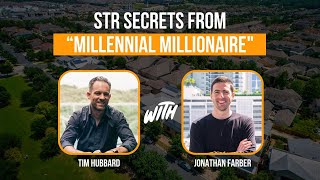
Jonathan Farber owns eight STRs in North Carolina, a 24-unit apartment building in Louisville, and plans one deal per quarter. His ten-person remote team uses a daily Google Form to track tasks and needs, with Breezeway managing housekeeping. He shifted to furnished rentals in 2018, emphasizes cash flow and documented processes, and recently got more conservative as rates dropped to the upper 5s and low 6s.
Questions this video answers
Eight STRs, mainly in North Carolina.
A 24‑unit apartment building in Louisville, Kentucky (with partners).
About 10 people (mix of full and near‑full time).
About 20–30 tournaments per summer.
Rates cited ~7–8% several months prior, moving toward upper‑5% to low‑6% more recently.
Chapters
Welcome to Short Term Rental Riches. We'll discuss investing in real estate, but with a specific focus on short term rentals. Quick, actionable items to acquire, manage and scale your portfolio. I'm your host, Tim Hubbard.
Welcome back to the Short Term Rental Riches podcast. We got an extra special episode today. As most of you know, we don't have a lot of interviews on the show, but I thought it'd be a good idea to bring on some other experts because there are a lot of experts out there in this big world, and one of them happens to be my friend John Farber. And I'm really excited to have him on today. Welcome to the podcast, John.
I'm excited to be here, man. I was thinking about it. You probably came onto my show like two, maybe almost three years ago at this point. Two to three years ago. But I remember you. You're. You were ahead of me. Still are ahead of me, you know, like, just not just an age, but also an experience. Thank you. But like, I remember at the time, man, I was still living in North Carolina, and you planted the seed in my head that this was possible. Like, I had some properties. But anyway, like, yeah, that was just funny. I was thinking about that right before, like, you hit record. Yeah, you came on mine. I remember, like, seeing you in Colombia and I was thinking, man, like, that's so. That's just awesome. Like, he's out there. His business can run in the US it can run online, whatever. And like, in my head, maybe it subconsciously was the first seed that got me thinking. Maybe I want to follow that similar footstep. Maybe I want to actually come to Columbia too. And then I actually came and then you left. But, you know, I am here now and. But yeah, man, that was like two or three years ago. But no, it's exciting to be on and just always great catching up.
Yeah, well. Well, I didn't know that part, but that's good to hear. And it's. Yeah, we've met in person. So a little more on John's backstory. I mean, he became financially free at an early age. He has a great podcast, Millennial Millionaires, and he's really, really doing the thing. So today I think we'll just talk about short term rentals, but I want to talk a little bit about the lifestyle that we can. We can have if we're financially free. Right. And that living in Medellin. For those of you out there, I met John in Medellin. So we've had dinner a few times, and he's just really, really doing the thing. So shoot. So many places to start here. Why don't you just give us a little more about your background, John, and how you got into real estate and just kind of got started.
So I maybe used to say this. I don't really say it as much anymore, but here's how I would describe it. Like, I was not special in any way for any business background or pedigree. I was just working at a software job. I always have been able to focus on things, but like, I always wanted to become financially free. I always wanted to maybe not work for someone, have time, freedom, be able to work and live in different places like Columbia or travel. But I say that because, like, anyone can follow I think my story of if you have a job and you start a side hustle and you maybe buy a few properties or a property too, you could do with creative financing or, you know, very little money or partners. And if you do it that way, you could slowly chip away and achieve that, you know, whatever. It's that term financial freedom, financial independence, whatever you want to call it. But my background was pretty like vanilla in the sense of I got a job, I didn't love it that much. There was a huge layoff at the company that really freaked me out because I saw people way ahead of me get laid off from a job. So I was then thinking, what can I do to protect myself? Everyone told me my whole life that the job was safe and secure. Now I just saw these people get laid off. So I'm like, doesn't seem that safe and secure. So for me, it was all about then channeling my job to buy income streams. I wanted to make as much money as I could in this vehicle, this job, buy more real estate. So for me it was like just start to stack up one or two properties a year, try to optimize them and see what was the best strategy to make the highest cash flow. And then it became furnished rentals, when I learned about it in like 2018, 2019, started to shift into that, furnishing the regular rentals. I had, buying rentals just for STRs and kind of going about it that way. I also got really big and like interested into where all the virtual assistants, which I know you have tons of experiences.
Yeah, I want to dig into that a little bit more too. So let's not forget that 100%.
It's become a big passion of mine, just with everything. That's the other thing I remember when we first met, I was like, tim is the real life Tim Ferriss that I just met. I remember thinking that in my head I was like, this guy is just like him, like he might actually be a little cooler. But anyway, I was like, that could be my new goal. Like again, maybe subconscious, maybe not. But anyway, yeah, so then just started doing it more Covid hit and I really saw that as the opportunity to pour gas onto this thing to kind of work remotely, go travel around, meet brokers, meet different people. And I kind of looked at it like I had to speed this up before I had to go back to maybe my office, which was only like one or two days a week. But I still didn't like it. And you know, things took off from there. That's when I started creating content and all that. And that's when we met and that's like, you know, the background. And then today just do more deals virtually like we were talking about. You know, I live in Columbia half the year and then I live in New York. The other half passion of mine is playing tournament golf. I play like 20 to 30 tournaments a summer so I practice here, hang out and then in the summer pretty much like let the business run itself. I have a director of operations now that can handle a lot of the day to day for me and knows that summer months I'm kind of just playing golf. I'll check on stuff but you know, I want it to be able to run sort of with or without me. You know, of course there's things that I get pulled into, but that's the gist. So beginning to now kind of what's up and you know. Yeah, we're in Columbia.
Well, I know you got, you got a ton of experience. What, what does your portfolio look like today with short term rentals? Are you, you're in multiple markets or you focus on.
Mainly in North Carolina. Sorry. Yeah, mainly in North Carolina. Have eight STRs there and then in North Carolina, I mean in Louisville, Kentucky have a 24 unit apartment building with a few partners and probably gonna look to do trying to buy or do a deal like once a quarter. So kind of our. Like my thought is for every str I do, I want to do a regular deal as well. Just for diversity and you know, why not? Like they're both great, both have pros and cons so try to mix in a little bit of everything. But that's, that's the current setup.
Yeah, you know, a lot of our listeners know my portfolio is similar to, you know, I got into real estate for passive income to live the life that I Wanted to live.
Right.
To travel. And so for me, that wasn't like, oh, I need to do short term rentals. It's just that short term rentals happen to be making a much higher return than a lot of my other portfolios. There are a lot of my other properties. But there is a balance there, right. They all come with different risks, different rewards, even just in the short term rental niche. So, you know, we can compare a luxury vacation rental to an urban city apartment and they all kind of sort of operate differently. But I guess the, the goal is just having a good balance that works and allows you to do what you want to do, right? Totally. I think that's an awesome goal. 1, 1 per quarter and you've got the team to help you. I know you're a golf master, which is great. And I know the golf course is down there. So I am not by any means. I mean I've hit a few balls, but I've played the course down there in Colombia or one of the ones in Medellin and it was probably the last time ran out of balls. I ran out of balls and no more.
That's awesome. Let's see here. Tell us about your virtual team because this is a big piece and it's really necessary if you want to be living wherever you want to. Right. If you want an operation to run without you.
I just made something about this. But basically virtual assistants are like a cheat code. I think in any business and I think in 2023 more than ever any business, especially a property management business where a typical property management business, the returns and the margins are pretty bad and it can be pretty time intensive like it should almost be mandatory business operations to have virtual assistants helping with some of the virtual tasks in my opinion. But it could be any business. Like I've helped friends now that are chiropractors or dentists have a virtual assistant as their reception us to handle like anything messaging or even one of them has now just her chilling on an iPad, just greeting people when they walk in. Like it was a Covid kind of experiment. And now that's the vibe. Yeah. So you know, there's like different ways to do it, but for me I just got really interested in it and I started with one. I just started actually with content creation, having a VA help with podcast editing and video editing. Cause it was very simple and very like modelable compared to other things. So just started with that and then once I got kind of a taste of it, saw there was a lot of other possibility with it. Deal analysis, property management, email management, a lot of other little nuances to social media, different platforms. So for me now the team is actually just hired. I guess it's about 10 people now between like I would say full time and people that are almost full time. But you know, to be honest, that might be the cost of two American people, but it's a 10 person net. Like we were just evaluating this today. This is actually a really important point I was evaluating. There's a person on our team that, you know, we're, we're trying to decide what their role is going to be. I was thinking for what they're making, we could probably hire four or five more people that are really qualified and really good. If someone on our team is making 5k a month, you can find a virtual assistant that's making 1k and very happy. You know, like even here in Columbia, I've talked to people, they work in call centers, they make five or six hundred dollars a month and they have to go to an office every day and they hate it. So just to preface on both sides, some people might be hearing, oh my God, paying someone a thousand a month, that's maybe double what they're making in their current country. And they don't even have to commute if they work for you. So that's the current team. It can span for us. Deal finding, property management.
Social media management, personal assistant, and then just miscellaneous operational tasks that pop up like data scraping and things like that. But wouldn't be able to do what we do without it. I don't think I'd want to do it the traditional way just because also like, and you know this, I'm preaching to the choir here, they have just amazing mentalities compared to some of the, I hate to say it, I'm American, but like, compared to some of the American entitled attitude, it is ridiculous, man. When you talk to someone that's 22, 23 years old, coming out of college in the US, no experience, they think they should be making $80,000. Dude, you haven't done anything. You have no skills whatsoever. Like you should be in the learning mode instead of, I'm not taking this job unless I make 80k mode. So I guess I'm a little sick of that too. And the culture and the values that I found overseas or even in Colombia, just very different. Like grateful, excited, energetic, like willing to learn, bringing ideas. So definitely on the soapbox there. But that's like my view.
No, it's a, it's a huge part.
Of.
It can be Such a huge part of someone's short term rental operation. And it's one of the things that I love. Like, you know, we have access to the whole world. It's easier than it's ever been. People want, most people want the ability to work remotely. They don't have, you know, to drive to work and do all that. And there's just so much talent out there. I mean, it really is exciting. It really is exciting. And it's, and it's just creating a whole new error era, right? I mean, and also for us that want to be able to live anywhere. Like our team is mainly in the Philippines and Mexico now. But you know, I kind of bounce around, I'm virtual as well. And then we have people in the US that are helping to manage properties in other states that are virtual as well. And so it just really, it's really exciting. And we talk a lot about on that, we talk a lot about that topic on this channel. I found it really interesting when Airbnb announced that they could work, anyone could work remotely. And I think they have about 6,000 employees. And within a month or so after advertising that anyone on, in their company could work remotely, they had a million or so people visit their career page. I mean, so there's just, there's, there's so much talent out there and really all over the place, you know, I mean, so that's exciting for people in the short term rental world, people that haven't got into it, people that want to work remotely, people that want to be able to travel. It's just really opening up the world. But it's not always easy to hire a virtual assistant or someone helping you virtually. So what are some of the things that you do to try to help manage those virtual relationships and make sure that people are staying productive and, and those types of things.
So this is the whole like nuts and bolts of it, right? Like people, they may get excited about virtual assistants, but then if you don't get this next part right, it's probably going to be a failure. So getting the hiring and the onboarding and the managing and the goal setting right is so important, I think, to have success. Because I'm sure you've talked to people too, maybe in the US I've talked to quite a few that say, oh, I tried hiring a virtual assistant. It didn't work well. Okay, let's peel back what was actually going on. Like what did you give them as instructions? Did they have training? Did you have them set up with your tools? Like, how often were you talking to them, you know, and then when you peel that back, you'll figure things out. So first and foremost, I think it's important to think about, and this is now like a distinction we make. If the person has experience, we're going to pay them more, but we're going to expect to train them less. It sounds simple, but it's something people often miss where people will hire someone to do something they've never done, and they're hiring someone that has no experience with that thing, and then they wonder why they can't manage or train that person, and it's because neither people know how to do it. So if we do go with that route, which sometimes we do now, we'll either hire someone that has experience and we give them clear goals. And if they don't give us signs that they're going to achieve those goals in two to three weeks, we just let them go on the other side of it. If it's someone that is inexperienced but we're getting for a lower price, what we'll do is we'll invest in training for them so that they can learn as we learn. Like, for example, we just hired a new content VA yesterday. They're going to help us with just LinkedIn and launching a new course that we want to launch for both of those activities. We bought products and we bought courses for them to follow steps and learn alongside of us. So we bought them Justin Welsh's LinkedIn playbook and then we bought them a course creator course for using a new tool that we want to ramp up when we launch our new course. Okay, so they're going to just be able to follow step by step and we don't have to train them, but they don't have that much experience. We're not going to have to pay them as much as someone that might. So it just depends. I think if you hire someone that's new, you should be investing in training or you're going to be doing the training yourself. And if you're hiring someone that has experience, I think you need to be very quick to hire and fire those people because they can say one thing. But if they're not showing you sign of performance really early on, then it's just not going to work. That's something that we had to learn. We would keep people on way longer than we should have when we knew it wasn't going to be a fit, you know, pretty quick. If someone doesn't have that communication style or that energy or that attitude that you want my advice Just fire them right there. It's better for both people. You're not stringing them along and you're not hurting your own company. So I have a bunch more little tactics, but those are just some high level things. But if you want, we could dig into some tactical stuff or however you want to go with it.
Yeah. So great tips there, John. I think that, you know, the interesting thing with training is like, you know, I've hired a lot of people in the US and they didn't work out well either. And again, it comes back to training and setting goals and making sure that everyone's on the same page. So there, there are a lot of ways to do that. One of the things I like working with virtual assistants, really, I guess this could be anywhere, but there's so many resources available online right now. Right. So, you know, just like your course for content that you had one of your team members watching, I mean, sometimes we'll just say, you know, watch. Find the best YouTube channels that talk about this specific topic, how we can improve it, and let us know what you learned. And so I like to do that. And I have a daily sheet that all of our team members fill out. And that's one of the questions we have on there is like, what did you learn today? And we kind of give them free reign. You know, it can be on podcasts. It's kind of funny. A lot of my team, actually, they listen to all my podcasts podcast because it's, it's, it helps train for the short term rental space. But they also get to know me a little better, I guess, at the same time. So I guess you could do similar things since with your podcast and some of the content you have.
But so one little quick thing that just I think some listeners might find important. I got this from a guy named Michael Hyatt, one of my favorite books called Free to Focus. He talked about everything that they do in their company. They record the steps, they create videos for it, and then it's used for two purposes, internal training, but it also becomes products that they sell. And when I heard that, it just clicked with me. Like, if we use a Notion database for our Airbnb management process that we use with cleaners or internal tracking, why not give it as content or sell it? Other people might want it too, if it's working for us. And when we had that kind of like shift in thinking, it made our whole process different because now we built everything so cheesy. I can't believe I'm just like ripping off Cliches here. It was like built to sell. Like we would build it knowing that it would be packaged up and seen by other people. So we would build it a little cleaner or think about a little bit more like thoughtfully instead of just not having a process. So that was really important. But can I ask you a question? Actually Tim, I want to hear like more about that daily sheet because I'm like just, I love nerding out about this stuff. I find it really interesting, just different people's business operations. Like for us we use Slack, they do like a morning check in and an afternoon check in and notion. But could you tell me more or tell everyone, I guess about the way that your VAs communicate with you or with a manager and then use a sheet to log what they did that day or what's going on?
Yeah. So we have a simple Google form that each, each team member fills out. It says today's date. What did I do today?
What can I help you with? And so I don't review with all of our team members regularly. Some of them might be every few weeks or maybe even every month or longer or some of our other team members are managing other members and so they do the reviewing. But I think the process is the same for any step and it just allows you to. Let's say someone fills out their daily checklist for two weeks and you haven't talked with them. Well, any questions, any issues that came up that maybe weren't urgent and came across from a Slack channel or from something else, you have it there. So you can kind of pick up on all, everything. Make sure you don't miss anything. I like to add another one in here too, John. This one, this one's cheesy, but it says, what am I grateful for today? And it's not required. Like not everyone has to fill it out. Not everyone does every day, but they do pretty often. And it's cool to go in because it's, it's a little more challenging to build a relationship working with people virtually than it is in an office, for example. Right. We're not seeing them all the time, especially if we're not meeting with them all the time. So it allows you to kind of get a little bit of their personal life without being too intrusive. You know, it might say, you know, I enjoyed a fabulous cup of coffee today, or I enjoyed going out for a walk with my dog. You know, so it kind of just brings in the person side to the job. But yeah, it's a basic Google form and Every time they fill it out, it goes into an Excel sheet on the background. So the Google forms are free, so we use those for a lot of things. But it's been a good, really easy tool that anyone can use, working with anyone virtually.
So every person on the team has their own Google form, like Link, and that's just their form that they fill out daily. And then you could check it whenever you want.
Yeah, and the cool thing about it is, like, if you change tasks that you're working on, a team member changes their roles or something changes. All you have to do is then edit that form and add another question in there, and then that just becomes something that they're seeing every day and responding on. And so it's kind of like our checklist that we use for housekeepers, where we have certain things that we want them to do all the time. And we use Breezeway for all of our housekeeping checklists. We've talked about that in a prior episode. But it basically allows us to keep a checklist for a specific person or role and edit it whenever we need to in either way. So if you. Someone's refilling out a task every day that they don't need to, well, then we can take it off. But if they're missing something every day, then we can add it on. So I like that.
I like. Yeah, for sure. It's great with VA's. That's a really important thing.
Yeah, that's a really important. Well, all right, let's. Let's see here, John. So we know that the va, you know, having a remote team is, is easier than ever. We've got to make sure that we're training them properly. But this really can free up a lot of time. It can be a lot more affordable, especially if we're earning American dollars, because they're stronger than they basically ever have been. Part of the reason they're stronger, though, is because we've got some crazy things going on in the economy. And so as a, as a real estate investor, just to get your outlook on today's environment and if you've changed strategy, strategies or anything, maybe versus this time a year ago.
We'Re definitely a little more conservative now. We're definitely analyzing more deals before making offers.
I think we're looking at every deal now a little bit more with what's our exit strategy or what's our worst case scenario. We always looked at that, but now we just want to be more careful as far as things with like, interest rates and home prices, what we're seeing it's not preventing us from doing anything and talking to other people that are in the space. It hasn't prevented them either with just a little bit of a pivot. Because a year ago prices were really high and rates were really low. So your monthly price was one price. Now prices are down, but rates are up. So the price still might be similar in a monthly payment. But what we've seen over the last, let's say two months is that rates have started to drop slightly and prices are still lower or dropping. Like rates I think maybe five months ago were 7 or 8% for a lot of the loans we were looking at. Now we're seeing loans back in the upper fives, low sixes and the home prices are still what they were, what we've seen five or six months ago dropping. So, so we're just more careful. We're definitely looking at more deals. We're offering on deals that maybe would be on market longer and we can be more aggressive. Our methodology is always just to make a lot of offers. You don't know what's going to happen. So we're trying to make maybe last year it would have taken 10 offers to get a contract. Now it might take 20. And we're going to look at the deals a little more closely. Maybe we're talking to a few more people.
But yeah, like for this quarter, this, like I said, every other quarter this quarter we're bouncing back to buying a traditional, maybe small apartment building that's going to be a regular rental. Last quarter we bought a nice looking str building in Asheville, North Carolina. So we're just always going to buy. But it's a matter of the type of deal. Or maybe if we're seeing things pivot against short term rentals for some reason, we would just buy another regular type of building. But we really, I really do look at real estate. Just another cliche. I'm just ripping these is like the most successful people I've had on my podcast. They just buy more real estate and they just, they wait, you know, they don't wait to buy. They're just smart with what they buy. Most of the time their biggest regret was ever selling anything instead of pulling equity out of it. You hear it all the time. So those are the pivots. We're just more careful, we're looking at more deals and but again, just to preface, also there's a lot of the Airbnb bus stuff that you see online or the Internet. If I could just address that for a sec. You know, I don't think the vacations are going away. I think people are always going to take vacation. I think hotels are still going to exist. So if you think those two things are still going to exist, I think Airbnbs and VRBOs are still going to exist. Granted, the industry is going to change. There might be more regulation or if there's more saturation or supply, more people getting on. I think what I just take that as you need to be more competitive, you need to improve, you need to put out a great product and be great with management if you want to compete. And I think that's just like any business. There might be a golden era where there's less competition, but that doesn't mean that the industry goes away. It just refines or the top players keep improving, keeping, you know, scaling. So just my whole thought in general on like current market, but like what we're doing today, we're still buying.
Yeah, yeah, a lot of good, a lot of good points there. Yeah, I hear that quote pretty often. It's similar to what you said, right? It's you don't buy, you don't wait to buy real estate. You buy real estate and wait. Now, of course we don't want to buy anything. So it's good that we're conservative with what we're buying. And really the kind of, the premise behind that is that.
Really like we shouldn't be buying a property for appreciation anyways, right? So if we can buy a property that's cash flowing now and it makes sense, it's going to, it's going to be a good investment, it's going to help us become financially free. And if our interest rates are high right now and it makes sense and interest rates go down in the future and we can refinance, then it's going to be even better deals. So.
Exactly what you just said. So spot on.
Always two sides to every story. I think just the short term rental outlook in general is that way more people are staying in short term rentals than they ever have. Right. So maybe there was a crazy increase in supply. And again, we can't talk about real estate as if it's like one market or one type of property, right? There's every market's different. Every market has different opportunities and risks and then each type of short term rental is different as well. So I know we saw some big increases in supply in the vacation side of that. I think we're just going back to like a new, a new normal. And management, like you said, has become Much more important because we can have two short term rentals right next to each other and one of them can be doing much better than the other one just because of management, even if the properties are identical. So great points, great points. There, There's. Go ahead.
1. One really important point though, I think that that also like again, I've taken a page out of your playbook. It's really important to think about this. The, the Airbnb owners or, or investors that are paying a property manager 25%, they're also going to get washed out because they can't afford to maintain lower margins. But someone like you or me or other people that either have optimized management strategies or virtual assistants, you're going to be. If you were to compare what you're paying in management to them, it might be 3%, it might be 4% when you break out salaries or bonuses compared to 25%. So of course, who do you think is going to win in that scenario? The traditional sort of dinosaur mentality. The person that hasn't adapted or they just thought they could kick their feed up and pay a property manager 25%. Of course now they're going to be pinched and they're going to maybe be losing compared someone that has lower costs or just a better optimization.
Yeah. And that, you know that that's a great point. And that 25% that comes off of the gross, that's not coming off of their net income. So I mean someone could be paying property manager even if their property's not making money.
Right.
Or even if they're not netting any money. At the end of the day there.
Are people that pay their property manager makes more than they do. That's also why I tell people getting into property management, if you could do it with systems and automation and VAs, it might be better than actually owning the property in some cases because you do see that if someone's taking 25% of revenue after all expenses are paid, the owner might be barely making money. They're probably gonna make less than the property manager. So it's. You need to be good with the numbers. But yeah, that's why I think just learning systems and process is so important. Yeah, yeah.
And having that virtual team, I mean it's, we talk all the time on this show like it's very doable to do this on your own. Now not everyone wants to do it or has the time or it's maybe not important to them. But first it is very doable, you know, to lower your management costs. You Know, just hire one assistant even, you know, can help a lot with that. So great points there. Well, let's, let's jump in just to one last question here. You know, we're just doing all of these things, building teams and investing in properties and looking for the best opportunities and weighing our risks. We're doing all this for most of us because we want to be able to live a life that we want to be able to live right? And I know that you are the real deal and you are golfing every day, I don't know how many times, and you're doing well. So can you speak just a little bit about that?
What?
I guess, you know, the net, this podcast, short term rental riches. But rich doesn't necessarily mean being rich financially. It's. It can mean whatever we want it to mean. So I guess what does it mean to you? And, and how are you trying to live a rich life?
Okay, there's a quick story I want to tell. You've probably heard it, or anyone that's read the book Four Hour Work Week is probably familiar with it. But the short version is there's a guy selling either like fish or coconuts on a beach somewhere, you know, maybe the Bahamas or whatever. Okay. So he's on a beach and like some business guy comes up to him and starts asking him about his business and asks him, wow, like, you're doing these type of numbers. Have you ever thought about scaling? Or maybe if you hired some employees, you could improve your operation. And every time the business guy gives a recommendation, the guy on the beach says, why? Why would I do that? And he just keeps asking and the business guy keeps getting all the way. At the end, he says, so you could hire people and you could raise capital and you can, you know, build a factory and inventory, and then you can IPO and then you can sell, and then you can sit on a beach and do exactly what you're already doing. So it was like the guy said, but I'm already, I'm already doing that. I'm already doing the outcome that I would have had to do that entire 30 year hamster wheel to get to. And that story really hit me now, yes, you have ambition. I have ambition. We still want to achieve things. And I think for me, and you know, we all have different wiring. I like the feeling of achievement. I like the feeling of being productive. I like the feeling of building things. It just makes me actually feel like I'm doing something. Like I have a reason to get out of bed in the morning. Me and you could just chill and play golf every day, or be on a beach and just do nothing else. I think we'd get pretty bored. And for me, I wanted to find a lifestyle that I could make money. I could enjoy the work that I was doing, I could enjoy the people I was around, but I could also still do the fun things that I enjoy and relax and have quality of life. So I do have a little bit of this. It depends on the day. Some days I'm like, I want to start a big business and grow this. But then other days I'm like, no, you know, like, I am happy with making money passively and growing something and kind of having, you know, a lifestyle that I want. But the thing that actually changed all this for me, there was this one video my friend sent me from a guy named Frank Kern. He looks like a total hippie in the video. Like, he looks just like a surfer hippie dude that doesn't know anything. You wouldn't expect to know anything about business or making money. The guy is super rich, super successful, but basically what he talks about in that video is coming up with an ideal, perfect day that you could live every day and not get bored of, but also enjoy and get some fulfillment out of. So it's not setting long term goals. I want this dollar amount by this. I want a boat, I want this. Just what would you be happy doing every day? And that was the craziest exercise because when I put that on paper and started to think about it, I was thinking, okay, I'm here, this is where I want to be. What changes can I start making even if I'm not financially there? And it was the craziest thing. Like a little over a year later, I was living that exact lifestyle. And I still have the exact, like, write out of. I want to be doing like important work with my team in the morning, either content creation or coaching them or managing them, working on things that scale. I want to be working on the business, not in the business. And then every afternoon I want to be getting out to the golf course, one or two o', clock, playing golf, hanging out with friends, then coming back, kind of like wrapping up my day, dinner, whatever. And like, I couldn't believe it, but that happened. So I looked at it like, okay, this is a leveraged way to grow a business to make money, but also to enjoy every day and actually like be happy with what I'm doing. So that, that's a cool video if anyone wants to check that out. It's just Frank Kern perfect day on YouTube. It's not cheesy or anything. Like, he tells it in, like, a really funny way, but that's like, my. My vibe for now. And I don't know, I'm 29. I got to figure out if I want to do anything different, but, like, pretty happy right now, you know? Sure. There's days that are, like, in general, I'm not jealous of anyone that still works in that old job that I used to work in. Like, and I never think about going back to that. So, yeah, anytime I have a bad day, like entrepreneurship, I just think, like, I could be doing that. So, like, okay, it's not that bad, you know, Totally. Totally.
Well, that is. That is some great input and advice. Yeah. I think writing out your perfect day is a fabulous exercise. And if we have it on paper, you know, it changes from maybe just being a dream to being more of a plan, and the more detailed, the better. You know, I've done this quite a few times as well. There's. I've kind of always been into goals, but I discovered this exercise a little while ago, too, and it is just mind blowing to write something down and then just to realize one day that that's sort of what you're living out. But things do change, right? And so it's something we need to do continuously. Like, you might write your perfect day in one year, and it's got a lot of things that are different. It takes place in a different place. You know, it's just completely different. So it's good to always be just thinking about these things, what we actually want. So, John, I know we could chat for hours. You got tons of great advice and you share a lot of that advice. So can you let our audience know where they can find you and connect with you?
Easiest way to get in touch is just on Instagram, LinkedIn, Facebook, if you just search. John J. Farb Jo N J Farb, Instagram, TikTok, Twitter, same handle. And then on LinkedIn and Facebook, just Jonathan Farber. We actually just started doing a daily deals done for you kind of blast every day where every day we're sending out now a newsletter of.
Deals that are above our search criteria that just. We can't do that many deals, but we have someone that just analyzes deals all day. So if anyone is looking to find more deals or struggling to find deals, not sure what areas to pick, you could check that out. And that's something that I think is going to be like a big project for us to just get that off the ground and be sending it out.
Awesome. Good stuff. Well, we'll make sure to get that in the notes. And thanks for being on. John and I will see you in Medellin, hopefully sometime later this year.
That sounds good man. Unless I get out to Brazil, but sounds good man. We gotta link up either way.
Want to get on the fast track to financial freedom through short term rentals? Well, it all starts with the properties you acquire. But you want to make sure that you acquire the right properties. I want to give you my ebook that will show you how to do just that. There is no charge. It's my gift to you for being one of our subscribers. Just go to restmethods.com that's restmethods. Com.
More from Tim

Airbnb profit insights to get your business ready for sale! #podcast #realestate










What Most Successful STR Investors Are Focussed on Today: From a 300+ Investor Meetup