Virtual Management Evolution: Meet Tim’s Partner and Find Out What’s Next!
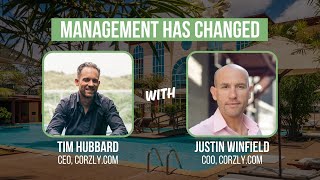
Tim Hubbard and Justin Winfield launched Coorsley, a virtual property management company. Winfield built a boutique hotel in Medellin and invested in real estate across multiple countries before partnering with Hubbard. Their optimization work has delivered a 15% average revenue lift for clients, with one Costa Rica property seeing an 80% increase.
Chapters
Way back In March of 2023, I recorded an episode titled why Virtual Management is the future of All Property Management. And here we are years later. I not only still believe that that's true and it's more clear and evident than ever, but I'm also more passionate about it than I've ever been before. But it's not just me that's passionate about it. I'm excited to have our guest on today, Justin Winfield, who has a fascinating real estate background. He's owned property in China. He owns a property in Vancouver that's been hosted on TV shows. And he also built an 11 story boutique hotel in Medellin, Colombia, where we met years and years ago. I'm also really excited to call Justin my partner because we have joined forces. He shares that passion and vision just as I do. We both truly believe that virtual management is the future of all property management.
So.
So I'm excited to jump into the details with him today, talk a little bit about his backstory, how we came to be where we are today, and provide a little bit of insight for all of you out there. Welcome to the show, Justin.
Thanks, Tim. It's great to be part of the team and it's an exciting future ahead.
Definitely. Justin and I have actually known each other for a really long time, like seven or eight years. We met in Medellin, Colombia, years and years ago. But it seems like the more I get to know Justin, the more I find out about him. He just has a truly fascinating story. So, Justin, why don't you give us some background and how you got to be where we are today. Sure.
So I'm a Canadian living down here in Medellin, Colombia. My journey is a little bit varied. I was a management consultant for quite a long time, basically in the 2000s, a little bit past 2010. And during that period, a side thing that I was doing was investing in property in China in the mid-2000s. And it was sort of a random way that I got there, but that did really, really well. And, you know, we all heard about the. The Chinese economic miracle and the boom and those things. I was very fortunate to identify that early. And I bought a few apartments there and then around 2009, I sold those because the stock market had crashed and so basically everything was on sale, 60% off. So I basically sold everything, got into the stock market, and then that, that rebounded really well. And then because I was living all over the world, I left Canada over 20 years ago. But often in consulting engagements, you're there at A client site for, you know, six months or nine months or a year or something like that. And, and so, you know, I was staying a lot in corporate furnished apartments, you know. Yes, I, I actually once lived in a Four Seasons for over a year. But it's, it's so much better living in, in, in apartments, like a home. But corporate furnished apartments never really had a great vibe. So Airbnb came along. I was like, wow, this is incredible. You know, like it feels like home. And this is, was the early days of Airbnb. And, and so because I was also going back to Canada more frequently, Vancouver, where my parents are. And then I bought an apartment in Vancouver. It's not any kind of like a billionaire penthouse or anything. It's just 22nd floor of a 30 floor tower. But I did it up the way that I wanted it opened it up, great views, Vancouver's beautiful. And put it on Airbnb and did it really, really well. And then all of these companies were booking it for marketing type campaigns and, and then Netflix shot part of a series in it, one season of that series. Anyway, so I learned that. And then I had a couple other apartments and they did really well in an Airbnb too. So I kind of came at it from a design point. But when I got to Medellin, I did an apartment down here and, and I always wanted to build a building, you know, and I always thought that the best of all worlds, you know, Jay Z, he doesn't stay in Airbnbs, but neither does he stay in little apartments, you know, little hotel rooms. He stays in like VIP type suites. So that was kind of my concept for the hotel that I built called Nido sky here in Medellin was, you know, beautiful full size apartments, but with private elevator access and 24, 7 reception and the rooftop and and so forth. So it was a little bit like, you know, Airbnb apartments, but within a hotel wrapper and trying to go more for like the higher end design side. And, and that's just done really, really well. But of course what happened with Medellin is that the city blew up in from a tourism perspective, what we saw back in 2015, which is about when we first started coming in a Medellin, living there, you know, everybody else was discovered over the last five years. So, you know, now there's literally millions and millions of tourist arrivals, which has been amazing for the city's economy and for folks that have, you know, Airbnbs and hotels. But it inevitably, capitalism being capitalism, you know, all these new Hotels flooded in. And then over the last basically 18 months, a lot of the hotels, our revenues are coming down because even though there's a lot more demand, there's way more supply, like there's dozens of new hotels opening every year. And so that brought me to you and, and, and ultimately what's become Coorsley? Because, you know, I, I was like, geez, you know, the, the good times, you know, where you're growing 30, 40% revenue a year, kind, and actually there started to become revenue declines. And so, you know, it was great when, when I went down in Brazil and you sat me down and you showed me price labs and basically gave me a crash course in dynamic pricing and optimized pricing. And then that made me think about all of the, the ways that listings really attract attention, particularly hotels, and really think deeply about that using that management consulting background. And, and so that, that kind of got us on this whole journey of discovery on marketing science. You know, how do you get listings that pop? How do you solve these algorithms to be on the first page? You know, and every algorithm is different. And then the result of that was about a 15% revenue improvement. And that was where, you know, I basically said, tim, we got to work together because you have the Airbnb side and you've created Midtown Stays, the predecessor to what's now Coorsley. And I've got the hotel experience and this thing, you know, if somebody like me who is very quantitative, very optimally oriented, was able to get a 15% revenue increase, everybody is going to be able to get this.
Yeah, you've, you've done some exciting things in the real estate world. I think quite different than, than the traditional route.
Right.
Owning property in China. I know you also lived in Laos for years. You know, you've traveled a ton and I know you've stayed in tons of short term rentals around the world. I don't know, a hundred countries or something like that. Justin. I mean, pretty much I'm not sure.
If I'm cracking a hundred, but for sure it's about 90.
So a lot of travel experience and a lot of design experience, you know, from those other apartments you had, from the Vancouver one to the hotel that you built in Medellin, which is beautiful. And so we'll make sure there's a link in the notes for anyone wants to check it out or for any of you catching the video. We'll, we'll make sure to put up some images. But beautiful 11 story building. You did a fabulous job with it. Uh, and yeah, we've known each other for a long time. So you sort of know my background and I've came from the more of a individual type property background. And a lot of the principles, and actually most all of them that apply to the short term rental space or vacation rental also apply to boutique hotels and hotels. You mentioned revenue management there. But we basically, you know, we've uncovered all of these things that help a property earn more money, uh, and also make the operations more seamless. And so you mentioned Coorsley there a couple times. Coorsley, I'm really excited to share is our new name for our virtual management company. Uh, it was previously Midtown Stays. That was because a lot of my properties were midtown areas. But, you know, now we're in eight countries, we're in more than 20 cities. Uh, and we want to bring this to the rest of the world. And, and that name, Coorsley, we think of ourselves as this core operating center on the back end, virtually where we're pulling all the levers, we're handling the operations and we're making partners. More money with less headache. And so, yeah, when you came to me and asked if I had, I had thought about partnering, I was excited. You have, you have a lot of experience that I don't. Your consulting experience you mentioned, which you did for a really long time, basically making really, really large corporations more efficient. Uh, and you've brought that to our team with Coorsley. So it's been great. I'm really excited. And we're doing this. Let's just jump into it. We're doing this because we both believe that virtual management is the future of all property management. And there's some really clear signs out there why the traditional approach is broken and it's not working that well. So why don't you, why don't you speak to that a little bit?
Sure. It's, it's, it's definitely a fact. You know, if you're in the hospitality industry, and as you mentioned, Tim, you know, there really is no difference between an Airbnb or a hotel. Right. Like the, the problems that you have at the Airbnb are the same problems you have as a hotel. Just the scale of those problems are a lot bigger. And then of course, the impacts of, of wise decisions and optimality. So if you have a hospitality business, whether that's an airbnb or small independent boutique hotel, you have basically the choices. You can either use a property manager. Right. And they're really expensive. They're like 20 to 30% there's a lot of nickel and diming, there's a lot of hidden fees. And, and as we know from the reviews of a lot of these folks, they don't do that good a job. Right. It's, it's not like, you know, they're crushing it with 4.9 review scores. No, the average score of like a Picasso or whatever is like 4.4, 4.5. If you're an Airbnb and you have a 4.4 review score or a boutique hotel with a 4.4 review score, you are never getting booked. Like, it's over. Right? So as, as a whole company, they're managing properties with an average review score of 4.4, 4.5. That is not a vote of confidence that they're doing a good job and getting worse. Yeah, it's, it is crazy, right? But then on the flip side, the diy, it's, it's a lot harder than people believe it to be. You know, a lot of YouTubers and content creators, they talk about passive income and it just isn't. It's hundreds of hours a year. You've got to be an expert at software if you want to be in front of all the eyeballs, which is being on top of all the different OTAs. You've got a whole bunch of work to get on all these different OTAs. You got to know all these different algorithms. You need a software that distributes your inventory across all of them, manages, avoids any kind of conflicts. Now you need pricing software that manages your pricing so that you're optimal. Then you're on 24 7, responding to people's inquiries, right? So somebody has, can't get in at 2am and they're calling you. So the DIY part of it, even though, you know, a lot of owners can get pretty close to professional level results, it is hundreds of hours of work and you can never really switch off. So that's why, you know, what you identified years ago. The virtual property manager is what we believe to be the solution for the future because it solves both of those problems.
So, yeah, I think you're absolutely right. You know, things used to be easier to be fair. You know, when I started a decade ago with my short term rentals, the expectations from the guests side of things were much different. Like someone booked your Airbnb, they're like, oh, I'm booking your home, your property. They weren't expecting it to have hotel like service. And now they really are, you know, and so it was easier in the past. There were way Fewer Airbnbs. But that's just not the case today. You know, it's much more competitive. Things have changed. And so we have to change the way that we operate our properties. And you. You talked about some of the big traditional options here, like Vacasa, and how those review scores just tremendously affect your revenue. And the sad thing is, is that those review scores are getting worse and worse. And so if your property is off under one of these really big names, you can see that, you know, when they list your property, if it's on Airbnb or wherever it happens to be. If you find that Vacasa property on Airbnb and you scroll down, you see Vacasa's average review score of 4.4. And that's not a good starting point from a guest expectation. Right? And the sad thing is that if you're with a traditional property manager, one of the very common pieces of that agreement is that they own your listing, which means that you basically have to start over if you want to. If you want to get out of those negative reviews, which leaves you some other options, right? You can do it yourself, which has become a lot, lot more challenging, or you can work with a virtual property manager. So, yeah, things have changed. You know, technology's changed, the market's changed, supplies changed. Things are much more competitive. Luckily, there are way more tools than there ever has been. But that doesn't mean you can just turn them on and run with them. You know, like Price Labs, for example. I'm. I'm excited to have the. One of the founders on. On the show here in a couple weeks, and I've known them for years, and I know way back in the day, there was probably just a handful of features. You know, you turned on this pricing tool. It really helped you with your pricing, and you adjusted one of the 1015 features, and you're kind of on your way. Uh, but now, I mean, I. I don't know exactly, but I imagine that there's like a hundred or even 200 different ways of settings and just configuring these pricing algorithms, there's a lot more to stay on top of. And, you know, of course, at the end of the day, it's all hospitality business. So we know that the big property managers, their reviews are negatively affected, really, for three reasons. One is housekeeping. You know, they just basically grew too fast and they didn't have the systems in place. So housekeeping, maintenance, and then guest communication. Why don't you give me your side of the story?
On.
On. On Those points, Justin.
So, in a nutshell, what we see is that, you know, the difference between being optimized, you know, like performing at a really high level and sort of the more typical, let's call it average way, is at least 15%. And we see that across our partner base, you know, partners that come onto us. And, and it's what. What I initially enjoyed with Neato sky and, and how we got started thinking about trying to bring Coarsely to the world. And then Coorsley. As a virtual property manager, we don't charge the 20 or 30% that a traditional manager does, right? So if you can get a 15% uplift, but you're only paying 10% and you save hundreds of hours having to run and stay on top of all these different tools, which are great. So with all of these tools, you could get much closer to optimal than ever before. But to get closer to optimal, you have to put in this investment of hundreds of hours a year, both on the guest reception side, but then also keeping on top of these tools and algorithms and changes, and they are constantly changing and evolving. So getting to optimal has a real impact on your bottom line. A lot of folks just don't get there with DIY or a lot of these smaller property managers. They don't have the big team, they don't have the expertise. They don't come from, like, deep sort of tech backgrounds like yourself, Tim. You're. You're deep in the weeds on the tech, and. And so that's what we see. And that's why the future is exciting. And there's a whole host of reasons why it's hard to do all those things. I'm not sure, for example, that housekeeping is easily scalable if you're running a whole city, for example. And it's. It's the same problem for me at my hotel. I don't need lots of housekeepers on Wednesday. I need lots of them on Sunday and Monday. We don't have the, you know, the. The demand levels consistent throughout the week, so that you can't have five or six housekeepers on staff just for those one or two days that you need five or six. Right? And it's the same with an Airbnb. You only need one on Sunday or Monday, probably none throughout the week. And then imagine that problem if you're trying to run like, 10,000 properties, you need 10,000 housekeepers on Sunday, but. But then you only need, like, 1,000 on Monday. There's a lot of fundamental reasons why, you know, the traditional property manager model just doesn't scale very well. But then equally on the DIY side, there's lots of reasons that, that it's really hard to get to optimal. And, and so we're really trying to put together, you know, this tech powered model that enables us to get the optimal but not charge the 20 or 30% that these sort of old school dinosaur types are going after.
Right. The way that these, some of these big property managers scaled, just obviously it didn't work. They scaled too big. And as you mentioned, you know, having 10,000 housekeepers on a Sunday and then needing, you know, 2,000 on a Tuesday isn't a very stable position for a housekeeper. And so, you know, I've, I've dealt with this in my own portfolio and one of the sittings where I have more properties, you know, we've, we've kind of been in between like hiring housekeeping companies, but then also just having our own individual because it is challenging, you know, trying to keep someone employed on a consistent basis. And then you layer on top of that seasonality. It's a little tricky. And so I believe it's trickier with a housekeeping company, you know, if you're working with an individual housekeeper. I've been working with one, she's been with me for over eight years, like almost from the very start. She helps manage our other housekeepers now. But that's made things a lot easier. I actually did a whole nother episode on, on the housekeeping. But I think having a personal relationship, there's a lot of reasons there why that there's more benefit than working with a large company. But just to take a step back and talk about like the do it yourself approach, I know this really well because I did, I did it myself, you know, and I've been doing it myself for years. And I know for a fact that it does not make financial sense to hire a full blown team to run your properties unless you happen to have a really large portfolio or you happen to have some properties, you know, that you can charge two, $3,000 a night and you can really afford to have more of a team. But in my experience, you know, we've managed, I don't know, over 50,000 reservations at this point. Like you really need five receptionists at least to cover a 24, 7 period because you can't expect one receptionist to cover for 12 hours a day, seven days a week. I've, I know a lot of people that have tried this approach. It's not as desirable for someone. Right. And so what I found is that you really need at least five receptionists to cover that 24, 7 period. And then, you know, if one of them gets sick or one of them moves on to something else, then you have to find another one. But it's not just that. You have to train them. Right? And we know that training receptionists to understand all of these different OTAs, you know, Airbnb and booking.com and VRBO, like, there are just so many policies and things that they have to keep an eye out. Yes, there's a lot of good tools to help manage it now. But, you know, all that to say that it's definitely doable, you can do it on your own, but you're going to have to do a lot of work on your own. And it definitely doesn't mean that you're maximizing revenue. And what I also see, Justin, you know, in talking with a lot of our partners and just other owners out there, is that they don't actually know when they're not maximizing revenue either. That's the other thing. So, you know, maybe they did just as well as they did last year, but the rest of the market's doing 15% better. So you really don't know that until you really dive into the numbers and you do studies. So any thoughts on that? I'm kind of just jumping all over the place here.
Yeah, absolutely. You know, that's exactly right. If you don't know what you're, what you're, you're missing, you don't miss it. Right. But we know that, that you're missing it. You know, look at that hotel we brought on in Costa Rica. You know, and I'm almost afraid to say it, but we've increased the revenue 80%.
Yeah, right.
Like, same property, same everything, same same team, same property. The only, the only things we've done is optimize their listings, done some marketing science on their visibility, put in the pricing models and a little bit more around the reviews, management, and 80% impact. Now, you could say they were really quite far from being optimized. And that's probably true. They're the first to admit it. But, you know, they have an owner who's, he's got several businesses, he's a very busy person. And, you know, if it's a 16 unit property and, you know, let's face it, yes, you can have a manager at a 16 unit property, but they're not going to be like PhD level expert, like all different kinds of things, you know, and they have to worry about running this Property and the maintenance and operations and all these things. So they're pretty busy. And the whole point to say that basically just about every property that we come across is quite far from optimal, but many people don't know him, so they feel, okay, well, you know, things are working, no problem. I don't need any help. It's a shame that people don't see the extra lift that they can get from, from bringing in folks who, who can do those things for them but actually charge them less than what they're going to get and then also take away the hundreds of hours that, you know, they would have to invest to do it themselves.
Yeah, it, it is a shame. You know, unfortunately there's just a lot of people that don't have the time though, you know, and that's kind of the other thing. People have bought in vacation rentals or maybe they bought a small multi family property and maybe they bought a boutique hotel, but it's not their full time job. And unfortunately it's taking more and more time to get better and better results now. And one of the, one of the big challenges about this is that yes, we, we have tools, we have education now, you know, you can jump on YouTube and you can find one of a hundred channels talking about the right way. And I did that with air quotes for anyone that's listening to the audio only version because you know, there is a lot of information out there, right. And it changes quickly. That's, that's one of the things I, I've, it's been really nice bringing on more and more partners with our virtual management approach is because we get access to that information quicker. So when we realize that know the certain way we've set up a listing has a much better, a much higher impact then we can quickly change that on our other listings versus, you know, back in the day when I was starting with one property and I put something up and I had a reservation a week and the end of the year I had 50 reservations. The velocity is not there, you know, for, for the learning. So we, we do have that benefit. But one of the challenges, just for everyone, everyone out there, I don't care who you are, if you're, you know, a larger property manager, you're a do it yourselfer. If we want to see our listings, the performance on booking.com then we've got to go into booking.com. if we want to see our listing performance in Airbnb, then we've got to go in to Airbnb. There is no incentive ever for these listing sites to want to give us all that information in the same place. And so I want to talk just real quickly about our vision for Coorsley, Justin, because it's really exciting and yeah, I do like the tech stuff, but it is, it is the future. I think people that aren't getting ahead of it are going to get left behind. And so, you know, our vision, which we're working on as we speak, is integrating all of these tools so that we can go into what we call our quartersly command center and we can pull up one of those properties in Costa Rica, or we can pull up a property in London or in Sacramento and we can see the performance on all these different listing sites. We can see search impressions, for example, we can see review scores and why we may be able to charge more on one rental site versus another. That's what we're working on. I think it's really exciting. What are your on the future?
Yeah, that's, that's, that's undeniably the future. There's, there's no question about it. It's, it's bringing all the data together, you know, all of the relevant information. And just as you point out, there's a lot of structural reasons why a lot of these platforms don't want to cooperate. They don't want to be part of that kind of thing. And so somebody has to create a system, you know, the command center and in our, in our company that pulls it all together and makes everything at the fingertips of a human being, making sure that everything is optimized. And then, you know, we all are watching the trends in AI and inevitably more and more, you know, the AIs are going to be handling, you know, certain aspects of it. People talk about agentic AI and you know, that one agent is perfect for one particular task. And you'll have, you know, dozens of agents doing, you know, each task that each one is optimized for. But the result of it is, is what we've already started to see with the large language models. Like, you know, there was a study of doctors, doctors diagnosing a medical problem verse doctors using ChatGPT. And it was ChatGPT that beat doctors. The AI was better than the doctors in diagnosing medical problems. And you know, we see that in a lot of areas. Like Waymo, you know, is now the robo taxi company of Google. That's, that's now amazing. I mean, you know, you've taken it, I've taken it. It's just a much better experience than taxis Were and even Uber. So you know, the computers are capable of doing things just at levels, you know, jet engines, you know, nobody takes a plane that flaps its wings. Right. You know, jet engines and technology can get us going at a thousand kilometers an hour in a way that nature never could. And so the critical thing is bringing that technology and focusing it directly on the, you know, the optimization problems and the, the guest management aspects of hospitality. And in a way that makes partners happy. In a way of course that ultimately it's about guest experience. That's absolutely critical.
A lot of good points there. And yeah, it does come down to guest experience. Right. Which, you know, in other words our reviews, if our guests aren't having a good time, a good experience, they don't leave a good review.
Performance just starts to drop and drop. And so I love our reception team. They, they do amazing job. We also use AI you know, our, our future plan is not to replace every human in a hospitality type business, but what we do see and what we do want to do is create the options for different types of property owners. So we've talked before about wanting to be like the shop of the piece of the short term rental space. And for those of you that aren't familiar with Shopify, it's, you know, multibillion dollar company that's basically created a lot of applications to help businesses run better. But those businesses don't have to use all of their tools. You know, they pick and choose what works best. And that's really our vision with Coorsley is, is to continue dialing in processes to earn better results, to save our partners time so they can do the things that they love to do and offer that set of tools for the people that need them. So, you know, maybe someone doesn't want to do revenue management, but they're perfectly happy doing guest communication. I don't know that to be the case with hardly anyone out there, you know, because you always can get those calls late at night. But if someone wanted that, we want to give them that option. And so that part's really exciting for me as well. Just being able to accommodate more types of, of property owners out there.
Yeah, it's, it's basically, you know, use us for what you need, you know, rather than like be forced to, to buy like some huge software suite that does a million things, but you only need it to do one thing.
Well, we're, you know, we're definitely going to have to do some follow up interviews here, you know, as we progress and learn more and, but I got to say, I'm. I'm really excited. It's been amazing having you on the team. You've been a huge, huge help. You know, just all your experiences, again, they're really showing up in the way that we're doing things now, and so I'm excited to see where we are just, just in a year.
It's. I mean, the world's changing, right? And. And we've built this company, you know, based on these fundamental insights of being tech forward, you know, embedded in the DNA. But ultimately, again, it's about humans being with humans, guest experiences, you know, delivering amazing results for partners and great stays for guests. And, and that combination is, is, Is what's going to win. And, you know, the, the current options out there are not great. You know, it's. It's not that they're impossible, but it's. There's a lot of room for a better solution. And, and that's quarterly.
Absolutely. Well, thanks for coming on, Justin, and I'll talk to you soon.
Looking forward to it.
More from Tim

Airbnb profit insights to get your business ready for sale! #podcast #realestate










What Most Successful STR Investors Are Focussed on Today: From a 300+ Investor Meetup