【存在しないはずの場所】ナイジェリアの水上スラム「マココ」に潜入!貧困解決のため、ナイジェリア政府の援助なしに、無料で学べる学校をつくる男に密着。
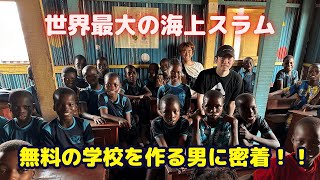
Desmond, son of Makoko's chief, built a free school in Lagos's water slum after the 2012 government demolition left 200,000 residents without aid. The school feeds and educates 361 children on fishing income and donations, including support from Japanese crypto benefactor Kenji Sasaki. Desmond wants his students to become engineers, doctors, and lawyers who give back to the community.
Chapters
Hello. My name is Desmond. I'm son of the chief.
My dad is the chief of this place, and I have also happens to be like a spokesperson to the community.
What do you mean like a spokesperson?
Spokesperson? A spokesperson is this person like standing for the community, you know, always want to see the needs of the community and always want to help in terms of, uh, if the community actually needs something him, and then he happens to be the person who will say it out to people so people can get to know about it and help.
Okay, so you are like a leader of this community?
So like, just like a leader. My dad is the chief, he is the leader, but I also perform the same duty, uh, just like my dad.
Okay, thank you so much for inviting us and giving us your today.
You're welcome. Thank you.
Your dad. Hello. How big is this community?
Makoko have a population of over 200,000.
Few hundred thousand people. Wow. Can I ask question?
Yes.
I heard like the main population of this community is from Benin.
No, no, is it not true? No, the main population is from Badagry.
Badagry.
Oh, I see, I see.
And why they—
the people there they can't came here and live here.
Why they came this place is, you know, what they do at that time is fishing. You know, the fishing group and our forefathers, when they get to a place, they found fish.
Oh, okay.
They've got to many places before getting to this place, and when they got here, they found, they found a lot of fish, and that's how they got to start coming to this place.
So this place has a lot of fish. So people—
yeah, there's a lot of fish in this place, and they've been living here for over 100 years.
Wow, over 100 years! Oh, that's a long—
oh, that's so Thank you. Is this cool? Yes, this is a street called Parts of Solution.
Parts of Solution. Welcome in down here.
Good morning, how are you doing? Are you good?
Are you sure you're good?
Are you happy? Yes. Are you happy?
If you're happy and you know it, clap your hands.
If you're happy and you know it, clap your hands. If you're happy and you know it, clap your hands.
If you're happy and you know it, clap your hands.
Good, good.
Sit down, sit down, sit down. Thank you. Thank you, teacher. Why did you build this school?
Um, why I built this school was, you know, in olden days there was nothing like education. People don't go to school, and because our forefathers, our fathers, they are not educated, there's face a lot of challenges in that they face many challenges only because they are not educated.
So I don't—
I didn't want the same thing to happen to these kids, you know. My dad spent a lot of money to— on me to send me to school on the mainland, and so I actually don't want the same thing to happen to them. So I had to come up with an idea with my brother. Let's plan the school and give these kids free education.
That's so cool.
So we give them free education. And that building, the other building there, is an orphanage.
Orphanage. So the house for orphans.
Orphans, exactly. So the kids that doesn't have family and some less privileged. Less privileged.
Yeah.
So that's a home for them. So they will stay there, they sleep there, and then from there they come to school and go back there.
Yeah.
So that's it. That's what I do. I'm doing all this free.
Wow. Free.
And also, this is free for children?
Yes, the free— we get them free school, their uniforms, we give them free, uh, their sandals, their shoes, socks, books, bags, we give them for free. All I do is we write to people, you know.
That's super cool. How did you manage your disco? Like, how'd that money come from?
How I manage I still do fishing. So the money I get from fishing, the money my brother got from fishing, so we take out of the money and we can pay the teachers. Oh, if we don't have money from fishing, so I write to people I know. Like, a lot of tourists have come to this place and they all have my contacts, they have my Instagram. So I write to them, I need to pay teachers, and people get interested, send money. People send money and I pay them off. Oh, so So that's how we get to do things.
Can I share like your Instagram or those kind of things in this YouTube to my Japanese people? Yeah, sure, sure, you can share it. Yeah, yeah, perfect. Thank you, that's so cool.
So they sleep, they don't even have beds, you know, no beds for them.
Yeah, I'm planning if I get money I buy them beds. So they sleep on the floor right now? Yes, on the floor. This is the kitchen. Bye-bye. This is the office.
Office?
Yes, this is the office.
Community doesn't have that much money, I guess. The government doesn't help.
Yeah, the thing is, we've not We've not been getting any help from them.
Government?
Yes. I can't even tell if they actually know there is a school in this waterfront. Oh yes, they are not helping us.
And why you cannot tell that there is a school here?
Yeah, the thing is, you know, we have the greatest challenges in 2012. What kind of challenges? We're giving, uh, 72 hours notice. So they came, they demolished many houses, they got many houses demolished, and some of the people were shot, not to death but badly injured. And a second-in-command of chief was shot to death during the process. And because we lost lives, so they stopped the demolition. Stop the demolition. And then, and since then, they don't want to help us. They don't want to help us. We've not been getting any help from them, and that's it. So everything that happens in this community, it's of private sectors. So just private individuals, you know, like the school. Now, if we didn't give them the free education, they can't afford to go to school because their parents don't have the money to send them to school. So all they want for them is to start fishing as well. And the way they lay— the way the kids, uh, the female will be start— will start going to the market to sell the fish. So that's it. So it's also the reason why we are giving them the free education, to make them more comfortable. We don't want them to face any challenges in having the educations. They are the best I believe that's the best we can give to them— education. If you're educated, then you know how to build your house, life, you know how to think well, you know how to calculate things well. So that's just it.
Do you want children to like not only become like fishermen but also become like a maybe engineer or like a teacher or like a maybe like a study abroad, or I don't know, but like, do you want people's children to like, uh, walk through the different paths as well?
Yes, that's, that, that's the plan, and that's the, that's also the prayer. So I, I'm a student and I know how to fish. As long as you're born and brought up in this place, definitely you should learn how to, how to fish.
Yeah, as well.
So what the life I want for these kids is one day they become an architect, one day they become a doctor, one day they become a lawyer, one day they become a banker, many, many engineers, many things, many things. So that's, that's, that's the plan I have for them. That's the dream, and that's what we've been praying on. So if they become a, a good person in life, a successful person in life, definitely they would want to remember their community and they want to give back to the community as well. And then from there, good things started coming out from the community. I also appreciate Japanese people a lot.
Oh, why?
Yeah, why? Because of the man I mentioned, Kenji Sasaki. Yeah, Kenji Sasaki is a great man. I can't tell. He visits this place He came here and I think, uh, was he last 2 years? Yeah, he actually visited this place. And when he visited this place, uh, I don't know the kind of person he is. I don't know who he is. I don't know, is that very popular person? I don't know, is that powerful person? But what I noticed was everybody, all these guys there was calling him boss, boss, boss, bus, I don't know, until he left. So one of his workers actually told me who he is. I went ahead on the Google search his name, and then to find out is the Cardano, right? Yeah, Cardano is the founder of Cardano cryptocurrency. And then Sasaki has been contributing a lot to the community as well. So that's why every Japanese people that comes, I want to respect them a lot.
And thank you so much.
I love them so much.
Thank you so much. Yeah, so like you said, there's 200,000 people here, over 200,000 people. So like, but this school only has 351 kids, right? Yeah, 361 kids.
And like, I see, I guess one more school also have same kind of population.
And so I think there's more and more children in this community. Community. So do you want to like establish more school here and give education as a solution to success for them?
Yes, yes, we— the thing is, no money yet. If not, we would have, we would have established more school here and then have more kids in the school. And there's no— there's still not the money yet, but it's still in a plan and they keep writing to people to help us. So we all— we want all the kids to have a good and standard quality education. So that's what we want for them. Then there's a school on the mainland, there's a government school on the mainland, a primary school that is run by the government. We are always happy living on water. These kids, they are used living to this place, so their parents, they prefer the kids to go go to school in this environment till primary 6. So when they get to primary 6, they are bold enough to go to the mainland for secondary school.
So that's it.
But here we don't have much school here, just 2 English school, and then we need more schools to accommodate more kids.
Okay, thank you so much. You're welcome. Japan, Japan. Hello. So is this a bar? Yes, this is a bar. Community bar.
So let's cheers.
3, 2, 1. Kampai! We say your language.
In my language, you say 3, 2, 1.
So the, like, people are, like, building the house, but so the population is increasing here.
Do you like this? Yeah, it's increasing by population. Yeah.
Do you like this community?
Sure, sure, sure.
I love it.
You love it? My community, I love it so much.
I feel more comfortable. This is my home.
Nice. I love it too.
Thank you so much, Mr. Damon, for introducing us and welcoming us to this community. It's our pleasure to meet you and visit this place.
Thank you so much. Yeah, thank you so much for visiting the community. I really appreciate it a lot, and I hope you share the likes with whoever gets to see this.
Yeah, I love this lovely community. So do you have like last message to Japanese people?
Yes, I would say, um, I love Japanese people a lot because they've been a great support and help to the community. And I want to say, Japanese people, you are great. Yeah, you are good people.
Thank you so much.
Now let's say Makoku! We love Makoku. We love Makoku. We love Makoku.
We love Makoku. Good.