アメリカの名門高校に潜入したら凄すぎた!シリコンバレーにあるHarker School編
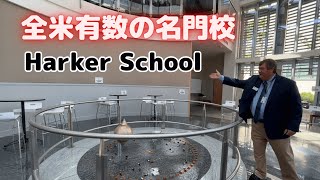
Tour of Harker School in Silicon Valley with its director and faculty. The school runs a student-led venture fund where students evaluate alumni startups, offers robotics as a hands-on lab, and has licensed counselors embedded across all grade levels. Unlike Japan's test-focused admissions, U.S. colleges weigh academics, essays, and extracurriculars together.
Chapters
Yeah, we're one of the, you know, higher-ranking, you know, high schools in the private sector. Here as well. It's funny because some of the local people might not know Harker, but when you go international, most people know about Harker because of the word of mouth. Because we had a lot of clients in the past from China.
Famous outside, but nothing in Japan.
Not yet. Japan, very few.
Very few.
We're actually more well known in China.
Oh yeah, but I will help introduce, uh, Harker to Japanese people by this YouTube.
So that'd be awesome.
Okay.
Yes, yes.
English, business and entrepreneurship. It's that important. We teach economics in the business and entrepreneurship department along with business classes, and we have many activities including an incubator for our students to actually start their own companies. We received a charitable gift for the purpose of giving the money to our students in the form of grants to start their own companies. Oh, and kind of learn how to do that while they're here at school and in our high school incubator. The big program that we're just going to announce one week from today is one of our young alums became very, very successful, and he's making a $10 million endowment to the school, mostly to help pay for financial aid for students who can't afford to come here. But a certain part of that endowment, which spins money off every year, will be used to create a Harker venture investment pool, and that our students will work with the leading entrepreneurs and VCs, venture capitalists, in the Harker community to analyze alumni-founded companies and, and actually make capital, early-stage capital investment in alumni-founded companies. So it's like this community of entrepreneurs, venture investment professionals, that, that will be helping each other source deals, know what's going on. And the students will have a big important role where they will be creating a quarterly newsletter that they send out to all the venture professionals and entrepreneurs that are here in the Harker community— alumni, alumni parents, current parents, and students— that will basically explain what our Harker alumni are doing, what kind of companies are they founding, what problems are they trying to solve, where they're at in the staging and what stage in the development of their company are they. And so it will be a great place for our angel investors, our venture capitalists to begin to source deals because Harker will co-invest with the real venture. We won't be making million-dollar investments, we'll be making very small investments, but we will be able to introduce this alumni-founded company to a very powerful network of of angel investors and venture professionals to be able to help support our alumni who are starting their company. So it's a, it's very interesting. Yeah.
So I teach here in the Upper School Business and Entrepreneurship Department. We've got a number of courses that we offer ranging from the 9th grade entry principles course all the way up to a number of post-AP college-level courses in economics as well as in entrepreneurship. And those are courses designed for students that want to launch a new business. So they're provided both funding, mentorship, curriculum to help them launch the business. And then if they graduate that course, they can take a separate course to scale out the business and really focus on fulfillment and growing the customer base.
So yeah, we designed this room so that the students can write on the walls and the teachers can write on the walls. Very good, very good. I think one of the most unique features of the Harker School is the level of individualization and customization that we're offering to our students. The kind of courses, like for instance, there's very little— hey there, how you doing? Very little students take the exact same courses. So many different courses to choose from and different levels of those courses. That is probably one of the most unique features of Parker. This is our robotics laboratory. The students come in and build their robots here. And by the way, the students run this program. They have, you know, they— it's like a startup company, actually. There's a student that's the CEO, and then they manage all the different departments— electrical, electrical engineering, mechanical engineering, and so on and so forth.
Does Hacker focus on arts?
Everything.
Everything?
Everything. So it's all— everything we do is—
science, math—
we try to strive to be the very best in the country, and we actually are very most accomplished. Oh, okay. So you'll see where all the equipment is, there's an orchestra pit. So there's a hydraulic lift that takes this down and our orchestra will be able to play for the plays. And then the students will run all the lights and the sound and the smoke and bring down the sets and all the control rooms here. So it's a beautiful, beautiful, beautiful theater.
I love it.
A lot of people donate money to Parker.
We're a nonprofit school, so there are schools— some schools are for-profit, owned by a particular person or company, and they need to make money on their investment. Parker's nonprofit, so there's The school makes no money. All the money that we get from tuition and fees and then contributions, we spend on the children. There's nobody making money.
Organization, active study, and what?
So organizational skills, time management, and active study methods.
Okay, okay.
So how to study, you know, how to, how to prepare, how to organize.
And that, that 3 points is important here.
Yeah, this is in the middle school. This is when they develop those skills so they can manage their schedules, a busy schedule. They might have so many different things to do, they have to keep themselves organized. Honestly, this is like one of the most important aspects of the middle school experience. Is the academic counselors really help students certainly with their academic help, but there's so much in the middle school that they have to go through. And like in the elementary school, the lower school, there are many, many, many safety nets for the students. The teachers are checking, there are systems in place to make sure you don't lose things or you, you have your homework done on time and so on and so forth. Hi, this is one of our counselors right now. Nice to meet you. Taylor, Ryan, fantastic. We have visitors from Japan today.
Oh, awesome.
Very good to meet you.
We have incredibly outstanding academic counselors, and they're also, I think they're licensed marriage, family, child counselors as well, and so on and so forth. It's really a phenomenal, important part of the program. And I think it really sets Parker apart from so many of the other schools, the emphasis and the professionalism that we have in this particular department. They had classrooms in many different buildings, and the students were not happy because they want to see their friends. So we built this building where all the students are together in this building. The main academics.
Thank you. Can I get the point of, like, what? Academic advisor doing here?
So academic advisor means like when they have like advisory time, so it's almost like think of as similar to homeroom, right? So rather than going all the classes, you have advisory time to talk about like if you have some difficulties with say, uh, classes, okay, or maybe some difficulties with friends and then they could discuss and find a solution.
Oh, okay. Like cannot catching up with the class or like—
I'm having a hard time catching up. So can you give us like strategy or tips?
Can you help me?
Okay. So that's what the advisor is doing.
Oh, okay. Yeah, I think that those kind of safety net or like place to— Yeah, place to go and receive help.
Exactly. Exactly.
It's very important. For children?
Yep.
The big step is that they actually tell themselves like, I need help.
Ah, okay, right.
And then if they do that, then we're offering help to them.
Yeah.
Okay.
There's some people who cannot say I want help.
It's hard. Yeah, sometimes kids, right? And that's where the teachers come in because they have to kind of sense that it's like, oh, he or she is kind of struggling. So even though they don't speak up, it's like, hey, I could help you. Let me get somebody else to help you. What's troubling you? Right? And that's kind of the role of our teachers too. That makes sense too.
That's why like, uh, teacher's office is in the classroom and like be, be part of the class. Exactly. Every, every time.
Every time. The administration encourages the teachers to take time to go to conferences, workshops, or visit other schools. Why?
To learn.
Okay.
Yeah, to always constantly learn, right? Learn about different types of teaching or different types of strategies. So I used to go at least once a year to different conferences.
Oh, okay. Yeah, I think it's important too.
We call that professional development. So yeah, if I could prepare my kids to understand and problem solve on their own, be independent, not just academically but socially, then we did our job. Okay. You know, that's what education is.
By the way, I want to ask like about the like admission of the, uh, the university in the United States. So I think like admission is in the United States is more like, uh, complicated compared to Japan's admission because Japanese university only focus on the score of the test, but American university focus not only score but also like extracurricular activities, essays, or like they try to like understand the whole people, not only the score.
Yeah, because they can. For example, I know pre-COVID, it was like 2019, you know, like for UC system, you know, they could only take, let's just say, 10,000, but they got over 100,000 applicants. So how do you decide? And out of those 100,000, let's just say 50,000, they're all 4.0 average or higher. How are you going to decide? Because they're all smart academically, right? You can't just base on test score. So now the next thing is, what have they done so far? Have they volunteered? Have they helped in the community? Did they actually start up a business, a nonprofit organization? These are the things they look for, like a whole student. That's where they start. Okay, they're academically smart, but not only that, but they have other goals. That's how they select. Okay, because just because you're smart and say you have 4.0 2.4 grade point average, you have a high SAT score, it's not automatic anymore, right? Yeah, because there are a lot of kids saying, doing the same thing. So what's separate? Well, then you look at other stuff. And so for example, once the kids do like nonprofit and they actually, you know, go to third world countries, let's just say Africa, and help build houses and stuff like that, it's like That's the student we want in our university. Why? Because that student can make a difference. It's not just academic, they could make a difference in community and the world, right? And that's what they look at.
Okay.
And sometimes we tell the kids, it's education— sometimes it's not all in, meaning it's important, but it's not— don't be discouraged if you don't get into your university or college that you want. It's okay, right? It's okay. It's like, I want to go Stanford, I didn't get in Stanford, and they're all depressed. Like, don't worry about it. If you need to go to junior college, do that, or go to other university and transfer to Stanford. But you gotta just work at it. These are the things that you need to work on, right? So we have to encourage, like, don't be upset just because you didn't make it into that particular college or university, right? But, you know, set your dreams high. And you just keep working at it, right? Just work at it.
Not to be stick to the acceptance or like, yeah, rejection.
And exactly, and that's part of life and learning.
Yeah, yeah, move forward.
Yeah, move forward, right? And it's okay to be rejected or fail. We said there's nothing wrong with failure. You learn from it, right? You, you get up. You're falling down, get up, brush yourself off and let's move forward. Okay, you know, and, and to be honest, if you do that, you, you become more resilient, right? You could handle the stress, you could handle the failure. I'm just showing them our lower school computer lab. I'm fine. Over there, if you notice, we got the Lego robotics.
So we also build our own robots now.
Yeah, I know.
And with our 5th graders, basically they build their own robot from scratch. So they learn to breadboard, and we give them microcontrollers and motors, uh, and they're able to plug in sensors. And because they— we teach them how to breadboard, it opens up a whole new—
yeah. Do you think important to teach robots from young age, like in lower school.
Yeah, basically the idea is that they shouldn't be afraid of hardware, right? Any type of hardware. And the idea that you can code hardware, not just something that you come up on your computer screen, can also be new. And what I found is for students who might not find game development as interesting, or, you know, animation as interesting, to see This is a real-life thing that you create, right? It moves around, it can collect data for you, it can transmit that data, it can wirelessly communicate, and you're building it completely from like off-the-shelf materials that you got from Amazon. It's not plug and play, so it feels like the real thing.
So there's a different level of understanding when you have that physicalness of it versus just programming.
And then building a circuit, so you know trying to figure out how do I put a sensor into this circuit and how do I get the sensor to collect the data that I need, how do I get it to relay that data, and then how do I get it to make decisions based on it. So it's a fair amount of complexity. And by the end, by the time we're done, the kids are like racing their robots. They race their robot cars that they build by the end of it. So yeah, it's a lot of fun teaching these.
Hi, my name is Joe Chang. I'm the ELI director as well as I oversee the summer camp on the Bucknell campus. My message to all the young students around the world is follow your passion. When you're passionate about anything, you need to follow it, dream it, pursue it, and hopefully with the guidance and support from your parents and teachers, you will be very successful. Don't worry about failure, just get up, brush off, and continue on with your passion. And if you do that, you will have great success in life. And for parents and like teachers, educators, they need to support that and guide students along the way. And that's what I feel as an educator, that's our job. We should help support our kids find their way.
But on the other hand, I think it's very hard to like, uh, find what you're passionate about. True. How do you think about it?
That— so in order to find your passion, that's where education comes in handy. You try different things at school, okay? You try different things with friends, family, join clubs, join different type of society, right? And you find it's like, oh, I like doing that, right? Or I'm interested in that. You can just push So that's where you need to start finding what you want to do.
Okay, so like the school is the place to find what you're passionate about and to pursue it? To pursue it. Yes. Okay, great.
Definitely.
Thank you.