Perspective Agents in the Autonomous Age with Chris Perry
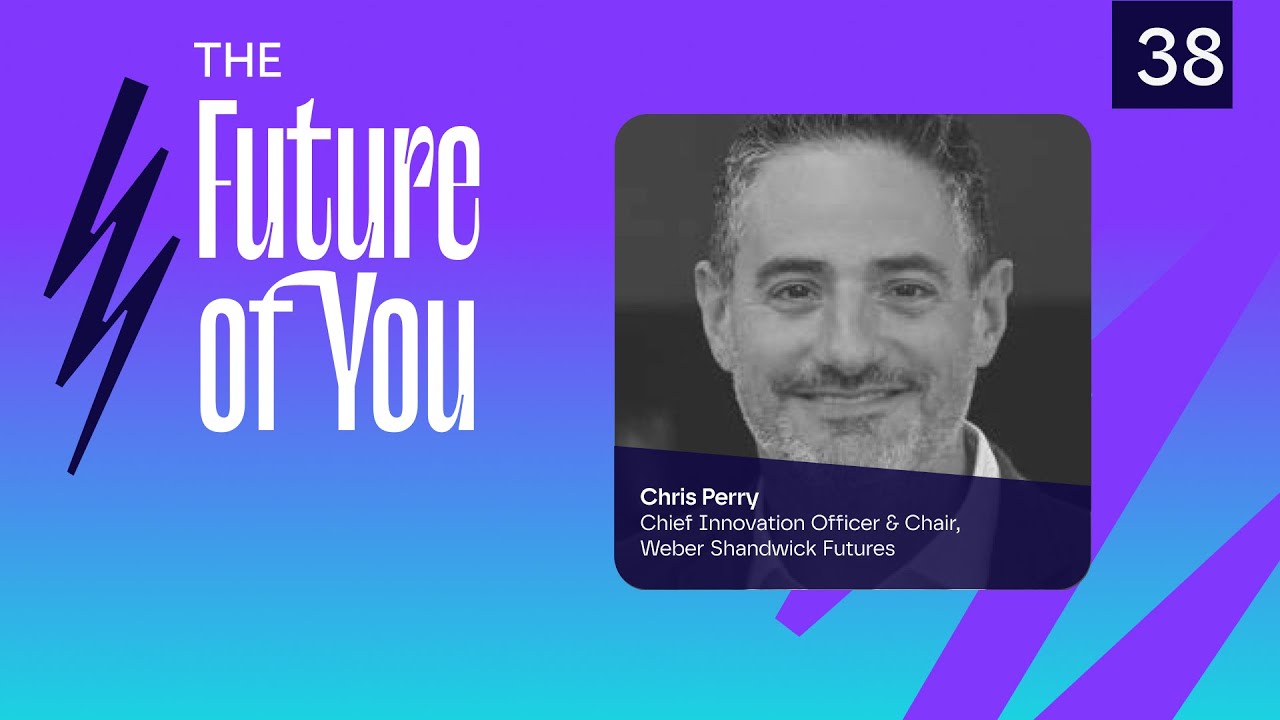
Chris Perry argues we've passed the believability test for AI and now need tools that help humans judge better. He maps three outcomes: efficiency gains, job losses, and new work forms. Practical sense-making tools like Perplexity and NotebookLM can surface diverse perspectives as consensus truth breaks down.
Chapters
Chris Perry, welcome to The Future Review. Fantastic to have you here today.
Love being here with you, Tracey. I love that the conversations that we have in private, we might be taking at least some of what we talk about public.
Well, let's see then.
Let's see.
We were just having a fascinating conversation just before I pressed record even. So, Chris, why don't you give a little bit of an introduction to yourself about where you are right now, what you're doing, and tell us a little bit about Perspective Agents, um, what it is.
Yeah, sure. Um, so a lot of questions within the intro question. Um, so right now I'm in, uh, São Paulo, Brazil. I'm here, uh, this week talking about AI, the intersection of AI in business and society. A number of meetings, a number of presentations talking a little bit about the book. And that reflects the work that I've been doing for the last couple of years, which is to try to think about a pretty big question, which is, you know, is kind of AI eats the world or eats software, whatever Silicon Valley framing you want to put around it. The big question is what comes out the other side? And it's not just efficiency and productivity and, you know, I, you know, call it I guess the money game or an economics game. I'm way more curious about what it means to be human in this world. Personally, you know, collectively within groups like work and more broadly what it means for, you know, society and the structures that keep us together. So that's what I think about. That's really what got me started on the book. The book was about a 5-year project. And that coincides with work that I do in my day job, which is leading innovation in what we call Futures at Weber Shanwick, which is a media lab and a think tank, and now an accelerator to help companies think about the implications of AI in a, I guess, a business and a reputation context.
Okay, and typically what kind of clients, well, what kind of level of knowledge do your clients have about AI? What would be their framing? How do they think about it? And are indeed they using it in their sort of, you know, everyday roles?
Yeah, it's a hard question to answer because I tend to work with, call them Fortune 100, you know, type firms as well as, you know, major nonprofits. If we think about, again, the essence of your question, when you say AI, AI has been around for a super long time. So when we meet with, for example, clients in the financial services field or healthcare, you know, they've been running their businesses and running R&D and running different parts of their organizations with the support of AI for a long time. I think the kind of the aha moment really a couple of years ago was this, you know, generative AI thing. And once you start getting into something that is kind of working in quotes behind the scenes, through algorithms that help, you know, make sense of things, help to explore, help to do research, help to deliver content, you know, to the right person at the right time, so to speak. It takes on a very different nature when these things start to take on a human essence. So one of the things that, again, I've been thinking about that we could get into in the discussion is I think we passed the Turing test, you know, for believability in computers resembling, again, human equivalents. I'm curious about then what's the Turing test for judgment? Because you can replicate people all day, but there's a lot of judgment that I've seen not really being thought through. And that comes back to your question, where are companies right now? I think they're still very, very early in the generative AI game. And I'm not sure they're asking the right questions as they're embarking on the journey. More about technology and technology procurement, not about what does this technology mean to the organization and what are the, frankly, the human benefits that this is going to deliver, not just the economic benefits.
Yeah, I think this speaks in part to the question everybody's trying to answer, which is, is AI hype or is this reality? Is this going to be the new reality? And obviously AI, in whatever way you frame it, at the moment, obviously, particularly generative AI. There's a little bit of doomerism around, negativity, companies sort of saying, well, we can't really see, I mean, even the economic benefits, we can't even see any of the benefits at the minute 'cause it's been 5 minutes. And, you know, this idea of having a longer-term perspective and thinking about, you know, what it substitutes, what it doesn't, you know, what it retrieves, all these sorts of things, I don't think there are many people thinking about that in a profound way. It's very much a sort of productivity and sort of performance way, because we're used to seeing sort of digital as performance rather than, you know, necessarily brand building from scratch anyway, and certainly sort of in human flourishing. Sort of the internet and everything that's happening digitally and with AI seems to be in opposition in most conversations to everything that's going on, which is around, you know, How do we retrieve human flourishing and prosperity and the pursuit of happiness? So you, in your book, I think, try to think about and put forward theories about treating those two together. Is that right? Is that fair?
So let's maybe break it down a bit more. Let's be honest, writing about AI and thinking about AI, I think the last thing you want to do is put your thinking into a form factor that's a book. Because again, like, it's so quaint. It, it, it, well, it's quaint and, um, it is not easy to update. So I've done some, uh, experimenting around the book, creating agents, playing around with NotebookLM, creating podcasts like the Great Podcast, uh, you know, you, you published a couple weeks ago. Um, but the thinking has evolved a bit just based on kind of where the zeitgeist has been around AI discussions over the last year and time that I've spent with clients. You can think about the psychology around AI maybe through two poles. On one pole, it's the efficiency thing. And the word that I tend to talk to clients about is reduction. How can we make work faster? How can we make work cheaper? How can we create variations that are way more cost-effective than if we had to do it without AI? So one pole is reduction. The other pole is destruction. And destruction is, at this point, maybe a little bit more theoretical in that there's gonna be job loss, there could be meaning loss, there could be, you know, clearly some impacts on, you know, call it the national security front. These things tend to have an existential vibe. And I think it's good that we're asking the hard questions around AI that frankly we weren't asking at the onset of social media now, what, roughly, you know, 10, 15 years ago. But in the middle is where I'm pretty excited and there's a lot of opportunity, which is construction. Right? So there's clearly a lot of problems that have been perpetuated by technology and more, you know, for some time now. The question is, can AI and can generative AI give us the ability to create new things that kind of sit in between, well, yeah, we can do stuff more efficiently and maybe these things could you know, take us, you know, into a dark place. But again, around any major, you know, innovation moment or renaissance moment like we're having right now, there is enormous potential for creativity. So you could think about, you know, close to the work that we do, like, what is, what should media look like with AI? What should influential networks look like? What does cultural resiliency look like? What, you know, how do we think about things that have never been thought before that create completely new businesses using, again, the power of these things and the understanding and the judgment that comes with actually being in the game with these things. And again, I just want to, again, come back to the question that kind of triggered this, which is where are clients? And I would say that our clients are a little lost and I'm not sure they even know some of the starter questions to ask because of the narratives out there that tend to go to functionality or kind of existential dread. We're not getting to where it's interesting, which is in the creation part of the business, or at least what I kind of get into.
I completely agree with that. I've been saying for a while, it's not about productivity, it's about creativity. But of course, then not everybody wants to be creative or can think creatively, and they do need a little bit of a start on that because people need frameworks to be creative within. So one of the things the book does really well— in fact, before we get onto that, give us the definition. What is a perspective agent?
Perspective agent is a source that helps you see the world in ways you couldn't otherwise. And so there's a bit of a, you know, revisionist view. What, you know, what is a historical perspective agent? I mean, Tracey, it's people like you. Um, you know, I guess people like me, journalists, authors, um, you know, research teams, doctors, politicians. Um, it's historically been a human form and we've historically done a lot of the hard work to try to make sense of things, to help people, you know, either learn new things or, you know, think about buying new things or making the right decisions about things. Increasingly, I think that responsibility is going to be balanced by software, you know, AIs that, you know, can help us see things, explore things, figure things out, solve things. And so, you know, the notion of what's a perspective agent kind of fits into some of the bigger questions around kind of this human, you know, human-machine dance that we're going to be in the middle of for the foreseeable future.
It's interesting, that idea of exploration and explorers, because I agree with you. I think of perspective agents, as you say, explorers. But are we getting into a world, partly because people think of AI as productivity, not creativity, that they're treating AI as sort of expertise or expert rather than explorative? So, there's so many people I know think that they want to, or suggest that actually, the reason they would want to use any kind of AIs because they want the answer, they want the right answer, they want the objective answer, they want the act. And this is where a lot of this, um, negativity around hallucinations, uh, with AI comes in as well. Or why can't it get this right? And how dare it sort of make up something? Well, humans make things up. It's imperfect information, and it's all— and it's called culture and trends and interesting stuff like that. So are we in a shift from explorer to expert, or is this what you're trying to pull us back from and sort of try to get us to reframe and, and think more— I don't abundantly and creatively about what perspective agents are in an automation world?
Yeah, it's a great question. And again, you know, words matter. And again, coming up with a new term or phrase like perspective agents is fraught in part because it's new. And, you know, that's brilliant. Without a conversation like this, again, there's a lot of meaning that's lost. This is not about search. If, if, if we, the whole first third of the book is how much trouble we get into when we don't have the right perspective. When we use outdated frameworks, if we use outdated models, if we use outdated tools, and we use teams to guide decisions, in some cases in very high-stakes situations. If we're out of sync with the reality, bad things happen. So again, in the book, I talk about things like COVID, like did we get clear direction on COVID? Did we get clear direction on the financial crises that we go through? Do we have a sense of what's going on in the more, I guess, current view with elections and polls and using again, in quotes, traditional media to try to make sense of what's going on? The world's moved on, right? But I think a lot of leadership frameworks and leadership orientation is not. So now coming to your question, if we use these capabilities to enhance our perspective, that requires lots of different sources that either get plugged into our brains or get plugged into an agent, a piece of software to maybe get a sense of how to square up diverse points of view around difficult topics. It's not saying who's going to win the election and a Google-like object gives us the definitive answer. We have to use different inputs and different frameworks to gauge what, again, the likelihood of an outcome is going to be. And again, we are dealing with such enormous in complex issues today that getting an answer coming out the other side is probably not the right way of thinking about where AI can help us out.
I think that's what lots of people are hoping for though. Or it's not lots, some people. I mean, just in terms of, you say about language, just in terms of the language they use around it, you know, give me the objective answer as if this is going to be the route. And obviously you're doing, you're talking about it in a completely different way.
Yeah, but again, going back to the comment on, you know, in between reduction and destruction, there's creation. Maybe there will be completely new form factors that can at least help do a lot of that perspective gathering and filtering for us. And probably the, you know, the most maybe relevant example of that right now is Perplexity. It's a completely different way of exploring stuff that we're trying to figure out. It resembles Google in its UX, but it doesn't resemble Google in how you use it. So what's interesting about Perplexity and models like it is you don't necessarily have to know the question that you're trying to ask. It can help interpret what you're trying to get at, not only through what it, how it responds, but also additional prompts that it puts in front of you to go deeper into something. My sense is there will be even more pure, pure play forms of column perspective-based media, but they haven't really been built yet. And I think there's some pretty interesting opportunity to explore something like that in a whole portfolio of tools that can help us make sense of what's happening and ideally find some coherence on issues that if you're in your, um, echo chambers, you're never going to get that broader perspective that you're going to need to protect yourself, your families, people you care about, because some of this filter bubbling stuff I think is going to have some pretty dark consequences before we get to better ways of seeing the world.
It's interesting because I often sort of ask a question or probe something of ChatGPT and then I get Claude to Rewrite it, given I tell Claude that this is what OpenAI have produced and I'm sure you can do better. And this is sort of, it's an adversarial thing, isn't it? And then you can put it, you can go to perplexity and kind of using all the different sources, if you can, if you know how to prompt them in different ways, and I'm no expert, I'm just experimenting the same as a lot of other people, I think you do get some really great perspectives, if you like. So, it's knowing how to use the suite of tools that are sort of emerging, not just trying to look for the answer. But you mentioned about the information landscape. Can we talk a little bit about that? You've just noted that it's pretty dark. Where do you think we are in terms of there being a breakdown in sort of, you know, consent, consensus, official narratives, and now an emergent sort of networked tribal sort of resonance rather than consensus of information and truth-telling, or truthiness if you like. What's your perspective on where we are and where will we come through the other side? And if we do, well, how do we get there?
Yeah, wow, so this is a big question. Again, the first thing that came to mind is some of the some of the influences behind the book. Clearly the way Marshall McLuhan thought about, again, media ecology, you know, comes to mind. Obviously Norbert Wiener with the whole notion of cybernetics. We've been in a very linear, I would say, stage in information processing for the last century. A lot of the kind of media figures that still are in positions of power and responsibility, they still in many ways rely on a linear progression of agenda, editorial calendar, reporting, pump it out, and then kind of have the social on the edges.
I think we rather disparagingly call it boom of truth, don't we? Yeah.
So again, that's not how the world works.
Yeah.
So these notions of being a part of a media ecology and having more of a circular cybernetic orientation is actually how things work. And again, I think that lends itself more to, again, a generative notion in generative AI maybe being something that could help us break through once the breakdown continues to happen and maybe has Maybe a, uh, what a, um, what am I trying to say here, Tracey?
I guess I'm asking how bad is that breakdown going to be?
Again, I don't want to be overly doomy.
I'm not such a fun podcast.
I mean, I'm looking at the flower in your background. It's all, it's all very, um, here's though the, the, again, the hard truth. And again, I covered this in the book. What we're going through right now, it has new dimensions to it, but it's following historical cycles. Every time there is a major technological breakthrough, the social effects are very significant. Strangely, you just hear echoes or see echoes when you look at, you know, post-history after the printing press, you know, post-industrialization. When big paradigm-changing technologies drop, it tends to lead to a lot of discord, a lot of soul-searching, a lot of breakdown in identity. And again, invoking, again, Marshall McLuhan, right? When identity is challenged, people fight. And so we're in the middle and have been in the middle of an information war for some time. I think we're starting to see the extremes of that, particularly again, if you checked out or heard about yesterday's Trump rally at Madison Square Garden. Again, there's historical precedent for that. And so what I was trying to hedge on and why I paused so long is I do think that breakdown equals conflict. And on the other side of conflict, will resort and we will have new creative capabilities and creative, you know, human flourishing and life will go on. But we're going through a fairly rough stretch where a lot doesn't make sense.
Do you think that's just in the West, Chris, or do you think it's globally?
Yeah, so that's a great question. So a friend of mine, again, who I talk about in the book, his name is Mark Stallman. He runs a group called the Center for the Study of Digital Life. He tends to think about this. And again, he's someone in his group, or a group of people that are very well-read in terms of philosophy, history, with a very global view. And Again, the time that I've spent with the center and with the teams in the center suggests that the narrative that we're consumed by is a Western narrative and Western— kind of the Western construct is breaking down. In the East, again, they have a different view than we do in the West. They are retrieving the classics, classic teachings. Ancient history to make sure that— and I'm really talking about China right now— but we have to remember where we came from. And we have to respect that people that have gone through maybe similar challenges have thought deeply about the same human and social challenges that we're going through right now. I think us in the West, we're just so consumed and so mediated by digital technologies that maybe we've lost sight of some of the classics that really set the foundations for, again, Western civilization. Where their theory becomes very interesting is in between the East and the West, there's digital. So a digital ideology or philosophy is not the same as Eastern philosophy or Western philosophy. And digital proposes a threat to both without understanding, again, the contours of what digital looks like today, what digital might look like in the future, and what it means for maintaining a coherent society. And again, a territory, just to be explicit about that, is imagine let's say back the napkin 5 years out, the metaverse, despite, again, current convention, it's flourishing. That virtual worlds are a place that people immigrate to, not in a similar way to how we went to new countries to find a better life. Who governs that? Is it corporations? Is there a manifest destiny amongst You don't call them states. Who sets the rules? Who creates the economic models? Like there's a whole new world being built right now that very few of us have visibility into that has very significant geopolitical implications to them. And that's just another, again, dimension I touch on in the book. That again, it's just about making sure that our eyes are wide open to what's happening today and what's happening going forward. So we're not surprised, we're better prepared, and ideally we shape these worlds in a way that benefit us versus harm us.
Yeah, it's very interesting because another alternative option around that could be completely self-sovereign territories. I mean, people could be seasteading and things like that. Libertarian sort of philosophies obviously driving that. I mean, how successful they are at scale, goodness only knows. Perhaps they're not even possible. But yeah, that's another possible model. And this is it. I think people are experimenting with this. It's like whenever I go and talk to companies or boards or whatever about DAOs, decentralized autonomous organizations, I think they're again, just fascinating experiments in governance because they're just so different to where we've been sort of particularly post-Second World War. But let's say that post-war Western societies where it's very hierarchical, organized, command and control, media, all these sort of thing. And like people, yeah, but who's in charge? In charge? But who's in charge? I said, well, depends on the governance tokens and how those are distributed and how much engagement. Oh well, there aren't any case studies on it, are there? So it's probably— we— I don't think we need to spend any time on that. I think we do need to spend time on it because it's an interesting experiment. We could— if we, if we spent a bit more time observing it and noticing what we're noticing, then I'm sure it could actually be some very, very insightful about what what possibilities there are to come. But again, we're in that area where, oh, unless you've created this innovation and we've got some sort of use case/best practice, you know, all these phrases don't really seem to me to be that applicable and relevant as we go forward, but they are the lexicon and is the grammar of our culture that people are kind of stuck in now organizationally.
Yeah, so You're kind of hitting on a point that I think is super important to maybe dig into, you know, a bit more. So I've been at the intersection of, call it technology communications and call it public understanding for 30 years, you know, given where I've worked and some of the stuff that I've done. Historically, we, you know, we've called that digital. And so the innovations that, you know, we, you know, we thought about and ultimately built some pretty big businesses around were things like social intelligence. You should really understand again how people are interacting through social media to understand, you know, where, you know, where opinion is, where opportunities and risks are. Then we built a massive social media business, just helping companies understand How do you engage in social media, you know, pre, you know, ad-driven algorithms? So this was early. This was like 2013, 2015. We got into that. And without belaboring the story, we kind of scaffolded on column new communications interfaces. All we've been doing, though, is essentially putting layers on top of what is essentially old systems, or call them industrial systems, and governance models that virtually all the Fortune 500 companies and governments of all kinds still run on.
Yeah.
So to me, we could talk all day about AI, but I wrote the book because I think the most important innovation we should be focusing on right now is perspective. Because if we can't see what's happening, it doesn't matter how genius the tools are or how powerful the models are. If we don't know how to use them, then the value coming from them will flop. The second, if you then click down one more, we have to change organizing structures to reflect the way the world works today versus the way companies and organizations work today. So while again, you know, Fortune 100 or Global 500 companies will never be a decentralized crypto-run organization. They can use, again, inspiration from people thinking about organizations in completely different ways to at least move with more intention into a place where the relatability, you know, better matches the reality. And right now, again, like there are still some companies that still don't know how to communicate effectively through social media. And that's a 20-year, two-decade situation. And they still think that this is about information transmission.
Yes.
Using traditional forms, not interacting in engagement and almost using, again, the cybernetic orientation to continually improve and be better. Serving a public need or serving up public goods. So the whole organizational element of this is pretty fascinating.
Yeah.
And I think AI is going to apply extreme pressure on these industrial models just because there will be too much competition, too much velocity, too much, too many surprises for boards to assume that it's business as usual and we'll continue to run things the way we always have.
Yeah, because that's going to be happening at a fascinating time in which Gen A are going to be sort of onboarding into the workplace, and you know, they will be completely— and again, there's a lot of disrespect paid towards generational research, but I'm a big fan of it. I think if you do it properly and you, and you understand the actual outputs of it, it's incredibly valuable. But these, this generation would be completely peer-to-peer So then they're going to enter a workforce, which is just a complete anathema, or they won't enter that workforce and they'll just create their own sort of working communities or new types of roles or something.
Well, it's already happening, right? And again, I'm not saying that this is a good thing, but the whole creator economy is based outside the confines of institutional order, right? And just one other thing that I think is kind of interesting, you know, as you bring up generational differences. I see it inside of the companies that we consult with today. We're talking about generative AI. And I would say if there is a single term I would use to describe generative AI in the workplace, it's cautious, extremely cautious if we want to use two words. But there's an interesting I think oversight in that, and you could apply this to, you know, universities as well. I'm sorry, but bans aren't going to work. AI plagiarism detection is not going to work. Like these institutional controls over what's essentially the, you know, current version of the internet is nuts. It's in our phones, it's in our software, it's in our search, it's everywhere. And we're saying because there's this idea of a ChatGPT that's going to plagiarize things for us, that that's what governs our thinking. So there's a phenomenon, I don't know if you've heard of this, it's what? BYOAI, bring your own AI to work. Fortune ran a poll, I forget who actually did the poll, that there's upwards of 70% of employees said that they use generative AI at work without approved systems, without governance models, without guidelines, and frankly, without development. So the point that you made about, well, you've got a certain generation of leaders that are running things in a certain way, an employee populace that's just saying, fuck it, I'm just going to do it anyway. Like, think about the missed opportunities and think about risk with that. And that's just one tiny, tiny example of a, you know, a complete incoherence in some cases in the workforce around who I want to work with because they understand me, they share my values, and this is a place where I want to be because I feel like I can grow and prosper. I think there needs to be more study into that to really understand, you know, at a deeper level what's really happening and how you can meet in the middle.
So this whole, like, I was just thinking the same. Let's do that. Let's do that project. Let's do that.
Yeah, yeah, yeah.
Um, you've got a brilliant— very, very early in the book, um, I didn't know about this guy, Donald D. Hoffman. Um, this is, this is just brilliant, this bit. So Hoffman used computer speech to explain his ideas. He introduced a groundbreaking idea, the interface theory. Of perception. His papers argue that perceptions direct behaviour towards survival and reproduction, not truth. I mean, maybe you can just expand on that. I mean, it's brilliantly explained in the book, but it made me think of, again, this schism between maybe a post-war sort of organisational way of thinking, which is like a correspondence theory of truth, like, this is the truth because I can point to something that happened in the real world that it corresponds to. Even though actually the only way you can see that in the real world is through media, which, you know, we own. So it's not— it's still a prospective agent. And towards a coherence theory of truth. And as we were just talking about these new emergent generations who will enter the workforce in a sort of peer-to-peer or a kind of 'we don't do it like that' mentality, you know, they'll have a sort of consensus model of truth, very much like he's sort of espousing. Can you talk to us a little bit about that? And also, around some of the tools and companies or organizations or platforms that you might be using to navigate through where we are now with this, like Blackbird, that you and I have had a chat about before.
Yeah, this is like a series of podcast questions that you dispose, but let's dig into a bit. So again, let's use generations or generational differences as a way of kind of coming at what Hoffman's talking about. When there is control, when there's institutional frameworks, when there's limits to information, I can tell you the truth if I'm in a position of responsibility. I'm going to tell you what the truth is. And there's not a ton of corroboration. And again, if you look at the Gallup polls going back to the '70s, we believed it. We believed in our public officials. We believed in the media. We believed in corporations. We believed in our teachers. We believed in our doctors. If you look at where the Gallup poll was then and where it is now, I think pretty much all of them except for the military, and I'd have to kind of refresh my browser to see where the polls are today. With the exception of the military, they're all at all-time lows. So this idea of institutions being truth tellers, I think if you just look at the downward progress, there's probably— we probably need to spend less time on debating like what media outlet's right or what expert is right because The name of the game now is corroboration. So you aren't going to tell me the truth. I'm going to corroborate the truth based on the people who I trust, the networks that I'm a part of, and the tools at my disposal to get to what I want to know. And it could be as simple as what restaurant should I go to this weekend? If I trust in New York or say Chicago, Chicago Magazine or Grub Street, that's a good start, but I'm not going to just say, oh, well, I'm going to go there because my lifestyle magazine of choice rated them high. I'm going to talk to my friends, I'm going to dig around, and I'm going to make a choice based on, again, what I'm most comfortable with. So the best place to get, let's say, I don't know, name your dish, is going to come from me in my tribe. It's not going to come from someone telling me, someone individual telling me. So you then take that all the way through to COVID, right? Who the hell did we believe during COVID Well, it turns out many of us, just to get like a baseline sense of what was going on, used a dashboard from Johns Hopkins that aggregated data to help us make sense of what's going on, how prolific the spread was in certain communities. We used a data aggregation tool as a complement to what health officials and public officials were telling us. And ultimately, you got a pretty wacky mix of a bundle, if you will, of ways of thinking about COVID and lockdowns and should you send your kid to school and wear a mask and all that. That brings us to the Hoffman theory, right? If we are unbundled from an institutional information order. We do have certain communities that we're a part of to try to make sense of what's going on. The best ideas within those communities are going to win, and it's based on, according to Hoffman, evolution. It's not based on logic, it's based on emotion, right? And that might be a good thing, except for you've got grifters and power players and profiteers that know how to game communities. And unfortunately, a lot of the best ideas are total bullshit. And so the question is, are there other tools and other networks to be created to balance out the filtering and some of the performative and incentive models in social media, in media today? With not only, again, new technology, but different models around that that have the right incentives behind it. Because at the end of the day, we're going to choose what we believe in, not necessarily choose the truth. And we can talk about religion, we can talk about politics, we can talk about certain social movements. If you really want to get into the facts, some of the facts are very, very hard to justify. We're going to follow what we believe in. And my sense is Hoffman was onto something with his interface theory of perception. I think it's a super interesting theory. I'm surprised more people don't talk about it because it's essentially what culture is running on right now.
Yeah, I thought it was fascinating, fascinating explanation, like of the underpinning shift. Now, what about some of these tools then?
Yeah, so, so I don't think there's any one tool. And I think it's important to clarify that because I think there is a certain belief going back to your question about like where are companies and leaders, generally speaking on AI, I think there's this view that there's a silver bullet mentality, that one thing is going to be the, you know, call it the go-to source the way, frankly, Google became the go-to. Yeah. But again, I would look at Google as probably the, you know, the metaphor here that that Google became again kind of the front door or the kind of interface into like all the world's knowledge, right? I don't know if that's the case when you get into AI because if you start to break apart like how the AIs work, they're clearly based on the very powerful base, call them the LLMs. There's a, there's clearly a bunch of agent tools that can help us pinpoint areas where we could be smarter or more expansive in our explorations or more creative that borrow and pull from the data from the LLMs. And then the top layer, which hasn't really come yet, is kind of what happens when you start combining these different agents. Into maybe new verticals of knowledge. So I don't think they're necessarily following it, but I think Harvey is a pretty fascinating example. I don't know if you're familiar with Harvey. It's essentially, you know, call it a vertical AI for law and the legal profession. Okay.
Yeah.
And so I think you're going to start to see very different instances of you've got call them the big one at the bottom, or big ones, because to date there's not really any moats with those. You've got all these agents in the middle. So again, the way I try to describe to clients is if on a mobile phone there was an app for that, there will be agents for everything. Yeah, that's not sustainable because they like— we don't, we don't do well with abundant choice. So my sense is that they're going to roll up into maybe some verticals. And then maybe it then comes around and there's some AGI thing that ultimately you just go to one place and ask it anything and it'll solve all your problems. But I think that's still fairly speculative. So when we talk about tools, it's really hard to say, well, this one tool is awesome or that one tool is awesome. But let's talk about a couple awesome tools, right? So if we want to move from understanding how information travels and what public intelligence looks like, historically we would have looked at opinion polls. We would have looked at media reports. We would have done, um, you know, uh, focus groups. We would have done ethnographies. We would be doing a whole lot of things that were very human trying to understand how a message created versus message received worked, right? The world doesn't work that way. We're all a part of one big global network of humans and technologies, and it's basically a huge hive mind. So how do you see what's going on in the hive? Blackbird is one of these AI companies that doesn't look at intelligence through the lens of PowerPoints and paper reports, you look at what's happening through network graphs. And there's a particular focus on narratives because again, we're influenced by stories way more than data or academic stuff or these kind of things. So following the stories is a really good proxy for understanding what's going on. Stories today are in conflict. So when we look at network maps, whether it's from Blackbird or other intelligence providers, in almost every case, there's a for and against. If I say blue, you say red. If I say white, you say black. And it's on every issue. So understanding not only territories that are important to a decision, to your brand, to a policy, understanding how people are framing stories around that. In competing, using again the Hoffman model, regardless if it's true or not, what ideas have gained traction in these networks? How big and expansive are these networks talking about certain stories? And then where's the crossover? Because once things start to cross over, that's when social change for good or bad starts to happen. And Blackbird gives you a lens into that. And I think that's the way that we have to see. We have to see the world through networks. We cannot see the world through papers and expert models and some of the things that literally trillions of dollars of economic value goes into today. We have to redeploy that in more tools that help us see the world for what it is, not what we think it is. And it's all based on data. It's not based on subjective opinion. And I think using subjective opinion is where we get into a lot of trouble in terms of making decisions. The other one that we should talk about, because I know you're a fan, is NotebookLM.
Oh yeah.
So you're talking about two completely different, I would say, territories. Blackbird is more of a, it's a B2B. Service, but you can still get some pretty interesting intelligence, not through network graphs, but through interaction with an AI by using NotebookLM in clever ways. So for example, if I want to get, let's say I'm an undecided voter in the United States and the election is next week. I am not an undecided voter, but believe it or not.
You're the one.
Yeah, I'm the one. You could, if you had the agency to do it, you could pull 50 different articles today on the trending topics coming out of the politicking over the weekend, throw them into NotebookLM. NotebookLM will give you a briefing book that is a synthesis of all the varied, uh, uh, you know, polarized, uh, in ideological, ideological coverage. You can get a Q&A, you can get a fact sheet, you can create a podcast.
Yeah.
Most importantly, you can start to ask the information questions like strip all opinion and all bullshit out of this coverage and tell me how both parties are coming at issues that matter to me, like abortion or racial equality or— and just tell me the facts that are coming through this. Right there, you've got a prospective agent, if you will, that also is real time. So this idea that, oh, well, you can't trust, you know, ChatGPT or Gemini or name your LLM because they have a certain cutoff date that's 6 months ago. In the case of NotebookLM, you can augment that by just plowing information into this and then interacting with this, not just being a passive receiver of information. So those are just a couple of many things. We have a portfolio model. But ultimately, I think, again, coming back to this Turing test comment I made earlier, none of this shit matters unless it enhances our judgment. And right now, the media and information world, if anything, is destroying judgment with all kinds of psychological effects to this. Oh, totally. Is there a way of not just relying on AIs, but relying on how AIs and, you know, I would say pioneering thinkers are creating maybe more signal using these things versus more noise. And again, there's a lot of noise out there and there's a lot of crap being, you know, pushed into the, you know, public, the public square that's the internet. But I think there are ways of finding signal through some new technologies that are coming out.
Fascinating way to, to explain all that. I was going to ask you actually before you started talking about Notebook, when you were talking about the output from Blackbird, what happens when you take that to a client? Because it's not an easy answer, is it? Well, it's not an answer, it's a Again, it's like sensemaking. And you've got the different networks and there's polar opposite opinions. And then, as you say, there's a bit of a crossover. So what are they actually looking for? What can they— what do they do with it if they're smart?
So again, this gets back to perspective being the most important innovation. So when we talk to our clients, our clients again have kind of a linear mode of thinking about a problem. What's the problem? What's the remedy? What's the message? What's the strategy? What's the creative? What's the output?
Go.
They're missing a huge— this process misses a huge critical territory, which is, can you sense what's happening before you strategize? Because if you move from issue to strategy, you're relying on instinct, you're relying on precedent, you're relying on old frameworks, you're relying on da-da-da-da-da-da-da-da. And so who is it that was talking in our Human Effect Group the other night about military strategy in the OODA loop? And you have to observe and orient before you act. And it's a massive gap in a lot of public strategy work that I see done inside of corporations. And now, again, the stakes are so high that if you miscalculate where the marketplace is, It's material to earnings. It's material to businesses. It's material to employees. It's like the materiality around a lack of perspective is now showing up on balance sheets.
Yes.
Which is a really, really big deal. So this isn't just about a new Blackbird or a new NotebookLM or a new tool. It has to be put into a model that reflects the problems that have to be solved. And again, as I wrote about in the first two chapters of the book, the ability to effectively observe the marketplace and be better at what you do is, it's in a way, it's becoming a crisis.
Well, you talk at the end of the book about agents of wellbeing, not having them or not being cognizant of wellbeing, not knowing how to nurture it. Create the environment for human well-being, all of that, that is a disaster, that is existential. And obviously, you talk about the sort of Epicureans, about the importance of companionship, autonomy, or sense of freedom, and maybe some sort of meaning or direction in life. How do we instill this in recipients of perspective agents so that they can absorb or utilize perspective agents and the right ones in the right way? How do we do that with clients, but actually how do we do it in society? How do we think about doing that with young people who have got a very different, as we've just discussed earlier, a different value system? Can we re-engage them with some of the things that are important, sort of classically going back, back in life rather than just in the future?
Study Taylor Swift.
She's a cult.
No, no, no, no, Tracey, this is super important. Study Taylor Swift. Don't study her lyrics. Don't study her storytelling. Don't study her grievances. Don't study her past relationships. Why? Why is it that you can go— and I went to one of her shows. It's the Super Bowl every day for her fans. Everywhere she goes, it's a Super Bowl. It's the biggest day of their— in some cases, their lives. The energy in that place is unlike anything I've ever seen anywhere else, including a World Cup final and some of the biggest sporting events. The energy in this place is different because it's positive, it's joyous, it is unapologetic. And there is a connection there with, with, again, the bands, And we're talking like the band trading. Like there were a bunch of kids that were probably 5 or under at the show. Grandmothers there, like, what's going on there? And I don't give a shit if you're a fan or not, or if you're buying into kind of the right-leaning orientation that she's a poor embodiment of what a woman should be and all. And we've studied this. Just, just look at the worlds that she's built and her team has built. And it's based on obviously genius art, but social bonding. If you really study her work deeply, that's what it's all about. And it permeates into everything that she and her team does. So I'm not saying everyone should be a Swift fan, although it seems like most people are. I'm just reacting to your question that I could say, well, you know, study, you know, name that great brand or study this. No, studying the biggest story.
The phenomenon.
The phenomenon, the biggest story over the last couple of years and it's the Eras Tour. And it's fucking nuts.
It's nuts. How gendered is that though?
So I, you wouldn't believe, I'll send you a picture after this.
Okay.
I would say it was probably 70-30. Female, male, but, but, but the guys in the house were just as excited and happy to be there as— so, and again, there's a whole, you know, dads, you know, dads phenomenon around, yeah, around this. And it was one of the best bonding moments I ever had with my daughter. She invited me, she got 2 tickets, said, Dad, you want to go to Dublin with me? I said, are you kidding me? Of course I will. We had a blast. So the connections aren't just, you know, fan to artist, it's fan to fan. It's within families. It's kind of the antithesis of the political bullshit where in a lot of households, in a lot of markets around the world, politics has become conflict. People are fighting. People are losing relationships with parents, with siblings, with friends. This flips it on its head. This is a bonding agent. This isn't a, you know, a destructive element. And again, that's why, again, like to me, one of the things you got to look at to answer your question is that I'm sure there are other examples to look at.
It's interesting because it has spilled over. I mean, might not put this in the pod, but it has spilled over into the UK political context because obviously our new Prime Minister, um, took free tickets to go to Taylor Swift, and he's taking a lot of freebies, so he's under— he's being examined for that, really. And she was also given sort of, um, a police escort when she was on her way to— it was very, very expensive from the Met Police, and did she really need it? And that would not have happened with anybody else. It is because the pull and the strength of Taylor Swift. That that has actually happened and it's become this massive issue that's crossed over culturally with politics, which it would never have happened before. Anyway, just telling you.
So just one thing to stay on this for a second. So again, we study all kinds of different phenomenons. And one that we studied was the topic that you just talked about is anything that has emotional connection to it is territory for culture wars, anything. So it makes sense that one of the most emotive figures is Taylor Swift and the Travis Kelce thing and the affiliation with the NFL. And does she embody proper women's values? Is she a government psyop? We studied this Taylor Swift undercurrent, again, using Blackbird data, looking at it over time. Tracey, it's orchestrated. You could see the entire orchestration from coming out on Instagram and saying, get out to vote in a couple state elections through to Taylor Swift is a psyop that dropped on Fox and had not just Wright, but everyone like erupting into response. 20% of Americans think that she is a government agent. And that was before she endorsed Harris. And remember, she endorsed Harris because of some deepfake drops and Trump pushing it. And so this stuff is really, really complex. And again, coming back to perspective, again, I'm looking at this not only through like, here's the kind of the bonding agent that's Taylor Swift, but also like, what does the culture war look like around Taylor Swift? And they're both orchestrated. The bonding agent just didn't happen by happenstance. It happened through genius marketing, public engagement, feedback loops on what resonates with her followers, reaching out with high-touch moments that are Instagrammable and all these things. It's orchestrated, but it's orchestrated based on my personal experience with very, very good outcomes. The orchestration and the undercurrent, the culture warring, I'm not sure what that gets you that's positive other than maybe less attention on an endorsement and maybe again, a threat to others that may come out that we're going to come after you. You too. So the key thing is realize if you want to have a clear view on things, that there's very little in the world these days that doesn't have an orchestrated element to it.
Yeah.
Whether it's the algorithms, people gaming the algorithms, or people gaming other people, because it's so easy to do it when you have emotionally charged anything in the world, whether it's a pop star or you know, a candidate that you hate or love.
I think people are finding that, the people that understand that to some degree, are finding it quite demoralizing. Like, it does have an emotional effect on you of, in the extreme, you can't believe in anything, to sort of, well, I have to have several different views and talking points dependent on which cohort I might be communicating to.— it's a much more complex communication space, obviously, but I think there is something that's quite— even though that is the reality, to feel that you're being propagandized to, or it's being orchestrated to that degree, it can feel— on its worst days, it can feel a little demoralizing.
Yeah, yeah, but I think again, going— I mean, propaganda is not a new thing. I think what's different is anyone can participate in it now. You're just not on the receiving end. You can be on the, the, um, the for and against. And people, um, do have that agency and they're deploying that agency. And if that's a good thing or a bad thing, you probably know more about this than anyone given your study of, you know, people and identity. And I don't know, I think, I think it, it's just, it's just different. And we have to understand the differences being in a digital paradigm versus being in an industrial paradigm. And we're still super early. It's super early.
Um, Chris, um, I could talk to you, uh, all day. Um, I've asked you hardly anything I was supposed to ask you, and I've asked you things that anything I had on my paper, like, I'm like, oh no, that'll have to be round 2. Um, so, um, what is— just as we close up then, what is the, uh, one thing I, I haven't asked you that I should have asked you?
Um, I mean, there's just so much ground to cover.
Yes, isn't that—
I think the one thing, and I'm just going to say it one more time, perspective is the primary innovation. It's not a corporate thing. It's a personal thing. You and I have been around for quite some time. I think we've both been pretty successful in what we want to do professionally and what we could do going forward. You and I is again, test cases. We're either going to flourish or we're going to face a super harsh reality. That the way that we see the world and the way that we do what we do within the next 2 years is going to be— it'll be in a completely different form with very different models of thought. And that applies to everybody. And I see a lot of people sitting on the sidelines. You know, you said is I forget the exact way you framed it, but is AI a bubble or is it a fad? It's not a bubble and it's not a fad. It's one of the greatest paradigm-changing agents in human history. The speed at which this is being deployed, the speed it's integrating into our lives is extraordinary. I still don't feel we know the psychological effects of AI through algorithms on us. And we can't sit on the sidelines. You have to engage in discussions like the discussions we're having, even if it's around the dinner table with, with, you know, with your friends and family. You have to use the tools just to understand them. You don't have to use them. You can opt out. It doesn't mean that you're not going to be affected by them. Right. And I think we all have to think about impact and work in a different way because I think the workplace is going to change radically in the next few years. And so this idea of perspective, it doesn't really fit column containers that are prioritized in our own lives, let alone in corporate settings. I've never had someone say, hey, here's an RFP for perspective, right? But my God, is it important. And I wrote the book in part because I'm just, I would say glass half full, so excited about what we can build and what we create. And I'm terrified that I think the models and those that use the models are going to leave a lot of people behind. And if we leave a lot of people behind, then you get into some of the stuff I was hedging on with conflict. People don't sit easily when their livelihoods and their identities and their ways of life are challenged. And I think there's going to be a lot of challenge unless we move very quickly into builder mode. And I don't just mean build for build's sake, but build things that make us better, more connected, more positive. Some of the things that we were talking about towards the end of the discussion.
Brilliant. Yeah, because I think we should have a prepper mindset for AI. You know, what you're going to put in your toolkit, what's the equivalent of your sleeping bag, your water, your box of— I don't know, this will obviously go, this will be a part of my prepper mindset, my prepper toolkit for the future. Last thing for the book. So, obviously we've got listeners all over the world, US, UK, prospective agents, Where can people get it? Or more of your writing, because I know you do sort of still write on these topics, obviously, um, in Substack and probably somewhere else. I don't know.
Yeah, so easiest place is Amazon. The place is Amazon, so you can go there. Um, and, and again, whether you like it or not, leave a comment. I just, again, like, this gets into pretty, um, important, deep territory. Again, having more interaction around this stuff would be good. Same goes for the Substack. Perspective Agents on Substack is essentially serialized kind of updates to the book, given again, the stuff moves pretty quickly. So those would be the two places to check stuff out. And you can get in touch with me anytime if you want to jam on stuff. As you know, Tracey Follows, you and I jam on stuff.
We do. I'll put everything in the show notes. Um, but yeah, um, definitely a recommended read and everything else you have to say on this subject. Now you're in, um, I, I thank you for your time today, particularly because I know you just got off a long flight and you've still managed to do that discussion.
We're good, we're good. This is how it works.
Um, I look forward to seeing you soon. Thanks so much.
Yeah, great chatting.
More from Tracey


Your Face May Be Training AI You’ll Never Use #TrainingData #ArtificialIntelligence #HollyHerndon



Why In-Betweeners See What Others Miss #Futurists #DiaryOfAFuturist #inbetweeners



Pick a System card. Pick a Self card. See your future in the connection #TraceyFollows #System&Self

Your Past, Your Present, Your Future #futurist #futuresthinking #TraceyFollows

