The Briefing: Customer Wallets, Customer Futures #24
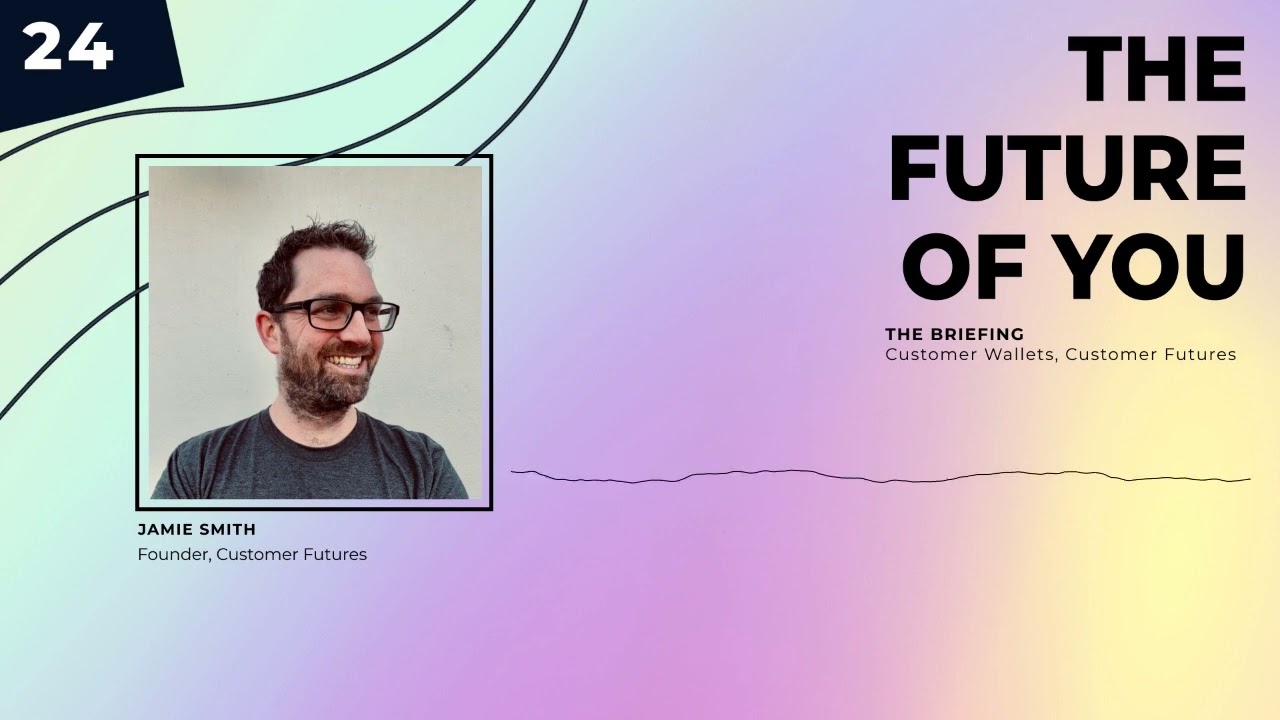
Tracey Follows and Jamie Smith explore digital wallets and identity. They cover what data users actually need to share, how personal AI agents might act on your behalf, and risks like social engineering when wallets become too powerful.
Chapters
Welcome to a new episode of The Future of You: The Briefing. And before we get started, a bit of news. I've been bringing you two formats of this podcast for a while now, and the in-depth conversations called The Discussion and the topical news on identity called The Briefing. I've been talking about the evolution of identity in the digital world since 2016, and I've been researching it for just as long, and really enjoy exploring all the various aspects of it along with you on this fortnightly podcast. And it now appears that the issue is finally reaching the mainstream. This weekend I saw two reports focusing on identity, one from Accenture on their Tech Trends for 2023, which had an upfront section on digital identity for everyone and everything, and one from an ad agency group exploring the changing nature of identity. So what am I saying? I think I'm saying that think tanks and trends analysts and management consultants are now converging around identity, so they've finally begun to understand its importance. And that means that it's probably time for me to rethink how much of my content is public. I plan on continuing the in-depth conversations with experts in and around identity, but the Briefings, which aggregate and investigate the really topical news on emerging identity issues and innovations, which take me a little while to research, write, and record, will, well, they'll now move to my website where they can be accessed by members who sign up to the Club membership. It's time to build a proper community around digitised identity, but also my own philosophy of identity, and I'd like to build that with you. So more news to come on this soon. It does mean that lots of my content on identity will still be free. In fact, in the last 2 weeks, I published and posted my deck, Identity Century: The Business of People in the Future. It's 100 pages long and outlines what's happened with identity over recent years, how digitisation is transforming us, why authenticity is no longer the reality and what takes its place, and it sets out the major implications for identity for businesses and brands over the rest of this century. We're at a critical time. As I say, it's all going mainstream, which means certain power shifts around identity will now take place as specific beliefs and approaches become somewhat codified now. I made the Identity Century deck public, as I would love as many people as possible to read and discuss it. And please do let me know your thoughts. I love to hear from you about this. The link to the deck is in the show notes. You can always email me. I would also really appreciate it if you could share it around, as it does capture the existential threat to identity that I first explored in the book, the subtitle of which, if you remember, was 'Can Your Identity Survive the 21st Century?' Well, that question remains not only unanswered, but even unasked in many quarters. Part 2 of the Identity Century deck that I'm just finishing up now goes into a lot more detail about the specific implications and actions of all of this for businesses and brands, as well as individual citizens and consumers, and it contains the answers to many of the questions I've been posing for a while. So, on that note, and speaking of brands and consumers, I thought I'd bring you a conversation I had with Jamie Smith on customer futures. In this great conversation, we cover what's a digital wallet and how it works, the value proposition for wallets, how we reshape the data we store, the difference between personal and personalized wallets, the emerging digital divide, and so much more. Enjoy, and don't forget to check out the show notes for more on Jamie's work. And I will see you for more briefings in the future at www.traceyfollows.com. The Discussion, well, that will be back in 2 weeks on Apple and Spotify and Google and Amazon on any of your favorite pod platforms. And we'll be discussing gaming, virtual and mixed realities, and identity. So, see you then. And thanks as always for listening. Welcome Jamie to The Future of You.
Very delighted to be here.
Perhaps you could tell our audience who you are and what you do, first of all.
So I am Jamie Smith. I started a blog called Customer Futures, which really is describing where we think the future of identity is going, the future of digital wallets, personal AI, and how they're coming together to redefine customer engagement, really, and how individuals can re-engage in a more meaningful way with businesses. My day job, I have been working on innovation, digital wallets, and identity for about 15 years. Through consulting and product, and most recently at GenDigital.
Brilliant. So, so good that you're here because obviously this is like the intersection of, you know, individuality, identity, customer relationship, brands, corporations. And I want to talk to you about all of that. But I wonder if you could start off by just telling us a little bit about what you think a wallet is. How would you explain it to somebody who has absolutely no knowledge of it whatsoever?
It's a great question. I think a wallet is really nothing more than a place we put our things and then we can carry around with us. And if you dig into that a little bit, it gets really interesting because when you go on holiday, you might have a different digital wallet and your passport might be in there, maybe a health card, maybe a boarding pass. Or if you're going out for the evening, you might take some other precious things out of your wallet because you don't want to lose those other things. You might just take an identity or a credit card or something. And so the wallet becomes something that you control and manage, and it's yours to use in whatever context. And what's really important is you get to put whatever you want in it. And I think there's a— in the analog world, in the kind of day-to-day life, we have these leather things, purses and wallets, and we decide what to put in them. And as we've moved over to digital, there's been much more rules and regulations and business processes wrapped around them, which means we're not able to put anything we want in them. And we've got to have, you know, we can only use them in certain places that we're allowed to. Or, you know, it's going to be day-day, month-month, year-year, not month-month, day-day, year-year. And it just gets a bit more complicated. But I think in simple terms, a digital wallet is something that, you know, a place I get to put my stuff and carry it with me and then present what I want. Where I want it. And I think in a digital context, we've lost some of that utility. We've lost some of the value of a digital wallet. And I think that's a really interesting place to kind of explore how we get back to what really digital wallet could be.
Now, Apple have been doing their wallet for some time, haven't they? And you can kind of see them moving into financial services, maybe even banking full scale. But they were the first ones, I think, really say, oh, here you can have a wallet on your iPhone. Do you foresee a future in which we've got an Apple Wallet in a kind of walled garden, closed system, or are you talking about a different kind of future for wallets?
Honestly, I think it's going to be a mixed economy, uh, and, you know, organizations are going to want to think about what they want to put in their digital wallet and protect that. They have their own business interests, rightly, but Really, we want to think about value for the consumer, value for the customer. And to maximize that value, you want to be able to use it in as many places as possible and use it for the things you need to get done. And Apple's Wallet, you know, they, they're just superb in terms of customer experience, in terms of, you know, making things just easy to use and understand and simple taps. And I think the digital wallet conversation so far has been quite a technical one. And actually, the language about wallets, apart from really Apple and Google and payments, the language about wallets that's come out over the last, I would say, 10 or so years has been one of Web3 and blockchains and Bitcoins and assets and NFTs. And I think the whole language around this is really messy. And so Apple will have, you know, they're going to want to control the experience. And if we can't just put anything in there, and you know, right now they've got my coffee shop loyalty card and a boarding pass and my payment card, and they are building their business relationships with other organizations who want to be able to accept them. And they honestly want to preserve the seamless experience. They want to make it beautiful and easy. And I think as individuals expect more of their apps and services, we're going to want to do more things with them. And therefore, we're going to want to put more things in them. And the tension right now is the wallet conversation is a very nerdy, technical one. And you get words about cryptography and digital signing and recovery and things that are really important, but day-to-day consumers don't really understand. And honestly don't think about. And so I think organizations have had to build their walled gardens so that they can control the experience and make sure things are nice and neat. As wallets become more sophisticated, as the community working on them get better at things like interoperability and standards, and then other brands and other startups and innovators will be able to build on top of them, build great experiences like Apple has And that's where I'm going to see the real full potential. So I said it's going to be a mixed economy because I think some brands are going to still want to control things end to end, and some new platforms and, you know, digital leaders are going to build new apps and services around digital wallets. They're going to make them more portable and more useful. So we're going to have both, I think, short term, but utility and value for consumers is going to come once they're more portable, once they're more useful, and I can use them in more places.
I think some of the confusion comes from when we use the word wallet. I mean, because most people when they think of wallet, think of money. And there is this thought, isn't there, that actually wallets for your currency, whether it's crypto or another digital currency or whatever, should be separate from your wallet with your credentials, your kind of life credentials that give you access to different things. Or should we have many, many wallets, one for each brand? I mean, that's going to get quite confusing, for example. So maybe you could just talk me through whether you think the word wallet is even helping describe your vision of the future or the preferred future vision for this, this kind of move into the digital world.
I think you've hit on a really important topic, and honestly, I don't think most people care about wallets. And honestly, they don't care about identity and they don't care about data. They just want to get stuff done, you know. They don't care about petrol, they want to visit their grandmother. So I think browsers are quite a good analogy, right? I don't care about having a browser, I care about online banking and cat pictures and social media and connecting with my friends. And we've, we've kind of got this very narrow conversation about wallets It's a bit like having a very narrow conversation about URLs and browsers and sidebars in HTML. And I kind of think of it like, you know, there's this kind of new customer stack emerging, like, you know, tools for me. And at the very low levels, it's how it works. And at the higher levels, it's like, well, what I can do with it. So in a browser, the low level is URIs and HTML and responsive design and you know, the, the, the mechanics of it. But above the line is, well, I can now do amazing new things. I can buy things off from my sofa, you know, I can buy an airline ticket, or I can order from a restaurant. And I think we need to think about digital wallets the same way. I think they're actually going to be kind of below the surface. We're going to abstract them away a bit, and they should be because most people don't know, they don't care. And so the details matter. How— I mean, to your point about open or closed, The details are going to matter, which wallet and how are they secure and how are they making privacy better. But really, to get adoption, for it to hit the mainstream and actually enter the public consciousness of this being a useful thing to have, I think we need to start thinking above the waterline. Thinking about Jobs to be Done, it's kind of value proposition, it's 101 of how to build valuable services and products. And I suppose it's worth touching on the super apps because they, you know, largely in China and, and Asia, they've absolutely dominated by building valuable services. And the way they do that is by vertically integrating, right? I've got the, the wallet and the, the payment rails and the profiles that allow me to onboard seamlessly, but also the insurance, the taxi company, the the delivery service. And I think they've been so explosive in growth because they're so valuable, honestly. And I think with digital wallets, we have an opportunity to reimagine what that value could look like, but in an open way. So actually, I've got my payment layer, my identity, my loyalty information, but I can layer on top all the services that I want, not just the one that the platform chose to add. And I think that's where it gets really interesting. So I think wallets are going to open up a new way of thinking about commerce, a new way of thinking about customer experience. And your point about, you know, I've kind of talked quite a lot about where the value is. And I suppose, getting back to your question, is a wallet is below the surface of it. And I think we should be mindful about where the value is created. The value is created much higher up. From a customer experience point of view.
Maybe that's how we should talk about it, because a wallet is normally in your handbag or in your pocket. It's hidden away, isn't it?
Totally. And it only comes out when you need it. And actually, you know, I can only speak from my personal experience, you know, I might take my credit card with me and just put it in my back pocket. I won't even need a wallet. And so, a wallet's the container. And Dave Birch talked for a long time, it's like, you know, Cards are going to disappear way faster than cash. And so identity cards and all the plastic and paper will disappear because I can now prove it digitally in a context I'm happy with and where, you know, where it makes sense in the browser or in an app. So I think wallets are going to show up in all sorts of parts of our lives in a way we can't honestly predict or expect right now. But I think the wallet is just a— it's a helpful term to think about, a container for you know, proof of stuff. Because Dropbox or Google Drive is a wallet right now, but I can't prove what's in there, and I can't prove where it's come from. A digital wallet with all the verifiable goodness that comes from being able to, you know, cryptographically sign and watermark stuff, that's where the magic's going to happen. Because suddenly my data is going to be useful in place, in new places, and I can create new services up at the top.
Let's talk about what we're trying to prove then with these credentials, or whatever the equivalent is going to be in the future. We've talked before on this podcast, and I've chatted to lots of people about really what you're trying to prove is, is a person. And that's what Dave Birch would say, you're trying to prove is a person, not is Dave Birch. What's your point of view on this? And how do we communicate that to, you know, to customers who are maybe nervous that they think they're exposing their personal identity, or they won't have anonymity anymore, because there's possibly a misunderstanding about what we mean by authentication or verification around identity.
I kind of flip it around a bit and start with who needs what. So rather than thinking, well, what can we put in there and what's the format and what am I sharing, which are really important questions, but they're secondary. They actually come after what we need to prove something. And the, the example everyone talks about is you don't need my date of birth, you don't even need my age, you just need a yes or no. Or, you know, above or below a certain age. And I think that whole framing of it is thinking about, well, what's actually needed to get something done. And, you know, Amazon doesn't really care who you are. They care about what you like, they care of what you've bought in the past, and they care that you've got credit card and a verified shipping address. You know, they don't necessarily need to know it's first name, last name, you know, date of birth. They might, for regulatory reasons, need to prove age for a certain product in a certain region. But I think this question of identity has got really messy. And honestly, if you speak to, you know, the identirati, the high priests of identity, we get very philosophical about, well, who gets to decide who I am, what I'm called. And you get into a very sometimes messy conversation about things like identifiers. What does that mean? Wasn't my account number, my date of birth, my my Social Security number. And actually, if you flip it and say, well, how do we just go through life sharing only what we need to share? Some of it's regulatory. You know, bank, when they receive data from you, they need to store it for 7 years, at least in the UK, for good know-your-customer reasons and anti-money laundering and so on. But for lots and lots of other use cases, and by the way, they're regulated to look after that data and steward it and look at, you know, make sure there's no data breaches and they're not using it for other purposes and so on.. But for so many other use cases, we actually don't need to share a whole bunch of information about us. And my example about Amazon's a really important one because Spotify doesn't either. And so they might need an email address, that's it, to communicate with me, and a credit card, and what I like. So if we start to rethink actually what data's needed to get stuff done, I think we can quite powerfully reshape the data that I actually need to store in my digital wallet, which by the way doesn't even necessarily need to have my identity in it, quote unquote, you know, government ID or even bank ID. So, you know, what if I could share profile information about myself, things I'm interested in, things I've done, things I've been— where I could express a need for something, like I'm interested in a car, or I want— you know, we get into this world of intent rather than having an email address where I— frankly, brands want to connect with me, so they send me stuff, and that gets overwhelming. And we're starting to put up filters and junk rules, and it's— we're fending off all this information, this overload from organizations. And I think what wallets have the power to do potentially is give customers a new kind of a new endpoint that organizations could connect with. And so once I put information in that wallet that's verifiable, that's of value to an organization without having to overshare a whole bunch of other attributes that you honestly don't need, I think that becomes much more valuable to organizations. And guess what? They can, they can ask for less data, so the Chief Privacy Officer and the Chief Information Security Officer get happier. There's less risk to the organization, it's lighter, there's fewer things to have to fill out and complete and so on. So customer experiences get better, the data sharing is just less, less heavy. And, you know, I think that, that's where the real opportunity is. And it lifts us out of this identity conversation, it lifts us out of a wallet conversation. So we'll put lots of different things in there. Honestly, the important things are who needs them, what value we're creating with them, them? And secondly, are they verifiable? Because if it's not verifiable, then it might as well just be self-attested, and organizations may or may not want to collect that data.
Do you foresee a future in which our personal AI agents can kind of use that wallet or the contents of that wallet on our behalf? Like, who's going to be in control of it? You know, you could potentially program it to not share certain parts of data with certain brands. And then an agent can go off and do that on your behalf? Or do you think it is us, the human being, that's constantly kind of 100% in control of it all the time?
Well, I think we should separate two things out there. One is rules around the wallet that I could set, and we can do that today. We don't need fancy machine learning and artificial intelligence models to, to do that. I can set some if-this-then-that rules quite simply, saying if this organization asks for these things, then do that. And by the way, I can keep a lovely cryptographic audit trail of everything that's ever been asked of me and everything I've shared. And the second point about personal AI, I'll come to in a minute about agents and stuff. But let's just think about that for a second. Think about that audit trail. That means that if an organization's now asking for stuff, there's now a lovely record that they've done that. And that starts to change their behavior about what they ask for, where and when.
How will that record be held, Jamie? What data will that be?
I mean, at a very boring technical level, it's just kind of an event log of interactions in the wallet. You know, stuff I was asked for, did I say yes, what did I respond with? And I can now prove what's been asked of me. I think that alone might start to change behavior about who's asking for what, because I can say, well, actually, why did they ask me for that? The, you know, yes, they needed these 5 things, but why did they ask for 6, 7, and 8?— when the consumer watchdogs might start to get interested about, well, we can start to instrument that. We can start to see what's being asked for where and when. I think that gets really interesting. Well, if you future-gaze a bit, might I pay $1.99 a month for a plugin to my wallet from— when in the UK, I might use Which?, maybe. Might I have a plugin from another consumer watchdog in another jurisdiction? Yeah, maybe, you know, and they can, they can be helping me make good decisions about what I'm sharing and with whom. So that gets really interesting. Will I always be in control? 100%. Will I always need to tap? Yes. I don't know, maybe, you know, with GDPR and consent and the banners, everyone's got consent fatigue now. And I think the really smart designers that you know, think about design patterns, saying, well, maybe I could say, look, if this organization asks me in the next 16 days, just say yes. And by the way, I've got a record of it, so I can go back and say, well, what's going on there if there's something suspicious? But if they ask, just say yes. If I'm going on a trip, the airline can ping my wallet legitimately for the next 48 hours. I don't need to tap every time. So that's the first thing. And the second thing is with personal AI, there's a whole other podcast to be recorded about You know, I like to think about the difference between personal and personalized. So personalized, it's someone else's, right? And I've given it some configuration and they're doing it to me a bit. You know, I get some value out of it. It's not really mine.
It's tailored, not designed.
Totally. And that idea, you know, right at the start of this, we talked about a kind of leather wallet. It's mine. I can choose what I put in it. Why can't we do the same with AI? Why can't I have an AI that's on my side, that's not personalized, that actually we're all contributing to this massive corpus of knowledge that, you know, they may not be selling the data, but they're, you know, building value and creating insights and stuff that they can use elsewhere that's not for me. Why can't I have a personal AI? And you asked, you know, will access my wallet? 100%. And that's back to this waterline thing. You know, personally, I setting up some rules and making recommendations. Yeah, I'll have that running on my personal wallet as long as I'm in control, the boundaries, I can see what training data has been. And here's the thing, I was discussing this recently, I might give that training model, that AI, more data than I might another platform because I know it's mine and I know I can turn it off and control it and You know, there's boundaries there, there's digital trust. And if it's got more data, it can be even more helpful.
How is this going to come to fruition when we've got governments and corporations and particularly tech platforms who are desperate to extract more and more personal information and data from us and also use it against us in a way that they'd like to socially engineer us? So they'd like to push us in certain directions to either speak in a certain way or hold certain opinions or behave in a certain way that benefits them, not us. There's an awful lot of temptation on their side of things to not allow us the kind of empowered personal control that you are talking about with customer futures. How are we going to bring this to fruition and stop them from overreaching, if you like, when they're very able to overreach?
That's a really good question. I think I'm going to think of this through a few different lenses. The first one is technical possibility, right? It's only been large organizations that could build this stuff and had the data scientists and frankly the data centers and all those things. I think the technology is commoditizing, and so people are going to build things themselves. There's going to be tinkerers at first and innovators. And I think, you know, it's this idea of value gaps. I think there's, there's white space on the side of the customer to build new things, and maybe it's $1.99 a month. You know, to build tools that I control and manage. So I think there's, there's open opportunity on the customer side that would create value for just me. And guess what? Once I've got insights about myself, I'd bet businesses would pay for some of that, and I would share some of it under my control, on my terms. And I've got that audit trail of what I've shared. So I think that's one lens, a kind of technical possibility. And by the way, Part of that is, you know, the last 50 years, we've really only, I mean, we've built most stuff for businesses, all the data machines. And I think there's an inevitability that some of that balance is going to pivot over to the customer side. So that's the first point. I think there's a legislative one, or regulatory, I should say, that says, you know, there's a really good, interesting debate about regulating AI right now for personal data, for example. But actually, there's loads of really good personal data regulations already out there. What you can and can't do, how you get consent, how you process it, are you the controller or the processor? And we're starting to see people push back on these AI platforms saying, actually, I've got— we've got the existing regulatory frameworks. We don't need lots of new exciting, you know, rushed-through regulation that does this new exciting AI thing. We've got personal data regulations in, you know, parts of the US and the UK and across Europe, Australia. So we can, you know, I think there's gonna be guardrails there a little bit. And it is a bit of a wild west right now, just like it was with the web in the '90s and frankly, early 2000s.
So as you're talking about that, I'm thinking, are you including the trust framework that the UK government is working to in this digital wallet credentials space or digital identity space? Or is what you are talking about of customer futures sit outside of that?
I think it's sitting alongside the governance frameworks that, for example, the UK set out is describing, well, who gets to be an identity provider, who gets to verify who Jamie is, and then give him blobs of data or create profiles that he can then use elsewhere. And it might be that there's a third party that can consume that data directly from the identity provider, which is what the banks would do, for example, or in this wallet world, that signal might go from that identity provider directly to me, and I hold it. And I mentioned earlier, you know, we've now got lever cryptography and digital watermarking, which means it can sit in my wallet, but it can be provably come from that identity provider, some so-called IDP. So these governance frameworks are going to sit together. The UK framework will say, well, who gets to prove it's Jamie, and under what rules, and are they certified? Quite rightly, there's going to need to be new regulations and frameworks to say, "Well, who gets to be a wallet provider?" There's also going to have to be regulations, "Well, who gets to request stuff?" Across Europe, there's lots of nervousness about this idea of papers, please kind of culture. And in an IoT world, we might say everything that can be connected will be connected. I think in a wallet world, anything that can be asked for will be asked for. And so we're going to need these guardrails, these boundaries about to, to protect people, because they're just going to tap and say yes. And so I think the, the UK governance framework around identifiers is going to be part of that for sure. Can we trust the sources of data? But there's going to be need to be new, you know, some, some will call them registries, you know, accreditation of wallets, of, of data sharing agreements about who can share And honestly, I think this, you know, people talk about transparency, it's a bit of a high-level concept, but a meaningful example of that is this audit trail of who's asked for what. And, you know, am I really sharing this with British Airways? Am I really sharing it with the bank? And how do we think about who the trusted organizations are? So, it's gonna sit alongside this management.
It's interesting, as you said British Airways, 'cause I was thinking as you were talking, I've got the IOTI app on my phone, and it's got a couple of things in, including, let's say, my passport details. So that's where my, like, air quotes, identity sits in the Yoti app. But what you're talking about with the customer futures is potentially I could have a wallet that is just working directly with British Airways, right? So I wouldn't necessarily need the Yoti app, is that right? Or would I, or do they sit alongside and almost duplicate?
I think we're in phases of transition. I think it's possible it could be a Yoti app, it could be another model. I think we're in a phase of transition.. And we're going from a world where there aren't really wallets out there and we don't have this portable verifiable data. And IOTI has been one of the, you know, best early examples of saying, let me, you know, digitally sign a copy of your passport and all those attributes onto the phone and then make it portable and use it in the convenience shop or use it at British Airways and so on. So it's an example of a tool that I can use that's on my on my side that's now portable. I think there's no reason why that wallet couldn't sit inside the British Airways app. And so British Airways, my app, and I might have things that pertain to my British Airways relationships. And so we're going back to the point about where wallets go. I think we don't know is the answer, but I think there's going to be an explosion of wallet providers, which is why we need accreditation. It's also why we need standards to know that they're, you know, they're the good ones and the bad ones. Just like we have the standards for cars. We don't just put— we just get in any car. We want to make sure that they're regulated and registered and so on. I think this is powerful, potent stuff. This is about who you are and where you go and your private information. And honestly, you know, the patterns of behavior about how you shop and where you go, this is going to be powerful. We need really good rules around it. But wallets are going to show up in airline apps, in, you know, car apps, in, in shopping apps. And I think most of them, you know, big commerce platforms, or have a kind of wallet strategy of some sort or other at the moment. The banks do, the telcos are thinking about it. If you push a bit further out, I think healthcare will be one of the biggest places for it, because private data— your data's in tons of places, it can't trust it. But guess what? It's heavily regulated, so they'll be a bit slower, but it will come.
Now that's an interesting conundrum that is, particularly for the UK, I think, because obviously we've had kind of OneLogin rolling out, which is about, you know, being a kind of gateway to your public services. One could argue that that is, or will evolve into, a wallet, let's say. So it's a digital identity or something at the minute. Now healthcare, hmm, how would OneLogin interface with your customer futures wallets, the sort of the public sector services that we may or may not enjoy with the commercial services that we obviously pay for or subscribe to? How are those going to overlap or interface?
Again, I want to pick it apart a bit because there's, there's the wallet as a place to put my digital stuff, and it can be, you know, watermarked and provable and revoked and that kind of stuff. That's subtly different to logging in. And the identity nerds also talk about authentication. And I think they are related but different problems. When I'm logging in, I need to make sure, is this returning thing entitled to access this part of the website or this resource or do this thing? It's kind of an authentication step. Are we allowed to let this person in? And that might be very well different from needing any information from the wallet. So what I mean by that is I could connect my wallet to a service. So let's say I could say, hey, let's go to a hospital. Hey, hospital, this is me and I'm on board in a certain way and I'm boarding the way I am today. But I might also say, but I've also got this wallet, by the way, it's been accredited, it's one of the approved ones. And I might kind of connect my wallet or associate my wallet with that account or that hospital visit. And that means that if that wallet then shows up, they don't need to say, hey, we now need all the attributes from everything inside your wallet to prove it's you. They could just say, yeah, no, we're happy. We can— as long as it's this wallet, we'll let it in. And now that's moving the trust. It's like squeezing the air in the balloon, right? It's now moving the trust to, well, does the wallet know it's Jamie holding it? And so now we've got a slightly different problem around how do we know it's Jamie's face, or Jamie's PIN, and how do we make sure it's Jamie, you know, binding, attaching himself to the mobile phone, let's say. So I think the wallets are going to show up in really interesting places. And you kind of mentioned big tech, you mentioned government. I think it's going to firstly be a container to separate those things out. It's going to be a container for my stuff. And in all those different use cases, right, when I turn up to government, And they say, "All right, is it you again?" I say, "Yes, it is. And here's the wallet that I've associated with my government account." But guess what? I'm doing something in this government context that required data from another department. Maybe you need my council tax details. I actually set that up and received that data in a completely different government context. But now I'm showing up over here to, well, part of benefits, for example, or claiming disability. I need to show a council tax number. Well, yes, I can authenticate communicate with my wallet, say, yes, it's Jamie again. But you can now trust when I share my council tax number that it really is coming from Jamie and it really came from the source you trust. So I think the wallet's going to become this really powerful new way to think about stitching together different services. And I used a kind of governmental one there, but let's, let's go to the hospital. I might want to share my insurance number, also my address, also maybe some medical history. And those can come from completely different places. And I might log in with my wallet because it's the wallet that they've already connected, and I'm happy. They don't need all the data, they just need to know it's the returning wallet, it's Jamie. And then they can say, oh, by the way, for this visit you need to share this blob of information. I say yes. So I think wallets are going to become this really interesting new way to show up at organizations. One, I'll be able to connect my wallet to that organization so they can trust that it's me again. But two, once we've created that lovely connection between the wallet and the organization, they could ping me and say, hey, we need that information. And that is where we get true digital transformation on the side of the business.
Because the problem with— well, there were many problems with Verify, but one of them was that it didn't really connect over from private enterprise or commerce to the public sector. So the public sector in various guises might, or government might know lots of things about you, whether you're on welfare, what your NHS number is, et cetera, et cetera, but they didn't really know anything you were doing with brands or corporates or in the commercial sector. And then if you had separate sort of identity credentials, they weren't connected to the government. So there was literally no crossover. And now, One can argue that that crossover is a good thing because you get true interoperability, as you say, true digital transformation, wheels are oiled for commerce and all of that. Or one could argue that's really scary and frightening because I don't necessarily want any crossover between officials and what I'm doing in my personal private life or through commerce. I think you could argue it both ways, but I was just interested in your point of view about how far you think that could go, you know, in the crossover.
Totally. And there's two ways of looking at it. One is the kind of data flows and the infrastructure. The reason we don't want to cross the streams, we don't want these systems to be connected because we don't know, you know, we can, we click the consent button, we don't know where our data is and what platform it is, if it's being transferred to a US platform or not, or if it's being overlooked by government. And, you know, the terms and conditions will say things like, you know, we share our data with trusted third parties. If you dig, there's a massive long list of them. I've honestly, the cat, you know, the toothpaste is out the tube. We have no idea where our data goes. We have no idea what the kind of supply chain is. So we're very nervous, largely, about share, who's got what, where it goes, what we're consenting to. And digital trust has collapsed for that reason. And so we don't like to say, well, I don't want to let the government have access to my private sector identity. Because then they know where I'm shopping and what I'm doing. And likewise, would I want to give the commercial entity some government information? Probably not. But if you reframe it, that plumbing, and make it about the individual— again, maybe it's a wallet. Most people don't care about a wallet. But let's make it my, my new customer tool that I'm in control and I can see the ins and outs and I can see the flows and I can, I can see what's been asked and where it's going. Then that changes the trust conversation. Because maybe I can put all my blobs of government information in my wallet or in my app, and I can see it, and then I can selectively share some of that with a commercial organization and vice versa. You know, I bet there are plenty of occasions in, you know, in government where they, you know, they might, you know, let's say a benefits example, they might want to see my, you know, a kind of threshold for earnings, right? Do you earn over 30,000 £1,000 a year, yes or no? That's quite interesting without me give you my entire open banking history where you can go and sniff around all my transactions. And the government could say, well, we trust that bank, that they've done their checks. Um, number one, they know it's Jamie. Number two, it's verifiably come from the bank. So now the government doesn't need to have this massive data store.
Wouldn't it be interesting in the future you could replace the existing census questions really, which are really kind of, you know, claimed information with actual behavioral information really, if you linked up all that stuff. I mean, that's quite, could be quite frightening, but also it could be quite enlightening. You know, you could get some really interesting stats on that kind of census-wide.
Researchers and academics have been thinking about this idea of collective intelligence for quite a while. How do we think about the smarts of 100,000 people? Again, if I attach these kind of plugins or extensions to my wallet, why wouldn't I anonymously share some information? With cancer research, with a census organization, see how many people, you know, self-assert this way or have got a passport, you know. And, you know, I think market research is going to be on its head now. I think we, we very, very dangerously veer into digital divide, data divide, the haves and the have-nots, you know. And, and from an EIDAS point of view, they're saying, well, it's going to be 80% you know, have adoption. Well, that's a very deliberate number because there's a bunch of stuff that certain demographics you're just not going to get to. Some people won't be able to have it, some processes won't be able to be digitally enabled by design. And we should absolutely not have a digital-only or an exclusionary process for anything. If you've got to have a digital wallet, I think we're in a very dangerous place.
This is what's frightening about it, veering into social engineering. I think this is partly why people are very worried about it. I mean, it's a bit like the information misinformation era that we're in at the moment. I'm worried about misinformation, but I'm nowhere near as worried about misinformation as I am about missing information. There's so much that's not reported, not spoken about, that's deliberately designed out of the communication system and the media landscape. I imagine that happening with tools like this, or the interaction with tools, or access that you are deliberately designing out some people or companies or whatever from accessing all of this because, well, there is no justification really, just because you can. So I think that's one of the things that people are increasingly worried about and particularly because they're sort of linking some of this with central bank digital currency. So I think there is a fear around where this all goes.
Completely. And you used the word deliberately there. And I think there's just clumsiness as well. I think accidentally excluding whole swathes of society. You know, think about online banking. It's been largely helpful. It's been largely helpful for access and financial literacy and so on. But guess what? We've now shut a bunch of branches. A bunch of people now can't go and see a teller or have a conversation about their finances. And so in the UK, at least, the Post Office is stepping in. To build community branches where banks can, you know, say, well, actually, we'll provide some kind of banking tools or access for you where we can. So wallets and, and all this kind of exciting new tech is, is neutral. It's gonna be good things and bad things. Browsers are neutral. You can use them for exciting things and cat pictures and online banking, but we can also fall down the misinformation rabbit hole and have infinite scroll You know, all these things are going to be built on top of, and I think we don't yet know what's going to happen. You know, I think it's a bit just like with AI. It's probably 90/10, like 90% exuberance and excitement and where it could go on solving cancer. But, you know, there's only 10% of people say, well, hang on, what about, and, and how do we think about guardrails and ethics and stuff? And I think the same thing's probably gonna happen with wallets. You know, I think there's probably 90% of, oh, let's, let's, you know, digitize the experiences and or maximum 10% people thinking about, well, hang on, what are the unintended consequences? Who are we leaving out? It might be fine if we're optimizing an onboarding flow for a bank. What if you're, you know, the wrong gender, sexual orientation, race in, in a, in a regime that is actually enforcing digital wallets on everyone? So I think we need to be very, very mindful about how this is rolled out and regulated. I think there are some thoughtful people You're working on it, but we need to be slow and careful, I think, is the answer.
I think it needs more public consultation. I don't think you need to engage the public, but that's an ongoing theme in this podcast, actually, through every, nearly every single episode, that how do you engage people in digital identity, acknowledging that that's, you know, a horrible phrase and it's quite a transactional phrase. It's not the most engaging kind of title for it.
In the conversations I've been part of, people are calling for more social science involvement, psychologists, you know, thinking about how is this going to play out. You know, um, again, there's that word ceremonies that kind of shows up, like how do I present my information and what's it going to feel like when I— should I be able to get an insurance, you know, life insurance policy in 3 taps? Probably not. I've written a bit about this idea of good friction versus bad friction. A dark pattern is a bad friction. And things can be too fast. We should be thinking about good friction. In fact, I know back in the Verify days, as UKGov.Verify, for its many challenges and issues, they did some brilliant work on good friction on the onboarding flows. And do you really know what's going on? Let's introduce some extra screens to slow you down so you know what's being shared and what's— so, you know, I think wallets right now, or the default is, you know, frictionless, seamless. And I think we need to think very carefully about good friction.
Very good point. So as we just conclude this then, what would you like to talk about that we haven't mentioned? Or is there something that brands or corporations should be doing to make themselves get to this next step and embrace customer futures and not let it happen to them, but actually take the initiative.
Honestly, I think this is about the prize. You know, we make this a very customer, citizen-centric story about privacy and security and portability, and that's absolutely front and center. The prize, honestly, if I think about the kind of slightly broader digital economy, is we can start to wrap whole new experiences around the individual. Because for the first time, you know, let's call it a digital wallet, but it could be an app or a service. I can now think about an entire customer journey organized and managed around the individual. So, you know, today we think about the businesses in the middle and all the customers are kind of orbiting. And there's— I think it's gonna be a complete inversion. Actually, we're gonna have the customer in the middle and all the businesses going around. So it's just like, you know, we used to think the sun used to go around the Earth.
Doc Searls used to talk about this, didn't he?
Yeah. And so we're going to get this complete inversion. And so to your point about the business opportunity, I actually think digital wallets are going to become a new customer endpoint, a new customer touchpoint. And if you think about what— just, you know, to be specific, you said, you know, what can businesses do? If you think about someone who's looking after customer engagement inside a business, What do they want to do? They want to have a trusted, ongoing, valuable relationship with the customer who spend more money and build loyalty and trust and stuff. Right now, what are the tools that customer engagement lead has? They can send you a text, send you an email, and both of them are push, they're interruptive, right? So we put up spam filters and, and, and, you know, we have tools to kind of manage the noise. There's all— I've got another PDF attachment or I just, I can't be bothered with it. And we lose things and we forget, or it's gone to the wrong number.
They're push.
The other two are pull. So they can, the brand can get me to come to their website, fill out some more forms, do the little password dance. It's all really clumsy and fill, you know, or they can get me to go to their app. So you can download another app, create another account, you know, and now suddenly to go on a trip, I've got like 6 apps. I've got one to go to the airport, one for the airport, one to get on the plane, one to share my COVID certificate with the country, one— like, those four choices are really bad. I got messages, email, a website, or an app. That's how brand engagement goes right now if it's digital. I think digital wallets are going to go like a fifth channel. And I don't just mean, oh, everyone's, oh, they're just going to spam me all the time. But guess what? I can just shut that customer connection off. You know, my AI could do that and say, look, actually these messages are interruptive, they're not adding value. So I think that's the hidden value here, is that customer wallets are going to become a really new interesting channel that are authenticated, that have high-value data in them, that I'm under control, it's transparent who's interacting with it and what they're doing. And that the customer can say, you know what, I don't want to receive messages with you, or I'm not shopping with you anymore, just close it. Once a business has my email address, that's it forever. Whereas now I can just shut it off. So I'm in control of my experiences, which brands I want to connect with. And by the way, I could now express things to that business saying, hey, do you know what, I am interested in a new car. They're like, great. And I've got that new customer channel. It's not me going to Google to asking for test drive and getting 1,000 responses and spam for 3 weeks. So I think brands should be thinking about the digital wallet as a new customer engagement opportunity. Around which is going to be an explosion of innovation. So that's where I think we should be thinking about things.
I like it. It's like each individual treating themselves as a business and they've got a front desk.
Completely. So flip it. Everything can be flipped. So rather than me subscribing to a business, why doesn't the business subscribe to me? Guess what? Why would I let them do that? Well, they're going to create value for me. Why would they do that? Well, they're going to create more loyalty, more value. You know, Nike To build a shoe, you have to know everything about running. Now I might buy the shoe, but think if they could use that channel to just help me with my 0 to 10K journey. That becomes really interesting. You know, to sell a mortgage, you have to know lots about debt and lifestyles and help me do things in my life. Don't send me messages, don't get me to download another app. Think about the customer engagement journey. Through the lens of a digital wallet. I think that gets really interesting.
Okay, so how do people find you if they want to talk to you about this more, or if brands do want to put themselves on this, um, sort of journey, this, uh, this roadmap to customer futures?
Probably the best thing is to go to customerfutures.com. All my details are there, and, and what I think about the future of personal AI and digital wallets, and much of what we talked about today.
Brilliant. Well, thanks very much, Jamie. It's been very interesting to talk about wallets, even though we They think that might not be the right word. We can't find a better one right now, but maybe we will in the future.
Brilliant. Well, thanks so much for having me.
It's been a pleasure. Thank you for listening to The Future Review hosted by me, Tracey Follows. Check out the show notes for more info about the topics covered in this episode. Do like and subscribe wherever you listen to podcasts, and if you know someone you think will enjoy this episode, please do share it with them. Visit thefutureofyou.co.uk for more on the future of identity in a digital world and futuremade.consulting for the future of everything else. The Future of You podcast is produced by Big Tent Media.
More from Tracey


Your Face May Be Training AI You’ll Never Use #TrainingData #ArtificialIntelligence #HollyHerndon



Why In-Betweeners See What Others Miss #Futurists #DiaryOfAFuturist #inbetweeners



Pick a System card. Pick a Self card. See your future in the connection #TraceyFollows #System&Self

Your Past, Your Present, Your Future #futurist #futuresthinking #TraceyFollows

